
Soft Banacle
Fabrication
2025
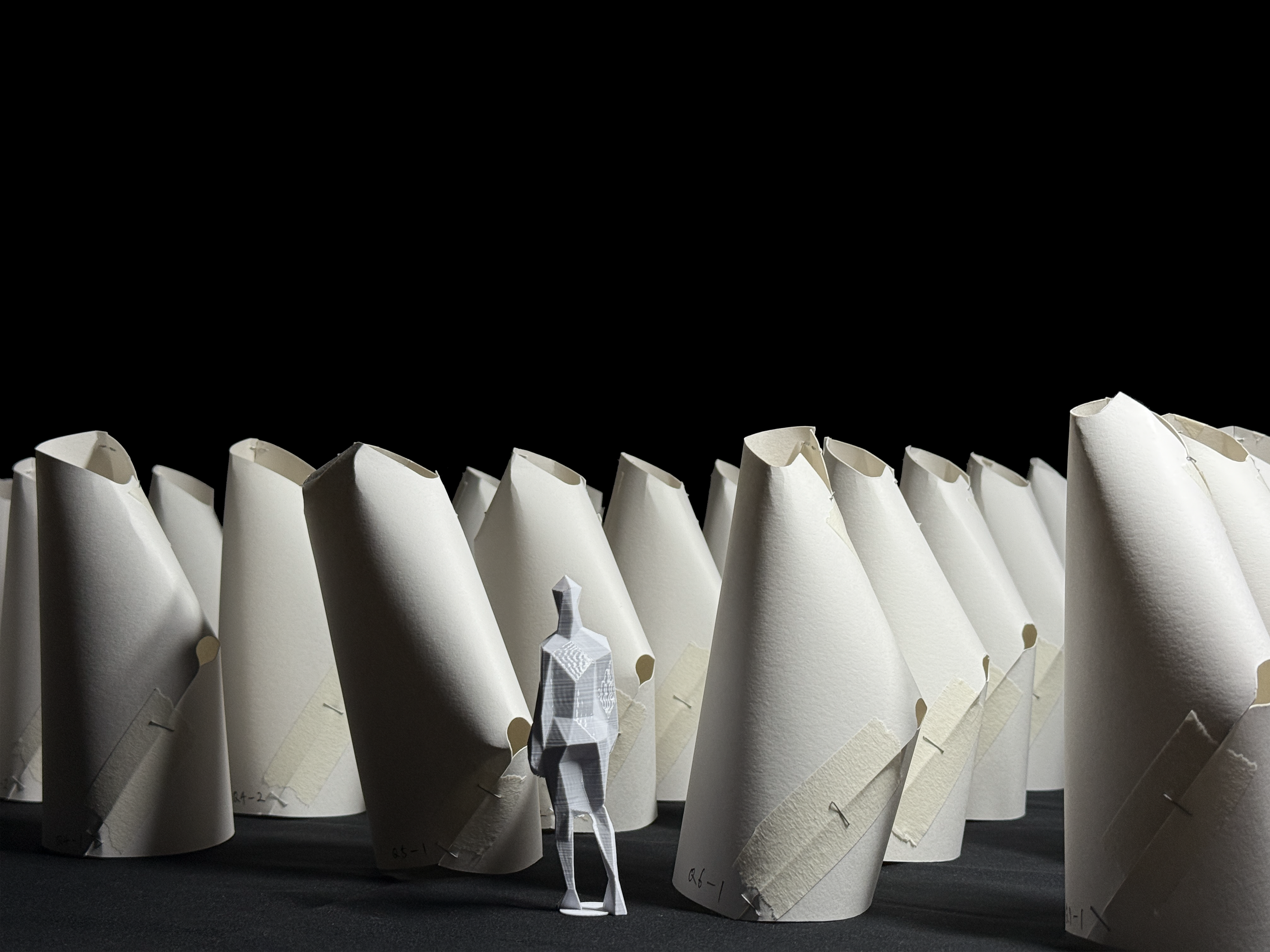
This study focuses on the role of materials and construction in the architectural pursuit of sustainability, examining how material and structural innovations throughout architectural history have generated new paradigms, while exploring the potential of lightweight and flexible materials. As a follow-up to previous research on active-elastic structures, the study investigates the material and constructional development of active-elastic surface techniques using large continuous-fiber composites. In particular, it explores the possibility of expanding one of the three architectural archetypes—the column—as a primordial architectural element through the fabrication of a prototype.
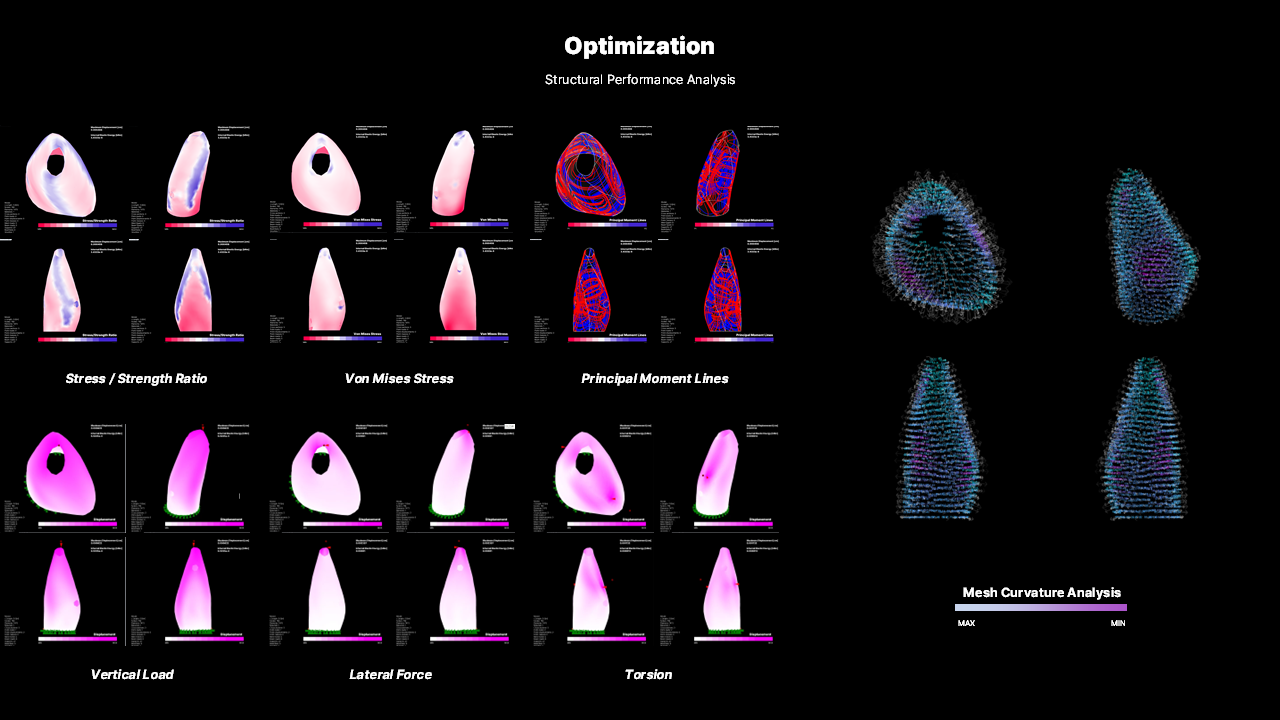
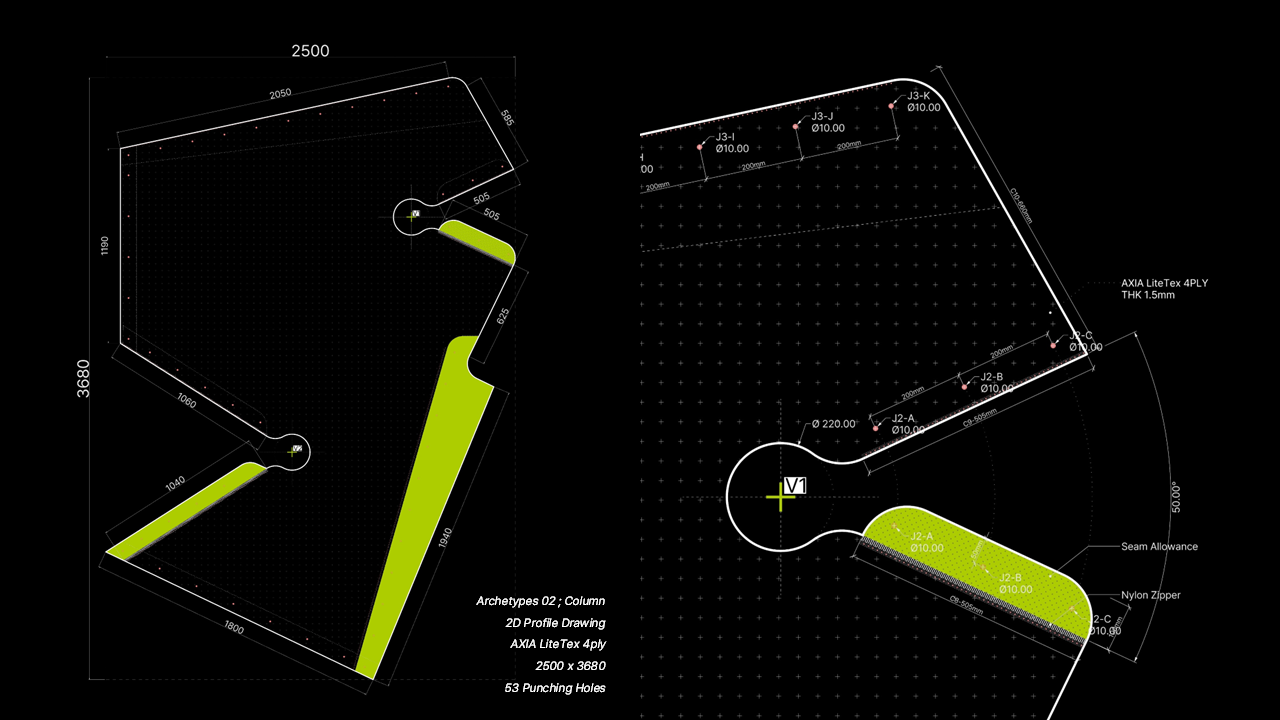
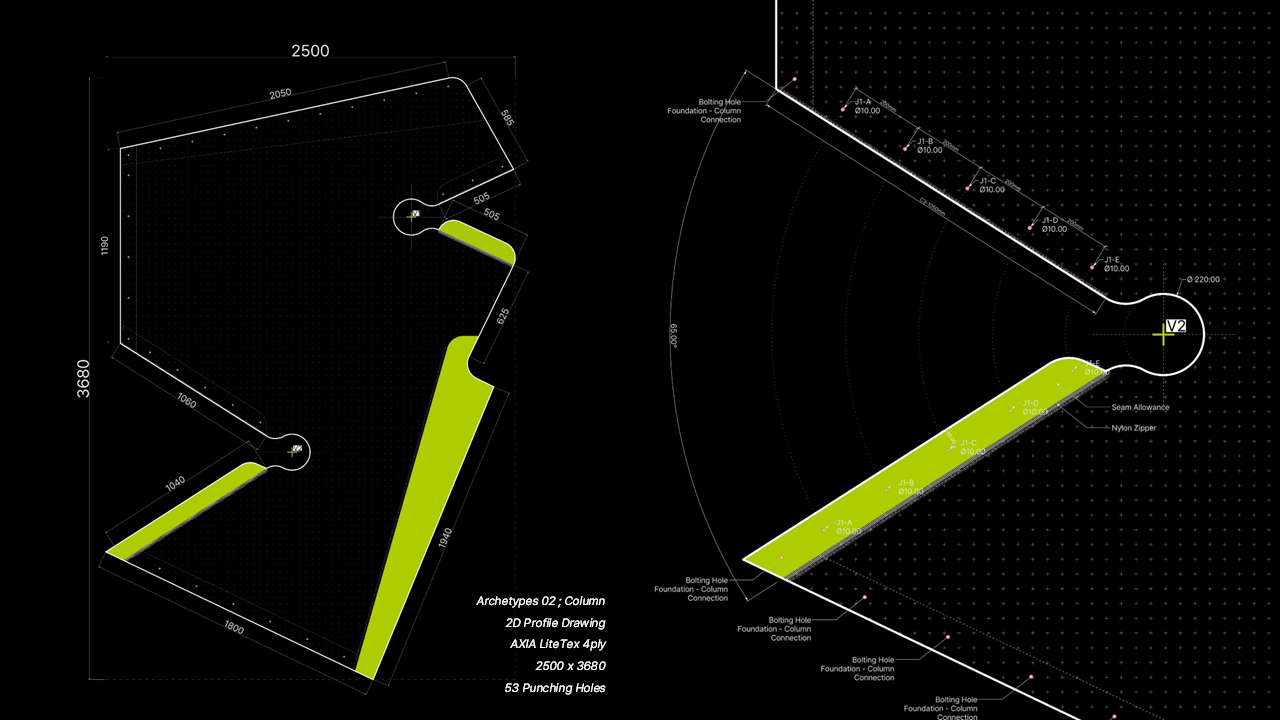
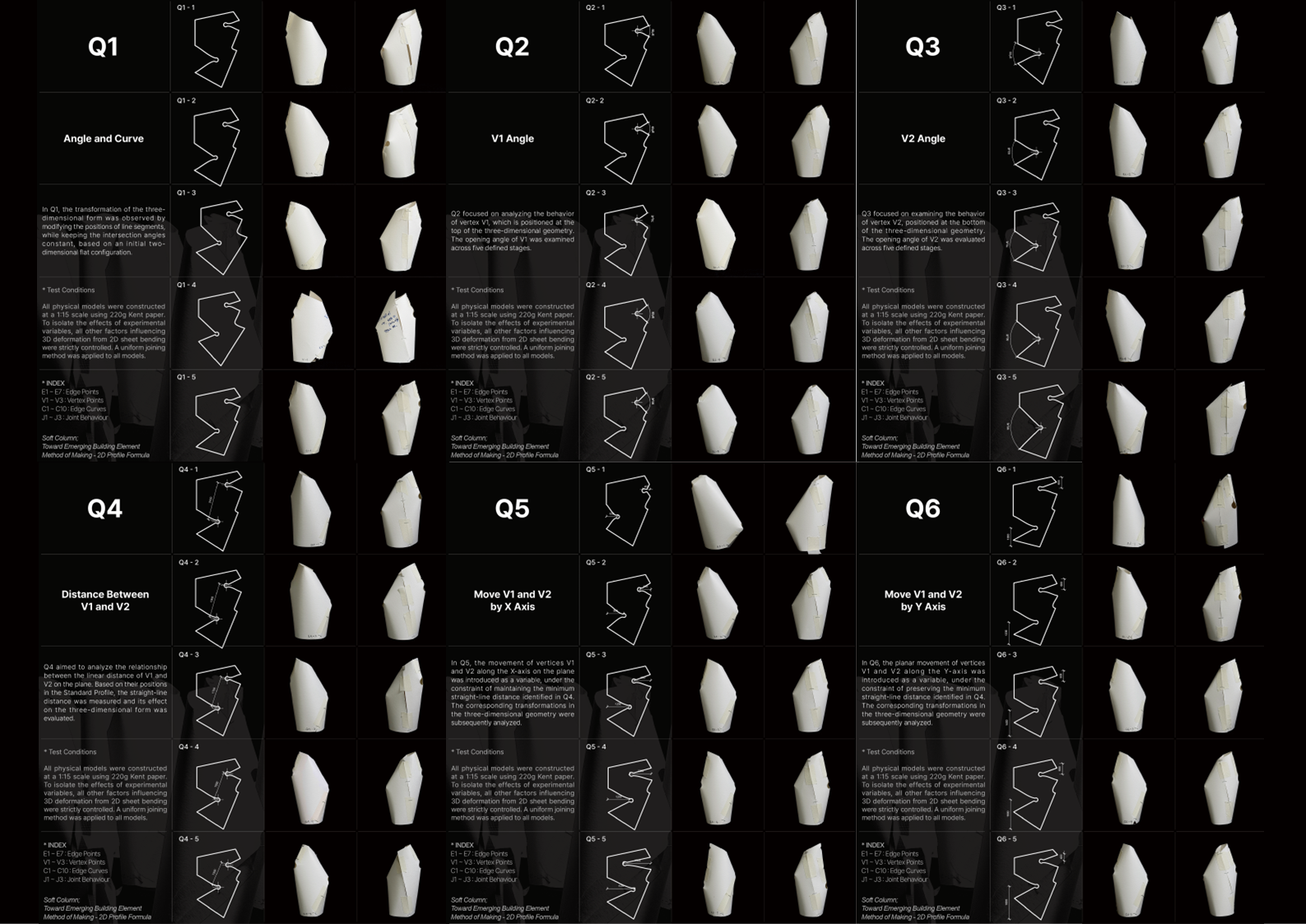
To enable a continuous-fiber composite of approximately 1.5 mm thickness to function as a vertical load-bearing member, the study derives a new geometric configuration termed the Multi-Vertex Conical Shell. This configuration is developed and validated through a multilayered process comprising material property investigation, geometric construction, optimization and structural verification, and fabrication, all grounded in a material-based computational design methodology. Digital simulations and physical prototyping were employed to substantiate its performance.
Architectural structures realized with lightweight and flexible materials significantly reduce environmental impact across their entire life cycle—including fabrication, processing, transportation, assembly, disassembly, and reuse—compared with traditional building materials. Through the exploration of materials and construction, this study aims to propose adaptable architectural typologies that respond to rapidly evolving societal needs, thereby establishing a foundation for pioneering new architectural paradigms.