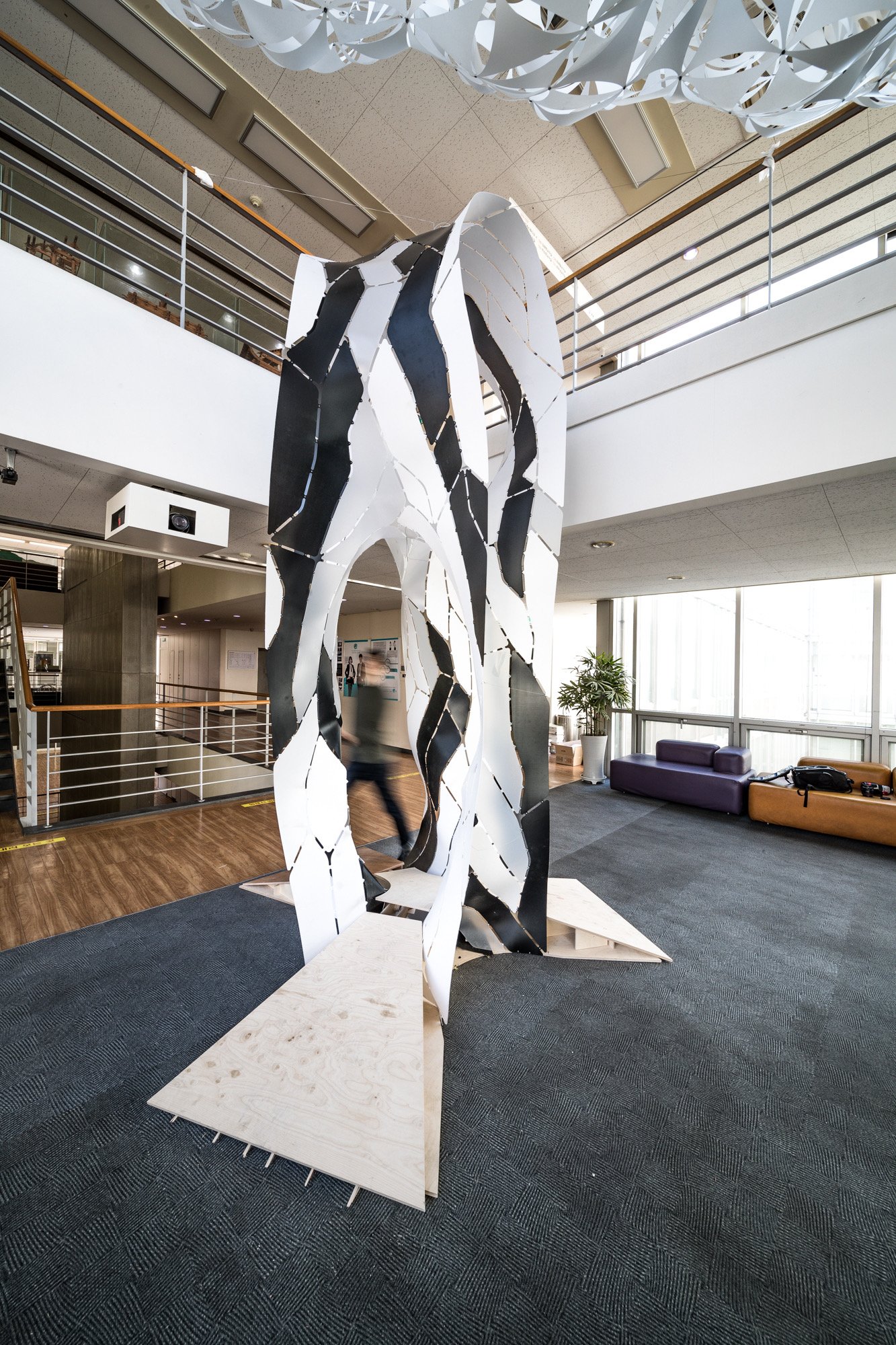
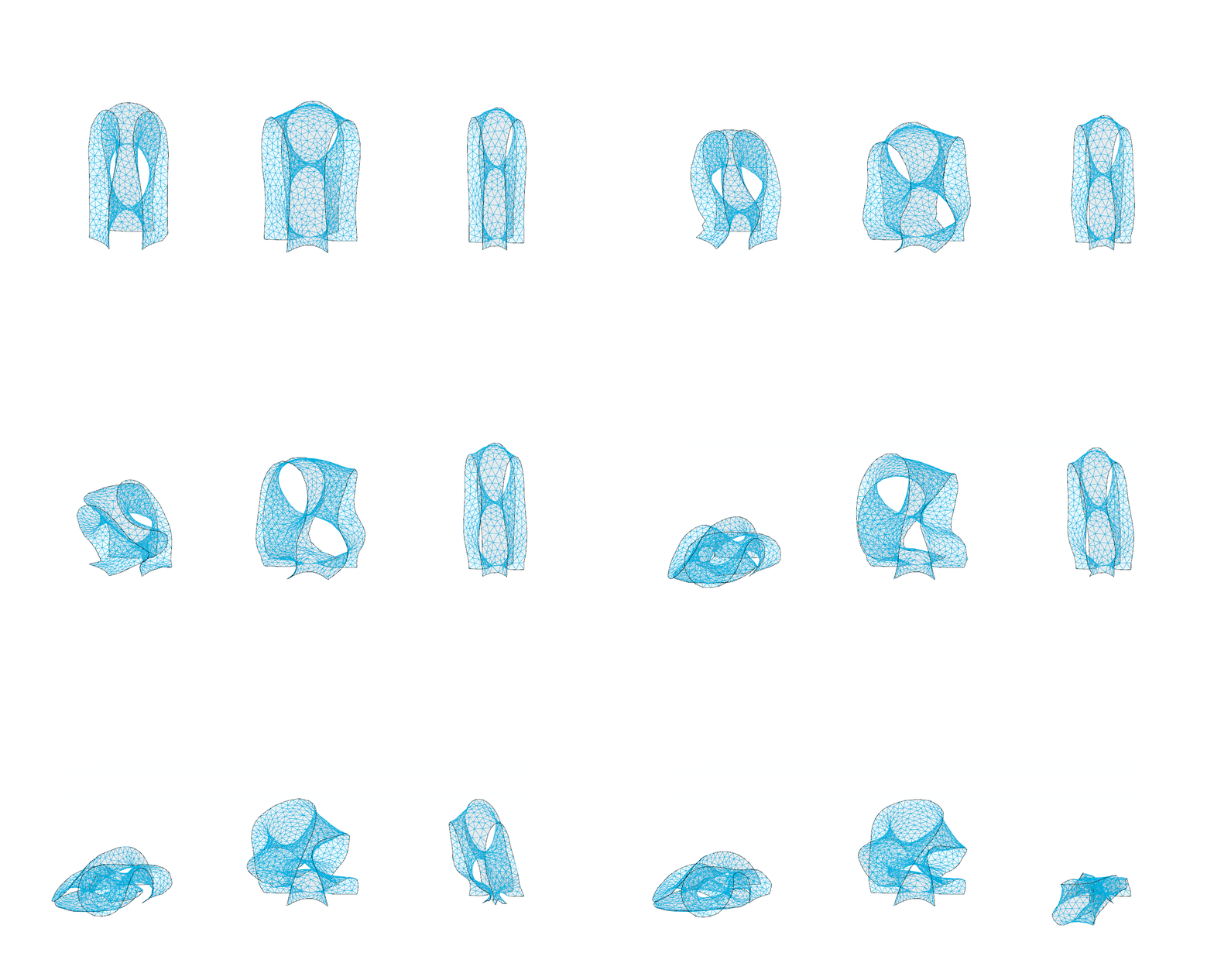
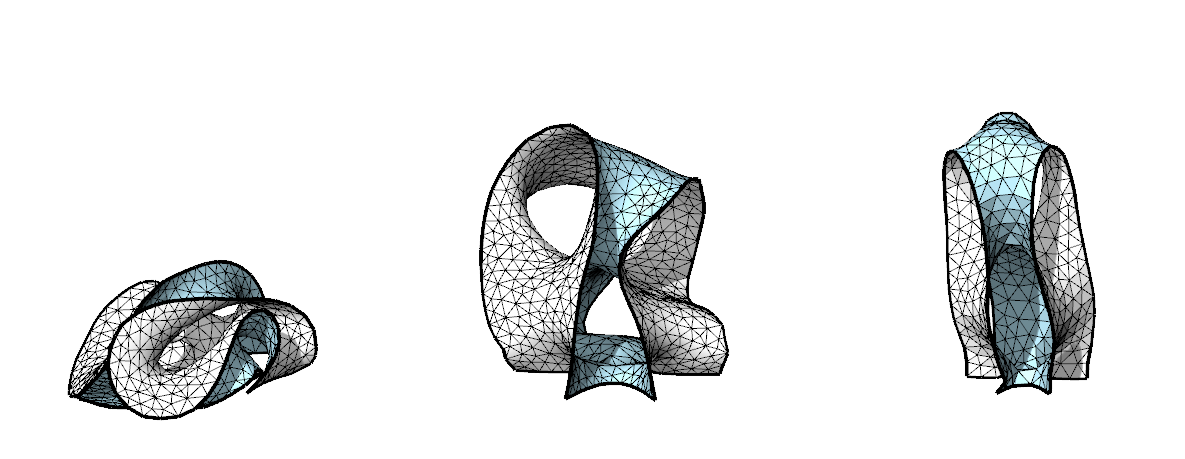
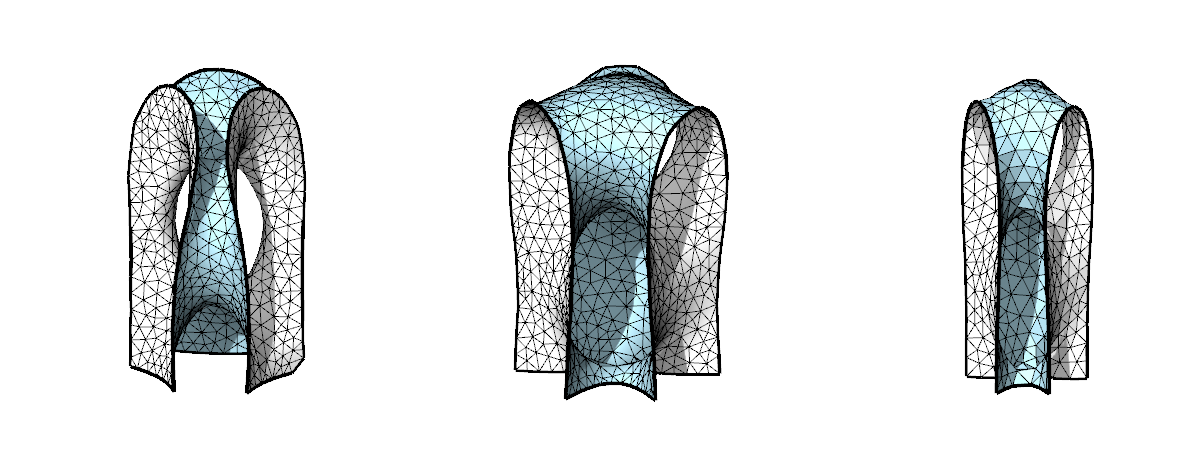
Pattern Tree is a computational design and fabrication study that explores how external forces and material behavior can generate architectural form. The project begins with a simple UV surface and applies digital form-finding techniques to create a global geometry shaped by two main forces: bending force along the outer edge and elastic force within the inner surface. Through this process, the surface is not treated as a fixed shape, but as a result of interaction between force, matter, and geometric constraints.
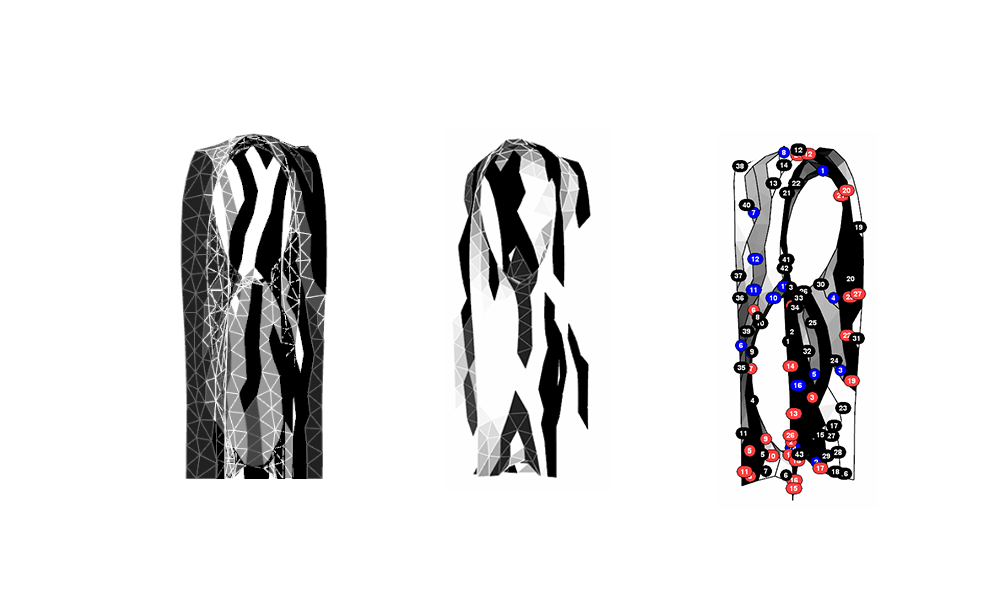
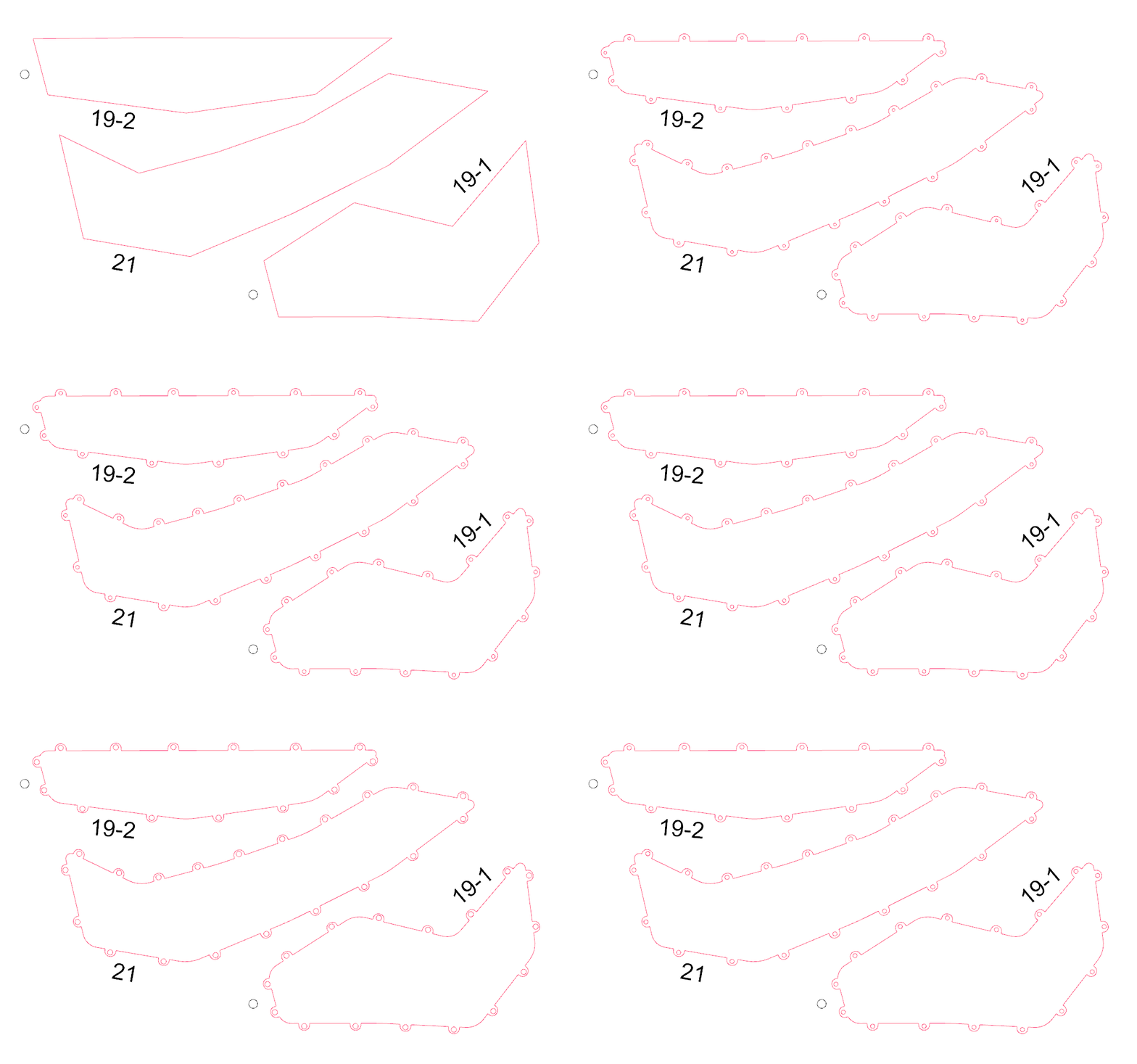
After defining the global geometry, the project translates the complex surface into a fabrication-ready system. The mesh is rebuilt and optimized, while gravity simulations are used to identify structural weak points. The surface is then divided into strip-based components, with the directionality of the strips controlled through the Steiner Tree algorithm. This allows the complex form to be organized into readable patterns that can be cut, labeled, and assembled at full scale.
The project also tests joints and flaps as connection details between strips, combining digital modeling with physical mock-up studies. Overall, Pattern Tree demonstrates how computational tools can connect form-finding, structural behavior, pattern generation, and fabrication into one continuous design process. It proposes a lightweight and efficient method for producing complex curved surfaces through material logic and digital control.
Related Research