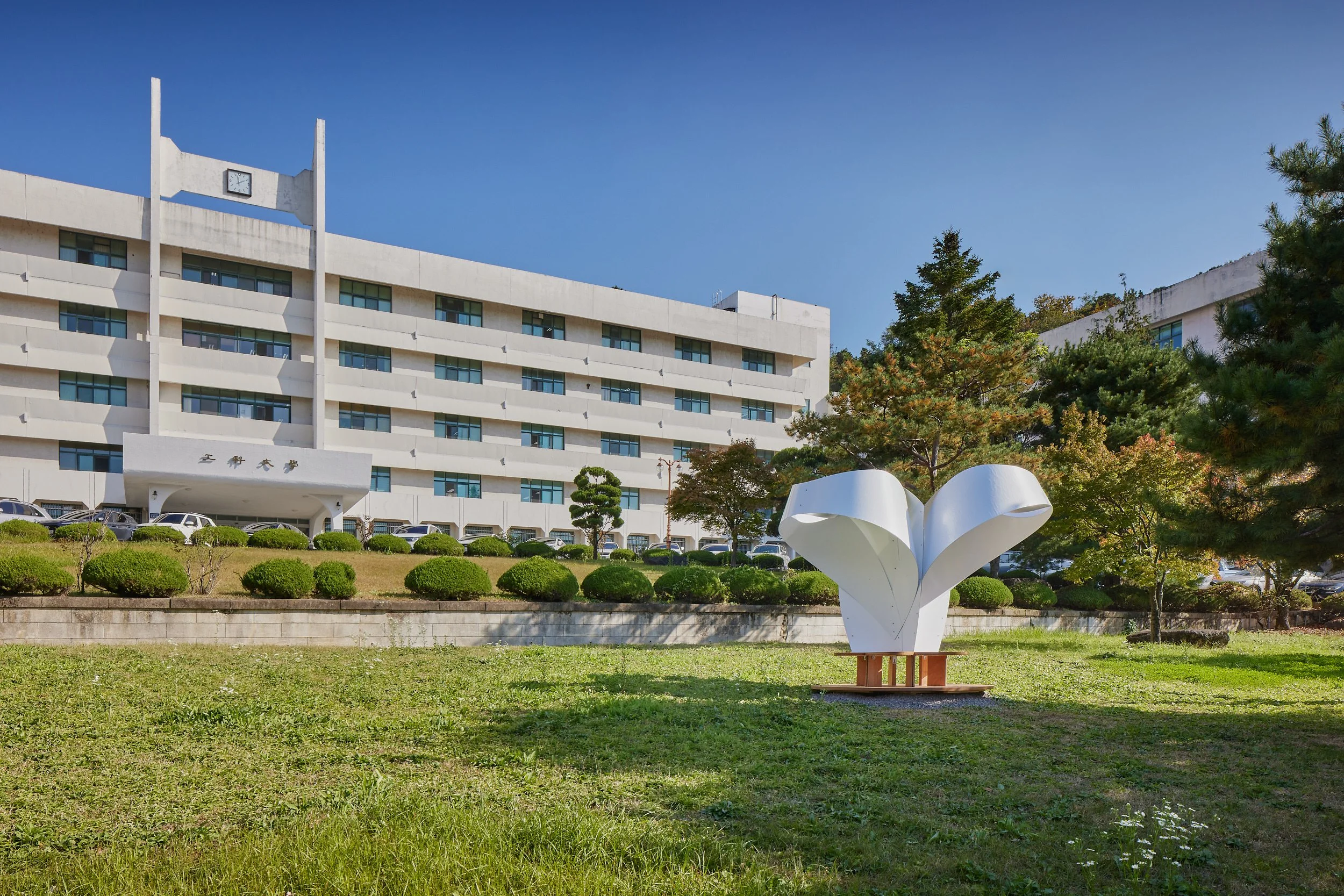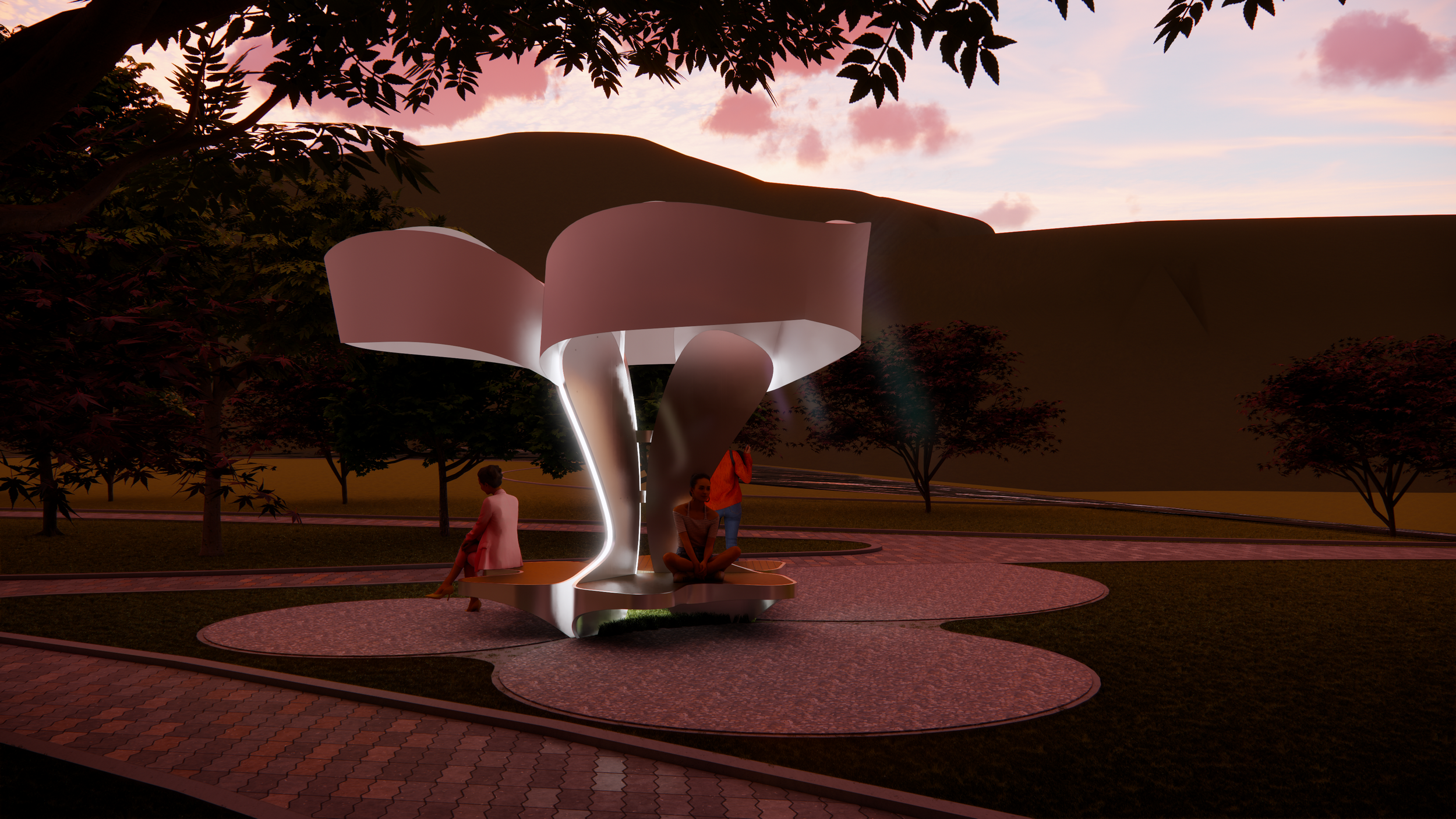
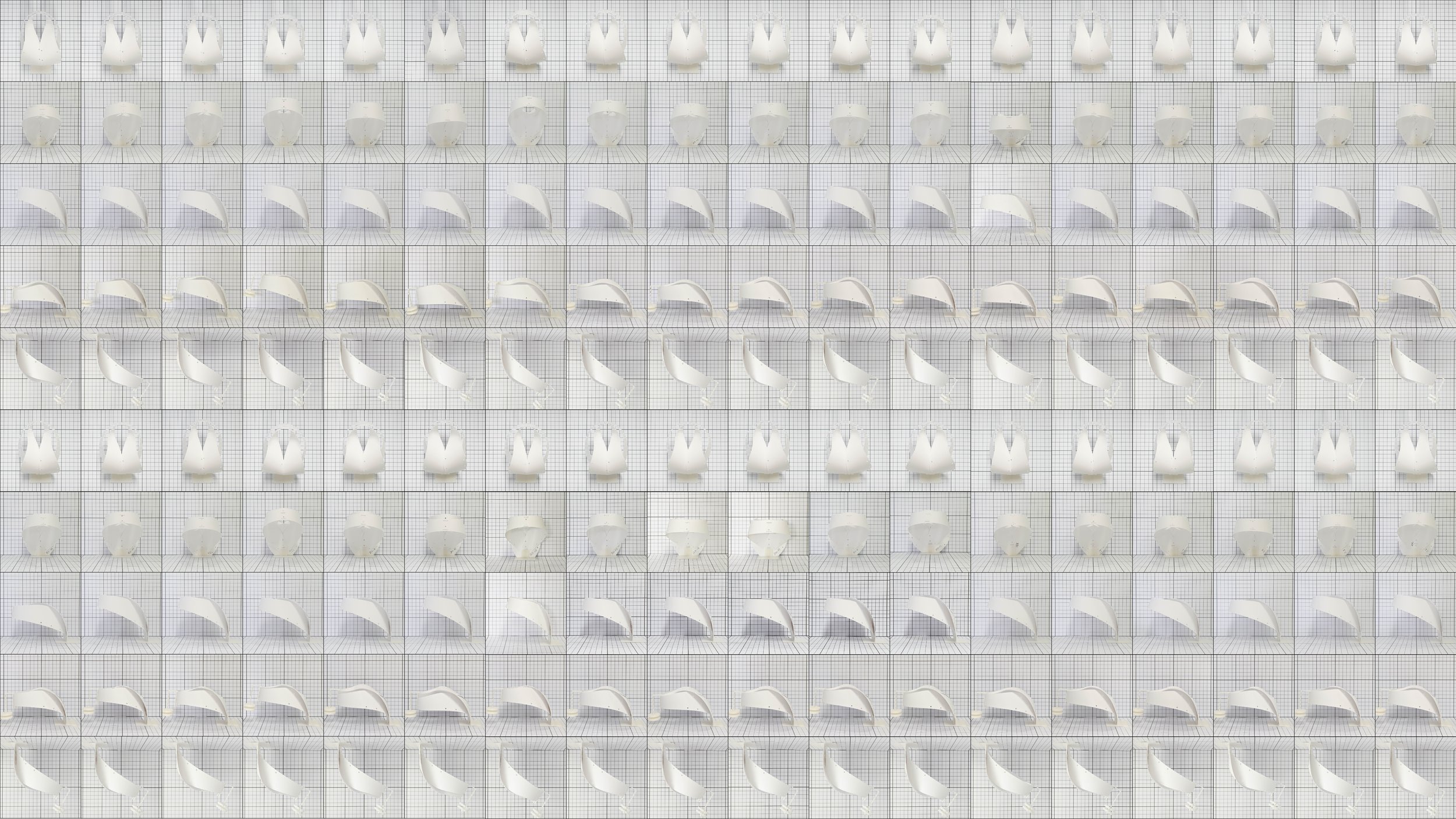
This study explores the architectural application of active elasticity in continuous-fiber composite materials through a Bending-Active Research Pavilion using AXIA LiteTex. Rather than designing a pavilion as a fixed sculptural object, the research develops a process in which flat composite sheets are cut, bent, connected, simulated, and fabricated into a lightweight three-dimensional structure.
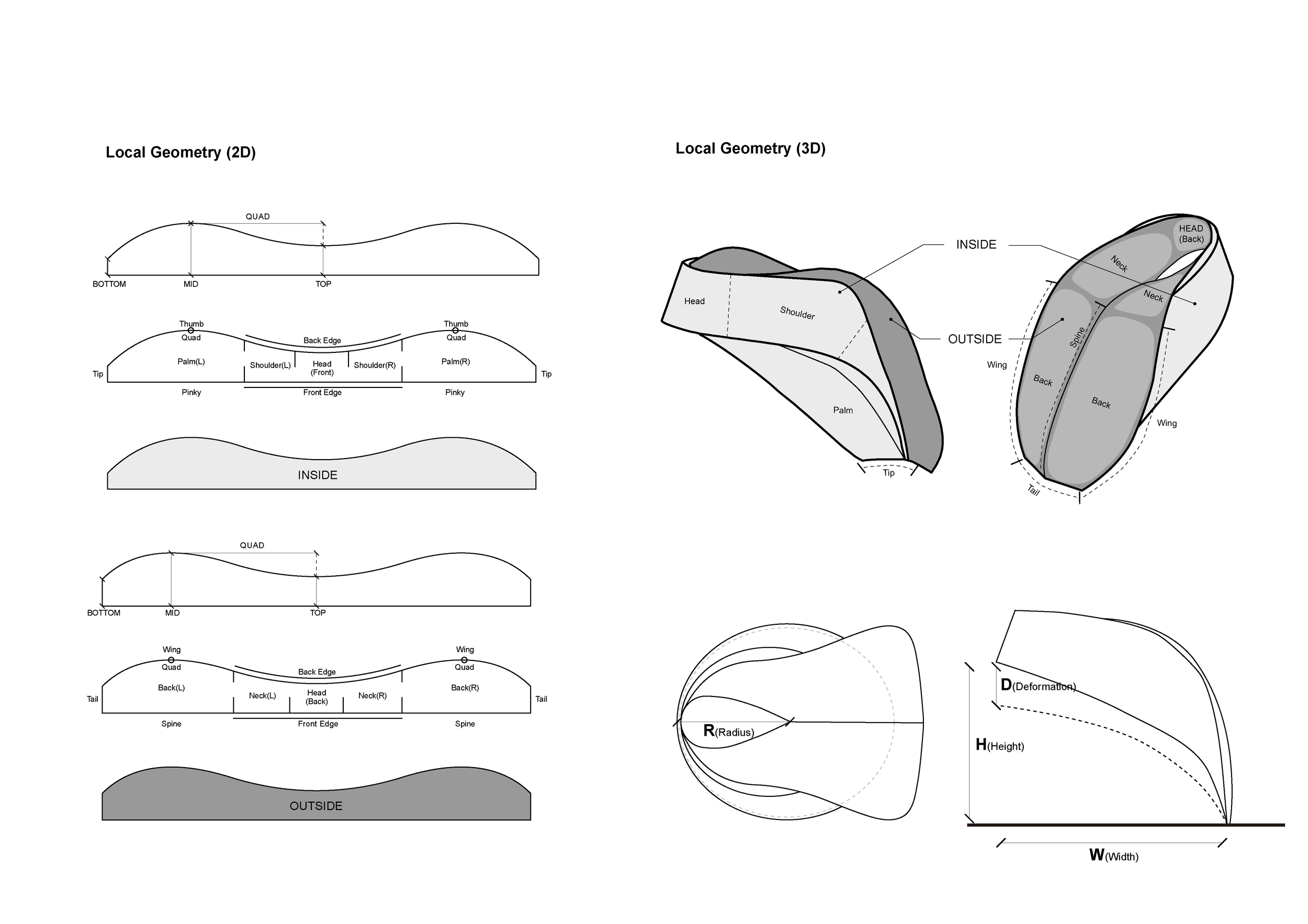
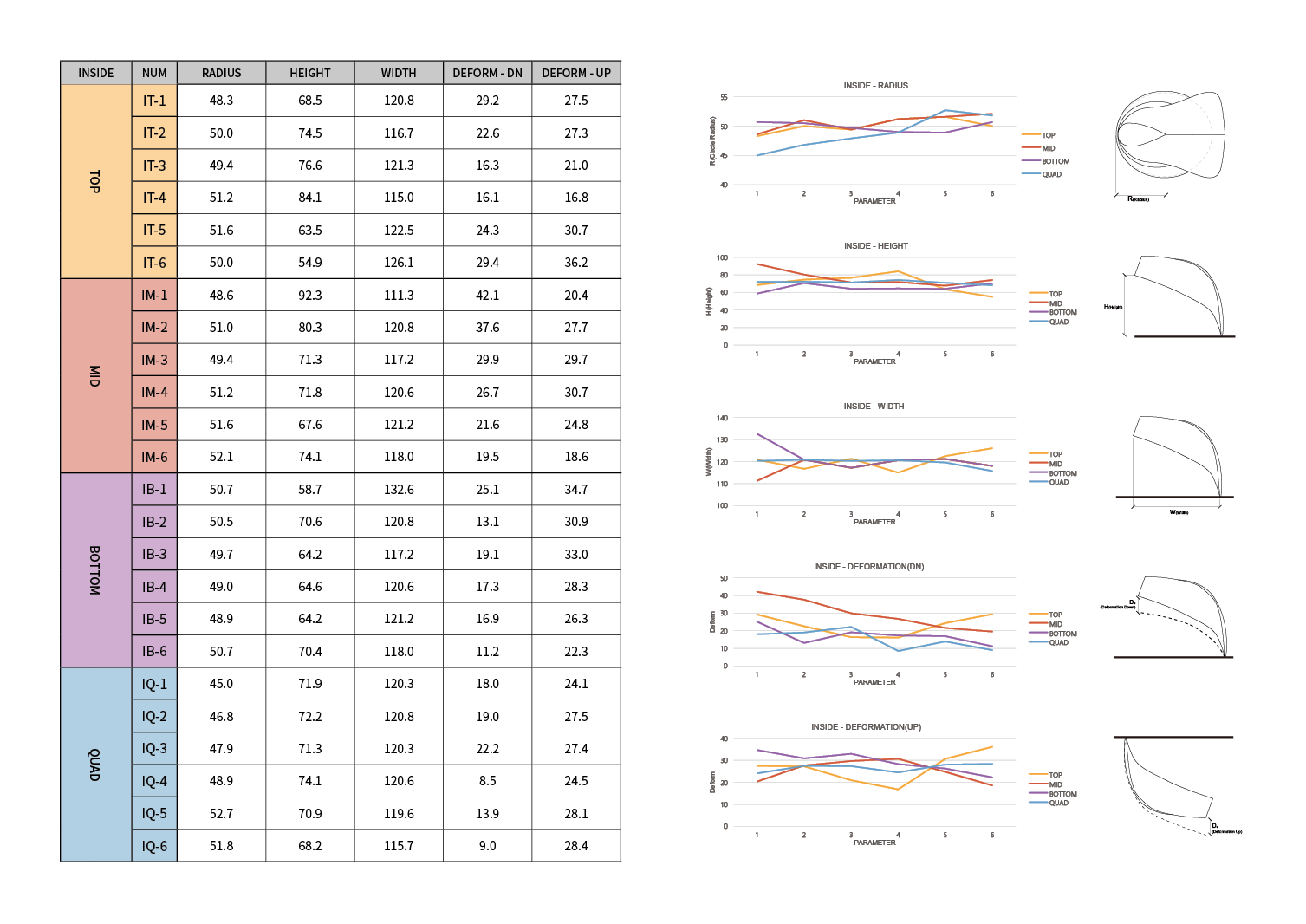
The research is organized into seven phases: local geometry tests, multi-parameter tests, global geometry combinations, LiteTex material tests, digital simulations, fabrication-detail studies, and final fabrication process review. In the early phases, planar parameters such as Top, Mid, Bottom, and Quad are tested to understand how two-dimensional sheets transform into three-dimensional bending-active geometries. The study identifies the Quad relationship between the inside and outside strips as a major factor affecting radius, height, width, and deformation.
Based on these tests, selected global geometries are further examined using LiteTex 2-ply, 3-ply, and 4-ply models to evaluate self-weight, deformation strength, bending radii, and structural feasibility. The study then integrates Kangaroo-based form-finding, Mesh Curvature and Vector/Sphere simulations for bending-radius analysis, Karamba3D shell displacement analysis, and 3D scanning-based digital twin methods for site installation planning.
The later phases focus on fabrication details, including joinery systems, edge cladding, foundation and anchoring strategies, and surface pattern studies. Overall, this research is significant because it connects material behavior, geometric logic, digital simulation, and full-scale fabrication into one integrated architectural workflow.
Year : 2024
Type : Pavilion
Status : Completed
Project Team : I.f Convergence Design Lab
Principal Researcher : Seungil Kim, Gwangeun Hwang
Project Assistant : Dongheon Lee, Jinsan Ryu (DAKHU)
Supported by : AXIA Materials, Kolon Global
Related Project