• Works
  • Research
  • News
  • About
  • Contact
Menu

I.f

  • Works
  • Research
  • News
  • About
  • Contact

SEORAE SALON

April 18, 2025

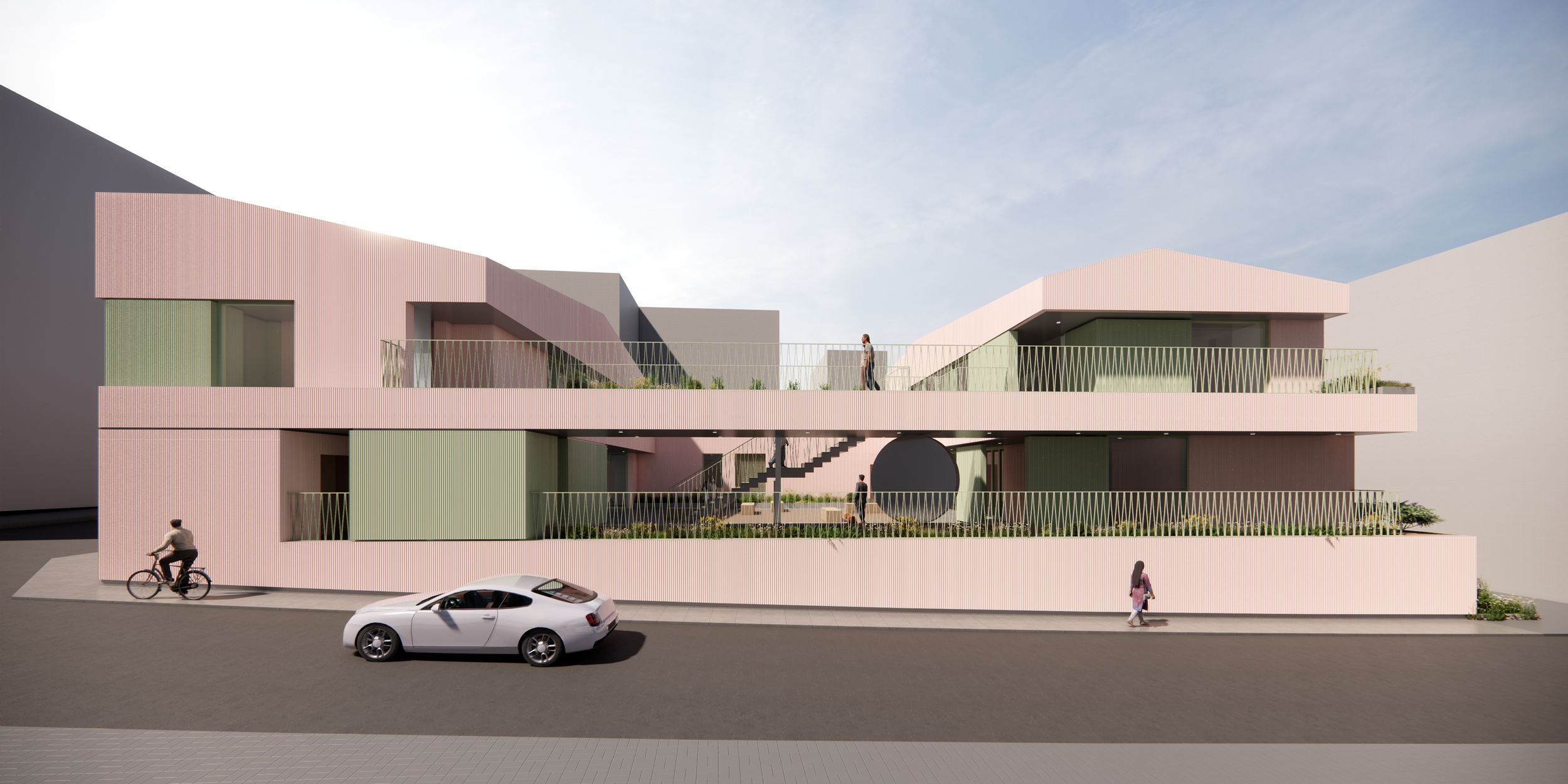
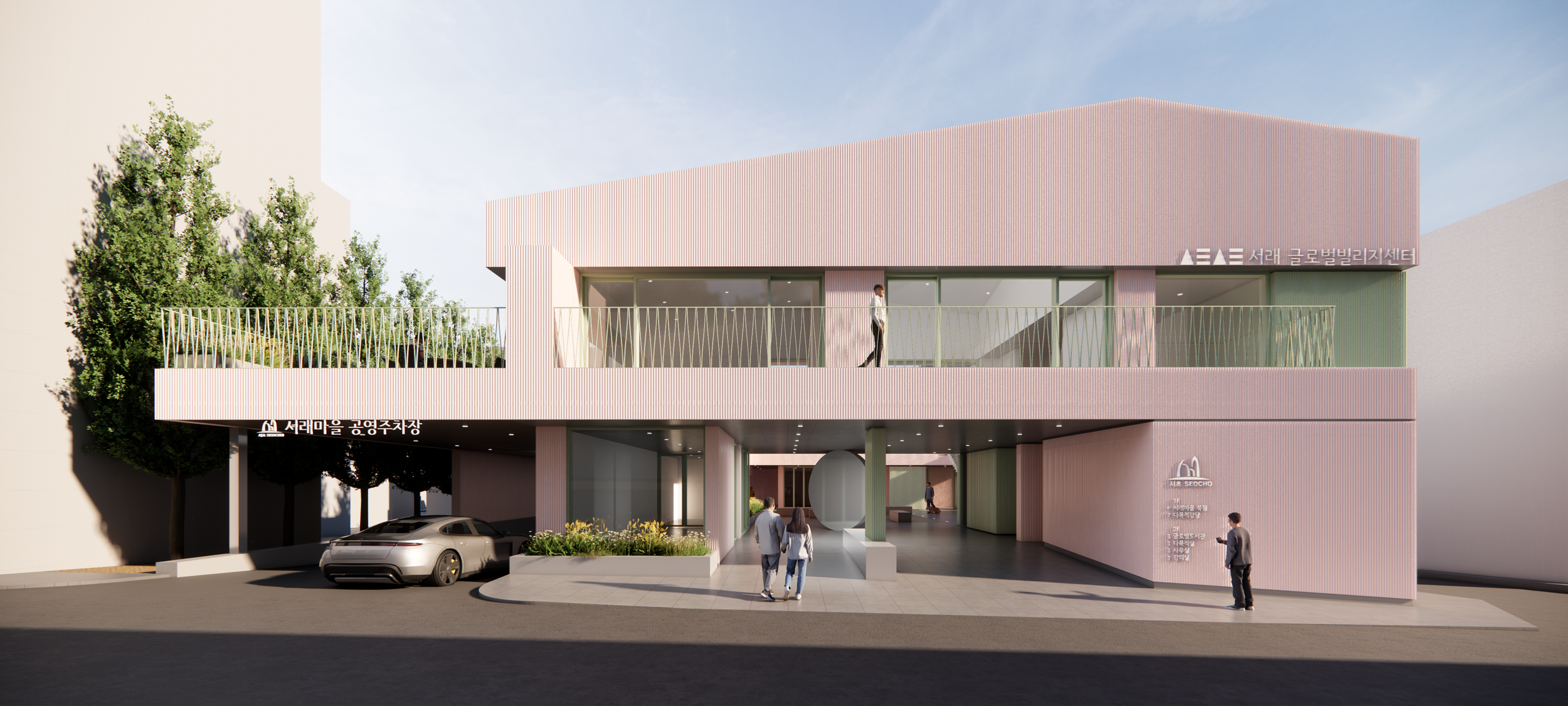
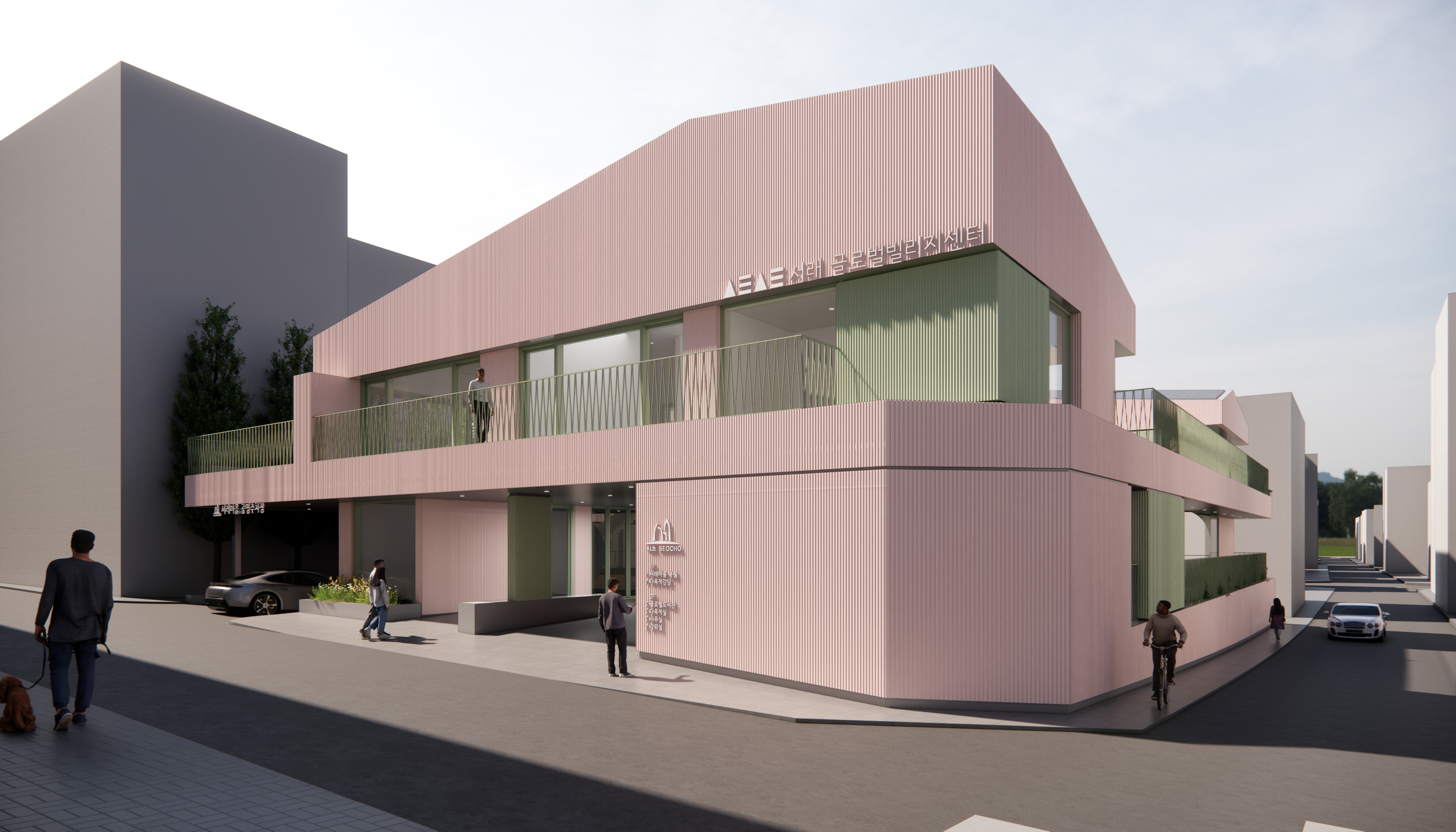
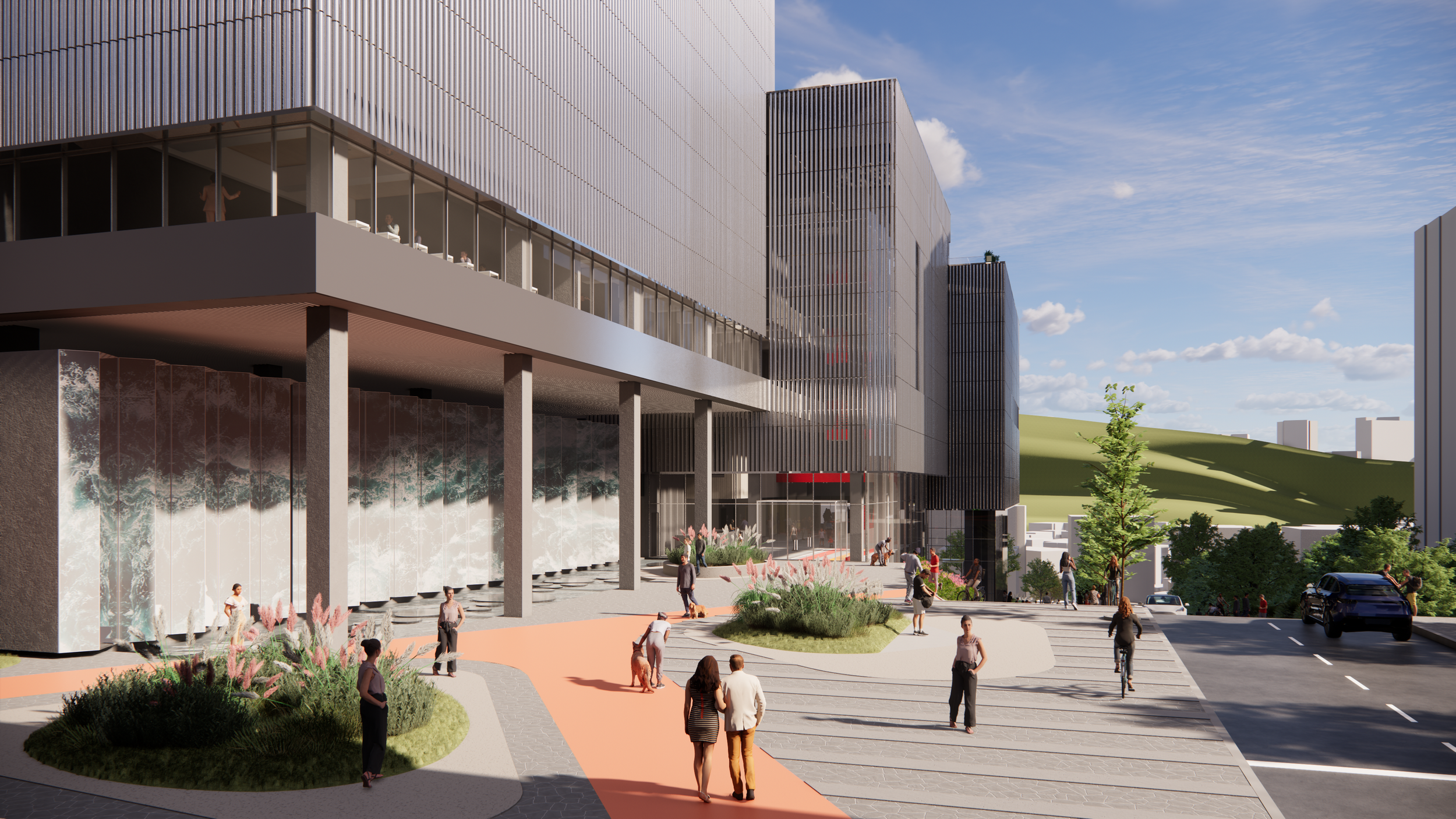
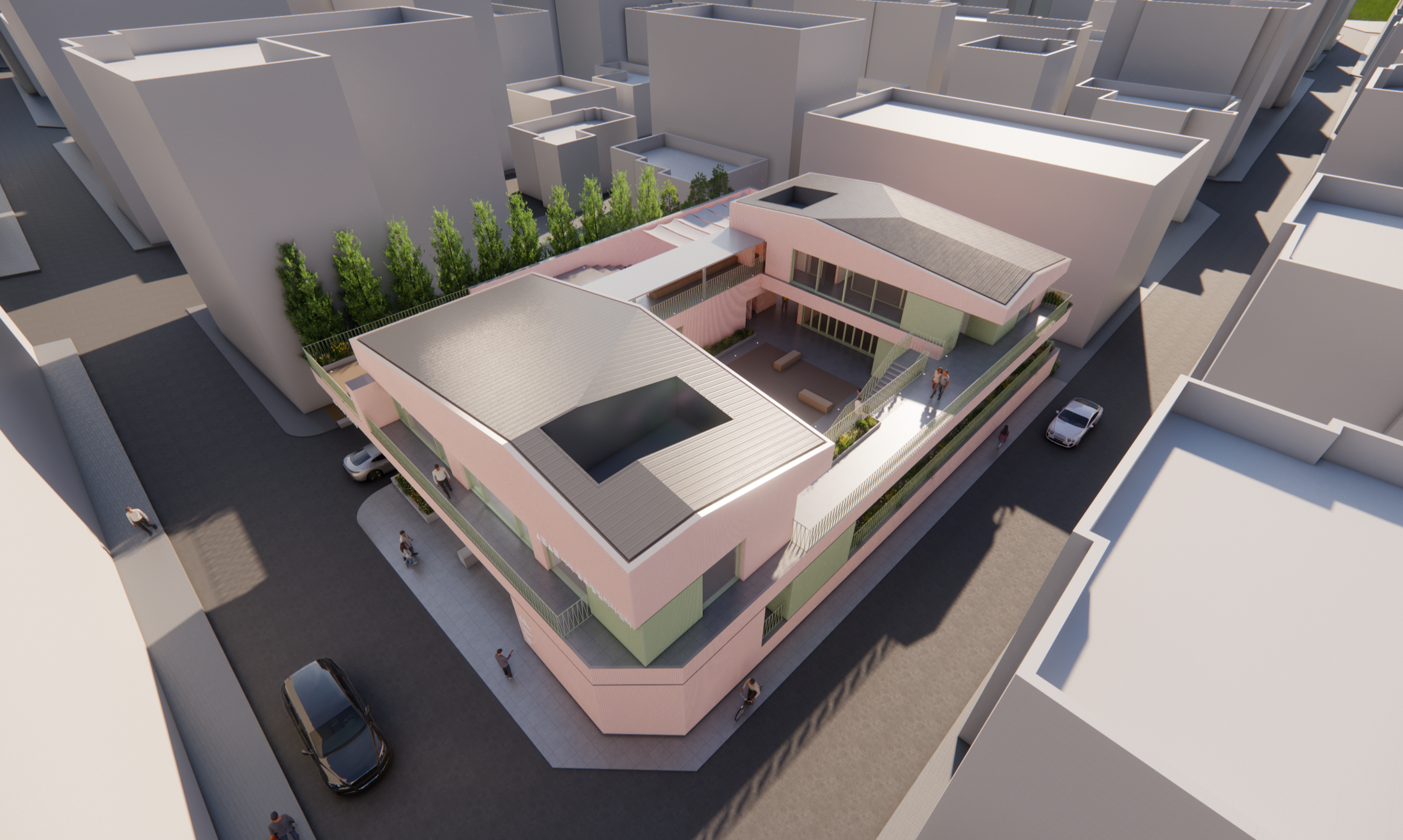
The ambitious expansion and relocation project for the Global Village Center in Seocho-gu involves transforming the above-ground open lot of an existing underground public parking garage into a dynamic, integrated facility designed for the shared use of Seorae Village residents and its numerous multicultural families. The final structure consists of two distinct wings, which will be functionally and visually unified by a connecting second-floor deck.

On the first floor, a vast public open space will be created, featuring both a specialized “Bookworm” bookstore and a library that intentionally blurs the line between the building’s interior and exterior, promoting community engagement.

Furthermore, a highly innovative design element is the canopy covering the vehicle ramp to the subterranean parking lot, which is cleverly repurposed as a terraced/stepped community resting area, providing an accessible and distinctive public amenity where residents can pause, socialize, and observe the surroundings.


Year : 2025

Location : Seoul, Korea

Size : 728.90 m²

Status : Ongoing

Type : Community Center

Principal in Charge :

Seojoo Lee, Hyojung Kim (I.f), Dongil Kim (I.f CDL)

Design Team :

Suyeon Seo, Chaeyoon Chang, Suhyeon Kim, Jeonghan Chae (I.f), Seungil Kim, Gwangeun Hwang (I.f CDL)

Collaboration : 위치건축사사무소

Tags Project, Ongoing, Cultural, Community

SEOUL MULTI-PURPOSE SPORTS CENTER AND CHILDREN'S PARK

September 13, 2024

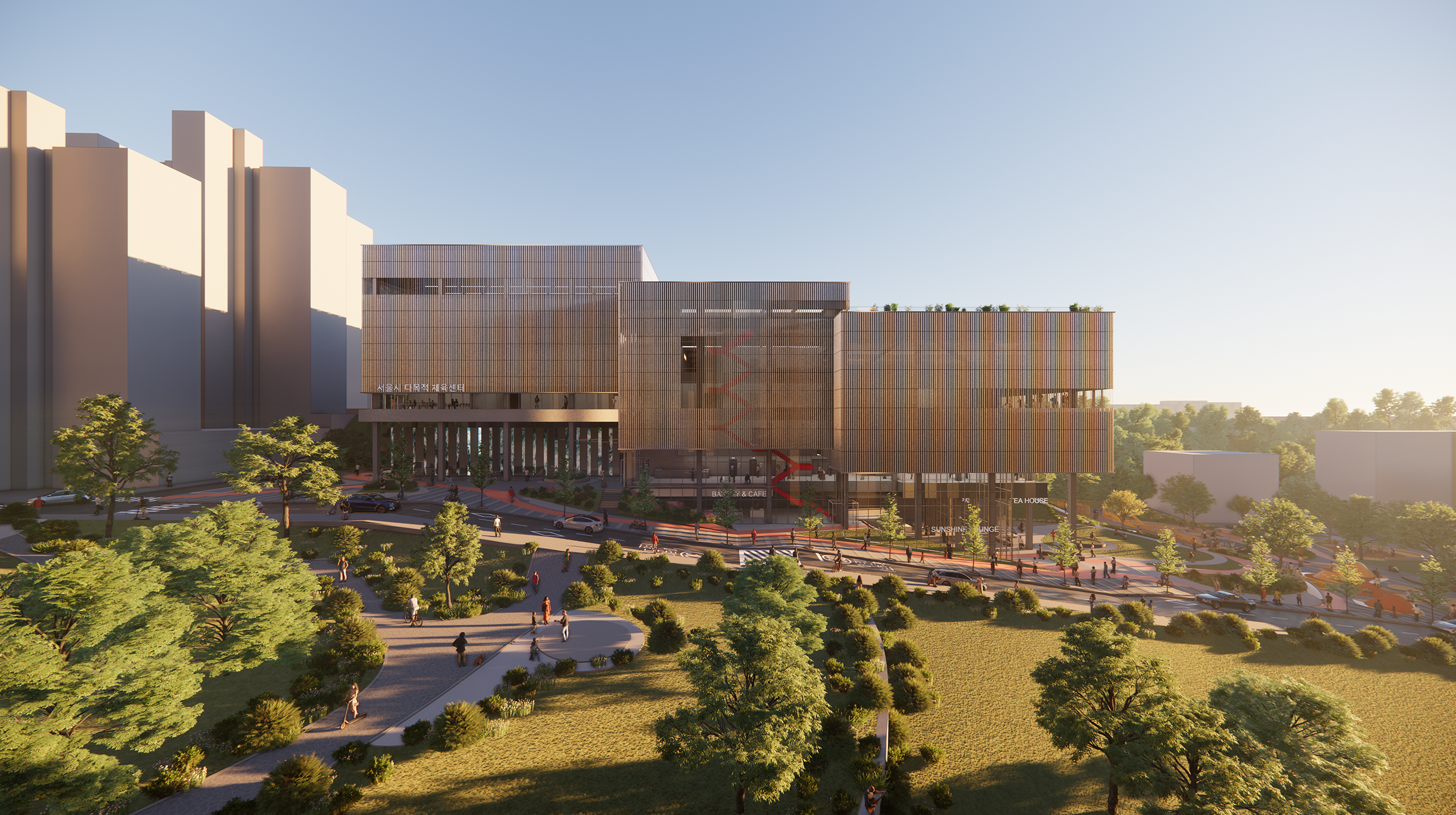
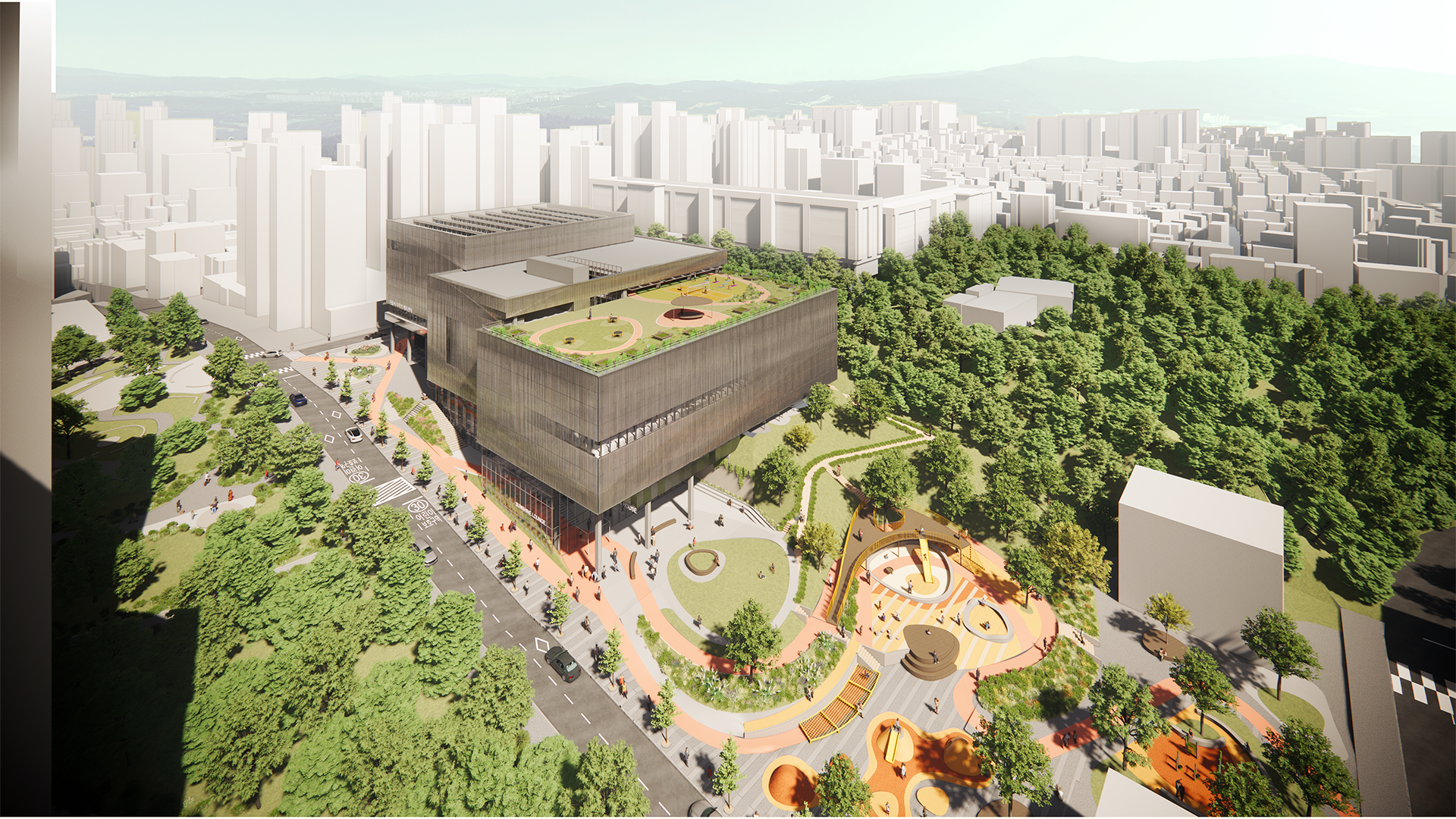
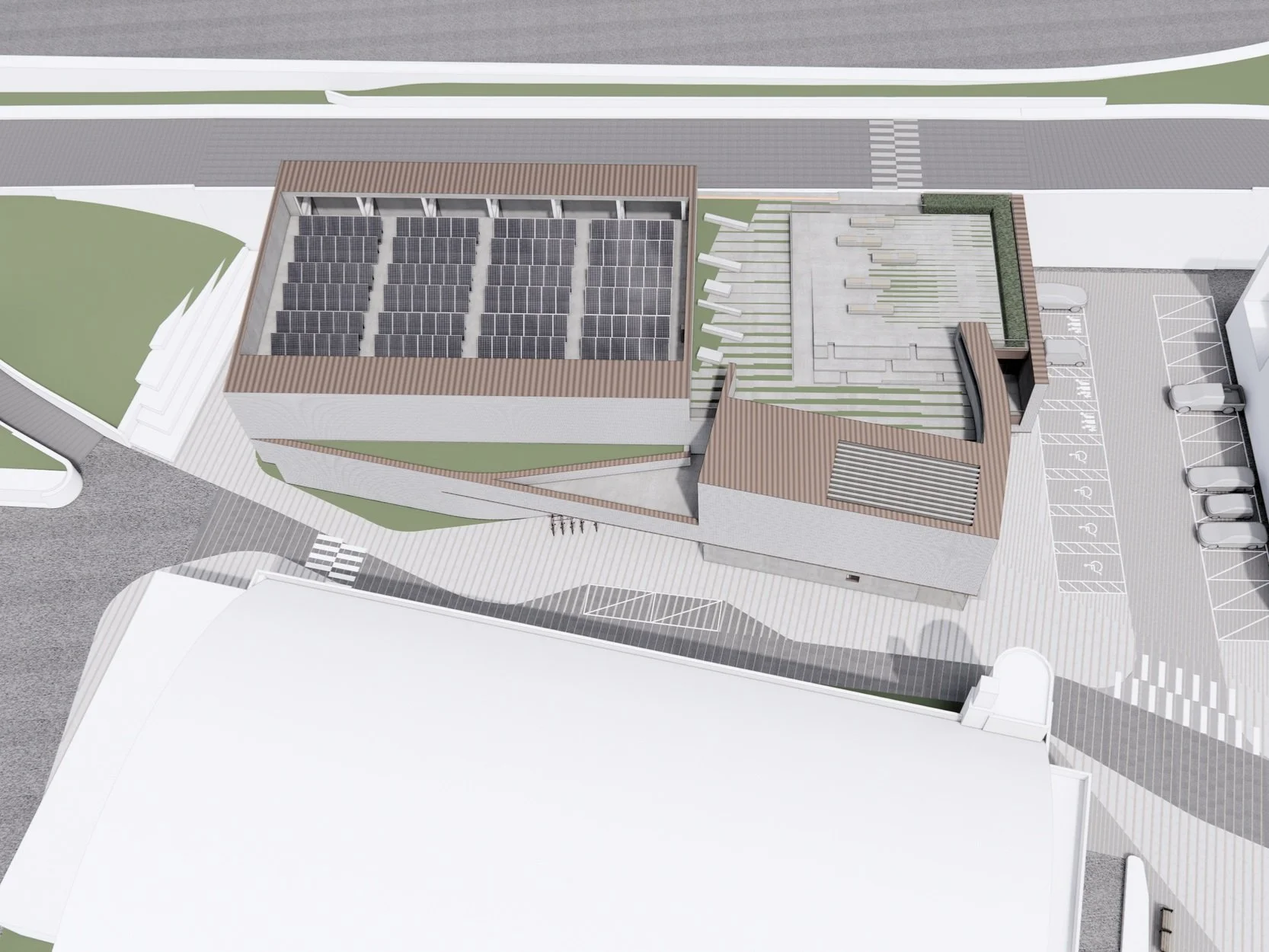
As society evolves toward prioritizing individual quality of life, the specialization of community-based sports facilities is also accelerating. Bangbae-dong Redevelopment Zone 5, once a hillside densely packed with small residential buildings, has transformed into a large-scale, high-rise, luxury residential complex. Amid this dramatic contextual shift, this multipurpose sports center is located at the northern slope of Isu Middle School, tucked within the inner edge of Zone 5. It serves as a multifunctional space for local residents' athletic activities and leisure. In the changing urban fabric, the sizable sports facility maintains a quiet presence without drawing unnecessary attention to itself.

To maximize the site's topographical features, a series of three-dimensional public spaces that naturally connect to the adjacent children’s park have been placed on the ground level. Meanwhile, a large swimming pool and multipurpose gymnasium are elevated above this public area. The swimming pool, with eight 50-meter lanes, is designed to accommodate professional swimming competitions as well as community swimming lessons. The multipurpose gymnasium, equivalent in size to two basketball courts, offers a versatile space for basketball, volleyball, badminton, and various local events. Despite its considerable size, the upper mass of the sports center harmonizes with its surroundings, presenting a calm and understated exterior. The building’s interior, while modest in its exterior expression, is vibrant and filled with natural light to support active and healthy athletic activities. Designed for maximum natural ventilation and sunlight, the interior ensures bright, fresh, and invigorating spaces for users.

The lower part of the building, accommodating various lobby levels, mechanical and electrical rooms, pool pits, and parking facilities, is constructed using an RC (reinforced concrete) frame structure. The central section, housing the vertical cores and support facilities for the pool and gymnasium, also employs RC framing. The large-span spaces, such as the gymnasium and swimming pool, are supported by lightweight steel trusses placed atop the RC frame, with mega trusses forming the external walls to resist lateral forces. This structural system is straightforward yet robust, comfortably housing both large and small programmatic spaces.

Situated atop a diverse array of external spaces that connect Dogo-meori Park to the newly established Half-Moon Park, this sports center actively integrates indoor and outdoor spaces with the children’s park. It provides an open, indoor public area for Seoul residents, serving as a space for health, vitality, and community engagement.

 

Year : 2024

Location : Seoul, Korea

Size : 14,985.95 m²

Status : Competition Entry

Type : Public Sports Complex and Children’s Park

Principal in Charge :

Seojoo Lee, Hyojung Kim (I.f), Dongil Kim (I.f.CDL), Minho Lee (func. Architects)

Design Team :

Seungil Kim, Gwangeun Hwang (I.f CDL)

Collaboration :

Architecture: I.f + TAAL Architects + func. Architects

Landscape: iL Landscape

Tags Project, Cultural, Sports, Community, Design Proposal

SUNSAN HEALING CENTER

November 16, 2023

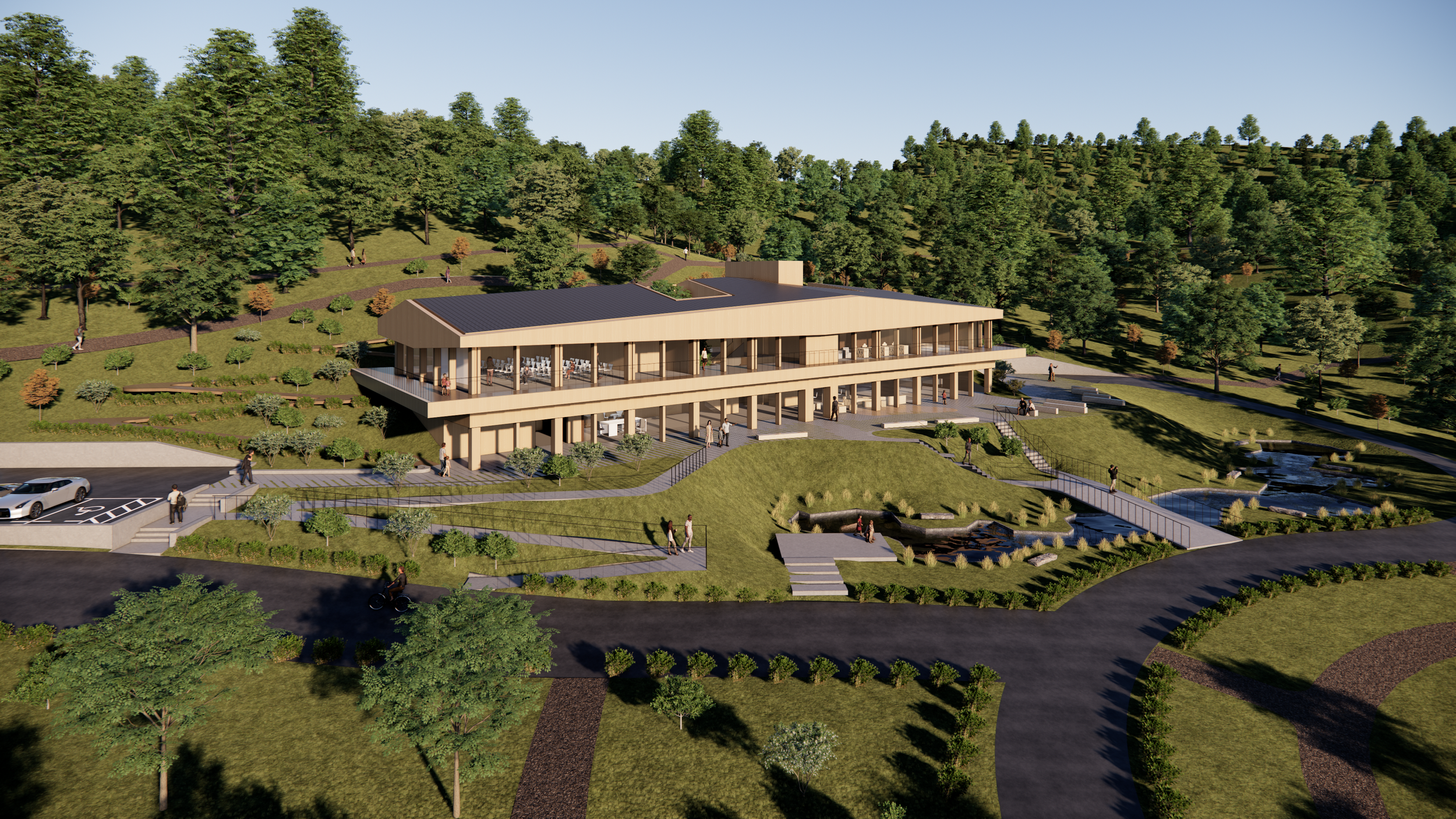
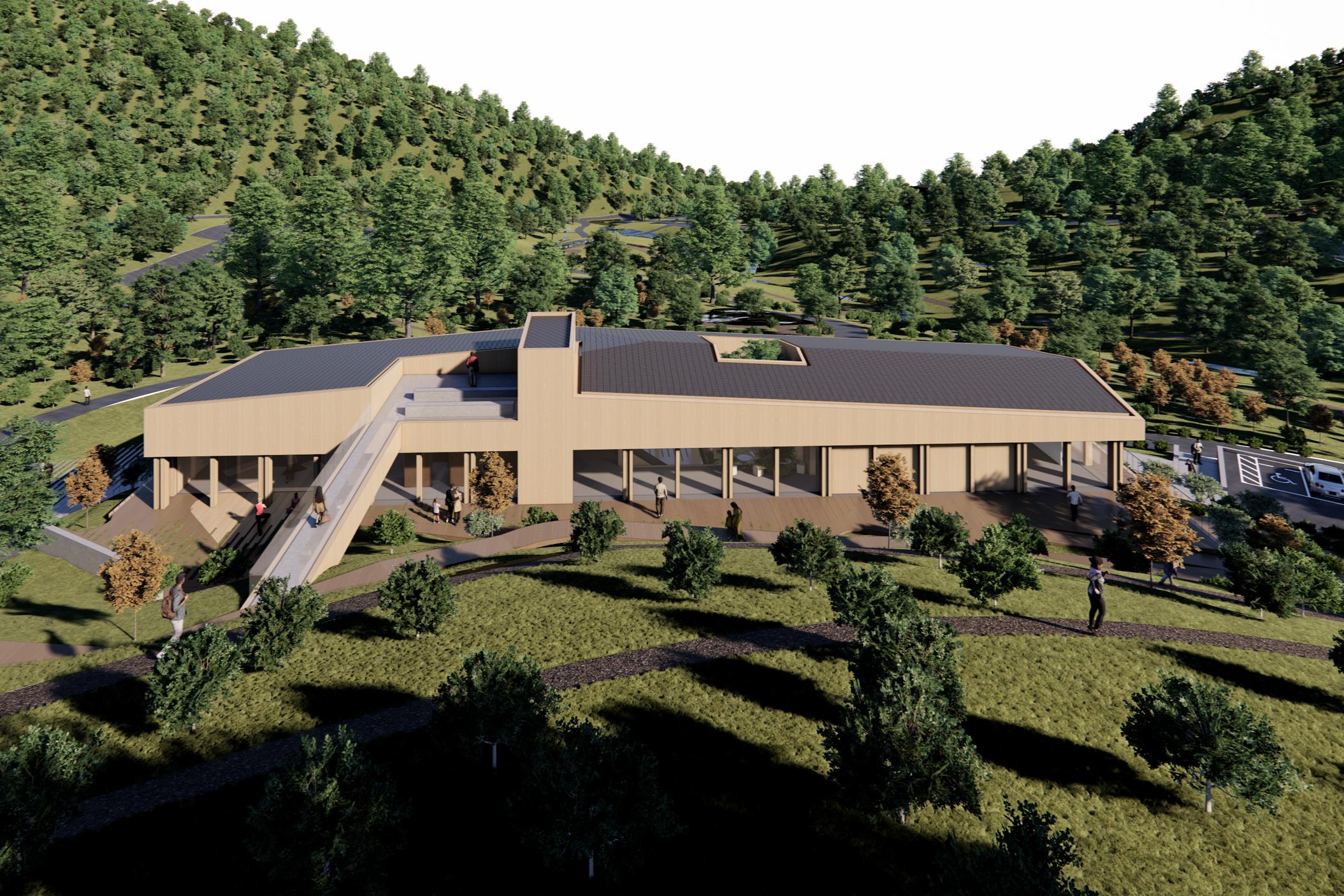
The Healing Center, part of the forest leisure town in Sunsan-eup, aims to secure recreational and restful spaces for citizens through the value of forests. It's designed to harmonize with the terrain while ensuring panoramic views of the woods below the mountainside without disrupting the landscape. Emphasizing a genuine natural environment, the center utilizes sloped areas, nestling the structures into the terrain and creating gently sloped roofs amid the forest canopy.

This space aims to offer diverse programs physically and visually connected to nature, reflecting the essence of a healing center. The design focuses on eco-friendly spaces and active integration between indoor and outdoor areas. Under low roofs akin to mountain birds, major program areas have separate outdoor spaces, fostering activities that harmonize with nature's flow. This envisioned Healing Center invites individuals to experience and enjoy nature while reflecting its tranquility and circulation within the space.


Year : 2023

Location : Kumi, Korea

Size : 4,325 m²

Status : Competition Entry

Type : Cultural

Principal in Charge :

Seojoo Lee, Hyojung Kim(i.f), Dongil Kim (Kyung Hee University), Minho Lee (func. Architects)

Design Team: Seungil Kim, Suhyun Im

Tags Project, Cultural, Community, Design Proposal

PAJU BANDABI SPORT COMPLEX

April 21, 2023

Common Ground

The Bandalbi National Sports Center in Paju serves as a complex sports facility along the pedestrian axis connecting Paju Stadium and Geumchon Multipurpose Gymnasium, functioning as a combined cultural and leisure facility for all local residents in Paju. Located on the northern side of the site, the central road provides convenient access from anywhere as it connects Paju City Hall, subway stations, nearby highways, catering to various modes of transportation such as vehicles, bicycles, and pedestrians. Due to its horizontally expansive setting within the existing agricultural land, it plays a role in converging the flow of the city and outwardly radiating, creating an open space that interacts diversely with the surroundings. The Bandalbi Sports Center, designed based on consideration and understanding for individuals without discrimination between people with disabilities and non-disabled individuals, serves as a mediator between people, the city, and public spaces.

Universal design starts from recognizing everyone's differences rather than defining a particular majority as "normal" and discriminating against a minority due to their differences. Since each individual is unique, with numerous and diverse distinctions, everyone is equally important. It begins by paying closer attention to each person and being sensitive to the subtle differences in everyone's bodies. The spaces created within Paju's Bandalbi Sports Center stem from a profound consideration for the architectural appearance of a simple, flexible, fair, free, diverse, and enjoyable complex cultural and sports facility.

The Bandalbi Sports Center in Paju places a strong emphasis on embracing the daily lives and physical differences of diverse individuals. It acknowledges the variety of everyday experiences and physical differences of everyone who seeks a complex cultural and sports facility in their daily lives, including young mothers pushing strollers, students using wheelchairs due to leg injuries, children who are deaf, young adults undergoing vision therapy without complete recovery, seniors coming on scooters, pregnant women and their husbands.

A Public Space Encompassing Everyday Life

For a long time, Paju's public cultural facilities mainly developed as tourist attractions centered around coastal areas and the demilitarized zone (DMZ). However, recently, Paju has made considerable efforts to advance public architectural cultural heritage centered around its citizens. As an extension of the motto of public architecture as a "connecting city" based on Paju's geographical characteristics and historical background and urging active citizen participation in "connecting spaces," the Bandalbi Sports Center can be envisioned as a more just and inclusive public building based on the ideology of universal design. If public buildings were previously focused on nostalgia, the Bandalbi Sports Center proposes an additional value of coexistence alongside nostalgia. It embodies the ideology of a public building not specifically for a certain minority but aiming to encompass more people's differences and everyday lives. It will be a resident-friendly public building that promotes the improvement of residents' quality of life, connects regions, and understands and encapsulates the daily lives of individuals.


Year : 2023

Location : Paju, Korea

Size : 3,214.28㎡

Status : Competition Entry

Type : Cultural

Principal in Charge :

Seojoo Lee, Hyojung Kim (I.f), Dongil Kim (Kyung Hee University), Minho Lee (func. Architects)

Tags Project, Cultural, Community, Design Proposal

YOUNGJU BANDABI SPORT COMPLEX

July 30, 2021

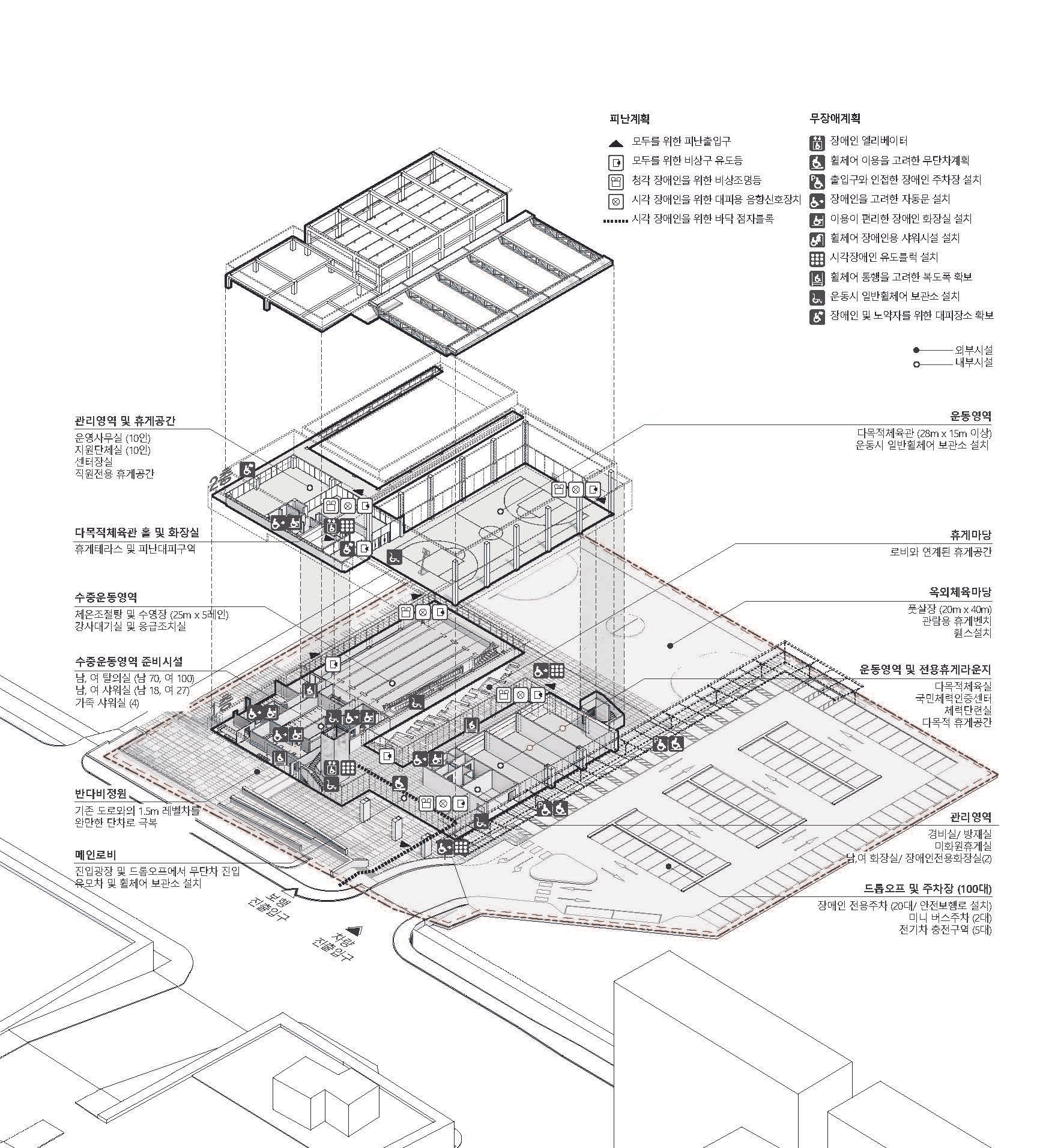
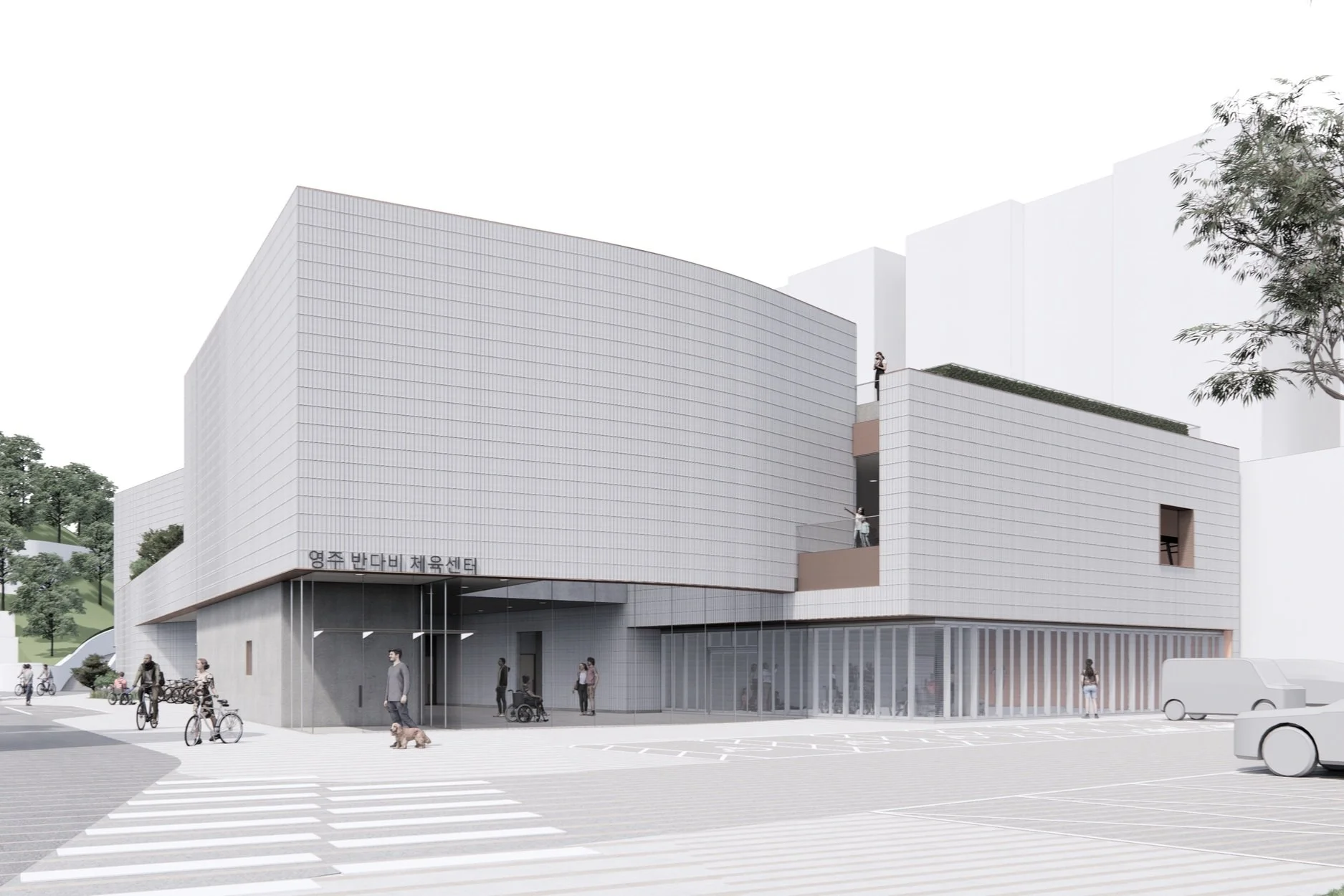
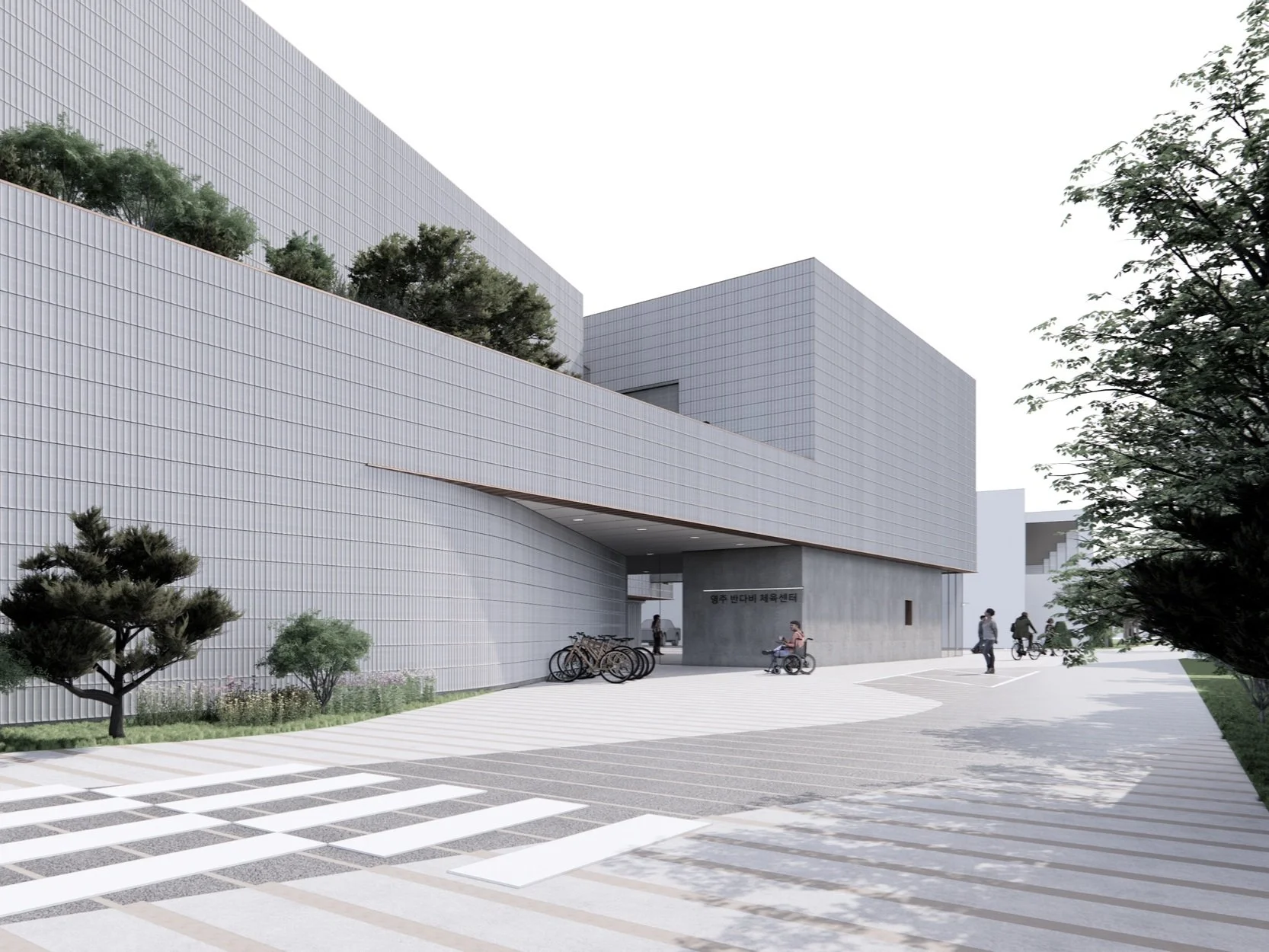
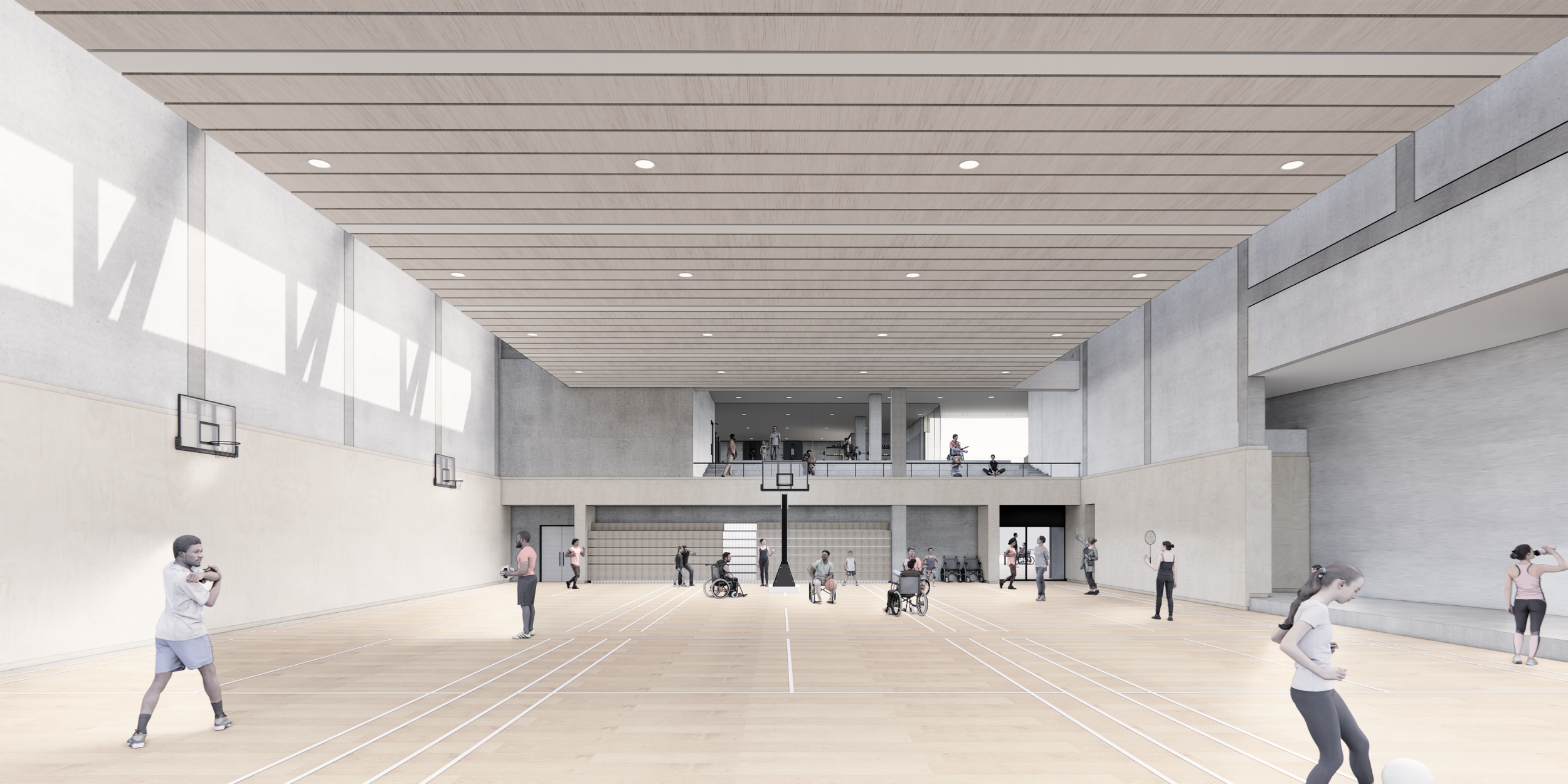
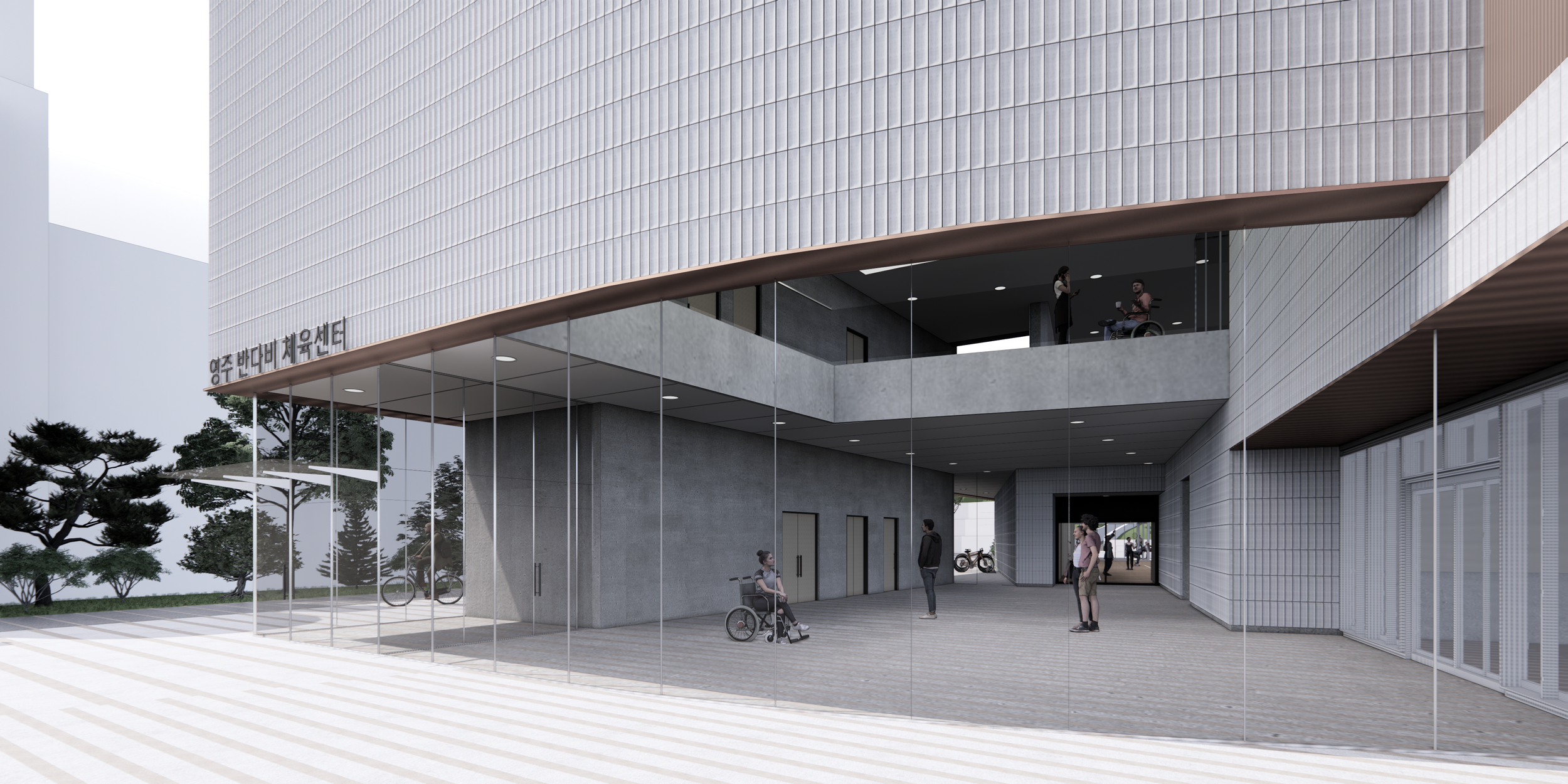
The Bandaebi Sports Center will become a new entrance point located within the Yeongju Citizen Sports Park athletic facilities site. It serves as a mediator that connects people entering from the University Road 153 to both the inside and outside of the Bandaebi Sports Center, as well as other facilities within the site, such as the Community Sports Hall, indoor swimming pool, boxing training center, Citizen Sports Park, tennis court, soccer field, volleyball court, National Sports Center, and Citizen Sports Park. The external space configuration encourages the Bandaebi Sports Center to be closely integrated with the site by opening up to a variety of external spaces that are adjacent to the site. Planning for natural and convenient access for different people and various modes of transportation such as cars, bicycles, and scooters, the Bandaebi Sports Center is designed to be a mediator between people, the city, and public spaces, based on consideration and understanding for each individual.

Over the past decade, public buildings in Yeongju have positively transformed the landscape of small cities and improved the quality of life for its residents. Yeongju has been steadily and clearly attempting urban regeneration through public buildings. Based on the characteristics of the Bandaebi space, if we try to capture the core idea in the public building, we can think of a more fair and inclusive public building based on the ideology of universal design. The Yeongju Bandaebi Sports Center embodies the idea of a public building that aims to accommodate more people’s diversity and everyday life, rather than being a space for a specific minority. Through this, Yeongju aims to achieve successful public buildings that have already been carried out and also match the goal of urban regeneration.


Year : 2021

Location : Youngju, Korea

Size : 2,035 ㎡

Status : Competition Entry (2nd Prize)

Type : Community Facility

Principal in Charge :

Seojoo Lee, Hyojung Kim (I.f), Allie Yeseul Chung (I.f Manila), Dongil Kim (Kyung Hee University), Minho Lee (func. Architects)

Environmental Engineering : Dongil Kim

Tags Project, Sports, Community, Design Proposal

Credited by I.f