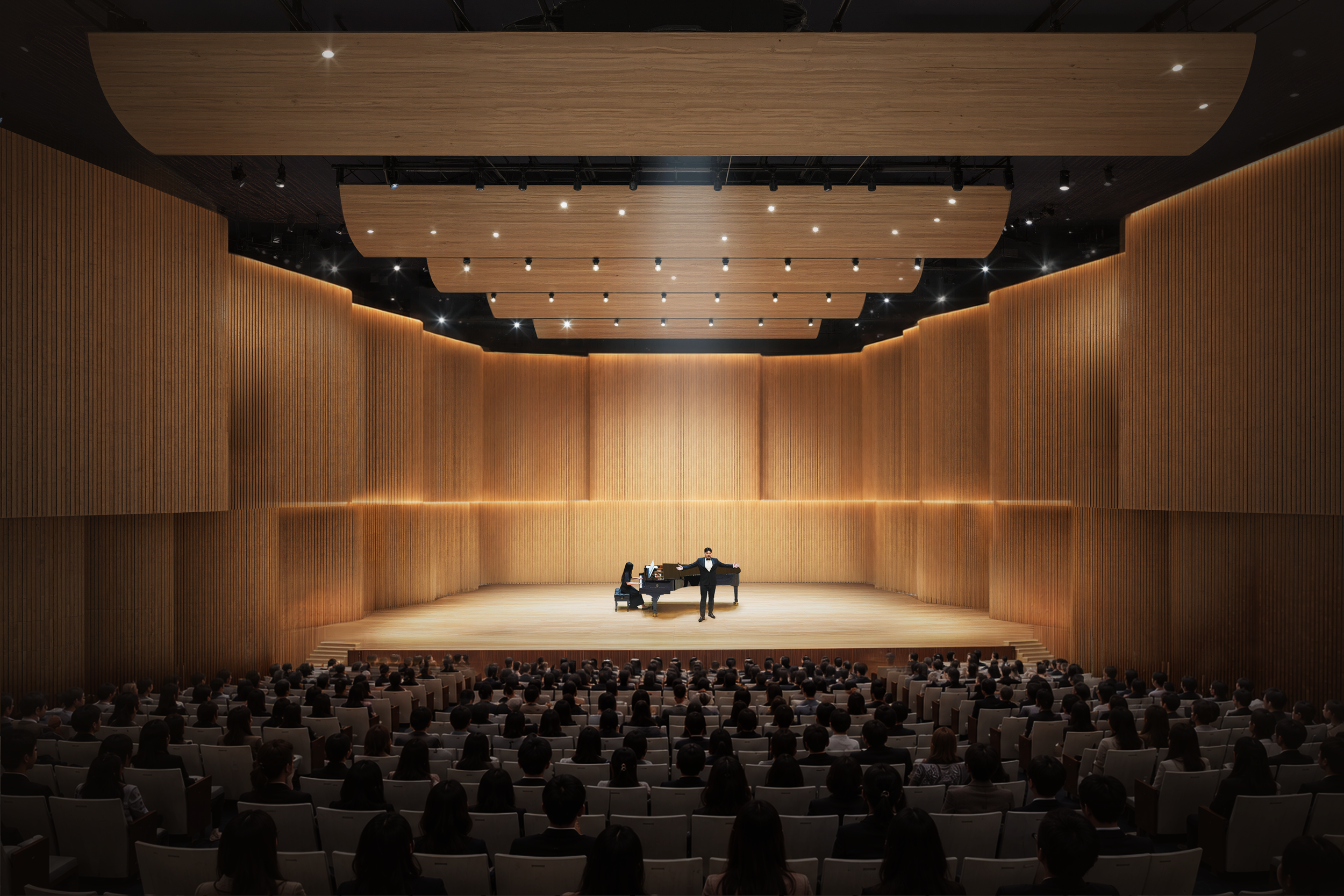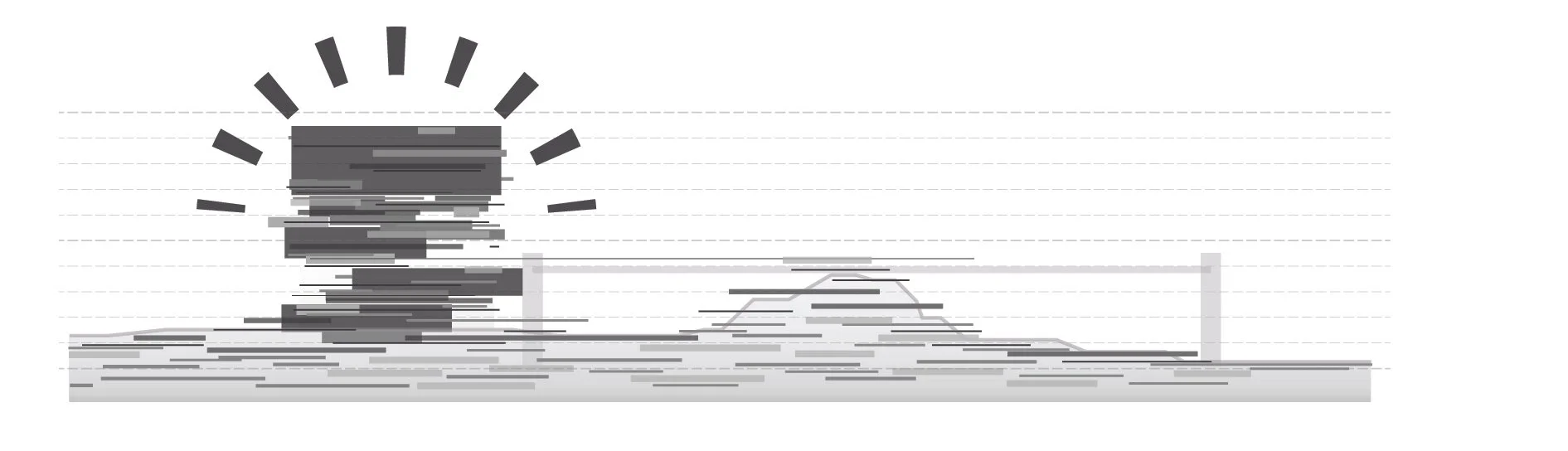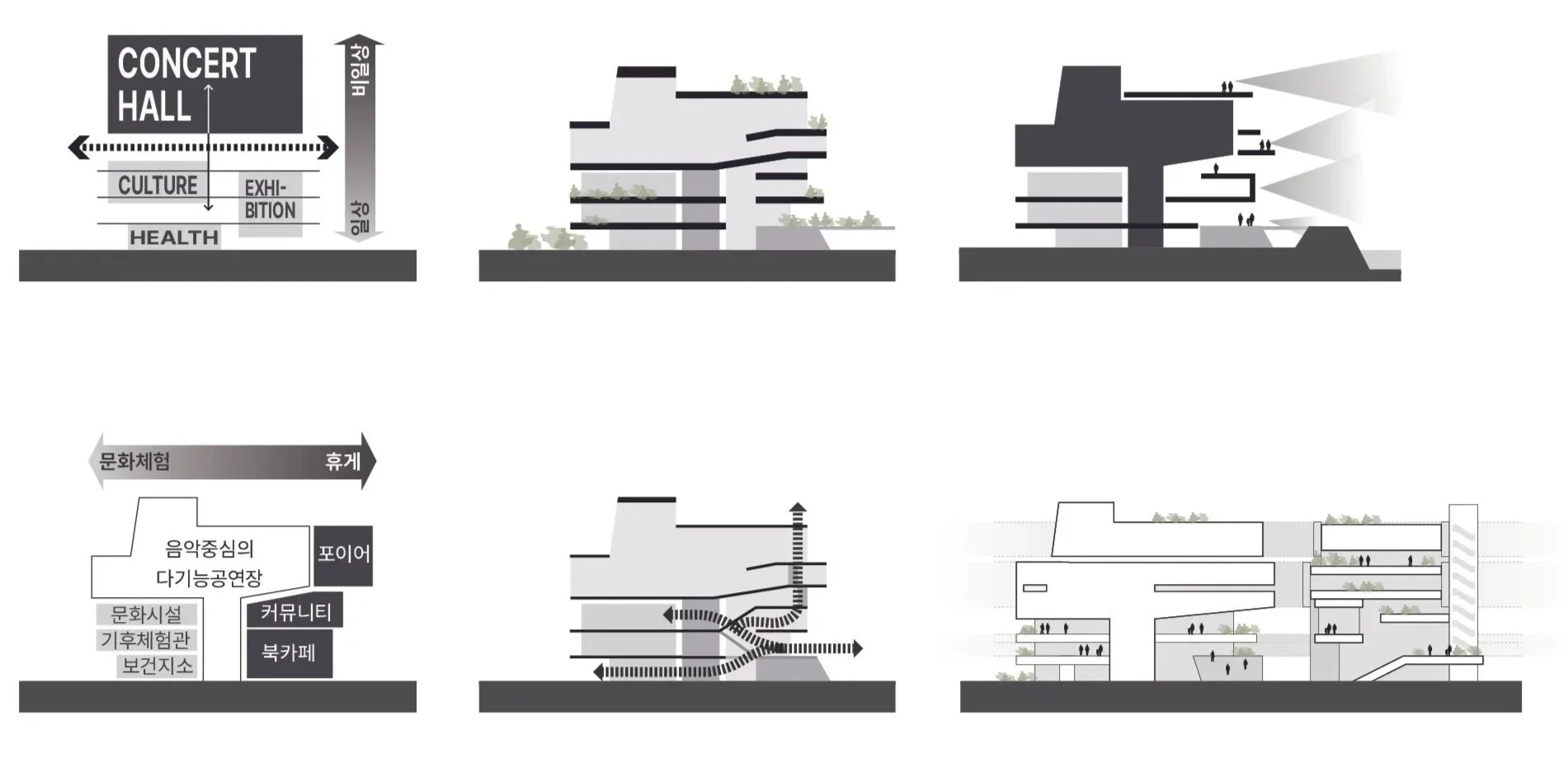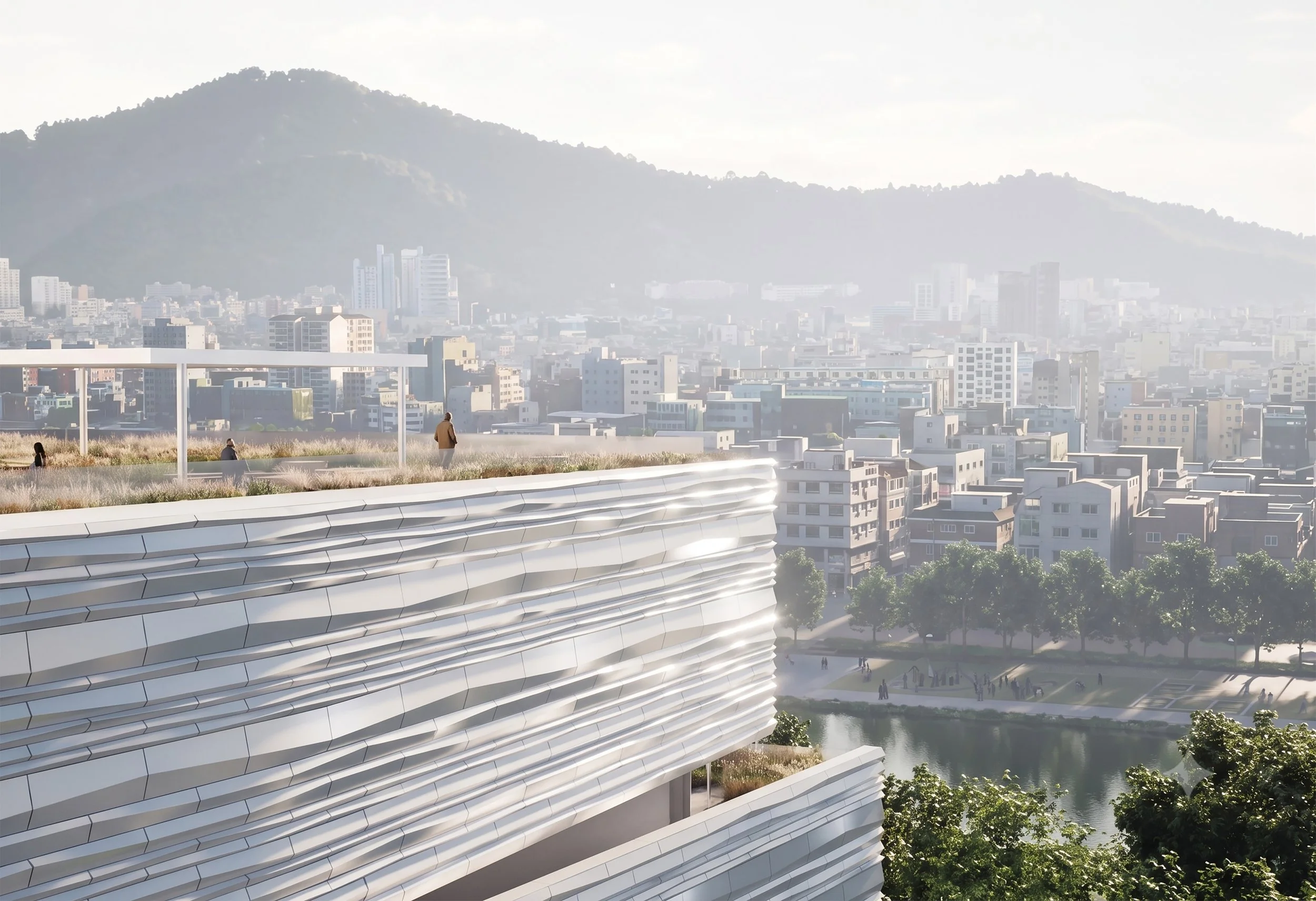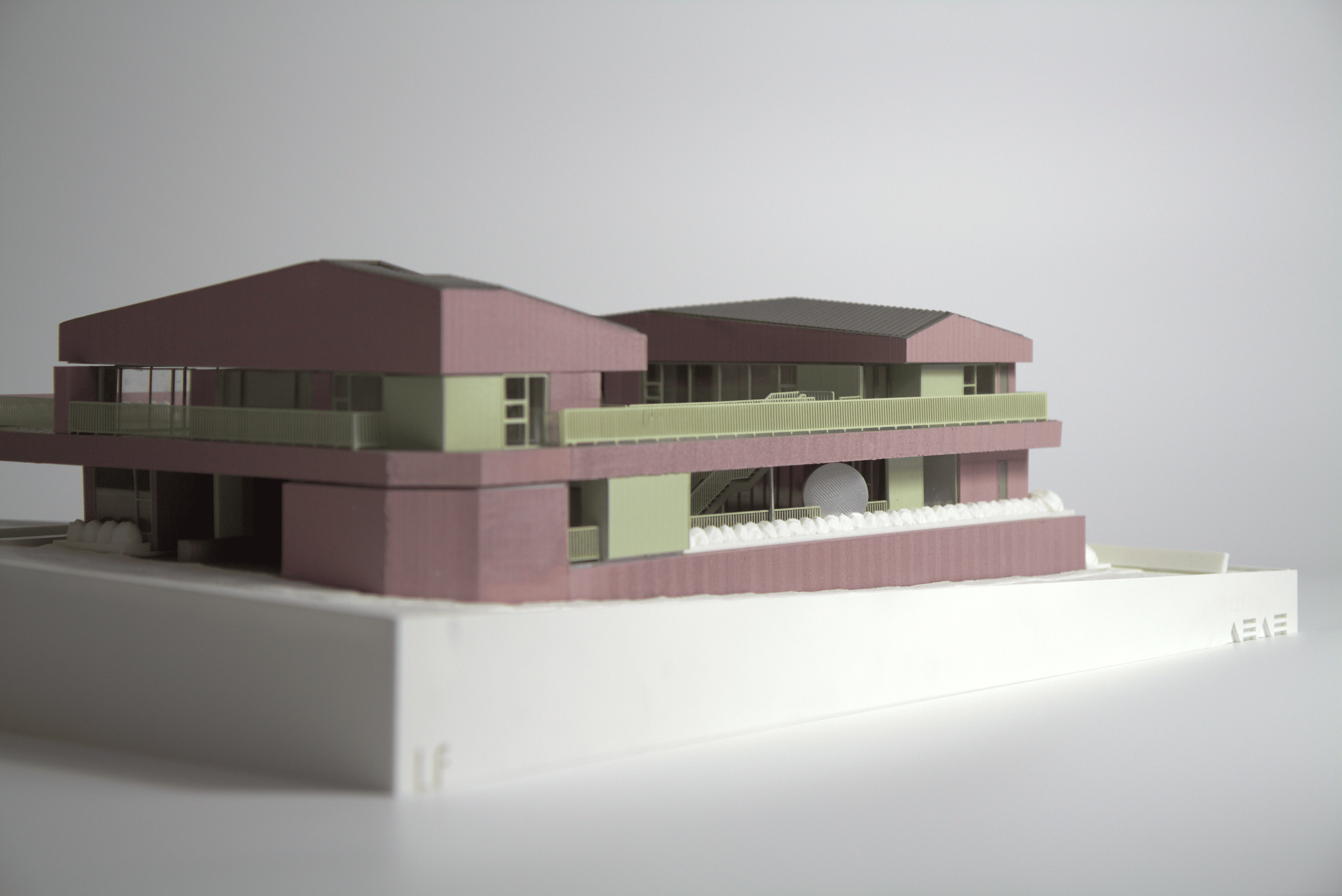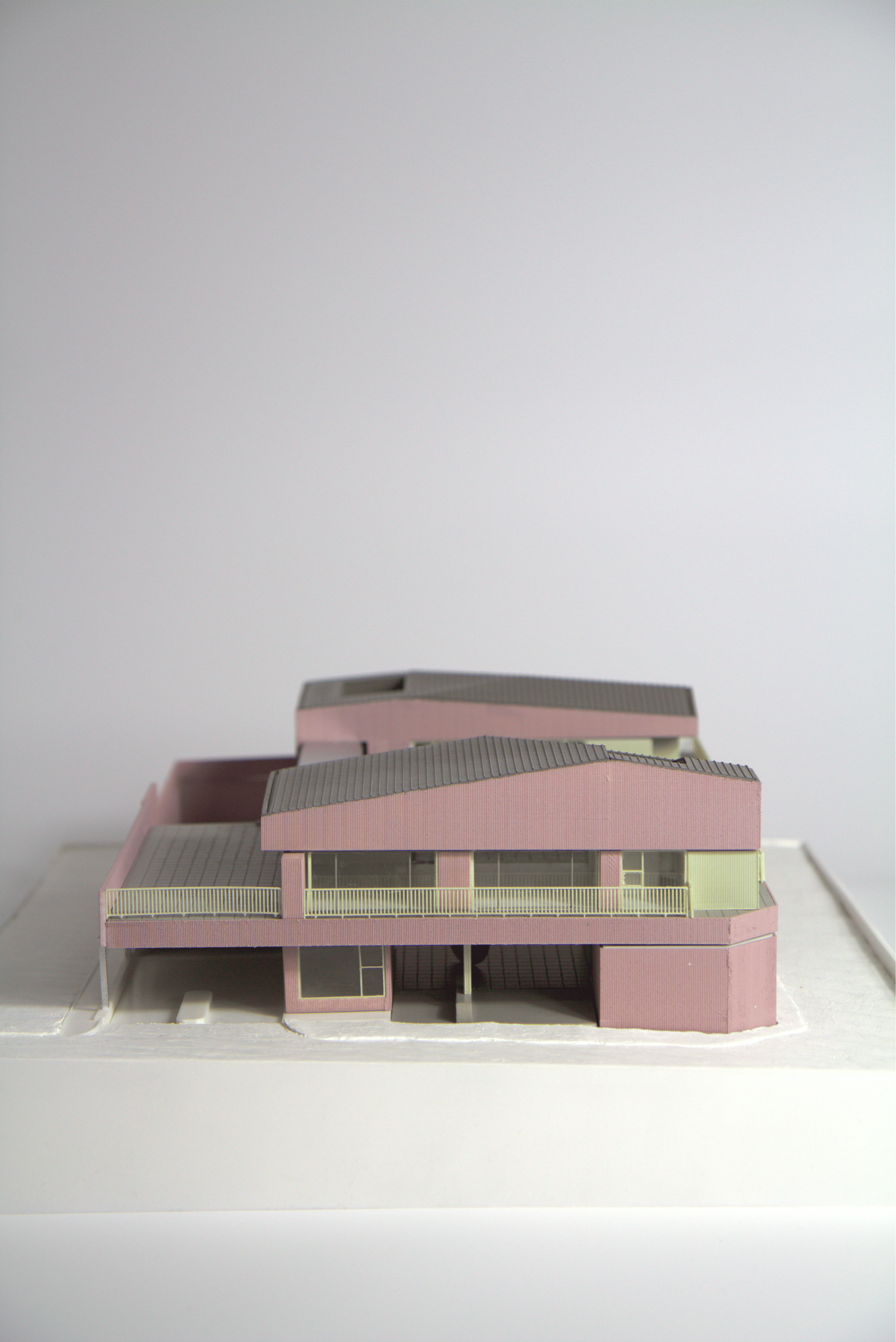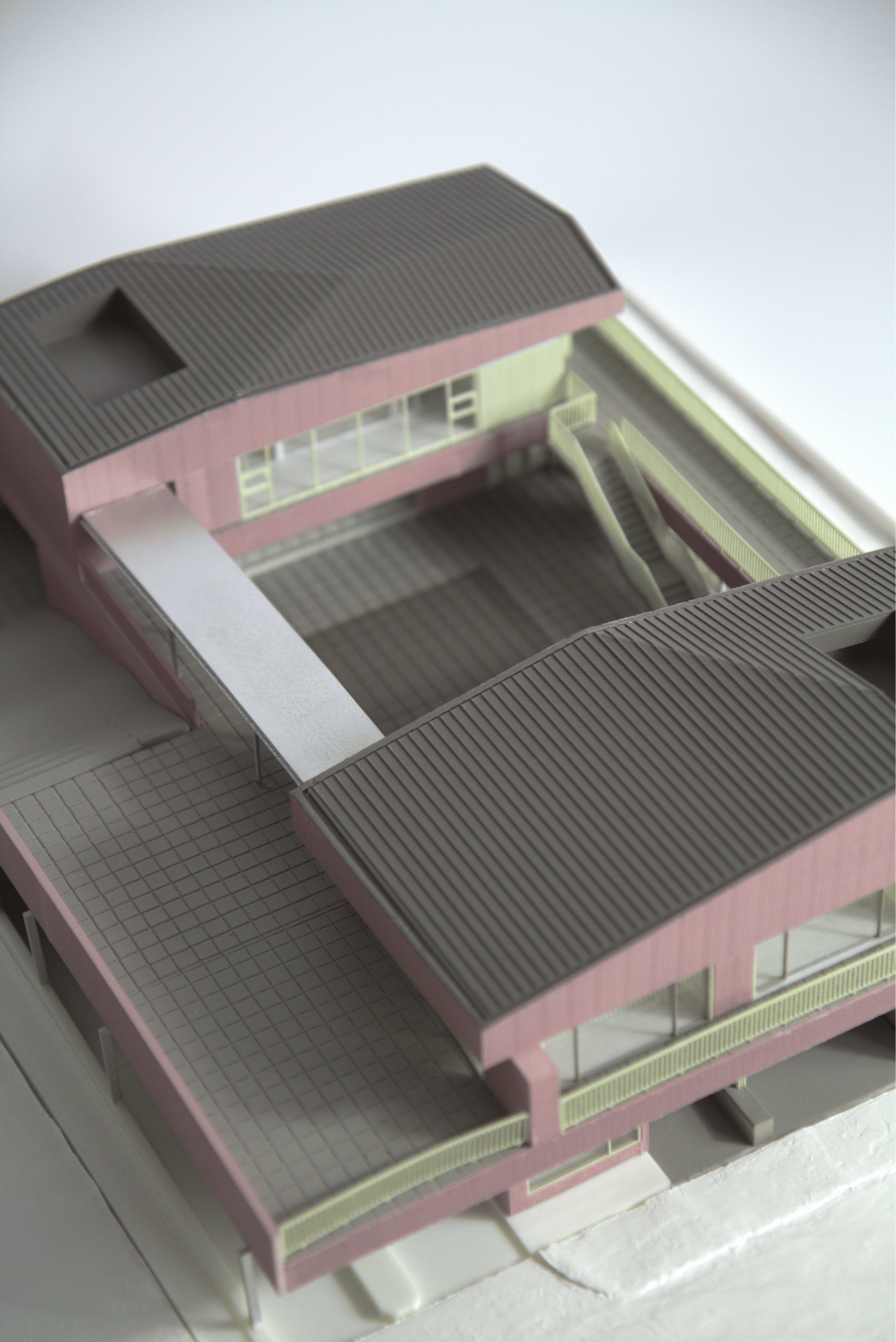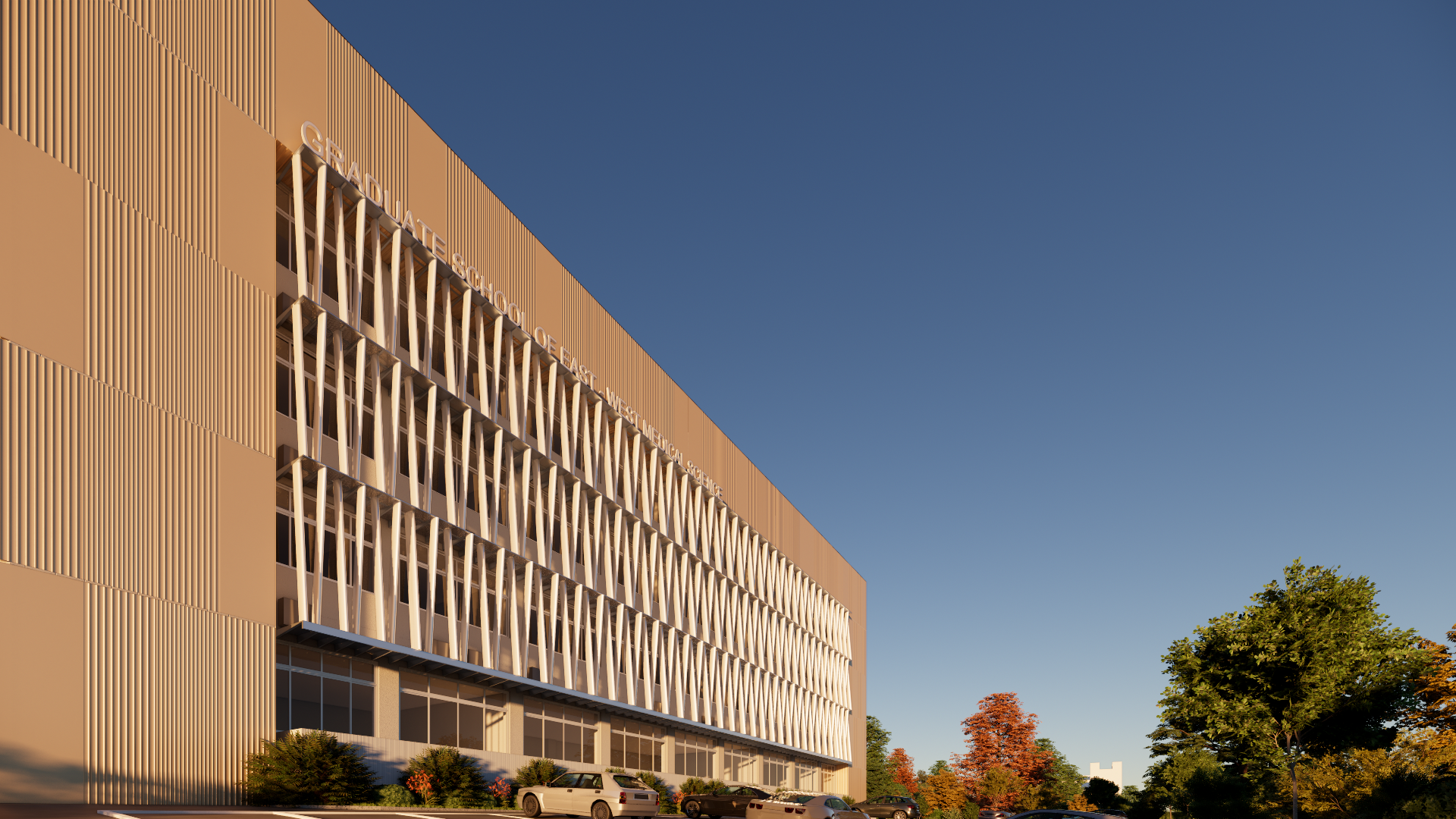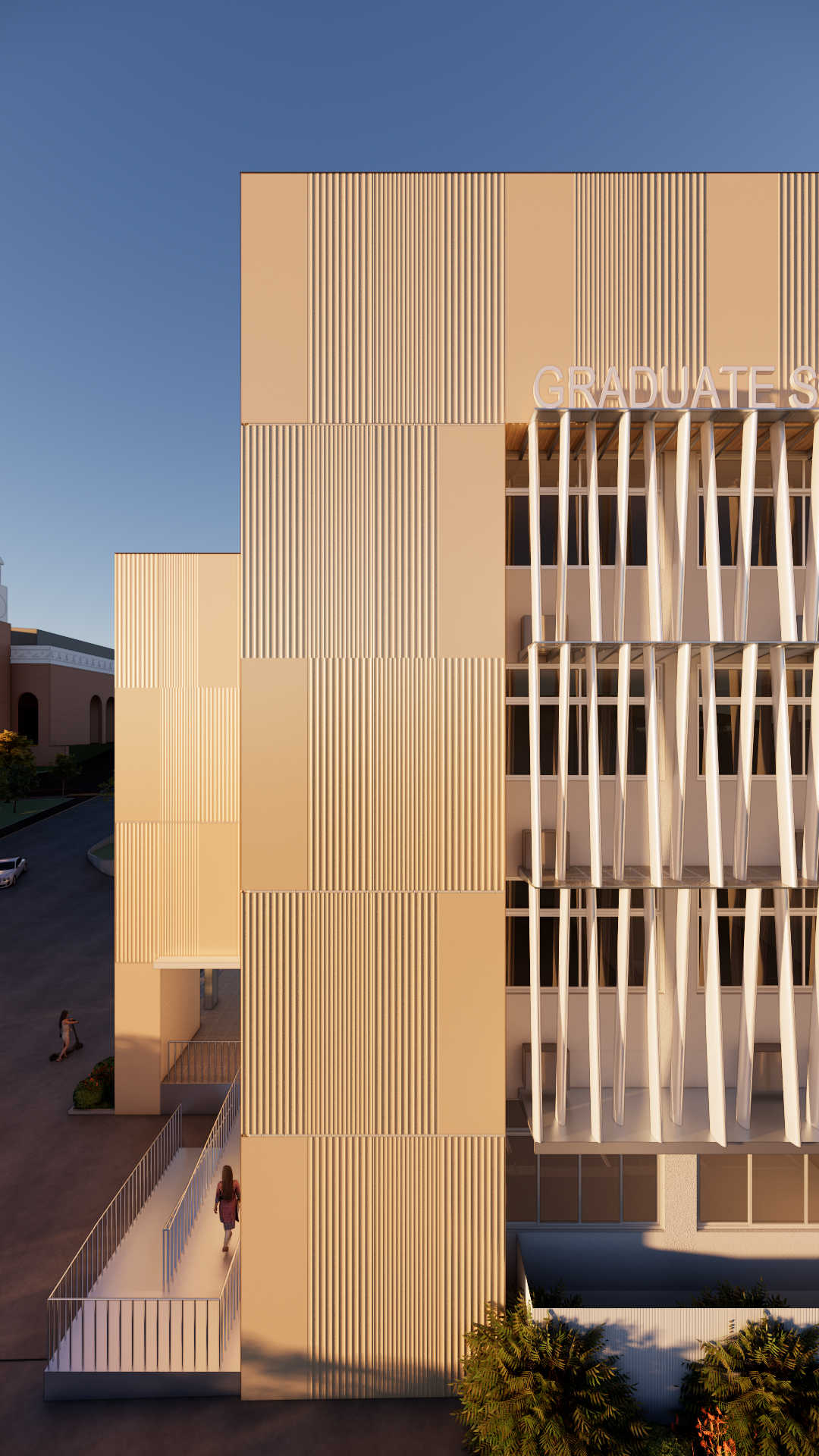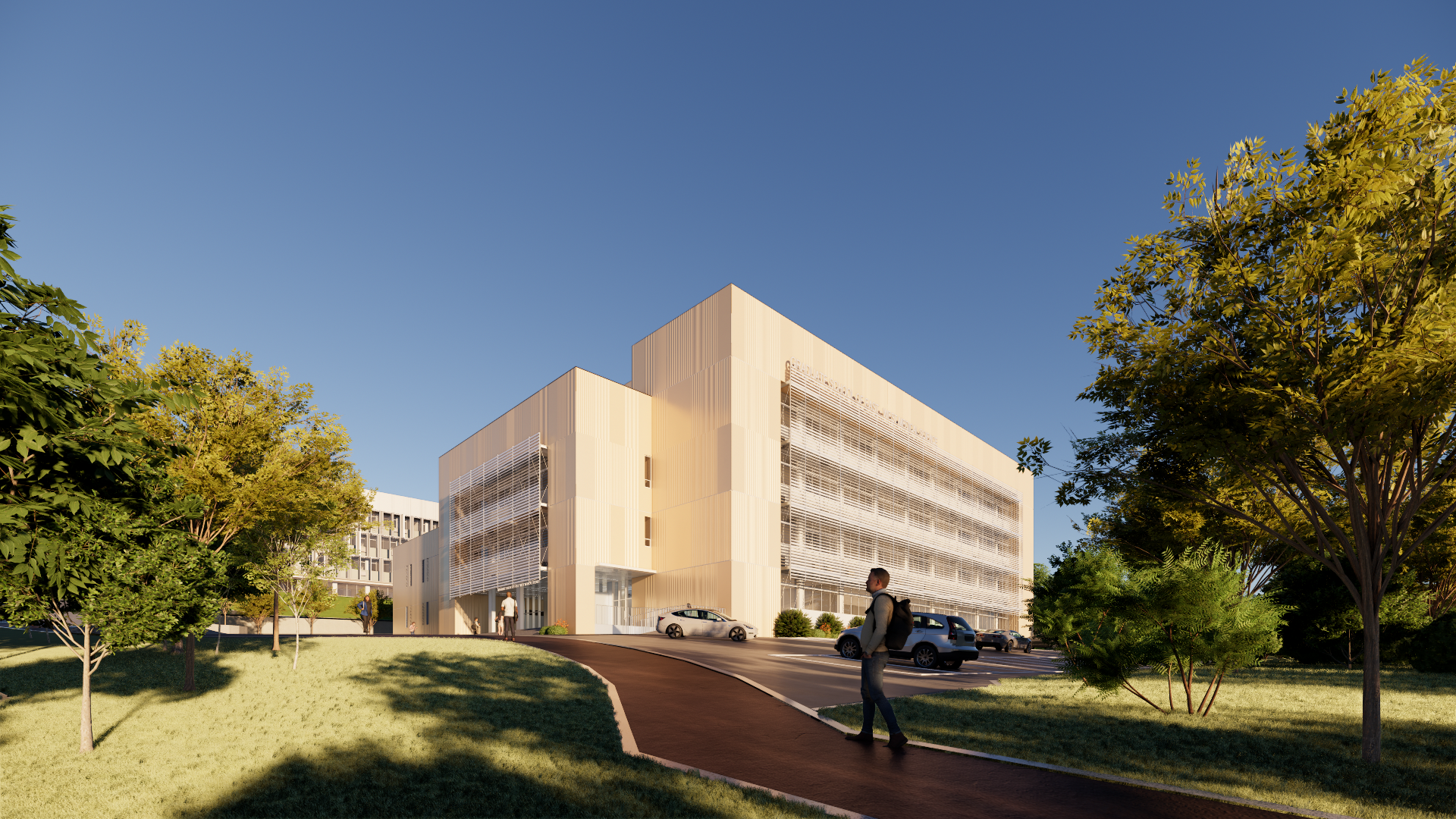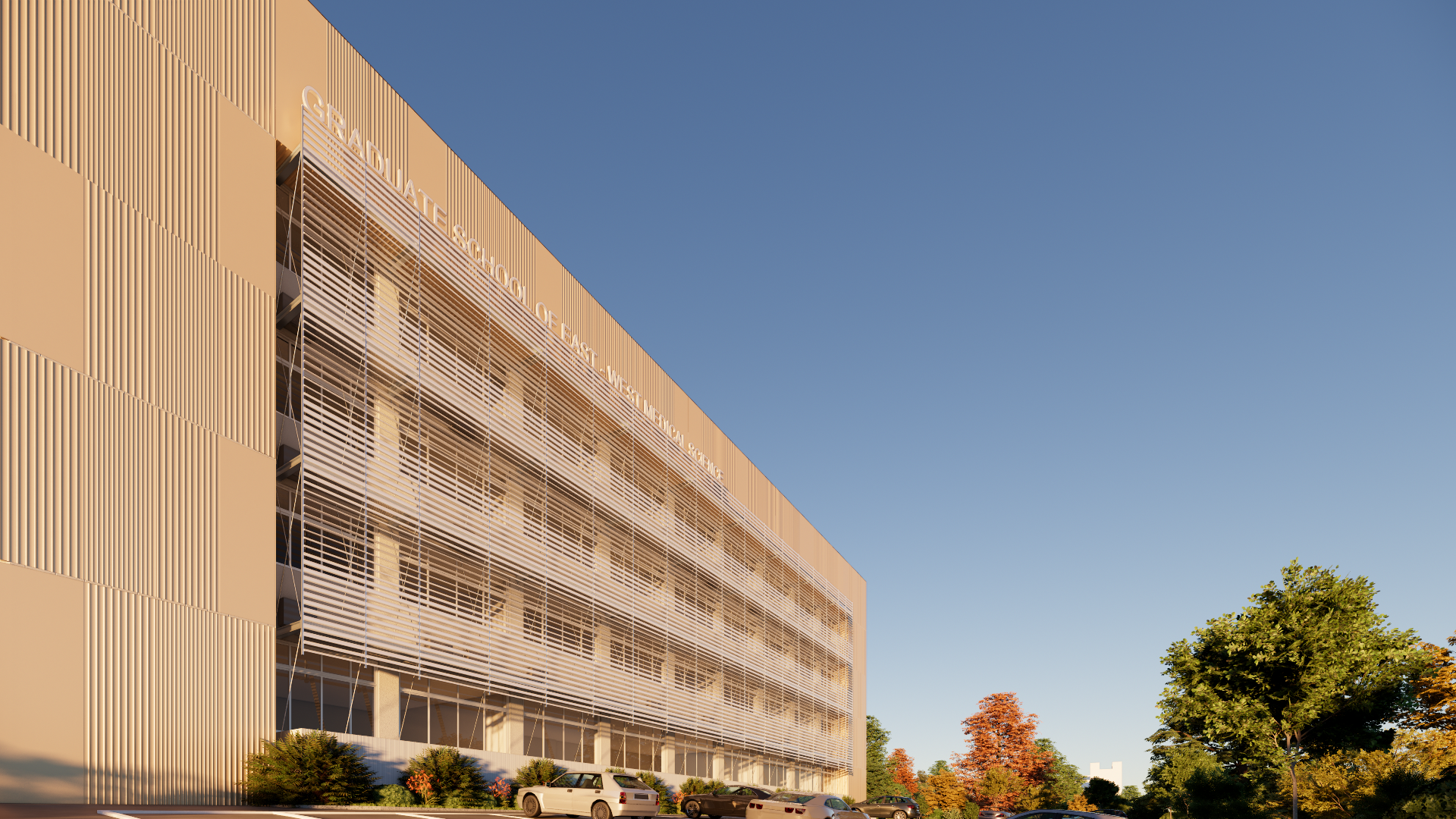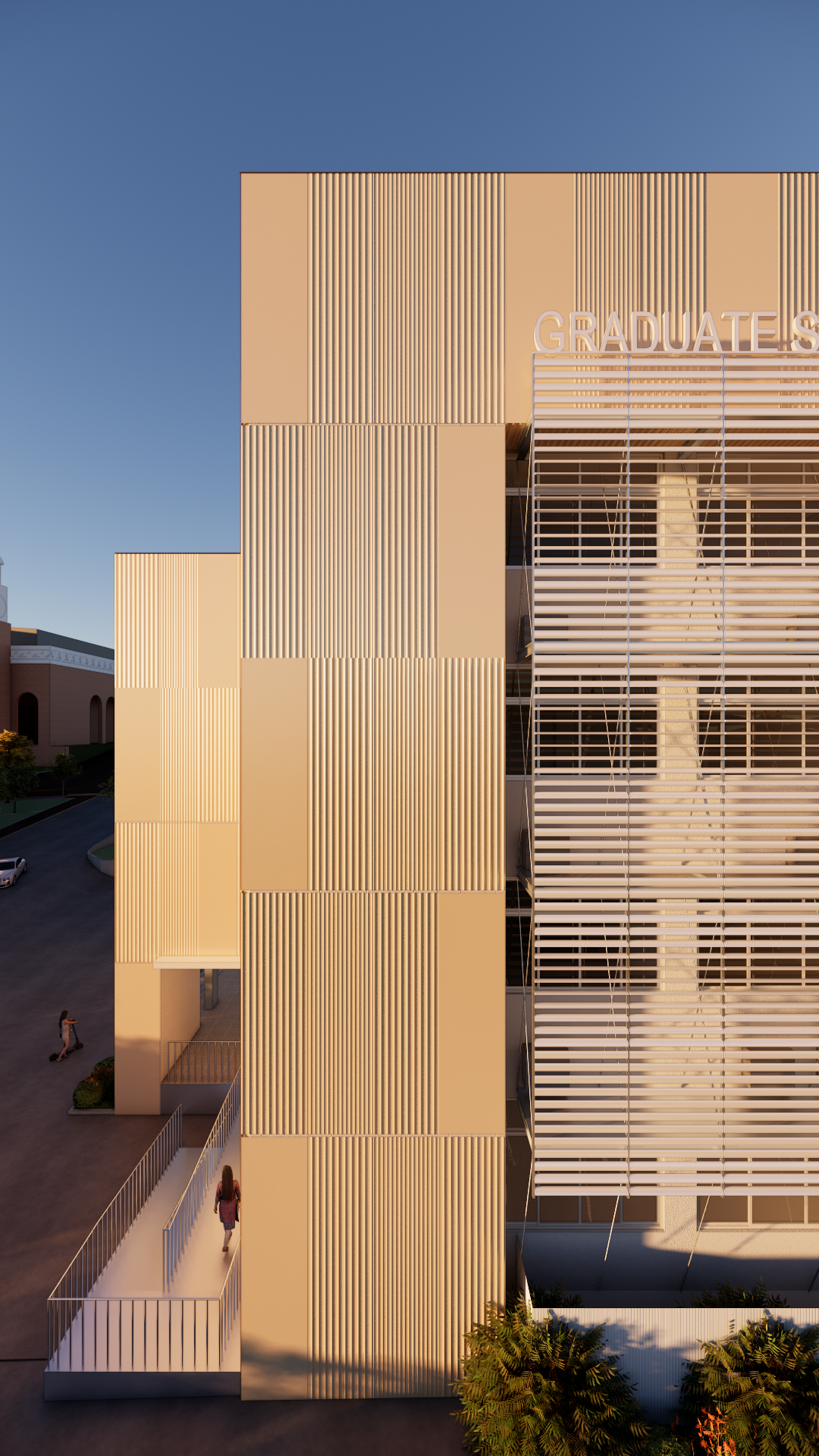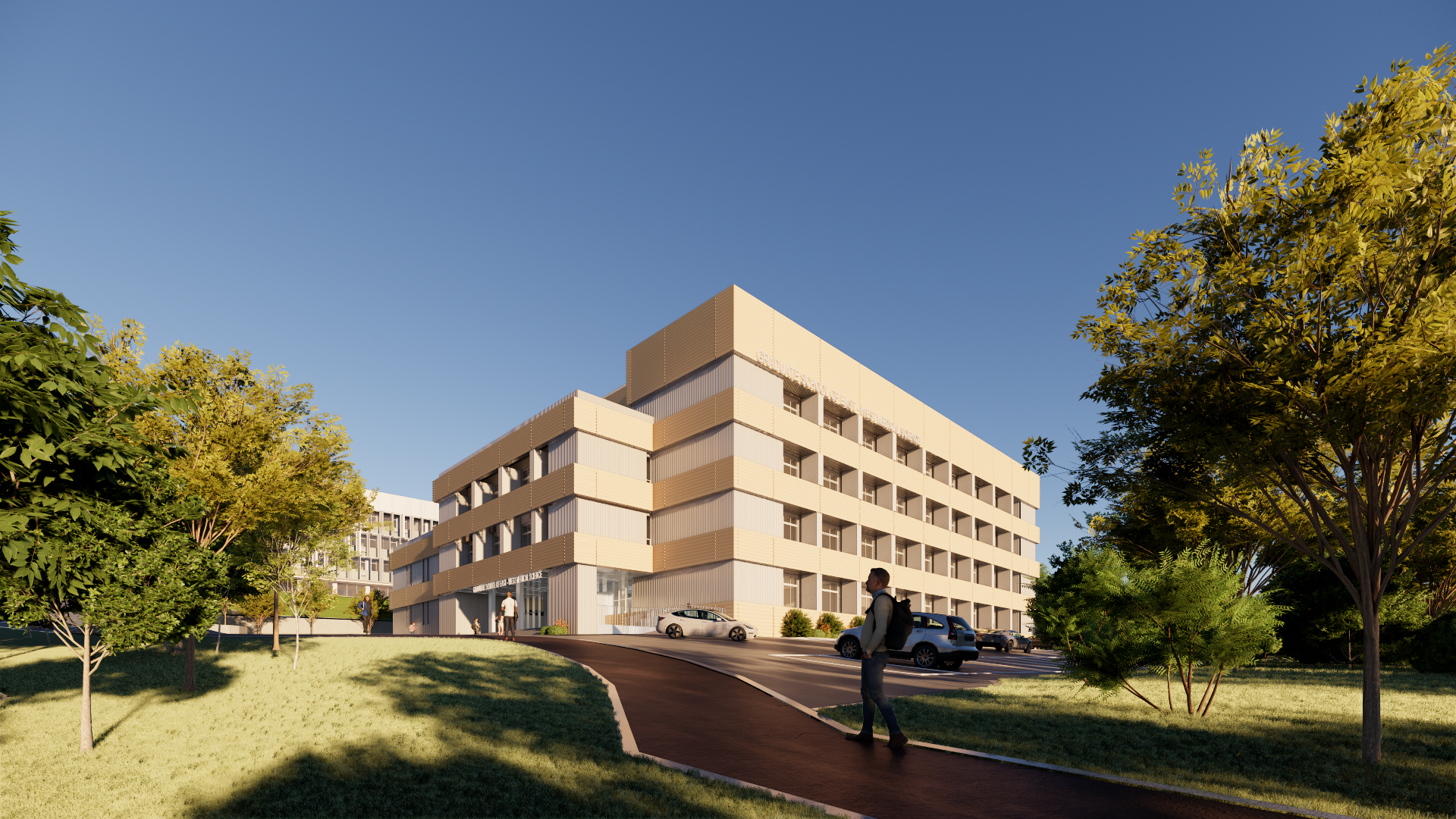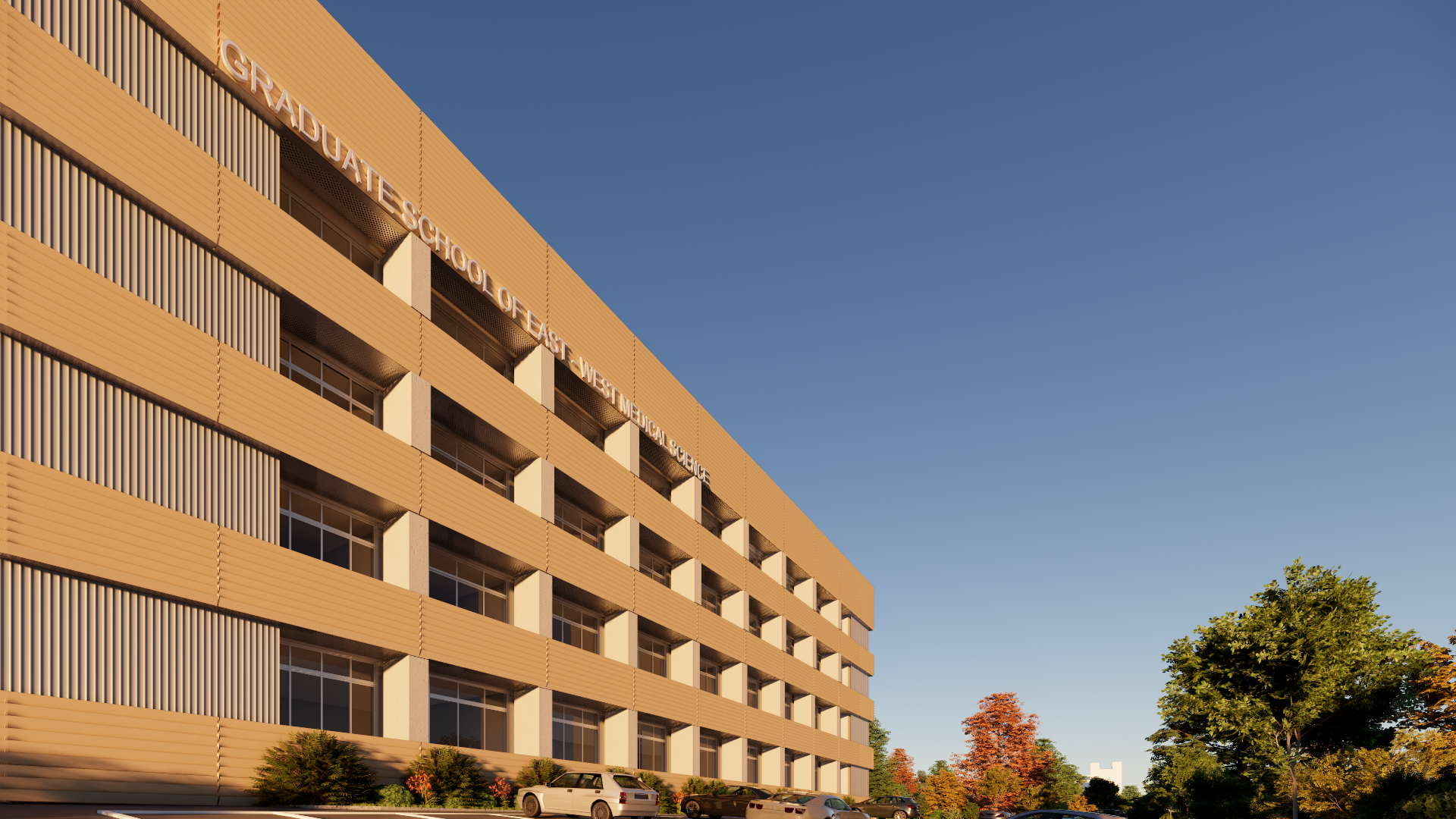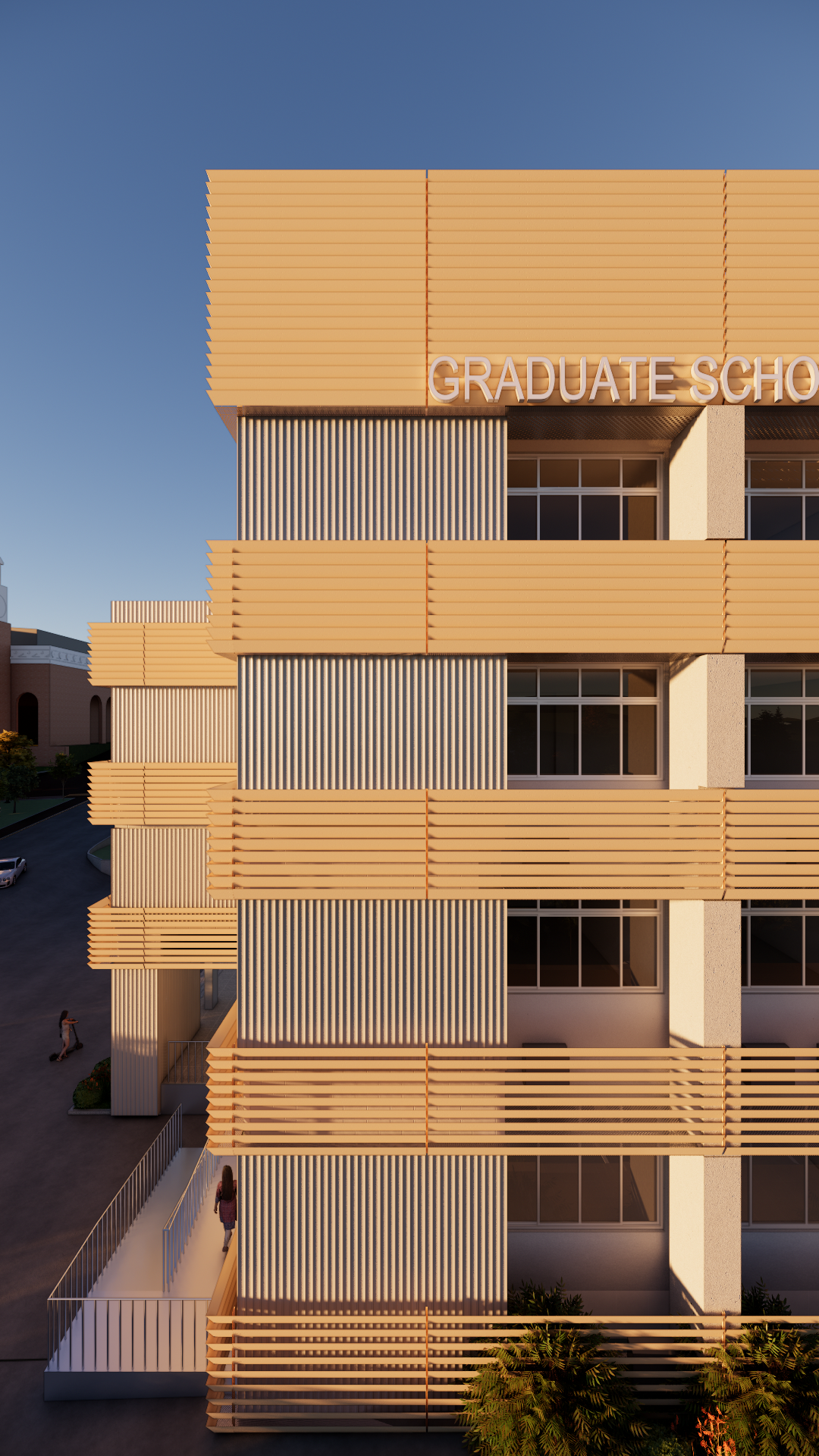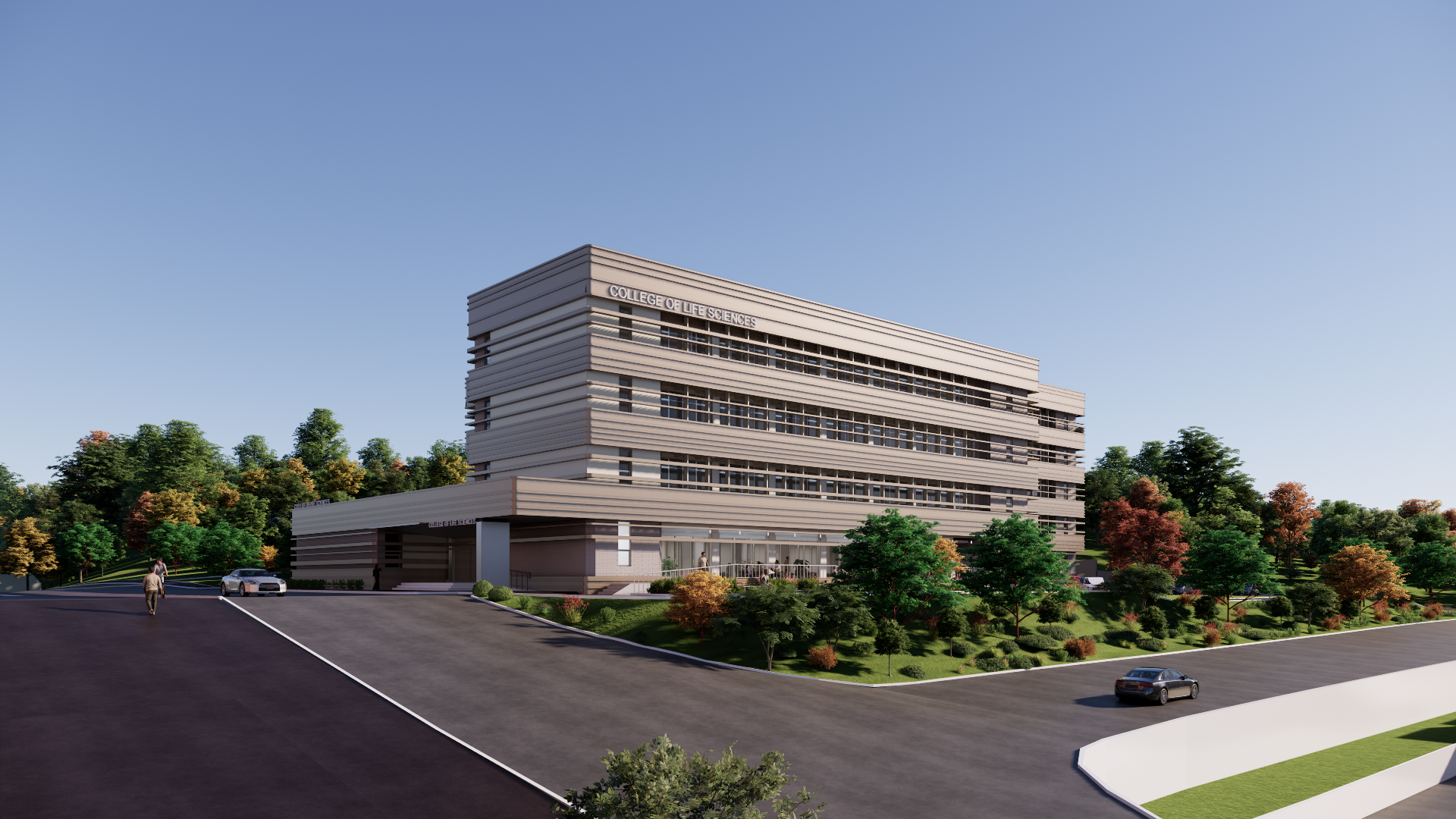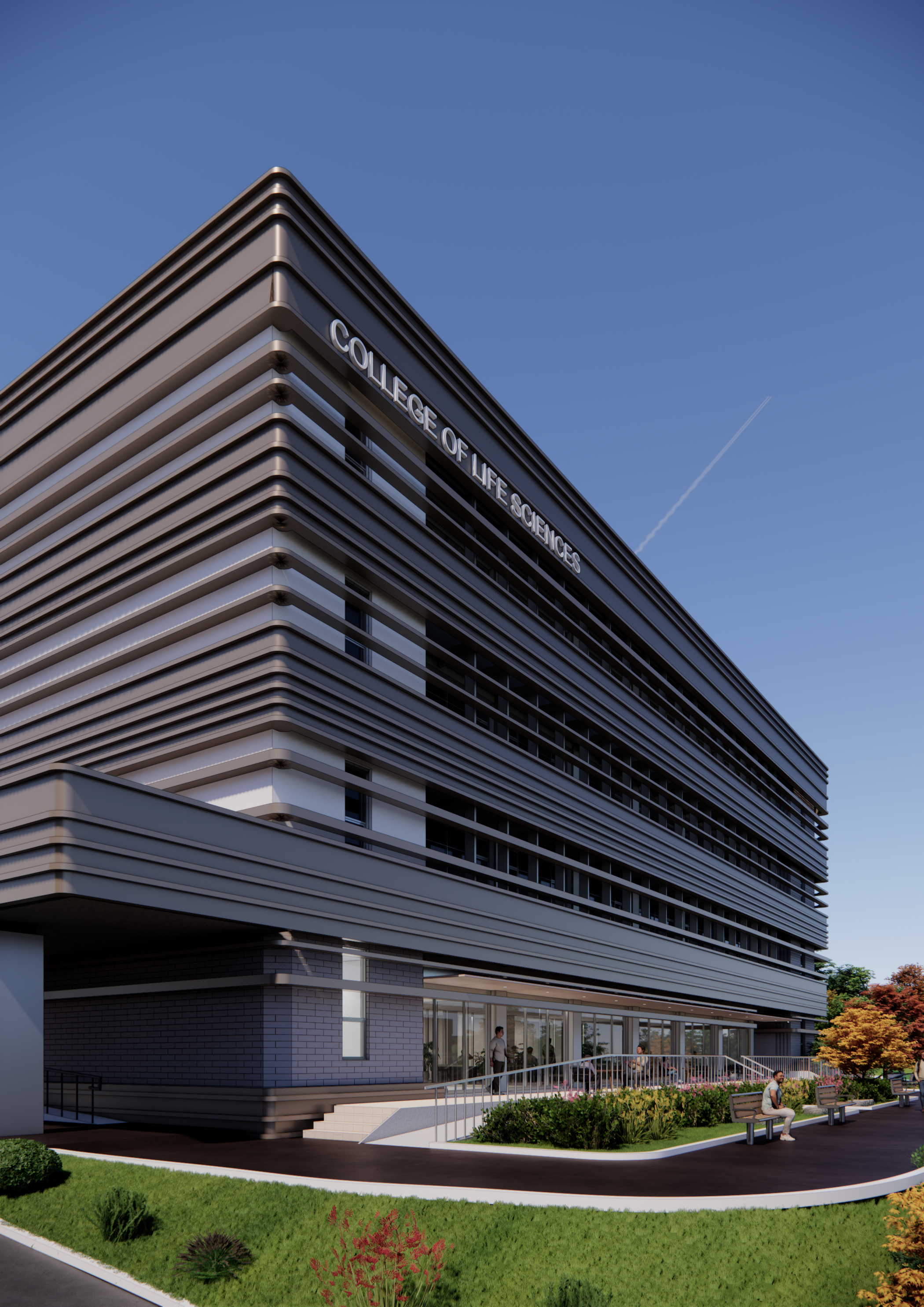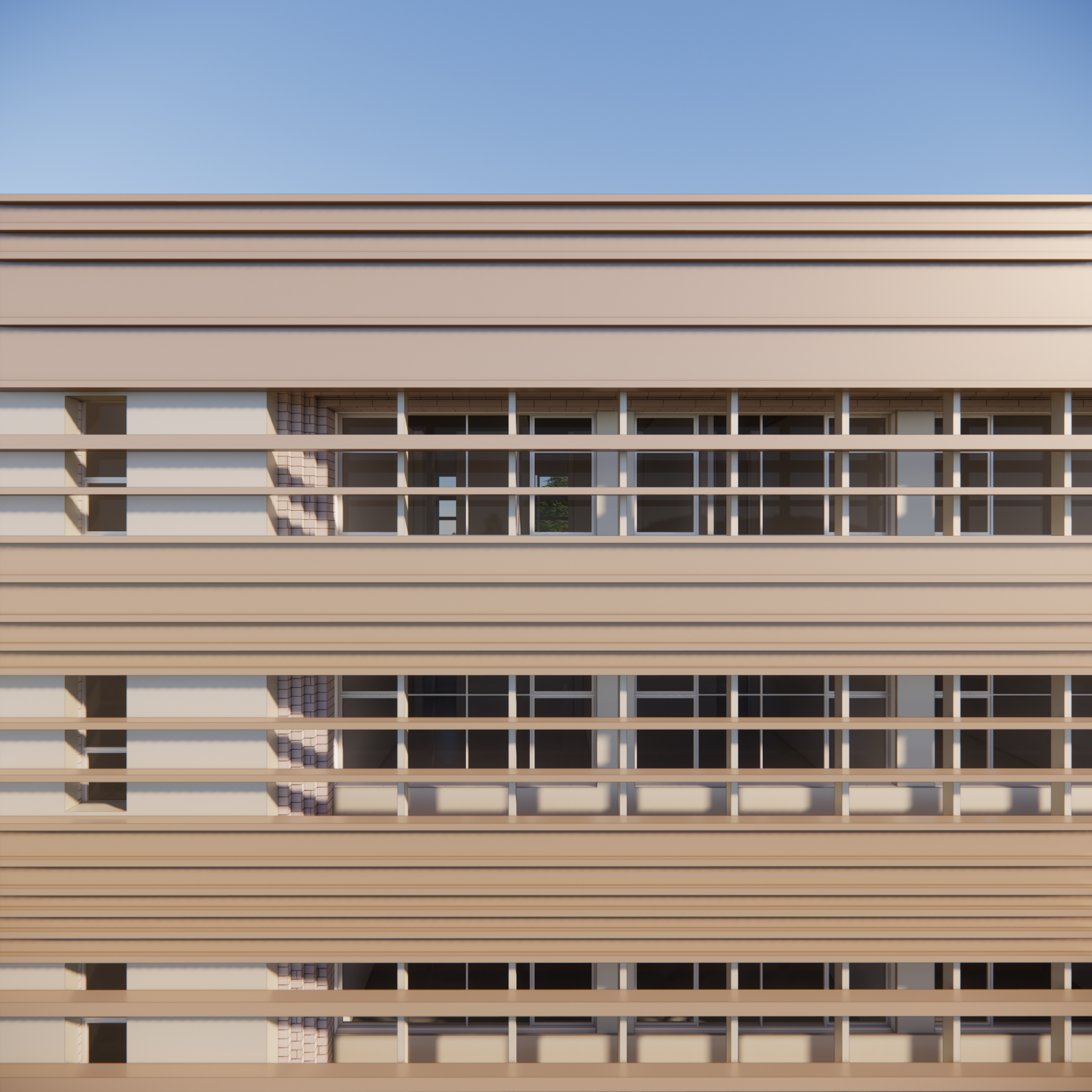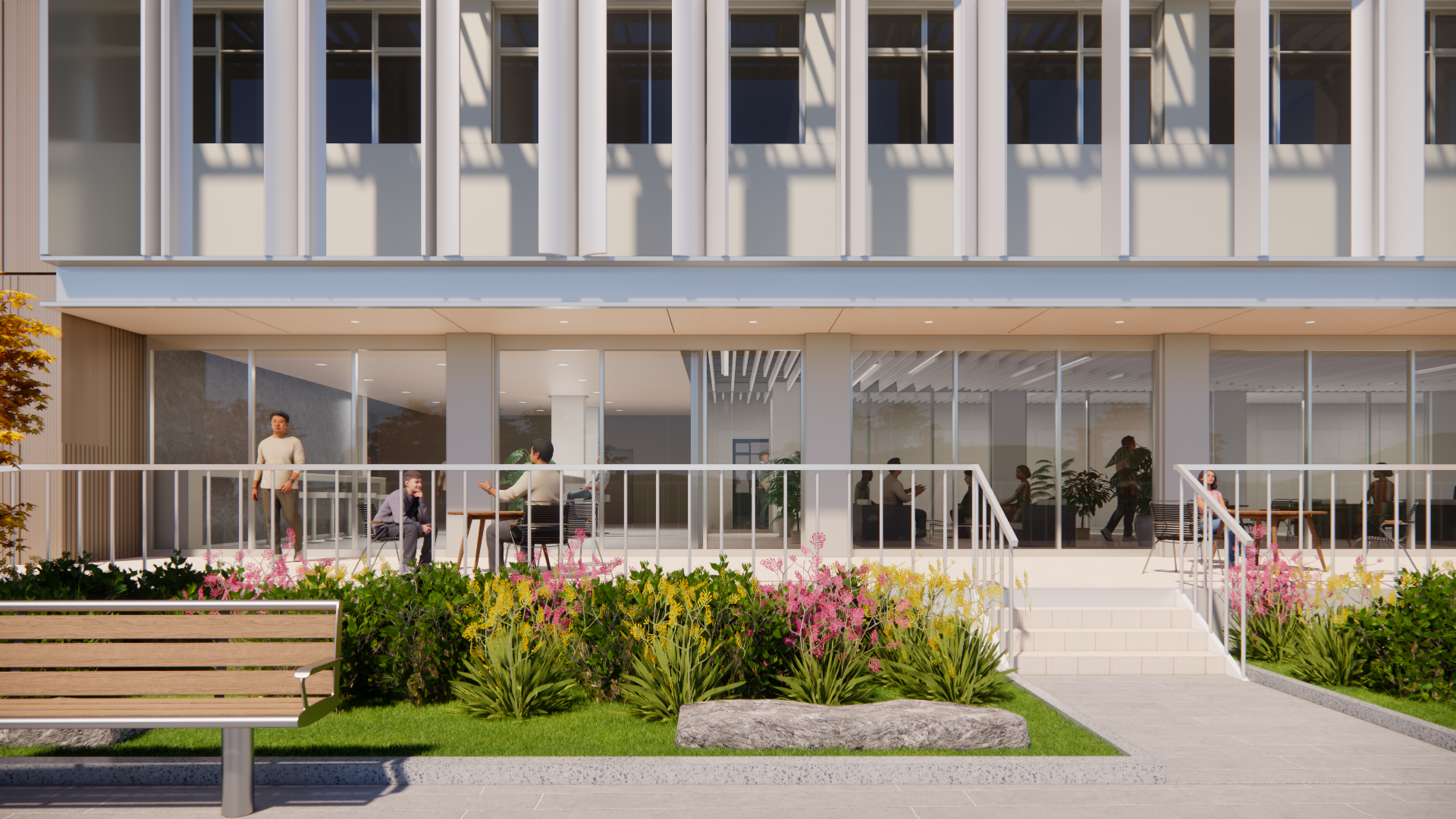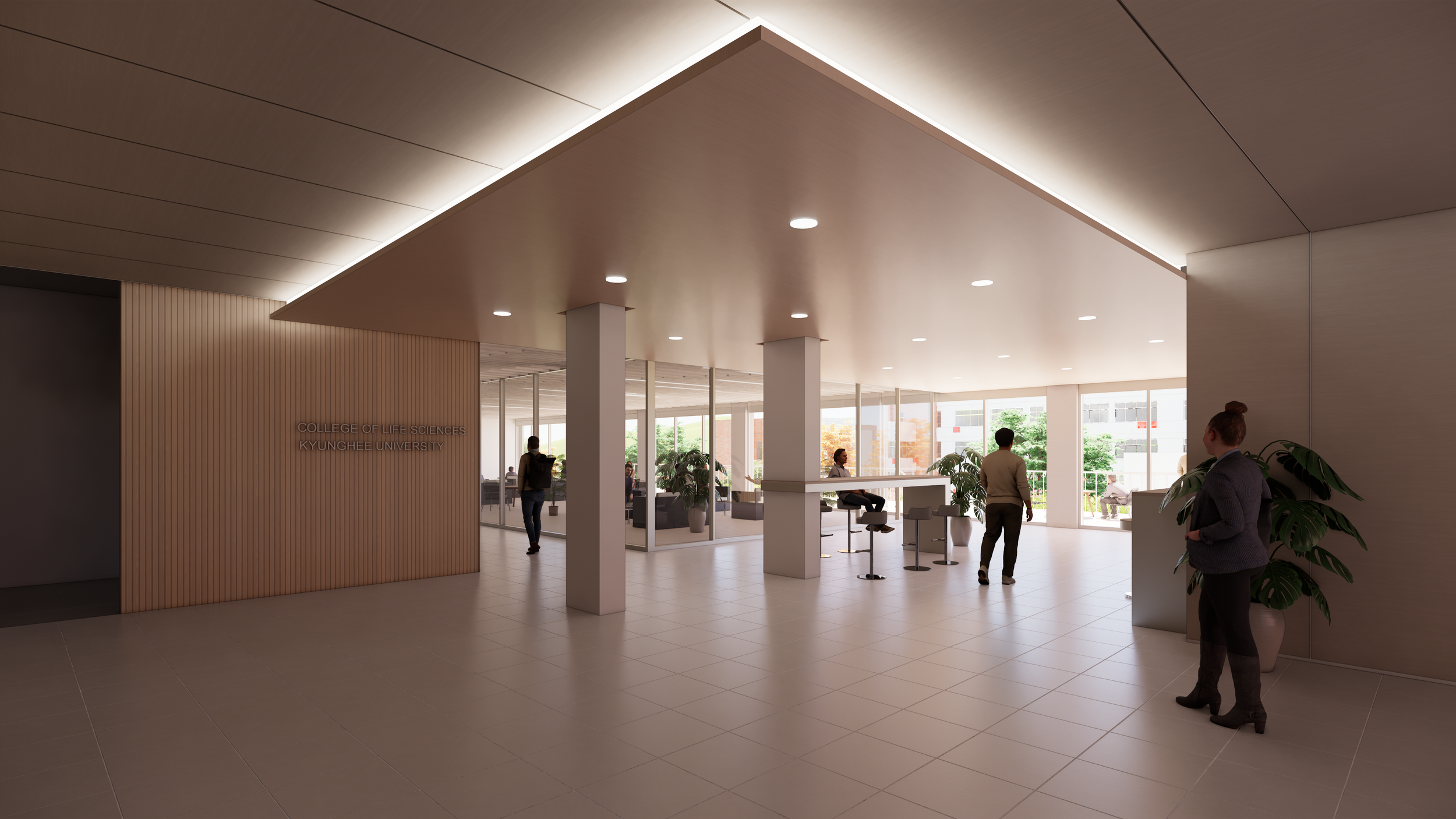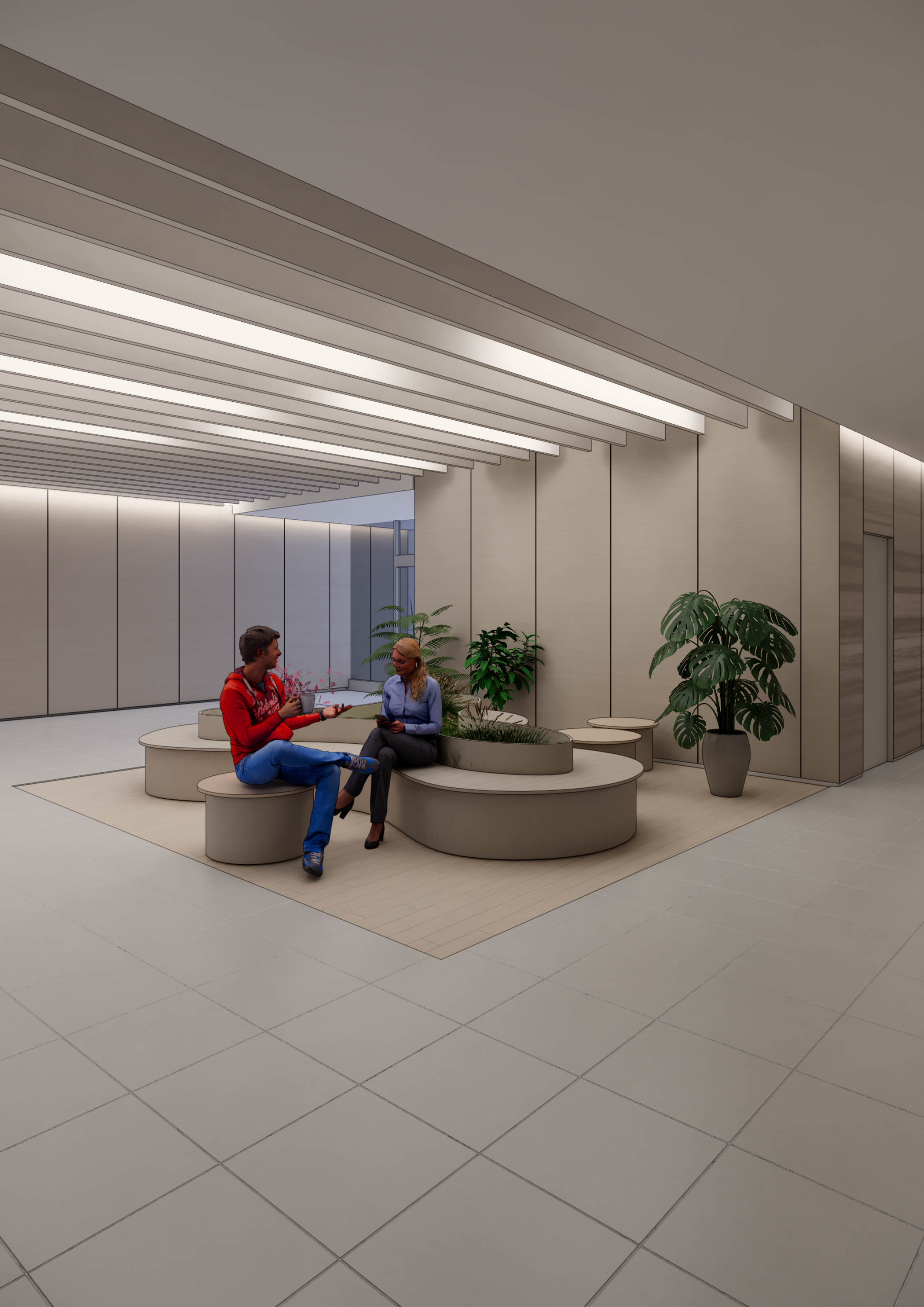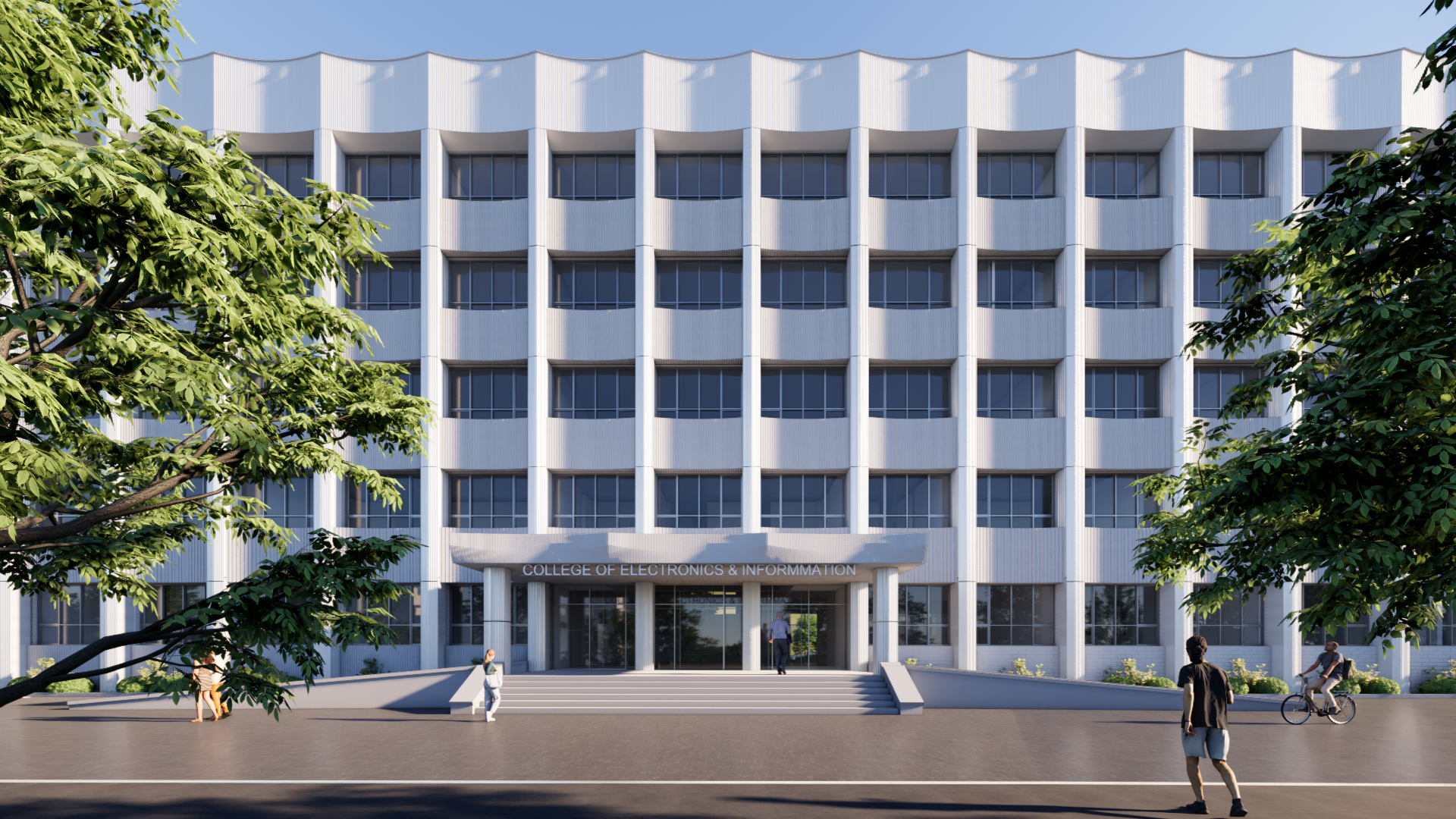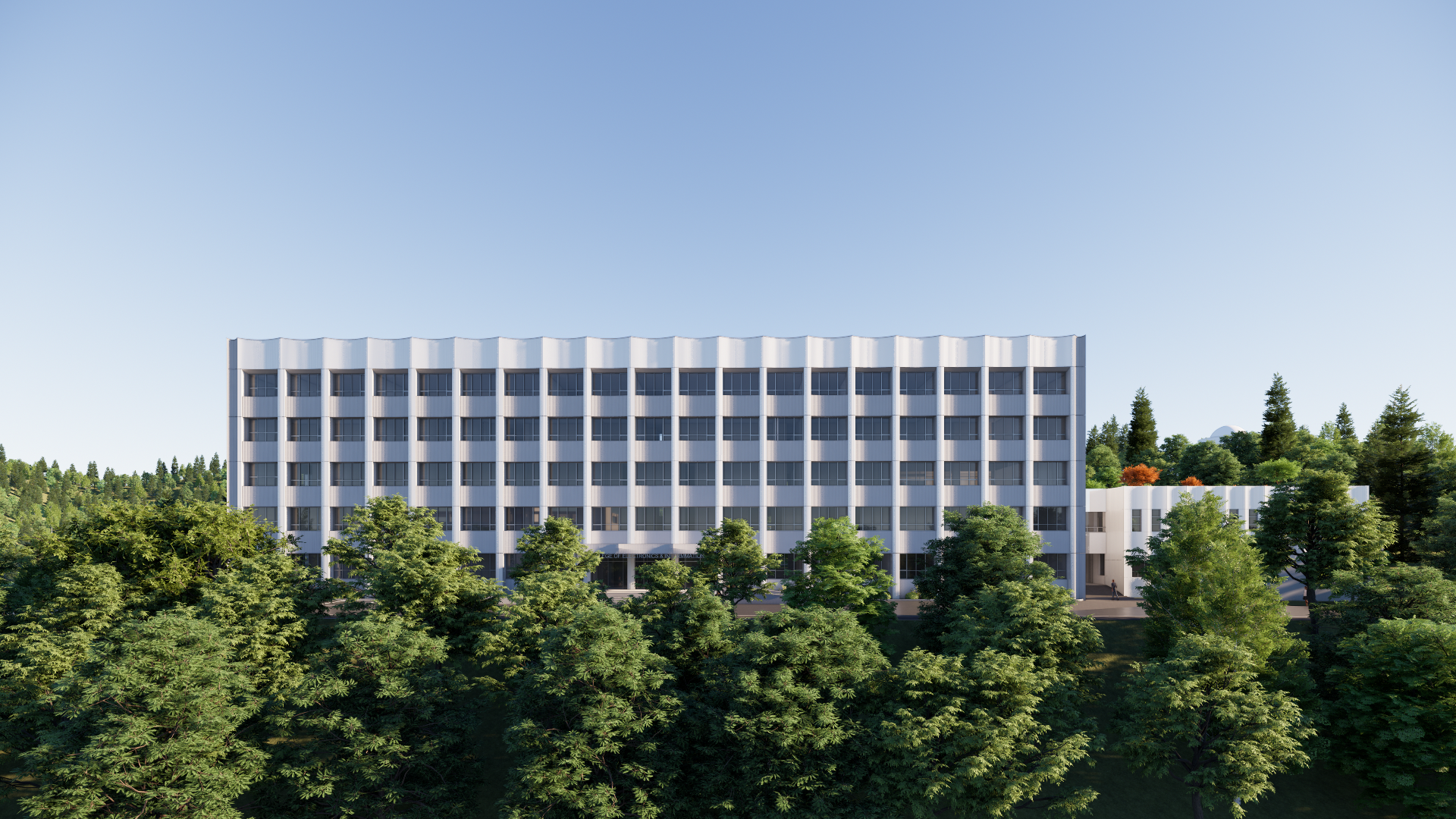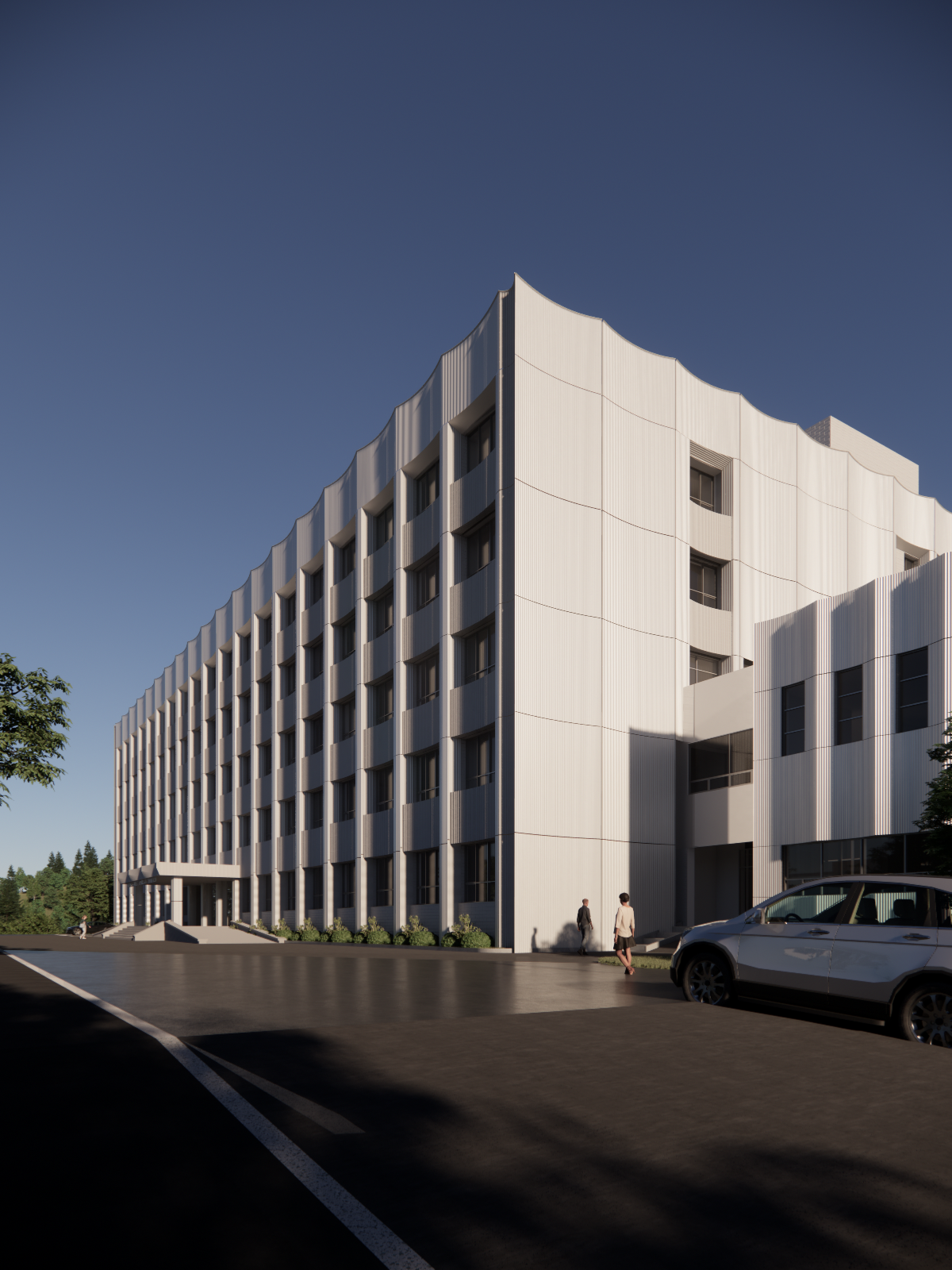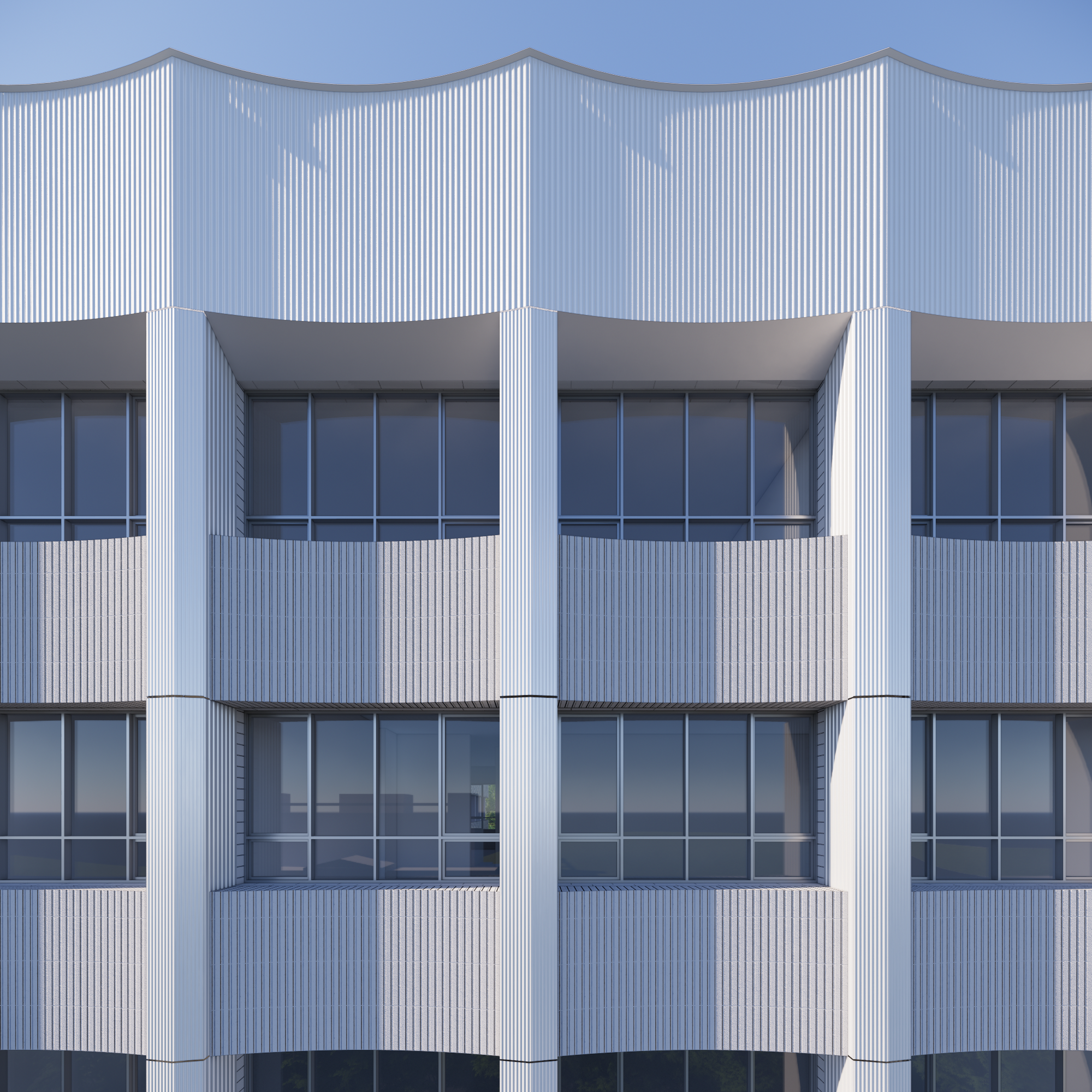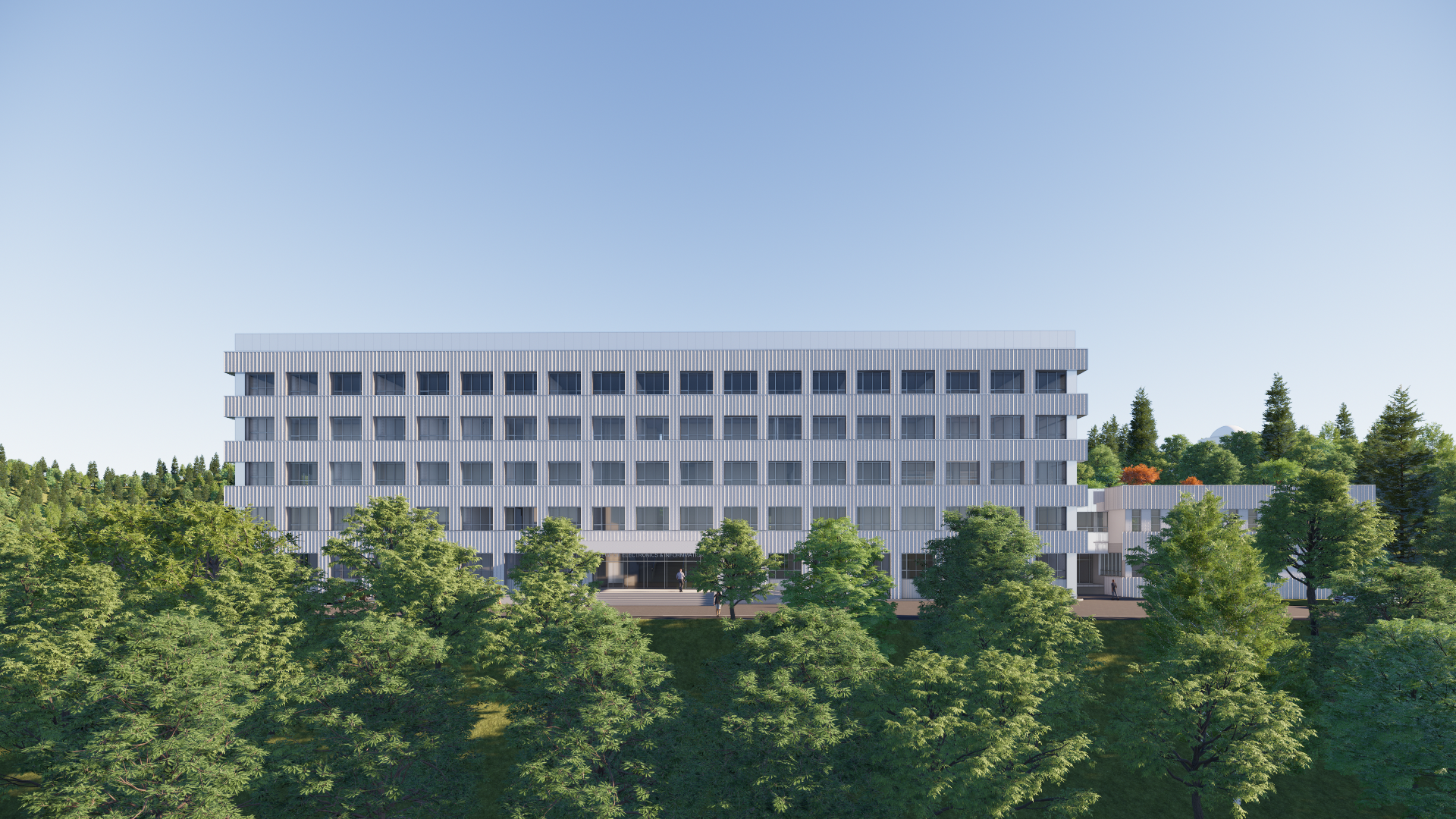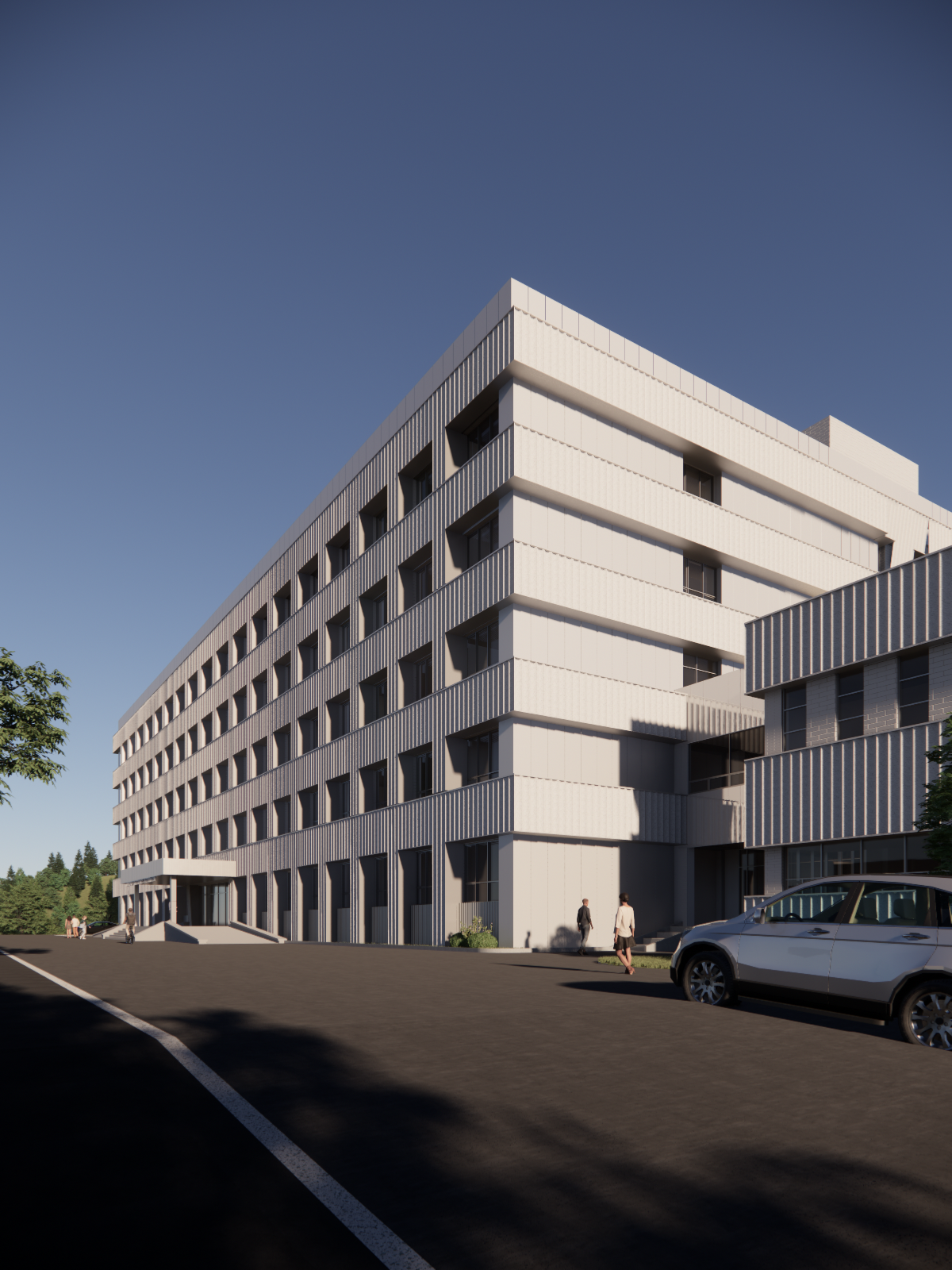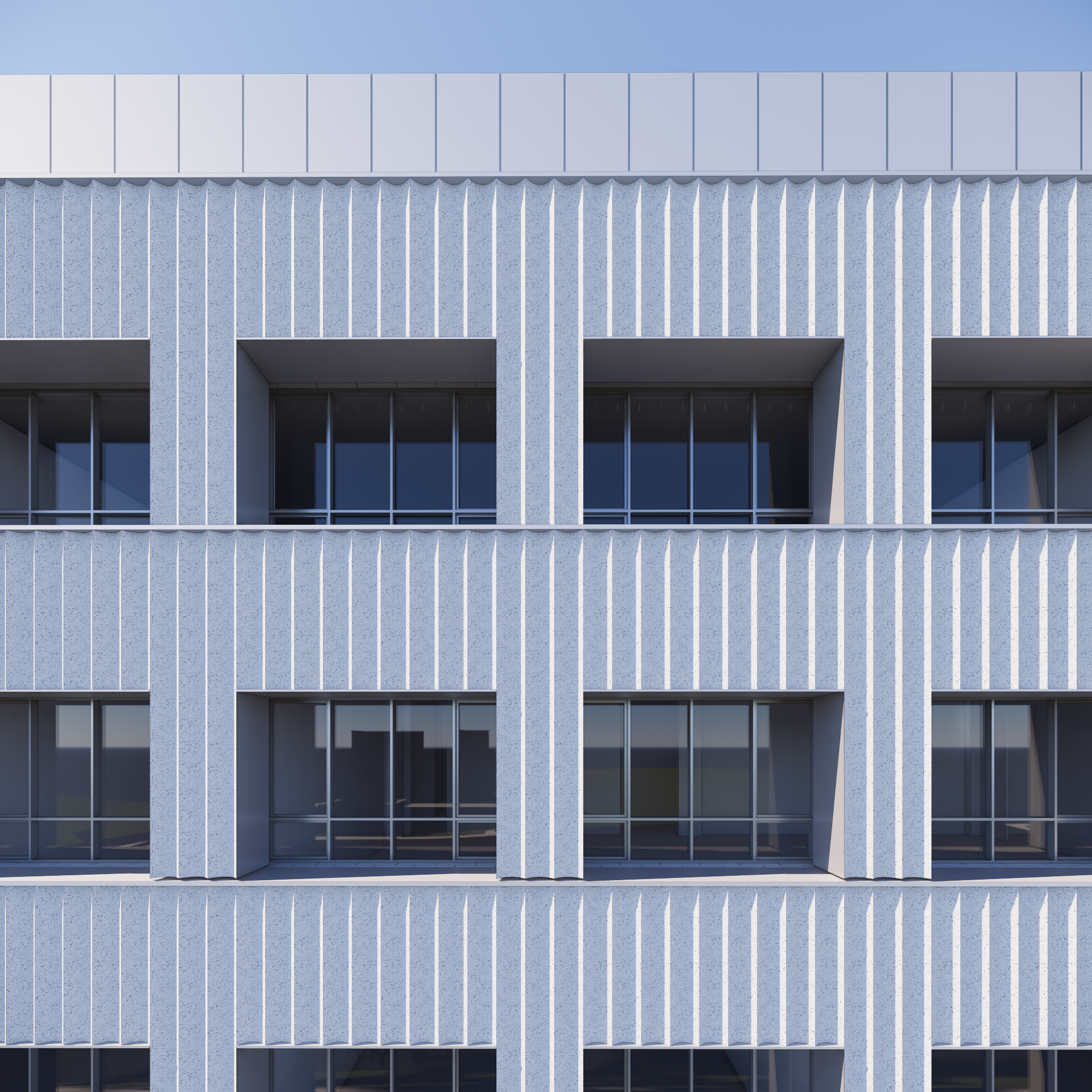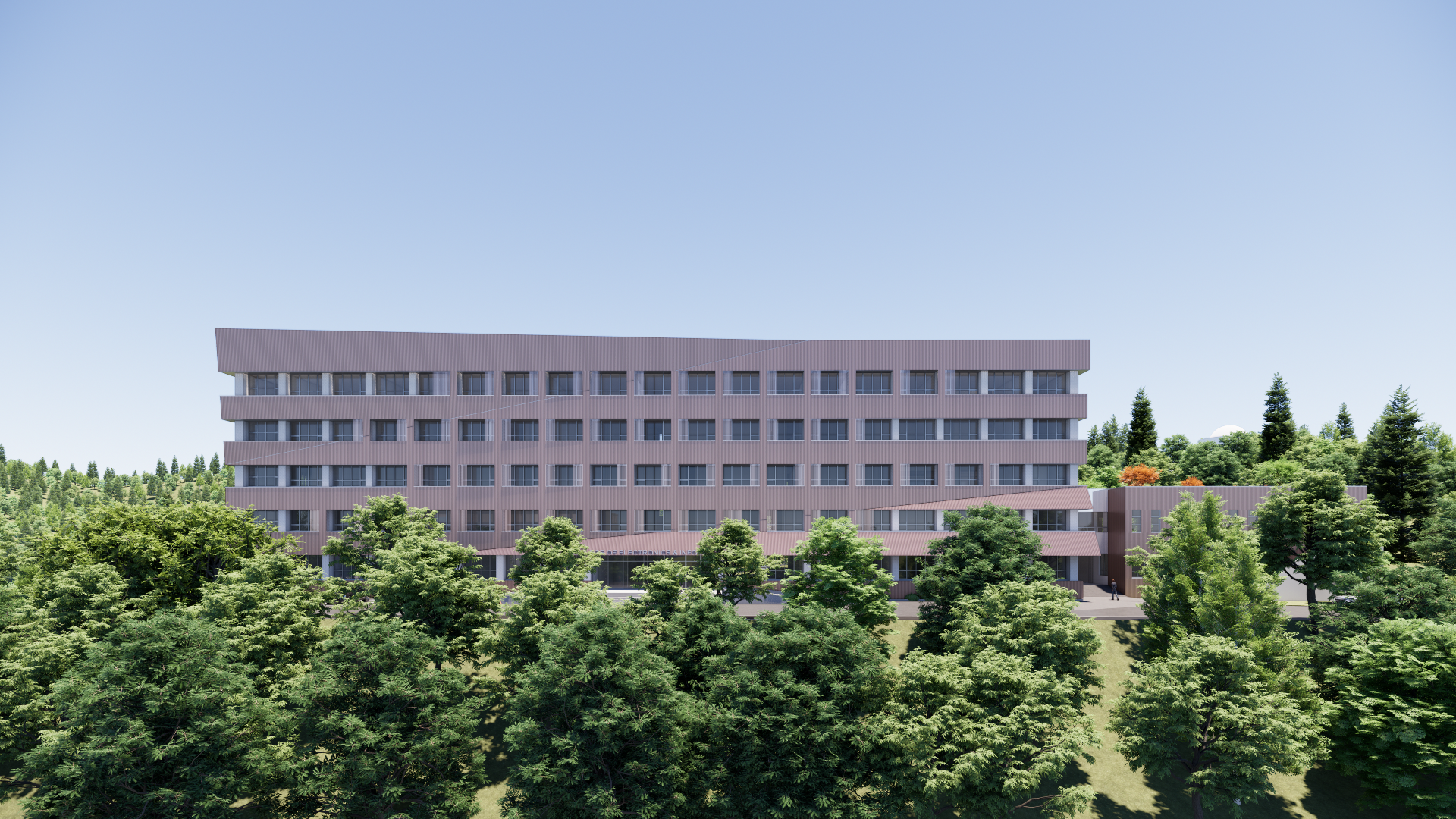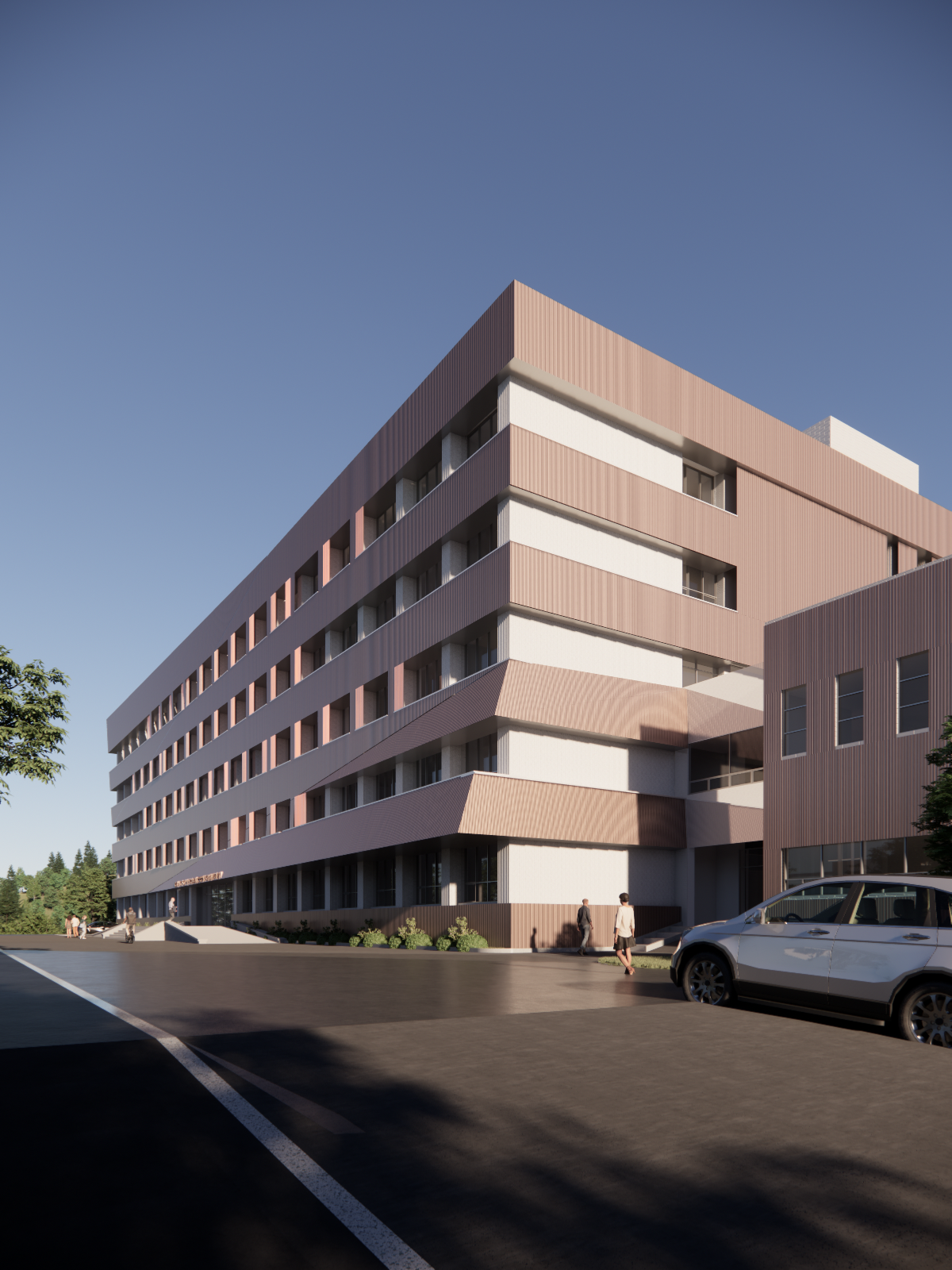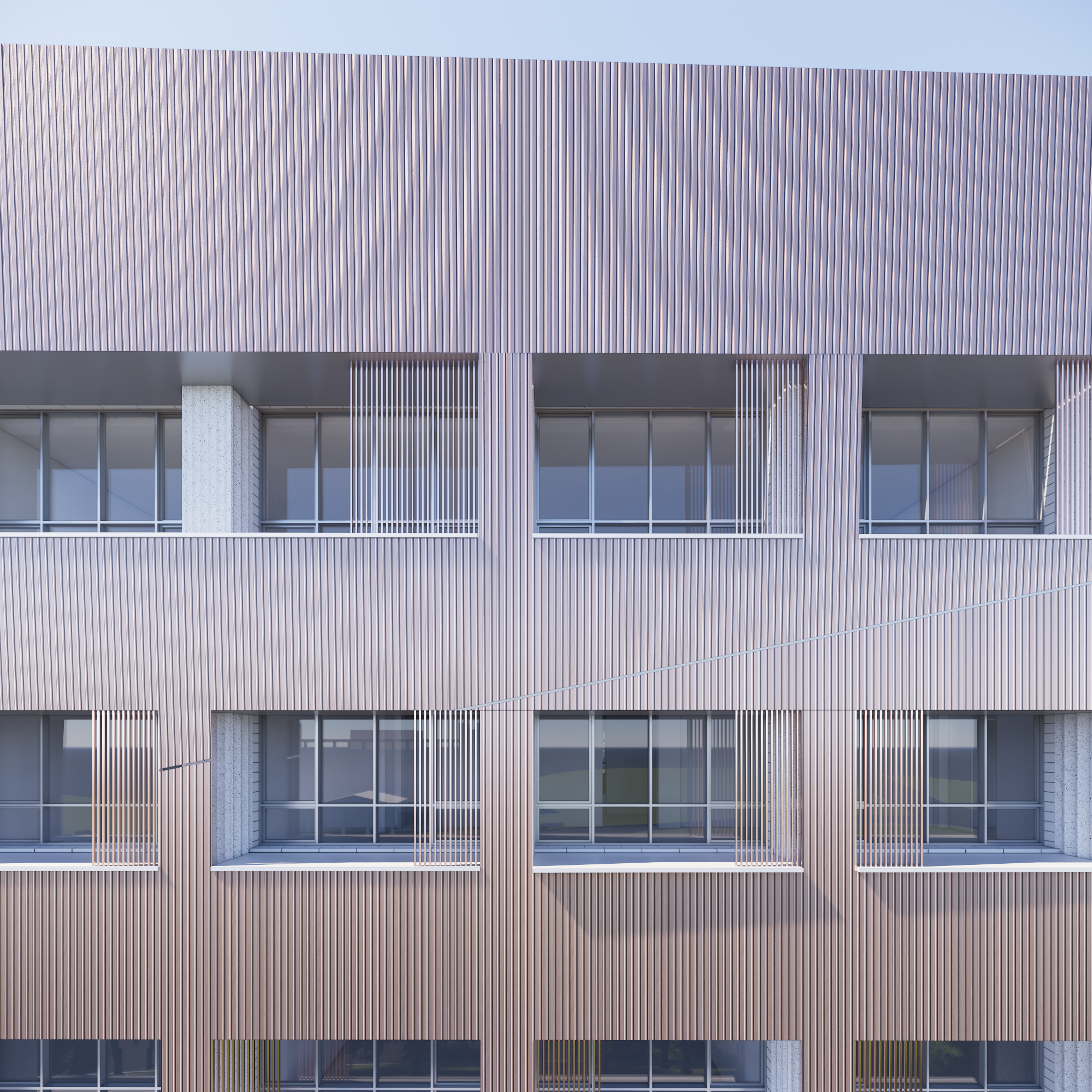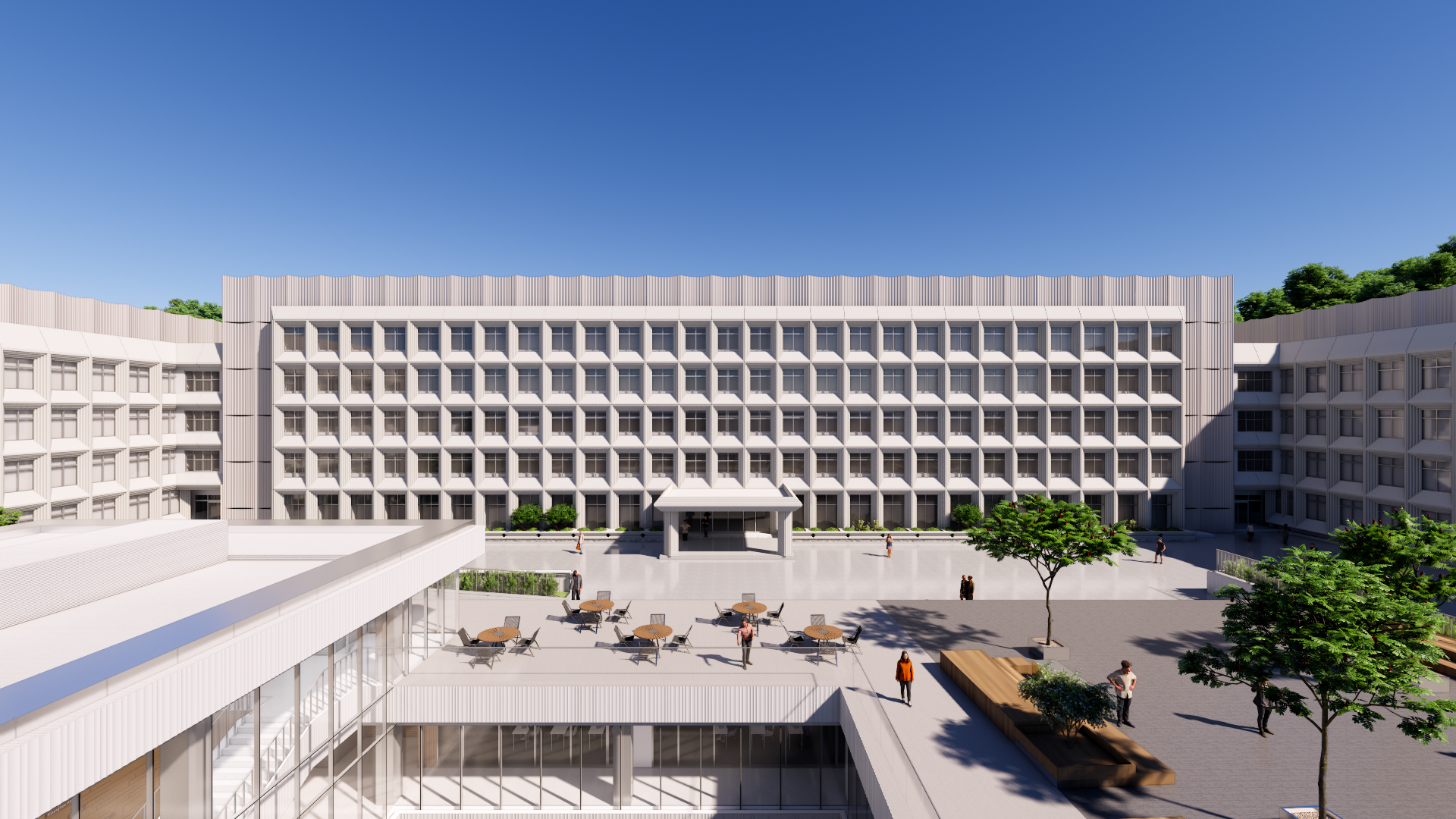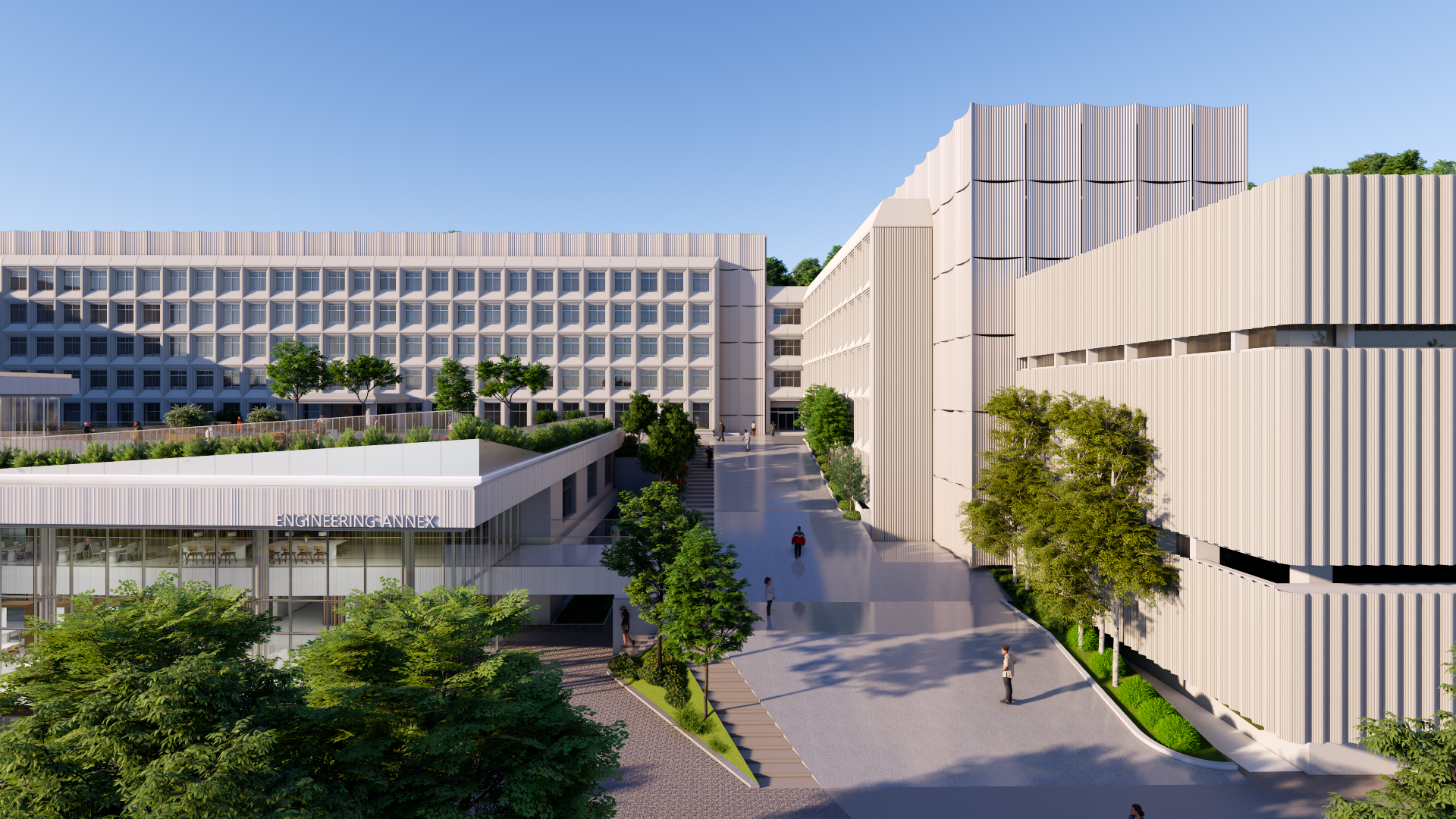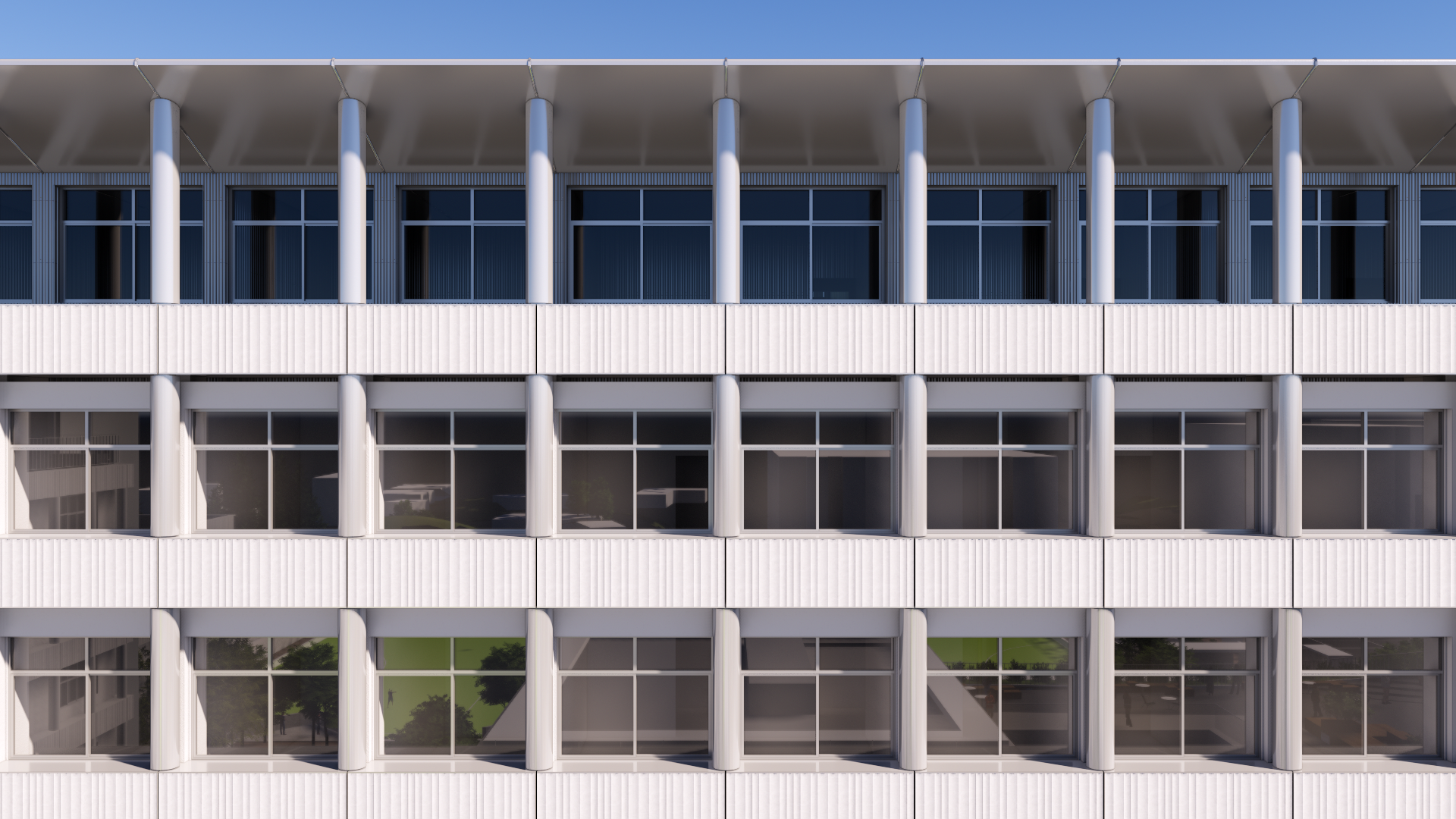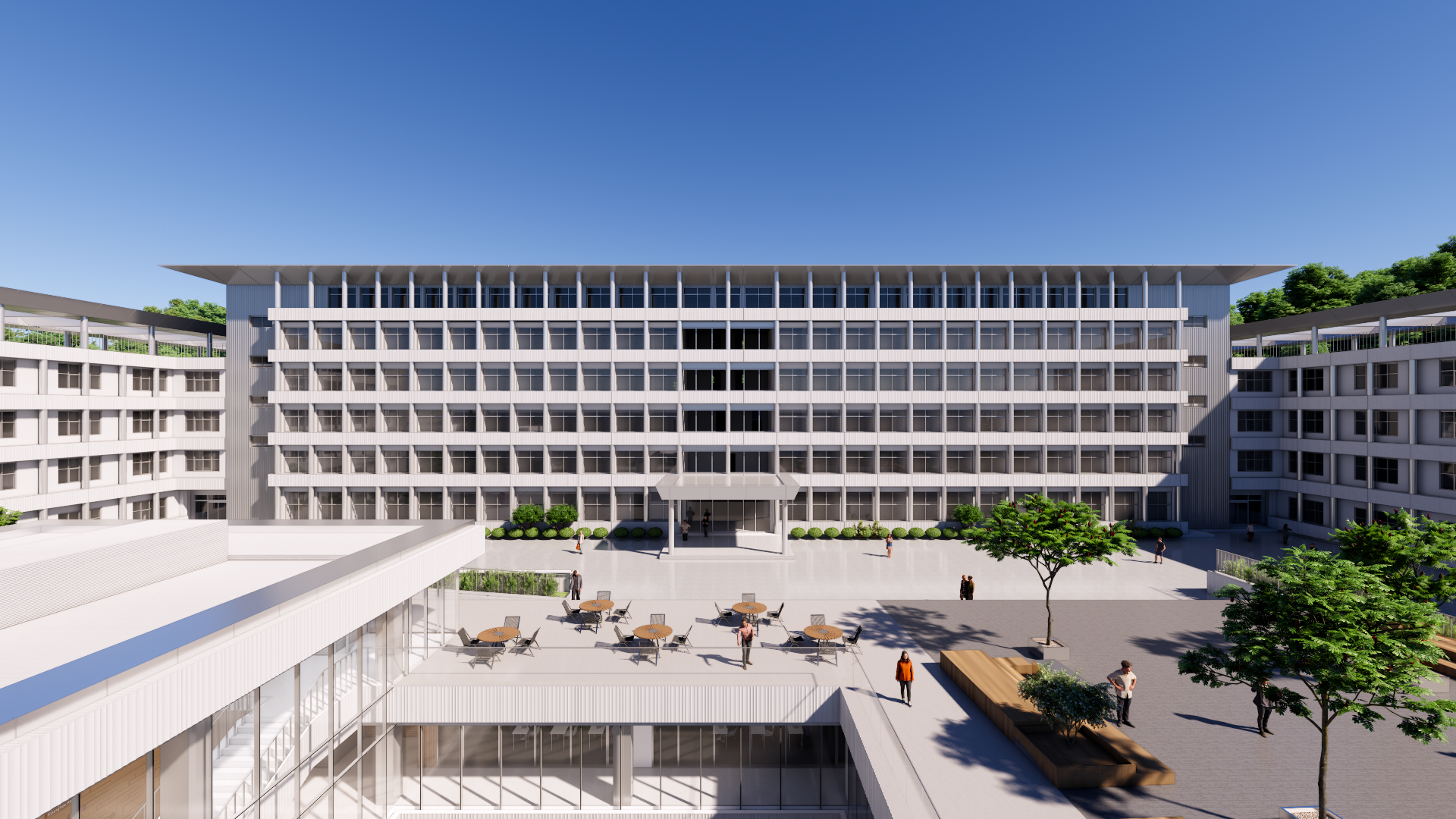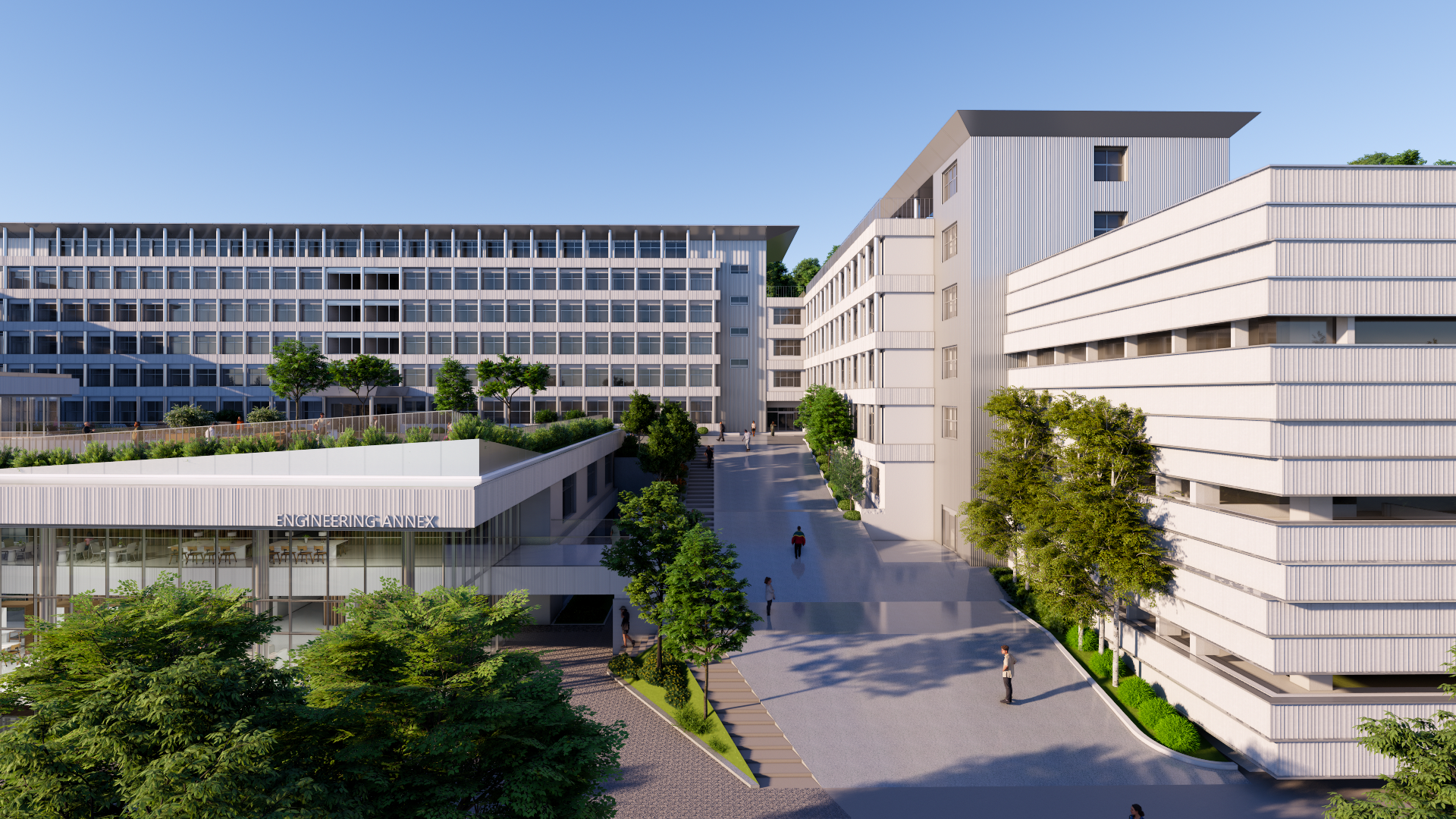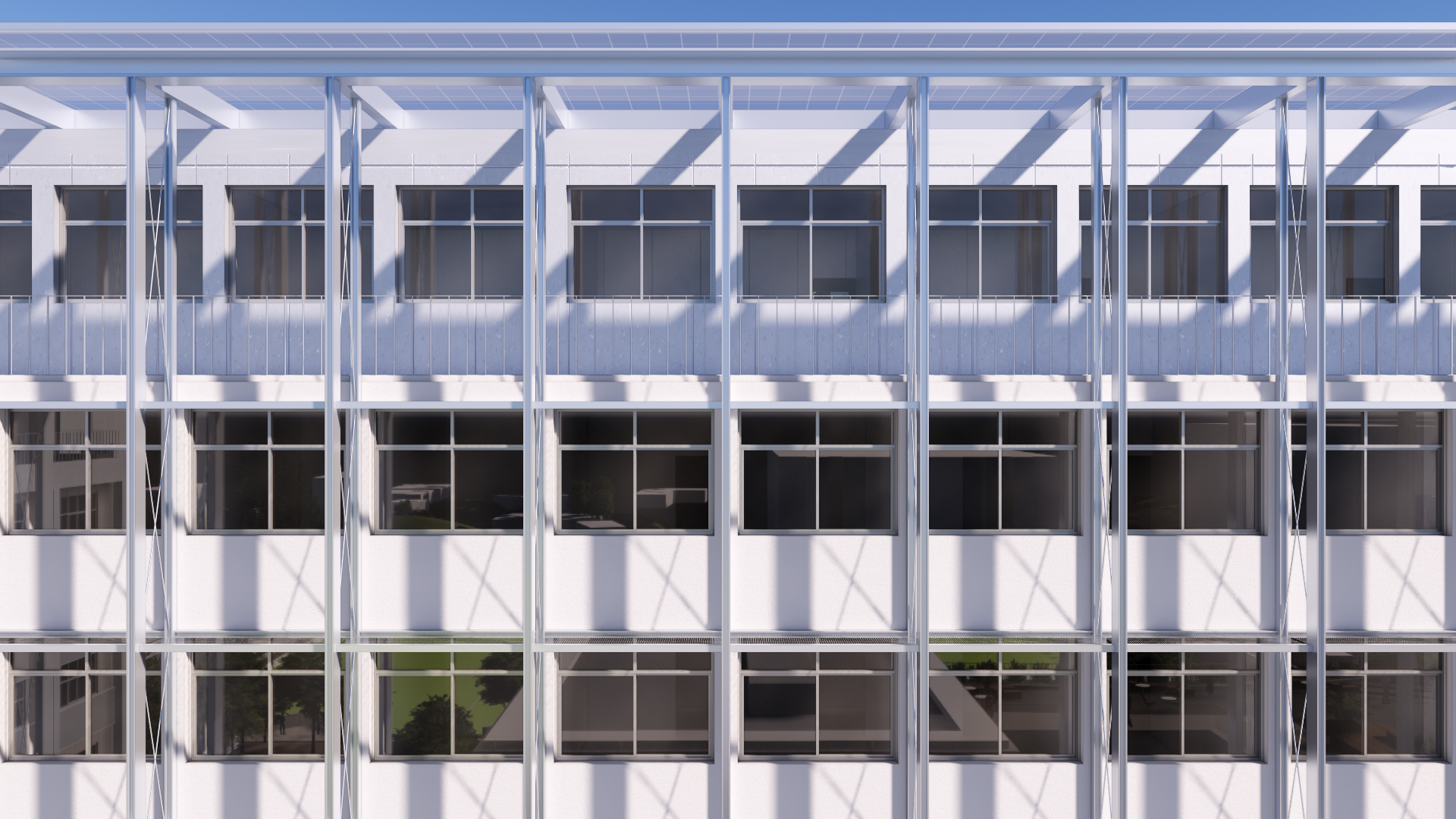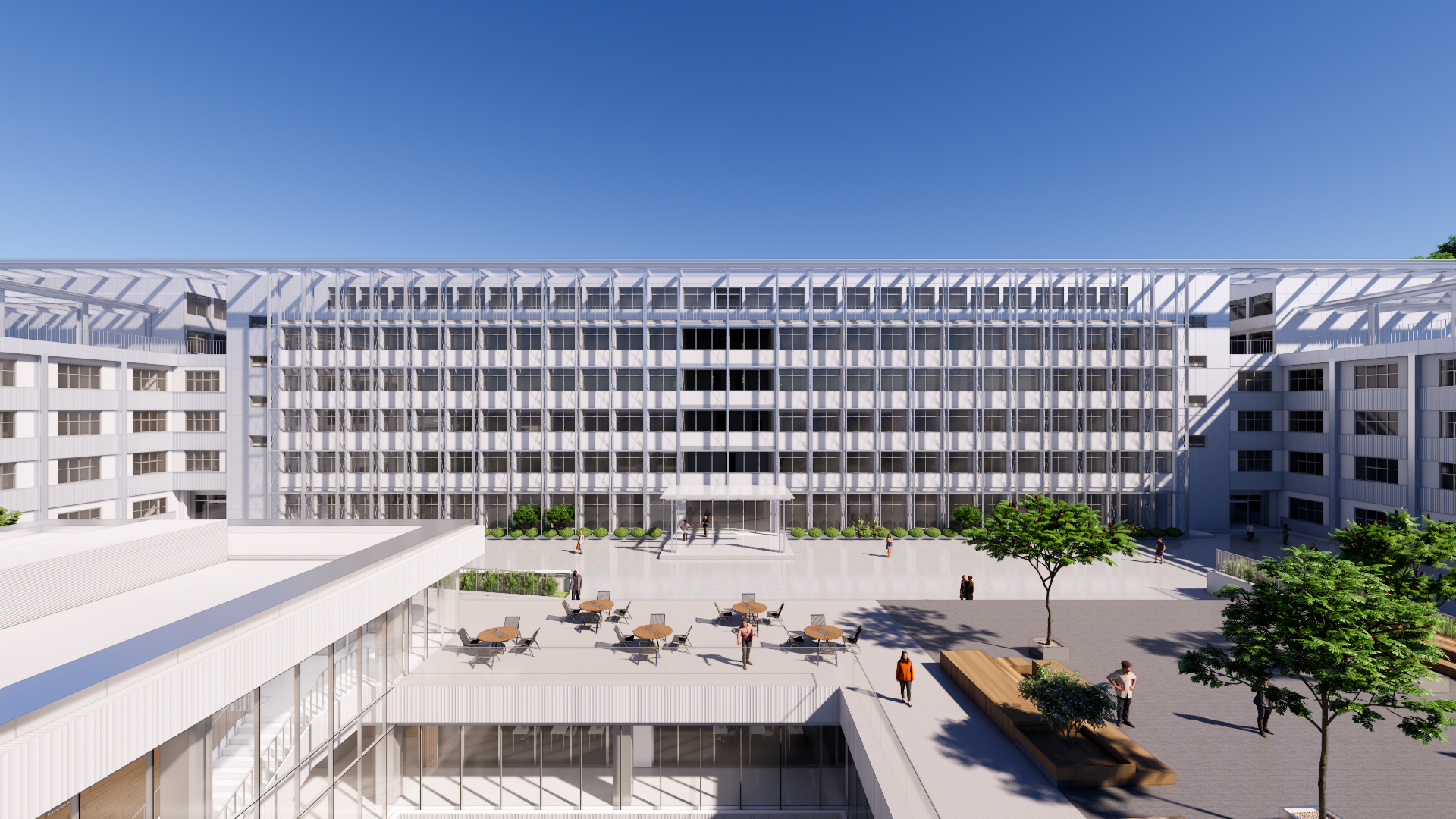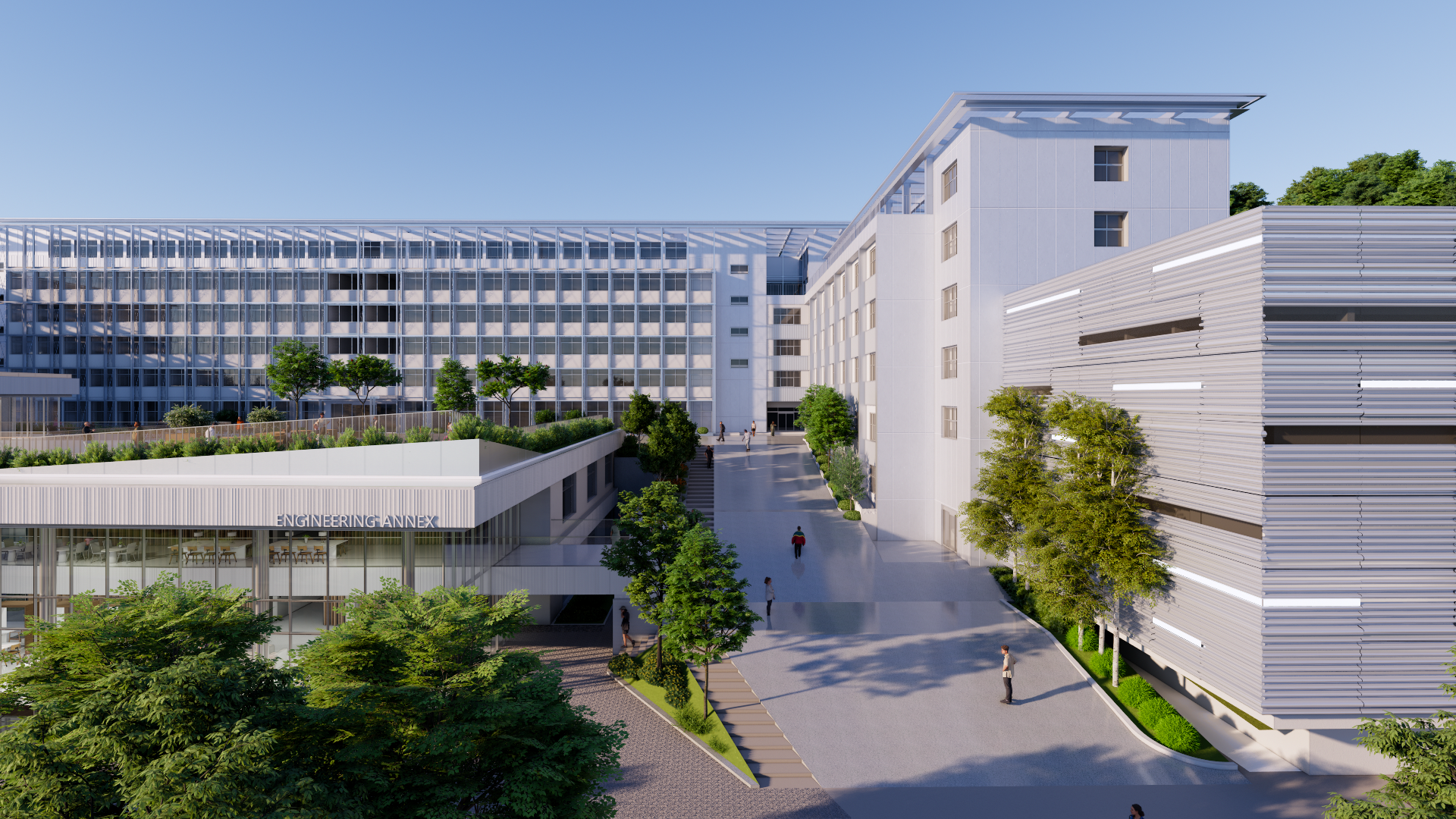
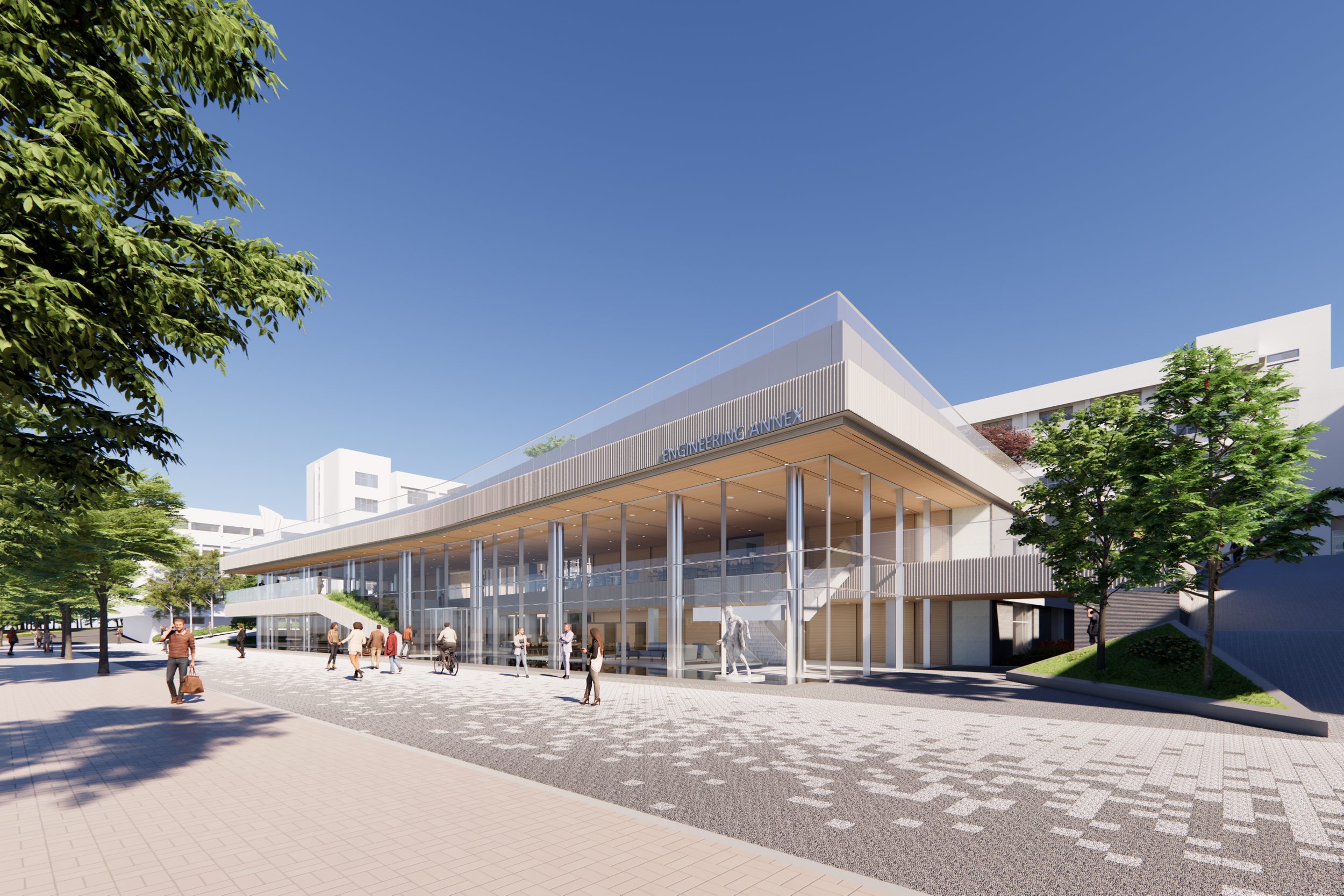
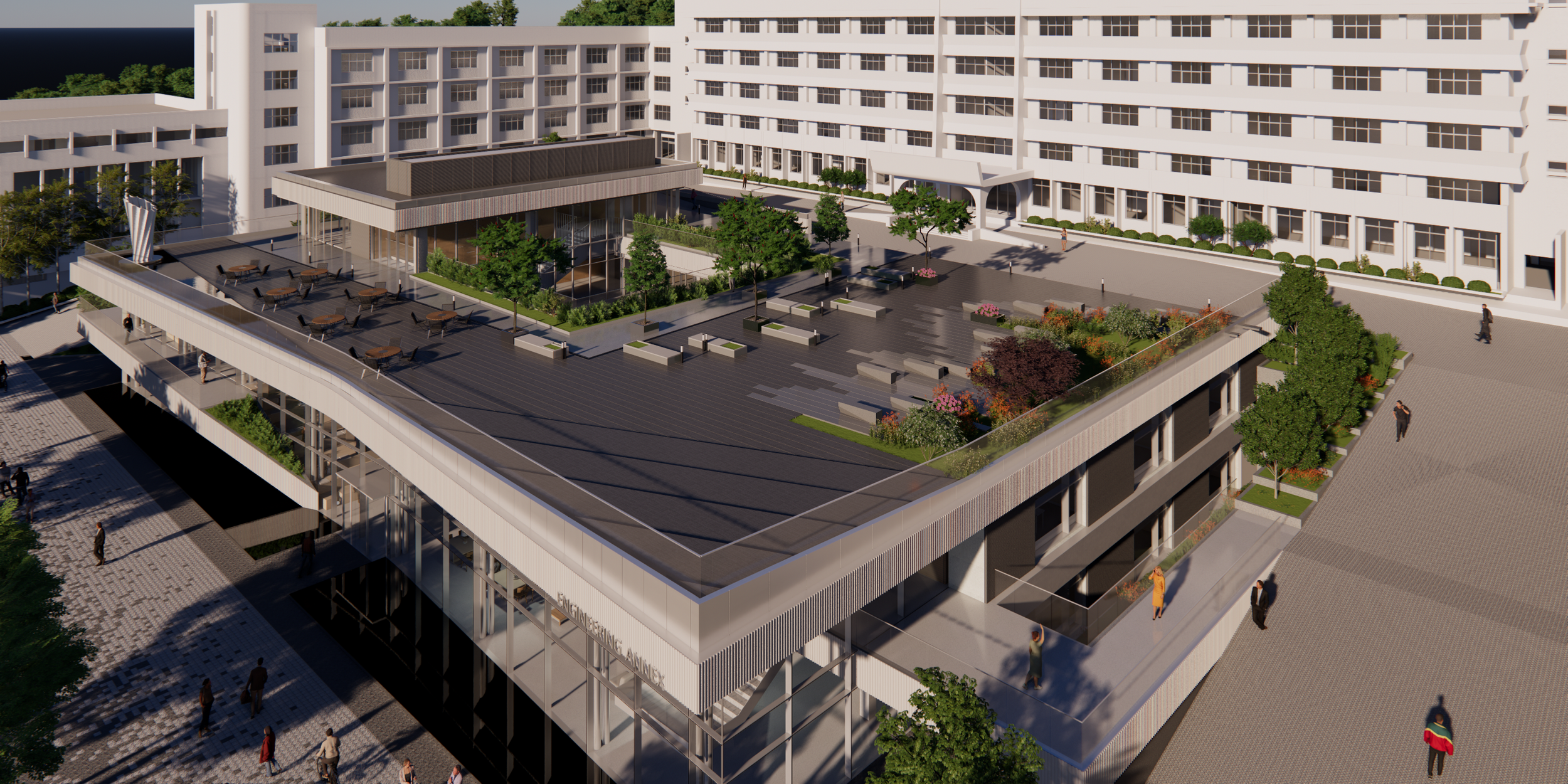
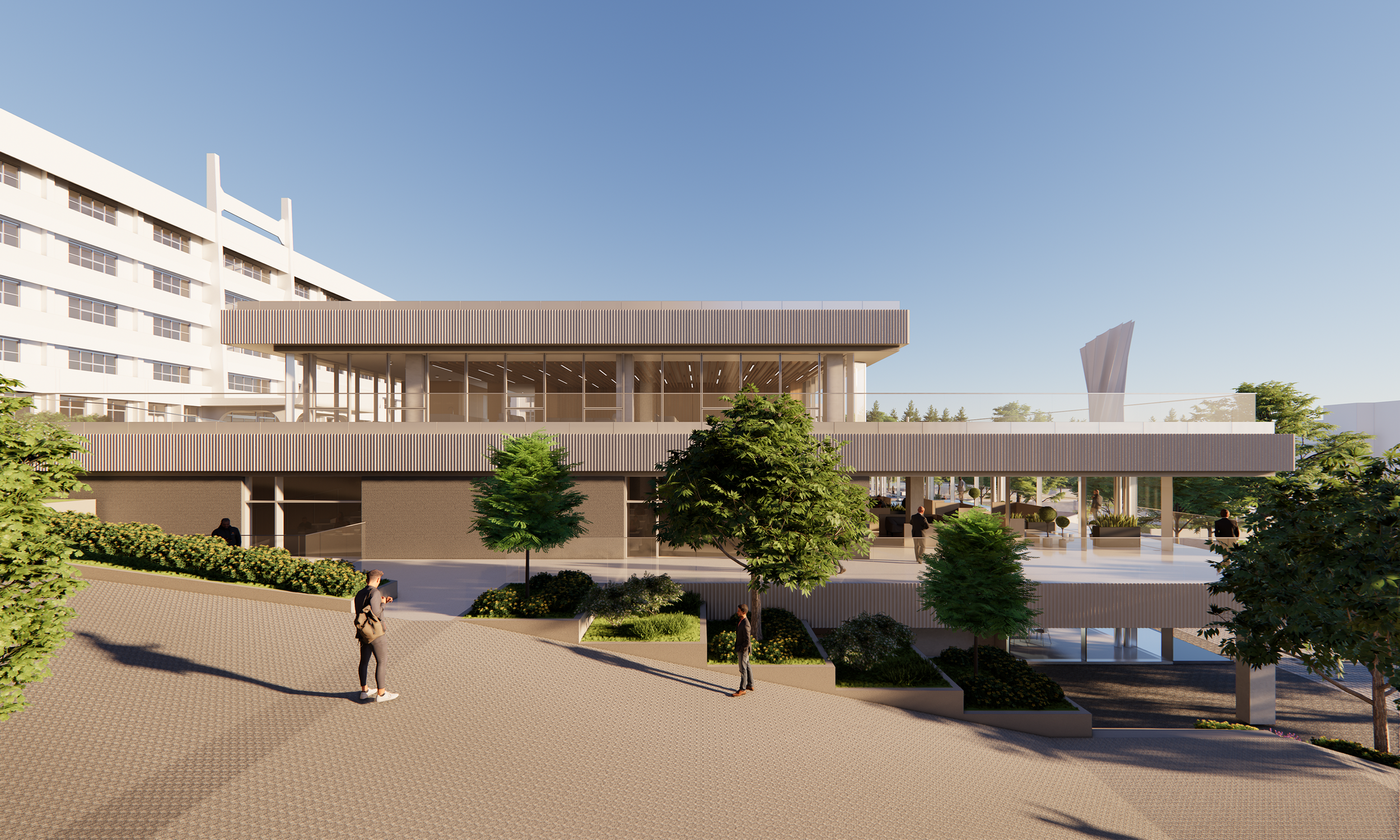
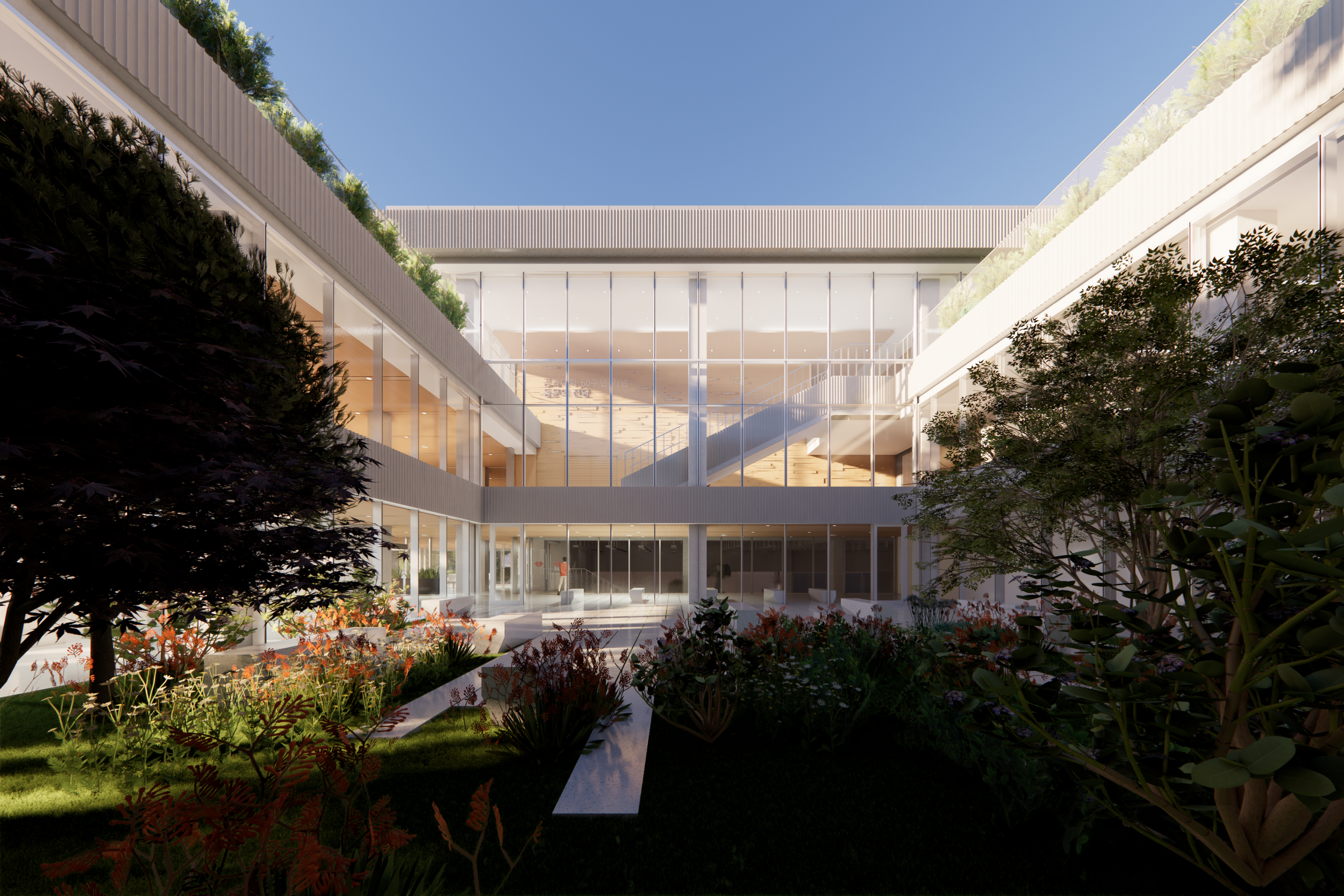
New College of Engineering Annex Kyung Hee University

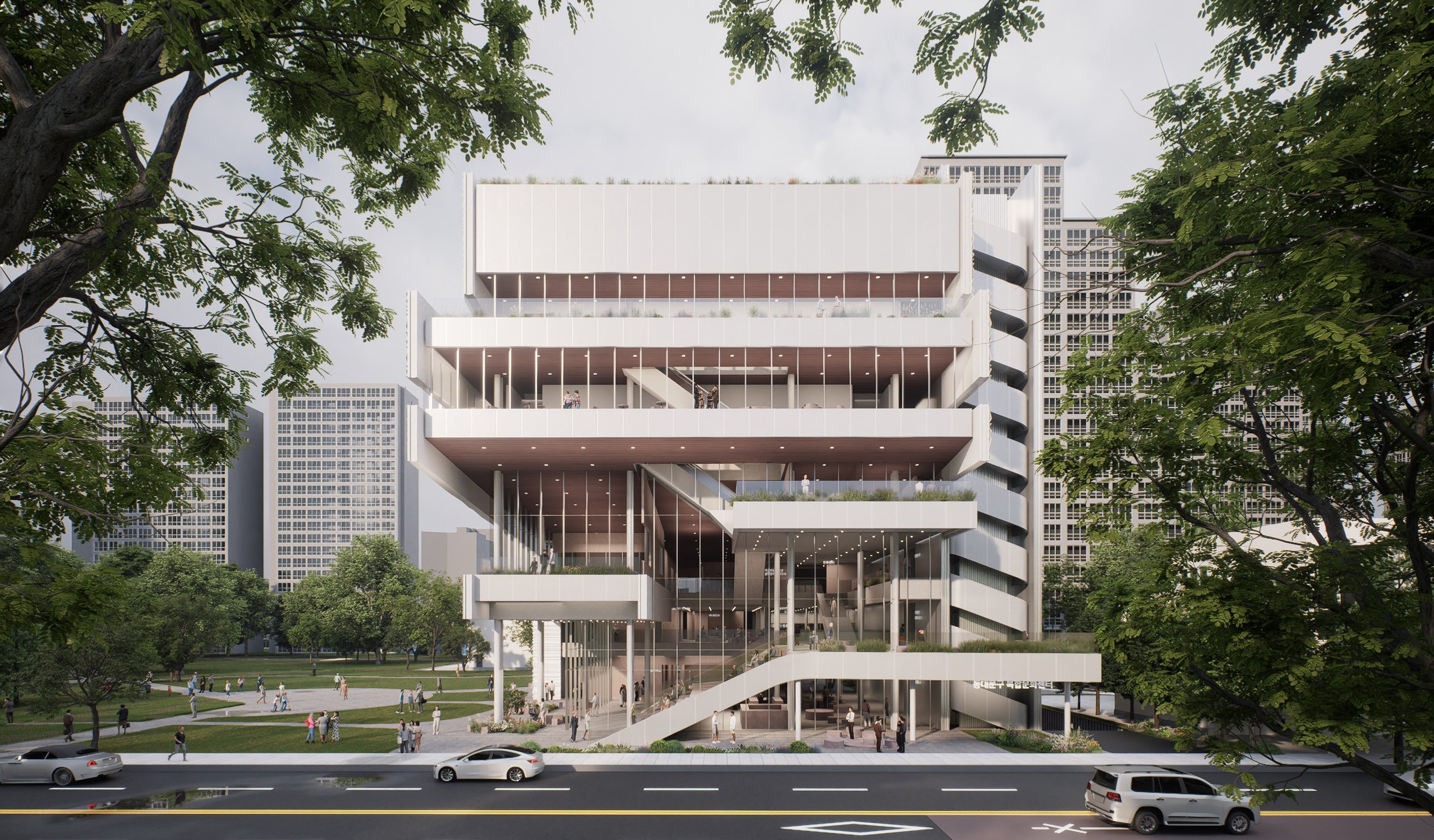
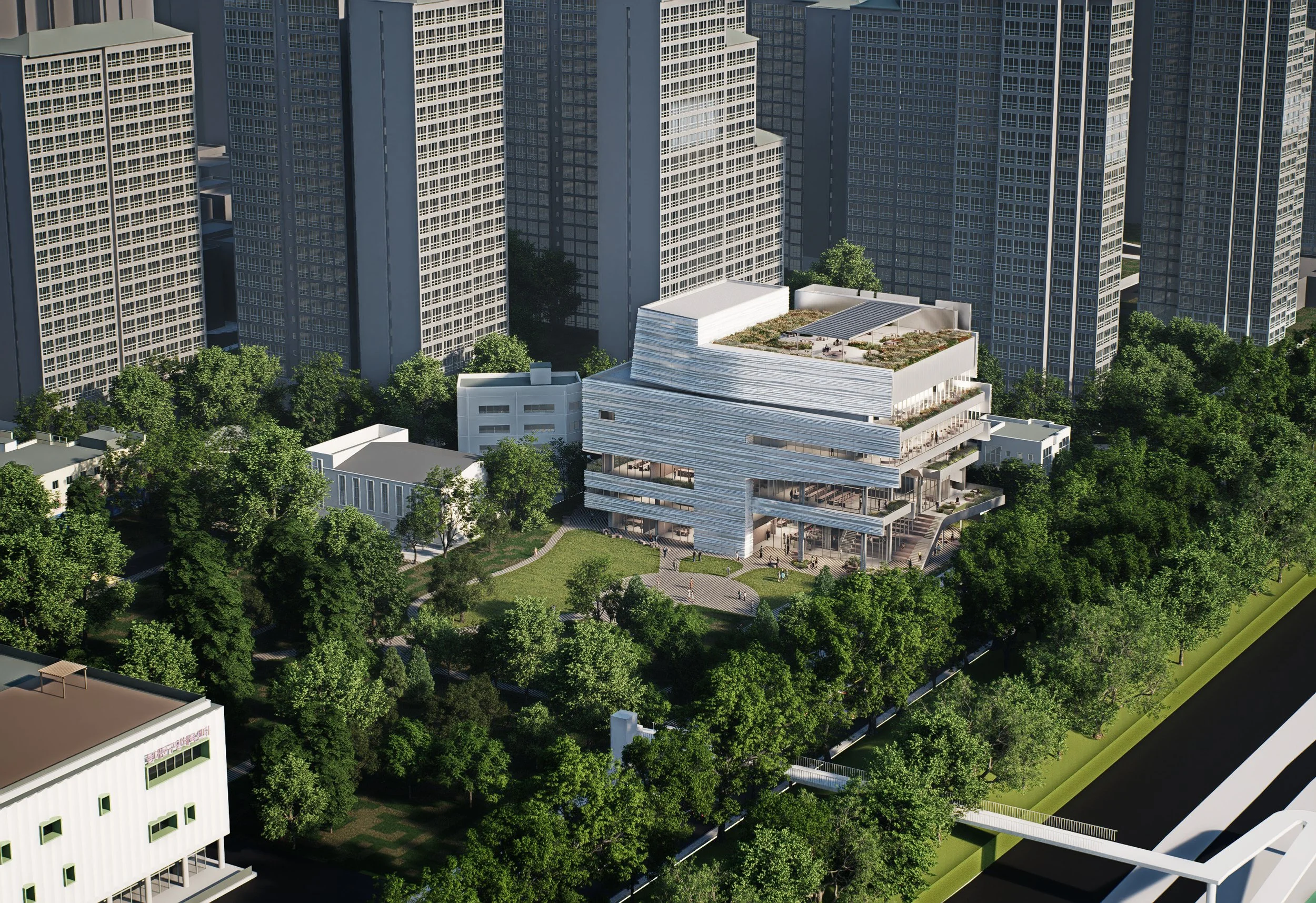
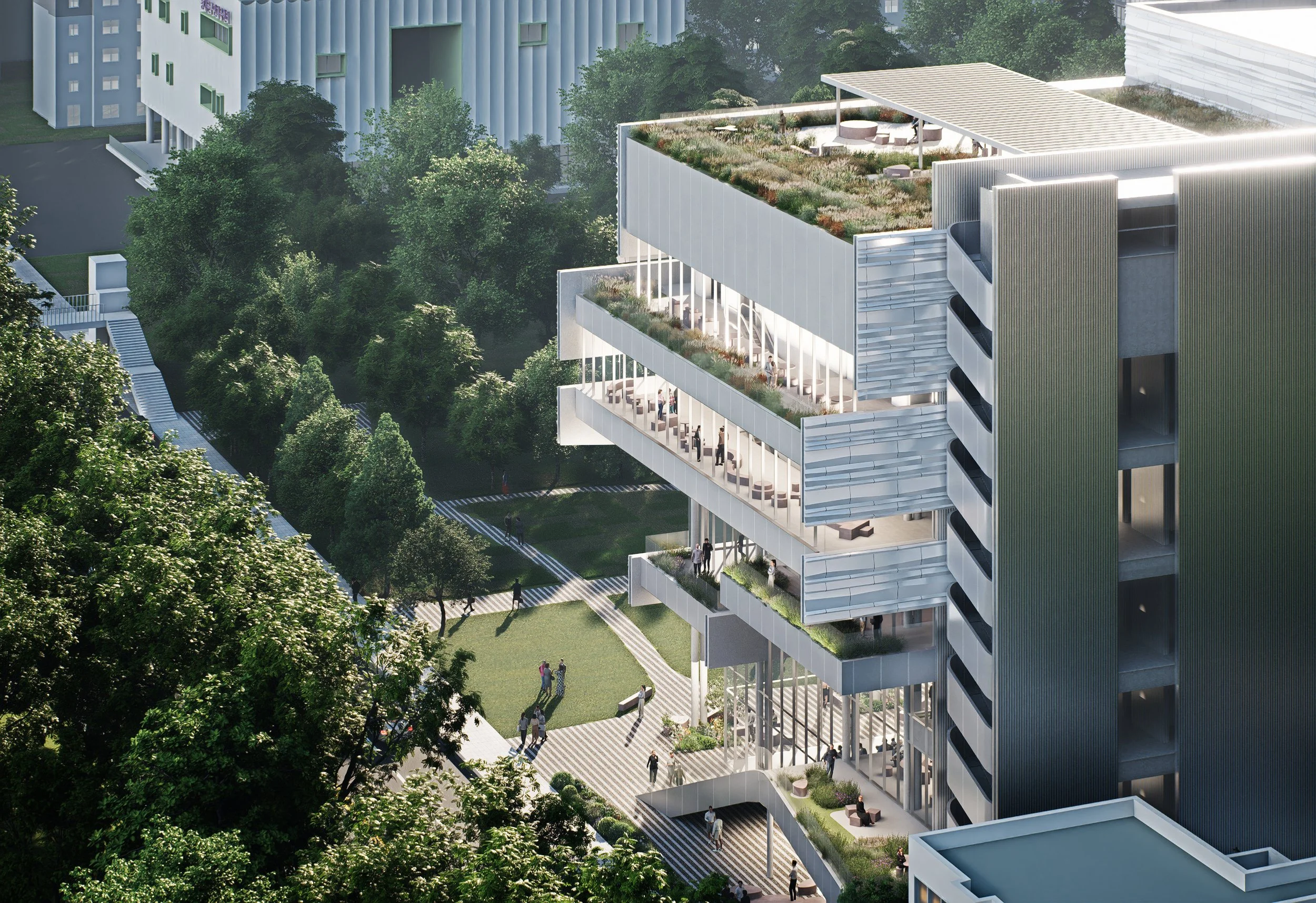
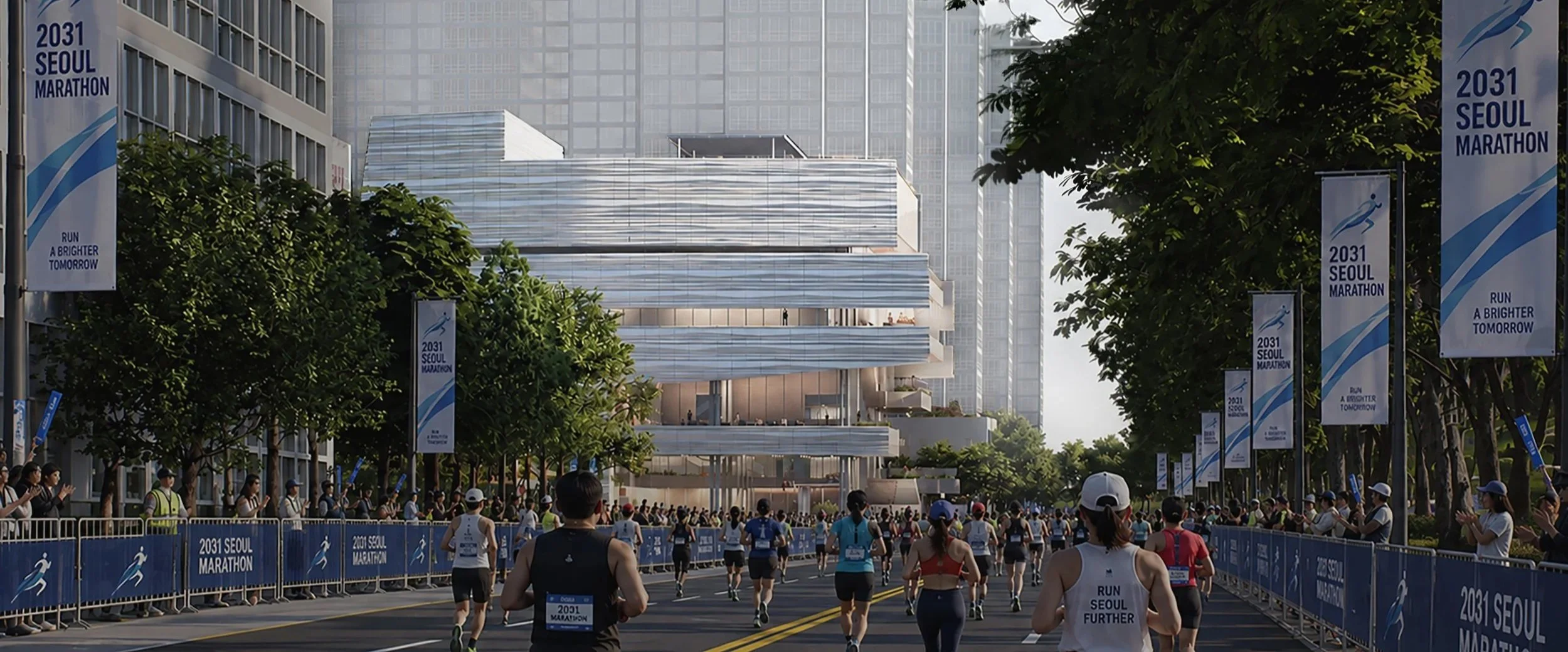
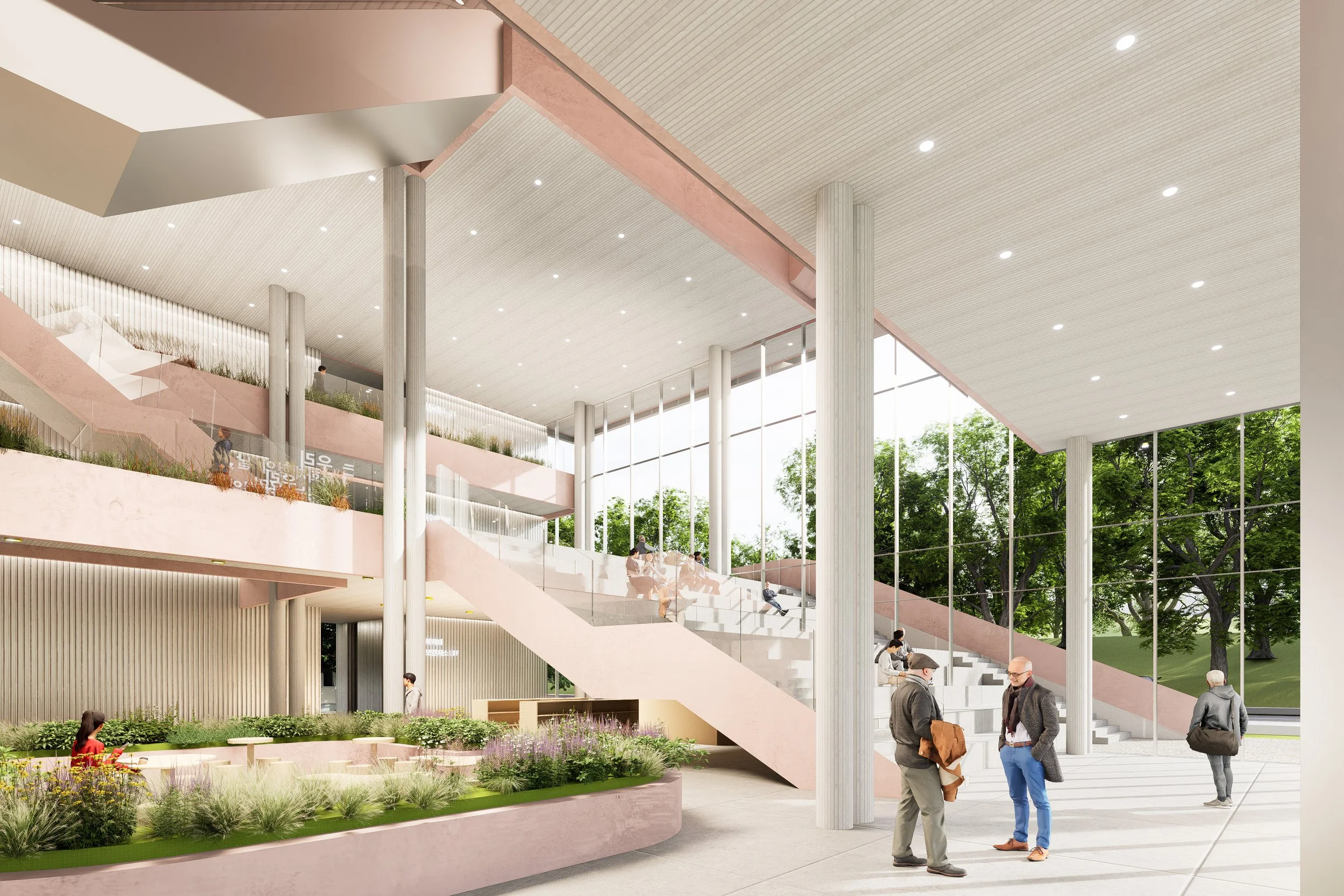
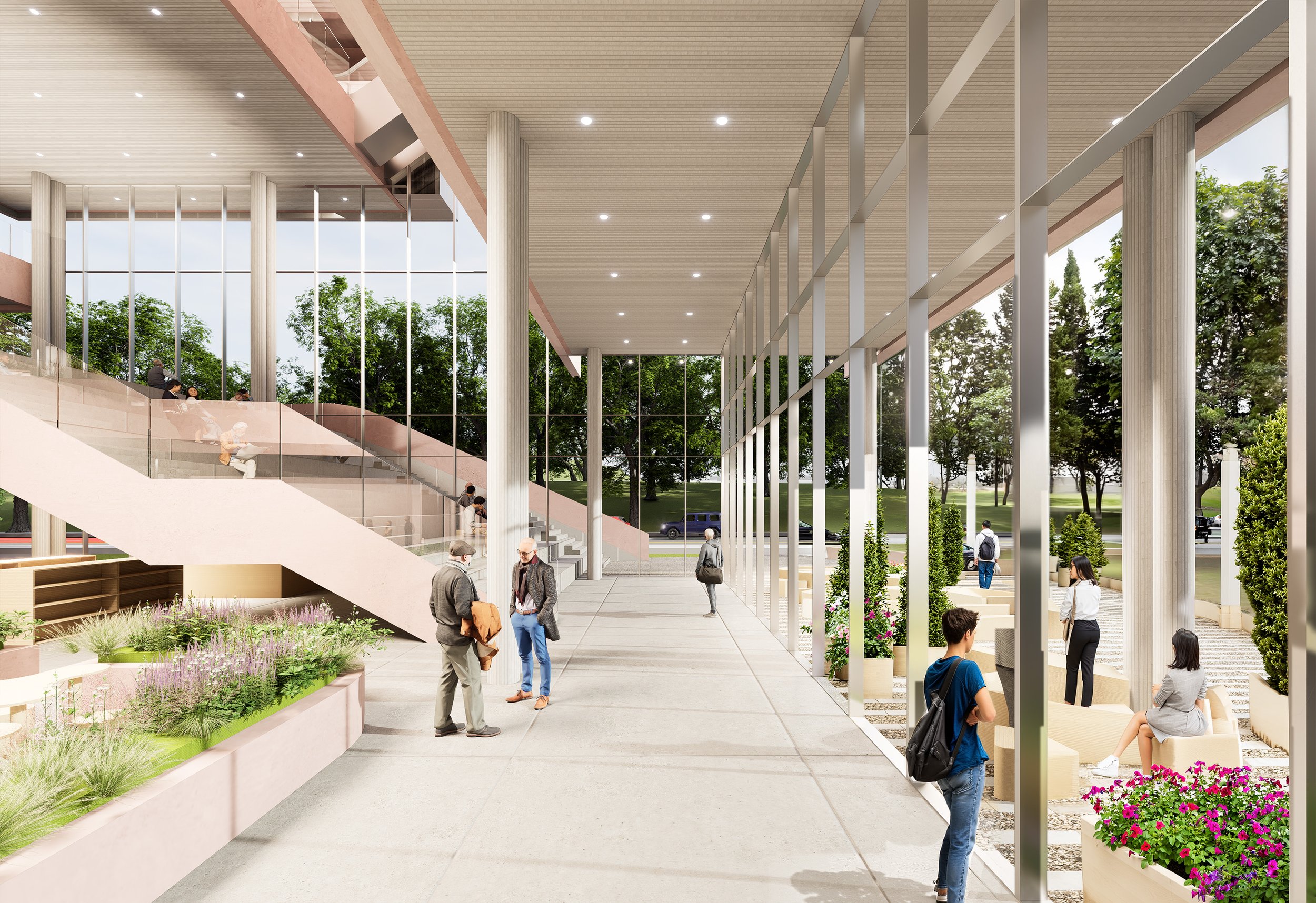
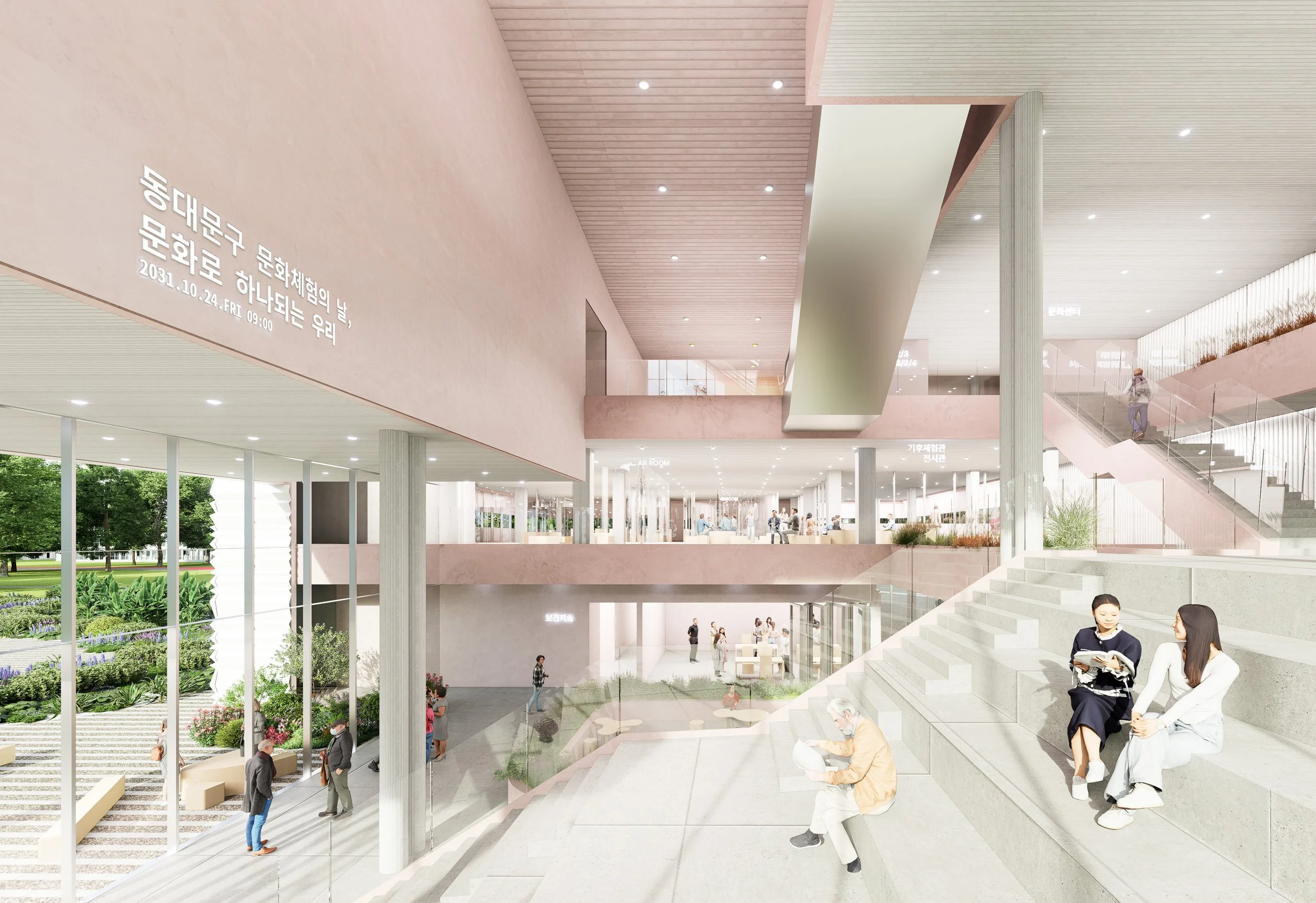
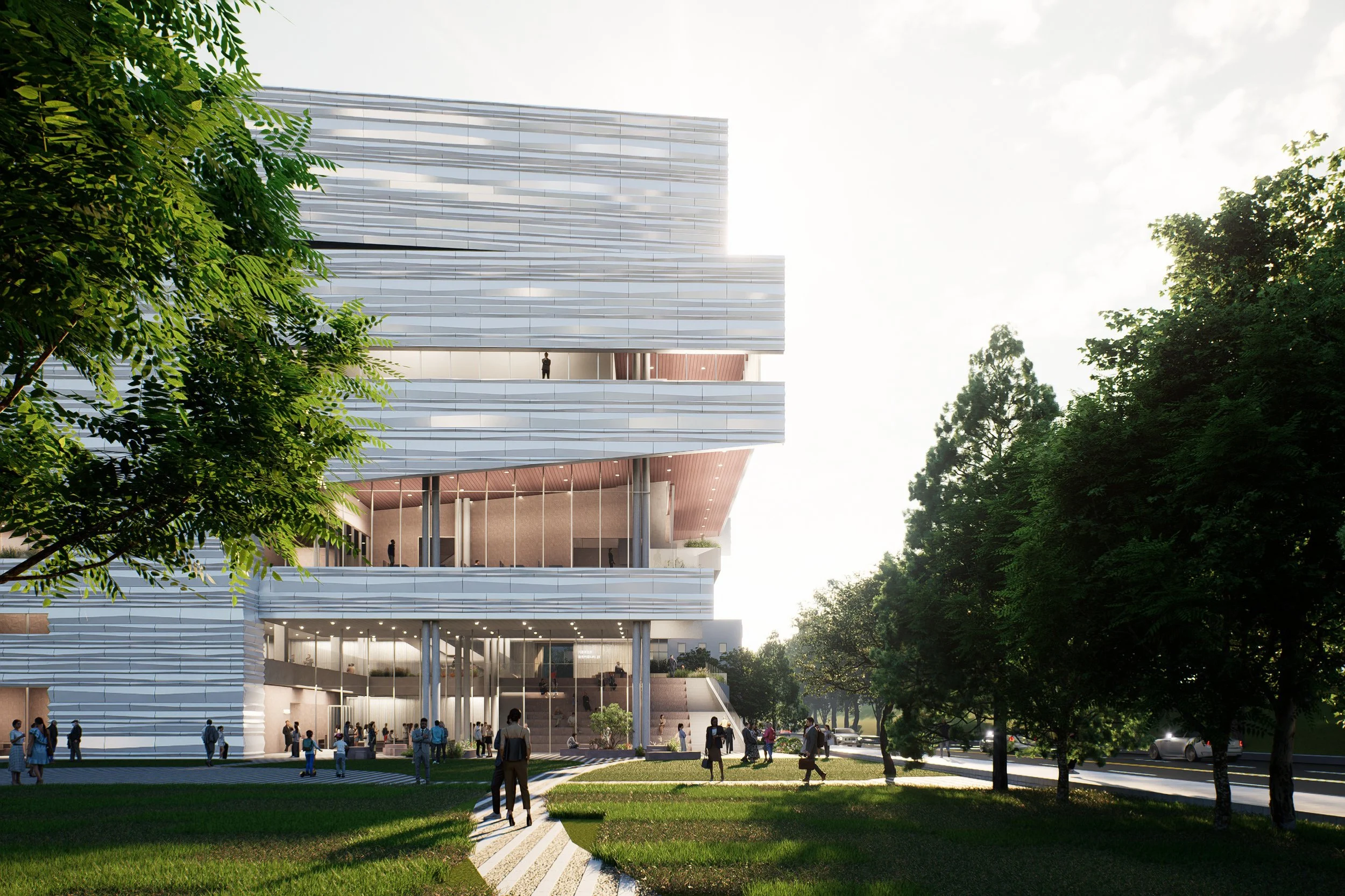
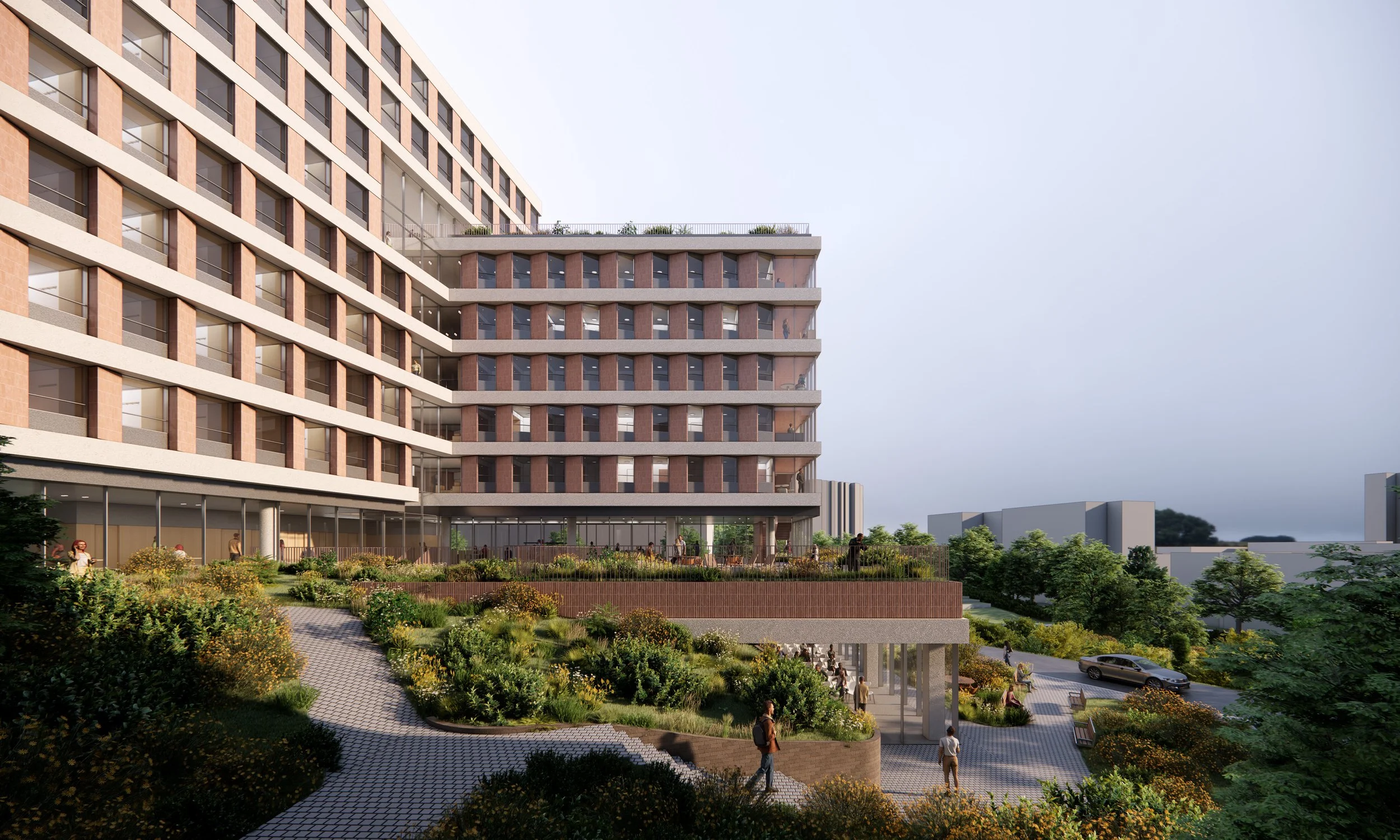
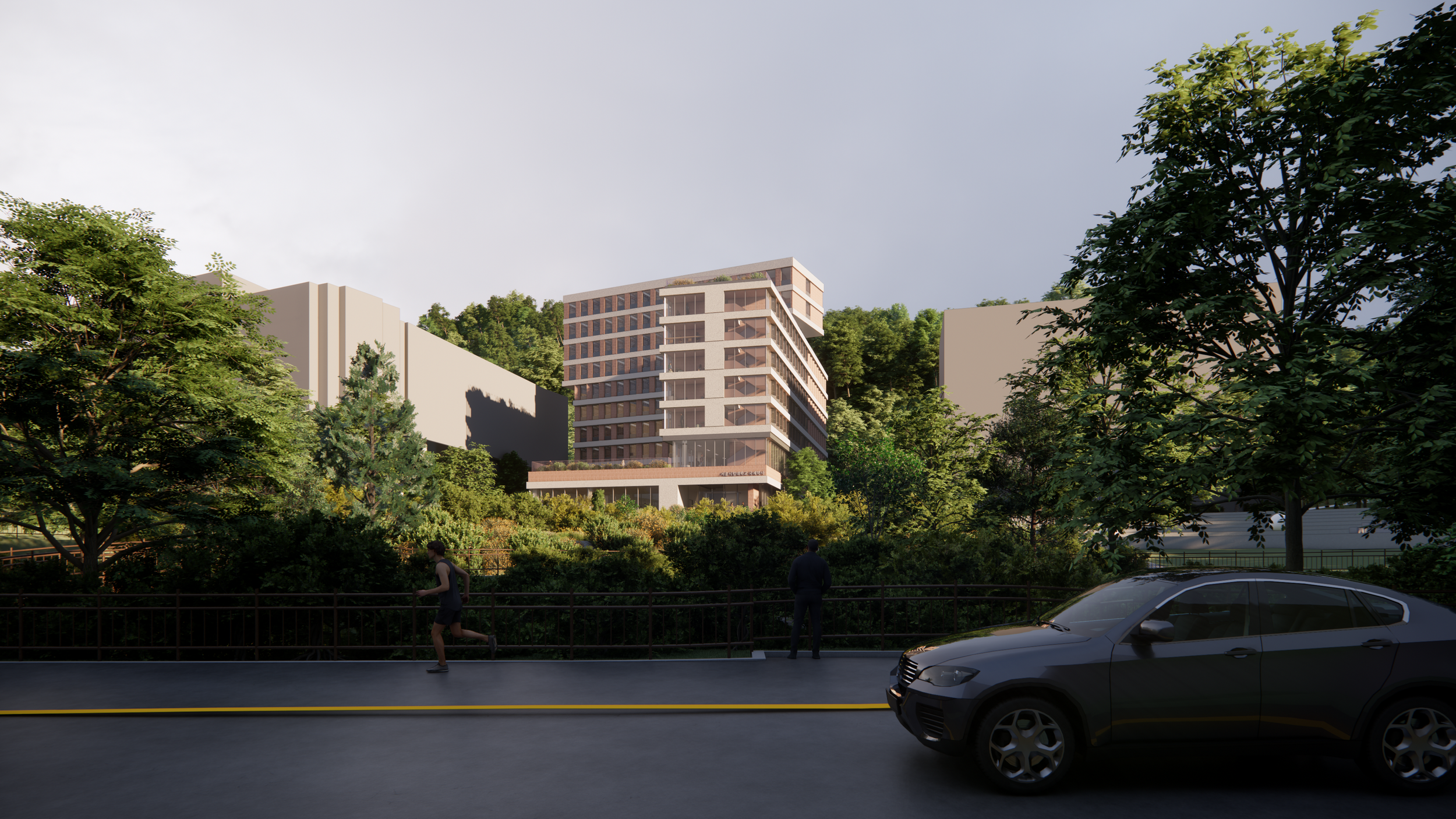
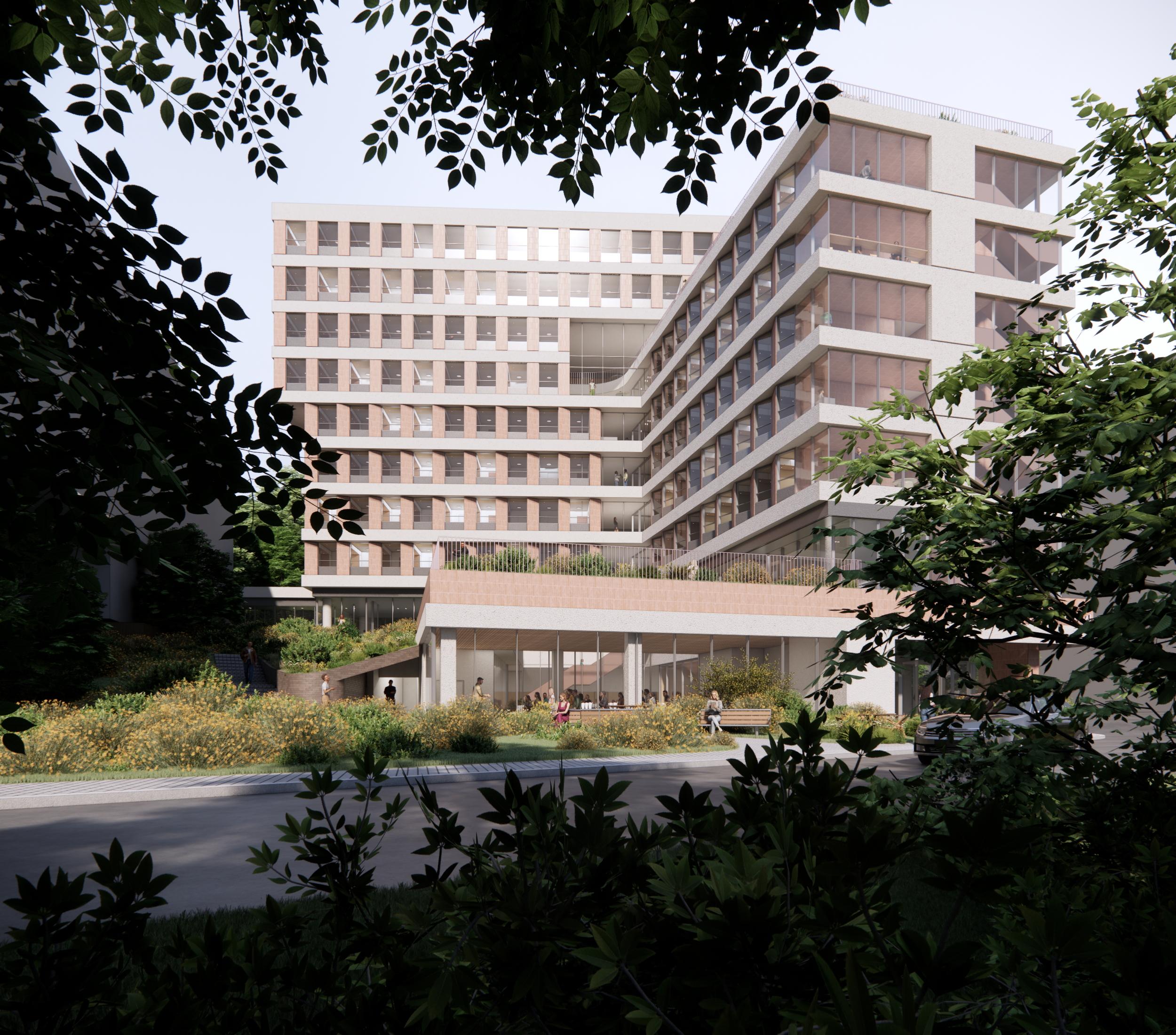
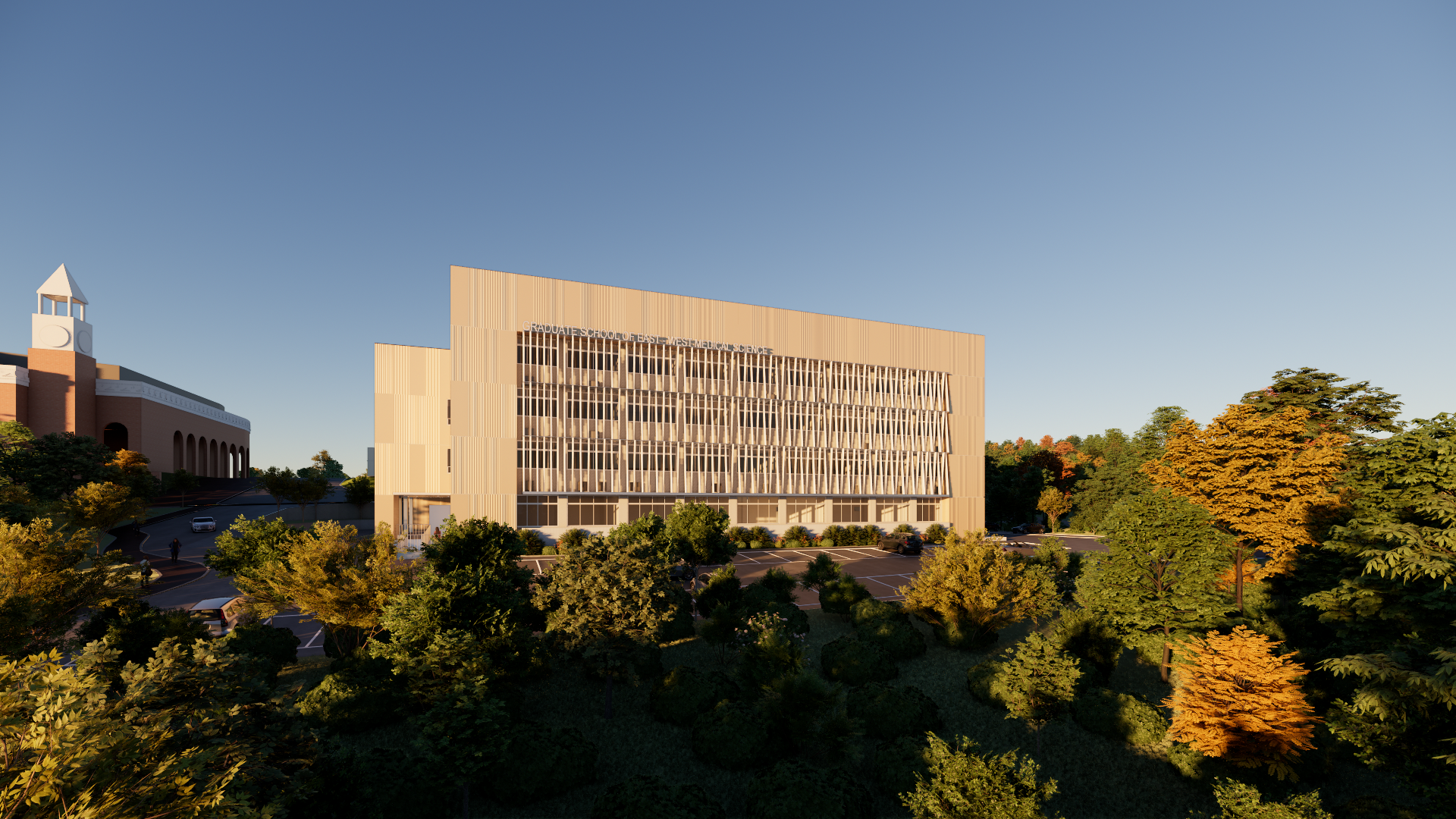
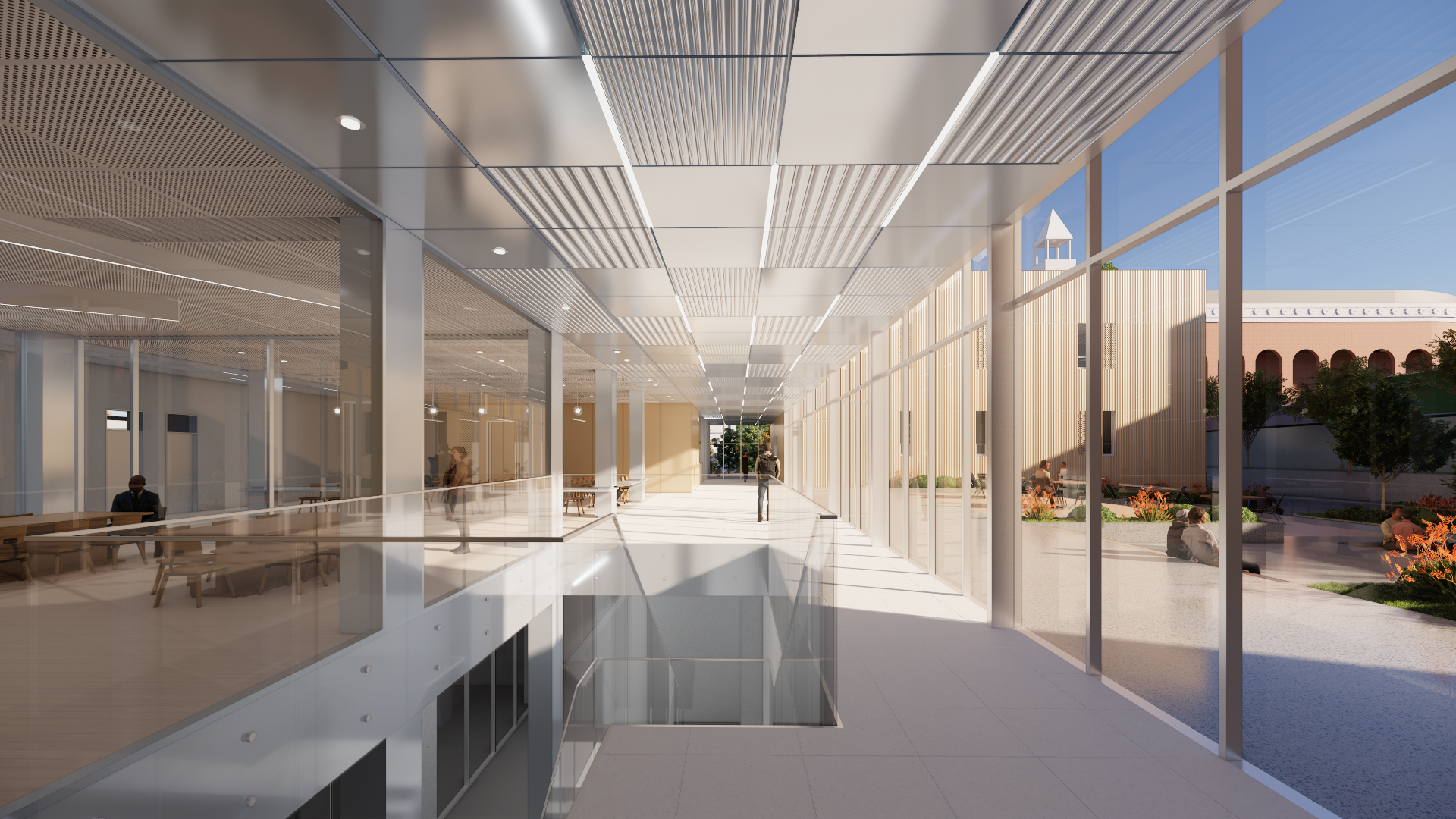
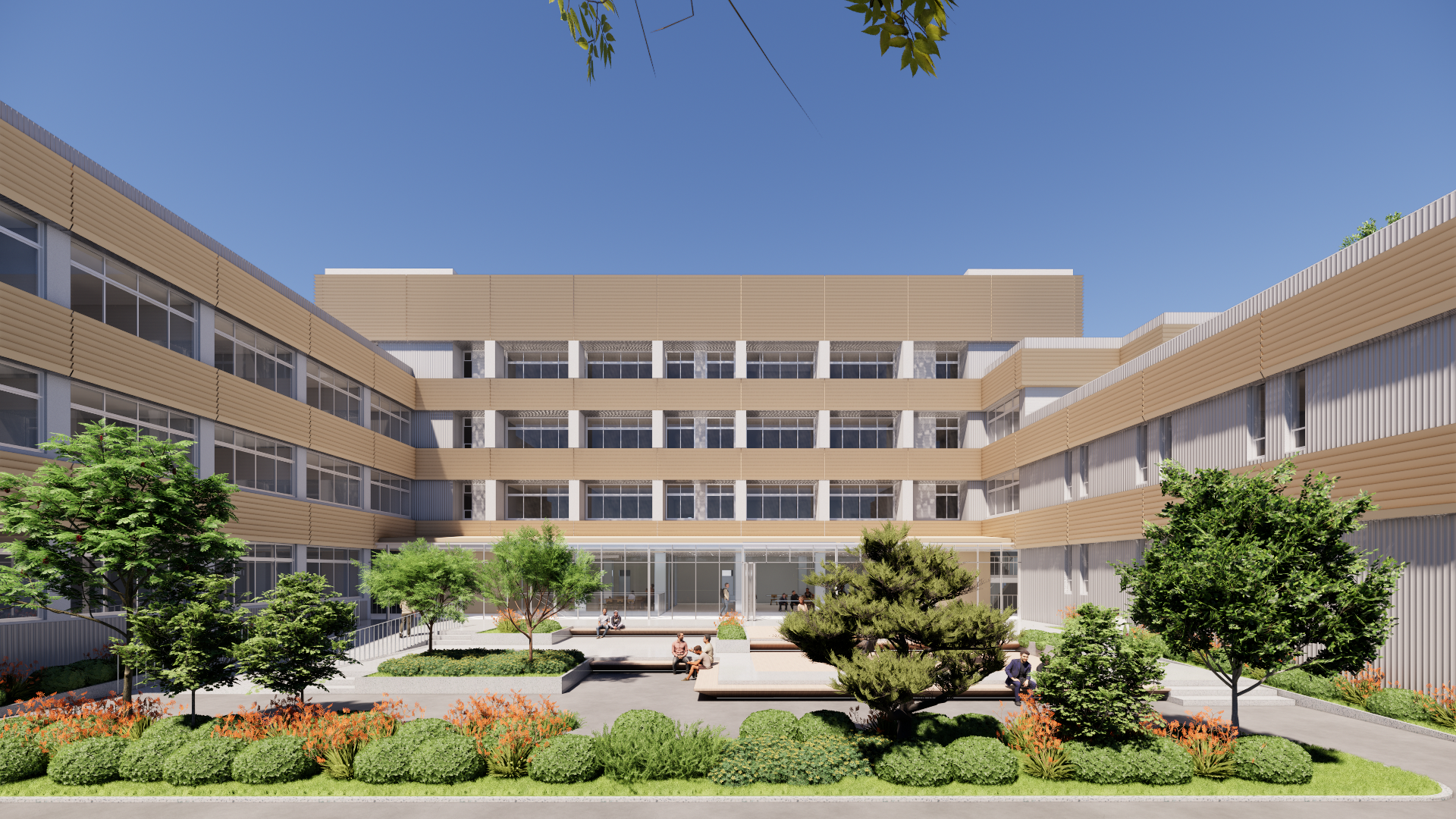
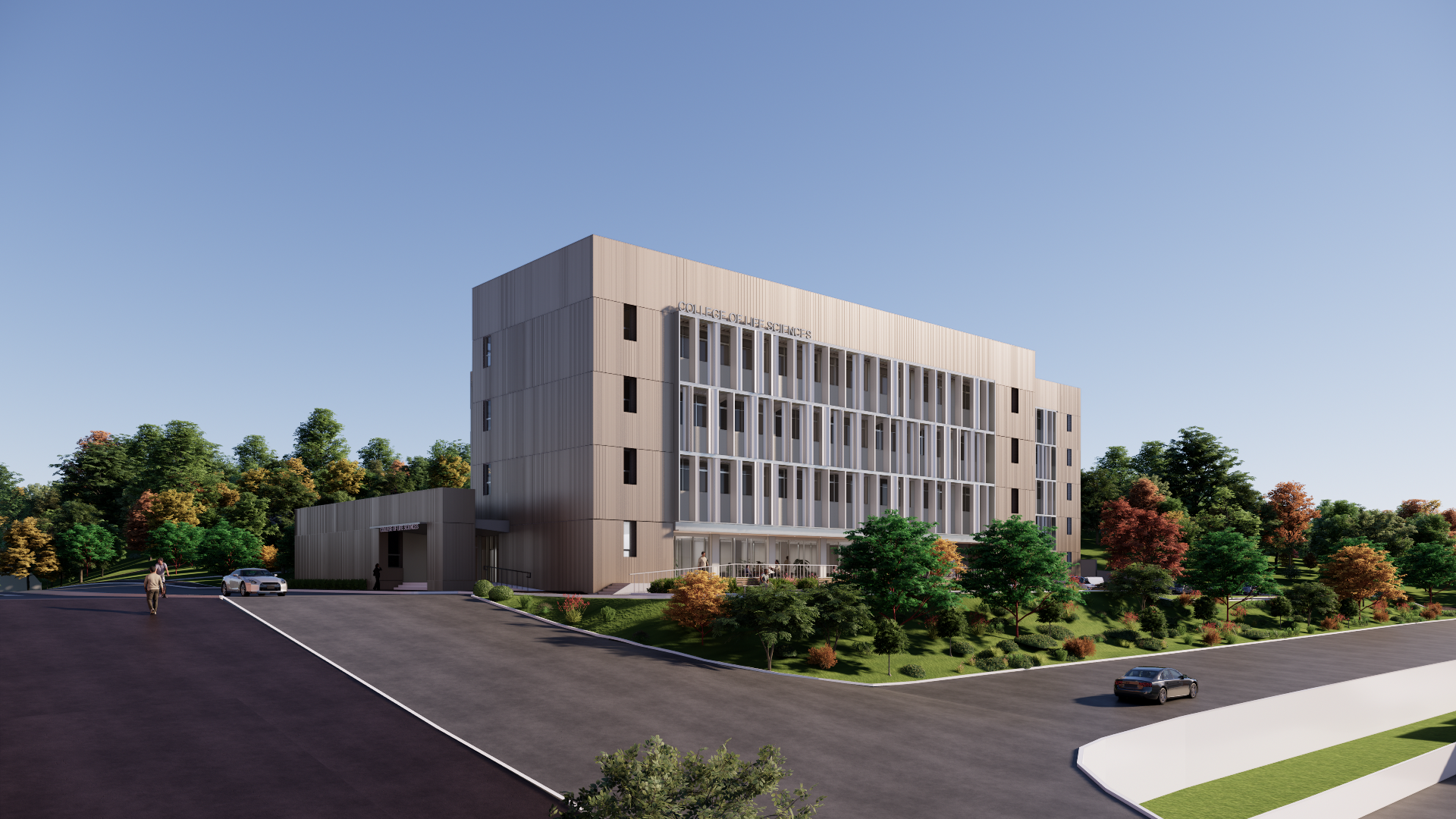
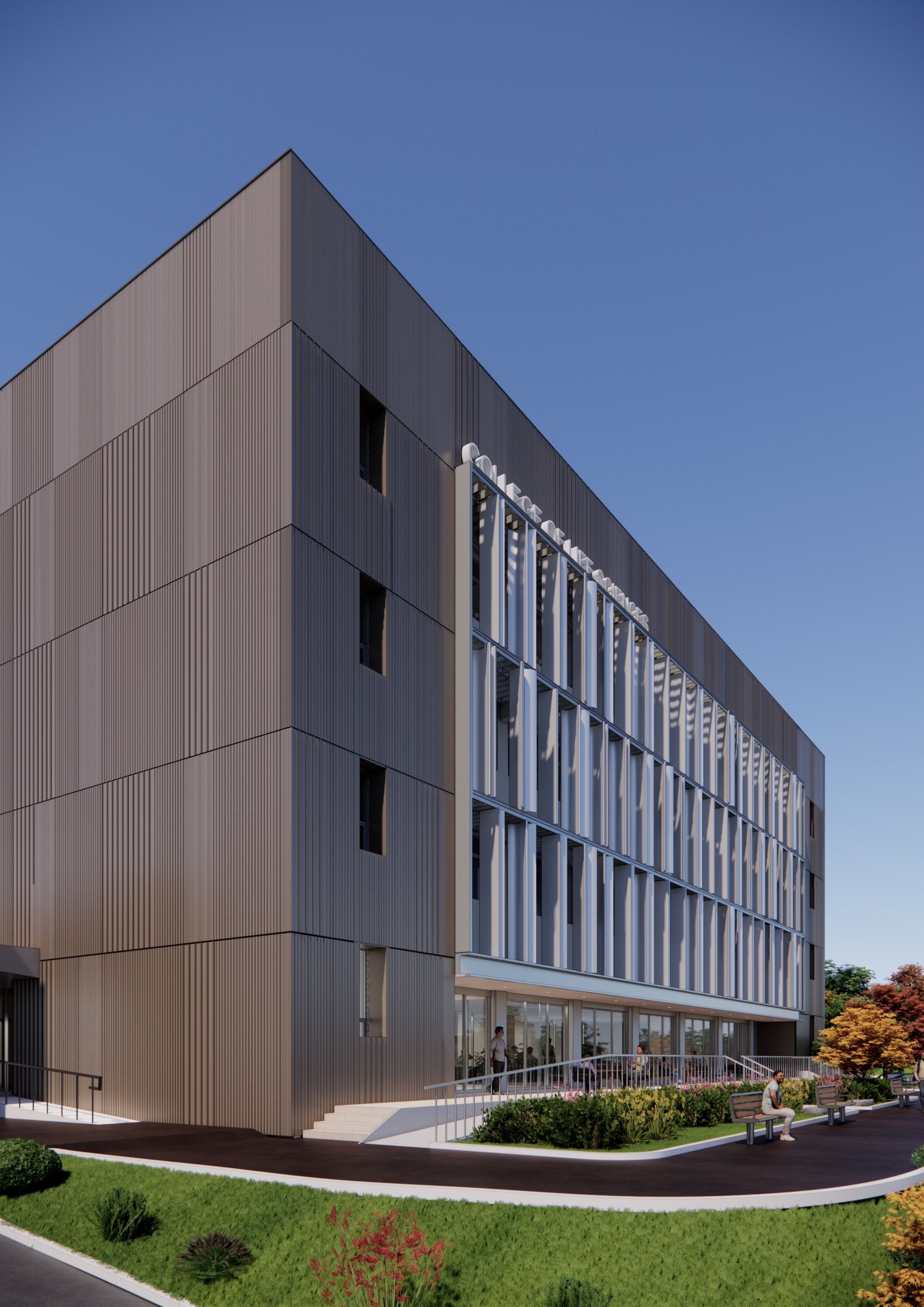
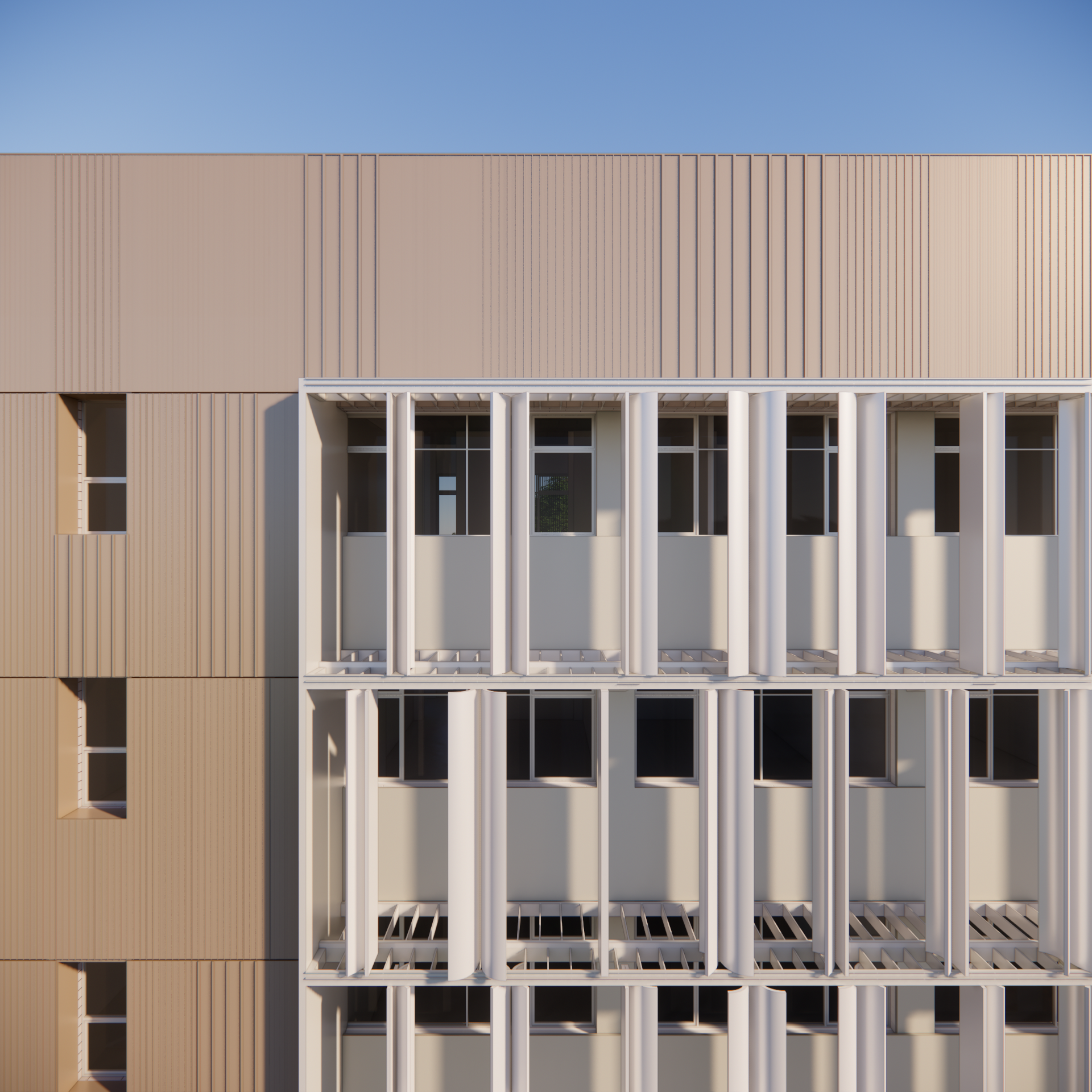
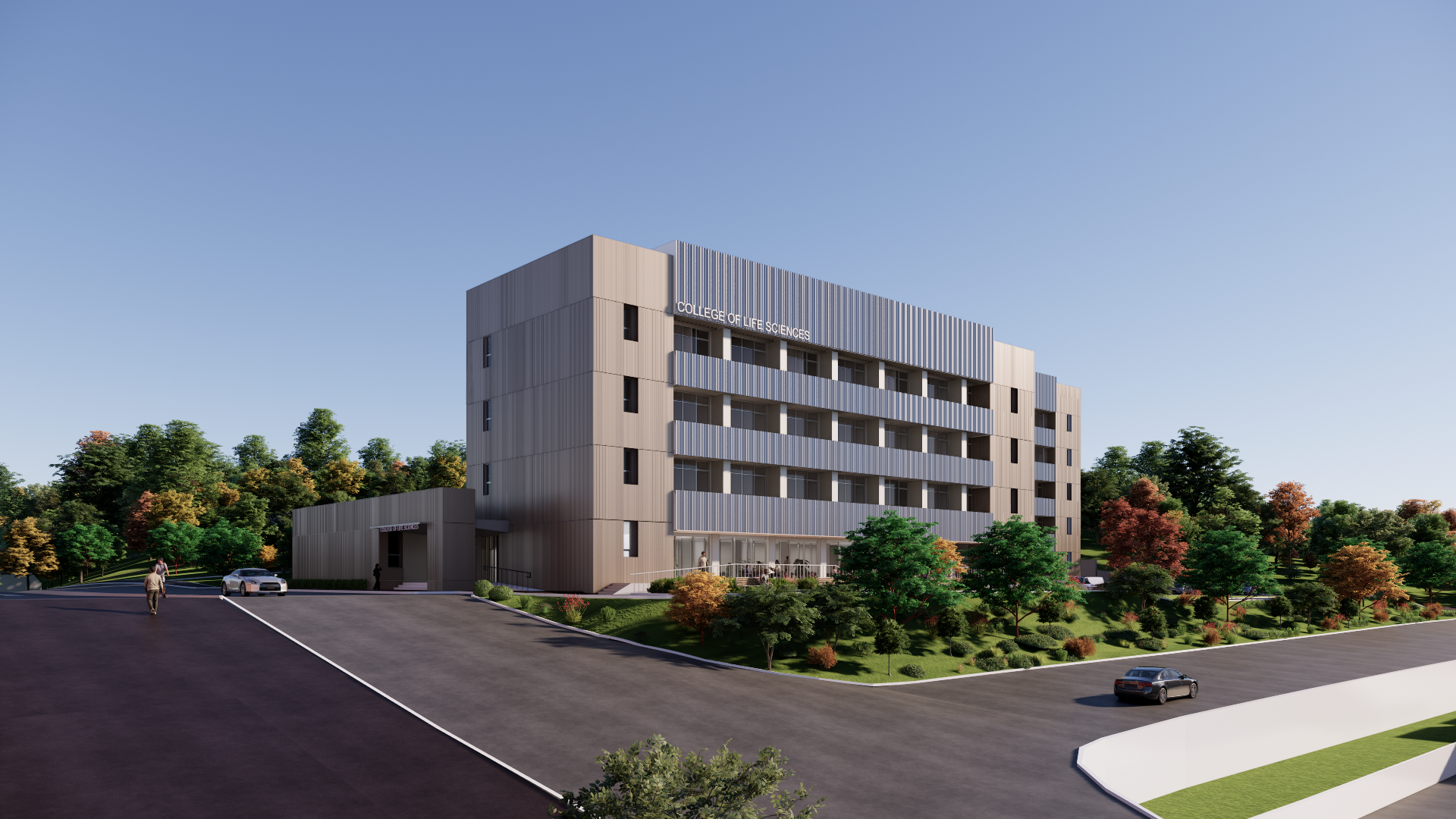
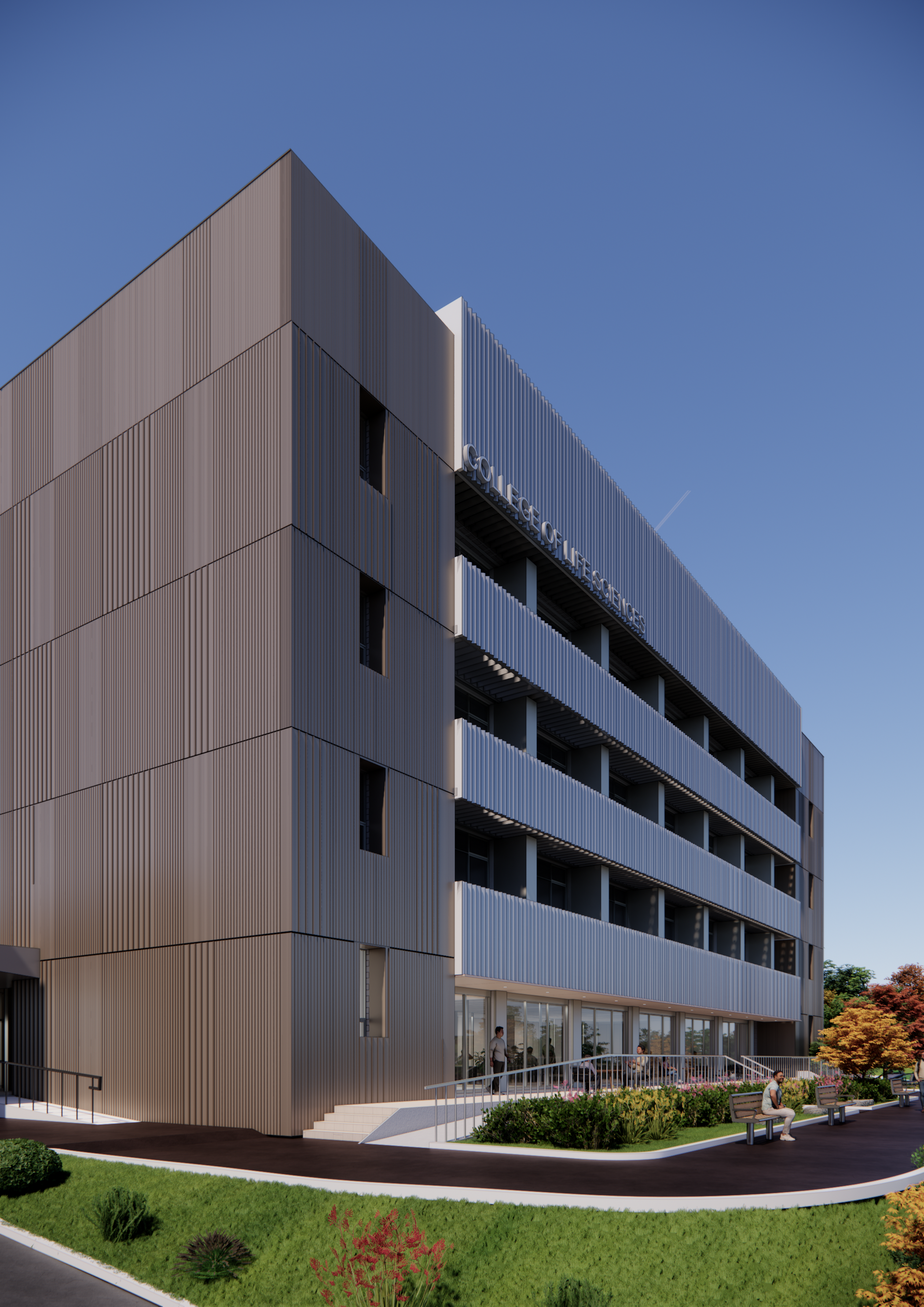
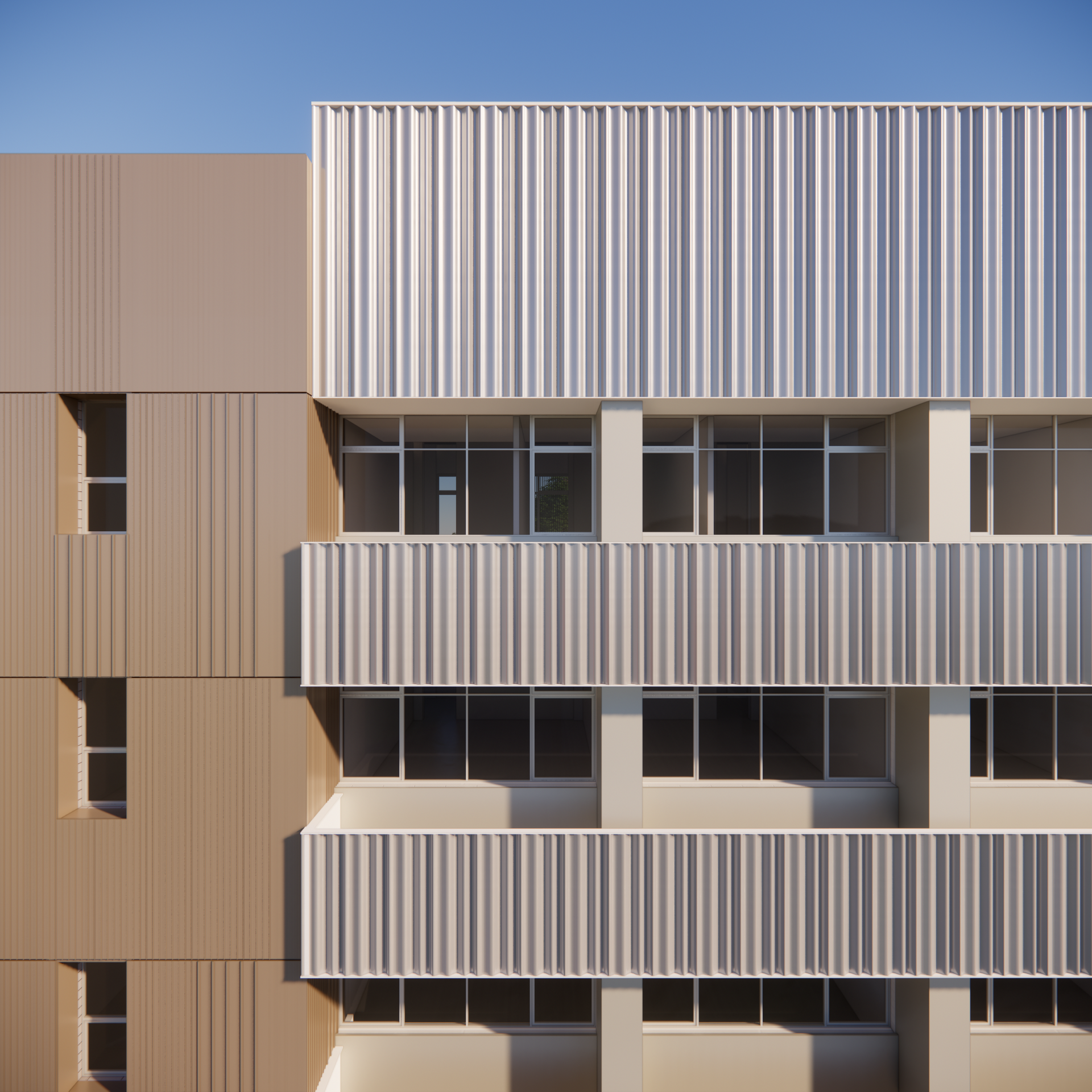
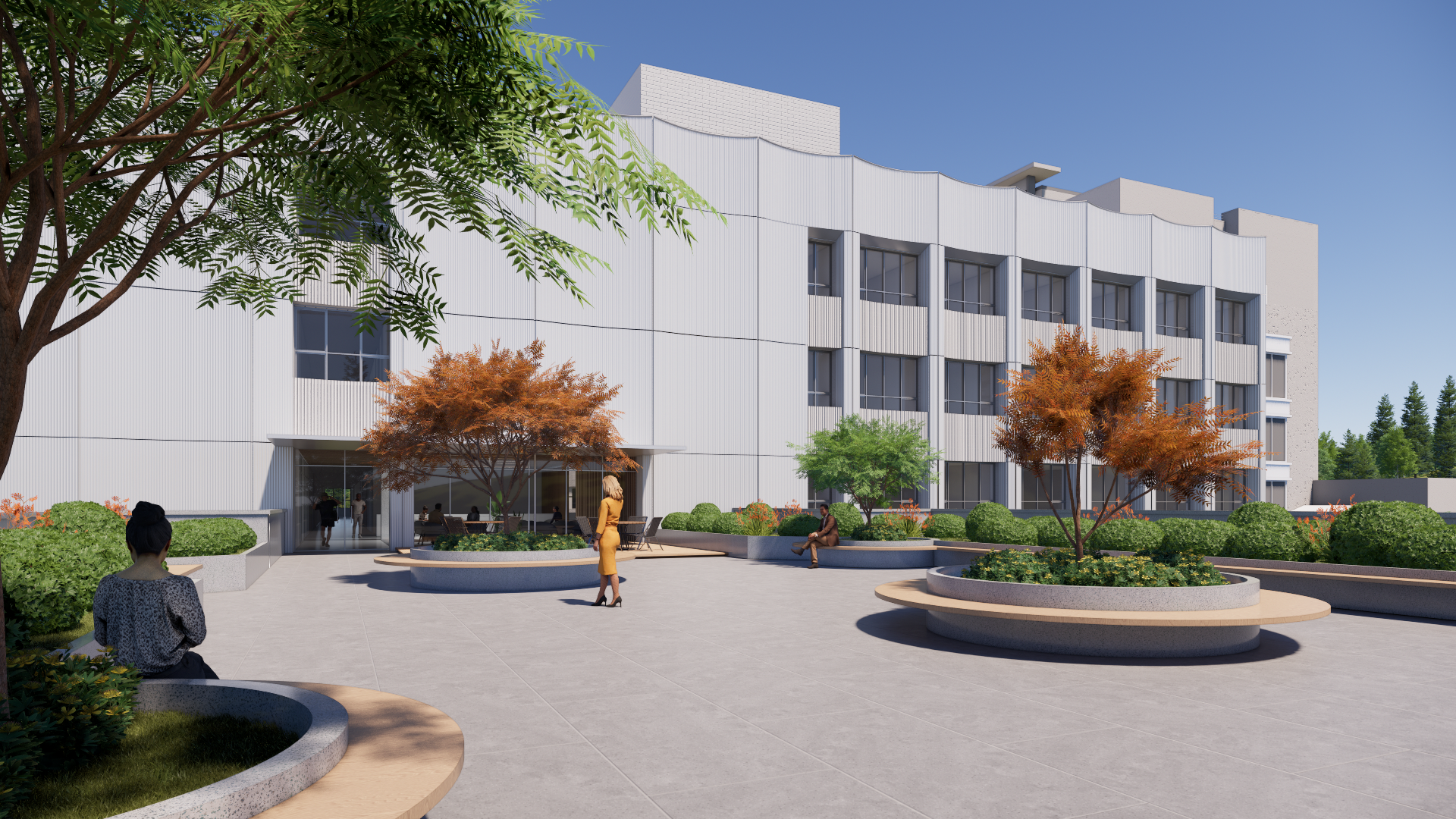
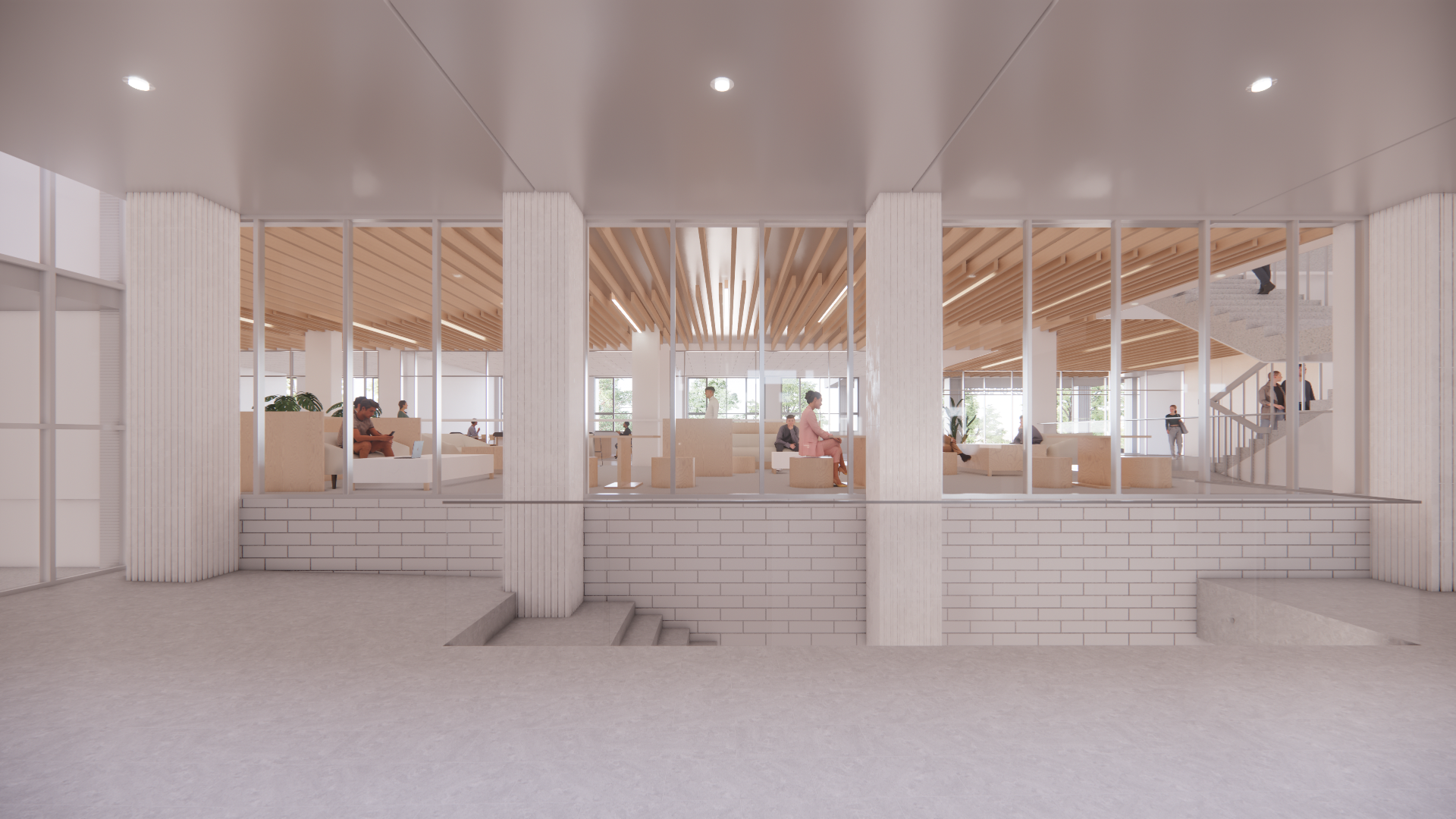
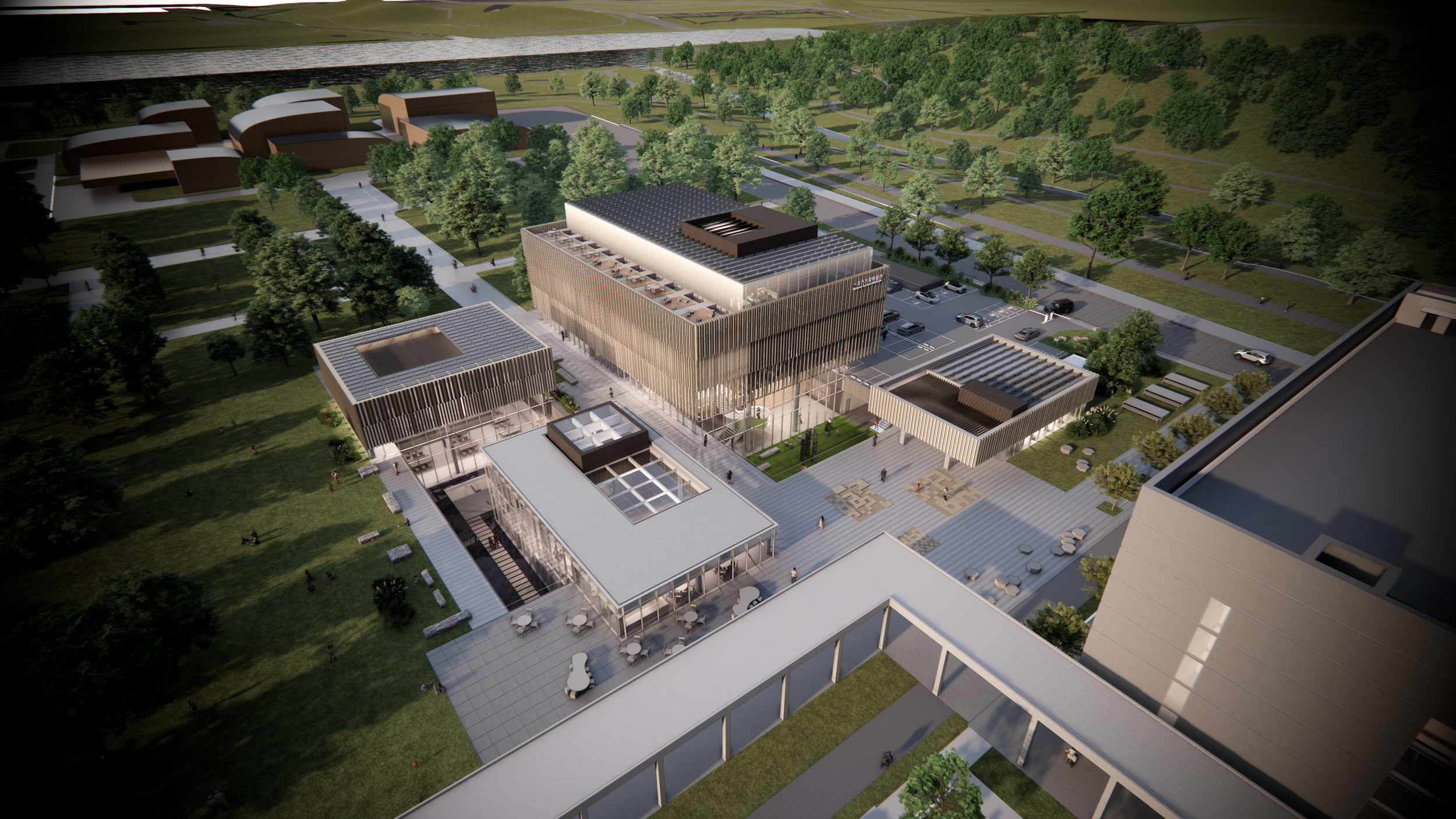
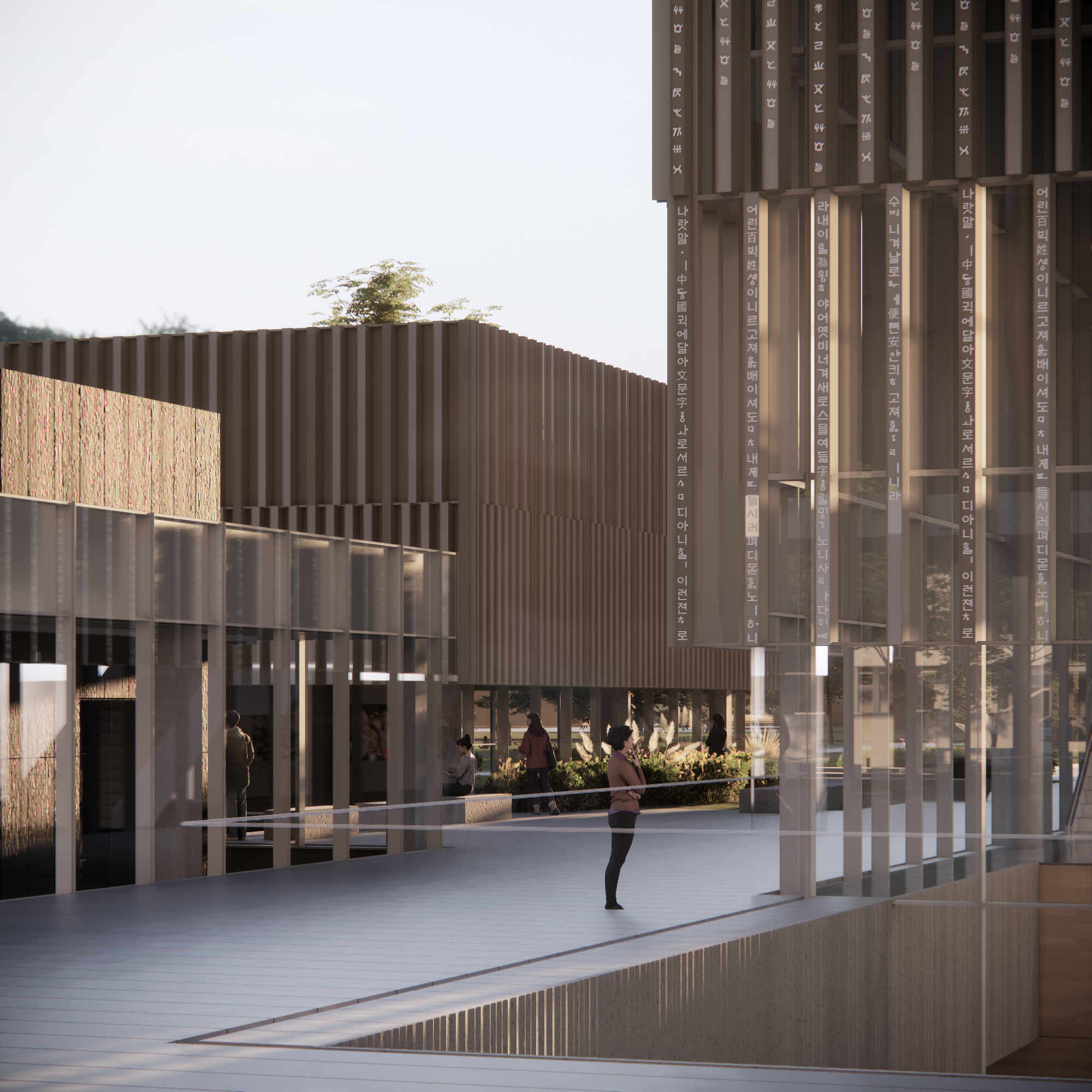
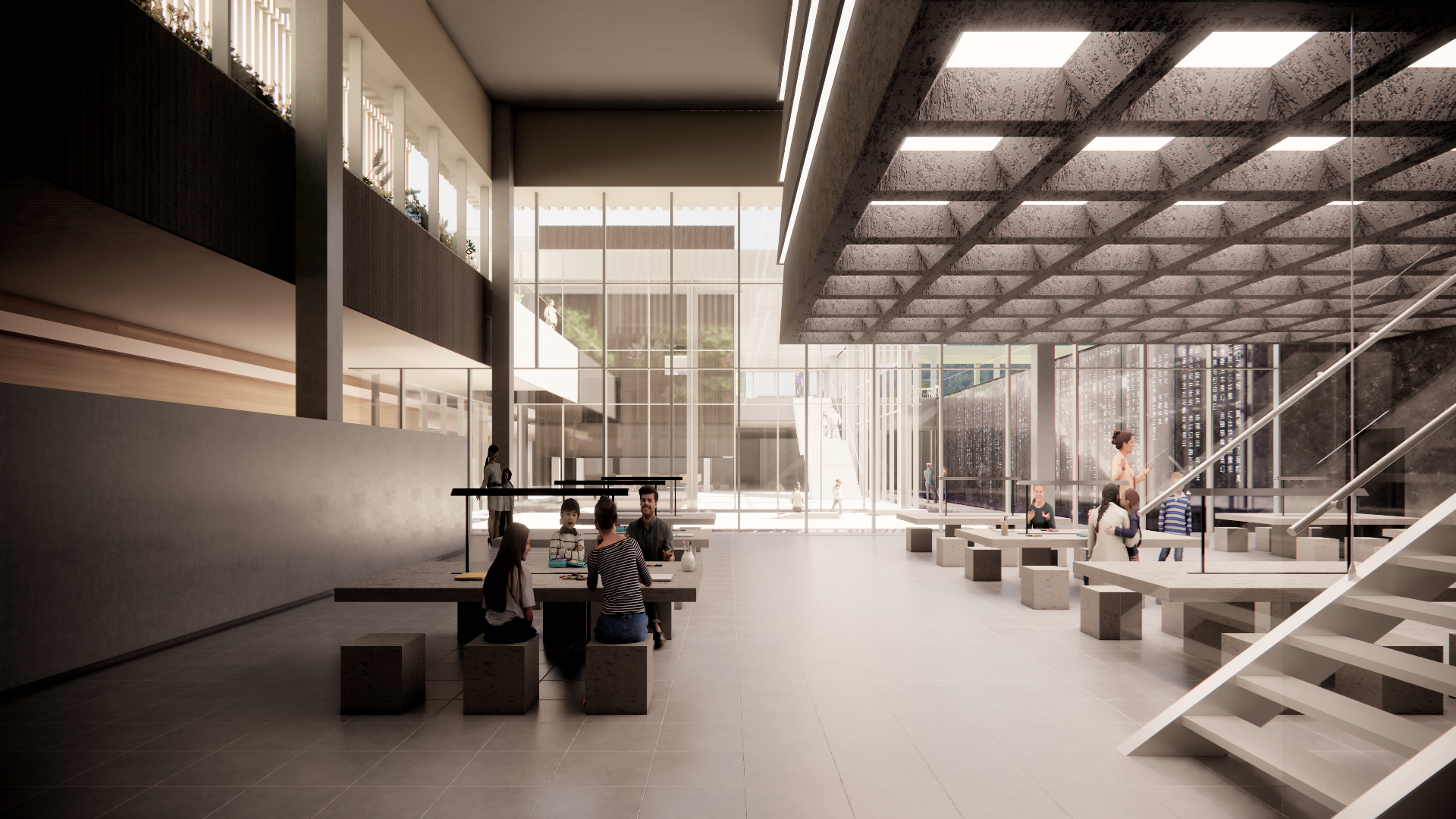
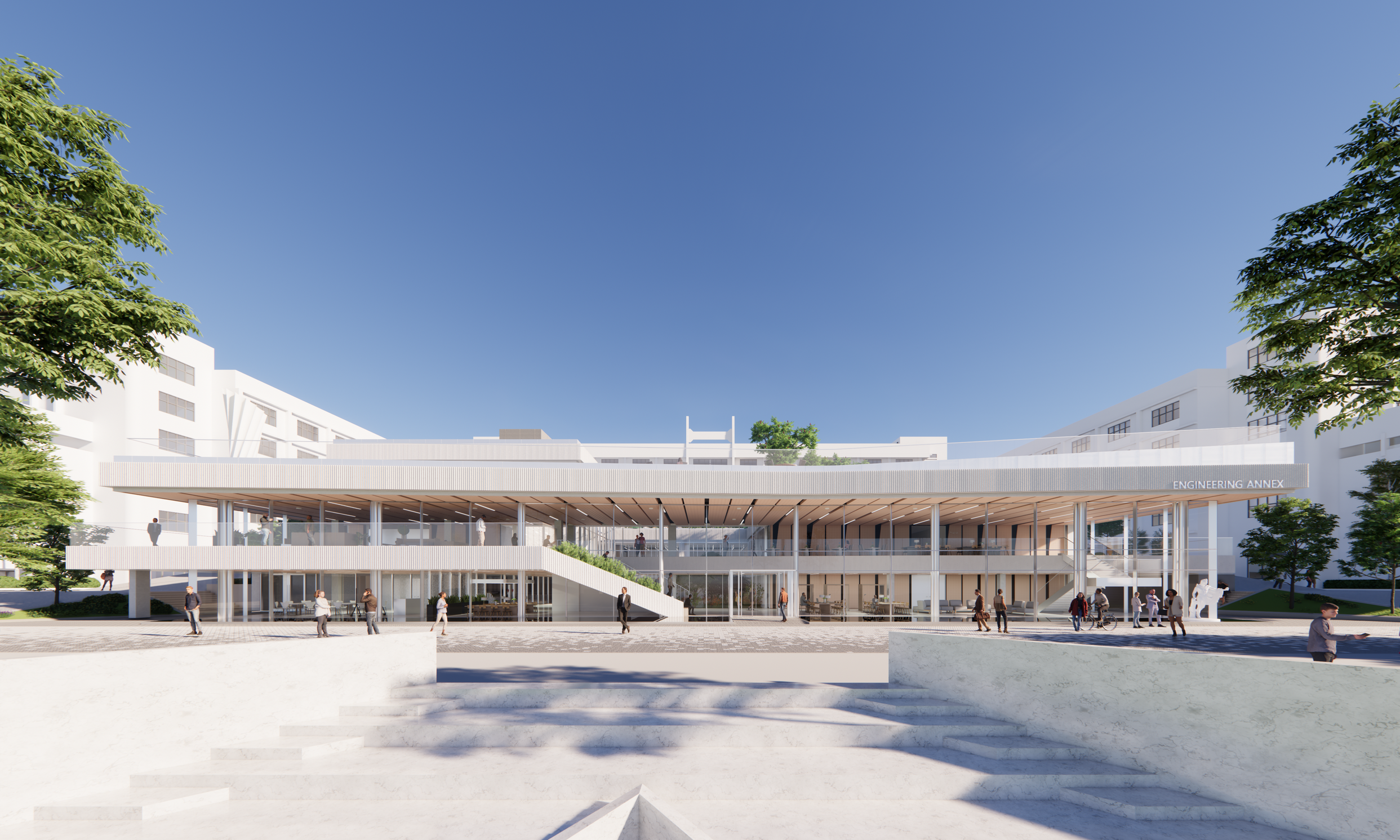
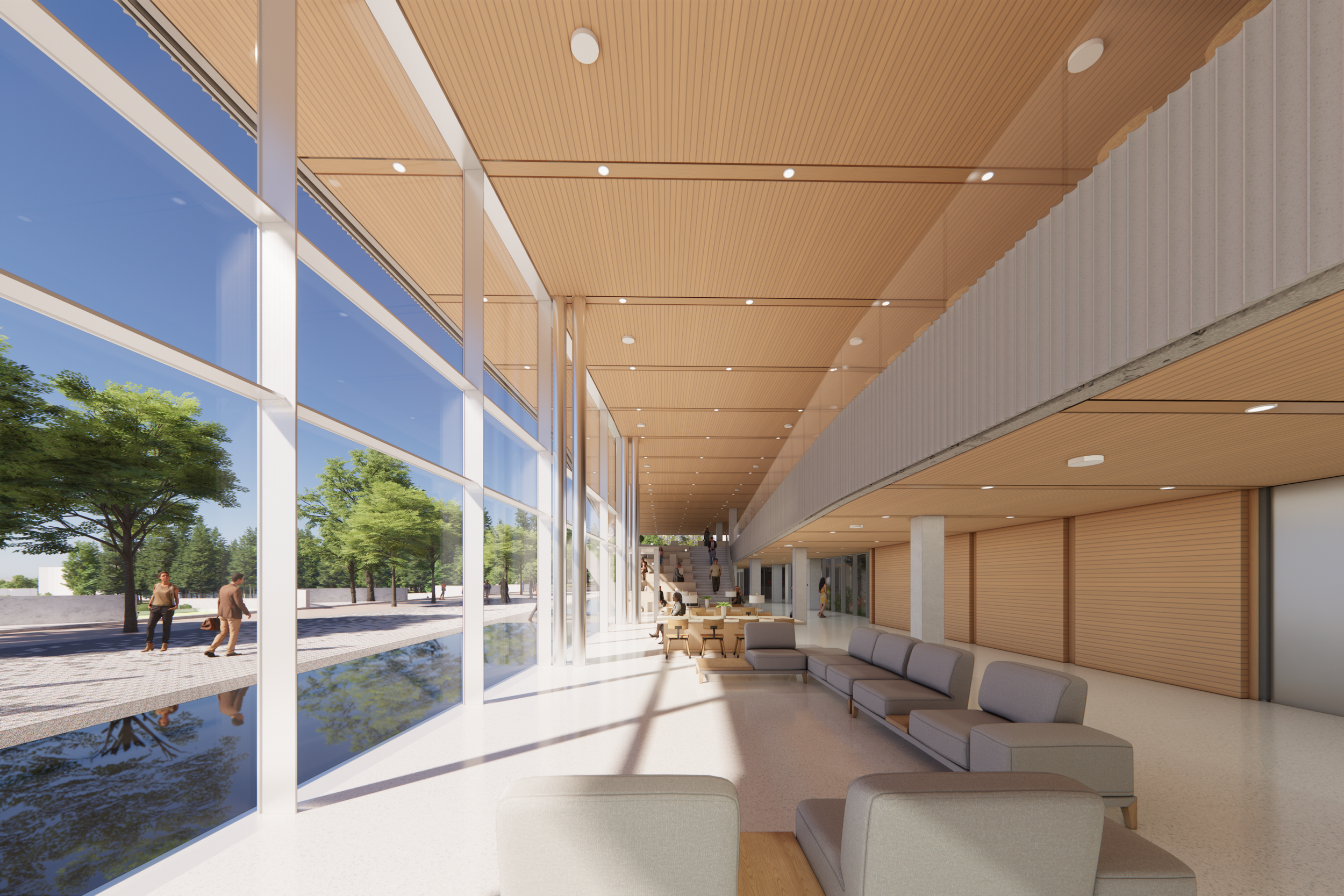
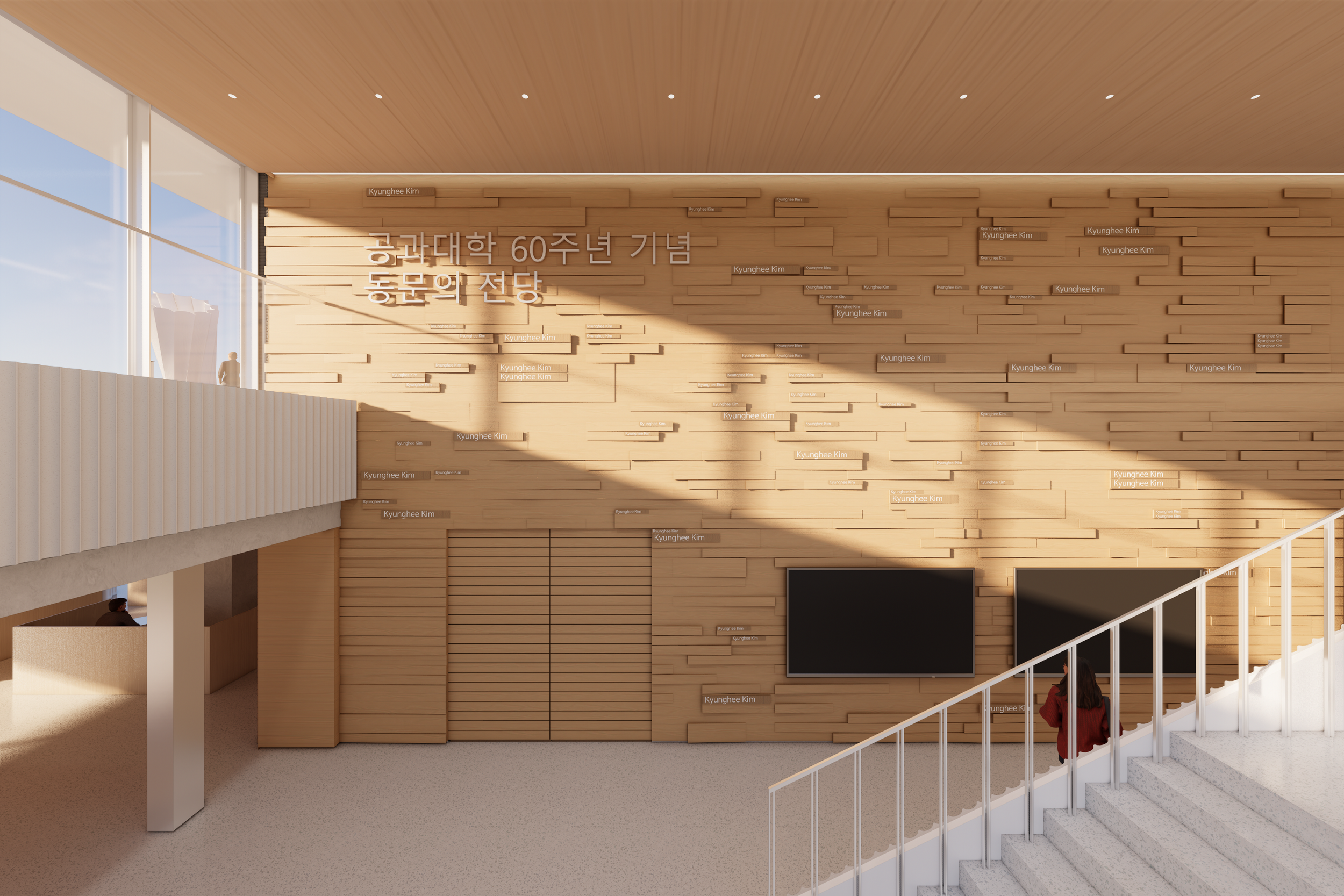
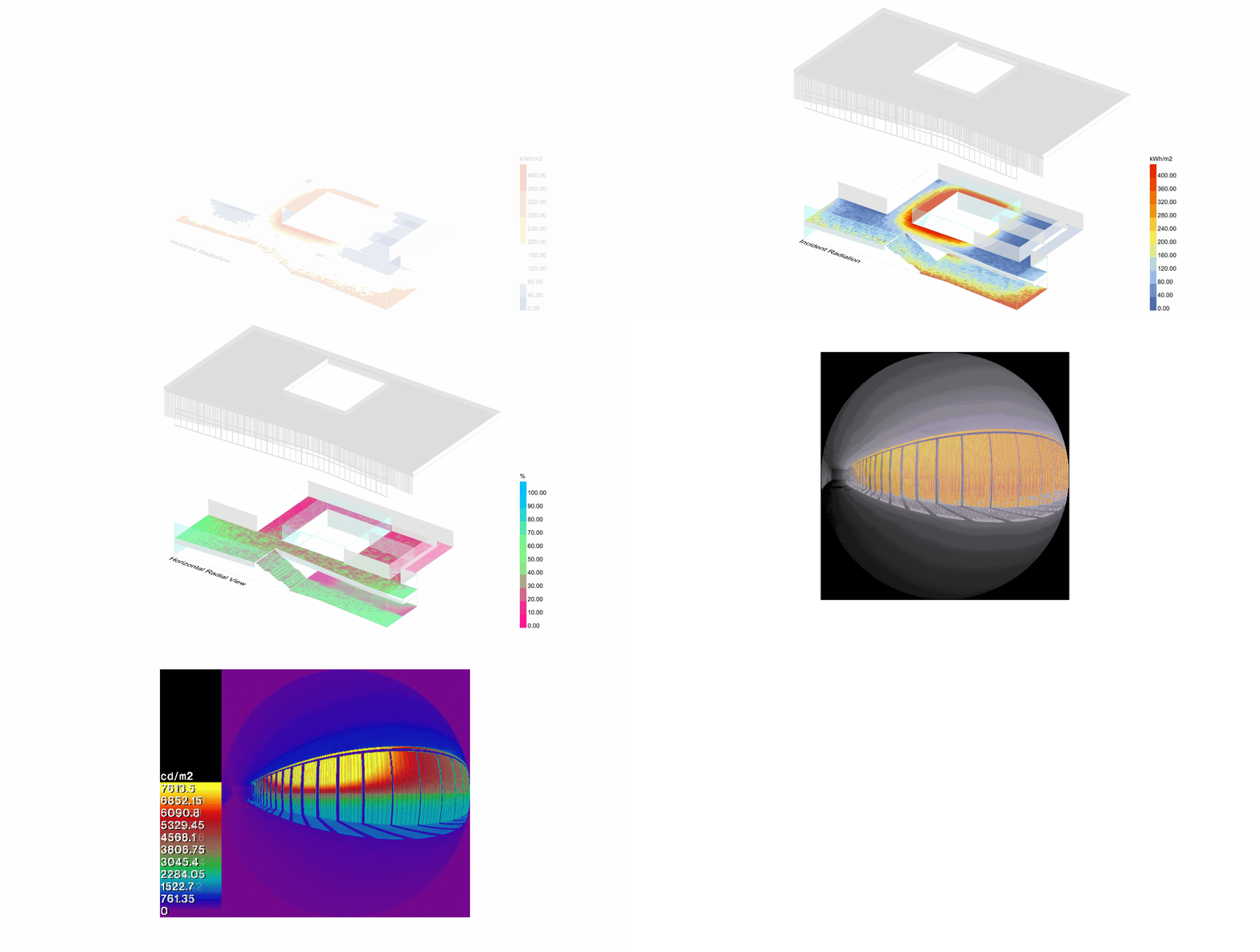
The design of the new annex for the College of Engineering at Kyung Hee University is a thoughtful response to both the legacy of the existing Engineering Hall and the evolving needs of the university community. Originally constructed in the 1980s as the first building on the International Campus, the existing Engineering Hall is characterized by its U-shaped layout and the central sloped courtyard that has long served as an open space for leisure, relaxation, and interaction among students and faculty. The new annex aims to respect and enhance this historical context while introducing cutting-edge, interdisciplinary research and educational facilities. The design takes into account the sloped lawn, a significant part of the campus landscape, by integrating it into the new structure as an active and versatile courtyard. This space not only preserves the original function of the area as a communal gathering place but also reinterprets it to accommodate modern needs.

In planning the annex, careful consideration was given to maintaining harmony with the existing Engineering Hall. The new structure addresses the height difference between the front and rear of the site, creating a seamless connection that enhances the overall campus experience. The annex is conceived as a symbol of the university’s commitment to innovation, serving as a bridge between tradition and the future of education and research.


Related Research
 

Year : 2024

Location : Yongin, Korea

Size : 3,925 m²

Status : Ongoing

Type : Education

Principal in Charge :

Seojoo Lee, Hyojung Kim (I.f), Dongil Kim (I.f CDL)

Design Team :

Suyeon Seo, Chaeyoon Chang (I.f), Seungil Kim, Gwangeun Hwang, Soohyun Im, Roun Yi, Bugun Kim, Isaac Kang (I.f CDL)

Collaboration :

ARA Architecture Group
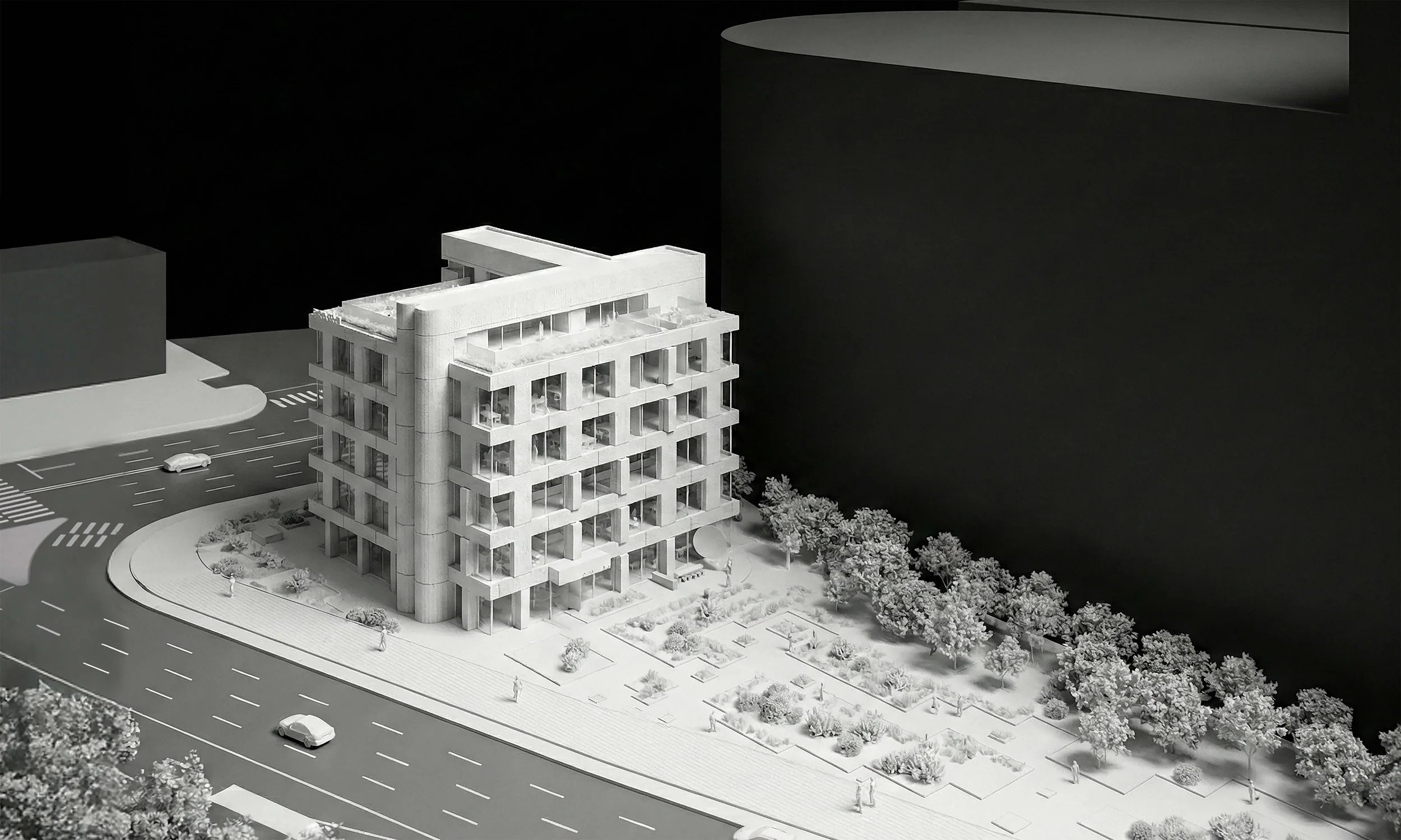
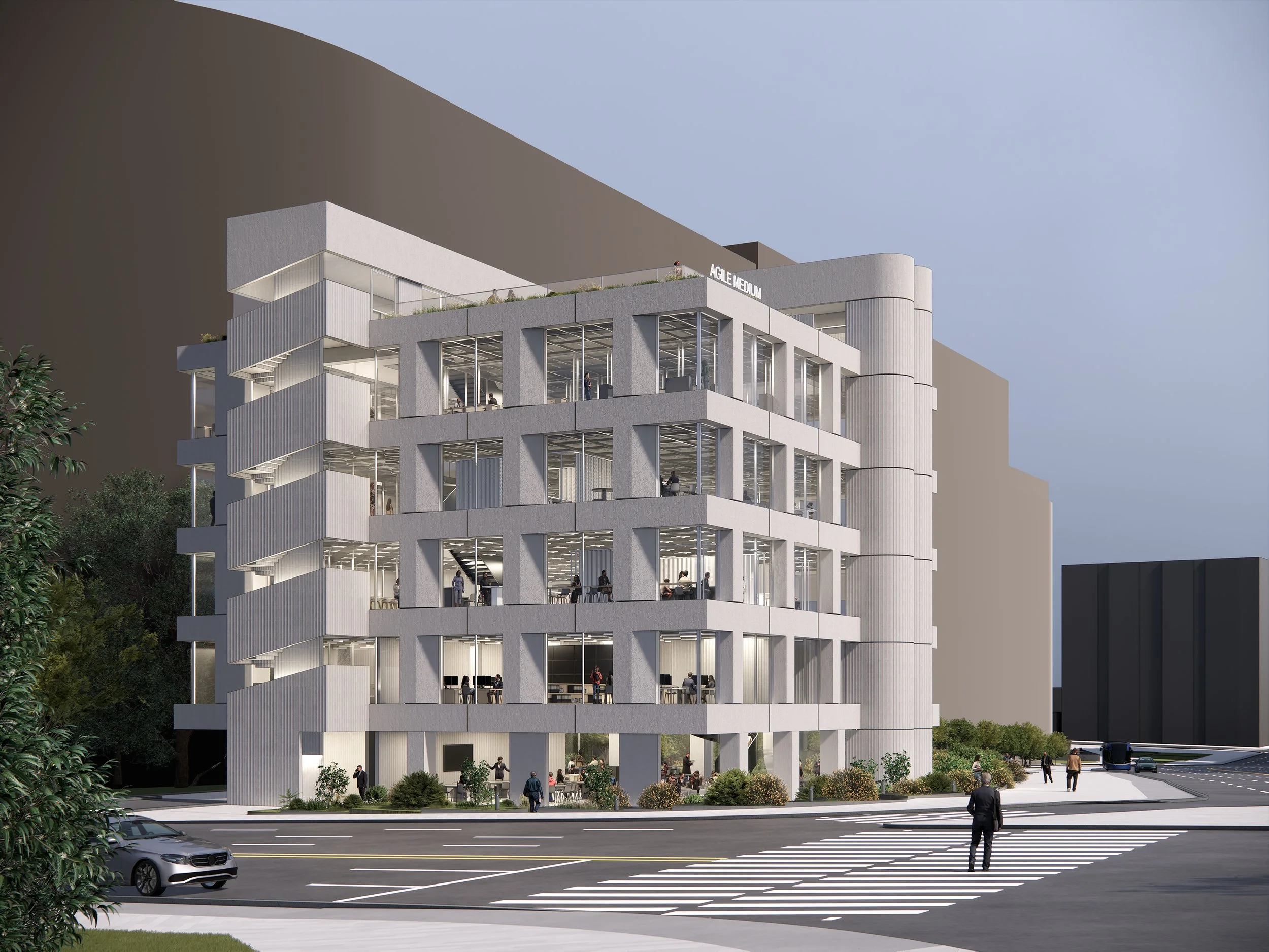
Agile Medium

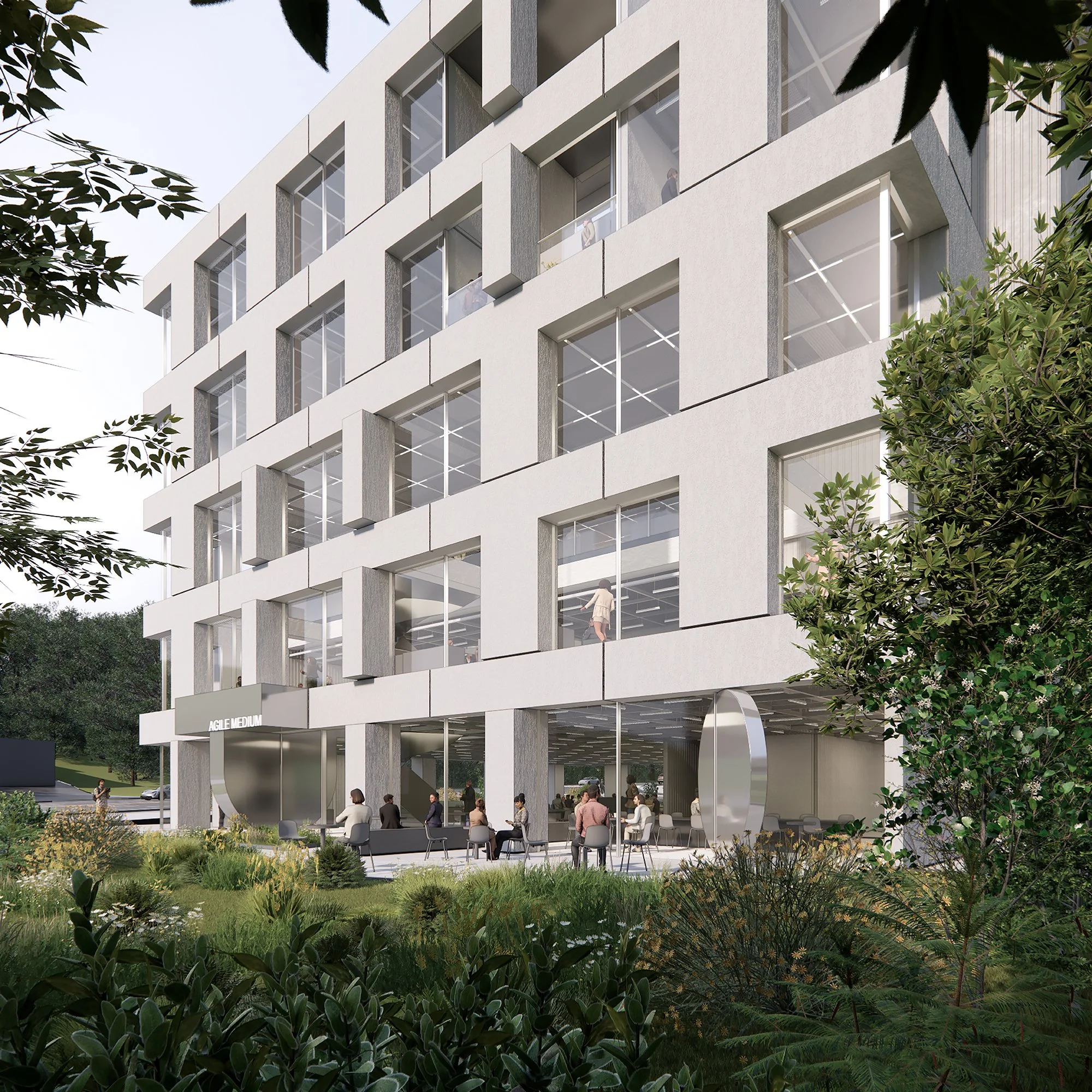
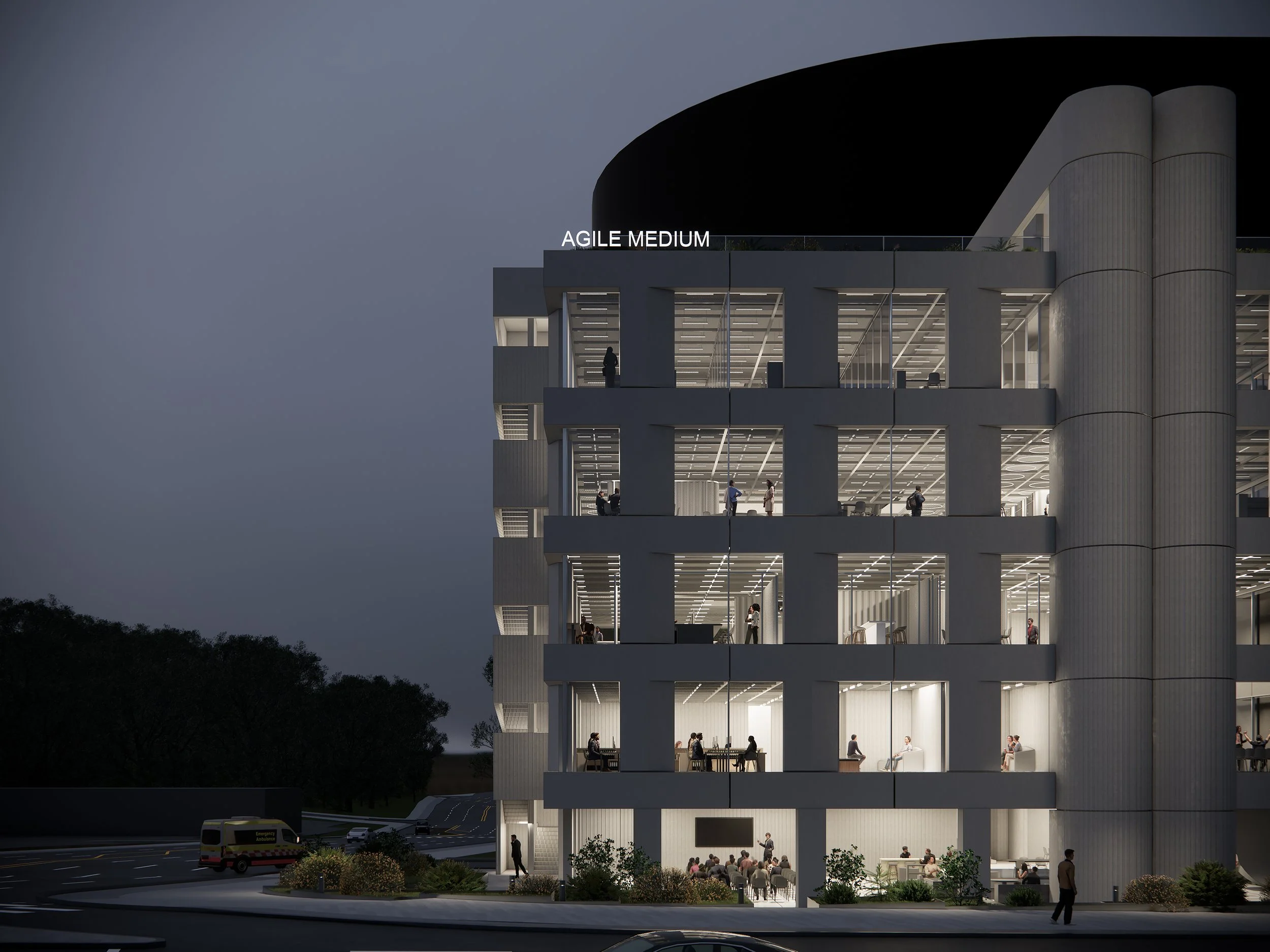
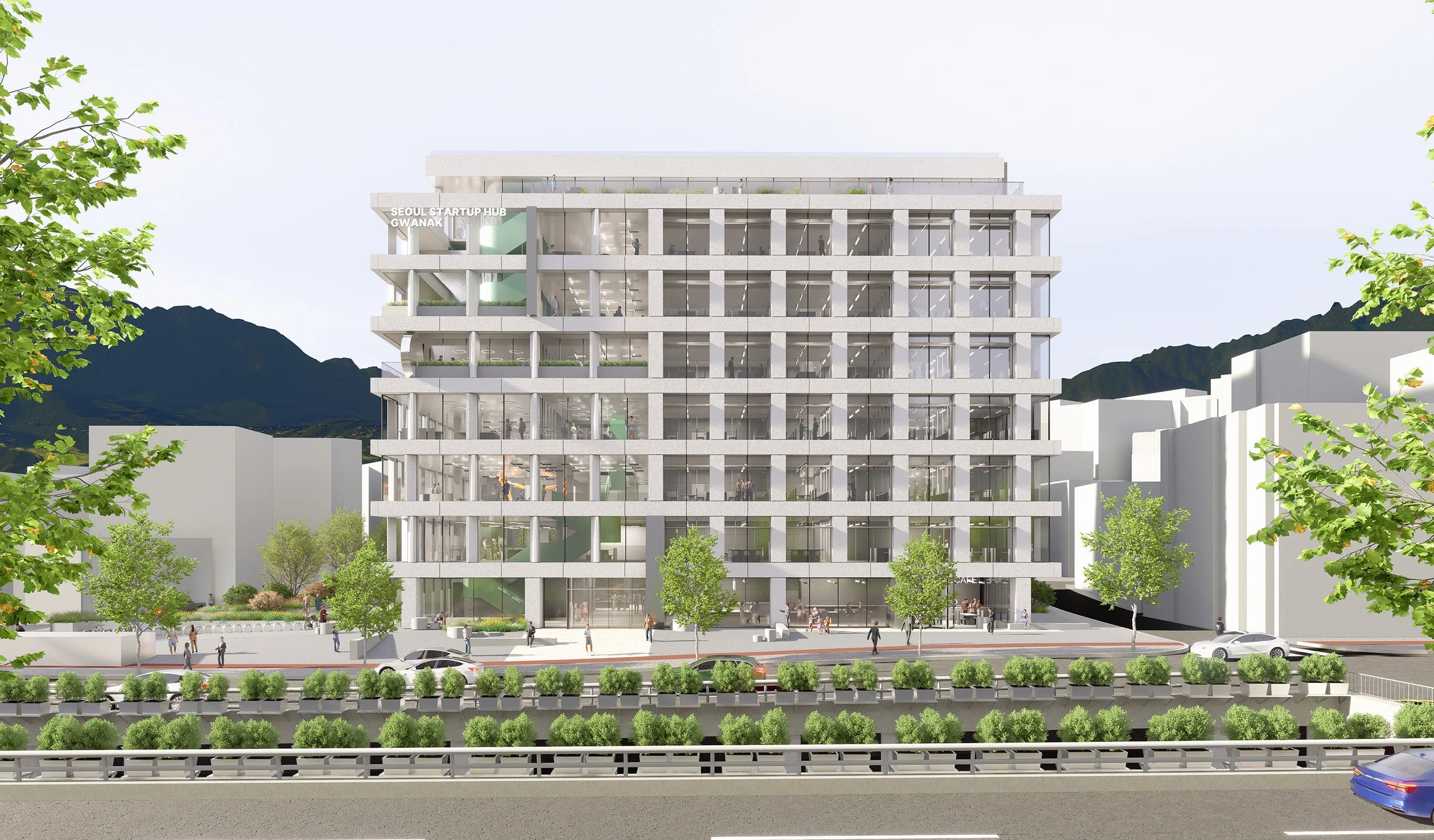
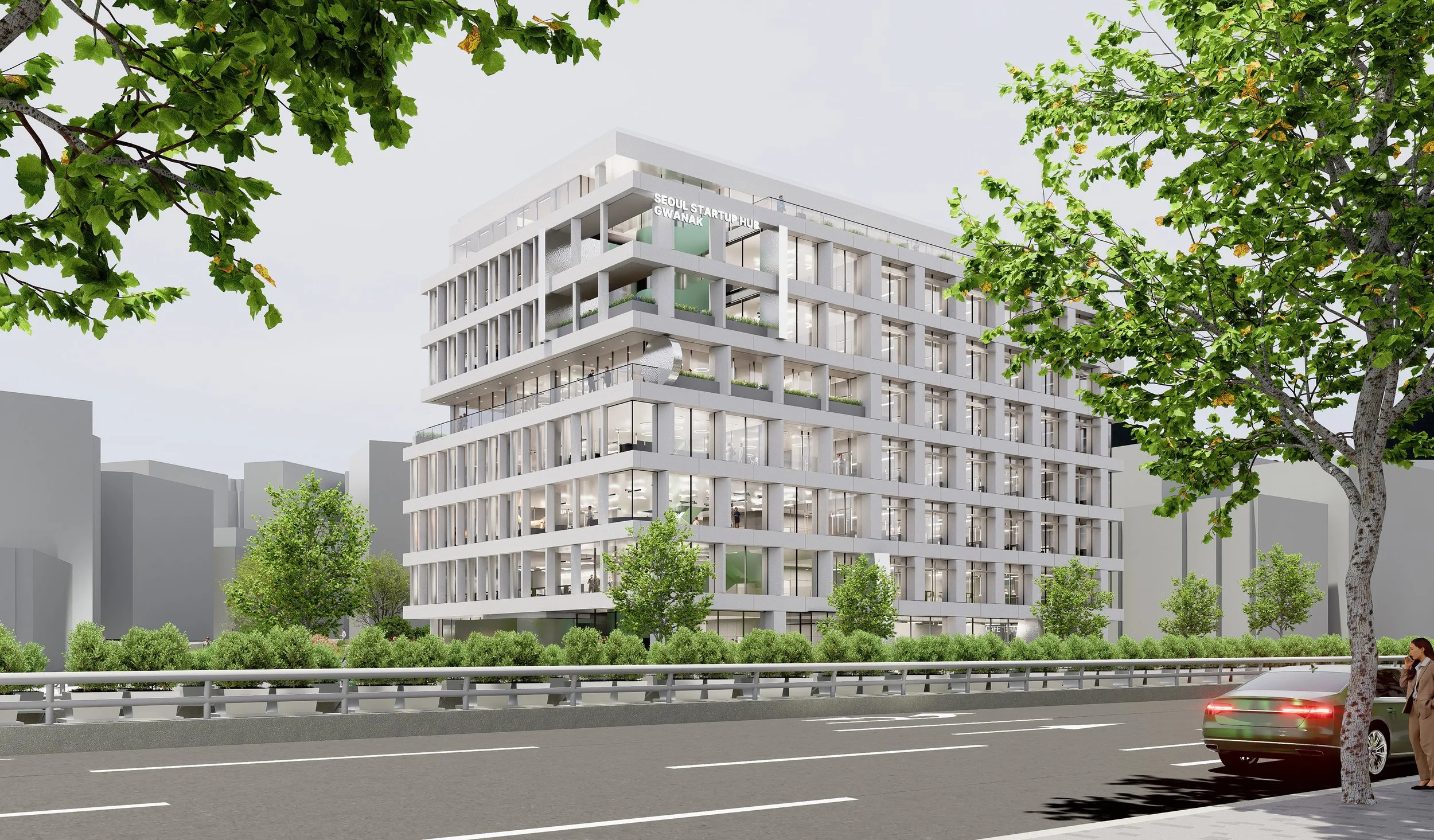
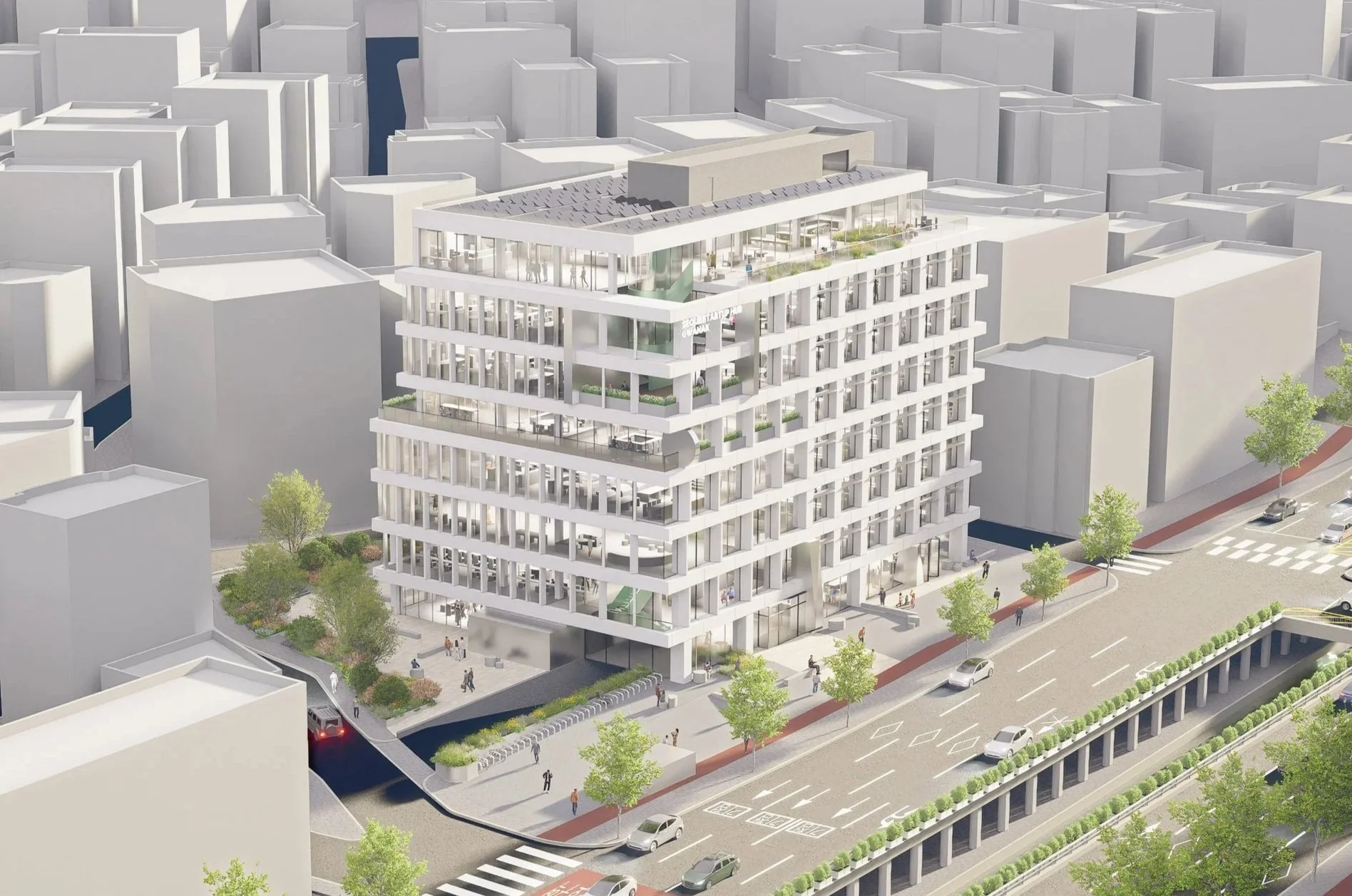
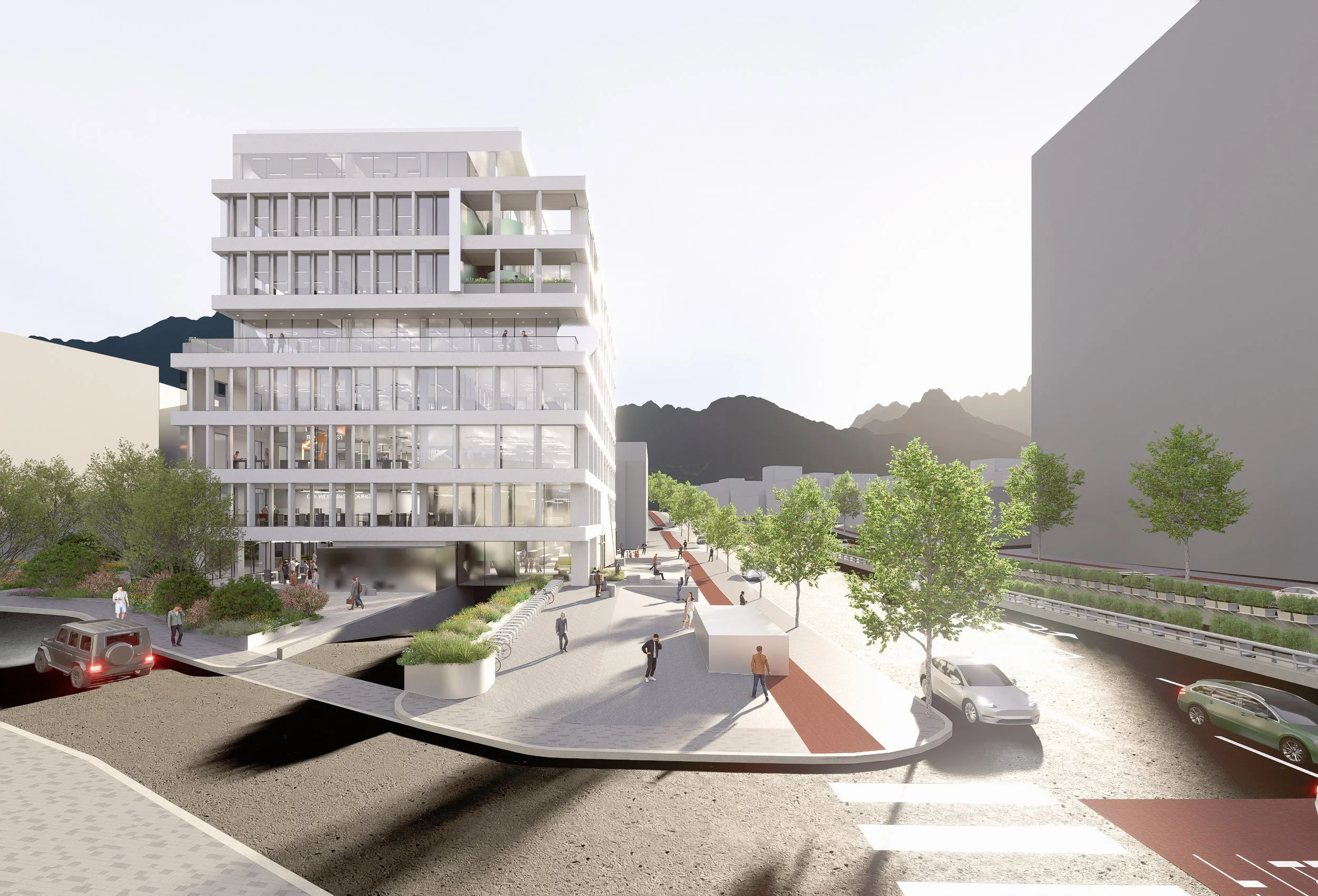
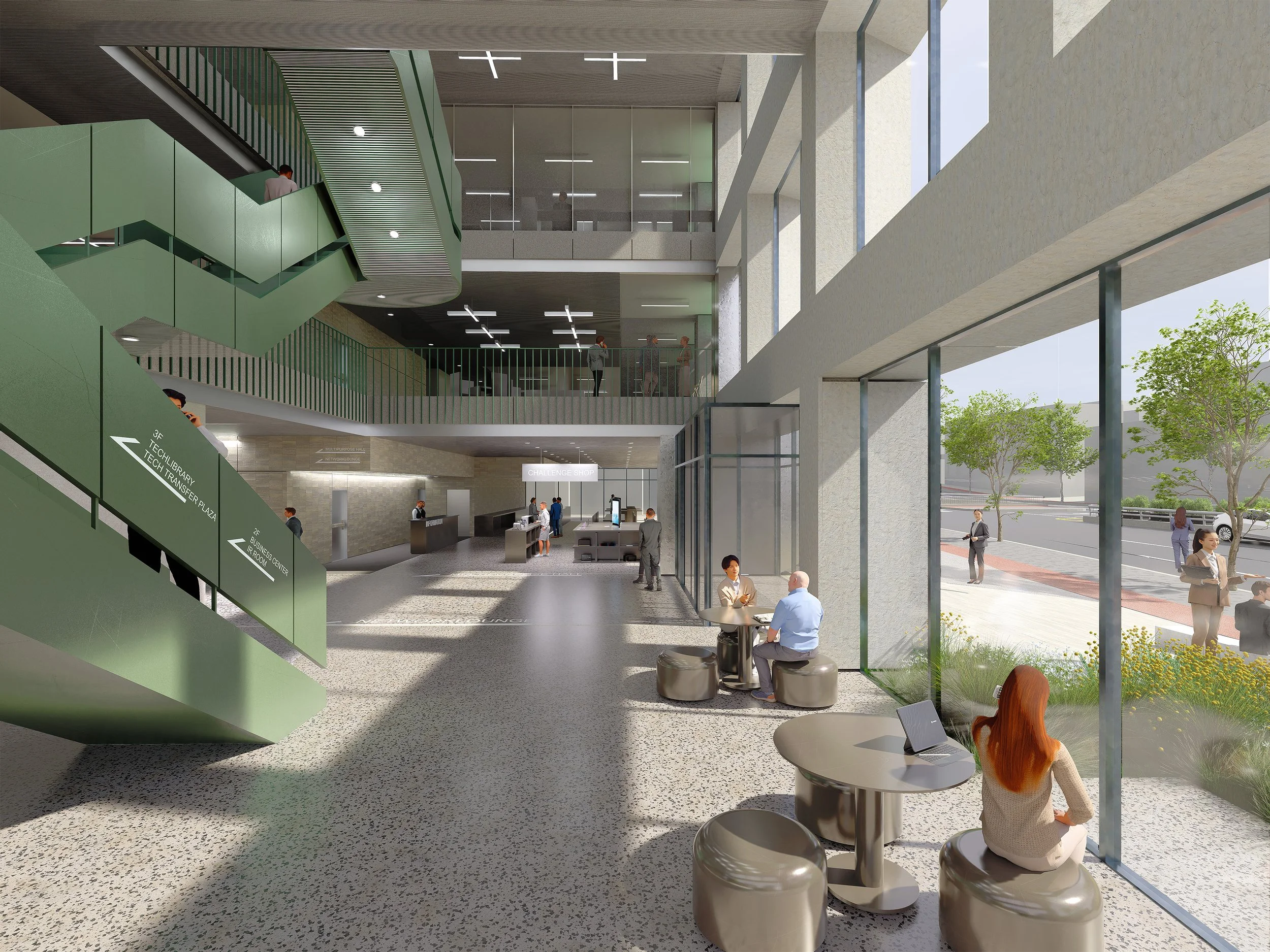
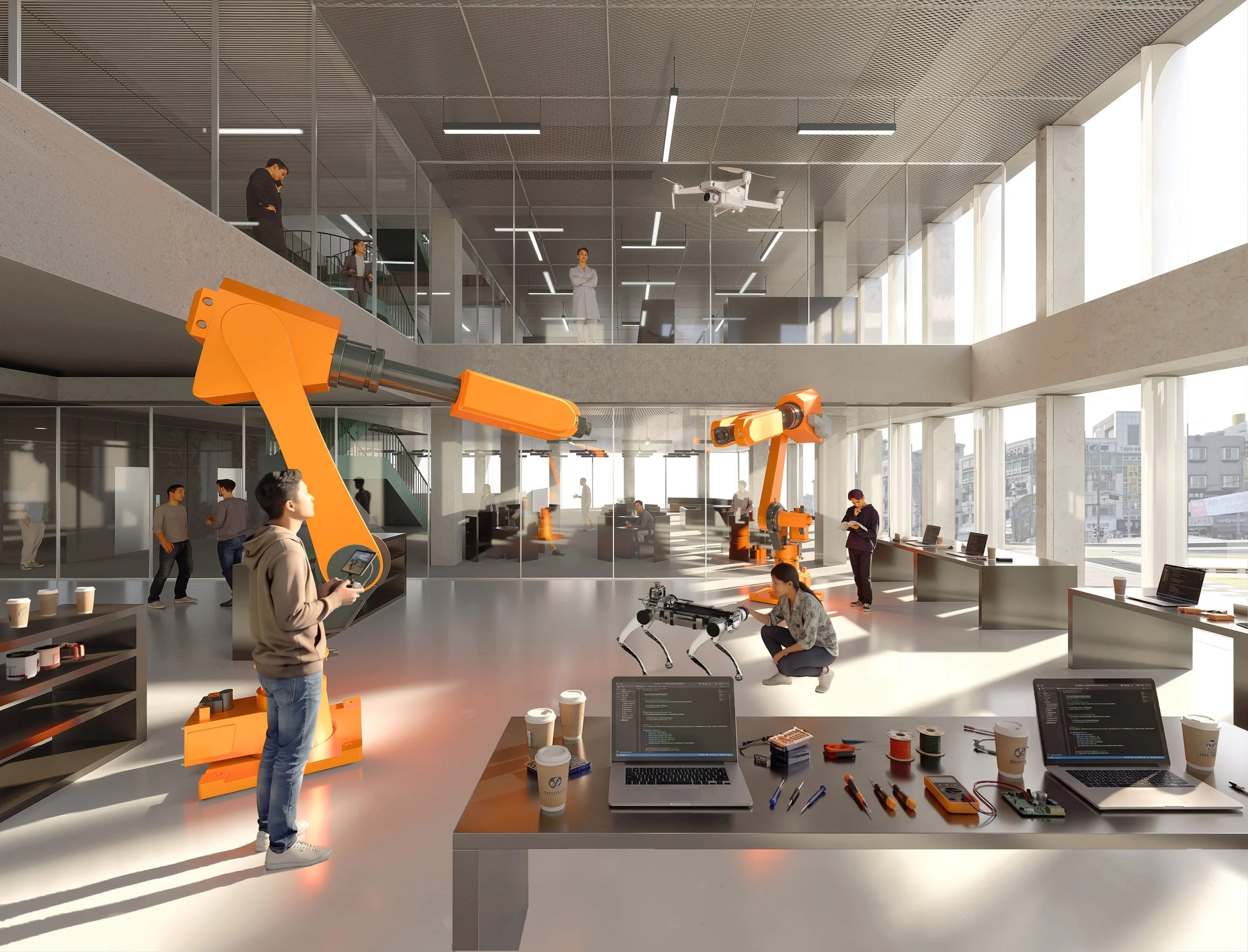
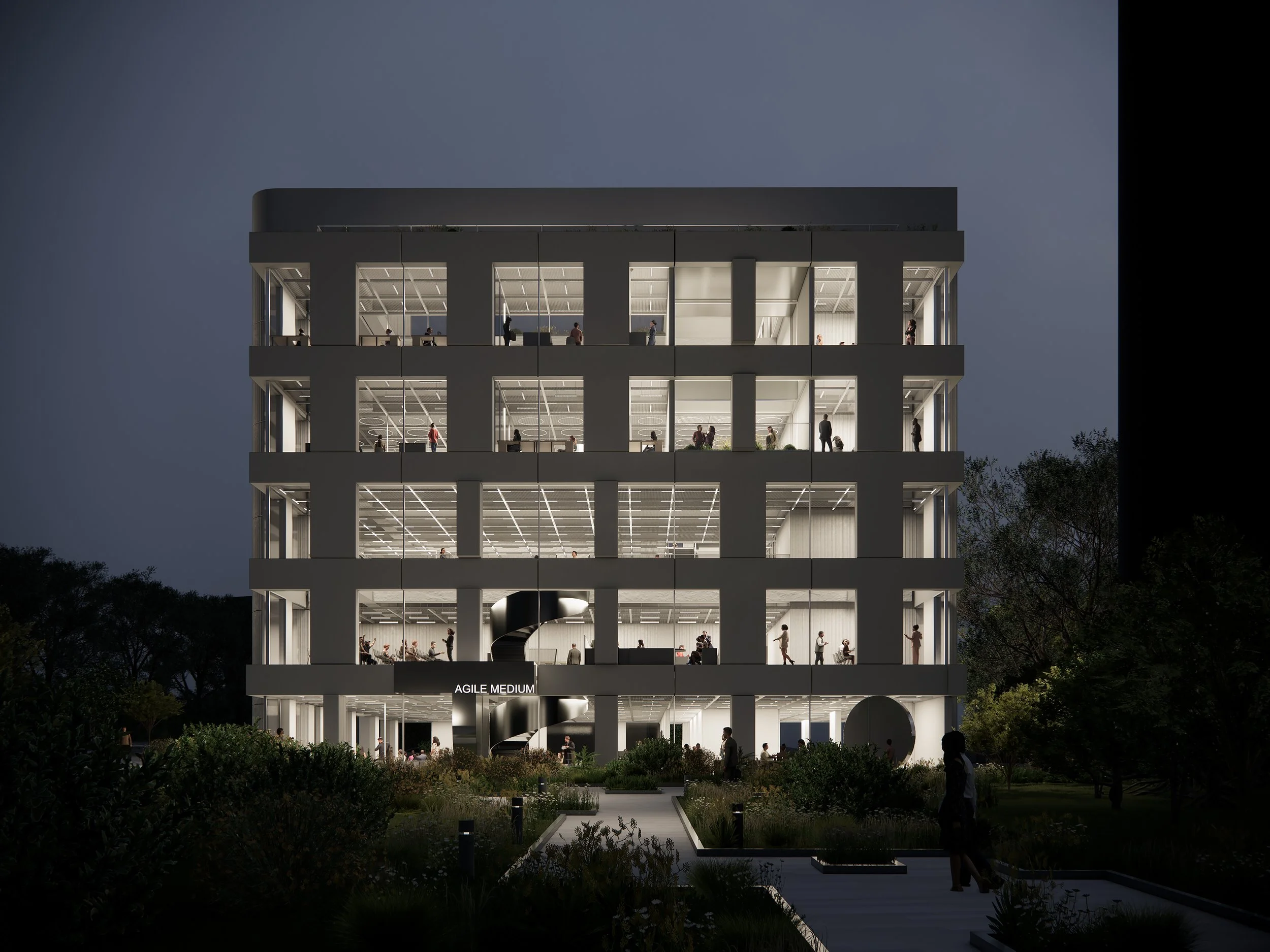
Agile Medium ; A Future-Oriented Public Building Embracing Change

The Seobu Truck Terminal site serves as a catalyst for Yangcheon-gu's vision of a "working and growing city," reorganizing the urban fabric into a pedestrian-centric structure through the introduction of a high-tech urban logistics facility. Positioned as both the terminus and the extension of the green axis, the site acts as a public anchor that accommodates and expands the flow of the city.

In an era of hyper-change, the work environment can no longer be contained within fixed forms. While industries and working methods evolve rapidly, architecture remains a long-lasting physical structure. Agile Medium translates this temporal discrepancy into a matter of systems rather than static forms, proposing a spatial organization premised on the continuous cycle of change.

The workspace ratio is entirely reorganized from a traditional 7:2:1 structure to a 4:3:3 networking-centric paradigm. By streamlining independent workspaces and expanding areas for collaboration and interaction, the lower levels are designed as open, welcoming spaces that draw the public in, while the upper levels provide optimized environments for deep focus and growth.

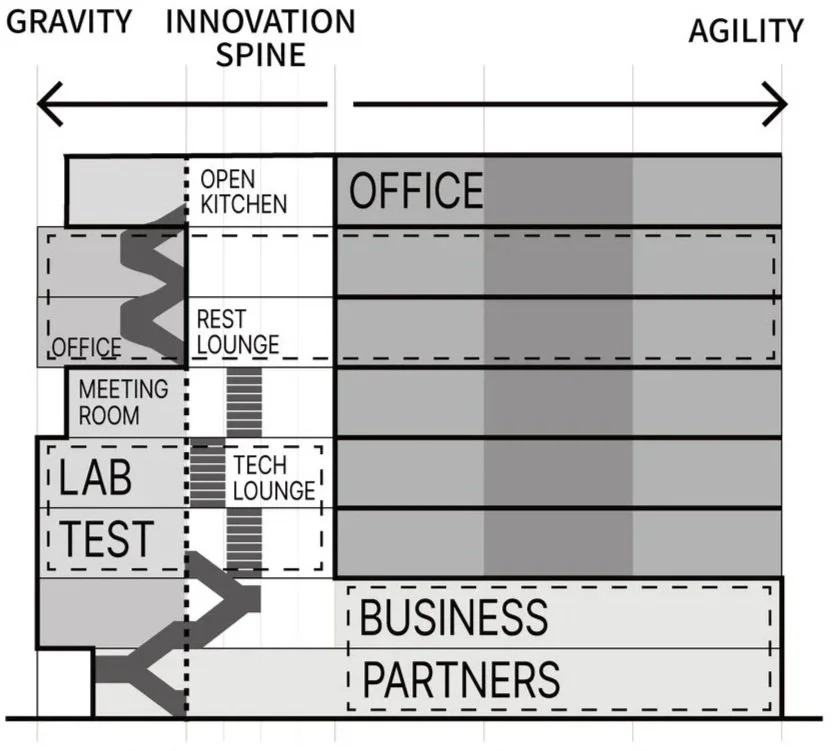
The spatial framework is governed by a 1.8m to 5.4m grid module, allowing for flexible reconfiguration according to organizational scale. The split cores and the Agile Spine orchestrate the programmatic distribution around a highly adaptable central open plan, facilitating a seamless sequence that guides users through the startup lifecycle: Support → Interaction → Immersion → Growth.
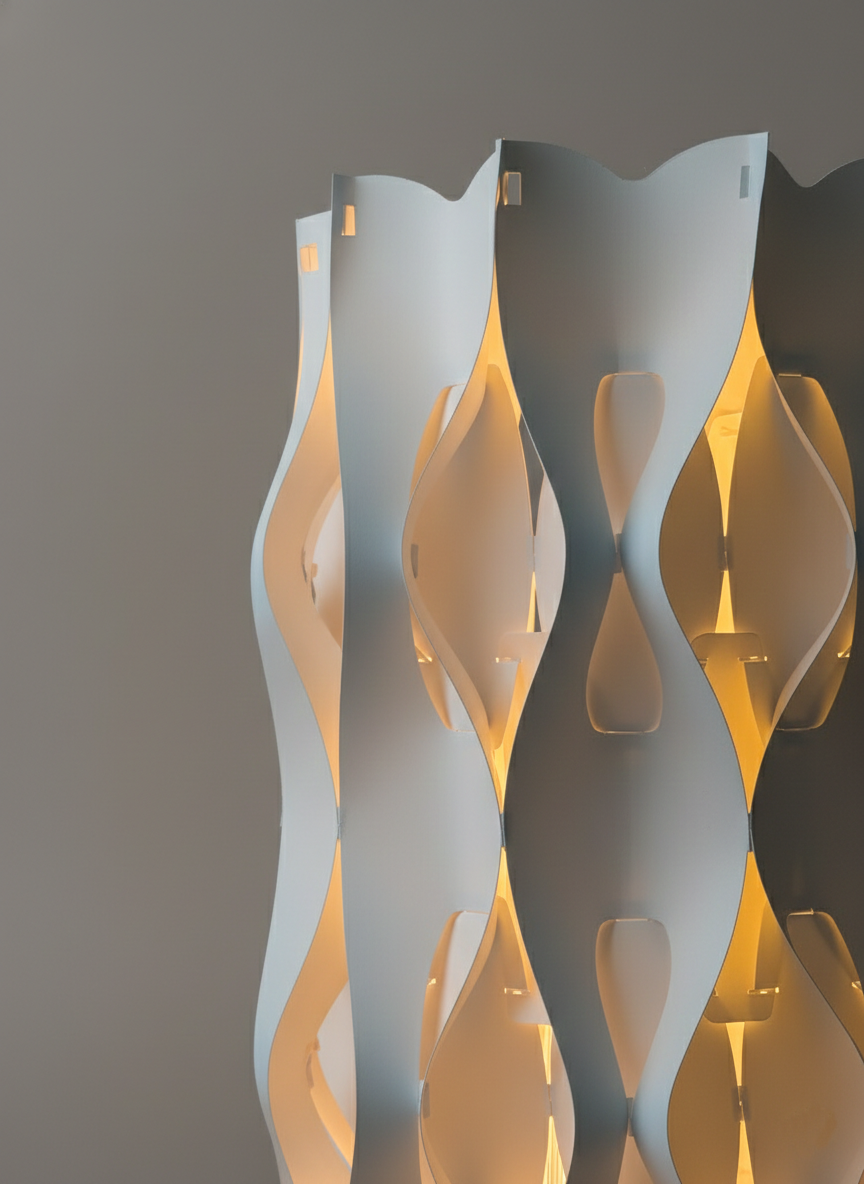
Urban infrastructure and the startup support facility coexist within a single architectural framework, with the integrated control center securing operational efficiency through independent circulation paths. Furthermore, the natural level difference of the site is seamlessly absorbed through sloped landscapes and ramps, transforming it into a welcoming public landscape.
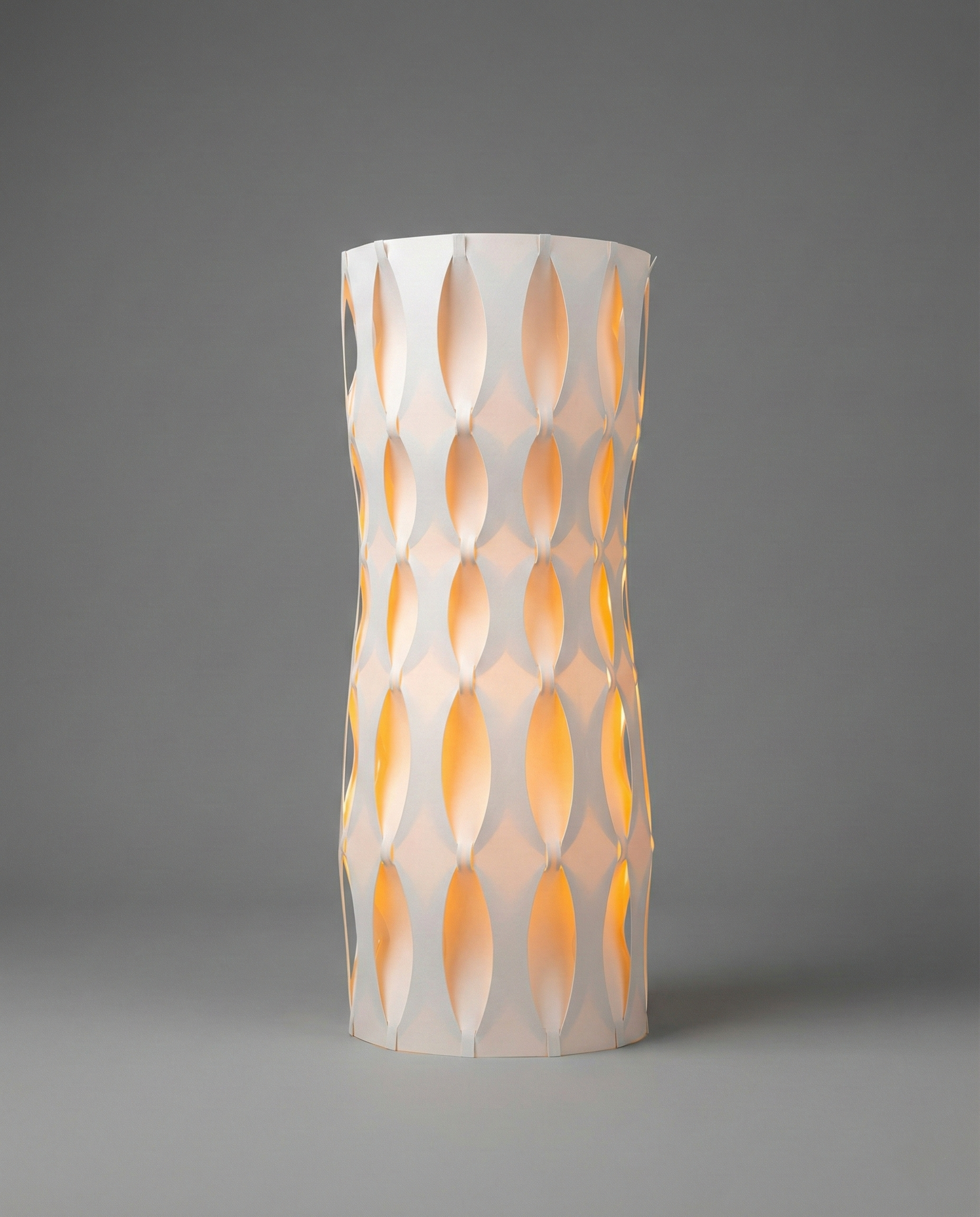
Finally, the structure and facade are seamlessly integrated into a unified exoskeleton system. Built upon an open-plan layout and combined with prefabricated concrete panels, this approach ensures construction precision and scalability. It ultimately functions as a resilient infrastructure ready to adapt to any future programmatic shifts.


Year : 2026

Location : Seoul, Korea

Size : 4,958.12 m²

Status : Competition Entry (3rd Place)

Type : Office

Principal in Charge :

Seojoo Lee, Hyojung Kim (I.f), Dongil Kim (I.f CDL)

Design Team :

Seungil Kim, Gwangeun Hwang, Bokyung Seo, Soohyun Kim (I.f)

Collaboration :

EFFECTUS

Living Manifold

Living Manifold: A Residential Structure Weaving Preservation and Coexistence

Living Manifold proposes a new identity for the extension of the University of Seoul International House, where preservation and coexistence are organized into a multilayered residential structure. Located between the existing residence halls, Haneul Pond, and Baebongsan Mountain, the site is not only a place for additional dormitory rooms but also a critical point where nature, campus life, and residential community overlap.

The project responds to this condition by arranging a T-shaped residential tower and a low-rise communal base around a sequence of open spaces. The upper residential volume is set back to secure privacy, daylight, and views, while the lower communal area extends the existing dormitory programs and creates a shared platform for students. Public and semi-public programs are placed at the lower levels with separated access routes, allowing local community use without disturbing the security of the student residential zone.

The shared spaces are organized as an expanded living room system: the urban living room at the lower level, the community living room at the first floor, and the everyday living rooms distributed across the residential floors. These spaces support different scales of interaction, from public events and RC programs to small study, rest, and casual encounters between residents.

Landscape is also treated as an active framework rather than a background. The front yard, courtyard, rear garden, and rooftop garden form a gradual transition from campus openness to residential privacy and the ecological edge of Baebongsan. Through this layered arrangement, Living Manifold redefines the dormitory extension as a living network that connects nature and campus, individual privacy and collective life, students and the wider community.


Year: 2026

Location : Seoul, Korea

Size : 6,796.86 m²

Status : Competition Entry

Type : Domitory

Principal in Charge :

Seojoo Lee, Hyojung Kim (I.f), Dongil Kim, (I.f CDL)

Design Team :

Seungil Kim, Gwangeun Hwang (I.f)

Yeoju Residence

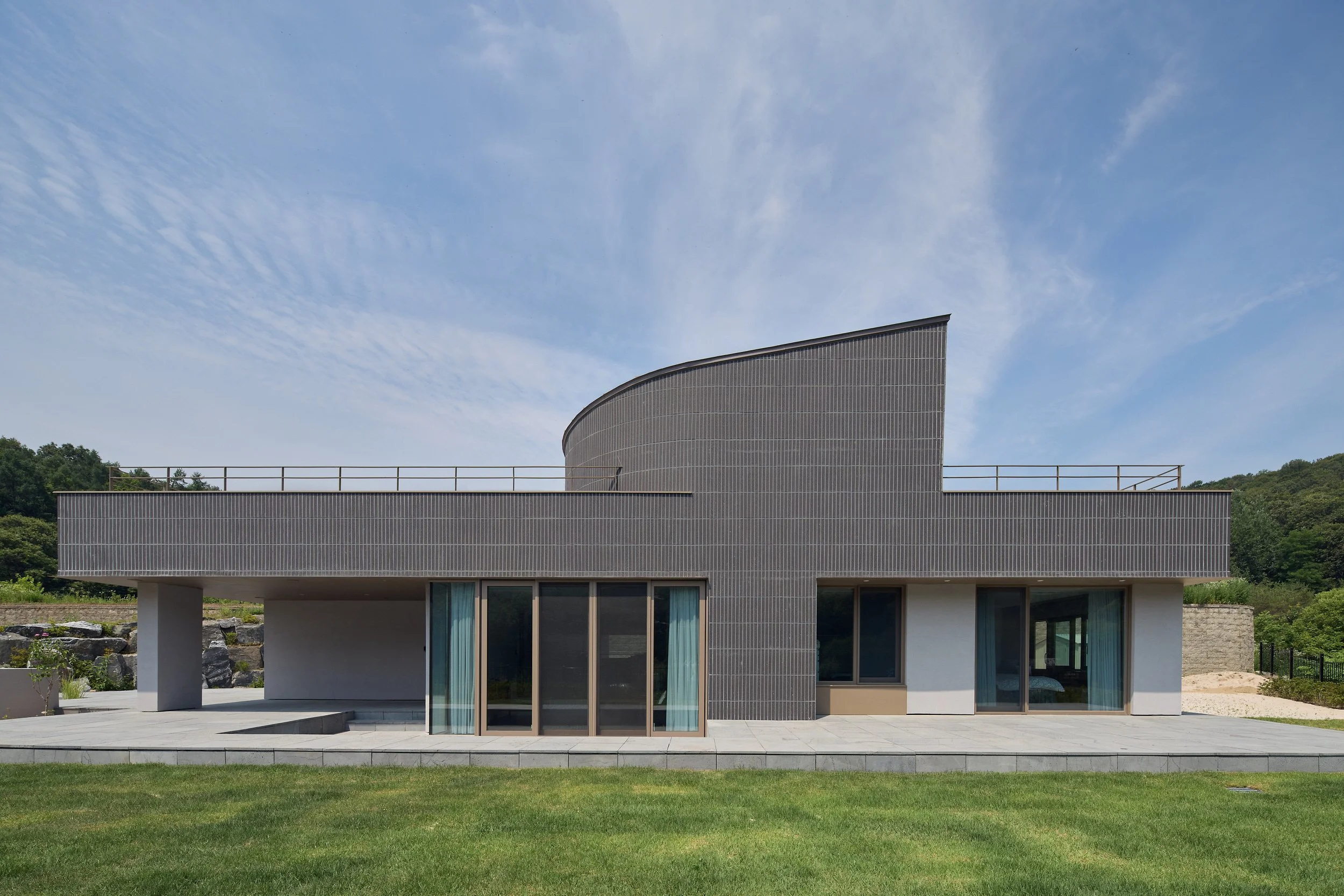
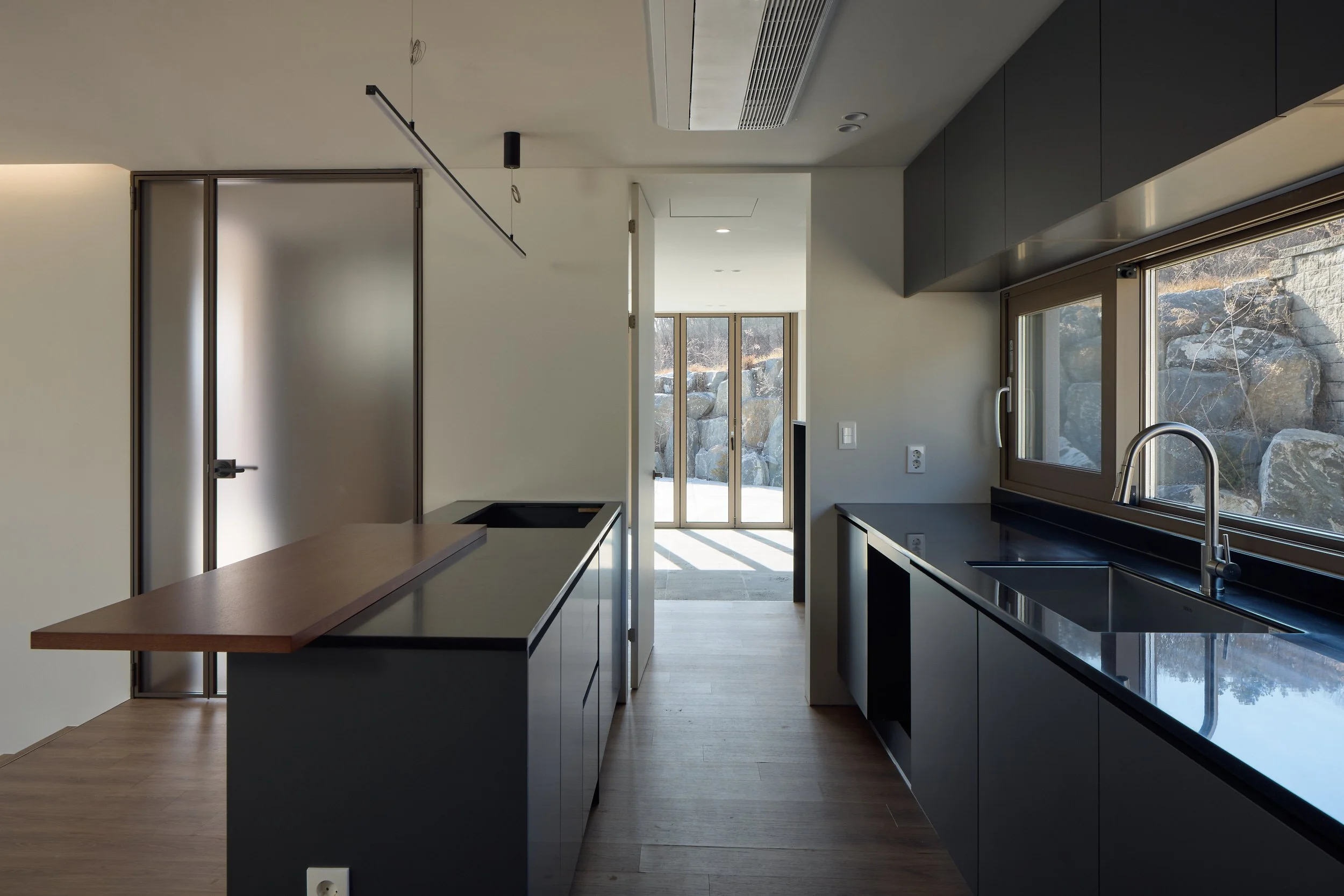
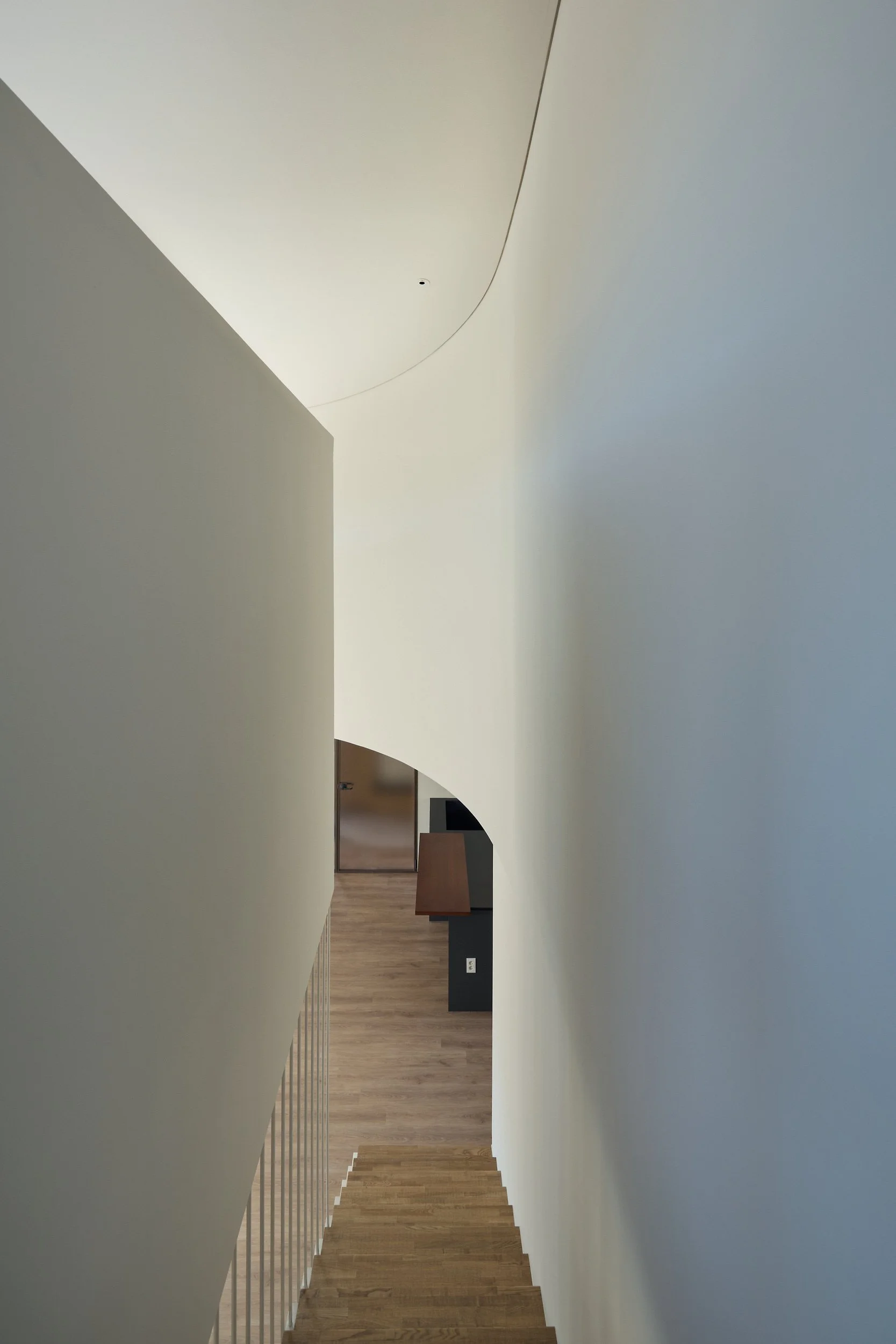
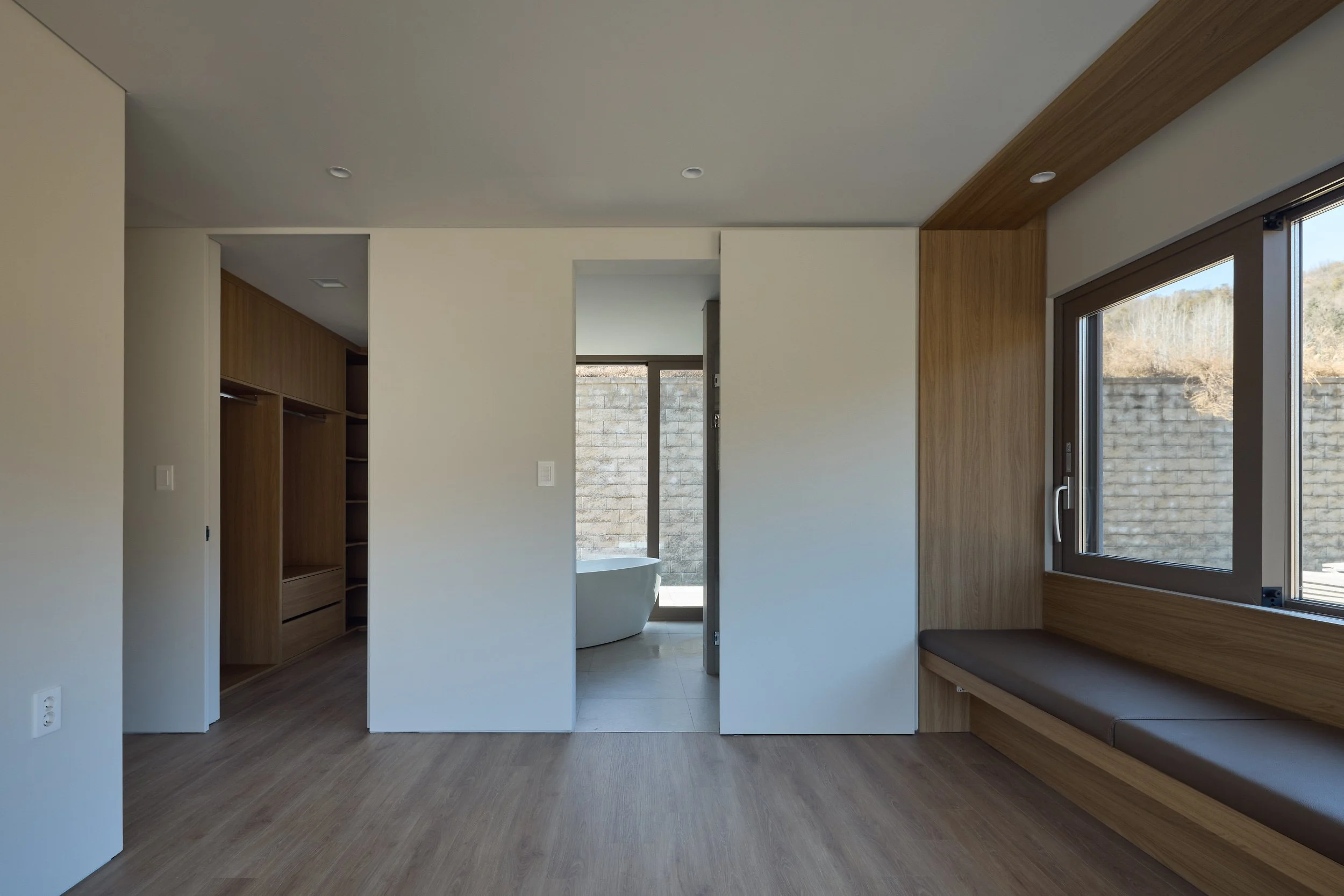
This site is nestled at the foot of Taebong Mountain in Geumsam-myeon, Yeoju, at the heart of a well-developed single-family residential village. To the east, it opens up to the picturesque Dogok-ri village, while to the north, it offers a serene view of a hillside planted with birch trees—creating a peaceful and quiet neighborhood setting.
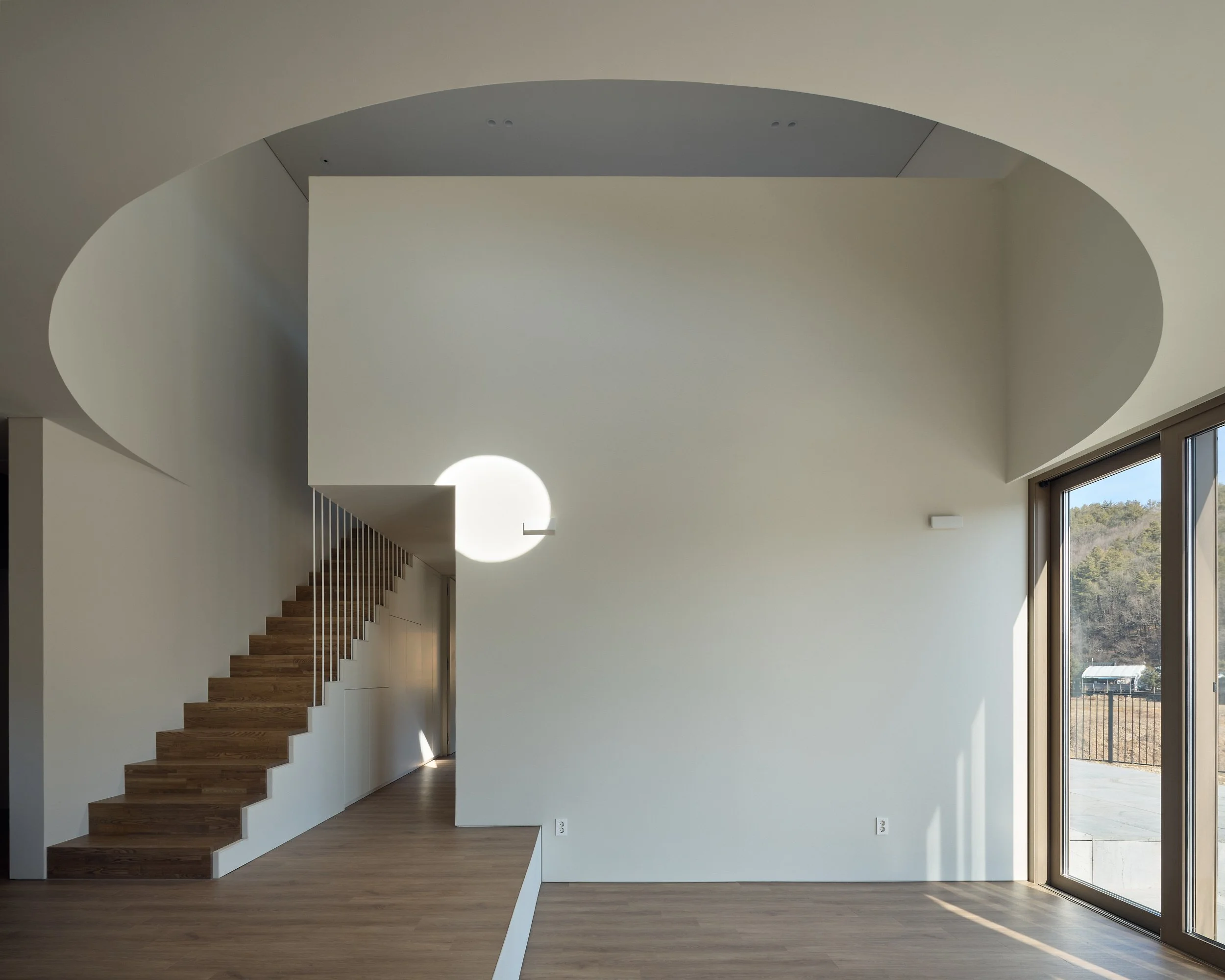
The house consists of a master bedroom, a guest room, and a shared space that combines the living room and kitchen. On the second floor, a family room provides a comfortable area for family members to spend time together.

Given the location and topographical characteristics of the site, construction on-site is minimized by employing a panelized modular building method. Structural walls, along with wall and roof panels, are prefabricated off-site and assembled on-site, allowing for efficient and precise construction with minimal disruption to the natural surroundings.


Year : 2026

Location : Yeoju, Korea

Size : 156.16 m²

Status : Completed

Type : Residential

Principal in Charge :

Seojoo Lee, Hyojung Kim (I.f), Dongil Kim (I.f CDL)

Design Team :

Suyeon Seo, Chaeyoon Chang (I.f), Gwangeun Hwang (I.f CDL)

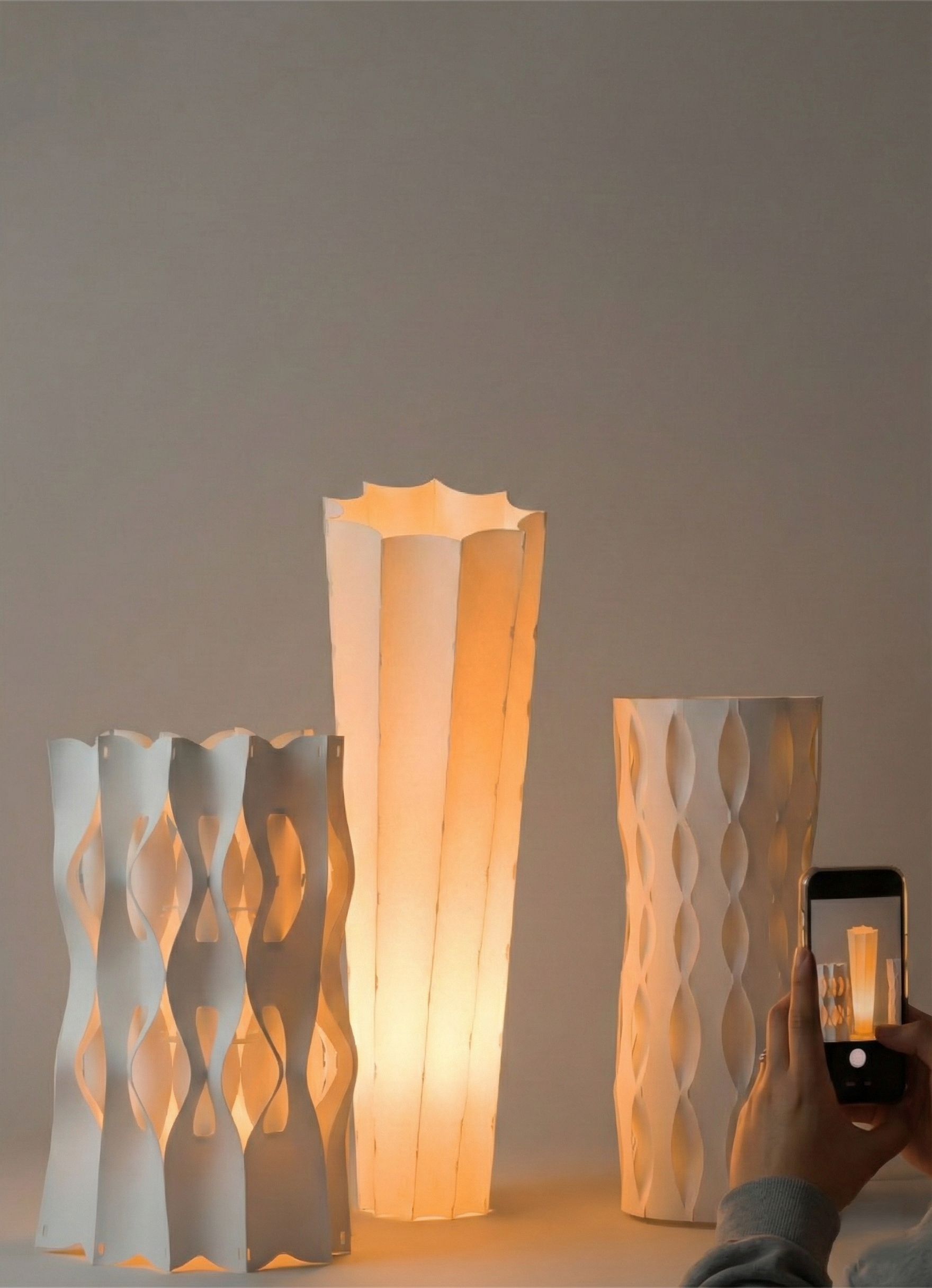
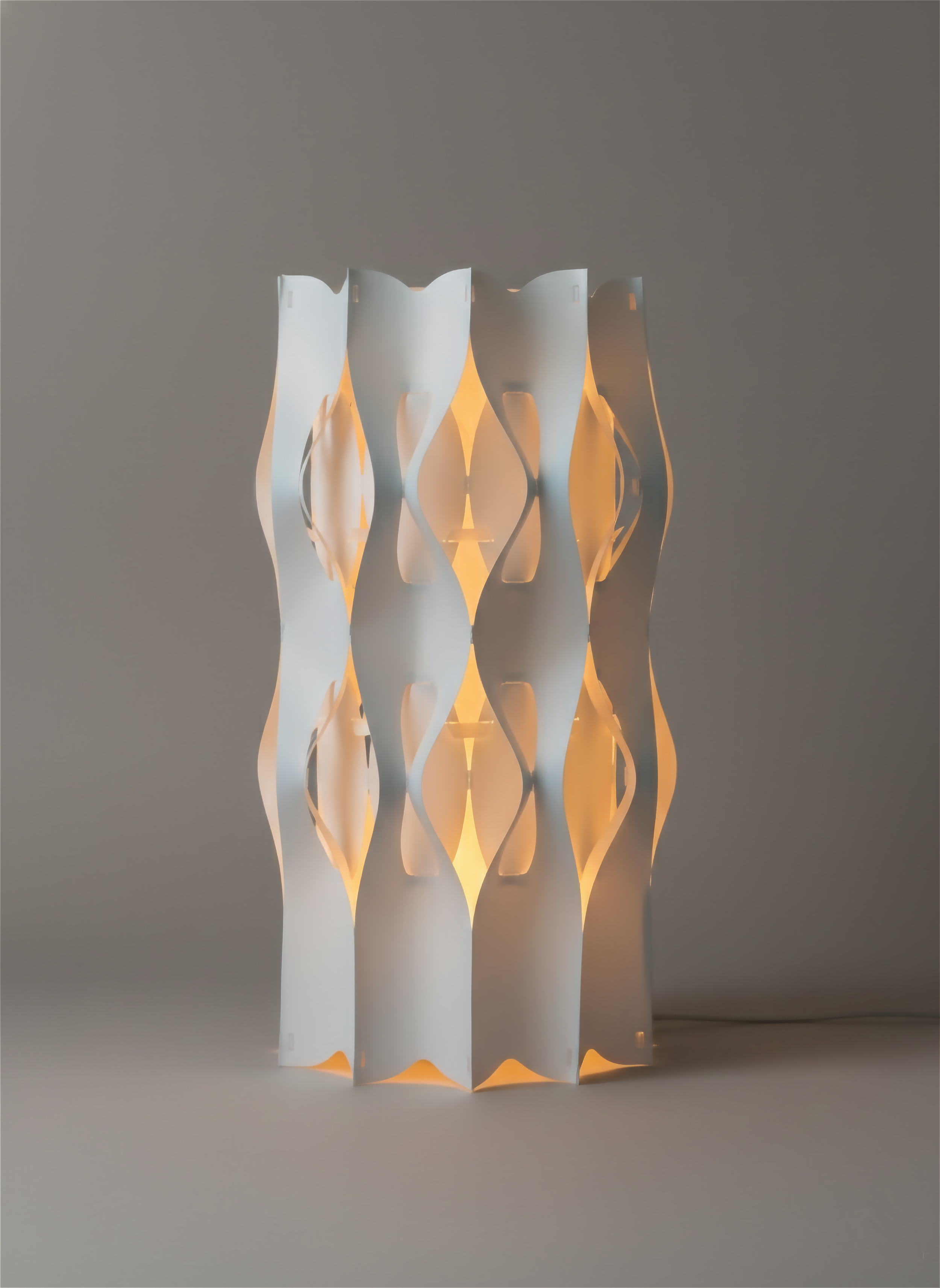
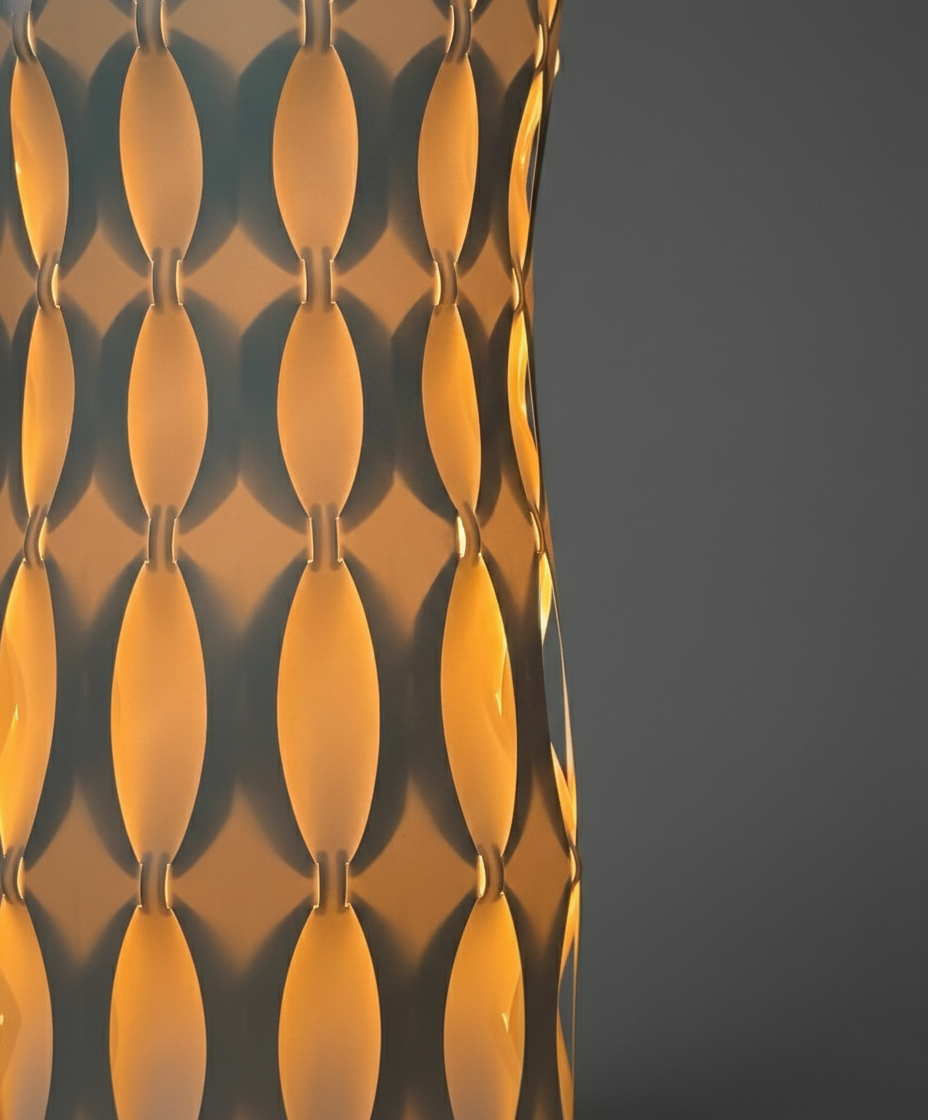
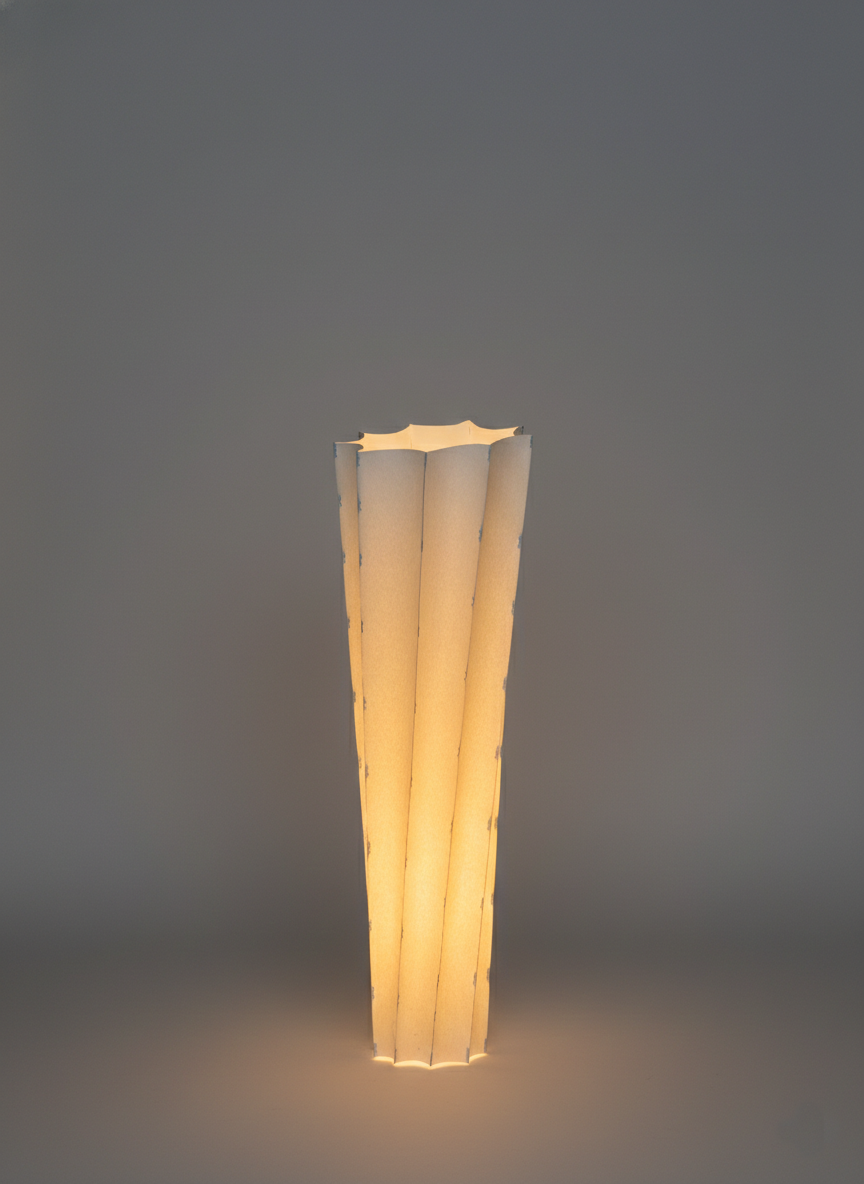
Lamp Shade Series
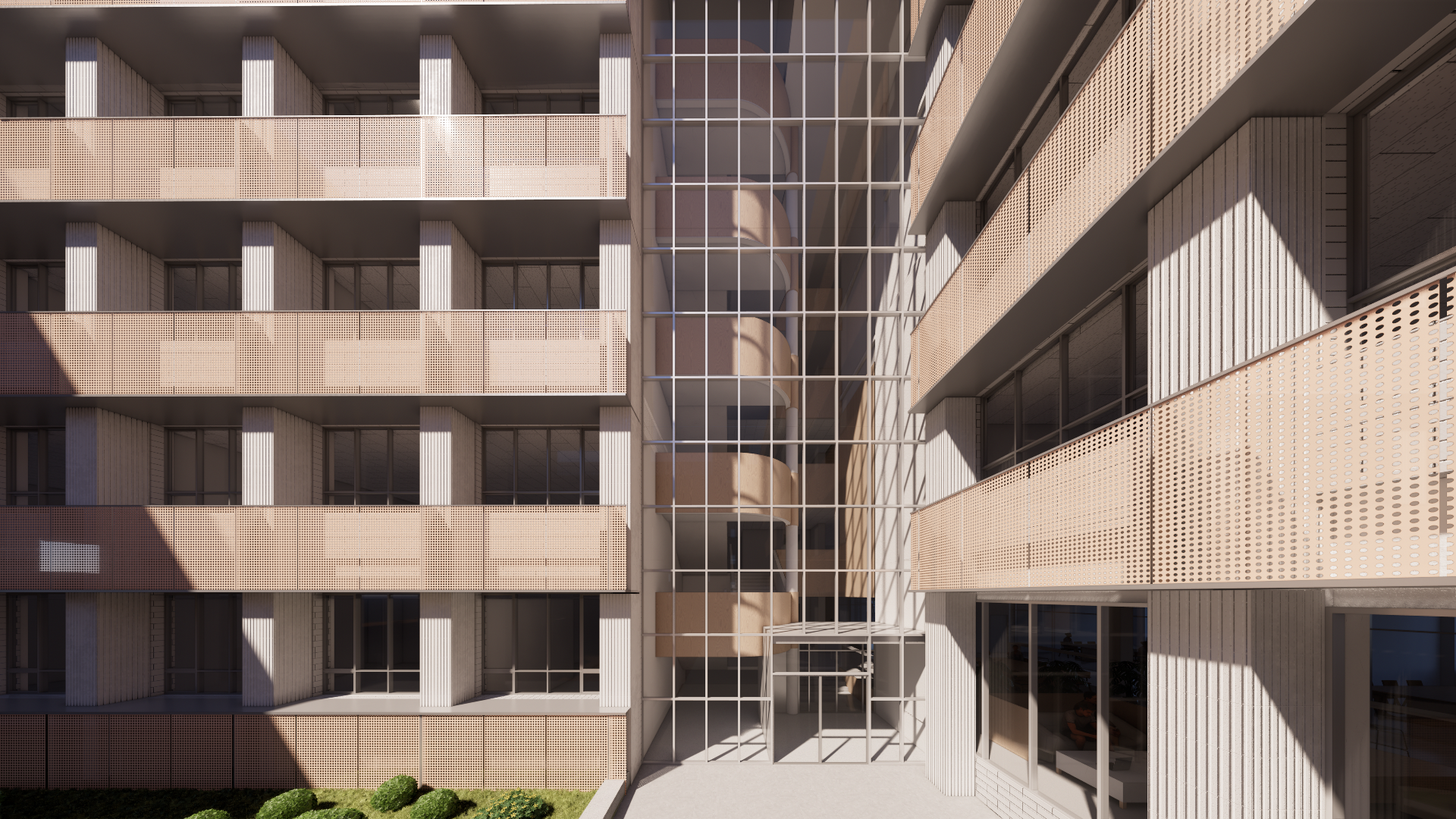
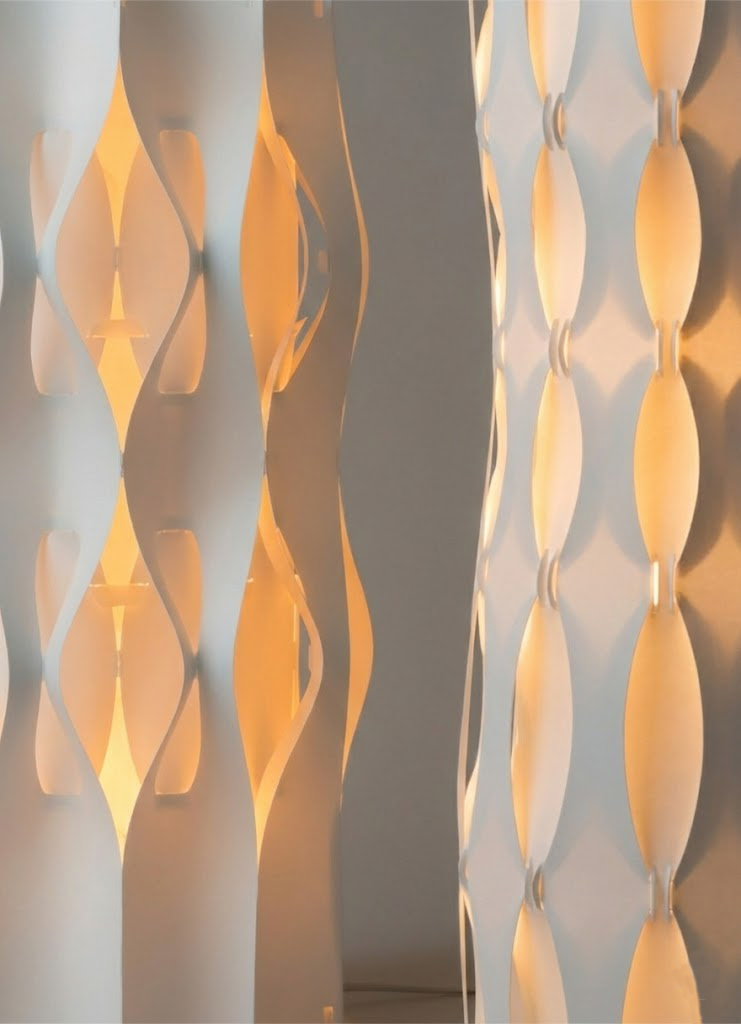
Soft Tectonics is a research initiative exploring Bending-Active structural systems that generate form through the active elasticity of materials. By controlling internal stress distribution and bending radii without external mechanical or thermal stimuli, the research experimentally extends the principle that "form originates from the physical potential of the material." This approach aims for an integrated concept of Material = Structure = Form.

Utilizing polymer-based flexible materials and fiber-reinforced composites, the system activates bending elasticity to create self-supporting structures. The core feature of this research is curvature-based stiffness, which ensures structural integrity even within thin cross-sections.

The methodology bridges the digital and physical through elastic deformation simulations, custom profile-extraction software, and error-correction processes. Parametric algorithms derive multiple structural possibilities from a single design, while over 200 prototype experiments optimize the balance between structure and self-weight. This Micro-to-Macro / Macro-to-Micro strategy connects object-scale experimentation to architectural-scale implementation.


Year : 2026

Location : Seoul, Korea

Project Director :

Dongil Kim (Kyung Hee University / I.f CDL)

Principal Researcher :

Gwangeun Hwang (I.f)

Supported by : I.f Architecture & Research

K:ink Tower

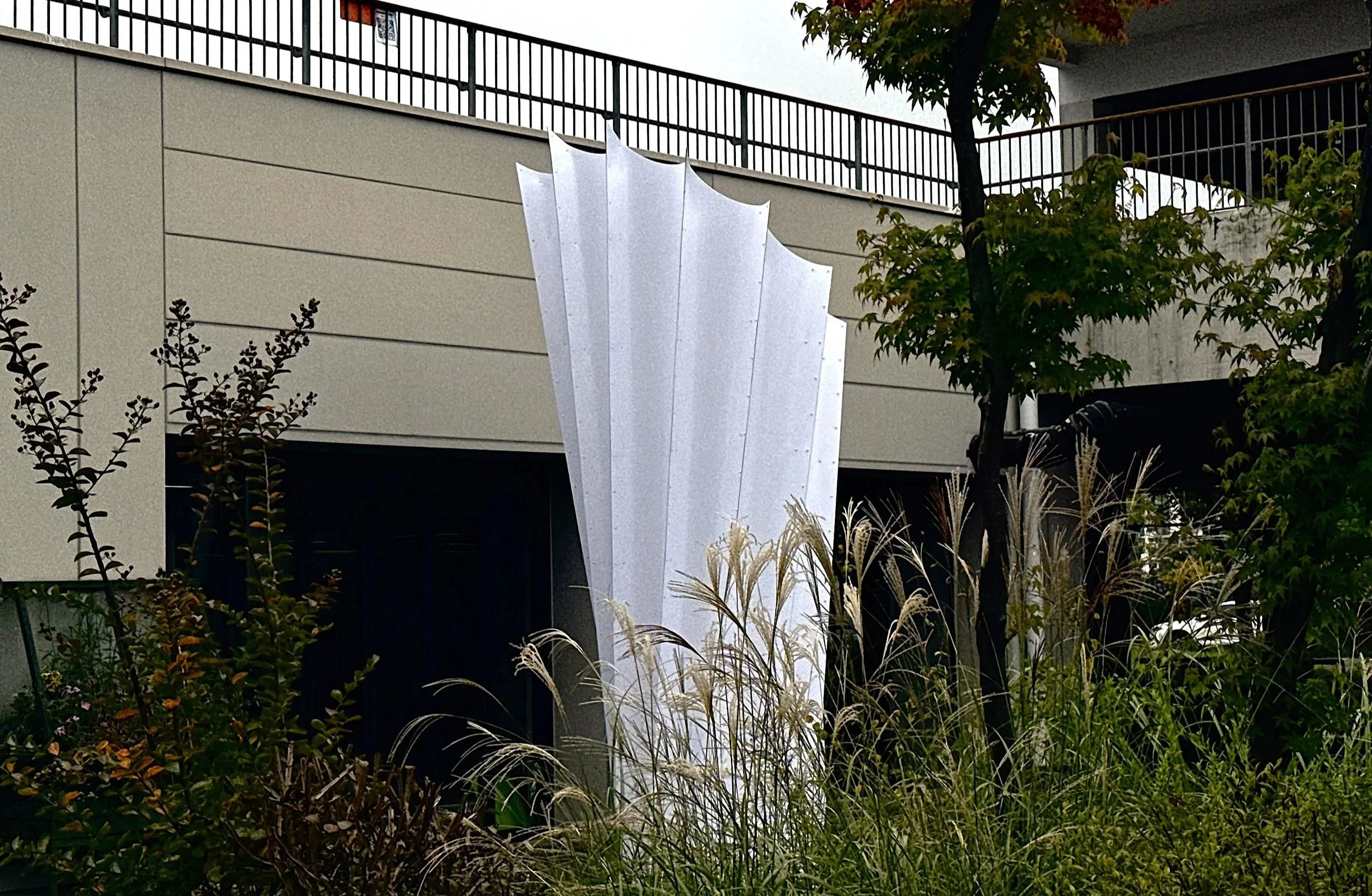
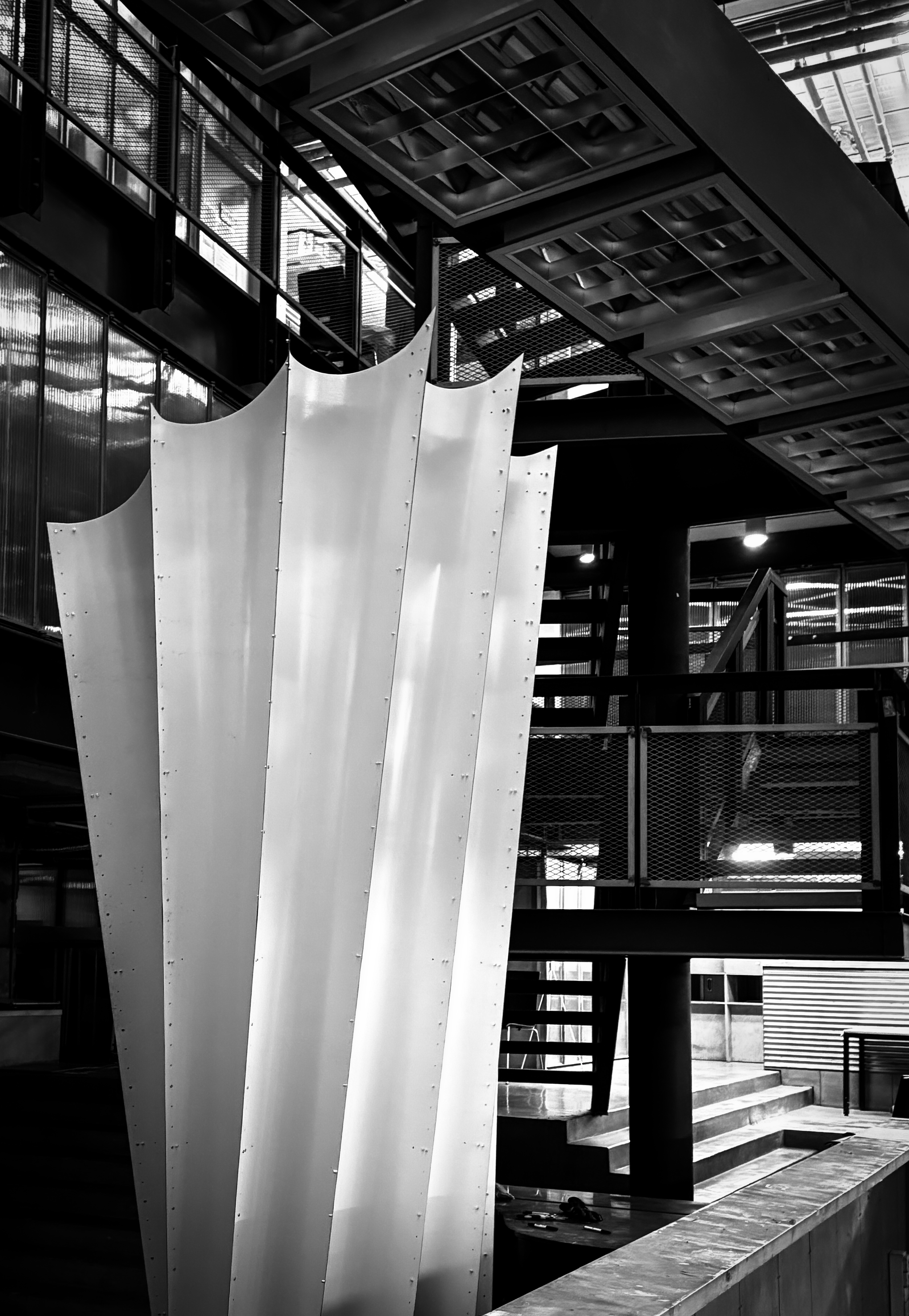
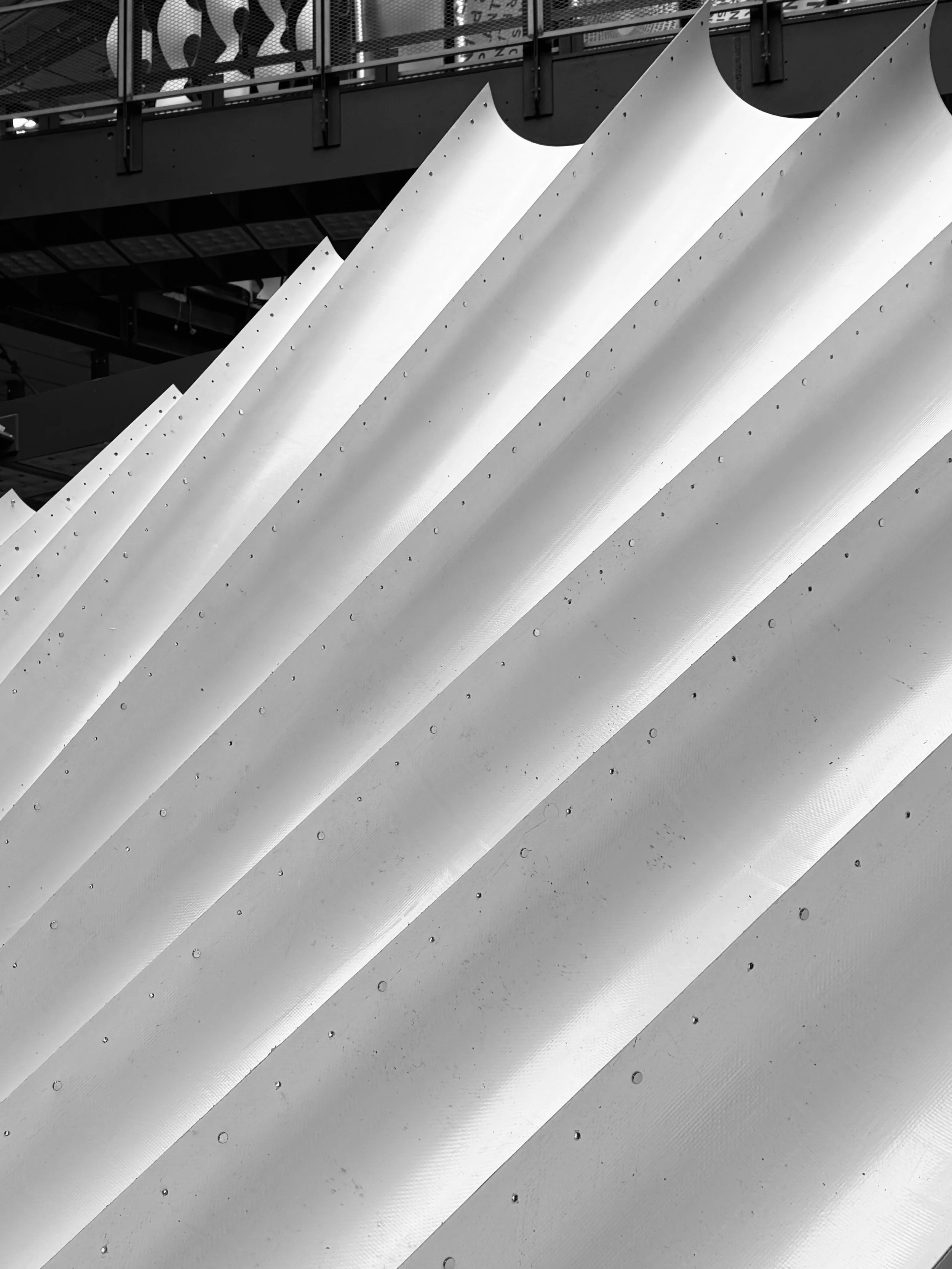
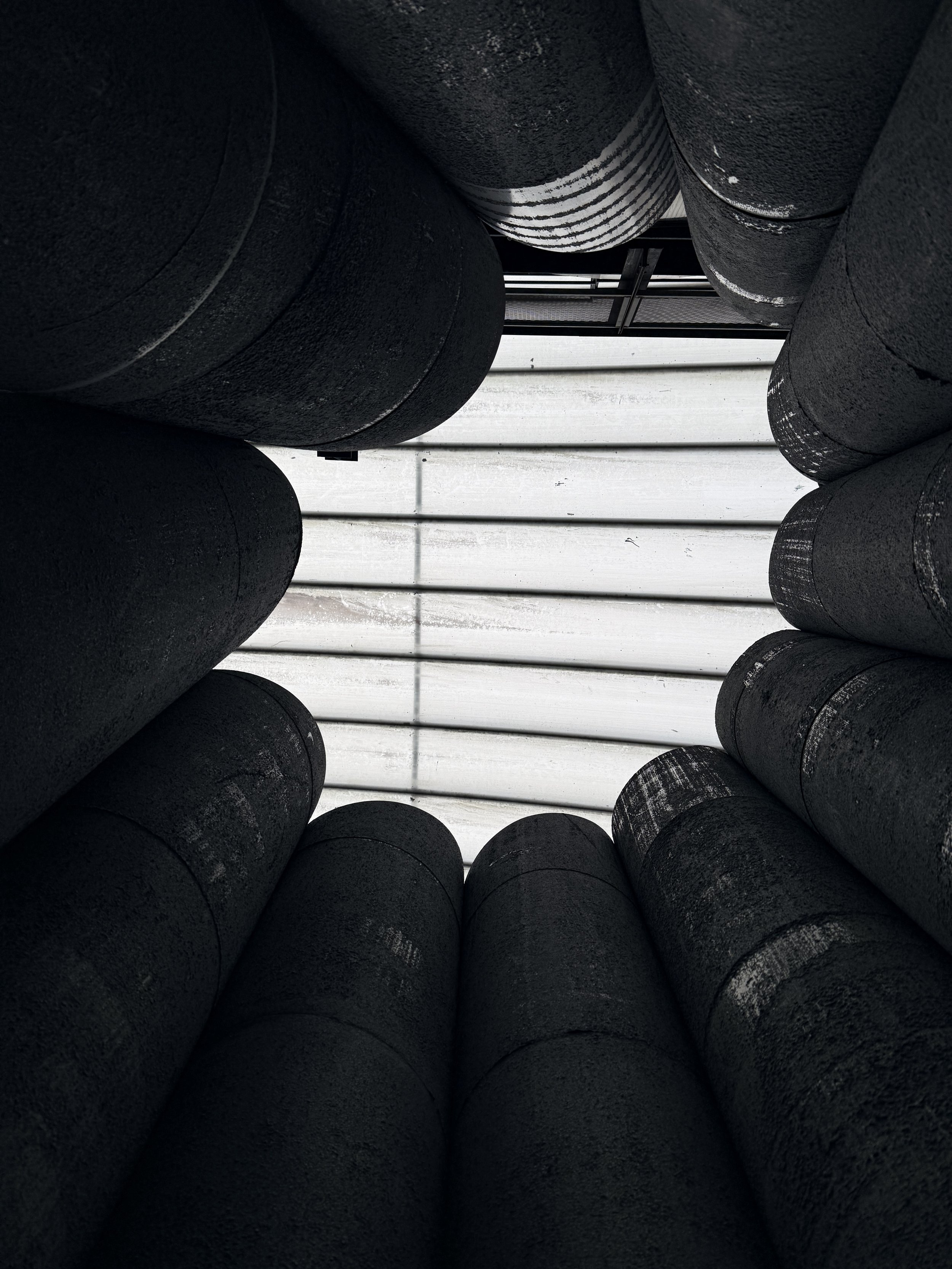
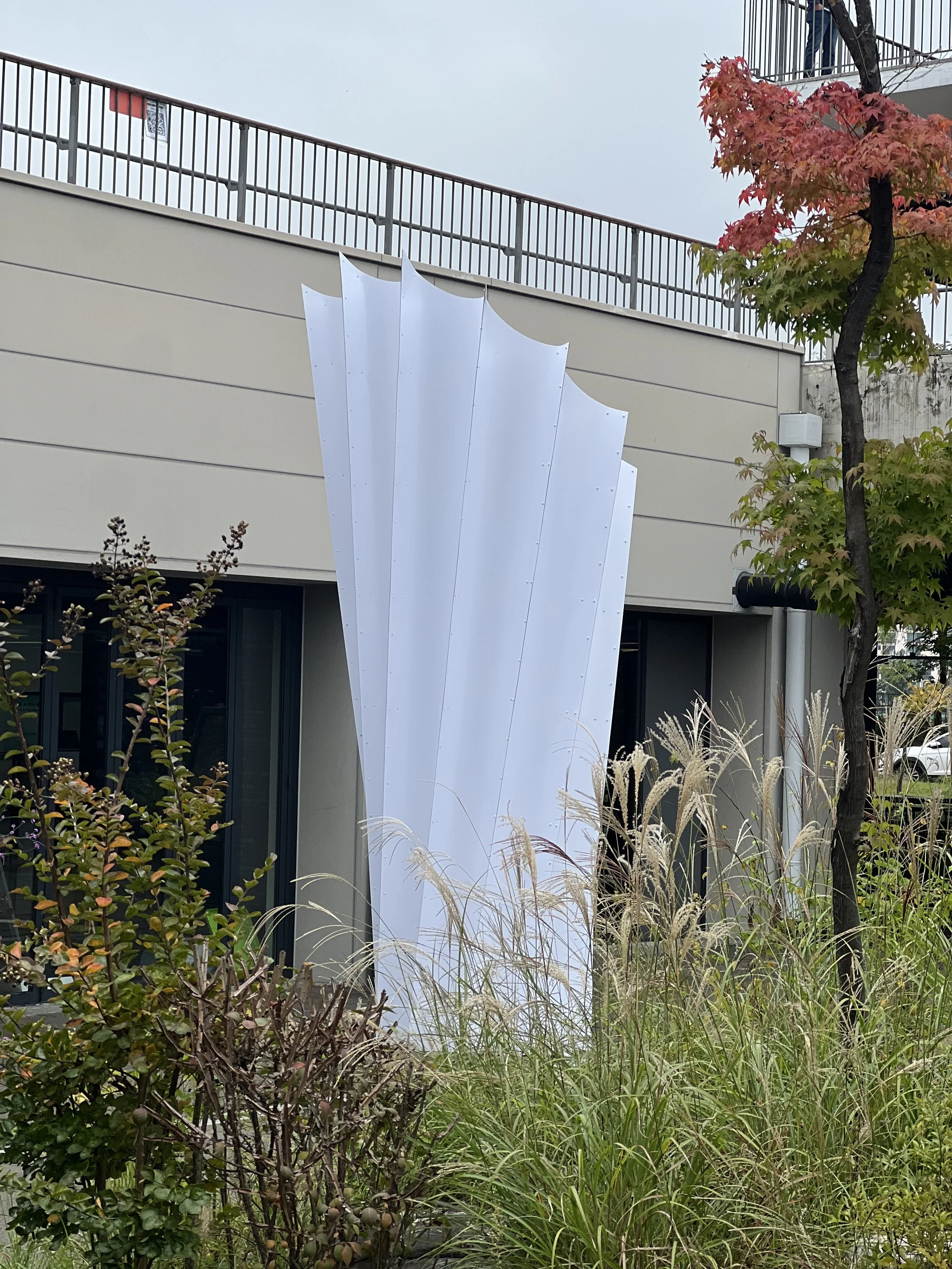
K:INK Tower is a bending-active composite experiment that explores the moment when softness transforms into structure. Using large-scale, ultra-light composite fibers developed by AXIA Materials, the project investigates how flexible materials can discover form and stability through the natural flow of tension.

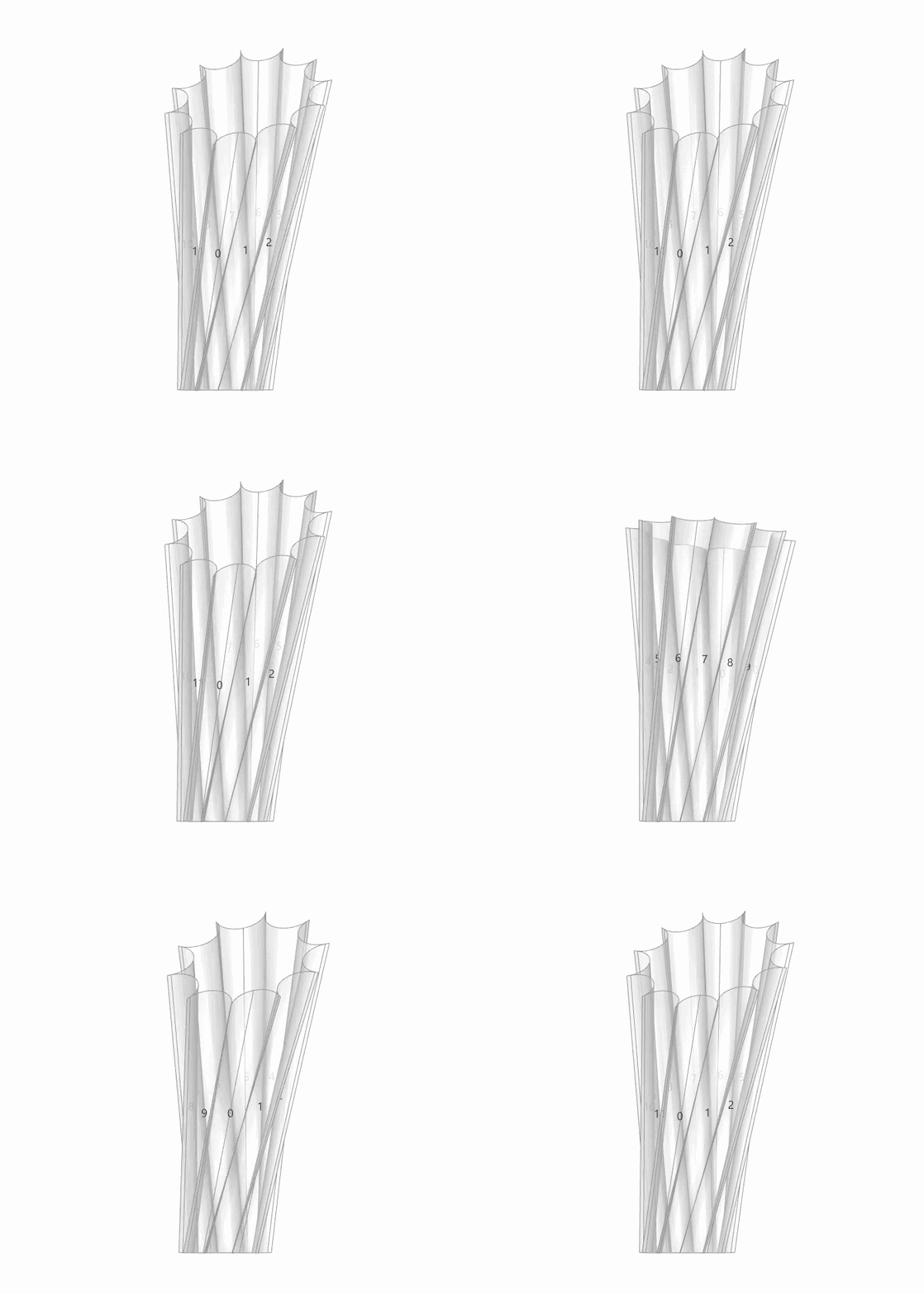
Standing 4.2 meters tall, the tower consists of eleven concave panels that interlock through a calibrated balance of bending and stress, embodying the Soft Tectonic philosophy — an architecture that stands through tension rather than rigidity.

K:INK Tower captures the precise instant when continuous surfaces bend and resist, revealing a vertical gesture where material energy crystallizes into form and structure emerges from its own tension.


Related Research


Year : 2025

Location : Seoul, Korea

Size : 1m radius, 4.2m height

Project Director :

Dongil Kim (Kyung Hee University / I.f CDL)

Principal Researcher :

Seungil Kim, Gwangeun Hwang (I.f CDL)

Project Assistant :

Isaac Kang, Bugeon Kim, Chaewon Go, Juyoung Lee (I.f CDL)

Supported by : Kyung Hee Univ., I.f Convergence Design Lab, Axia Materials, Kolon Global, I.f Architecture & Research

Seorae Salon

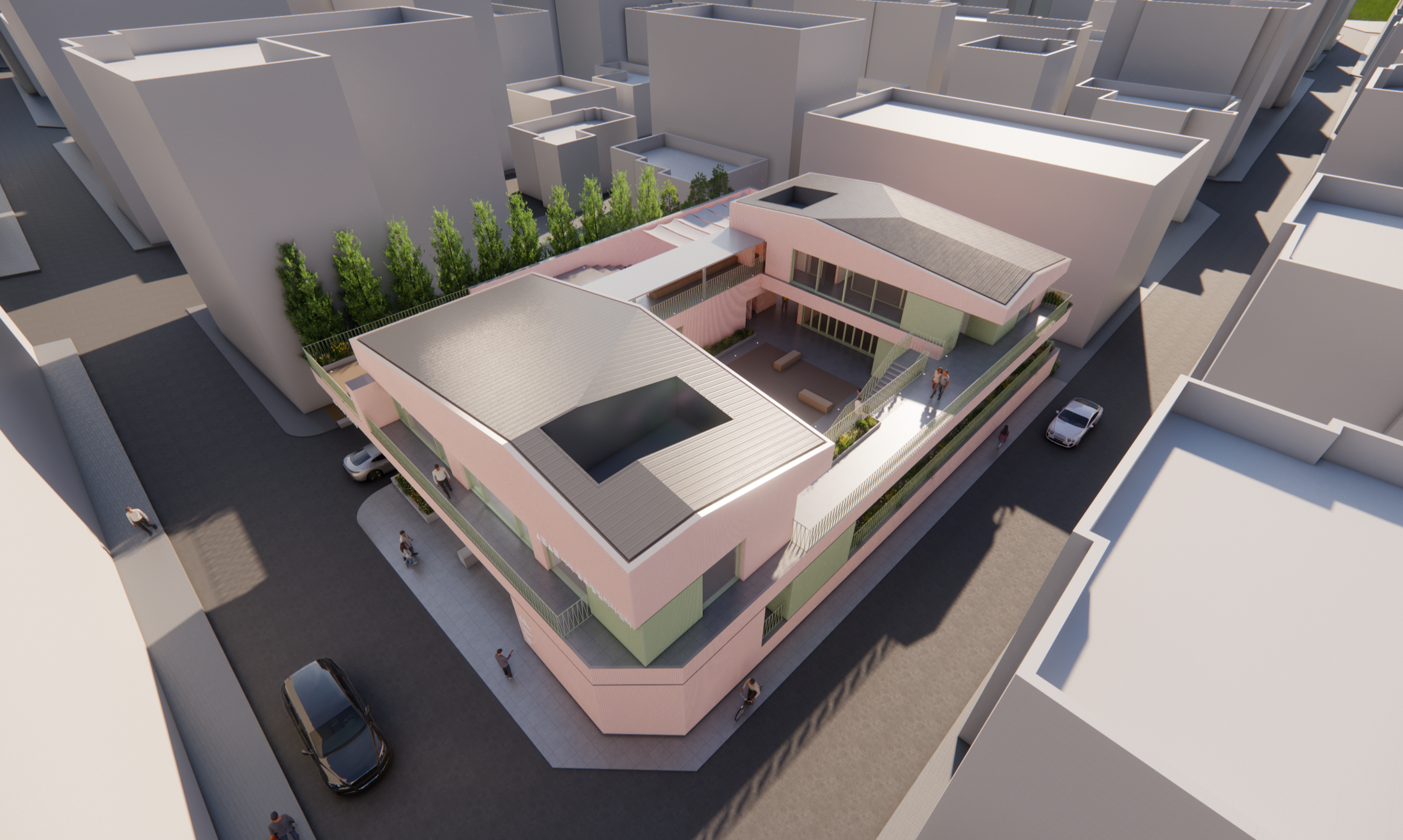
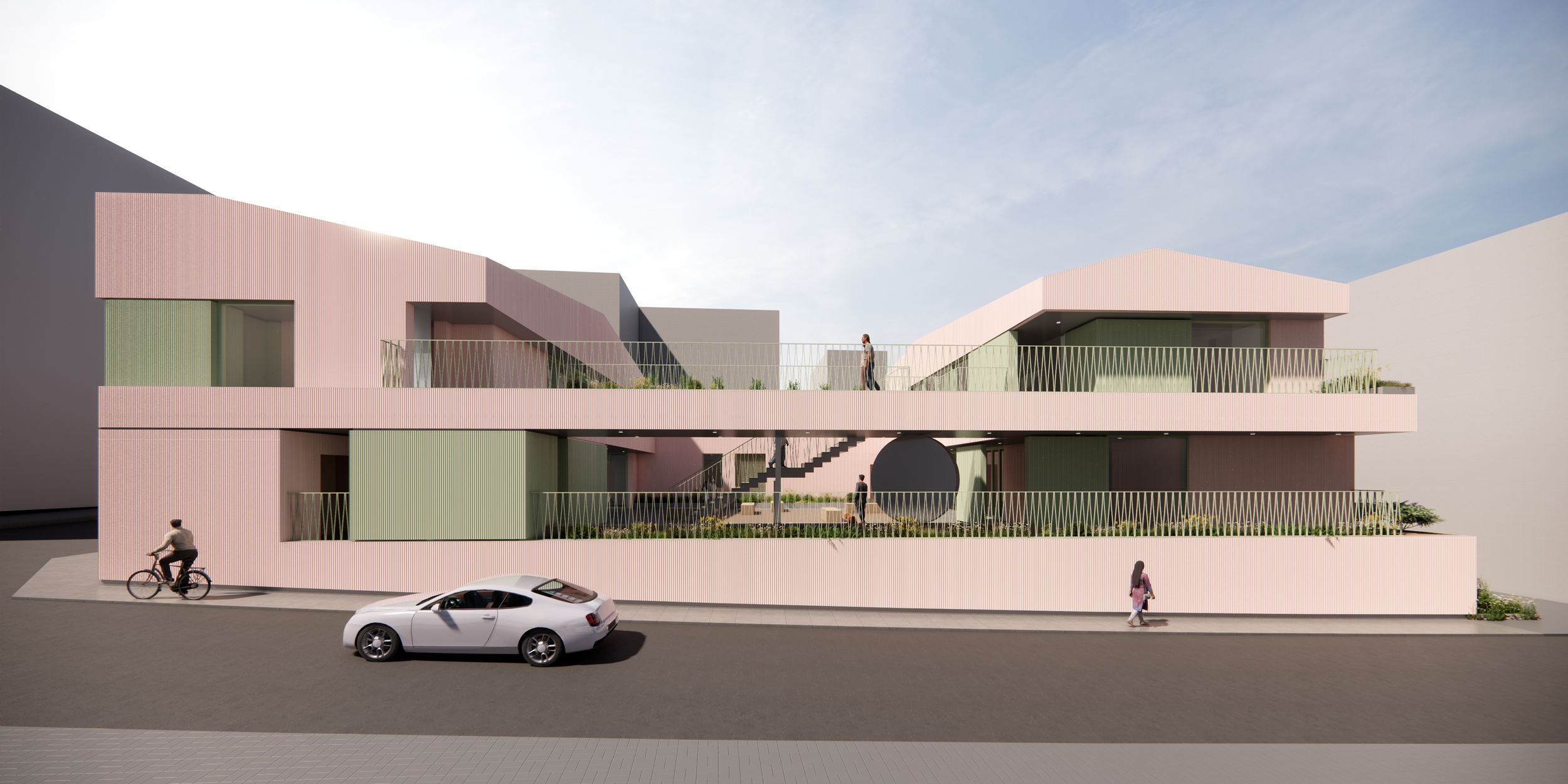
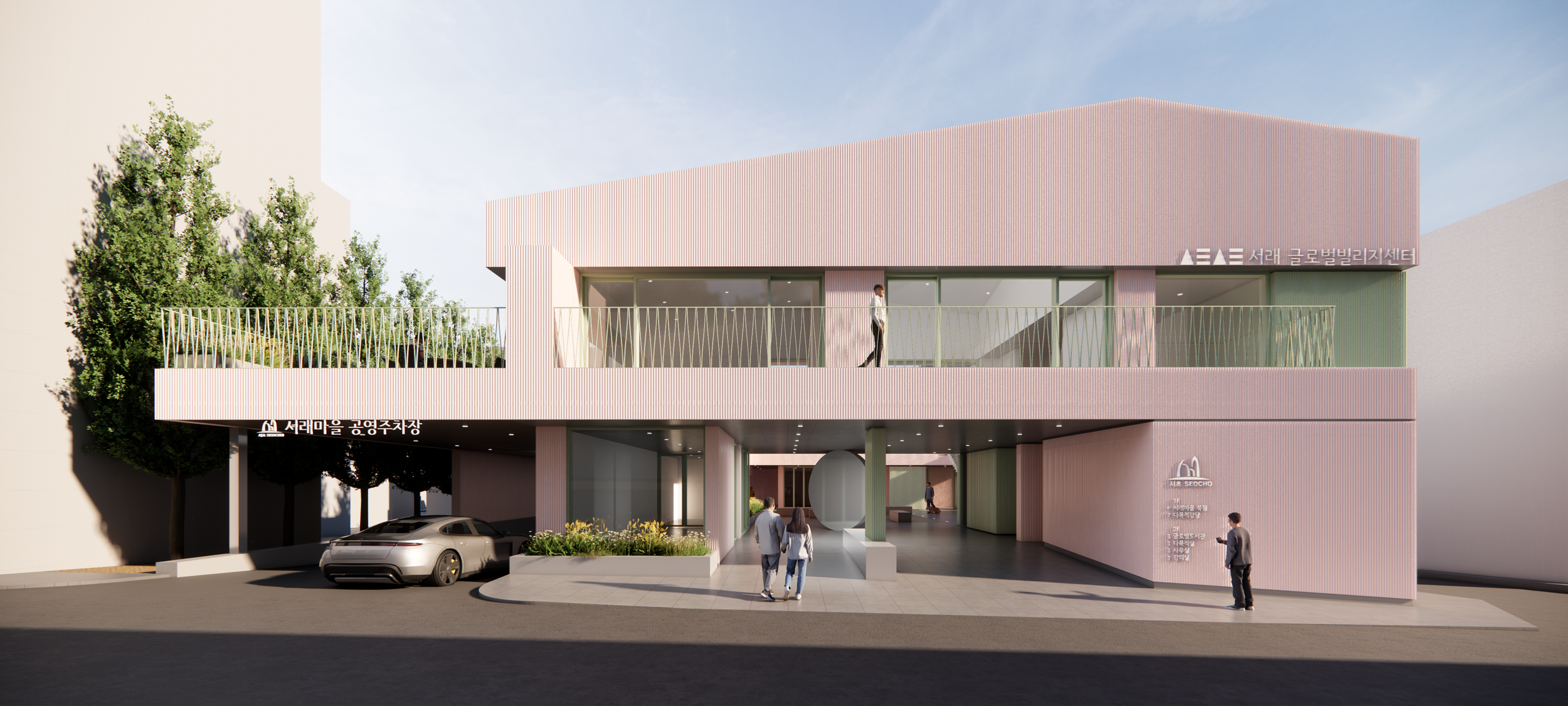
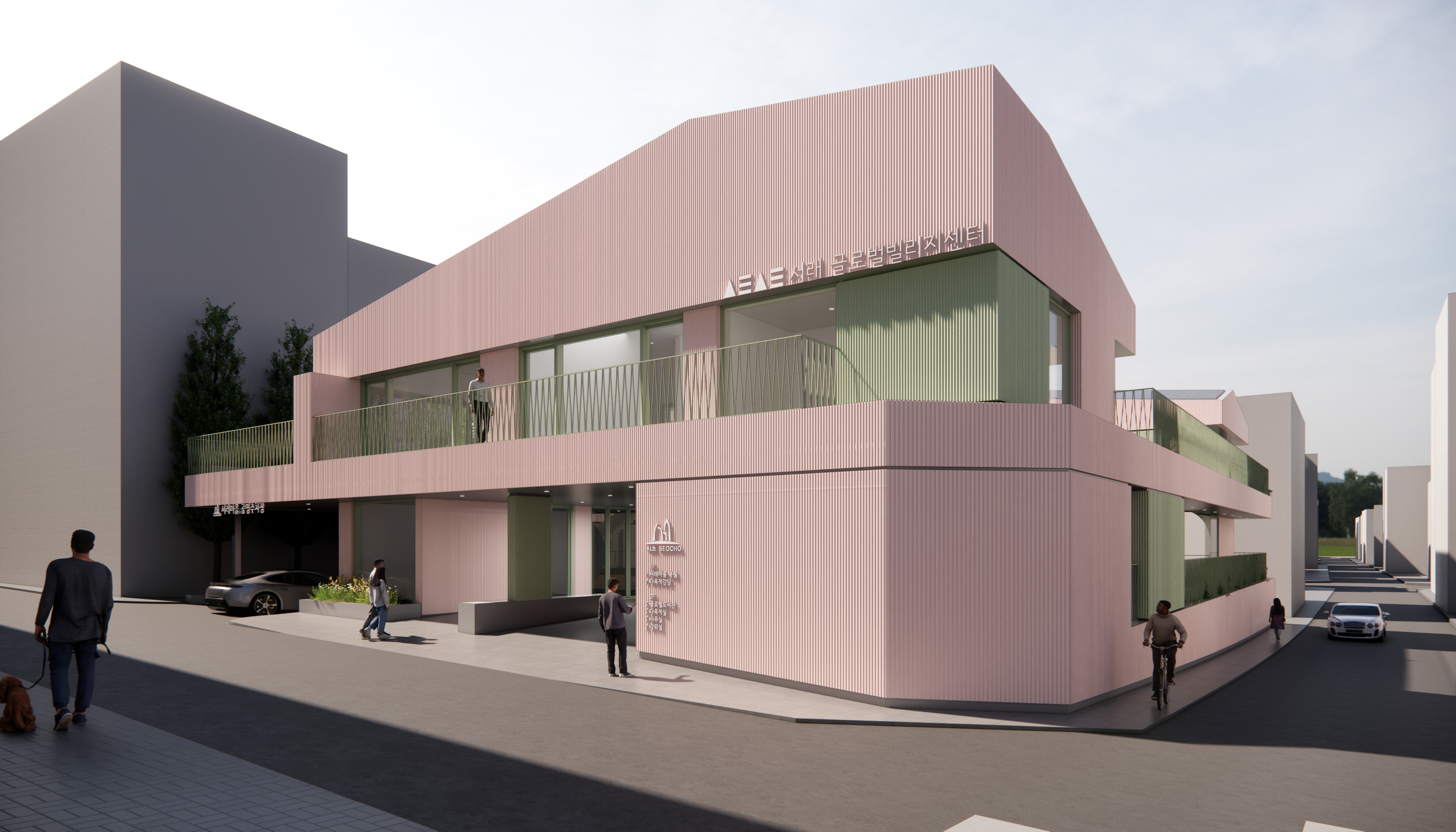
The ambitious expansion and relocation project for the Global Village Center in Seocho-gu involves transforming the above-ground open lot of an existing underground public parking garage into a dynamic, integrated facility designed for the shared use of Seorae Village residents and its numerous multicultural families. The final structure consists of two distinct wings, which will be functionally and visually unified by a connecting second-floor deck.

On the first floor, a vast public open space will be created, featuring both a specialized “Bookworm” bookstore and a library that intentionally blurs the line between the building’s interior and exterior, promoting community engagement.

Furthermore, a highly innovative design element is the canopy covering the vehicle ramp to the subterranean parking lot, which is cleverly repurposed as a terraced/stepped community resting area, providing an accessible and distinctive public amenity where residents can pause, socialize, and observe the surroundings.


Related Research


Year : 2025

Location : Seoul, Korea

Size : 728.90 m²

Status : Ongoing

Type : Community Center

Principal in Charge :

Seojoo Lee, Hyojung Kim (I.f), Dongil Kim (I.f CDL)

Design Team :

Suyeon Seo, Chaeyoon Chang, Suhyeon Kim, Jeonghan Chae (I.f), Seungil Kim, Gwangeun Hwang (I.f CDL)

Collaboration : 위치건축사사무소

Suyu Office


Year : 2025

Location : Seoul, Korea

Size : 462.12 m²

Status : Design Proposal

Type : Office

Principal in Charge :

Seojoo Lee, Hyojung Kim (I.f), Dongil Kim (I.f CDL)

Design Team :

Chaewon go, Bugun Kim, Isaac Kang (I.f.CDL)

Facade and Spatial Renewal Plan - 03

Cross Louvers

Screen Louvers

Horizontal Ribbon

Spatial Renovation

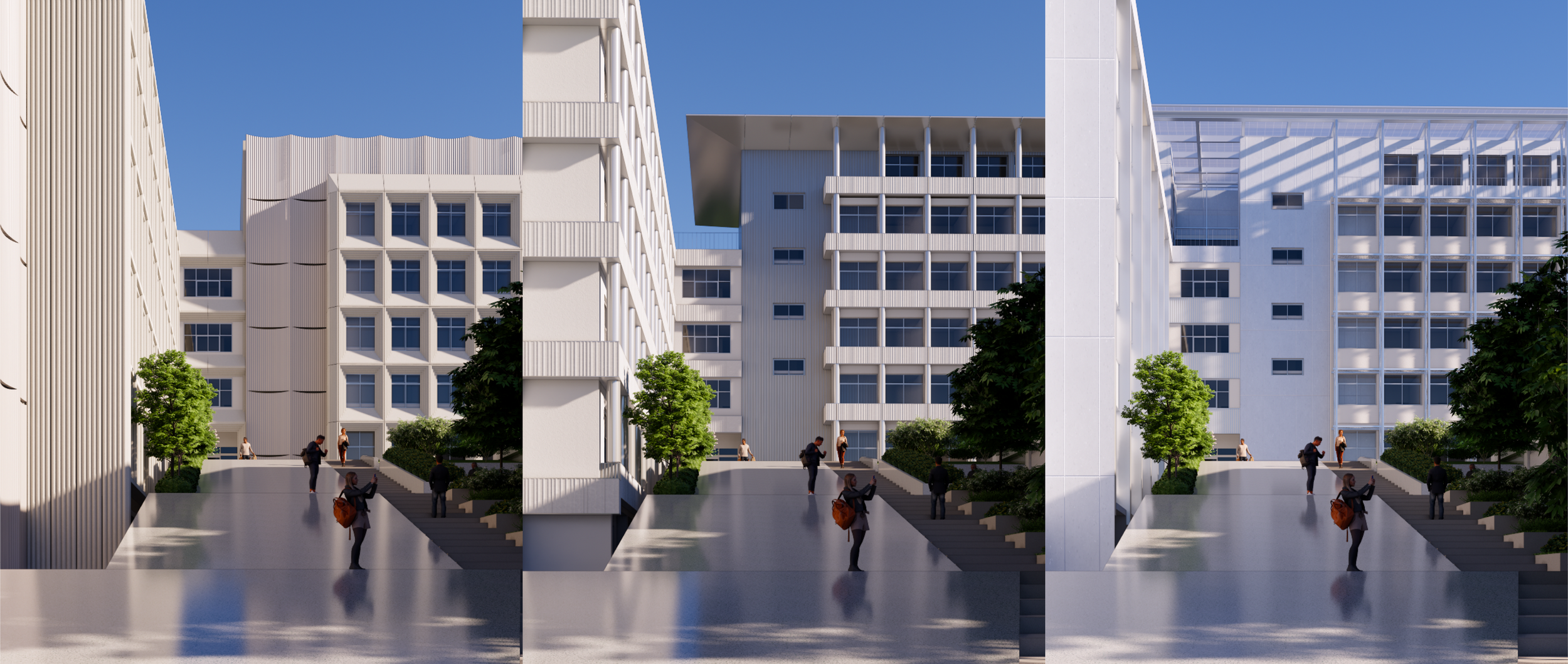
This study proposes a façade and interior renewal plan, with a focus on accessibility, courtyard connectivity, and environmental performance. The building suffers from deteriorated exterior tiles, exposed equipment, outdated public areas, and level differences that weaken the connection between indoor spaces and the courtyard.

The façade alternatives — Cross Louvers, Screen Louvers, and Horizontal Ribbon — respond to the school’s identity by expressing convergence and exchange while also improving shading performance and concealing exterior equipment. The interior strategy is distinguished by the addition of ramps and elevators for barrier-free access, the restructuring of low-level public spaces, the overcoming of courtyard level differences, and the conversion of underused upper-level space into an open rooftop garden.


Year: 2025

Location : Yongin, Korea

Status : Design Proposal

Type : Institution, Renovation

Principal in Charge :

Dongil Kim (I.f CDL, KHU)

Design Team : Bugun Kim (I.f CDL)

Facade and Spatial Renewal Plan - 02

DNA Sequencing

Monolithic

Wrinkled Strips

Spatial Renovation

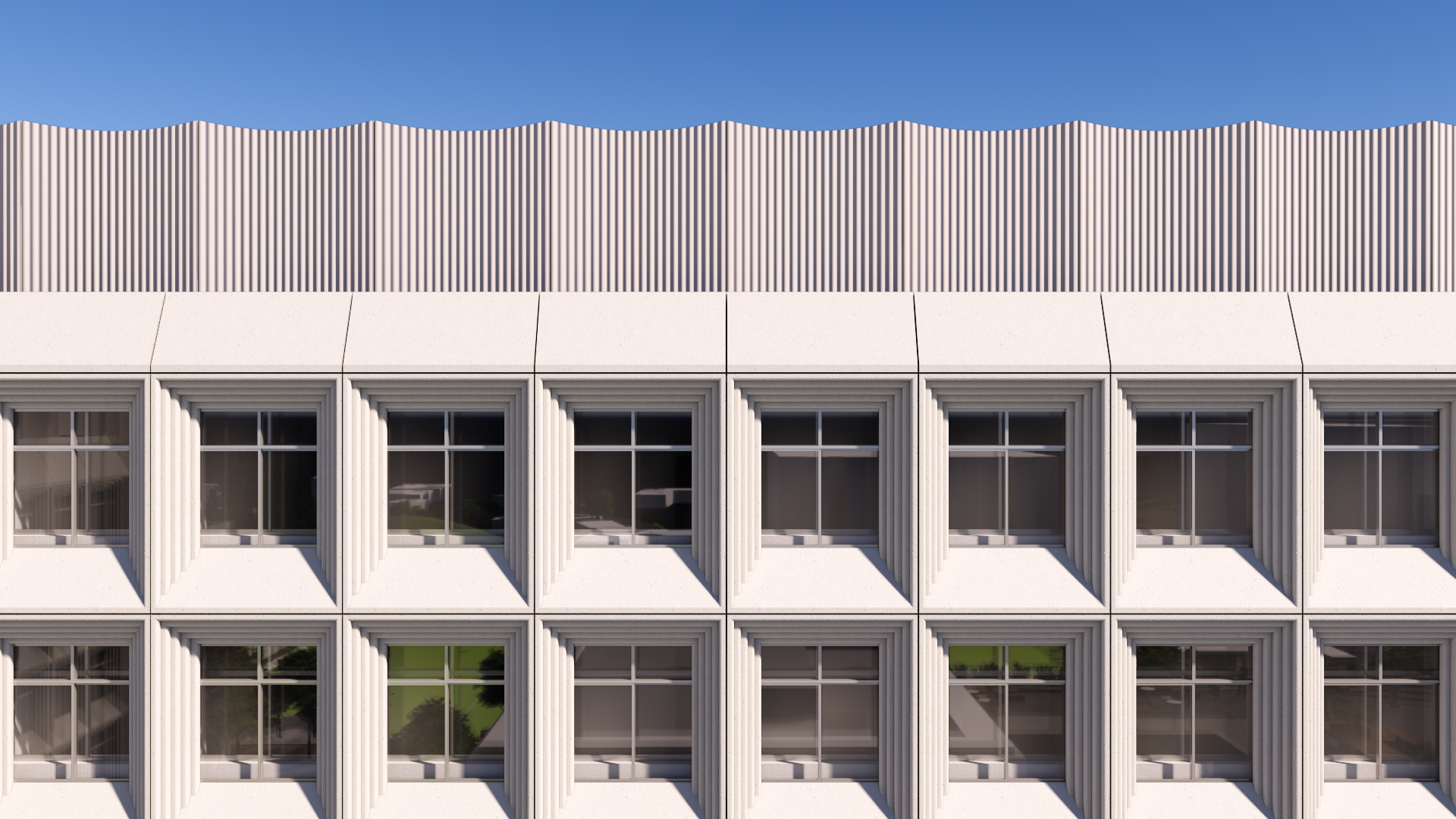
This study proposes a renewal strategy, focusing on resolving the visual and spatial complexity caused by multiple building extensions. The existing building shows façade deterioration, polluted tile surfaces, exposed mechanical equipment, and fragmented entrances and common spaces.

The façade alternatives — DNA Sequencing, Monolithic Layering, and Wrinkled Stripes — are developed from the identity and the building’s accumulated layers of expansion. This proposal emphasizes symbolic façade expression based on biological imagery, the reorganization of scattered entrances, the reconnection of pedestrian routes, and the transformation of inefficient shared areas into lounges, open labs, and a rooftop garden for rest and exchange.


Year: 2025

Location : Yongin, Korea

Status : Design Proposal

Type : Institution, Renovation

Principal in Charge :

Dongil Kim (I.f CDL, KHU)

Design Team : Isaac Kang (I.f CDL)

Facade and Spatial Renewal Plan - 01

Classic

Modern Classic

Innovation

Spatial Renovation

This study proposes a façade and spatial renewal strategy, a large academic building directly facing the central campus area, including Sasaek Square. The project addresses deteriorated exterior tiles, exposed outdoor equipment, and outdated lobby and shared spaces through façade replacement, courtyard-oriented spatial restructuring, and improved public circulation.

The design alternatives — Classic, Modern Classic, and Innovation — explore different ways to harmonize the existing building. A key feature of this proposal is the reorganization of scattered lounges and common areas around the atrium and courtyard, while linking the entrance lobby and rooftop garden to surrounding pedestrian flows and the observatory walking path.


Year: 2025

Location : Yongin, Korea

Status : Design Proposal

Type : Institution, Renovation

Principal in Charge :

Dongil Kim (I.f CDL, KHU)

Design Team : Chaewon Go (I.f CDL)

College of Engineering Building Renovation

Essential Classic

Neo-Classic

Innovation & Performance

This study proposes a renovation and vertical extension strategy for the main Engineering Building at Kyung Hee University under the concept “Where Tradition Embraces Innovation.” The project aims to enhance the building’s symbolic value, improve spatial efficiency, and upgrade environmental performance through façade renewal, window and shading system improvements, rooftop strategies, and interior reorganization.

Based on site investigation, 3D scanning, digital modeling, and analysis of existing structure and rooftop equipment, the study develops several design alternatives: Essential Classic, Neo-Classic, and Innovation & Performance. These alternatives explore different balances between campus identity, classical architectural language, new functional demands, and high-performance façade systems.

The proposed extension strategies include façade improvement, rooftop garden creation, vertical expansion, elevator and restroom extensions, and additional space for faculty offices and laboratories. Overall, the study positions the Engineering Building as a future-oriented campus asset that connects Kyung Hee University’s architectural heritage with contemporary spatial and environmental needs.


Year: 2025

Location : Yongin, Korea

Status : Design Proposal

Type : Renovation

Project Director :

Dongil Kim, (I.f CDL)

Principal Researcher :

Seungil Kim (I.f CDL)

Jeju Office


Year : 2025

Location : Jeju, Korea

Size : 1,609.37 m²

Status : Design Proposal

Type : Office

Principal in Charge :

Seojoo Lee, Hyojung Kim (I.f), Dongil Kim (I.f CDL)

Design Team : Seungil Kim, Gwangeun Hwang (I.f CDL)

Shinjuku City Building


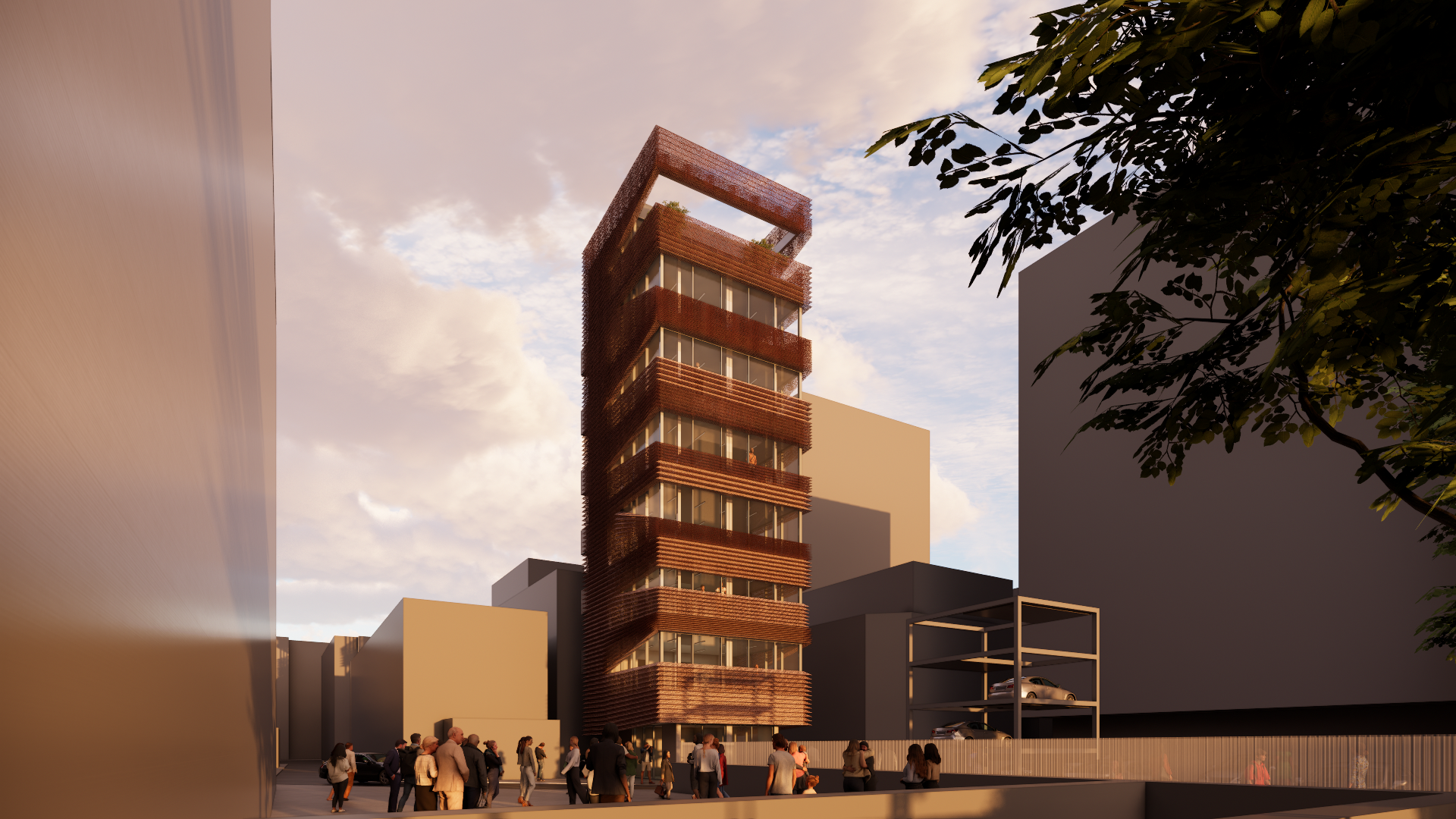
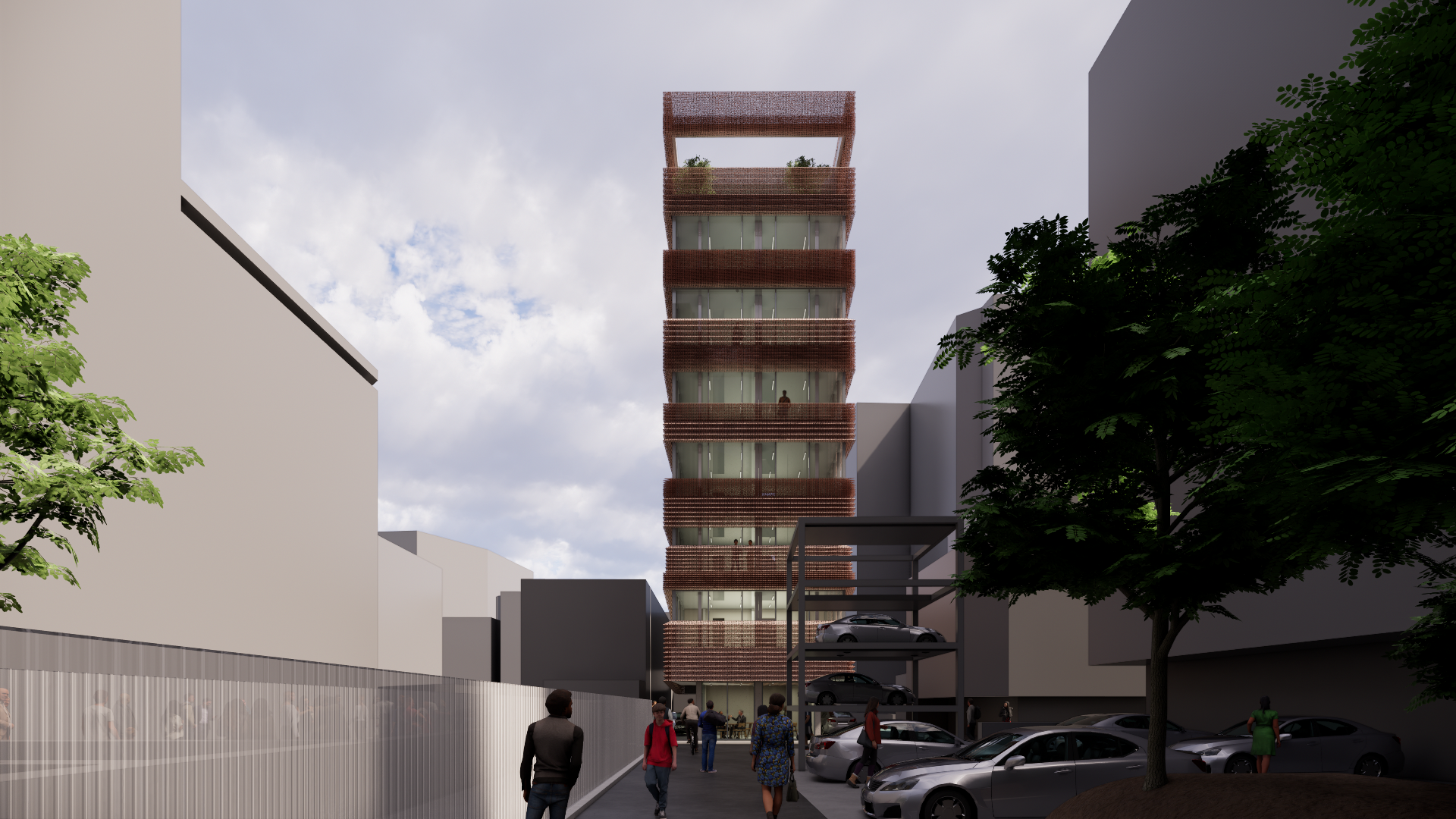
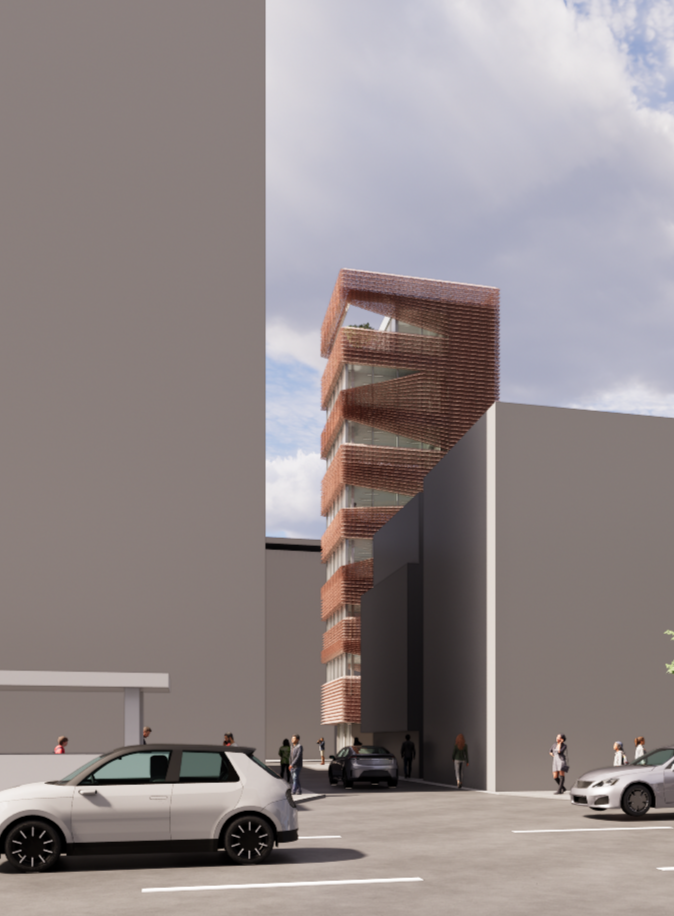
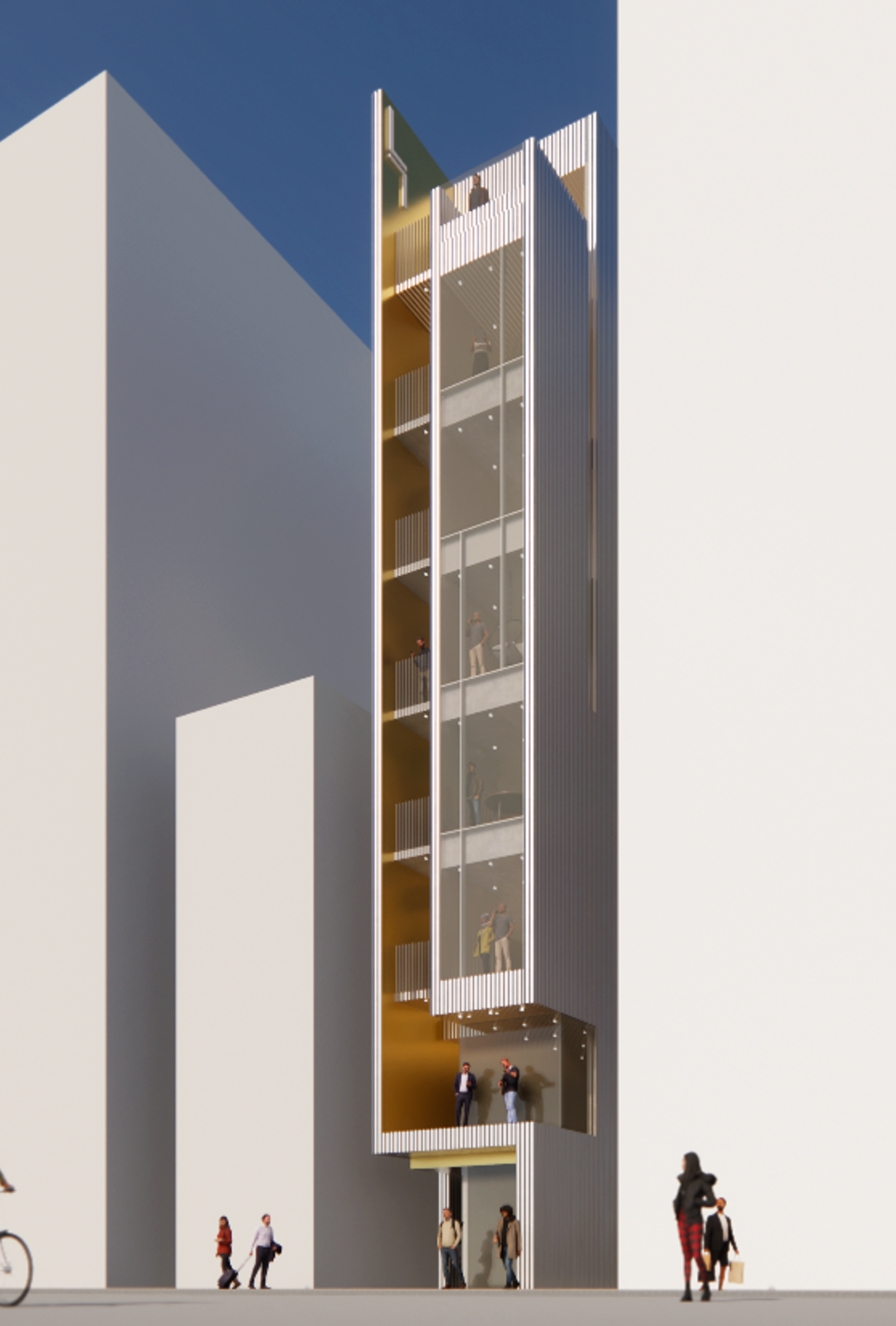
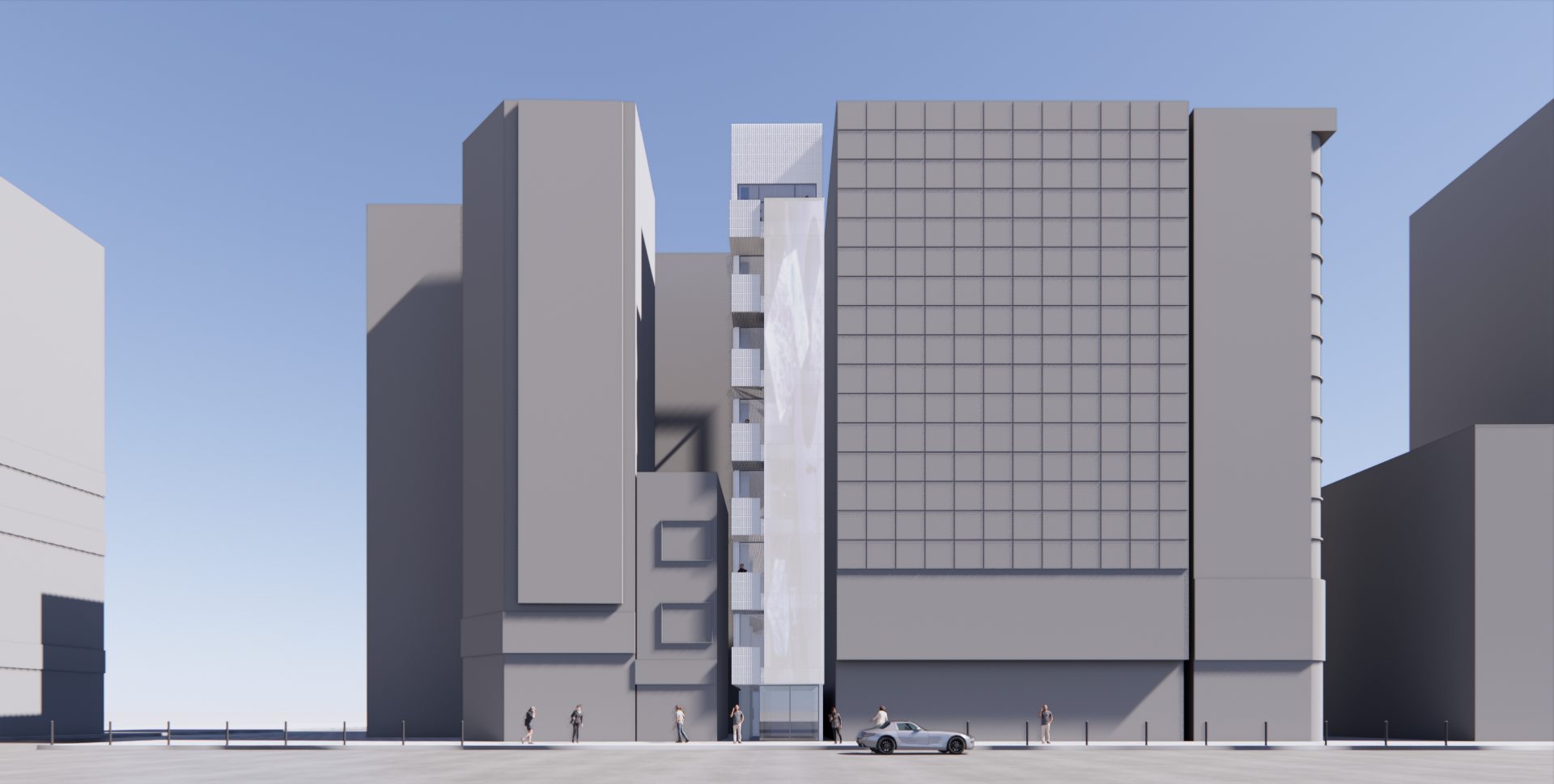
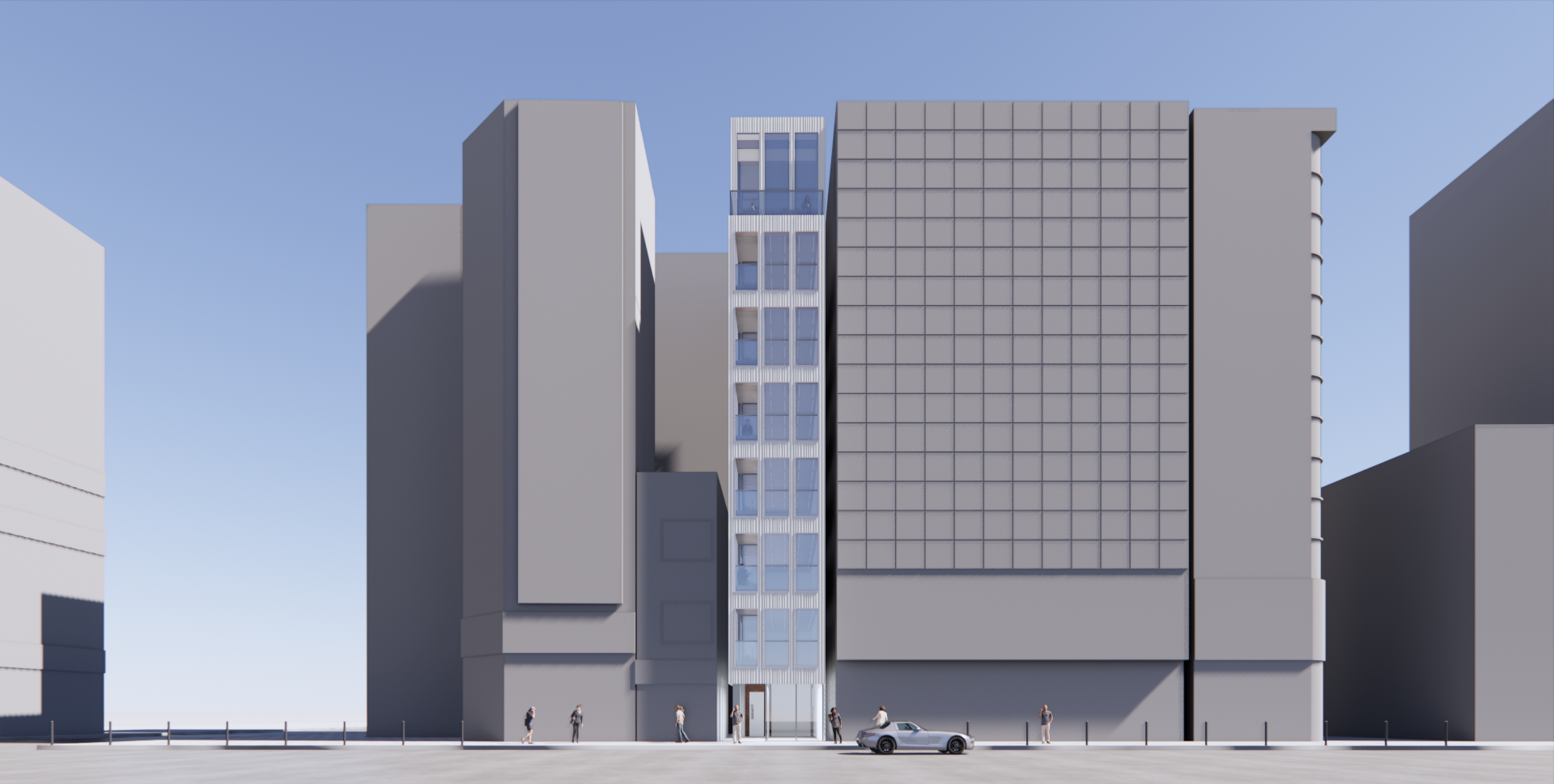
This project proposes a compact eight-story rental building in Kabukicho, Shinjuku, Tokyo. Located near Yasukuni-dori and the TOHO Building with the Godzilla Head, the site has strong pedestrian visibility and requires a clear facade strategy that can be easily recognized from the street.

Due to the narrow site condition, the plan focuses on maximizing rentable floor area while responding to legal and evacuation requirements. The building is planned below the 31-meter height limit to avoid the need for an emergency elevator, while the section is adjusted to secure the maximum volume under the road setback regulation. A front evacuation balcony and a rear outdoor stair provide two evacuation routes, and the ground-level frontage is designed to maintain visibility and commercial value.

The proposal explores three facade alternatives. Option A emphasizes a solid grid facade with a pixelated media expression. Option B strengthens verticality through a continuous curtain wall and highlights the horizontal rhythm of the exposed side wall. Option C responds to pedestrian flows from Yasukuni-dori and the TOHO Building by forming an L-shaped facade gesture that creates a stronger urban presence. Overall, the project aims to transform a narrow urban site into a recognizable commercial building through efficient planning, legal optimization, and a distinctive facade design.


Year: 2025

Location : Shinjuku, Japan

Size : 1016.75 m²

Status : Proposal

Type : Commertial

Principal in Charge :

Seojoo Lee, Hyojung Kim (I.f), Dongil Kim (I.f CDL)

Design Team :

Chaeyoon Chang (I.f)

Collaboration :

M3 Systems, Atelier KOMA

National Archive Museum

Living Records: The Multidimensional Role of the National Archives Museum

The National Archives Museum is not merely a repository of records but a spatial platform where records are created, shared, and interpreted. Records are not just static collections of past information; they are dynamically reinterpreted within historical and social contexts. Just as Walter Benjamin's nonlinear view of history suggests, records are not simply objects of preservation but cultural assets that connect the past, present, and future.

The National Archives Museum: A Period and a Comma in the Master Plan

The National Archives Museum is not merely an independent structure; it serves as an architectural nexus within the spatial network of the National Museum Complex. Rather than existing in isolation, it must integrate seamlessly with the broader master plan, functioning as a key element in the interconnected museum district. Although positioned at the edge of the museum complex, the Archives Museum is not just an endpoint but a starting point for the expansion of archival culture. It acts as both a period, marking a culmination, and a comma, allowing continuity, ensuring that records are not just preserved but actively engaged with, interpreted, and disseminated.

As the Track of Records and the Vessel of Everyday Life

The National Archives Museum is designed as a space where preservation and openness coexist, serving as an interface where archived records intersect with public experience. Its spatial concept is structured around a “floating track (궤)” that holds records and a “vessel (함)” that embraces and connects it to everyday life.


Year : 2025

Location : Sejong, Korea

Size : 11,798.87 m²

Phase : Competition Entry

Type : Museum and Archives

Principal in Charge :

Seojoo Lee, Hyojung Kim (I.f), Dongil Kim (I.f.CDL)

Design Team :

Hyunjoo Kang (I.f), Seungil Kim, Gwangeun Hwang, Soohyun Im, Roun Yi, Hyungtae Kim, Bugun Kim, Isaac Kang (I.f.CDL)

S:PROUT Pavilion Prototype

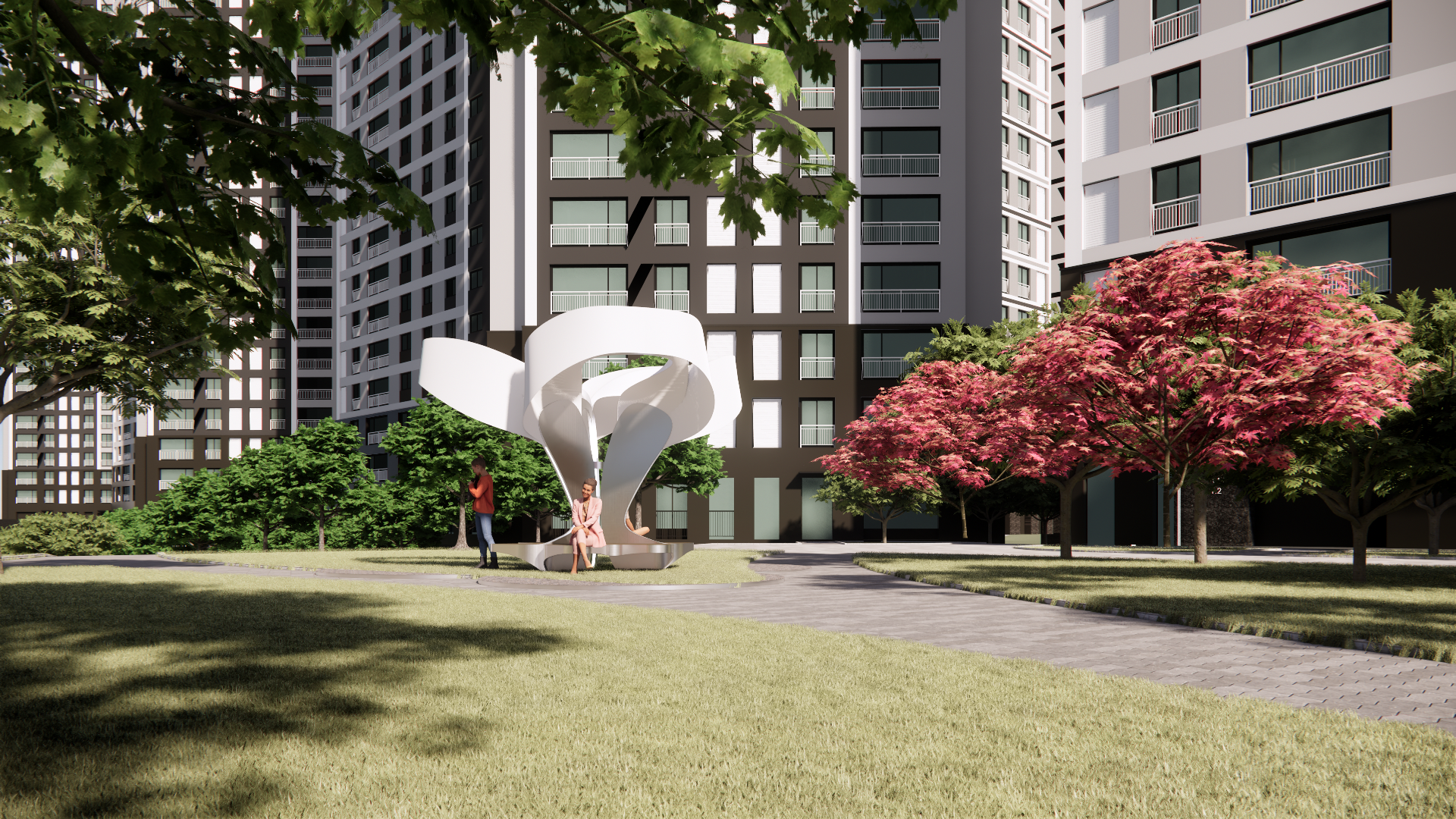
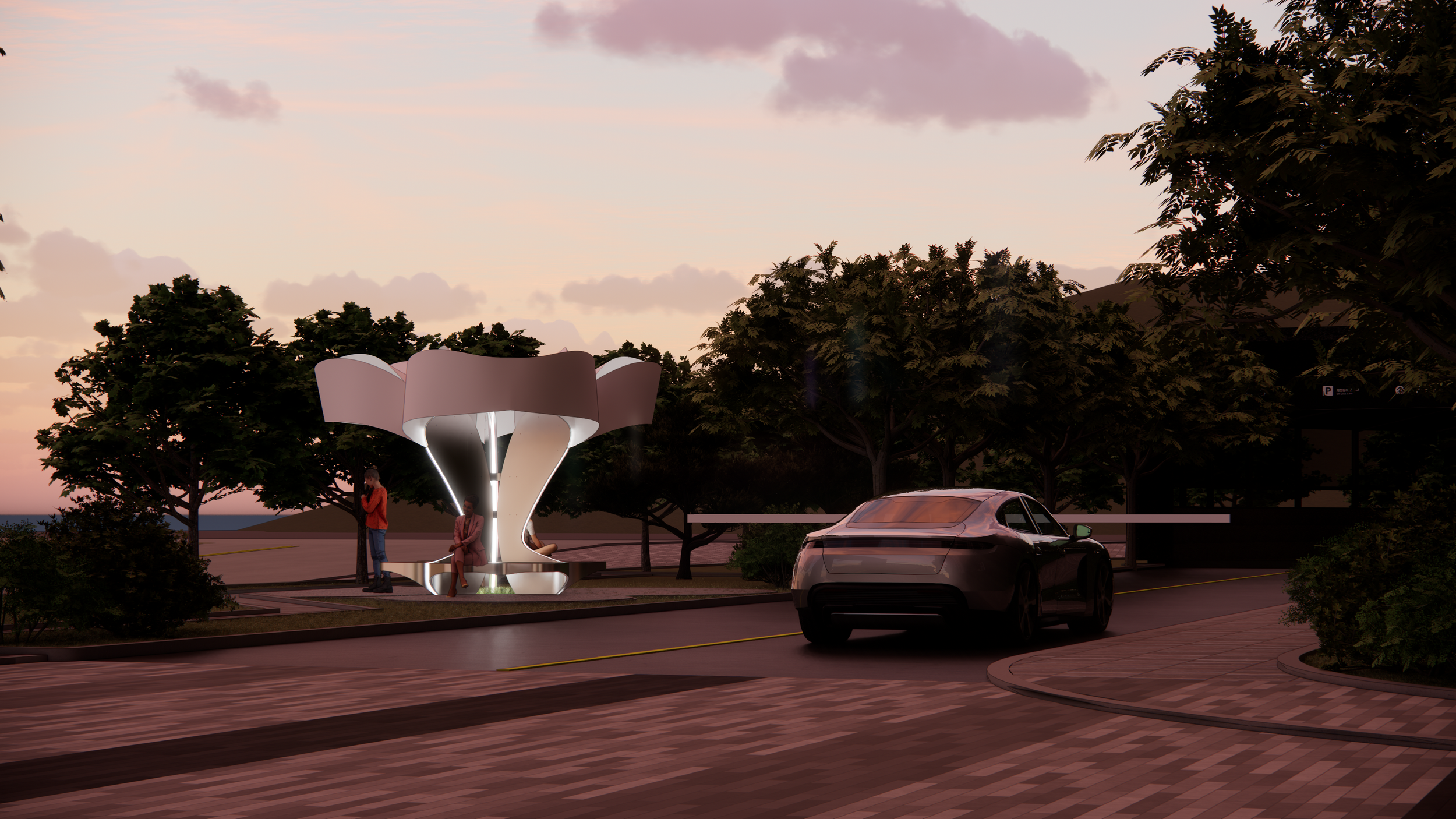
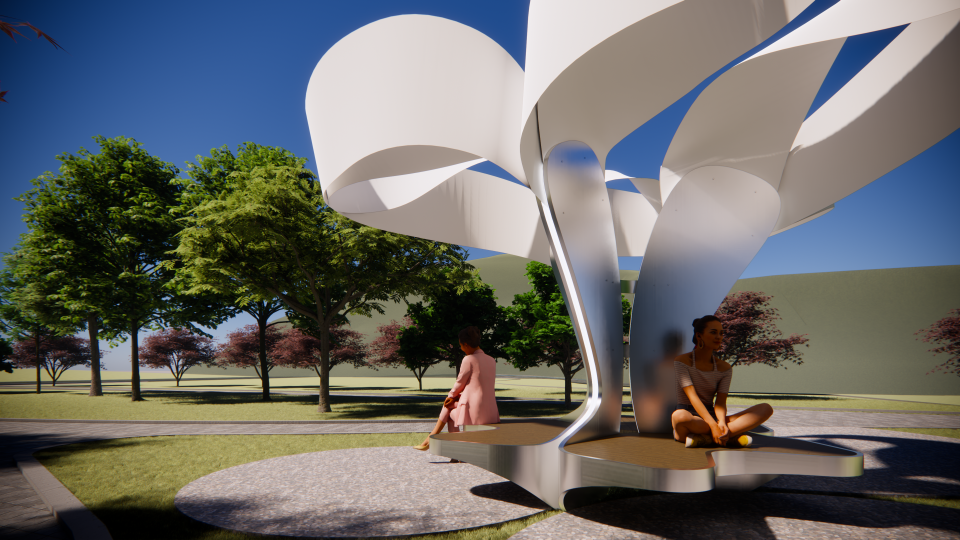
Since 2023, the Kyung Hee University Convergence Design Lab, I.f Architecture Lab, and AXIA Materials have been researching the architectural applications of continuous fiber composite materials through an industry-academia collaboration.

Project S:PROUT, the first physical outcome of this partnership, was created through the convergence of the superior elastic strength and innovative material technology of AXIA Materials’ high-performance continuous glass fiber reinforced composite, LiteTex®, with the shape-deformation tracking technology for active elastic surfaces, digital design tools, and structural simulations developed by I.f Architecture Lab and the Kyung Hee University research lab.

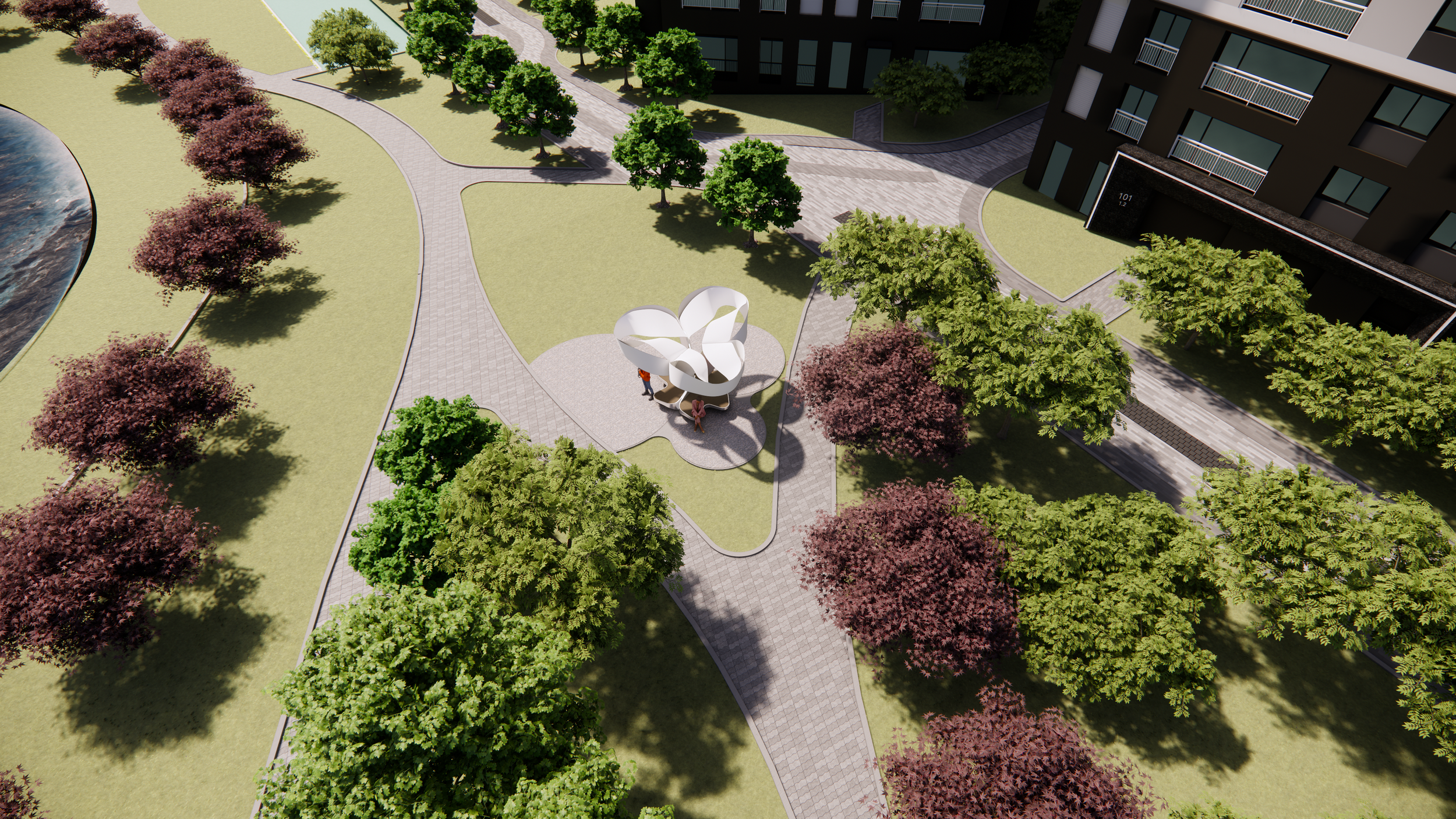
Applied as a pavilion within a residential complex, this project demonstrates the potential of the fiber industry to expand into architectural design and advanced materials.

As a pioneering example that establishes a new paradigm for the utilization of new architectural materials, Project S:PROUT is expected to hold a significant position in the architecture industry through various future research and development endeavors.


Year : 2025

Location : Gumi, Korea

Status : Design Proposal

Type : Pavilion

Project Director :

Dongil Kim (I.f CDL)

Principal Researcher :

Seungil Kim, Gwangeun Hwang (I.f CDL)


Related Project

Related Research


Project PEACE

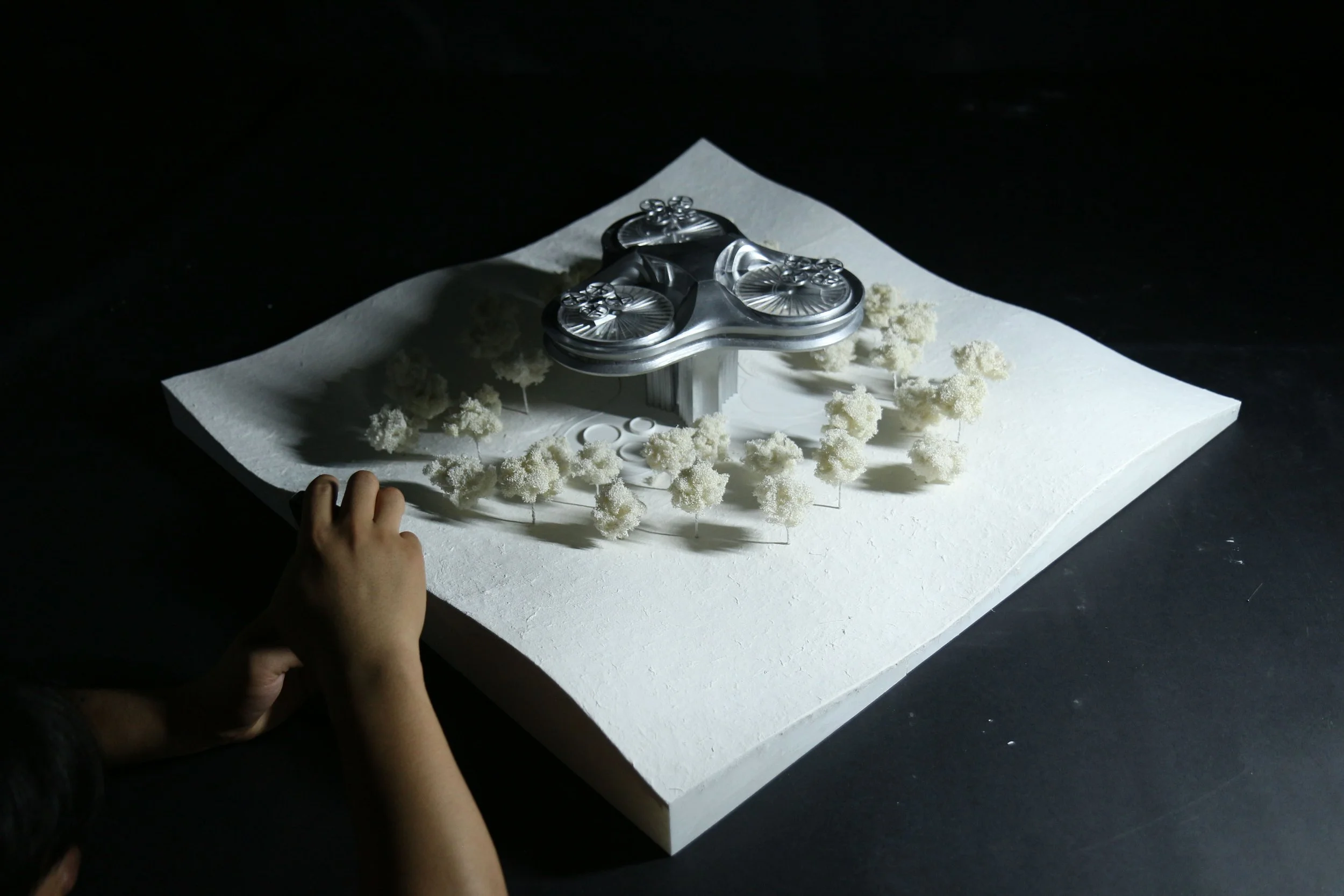
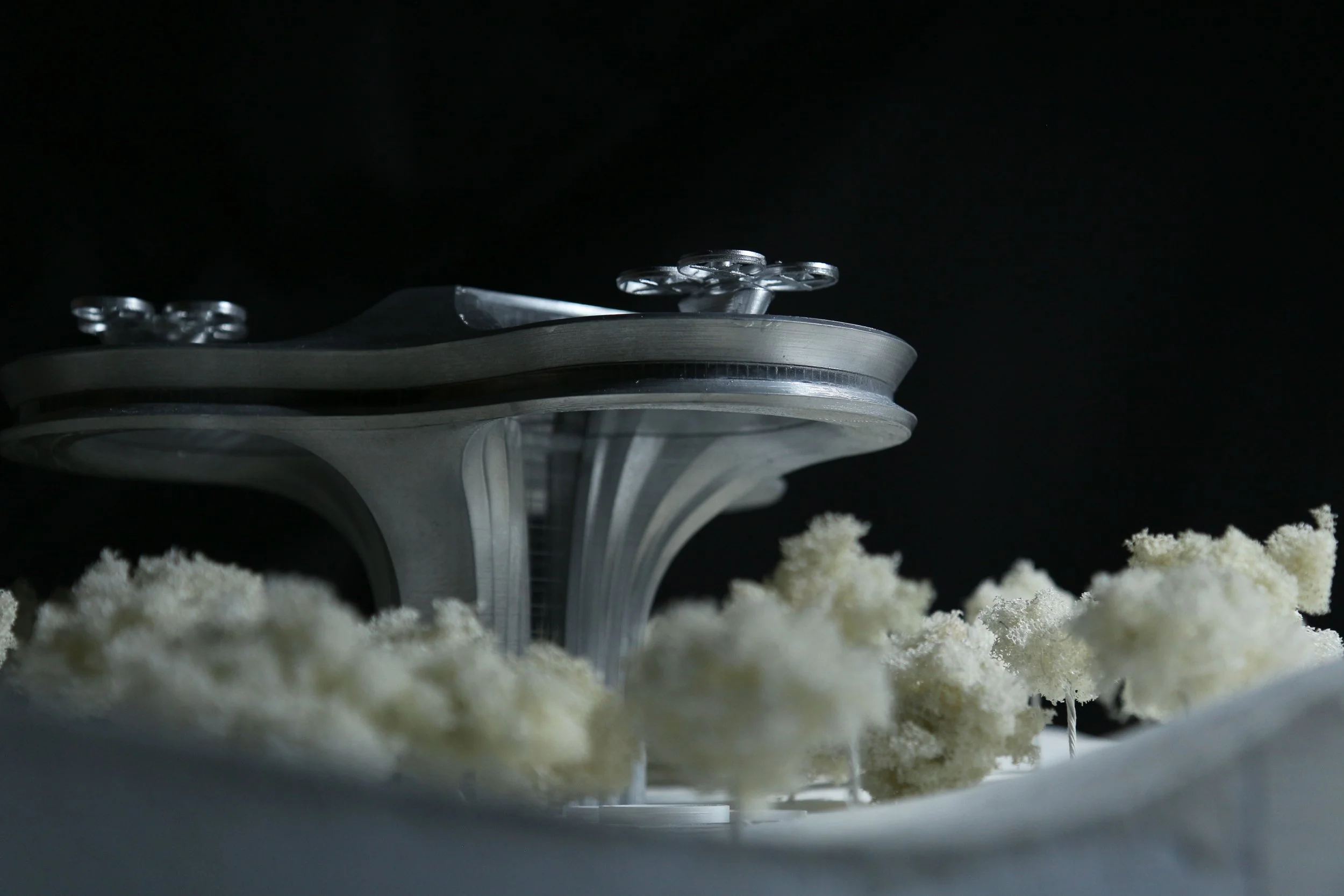
The Vertiport of the PEACE PROJECT is proposed as a new transportation infrastructure connecting cities near the Demilitarized Zone (DMZ) of South and North Korea. It goes beyond being a mere mode of transportation to serve as a symbolic venue linking the two Koreas. Designed with respect for the preserved natural environment of the DMZ, the VertiStop seeks architectural solutions that coexist with the ecosystem while minimizing environmental impact and harmonizing with nature.

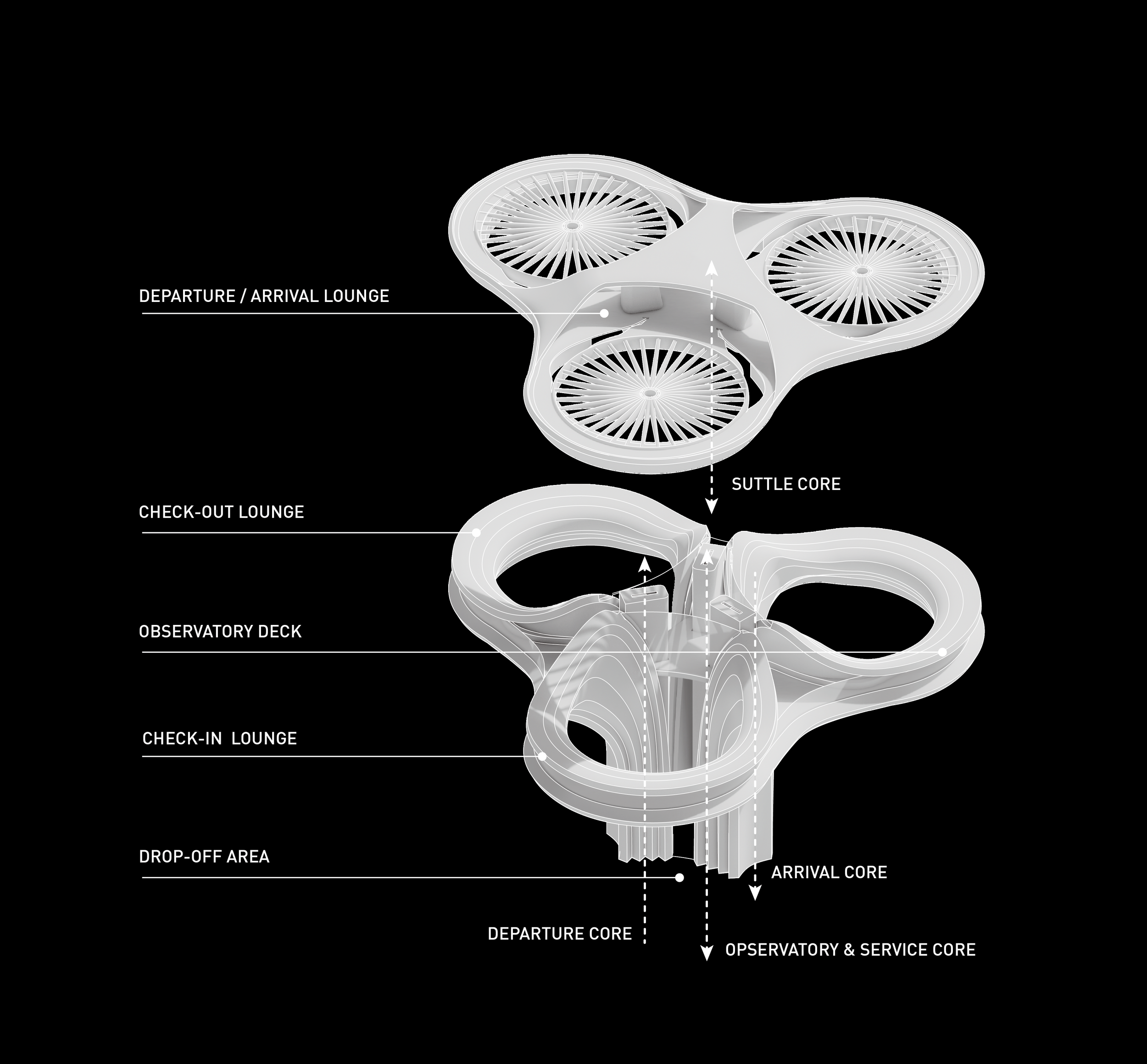
The Vertiport features a steel truss structure comprising three landing pads, each with a radius of approximately 40 meters, providing both stability and efficiency. Designed to stand about 10-15 meters taller than the average height of nearby trees, it minimizes interference with nature during takeoff and landing, ensuring smooth operations. The structure is divided into three levels. The ground level serves as the main entrance and circulation area, guiding users through a natural flow. The middle level functions as a lounge for pre- and post-boarding procedures, featuring independent observation decks where passengers can complete boarding formalities while enjoying the surrounding natural scenery. The top level is a waiting area designed for comfort, offering a pleasant environment for passengers before boarding. All levels are connected by independent vertical circulation paths.

The exterior is clad with steel materials that reflect the surrounding forest and blend seamlessly into the natural environment. This choice of material reacts dynamically to changing light and weather over time, creating an aesthetic that makes the structure feel like an integral part of nature.

Around the Vertiport, gardens and outdoor spaces harmonize with nature, offering passengers areas to rest or take a stroll while waiting. These features position the VertiStop as more than just transportation infrastructure; it has the potential to foster interaction and communication between residents of both Koreas, serving as a place of exchange and connection.


Year : 2024

Status : Concept Design

Type : Vertiport

Principal in Charge :

Seojoo Lee, Hyojung Kim (I.f), Dongil Kim (I.f CDL)

Design Team : Seungil Kim, Gwangeun Hwang (I.f CDL)

Collaboration : I.f + JOWA Architects + SML

S Project


This project envisions a “Connective Monument”—a spatial symbol that links architecture with its urban surroundings, connects brand to customer, and creates seamless transitions between environments. Positioned in a context where high-end flagship stores and luxury brand headquarters are concentrated, the design responds with a visually iconic and sophisticated presence that reflects both prestige and originality.

From an urban perspective, the building acts as part of the cityscape, catching the public’s eye naturally while transforming in response to social events and seasons—offering a dynamic interaction between architecture and society. As a spatial connector, it retains design continuity with existing Samsung stores, reinforcing a unified brand identity while introducing a fresh experiential layer.

At the street level, the design emphasizes aesthetic presence and brand clarity. The front-scape is crafted to naturally draw customers inward, creating an inviting threshold that encourages participation and exploration. The building’s façade, composed of three dimensional modular elements inspired by star symbol, rotates and interlocks vertically and horizontally. This kinetic composition captures Samsung’s brand tone of Bold & Playful, turning the structure itself into an interactive and expressive statement of the brand’s future-forward vision.


Related Research


Year : 2025

Location : Seoul, Korea

Status : Design Proposal

Type : Commercial Facade Renovation

Principal in Charge :

Seojoo Lee, Hyojung Kim (I.f), Dongil Kim (I.f CDL)

Design Team :

Hyunjoo Kang (I.f)

Seoul Multi-Purpose Sports Center and Children's Park

As society evolves toward prioritizing individual quality of life, the specialization of community-based sports facilities is also accelerating. Bangbae-dong Redevelopment Zone 5, once a hillside densely packed with small residential buildings, has transformed into a large-scale, high-rise, luxury residential complex. Amid this dramatic contextual shift, this multipurpose sports center is located at the northern slope of Isu Middle School, tucked within the inner edge of Zone 5. It serves as a multifunctional space for local residents' athletic activities and leisure. In the changing urban fabric, the sizable sports facility maintains a quiet presence without drawing unnecessary attention to itself.

To maximize the site's topographical features, a series of three-dimensional public spaces that naturally connect to the adjacent children’s park have been placed on the ground level. Meanwhile, a large swimming pool and multipurpose gymnasium are elevated above this public area. The swimming pool, with eight 50-meter lanes, is designed to accommodate professional swimming competitions as well as community swimming lessons. The multipurpose gymnasium, equivalent in size to two basketball courts, offers a versatile space for basketball, volleyball, badminton, and various local events. Despite its considerable size, the upper mass of the sports center harmonizes with its surroundings, presenting a calm and understated exterior. The building’s interior, while modest in its exterior expression, is vibrant and filled with natural light to support active and healthy athletic activities. Designed for maximum natural ventilation and sunlight, the interior ensures bright, fresh, and invigorating spaces for users.

The lower part of the building, accommodating various lobby levels, mechanical and electrical rooms, pool pits, and parking facilities, is constructed using an RC (reinforced concrete) frame structure. The central section, housing the vertical cores and support facilities for the pool and gymnasium, also employs RC framing. The large-span spaces, such as the gymnasium and swimming pool, are supported by lightweight steel trusses placed atop the RC frame, with mega trusses forming the external walls to resist lateral forces. This structural system is straightforward yet robust, comfortably housing both large and small programmatic spaces.

Situated atop a diverse array of external spaces that connect Dogo-meori Park to the newly established Half-Moon Park, this sports center actively integrates indoor and outdoor spaces with the children’s park. It provides an open, indoor public area for Seoul residents, serving as a space for health, vitality, and community engagement.


Year : 2024

Location : Seoul, Korea

Size : 14,985.95 m²

Status : Competition Entry

Type : Public Sports Complex and Children’s Park

Principal in Charge :

Seojoo Lee, Hyojung Kim (I.f), Dongil Kim (I.f.CDL), Minho Lee (func. Architects)

Design Team :

Seungil Kim, Gwangeun Hwang (I.f CDL)

Collaboration :

I.f + TAAL Architects + func.Architects (Architecture), iL Landscape (Landscape)

S:PROUT

Architecture with Flexible Materials: Discovering New Possibilities

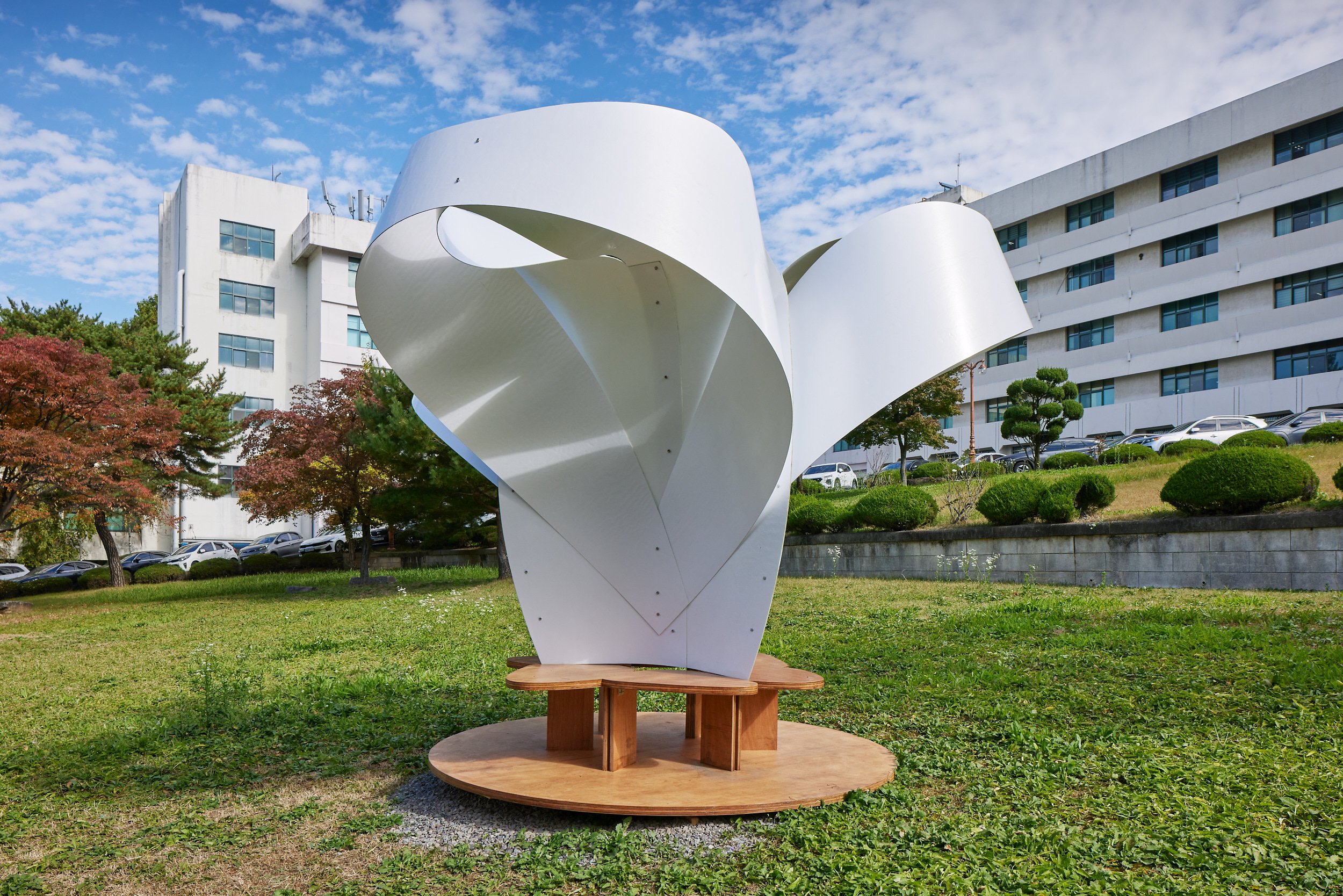
Flexible materials stimulate architectural creativity through their inherent physical properties and capacity for transformation. In traditional vernacular architecture, materials such as bamboo and earth have been utilized to create adaptive, flexible structures that respond to local environmental conditions and needs. Contemporary architecture reinterprets this flexibility by experimenting with high-performance composite materials. LiteTex, the material used in this project, is a continuous fiber composite that begins as a flat sheet and holds potential for transformation into three-dimensional forms. This material simultaneously offers elasticity and rigidity, maximizing portability and storage while enabling the creation of complex structures on-site. By applying two-dimensional patterning techniques from the garment industry, this approach enables the transformation of flexible, flat materials into three-dimensional forms, simplifying the fabrication process and ensuring cost-effectiveness. LiteTex represents more than a material experiment; it expands the possibilities of architectural design. This material is not only suitable for spatial requirements such as movable structures, temporary buildings, and pavilions, but it is also recognized for its environmental sustainability.

Designing Change: Process-Oriented Design and Fabrication

Designing change involves more than the creation of a final product; it requires the integration of the entire process by which that product is realized. This project focuses on the research of the design and fabrication process, investigating the physical properties and limitations of flexible materials through the integration of digital technologies and physical experimentation. The design process is divided into three distinct phases. The first phase involves basic form experiments using scale models to analyze the relationships between the material’s physical properties and the design variables. The second phase combines digital simulations with physical testing to assess the material’s behavior in real-world conditions. Finally, full-scale mock-ups are constructed to identify potential issues in the assembly process and derive solutions. By considering factors such as the material’s bending radius, self-weight, and assembly sequence from the early design stages, it is possible to achieve not only three-dimensional forms but also structural stability and spatial efficiency. This approach enhances the overall quality of the final product while minimizing errors during fabrication.

Integration with Digital Technology: Employing New Design Tools

Digital technology plays an essential role in effectively integrating the design and fabrication processes. In this project, a digital twin was constructed to measure the gap between the virtual model and physical reality, allowing for simulations of changes throughout the entire design and fabrication phases. Digital simulations were utilized as a tool to validate the design’s efficiency before creating physical mockups. Factors such as bending strength and deformation limits were analyzed in advance, enabling the identification of potential errors prior to fabrication. These simulations facilitated collaboration among architects, engineers, and material specialists, and helped integrate data from multiple disciplines. Physical experiments served to verify the outcomes of digital designs and test the performance and assembly feasibility of the materials. The complementary relationship between digital simulations and physical testing improved the reliability of the design and further extended the potential of new materials and technologies.


Year : 2024

Location : Yongin, Korea

Status : Installation

Size : 0.957 ㎡

Height : 2.87m

Material : LiteTex 5ply (AXIA Materials), Plywood

Structure : Bending-Active Composite Structure

Project Team : I.f Convergence Design Lab + Center for Ai & Architecture (Ai+A) (Prof. Dongil Kim)

Principal Researcher : Seungil Kim, Gwangeun Hwang

Project Assistant : Dongheon Lee, Jinsan Ryu, Isaac Kang, Yeonhee Kim, Hyeongtai Kim, Ro-un Yi (DAKHU)

With the Support of : Seojoo Lee, Hyojung Kim (I.f)

Collaboration : I.f Architecture & Research, AXIA Materials, Kolon Global, EFFECTOR, V.P.Lab

Photography : Kyung Roh


Related Project

Related Research