A Study on Architectural and Spatial Application of a Bending-Active Sheet Material
활성 탄성면 재료의 건축 및 공간적 적용에 관한 연구
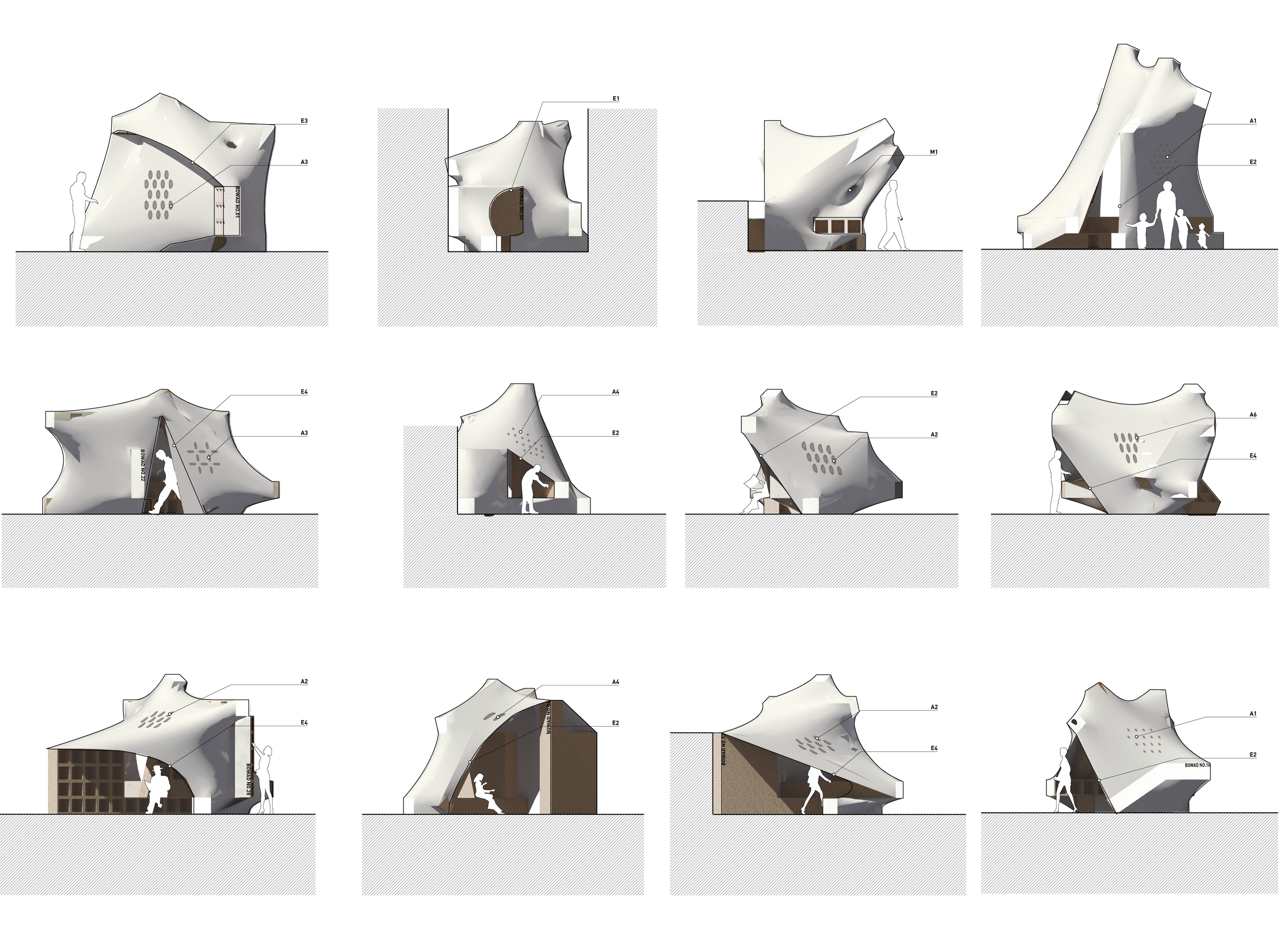
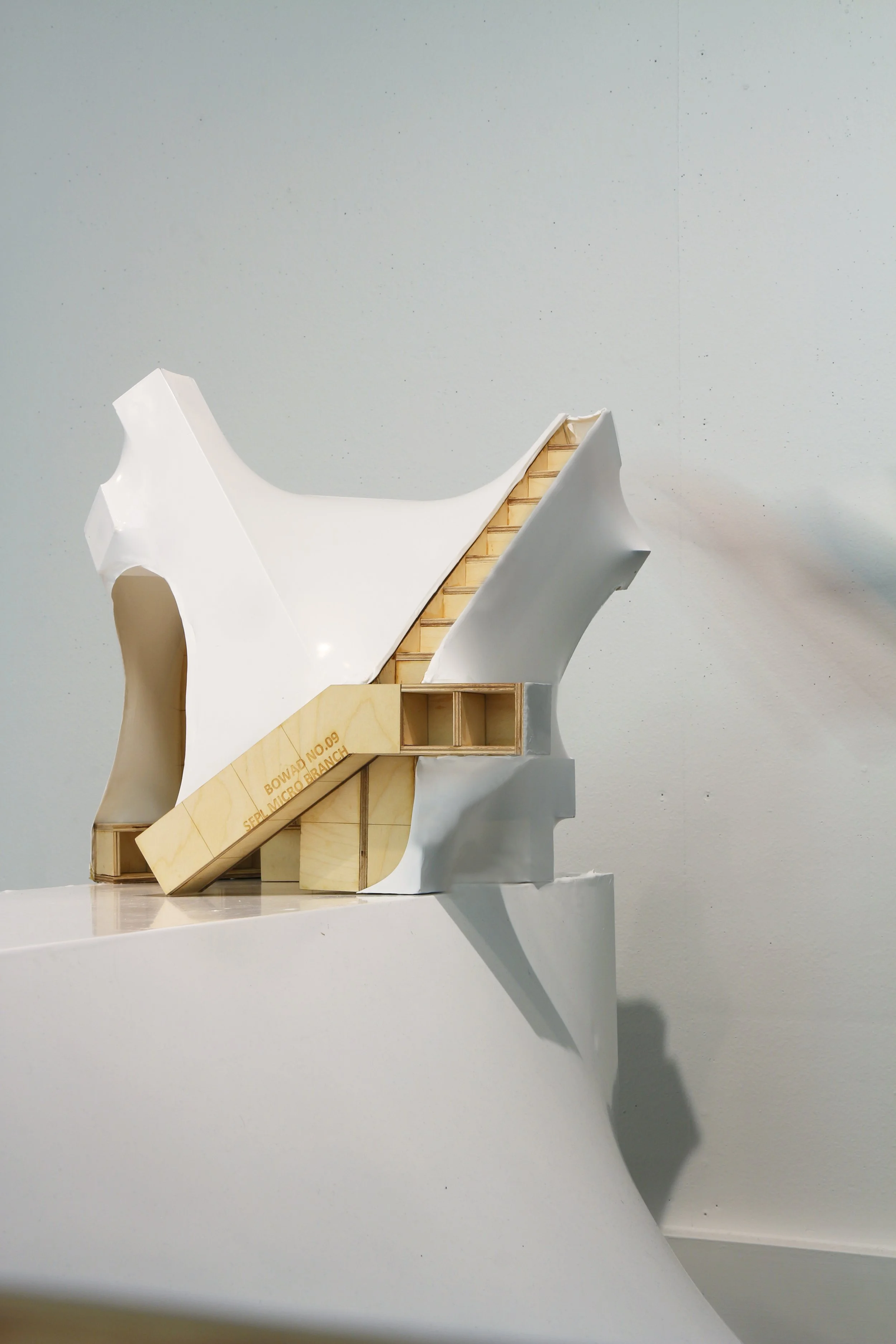
(Background and Purpose) Bending-active materials have been widely utilized in fashion, furniture, product design and even in creating new spaces and spatial experiences. In applying bending-active surfaces as design drivers, architecture has found it challenging to track and document the material’s morphological behaviors, to fully control the variables for design and fabrication. Also, architectural studies have considered innate structural and formal uncertainties of the bending-active materials to be too great a risk to utilize it as an inhabitable space. However, with the integration of current computational tools into the design and fabrication processes, the natural behaviors of elasticity and resilience in response to bending and other forces, can now be applied to extract morphological and structural investigations in architecture. This paper aims to demonstrate the application of computational tools to the architectural design process of a bending-active surface, from conceptual form-finding to full-scale model fabrication.
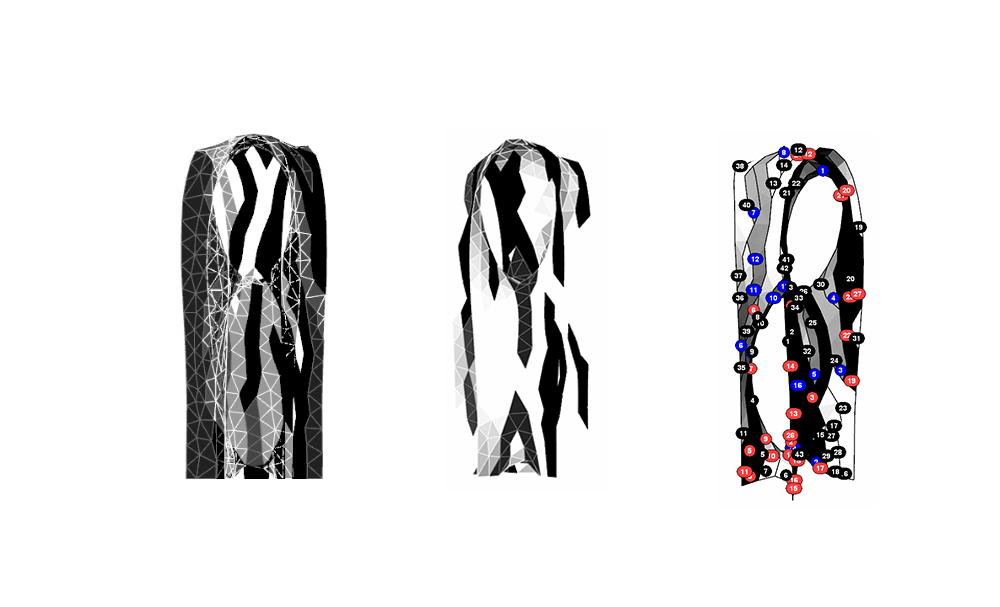
(Method) A plastic polymer sheet, which is one of the most widely available bending-active surfaces, will be central to the design process. The methodology is focused on a computational analysis on softness of the plastic polymer sheet, morphological behavior, and structural integrity in the digital platform. Simultaneously, iterative design exercises occur through physical fabrication of the digitally produced results, in order to achieve a complete reciprocity between the digital and the physical platforms. Two case studies are introduced in this paper based on this same mode of study. One exercise begins from the design of local scale modules and develops into the global scale geometry. On the other hand, the second exercise begins from the design of a global scale geometry and proceeds to segment this global geometry to produce local geometries for fabrication purposes.
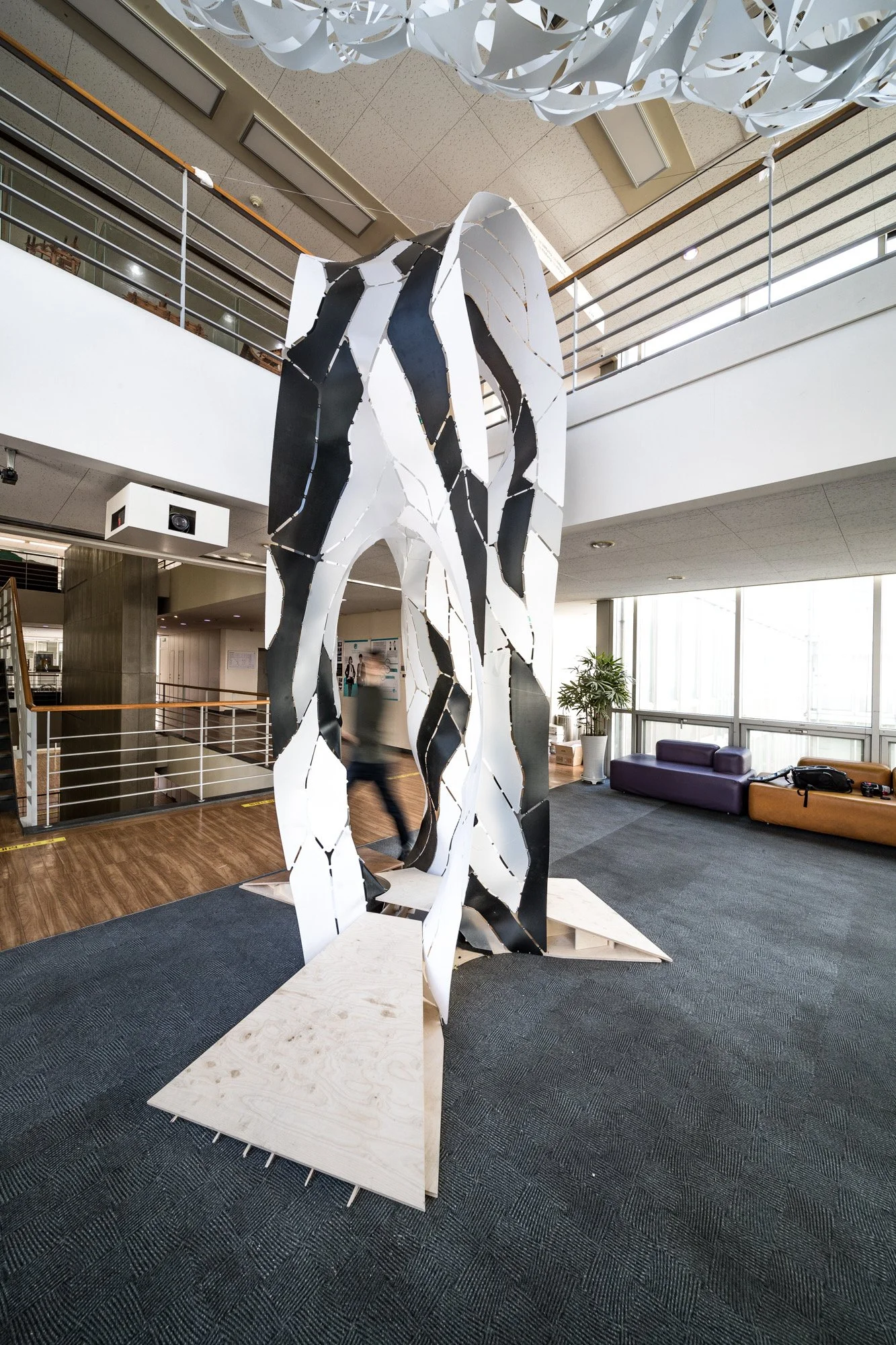
(Results) The two exercises produced the following results. First, through a reciprocal design process between the digital and physical platforms, a complex novel form that is aesthetically and structurally successful can be realized. Second, by interpreting a widely available material into the digital platform, customized computational tools allow form-finding and analysis of the final geometry to produce automated cut patterns for physical platform translation. Lastly, the assembly process itself can be designed so that a large scale structure can be assembled by a small group of people with no particular expertise and no secondary scaffolding or sub-structure, due to the lightweight material and the structural integrity a bending-active design inherently carries.
(Conclusions) This paper expects to further studies that examine material, formal, and structural design and fabrication of various bending-active surfaces.
Kim Dongil and Chung, Yeseul. (2022). A Study on Architectural and Spatial Application of a Bending-Active Sheet Material. Journal of Korea Intitute of Spatial Design, 17(1), 11-22.
https://www.kci.go.kr/kciportal/ci/sereArticleSearch/ciSereArtiView.kci?sereArticleSearchBean.artiId=ART002812654