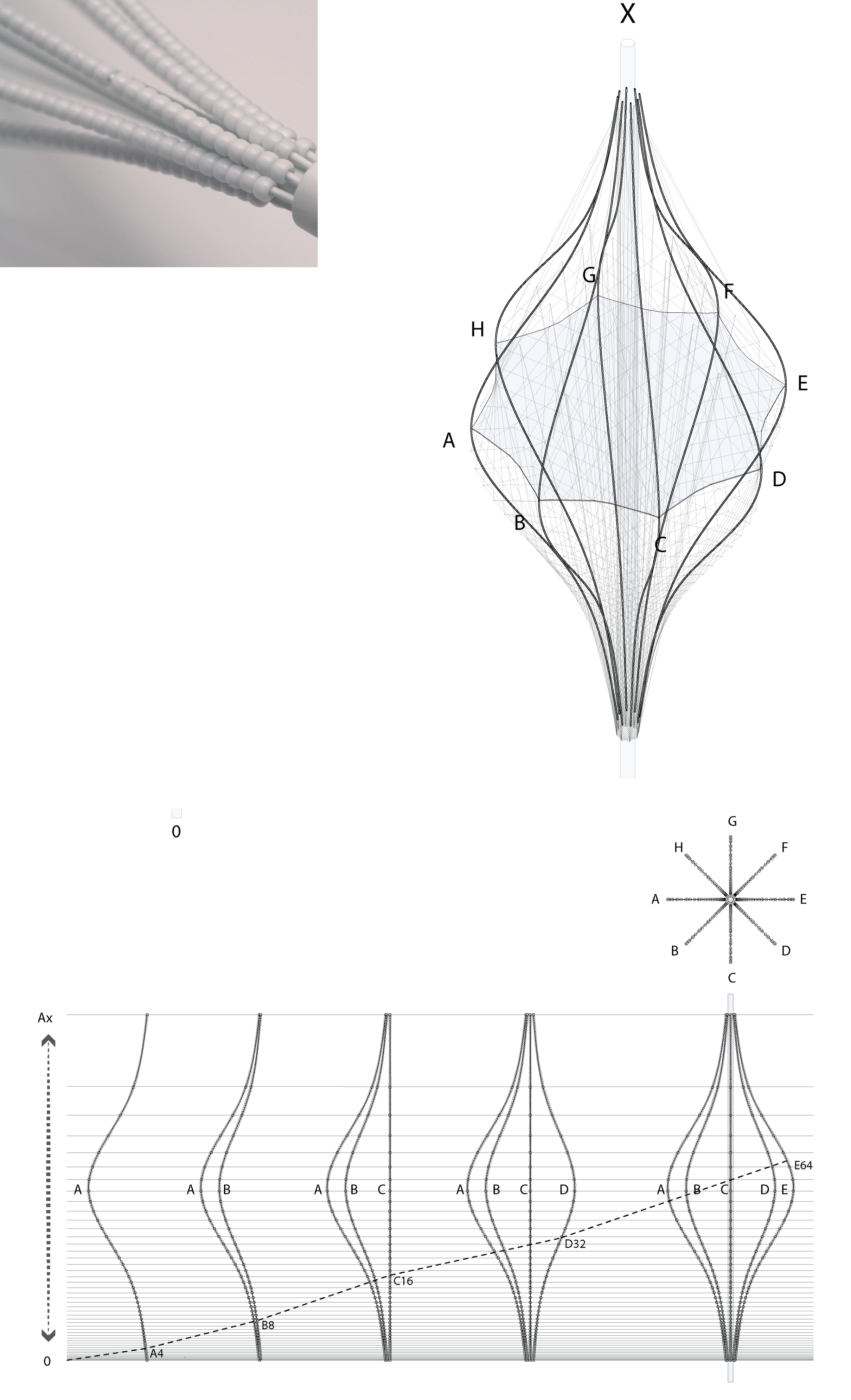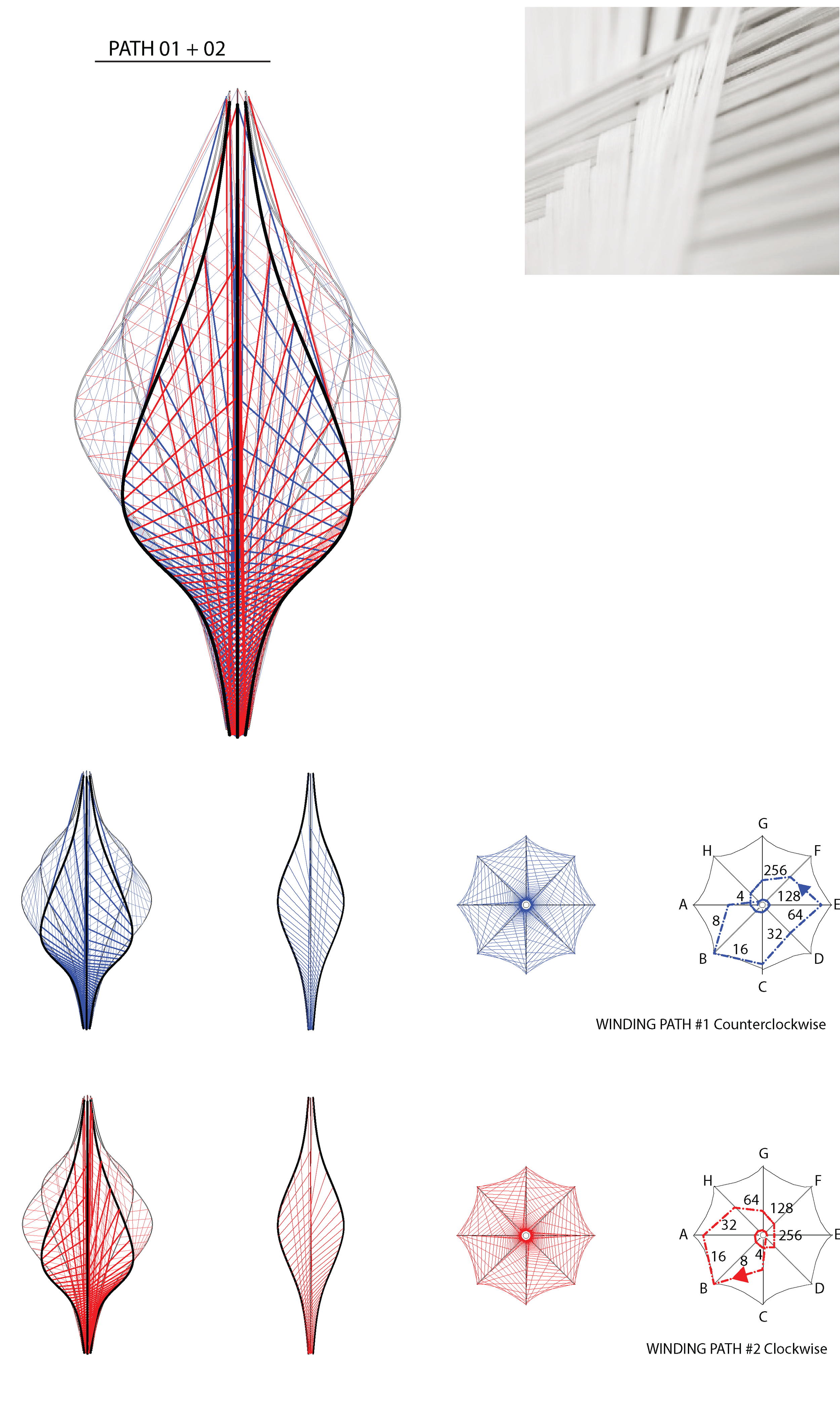
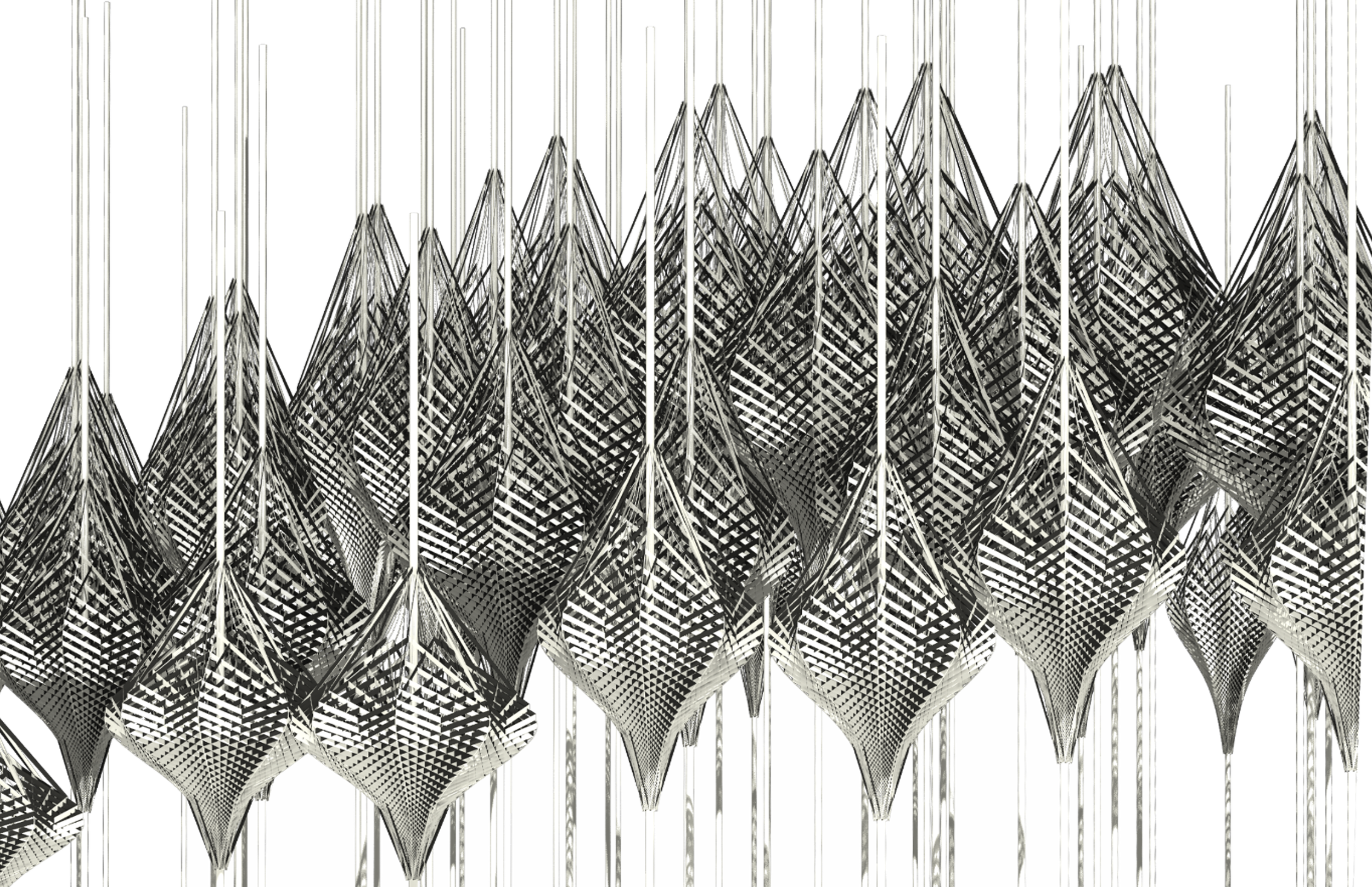
The Lamborghini Road Monument is a case study of fibrous tectonics that combines digital computation, material behavior, and efficient fabrication. The project is composed of pod-like assemblies fabricated by weaving carbon and glass fiber threads around a reusable formwork made of bending-active carbon-fiber rods. This flexible formwork can be adjusted into various shapes and lengths, allowing the system to respond to different design conditions while maintaining a simple and efficient construction process.
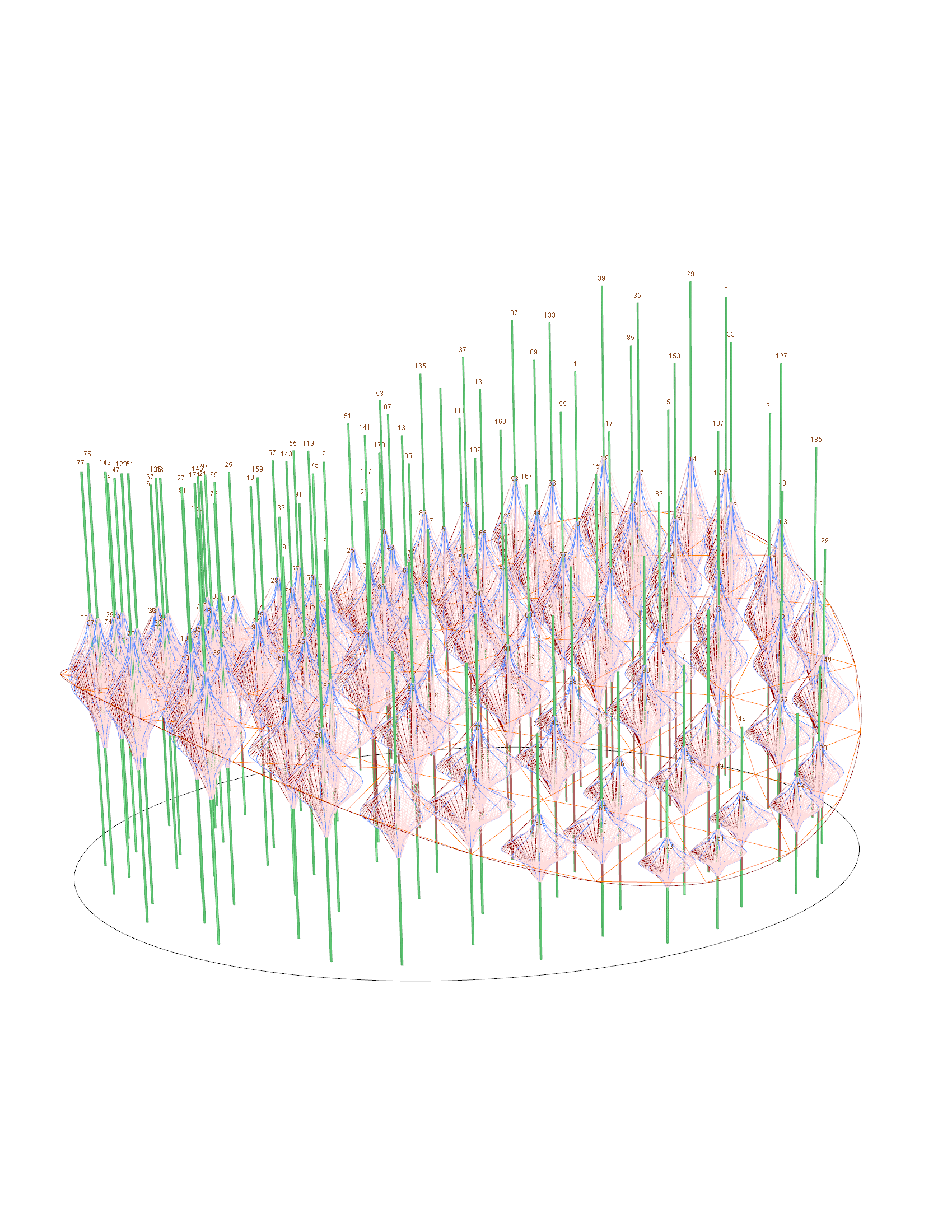
The project uses physics-based computational modeling to control both the overall form and the individual components required for fabrication. Through automatically generated data, each pod can be produced with accurate dimensions and assembled as part of a larger structural system. Since the prefabricated components can be transported to the site in groups and quickly installed onto a prepared foundation, the construction process minimizes on-site labor and improves efficiency.
Overall, the project demonstrates how digital design and material logic can work together to create a lightweight, adaptable, and repeatable architectural system. Rather than treating form as a fixed object, the proposal explores a soft tectonic process in which computation, fabrication, and material performance are directly connected.