The Big(inner)s

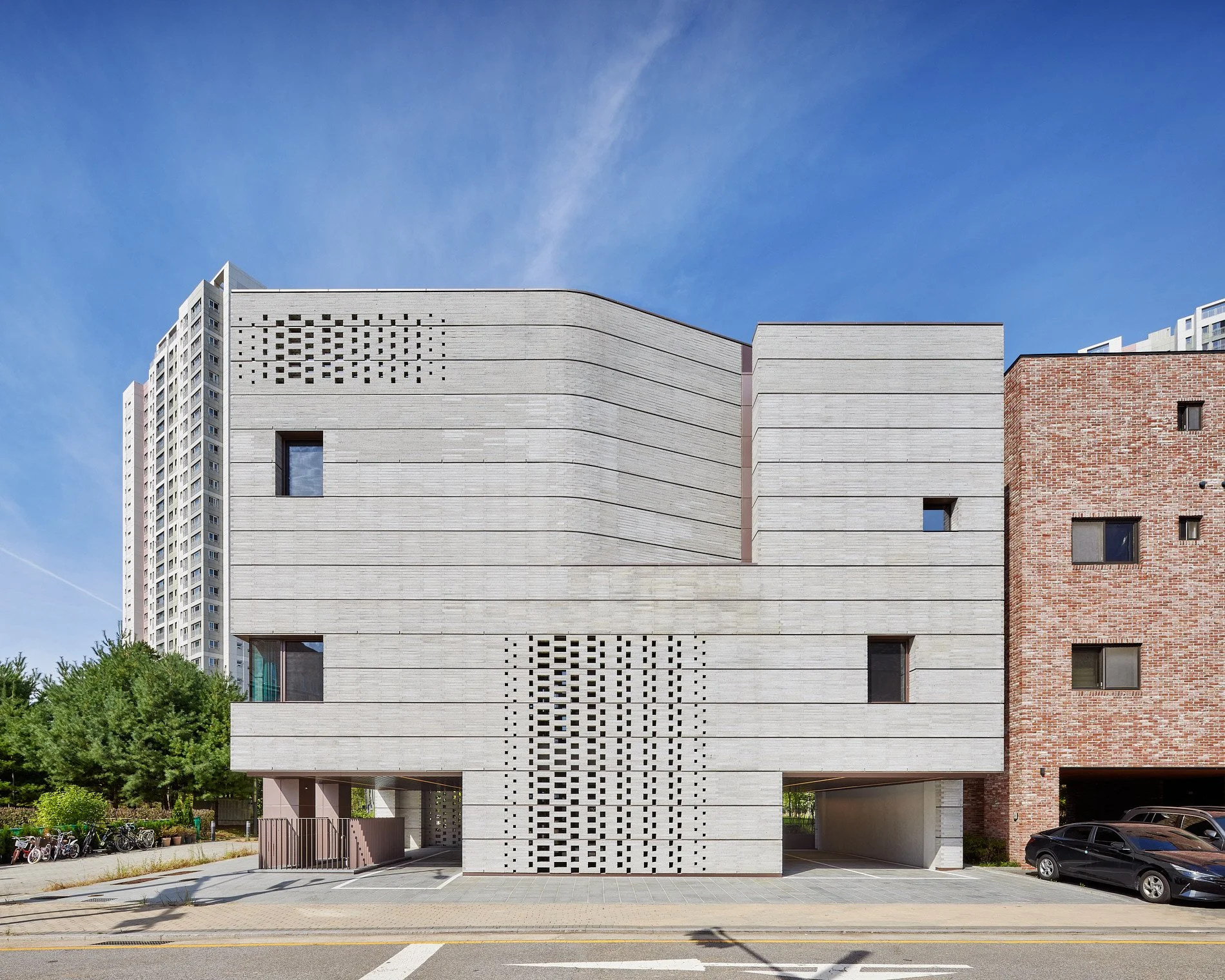
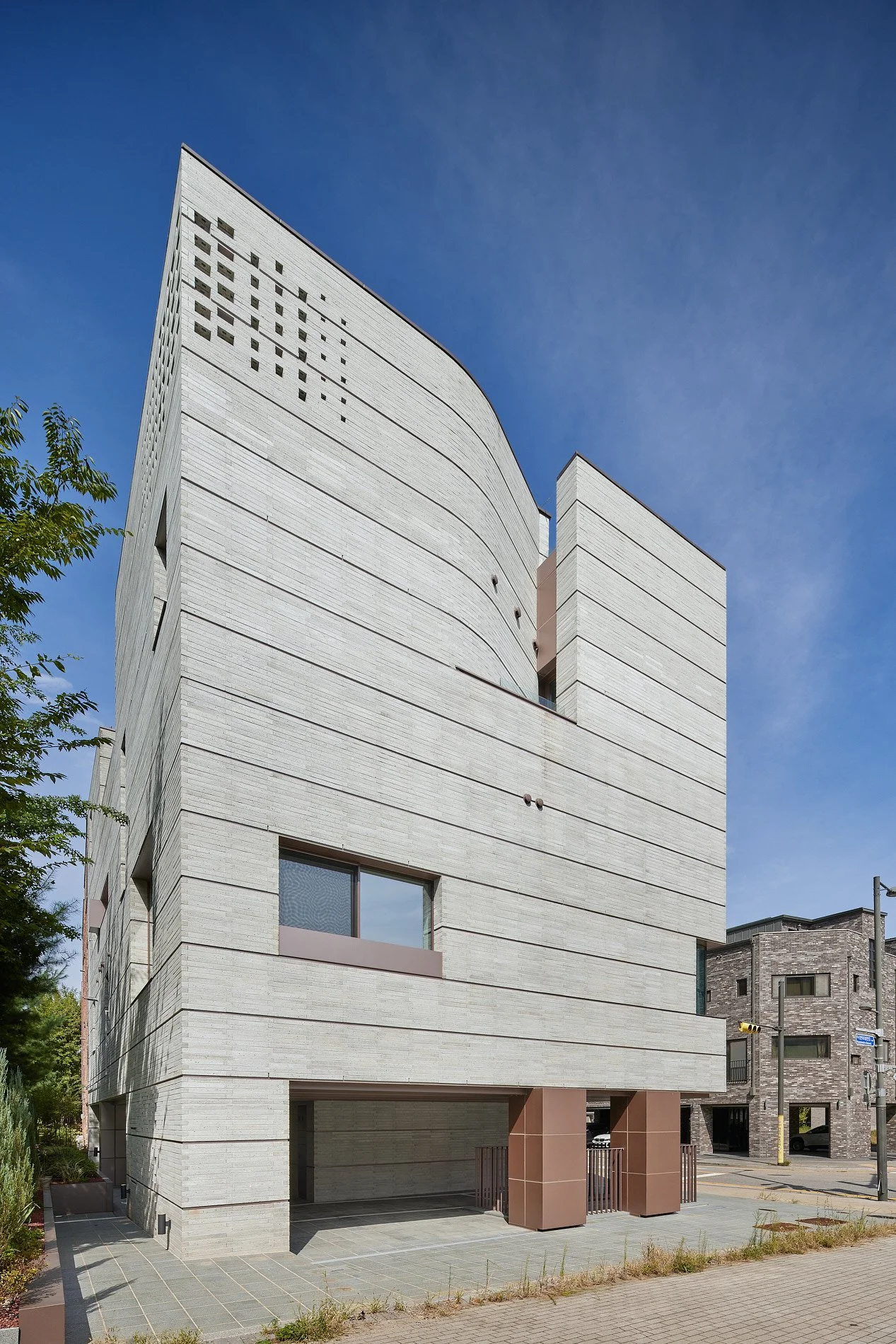
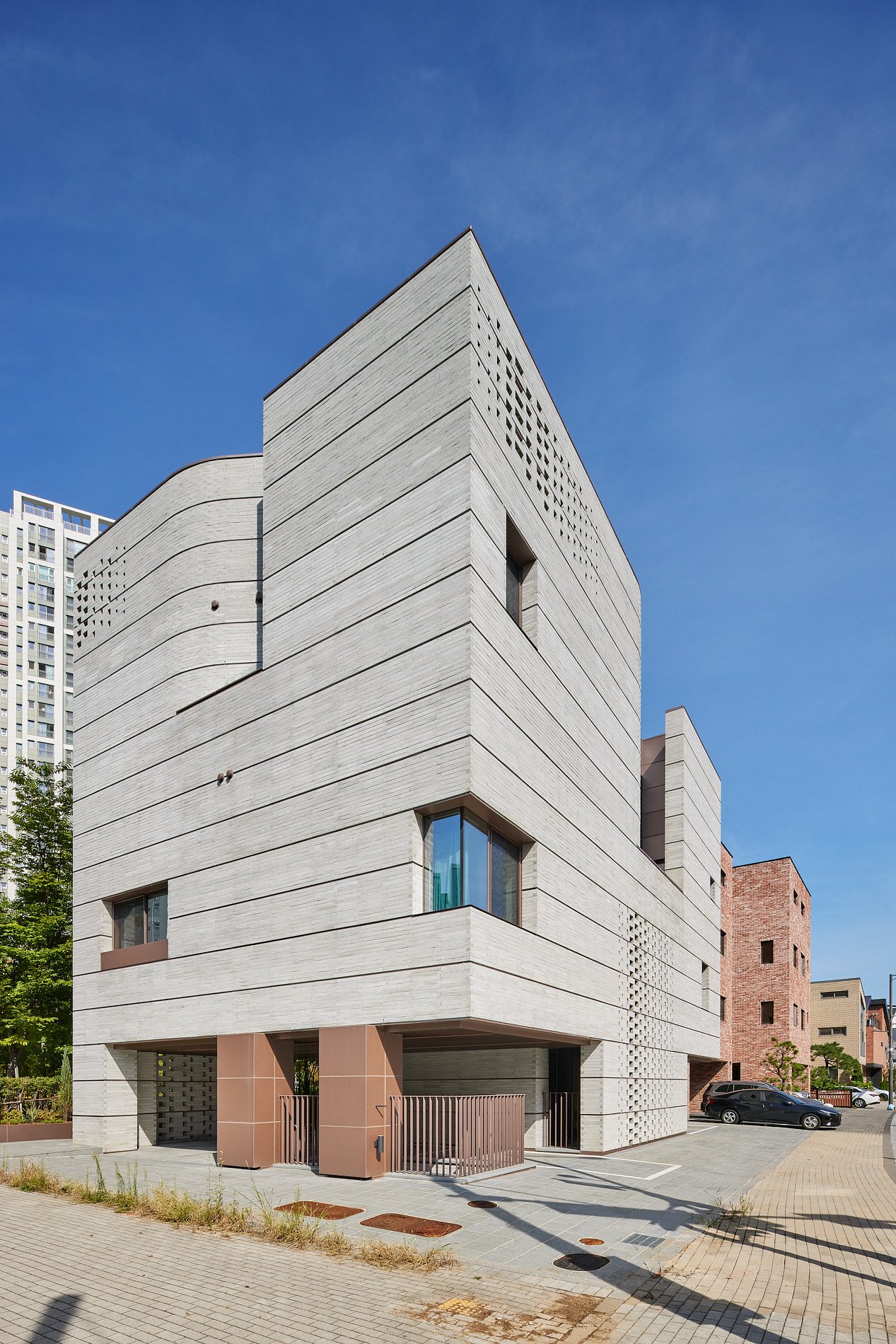
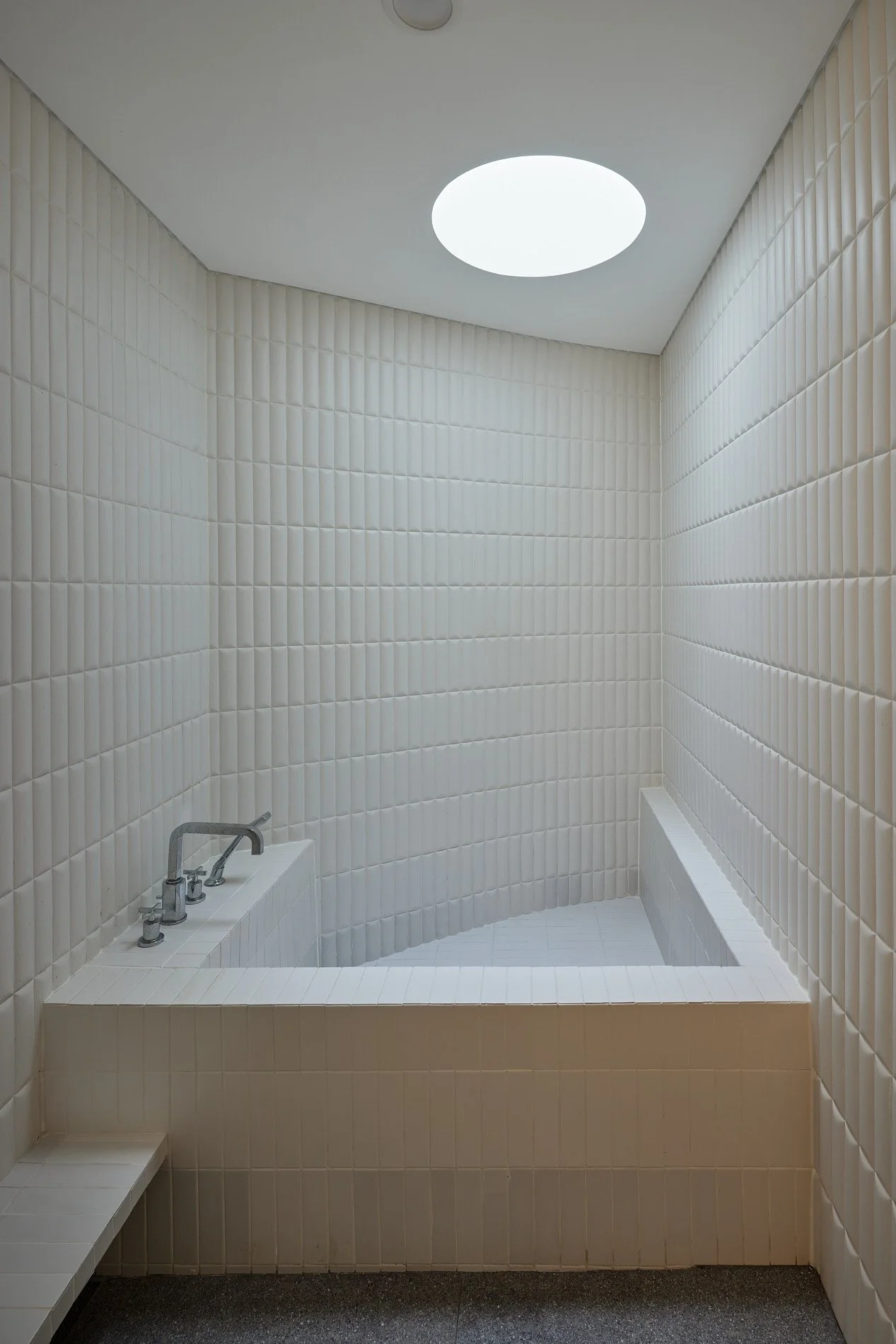
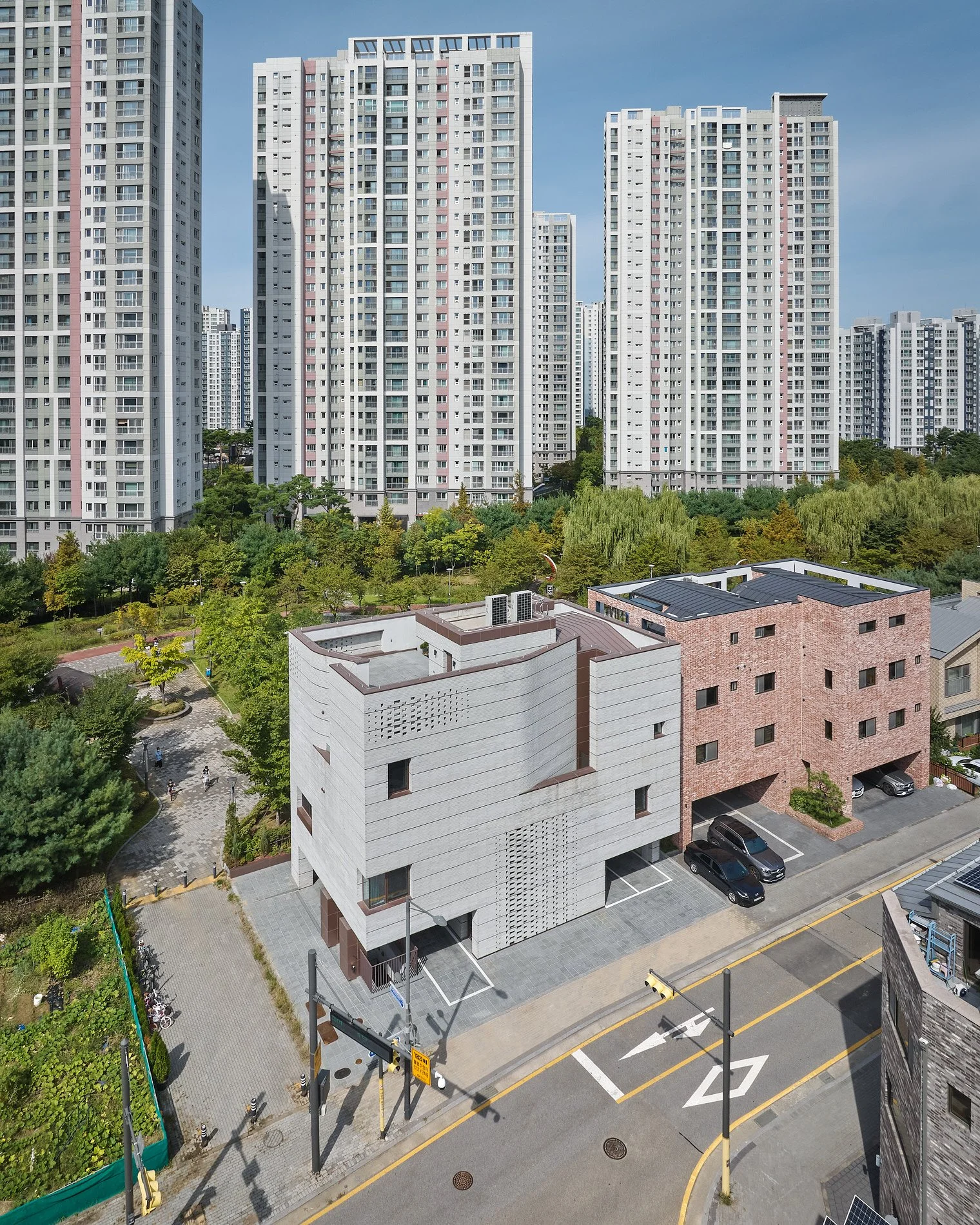
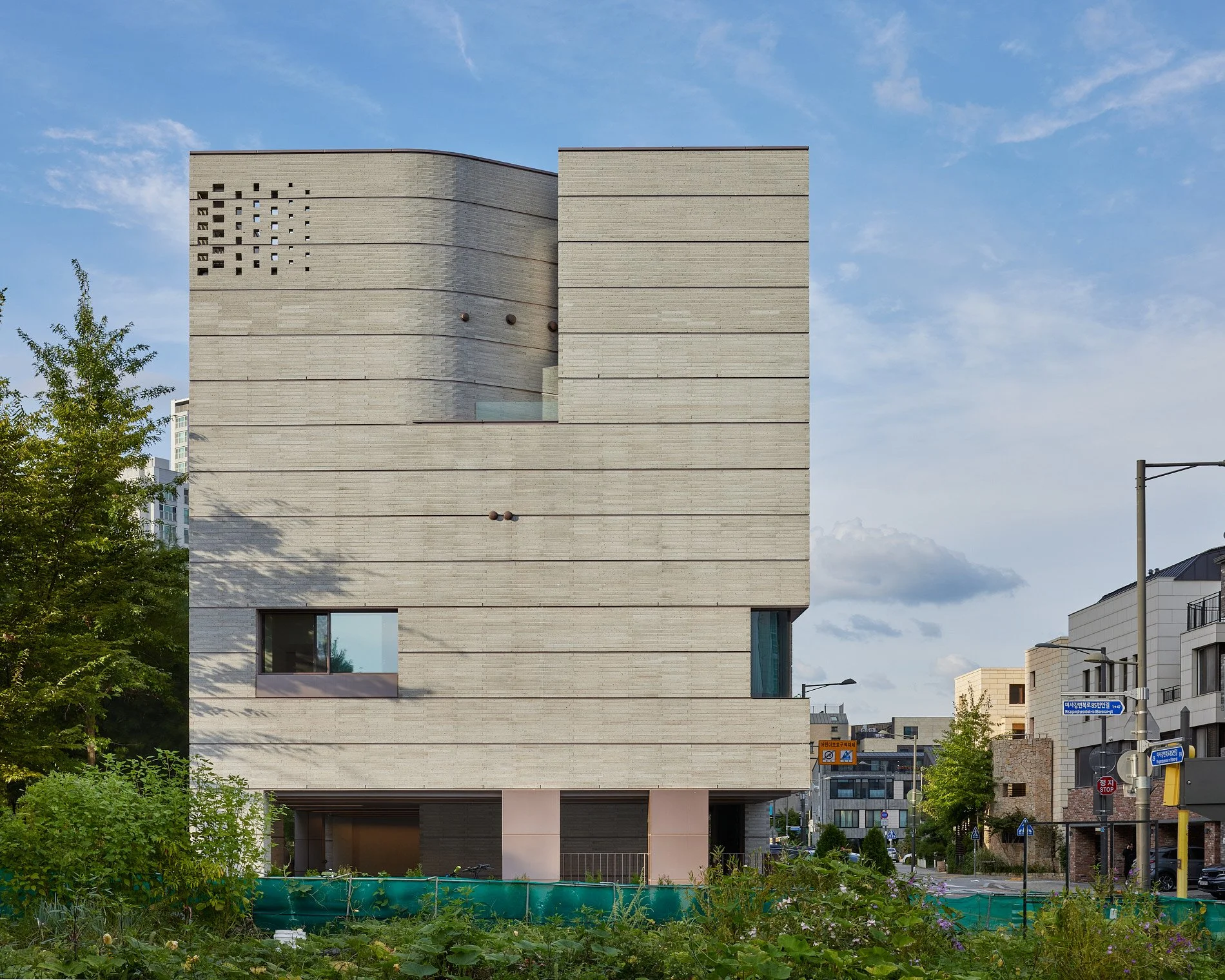
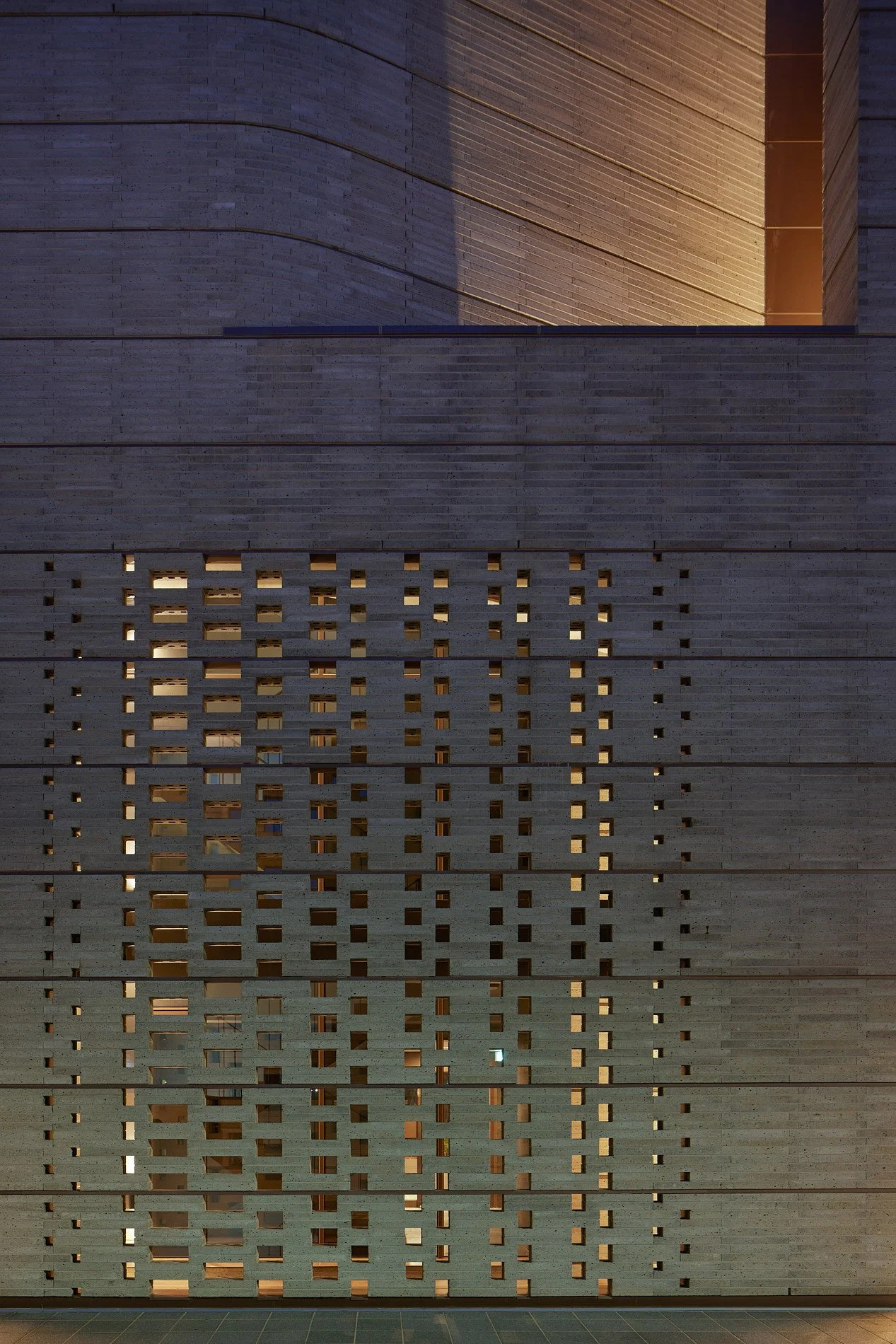
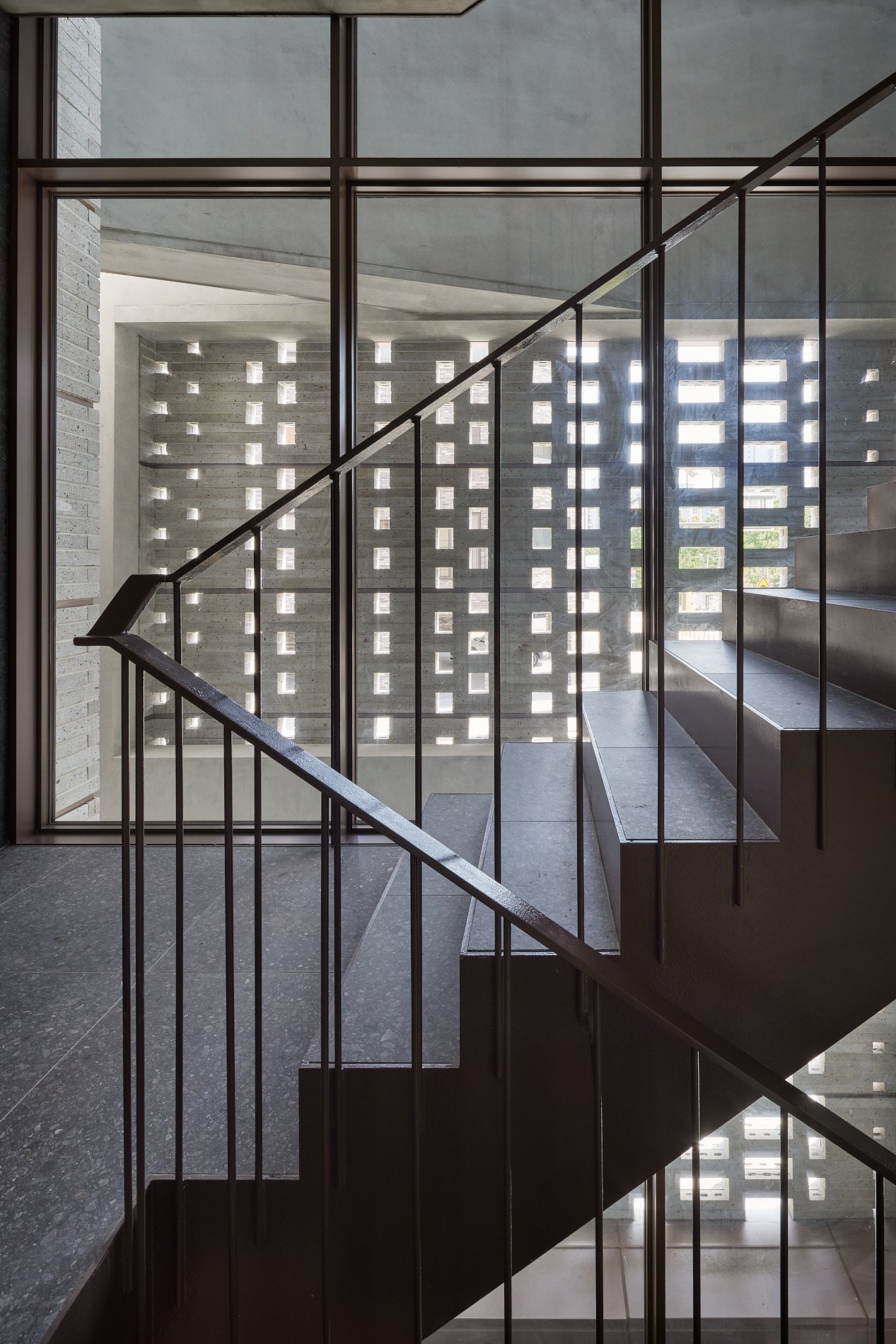
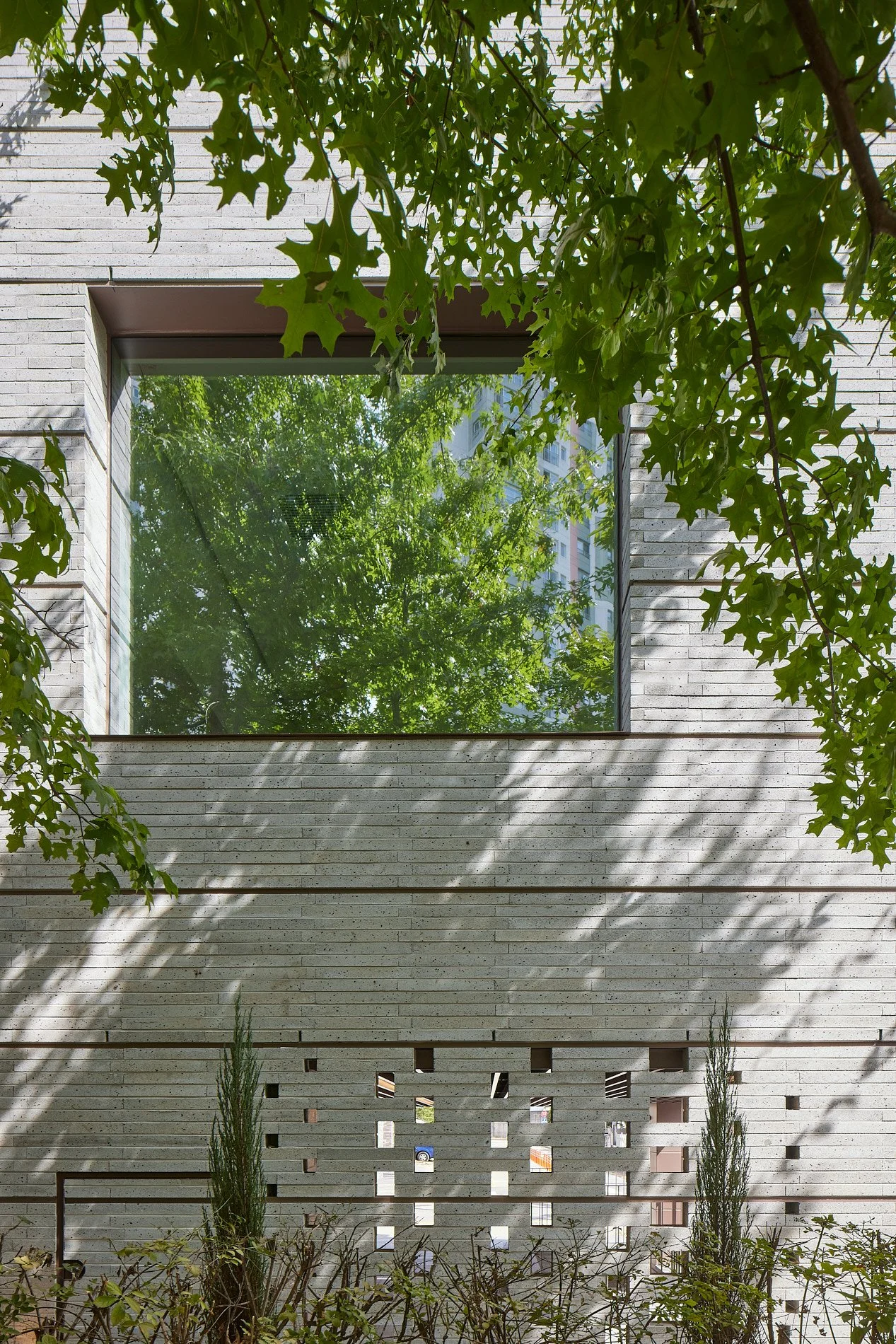
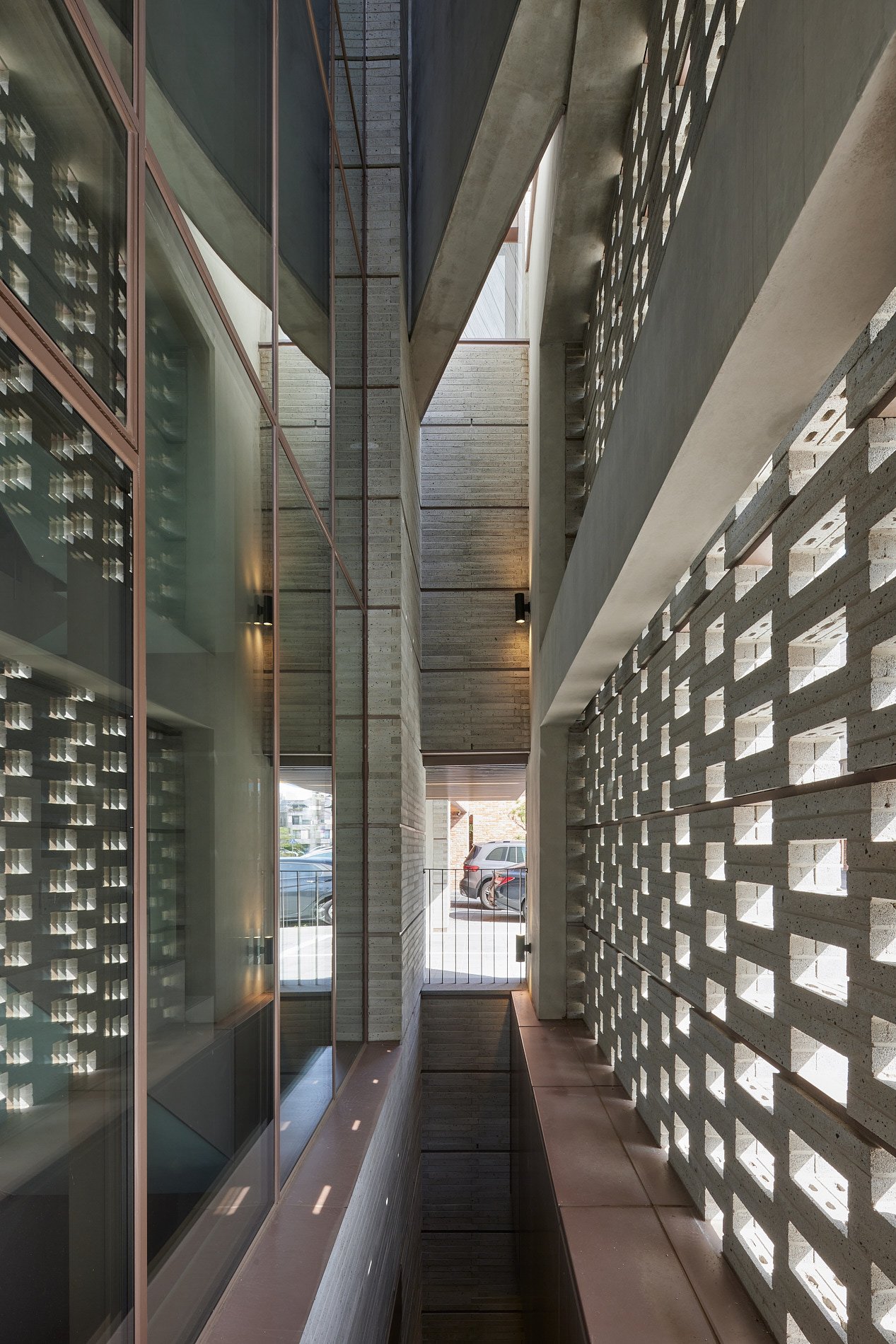
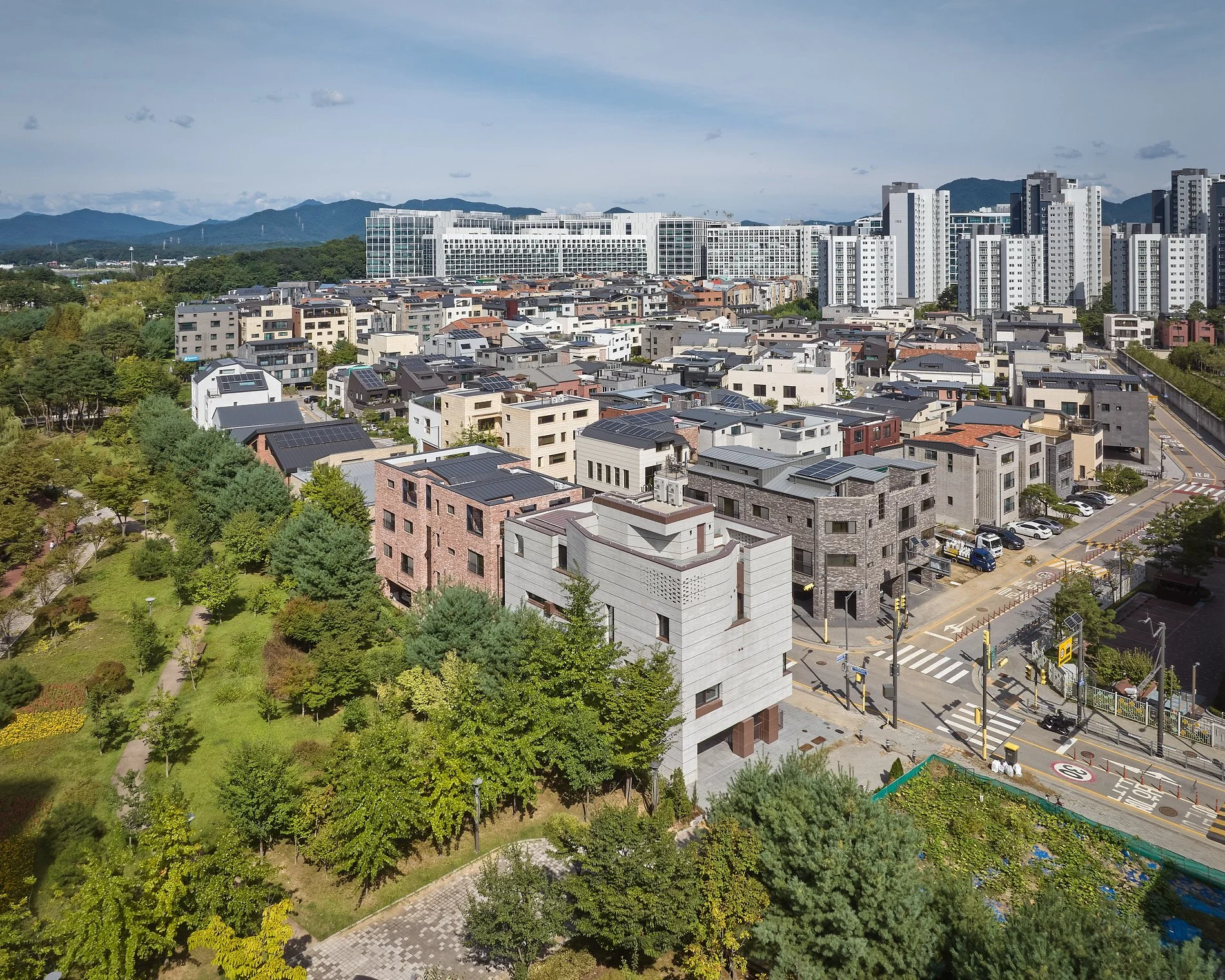
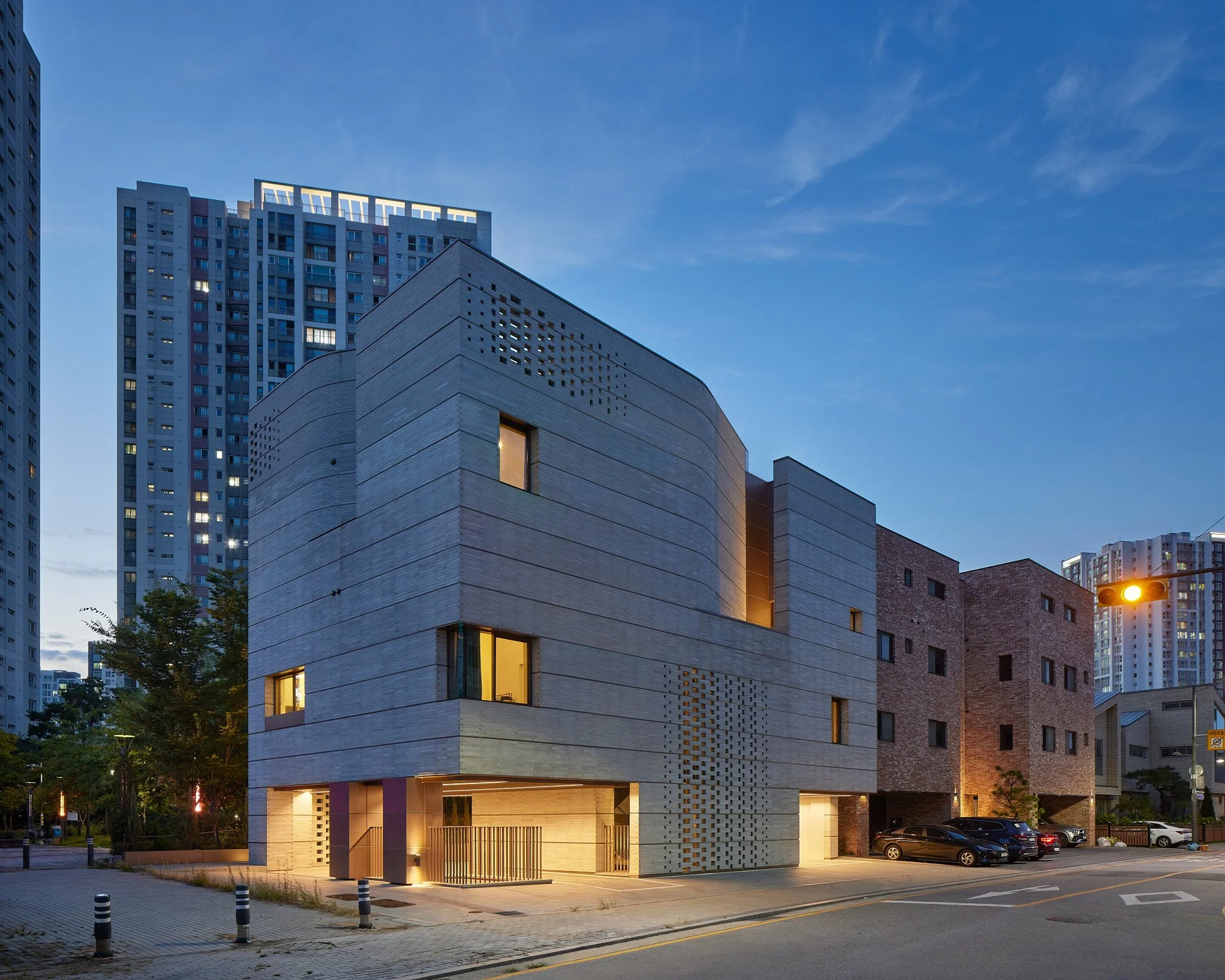
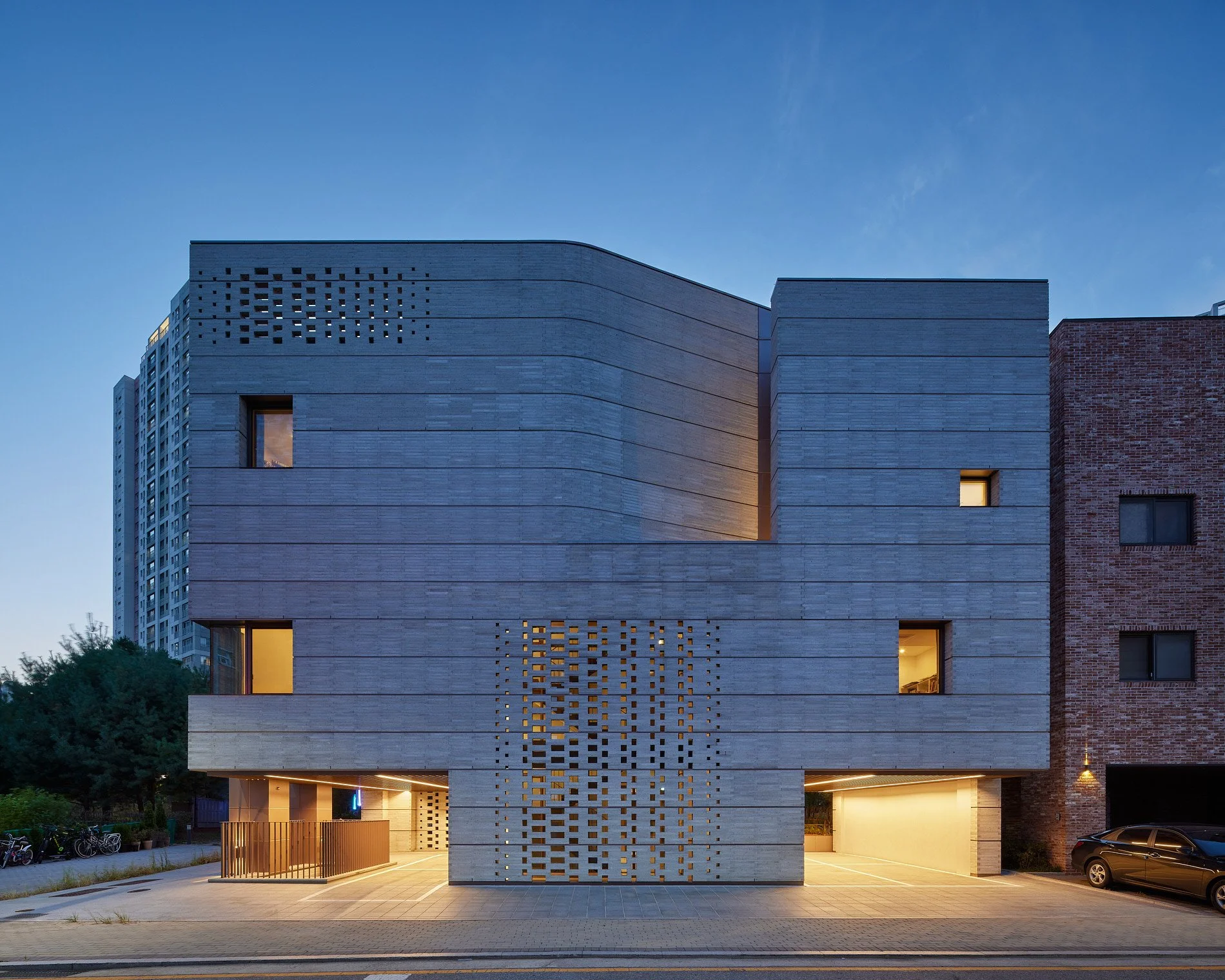
The site located at the entrance of the Misakang River housing complex in Hanam City is adjacent to the entrance of Misanoori Park, which passes through the Misakang River, and requires a role that presents a new landscape to park users while also serving as a residential facility. This building is a studio building for underground sound and a residential facility where two generations live together. It has a solid and concise baseline that holds the order of the complex spatial structure, and it looks like part of a sophisticated urban landscape at the entrance of the park and along the main road, while the area under the building is open to the park, opening up the view to the park not only from the side but also from the back. Unlike the windows that are directly open to the outside, the windows that open to the courtyard, inside the building, and to the sky, express spaces that allow for various interpretations, arouse curiosity, and require imagination such as art museums or galleries.

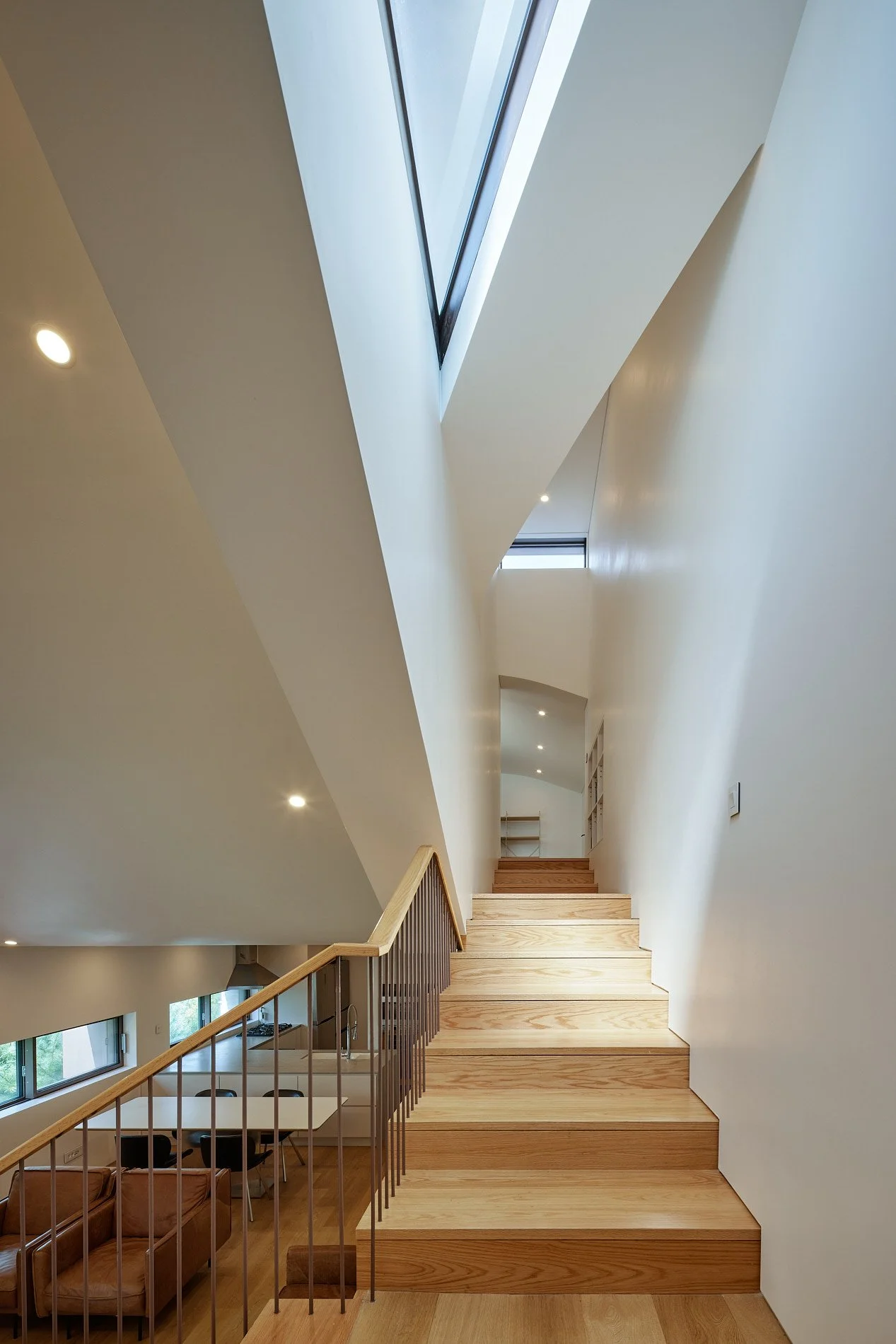
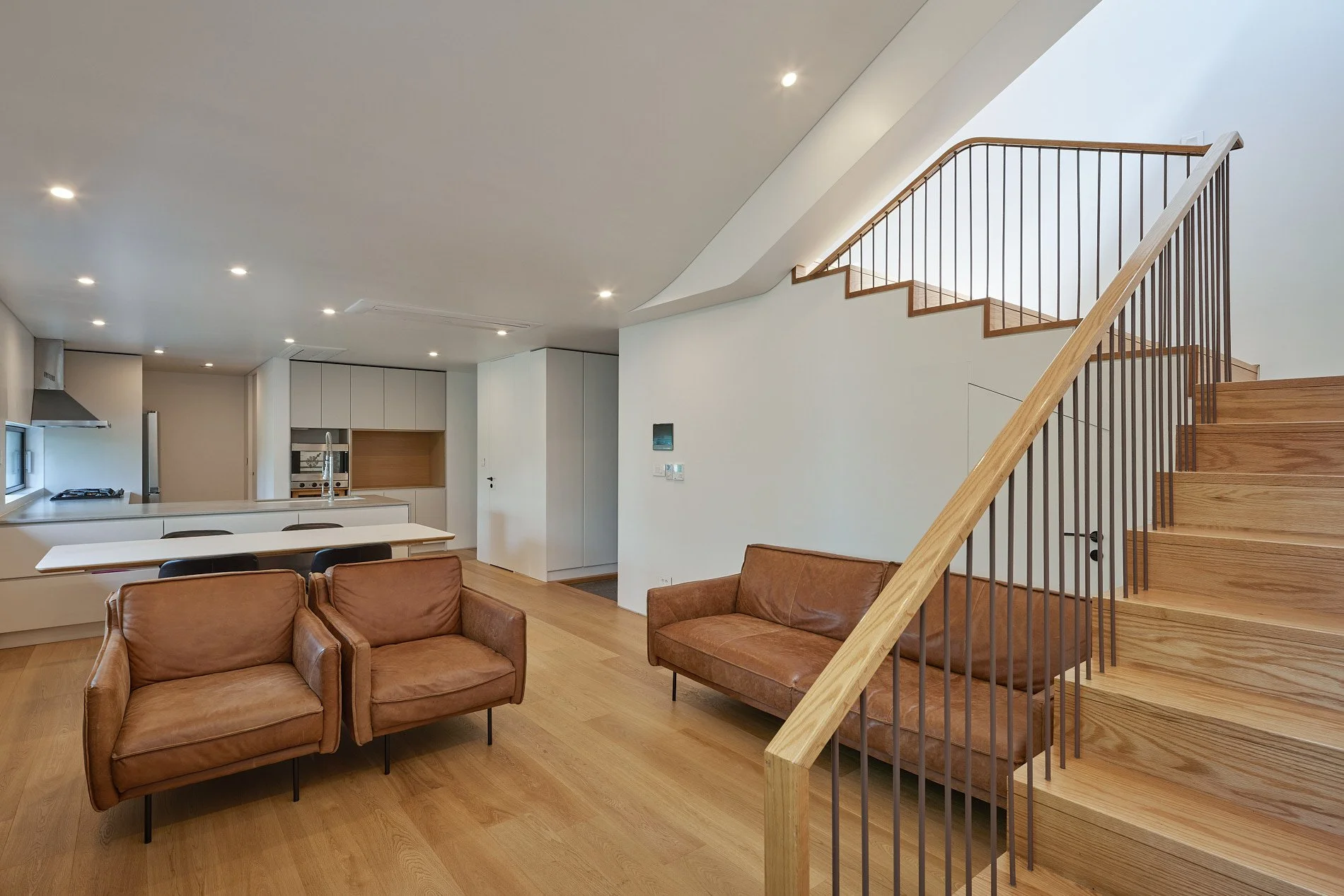
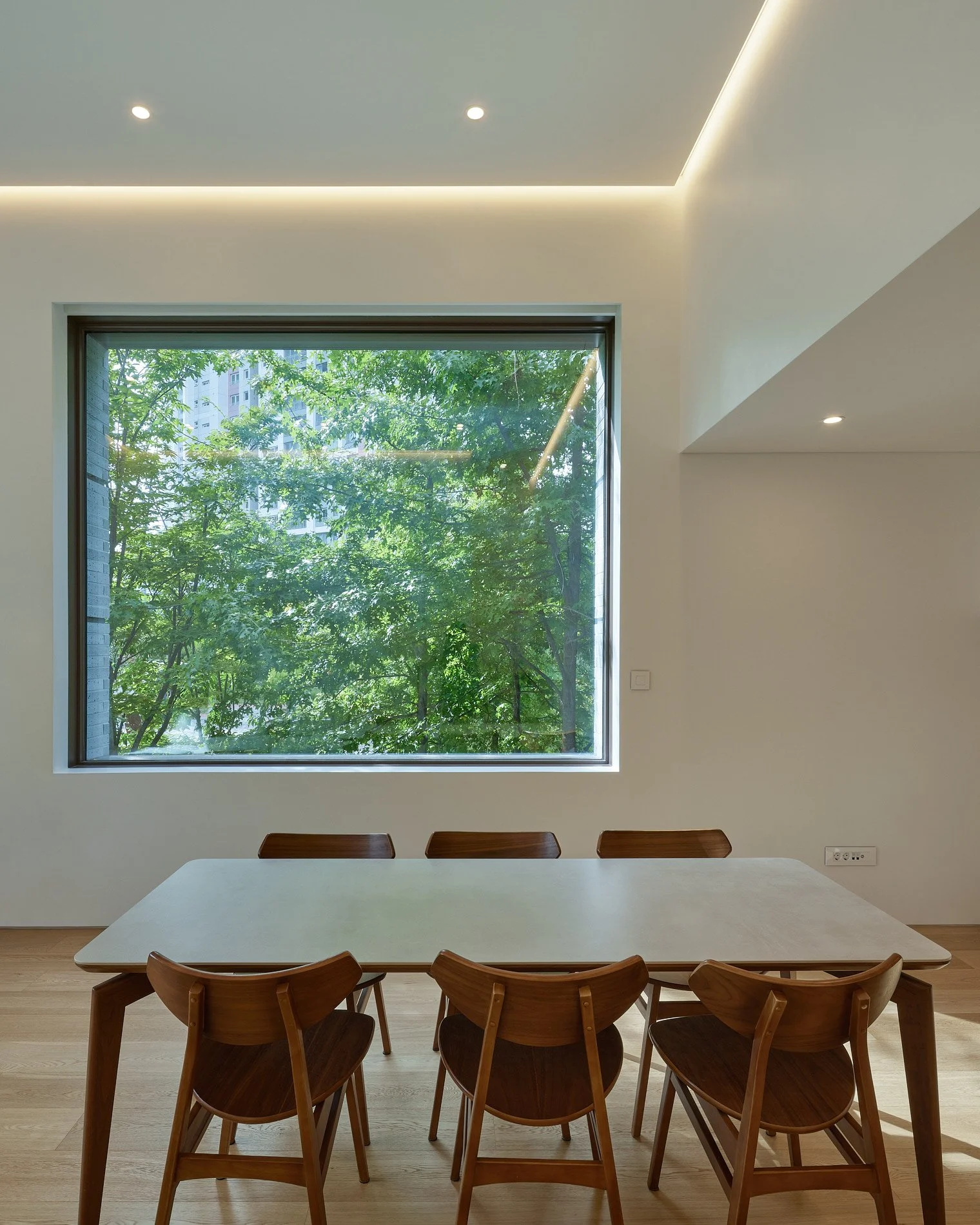
The main courtyard of this building, among its two courtyards, is open from the underground sound studio to the rooftop. The living room gallery on the second floor captures the greenery of the park through large windows, and the high ceiling adds a sense of spaciousness while providing functional sectional variations. The rooftop provides a private space that opens up to the sky among the tall apartments, offering a special outdoor space for families. The long gray brick wall uses rough masonry where visual openness is needed to maintain privacy as a residential facility while providing a sense of openness.


Year: 2022

Location : Hanam, Korea

Size : 489.89 ㎡

Status : Built

Type : Residential

Principal in Charge :

Seojoo Lee, Hyojung Kim (I.f), Dongil Kim (Kyung Hee University)

Client : 김동한

Contractor : (주)성지우종합건설

Civil : (주)토우지오

Structure : 서울구조

MEP : 두현M&C, 대경전기

Environmental Engineering : Dongil Kim

Record Architect : 장원건축

Photography : Kyung Roh
열수축 폴리머 재료를 활용한 디자인 및 제작방법론의 건축적 적용에 관한 연구

열수축 폴리머 재료를 활용한 디자인 및 제작방법론의 건축적 적용에 관한 연구

A Study on Design and Fabrication Methodologies with Heat-Induced Self-Reinforcing Polymer

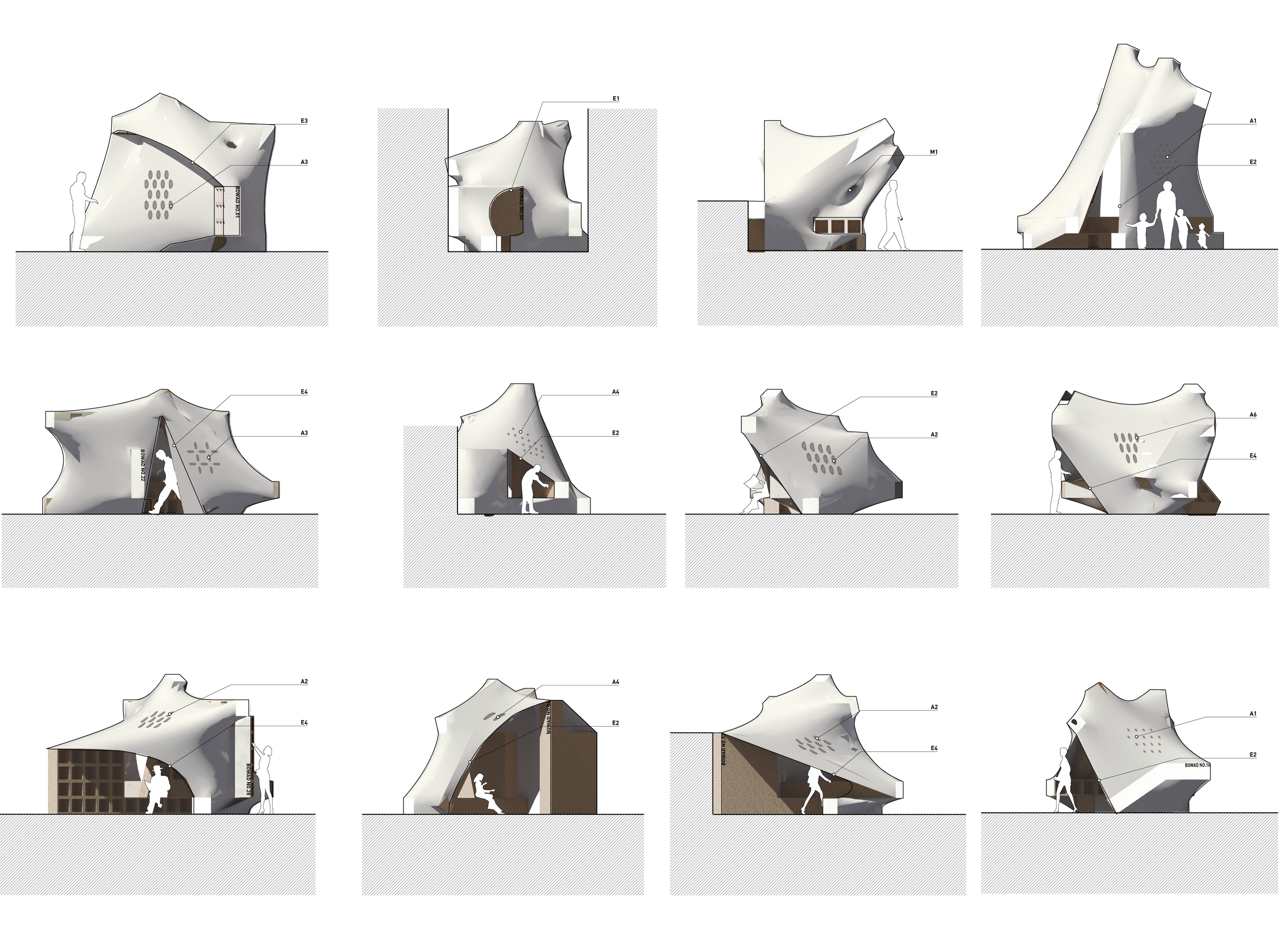
(Background and Purpose) This research paper aims to investigate a unique design process that digitally manipulates the morphological transformations of a heat-induced self-reinforcing polymer. The principle of the heat-induced contractile polymer has long been implemented in various industries such as packaging and fashion. While other industries have embraced the full potential of the particular soft material, it is still a relatively new material to be further explored in the field of architecture. Yet, with the application of computational tools to architectural form-making and fabrication methodologies, morphological and structural behaviors of heat-induced polymer could become an active material for architectural projects.

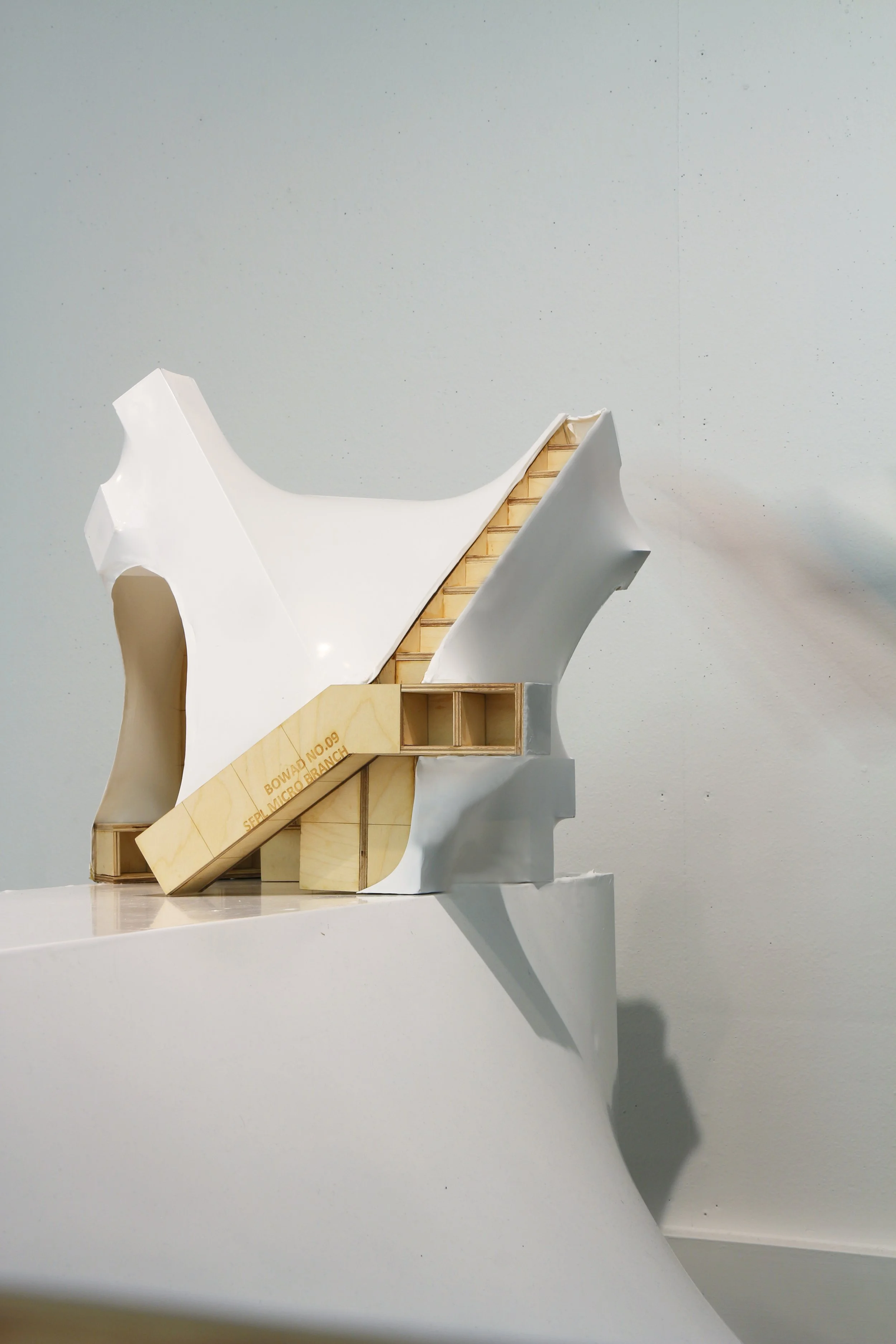
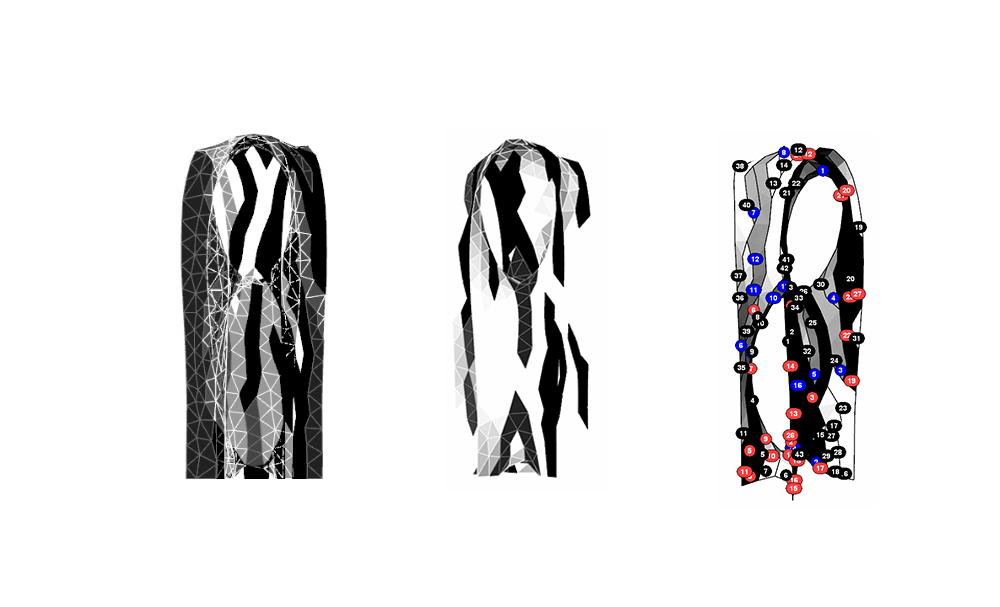
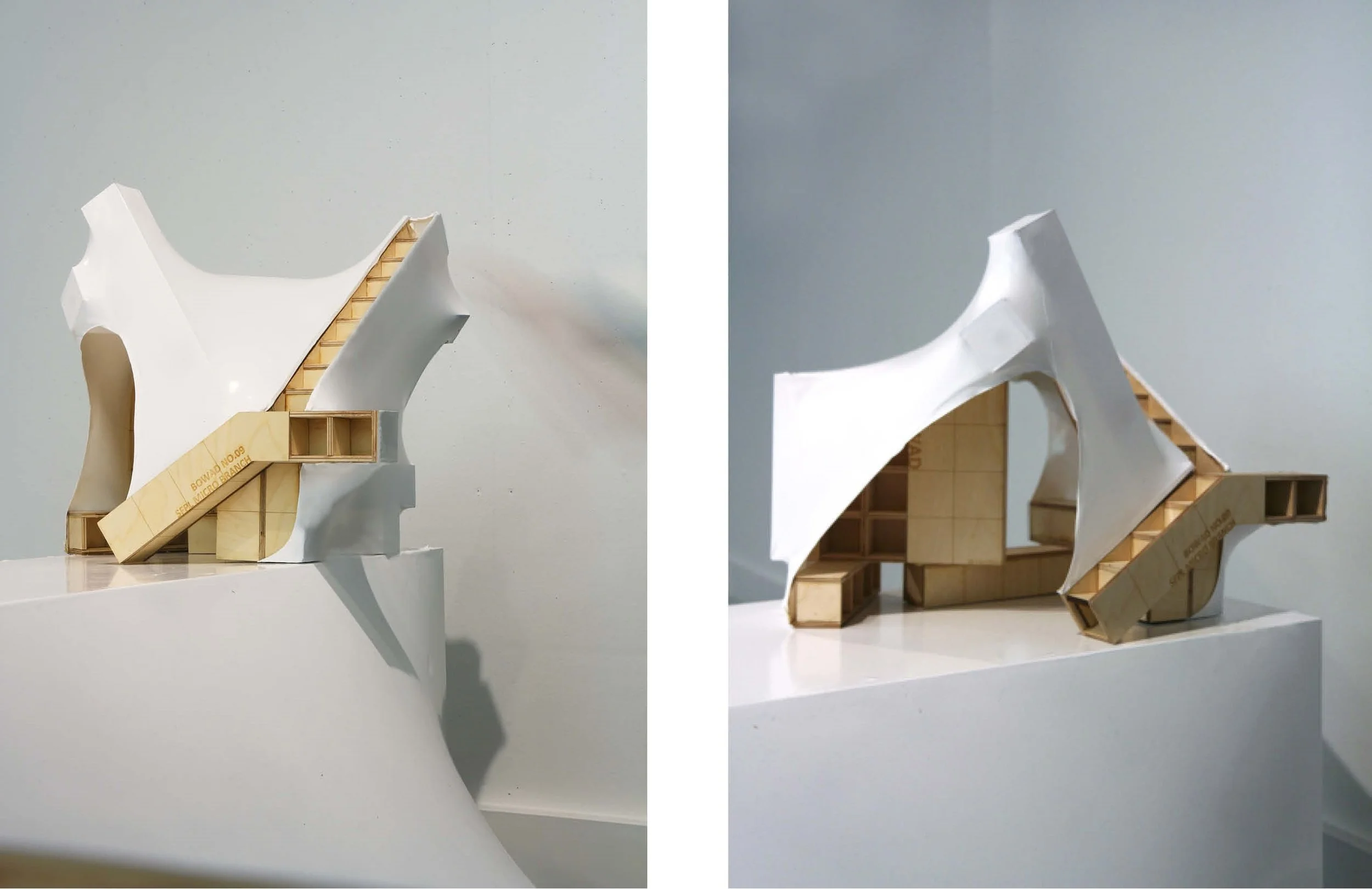
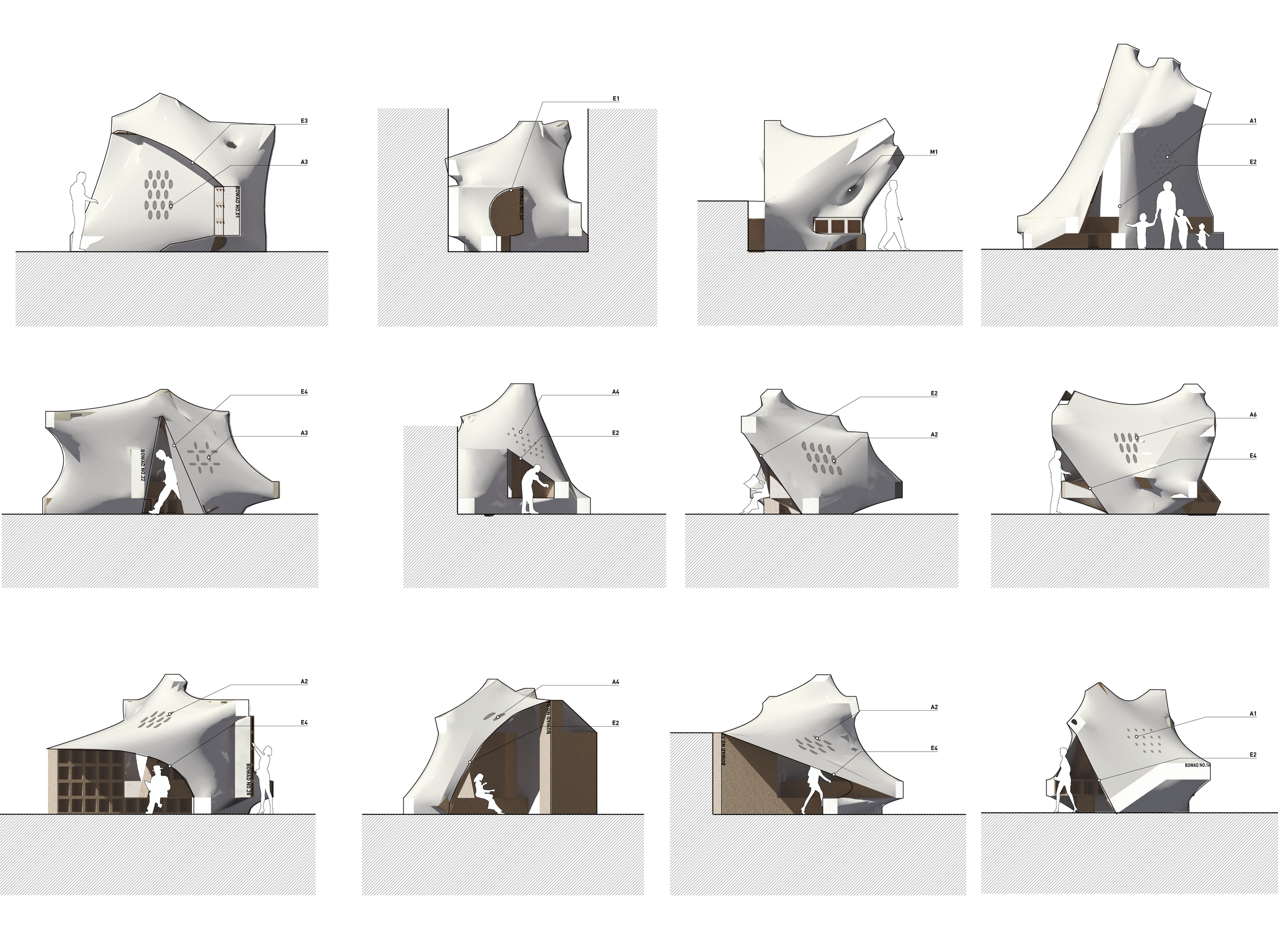
(Method) There are two modes distinguished in the presented research methodology. First of all, the author conducts the physical investigation of the material system of heat-induced polymers as a design driver. In this stage, the author computes the material behavior of the polymer sheet considering the material thickness of the polymer sheet and the traits of contractile deformation based on the time of heat exposure and the level of temperature on the material. Second, the author explores the digital investigation of a transition system of the physical properties to digital simulation then from the digital model to a fabricatable artifact based on the physical investigation of the heat-induced polymer sheet. In this stage, A series of computational strategies are applied to evaluate and analyze the design that eventually led to the making process. Finally, the latter part of this research paper showcases a built case study titled De:flatable. The study demonstrates the process of digitally comprehending the morphological transformation of a soft material, ultimately realizing the most optimal form through rapid prototyping with varying parameters.

(Results) The presented paper proves the resilience of the design process and aims to revisit the reciprocity of physical and digital, of formal and structural, and of design and fabrication through comparing the physical scale models and digital form-finding prototypes. And in lieu of the spirit of recalibration, the research is experimentation in imprecision.

(Conclusions) Not only an imprecision by the nature of the polymer’s intrinsic soft materiality but the imprecision of the digital translation of the morphological behavior of viscoelasticity. But as the following research demonstrates, it is within the imprecision and the infidelity of both physical material and computation tools that interpret the material that leads to the production of a form and a design process that hints at new possibilities in architectural design.

Kim Dongil. (2022). A Study on Design and Fabrication Methodologies with Heat-Induced Self-Reinforcing Polymer. Journal of Korea Intitute of Spatial Design, 17(2), 25-36.

https://www.kci.go.kr/kciportal/ci/sereArticleSearch/ciSereArtiView.kci?sereArticleSearchBean.artiId=ART002823029

Related Project


A Study on Architectural and Spatial Application of a Bending-Active Sheet Material


A Study on Architectural and Spatial Application of a Bending-Active Sheet Material

활성 탄성면 재료의 건축 및 공간적 적용에 관한 연구

(Background and Purpose) Bending-active materials have been widely utilized in fashion, furniture, product design and even in creating new spaces and spatial experiences. In applying bending-active surfaces as design drivers, architecture has found it challenging to track and document the material’s morphological behaviors, to fully control the variables for design and fabrication. Also, architectural studies have considered innate structural and formal uncertainties of the bending-active materials to be too great a risk to utilize it as an inhabitable space. However, with the integration of current computational tools into the design and fabrication processes, the natural behaviors of elasticity and resilience in response to bending and other forces, can now be applied to extract morphological and structural investigations in architecture. This paper aims to demonstrate the application of computational tools to the architectural design process of a bending-active surface, from conceptual form-finding to full-scale model fabrication.

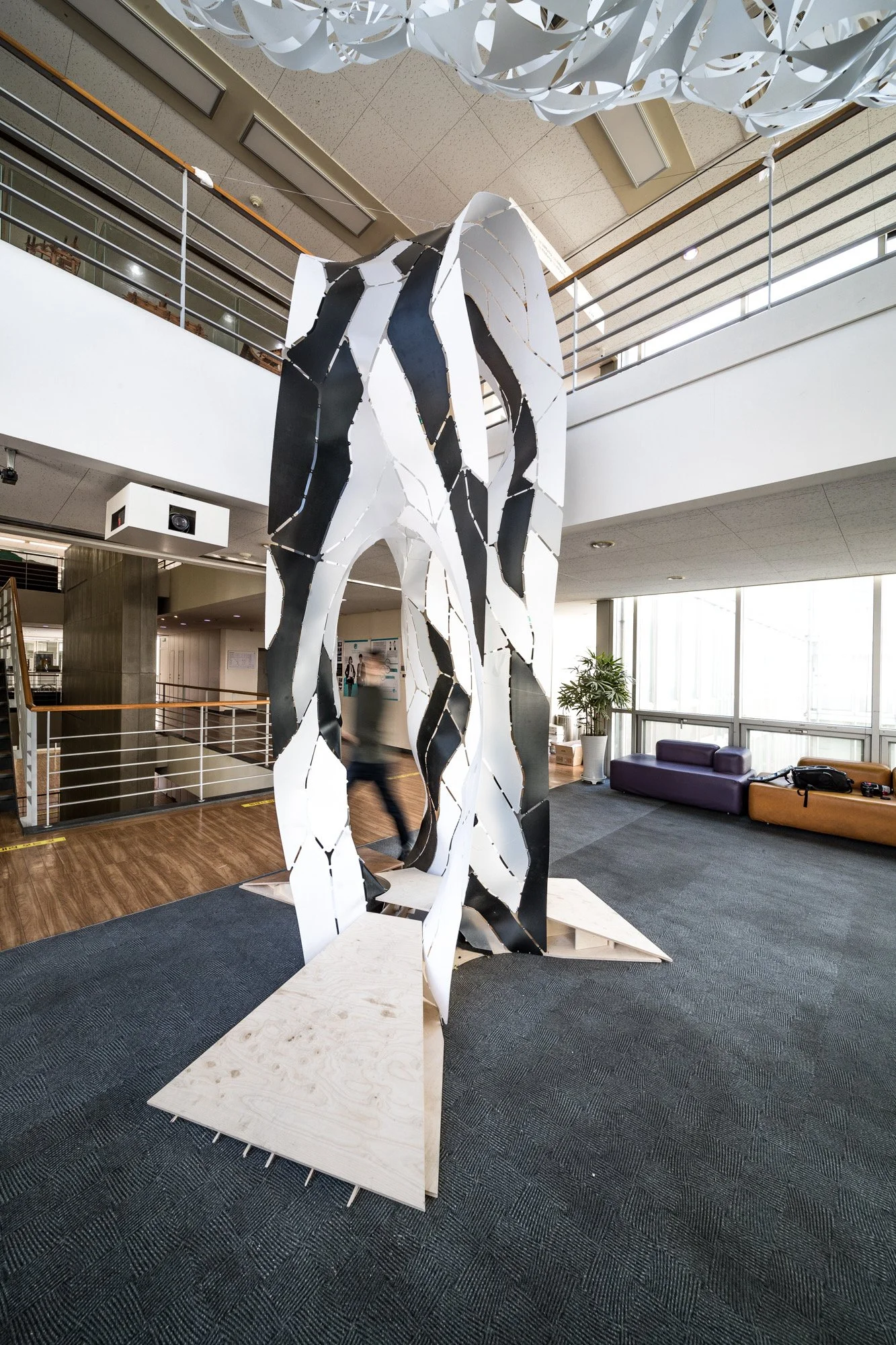
(Method) A plastic polymer sheet, which is one of the most widely available bending-active surfaces, will be central to the design process. The methodology is focused on a computational analysis on softness of the plastic polymer sheet, morphological behavior, and structural integrity in the digital platform. Simultaneously, iterative design exercises occur through physical fabrication of the digitally produced results, in order to achieve a complete reciprocity between the digital and the physical platforms. Two case studies are introduced in this paper based on this same mode of study. One exercise begins from the design of local scale modules and develops into the global scale geometry. On the other hand, the second exercise begins from the design of a global scale geometry and proceeds to segment this global geometry to produce local geometries for fabrication purposes.

(Results) The two exercises produced the following results. First, through a reciprocal design process between the digital and physical platforms, a complex novel form that is aesthetically and structurally successful can be realized. Second, by interpreting a widely available material into the digital platform, customized computational tools allow form-finding and analysis of the final geometry to produce automated cut patterns for physical platform translation. Lastly, the assembly process itself can be designed so that a large scale structure can be assembled by a small group of people with no particular expertise and no secondary scaffolding or sub-structure, due to the lightweight material and the structural integrity a bending-active design inherently carries.

(Conclusions) This paper expects to further studies that examine material, formal, and structural design and fabrication of various bending-active surfaces.

Kim Dongil and Chung, Yeseul. (2022). A Study on Architectural and Spatial Application of a Bending-Active Sheet Material. Journal of Korea Intitute of Spatial Design, 17(1), 11-22.

https://www.kci.go.kr/kciportal/ci/sereArticleSearch/ciSereArtiView.kci?sereArticleSearchBean.artiId=ART002812654


Related Research


Self-Formation

Self-formation is a process that an object or phenomenon is transformed by itself to adapt its shape or character from the external forces. The transition when the nature changes or is changed by the natural impacts such as weathering, erosion, sedimentation, earthquake or volcano effect, can be also called as a self-formation. Not only the natural phenomenon, but also arts and architecture can be also self-formed, which means that the form of arts and architecture is produced unintentionally from the natural phenomenon including gravity or user’s change, although the designer did not purpose the outcome. Interestingly, the external factors and the system how Nature or man-made structure has infl uenced on is very similar and its impact brings similar results on both, even though the intent, scale, life and material of form from Nature and artificial constructions are totally different each other. Through the Branner Research Fellowship, I explore the all the results of self-formation in both Nature, arts and architecture, and understand its process, reasons, controlling factors and external forces. 


Related Research