IN(IN)
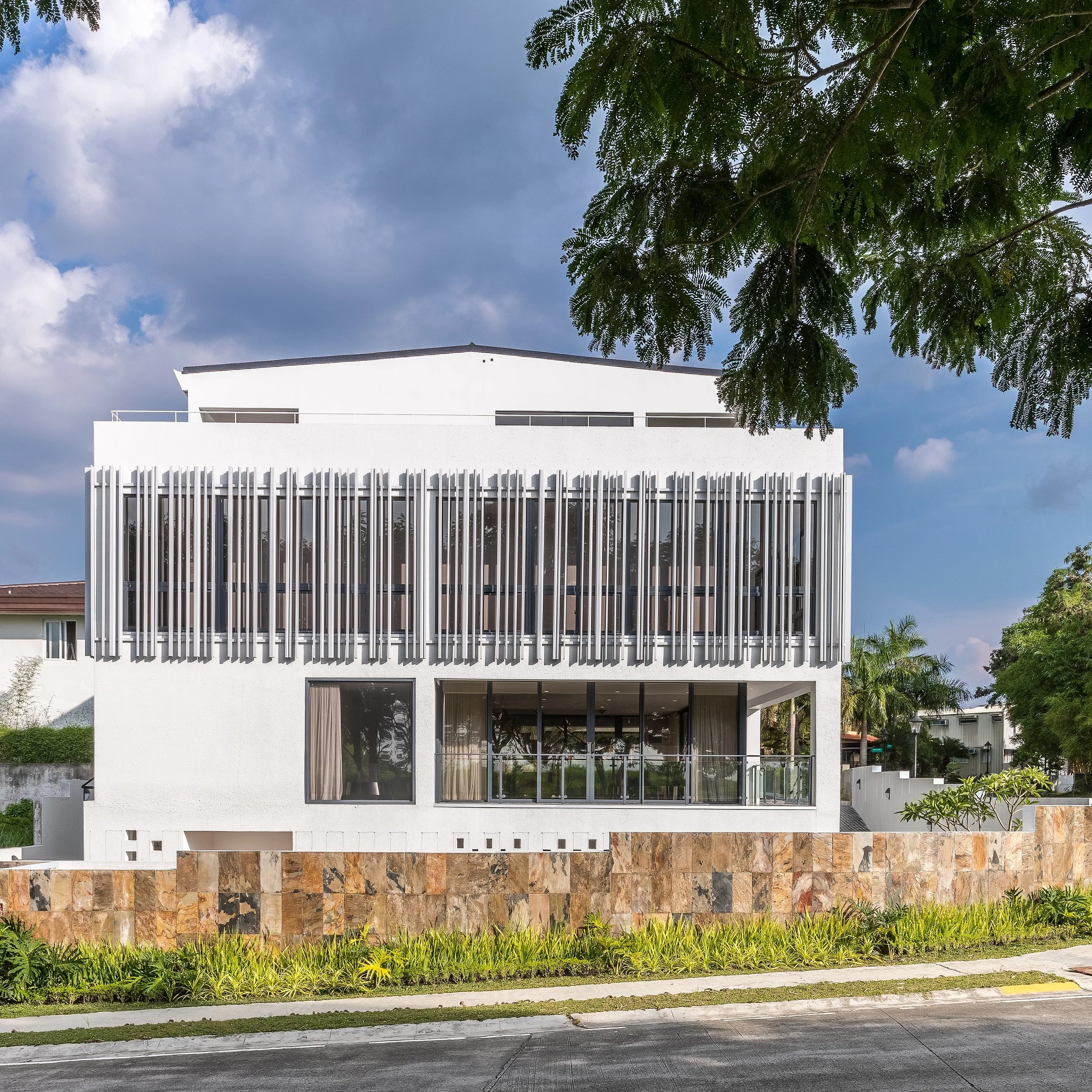
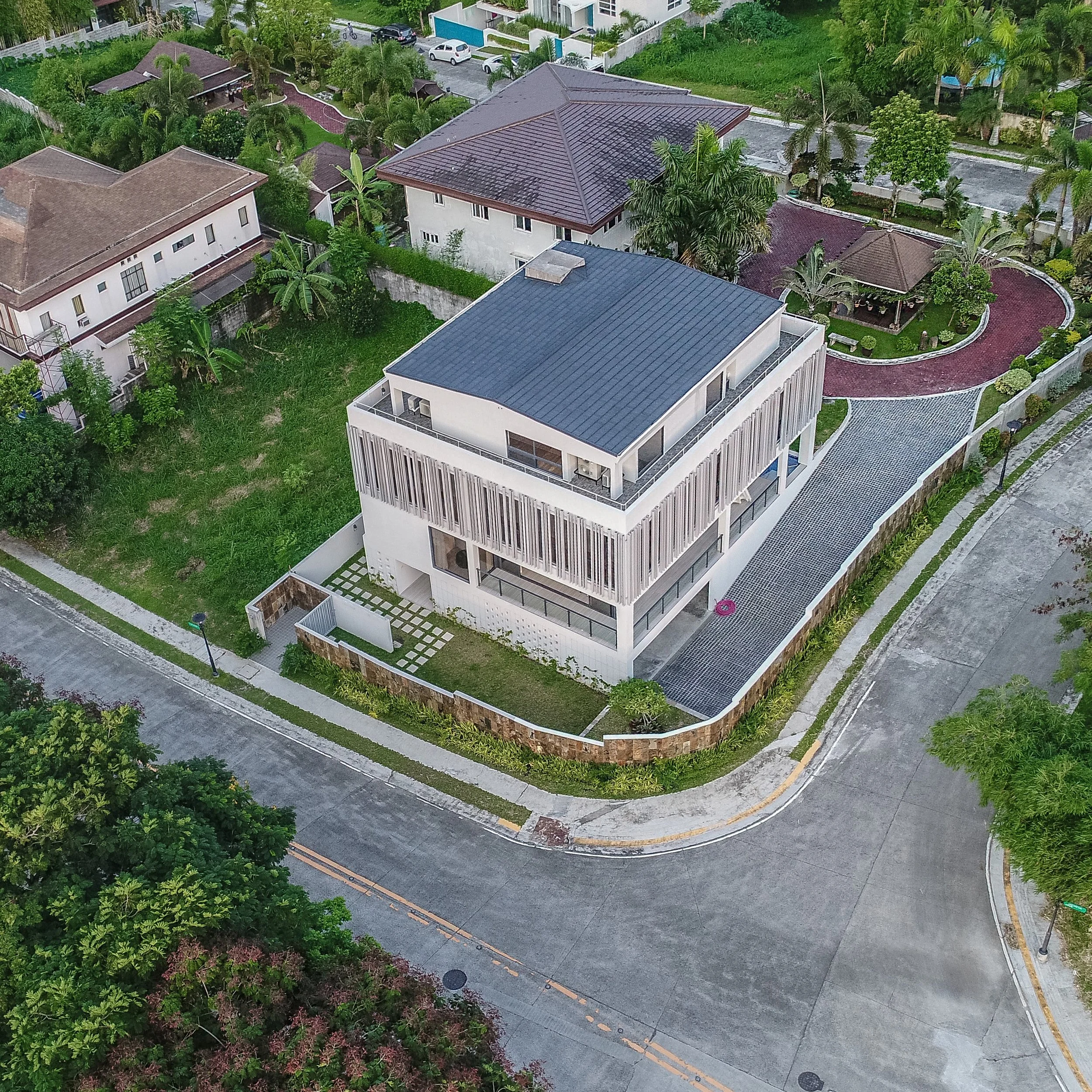
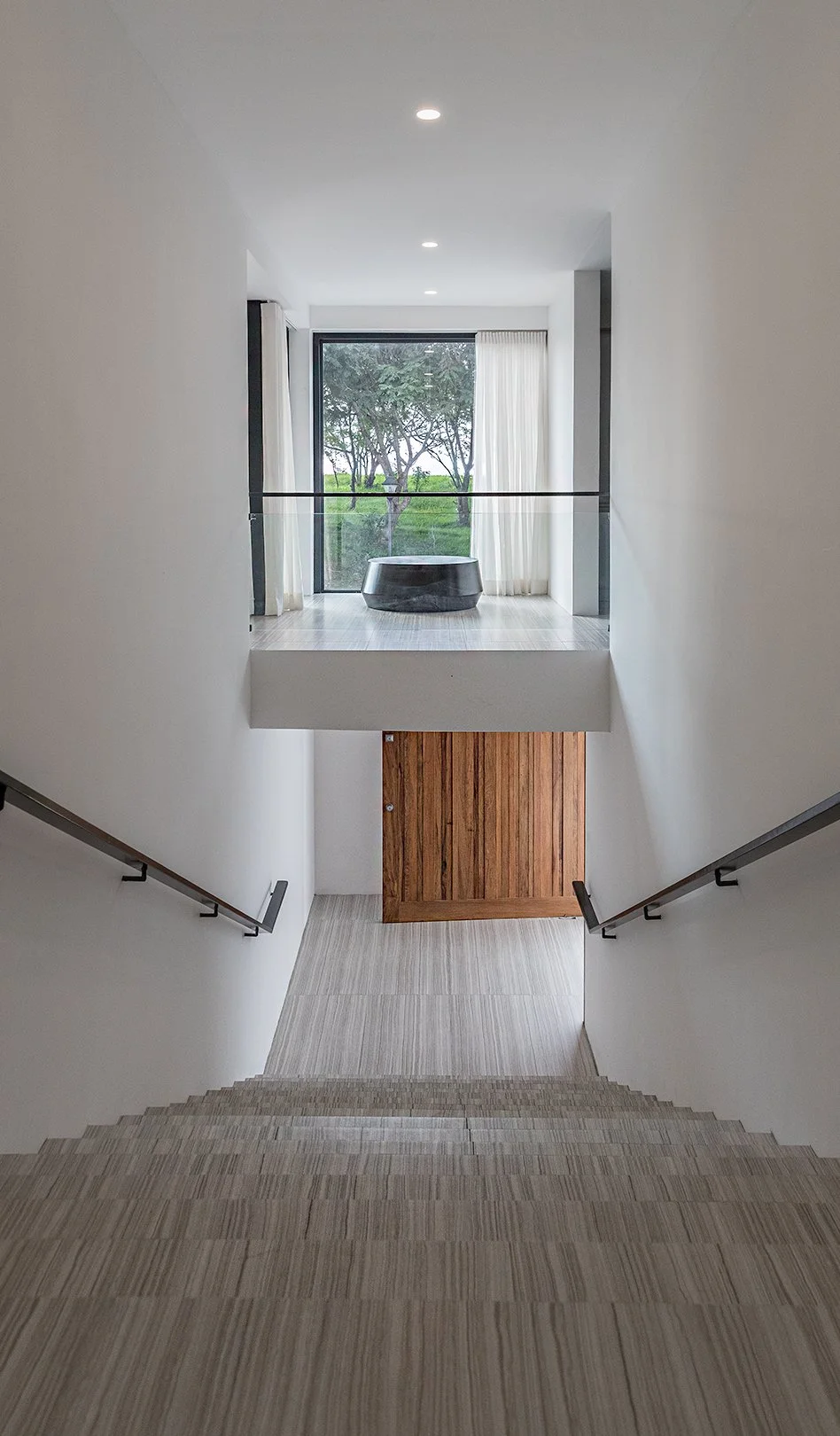
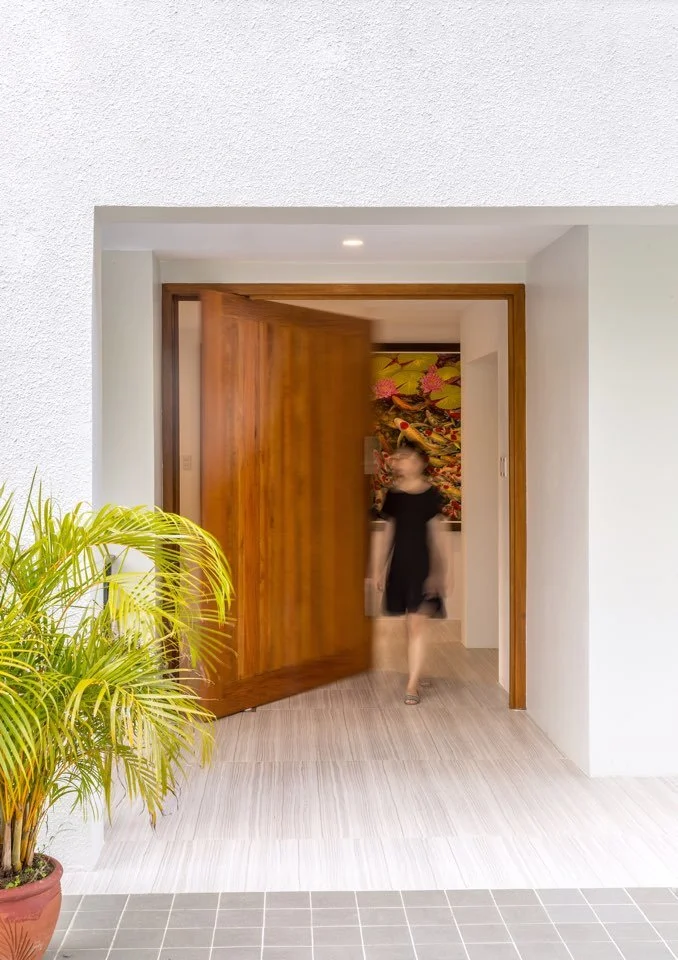
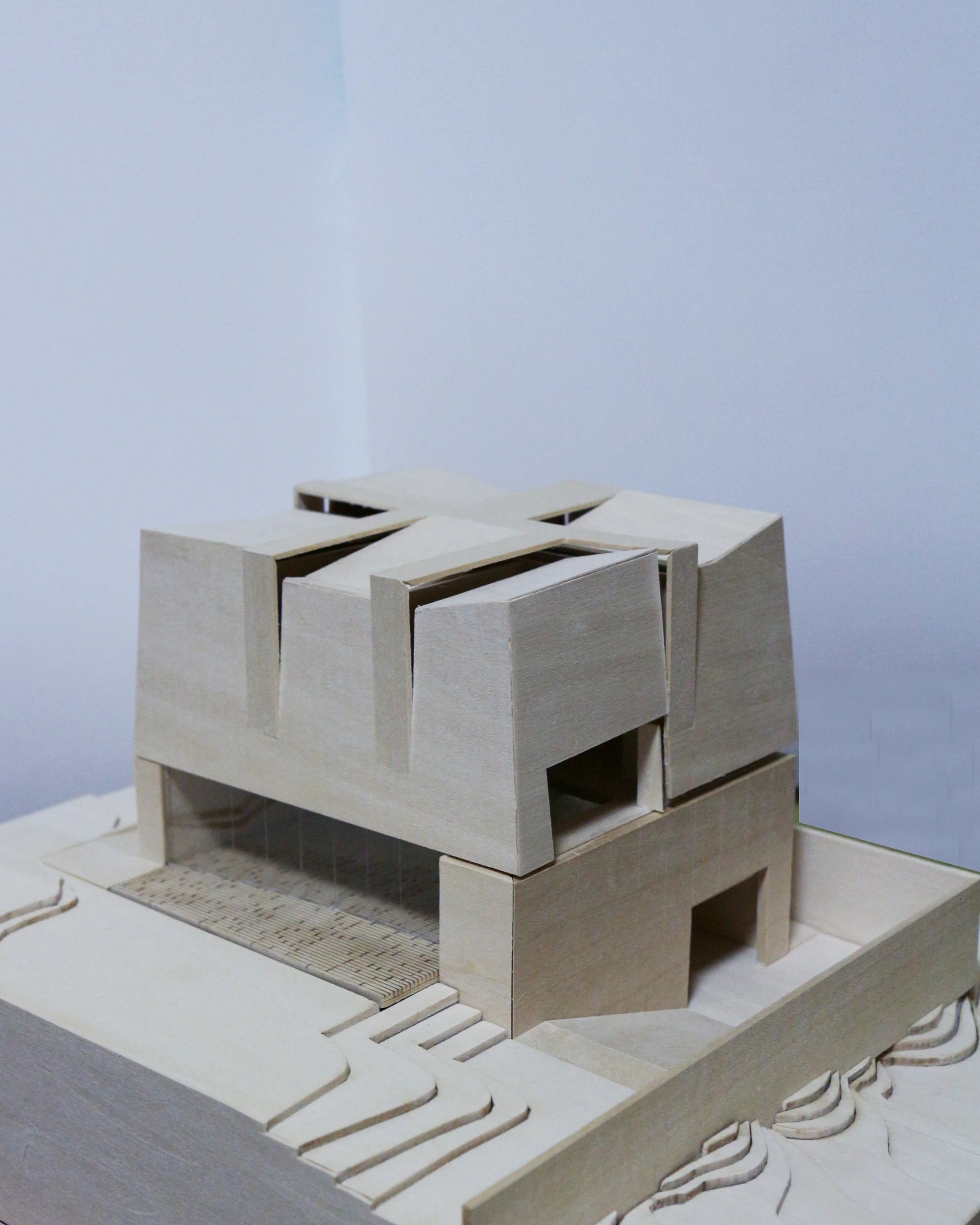
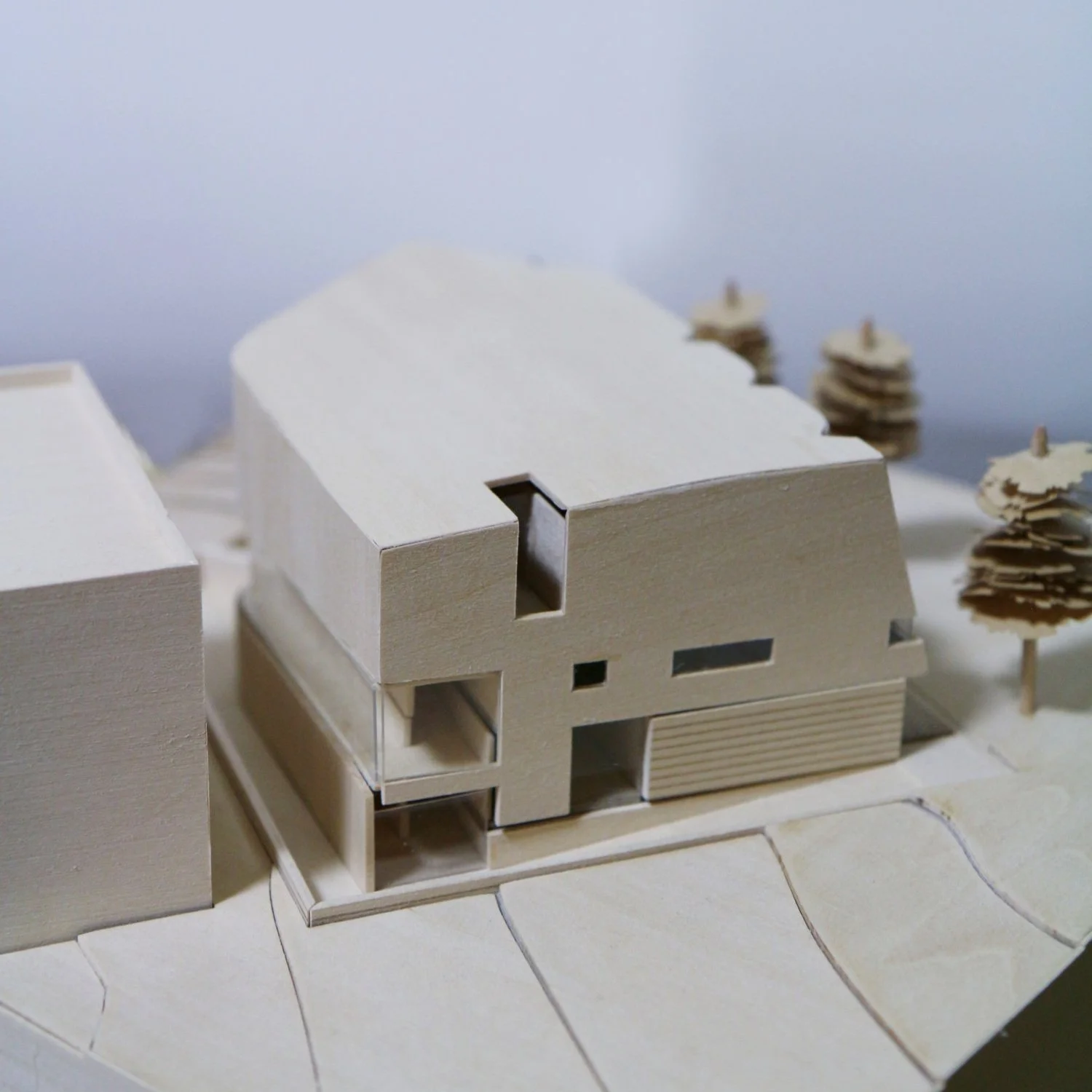
In(In) is a residential project located in a private community of Westgrove Heights in Silang, Cavite Philippines, that was completed in 2018. Set atop the slopes that overlook Laguna Lake, the site boasts lush greenery, ample light and rich tropical breeze. The client wished to build a guest house that connected seamlessly to the already existing main house and landscape, which was spread across multiple adjacent lots he had acquired and built at different phases. The project called for a contemporary design that showed a personal taste for the current that was deeply grounded in its context.
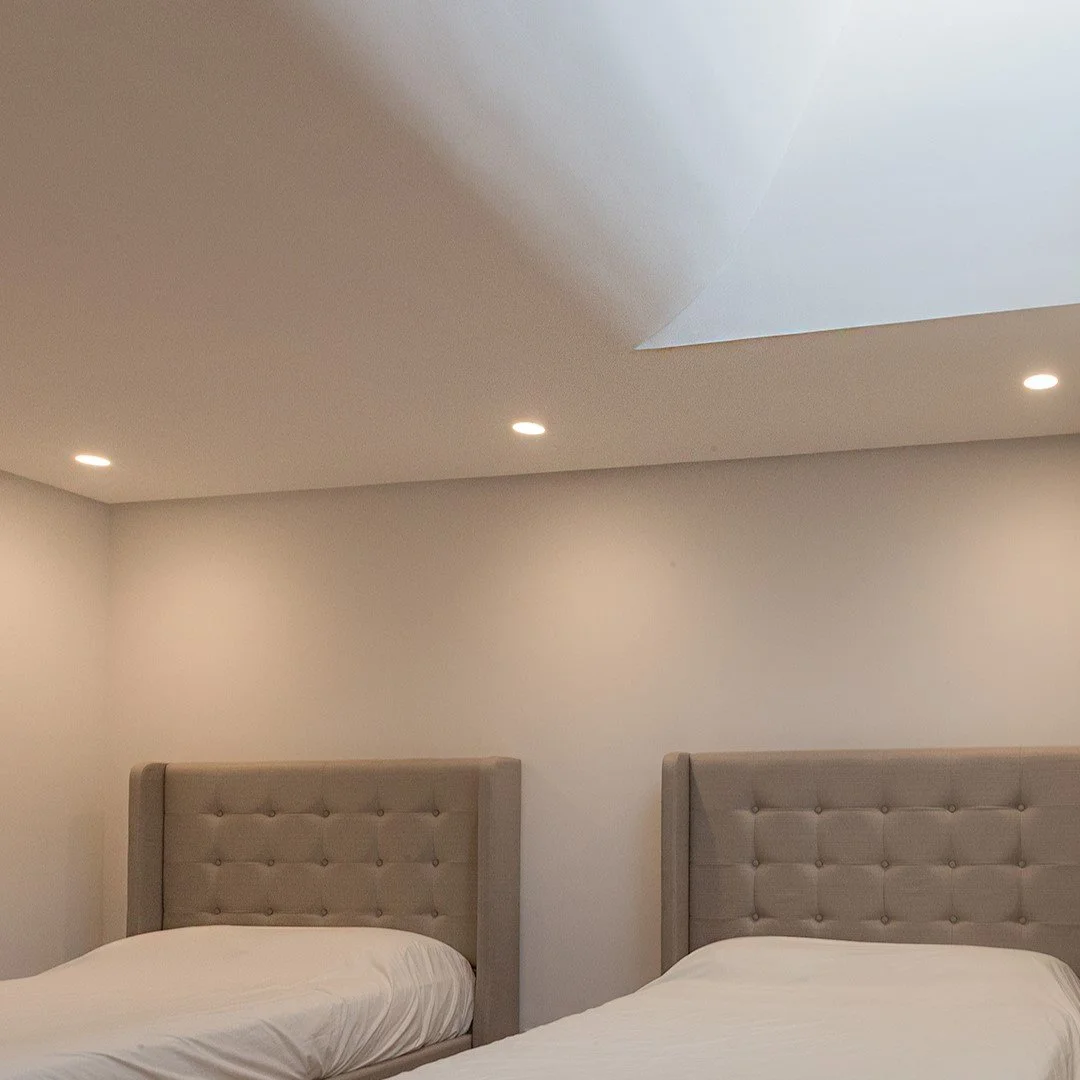
As a guest house, In(In) needed to distinguish two main hosting programs: entertainment and rest. Looking at the design in section, there is a larger, more open base into which a tighter, more divided volume is nestled into. The bottom volume is all about openness to light and air. The main hall and all public programs are located into this base, where the exterior and the interior are less divided and solid walls were removed whenever structurally and materially possible. The main hall was encased with movable floor to ceiling glass frames, to reinforce maximum accessibility and visibility, while at other times completely closing off to serve an exclusively private experience to those within.
The simple diagram of nestling a small volume within a larger volume--In(In)--served to create a unique, site-specific, and program specific design to meet the requested needs in a qualitative manner. Informed by organization of heritage homes that was guided by passive cooling methods and utilizing climate and sun path data, this guest house not only created a contemporary space to take shelter in but also allowed this shelter to fully open up to the outside to provide a richer experience during the temporary stay.
Year : 2018
Location : Cavite, Philippines
Size : 862 ㎡
Status : Completed
Type : Residential
Principal in Charge :
Seojoo Lee (I.f), Dongil Kim (Kyung Hee University), Allie Yeseul Chung(I.f Manila)
Contractor : VRameer Builders Corporation
MEP : Macro-Edge Techno Solutions
Environmental Engineering : Dongil Kim
Record Architect : Phintecstar (Andrea Ruiza N. Amador, Zoilo Renzo N. Amador)
Related Research

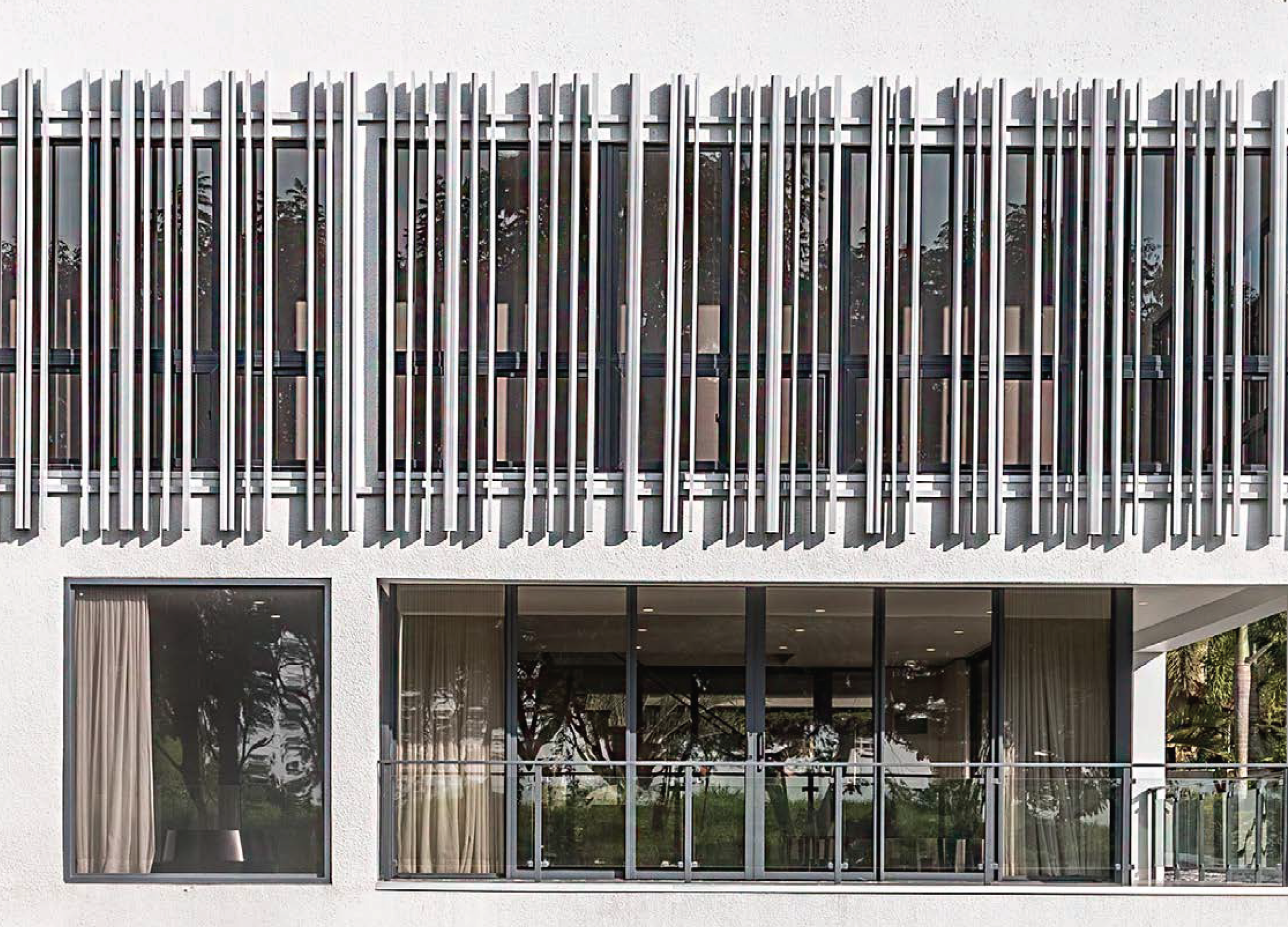
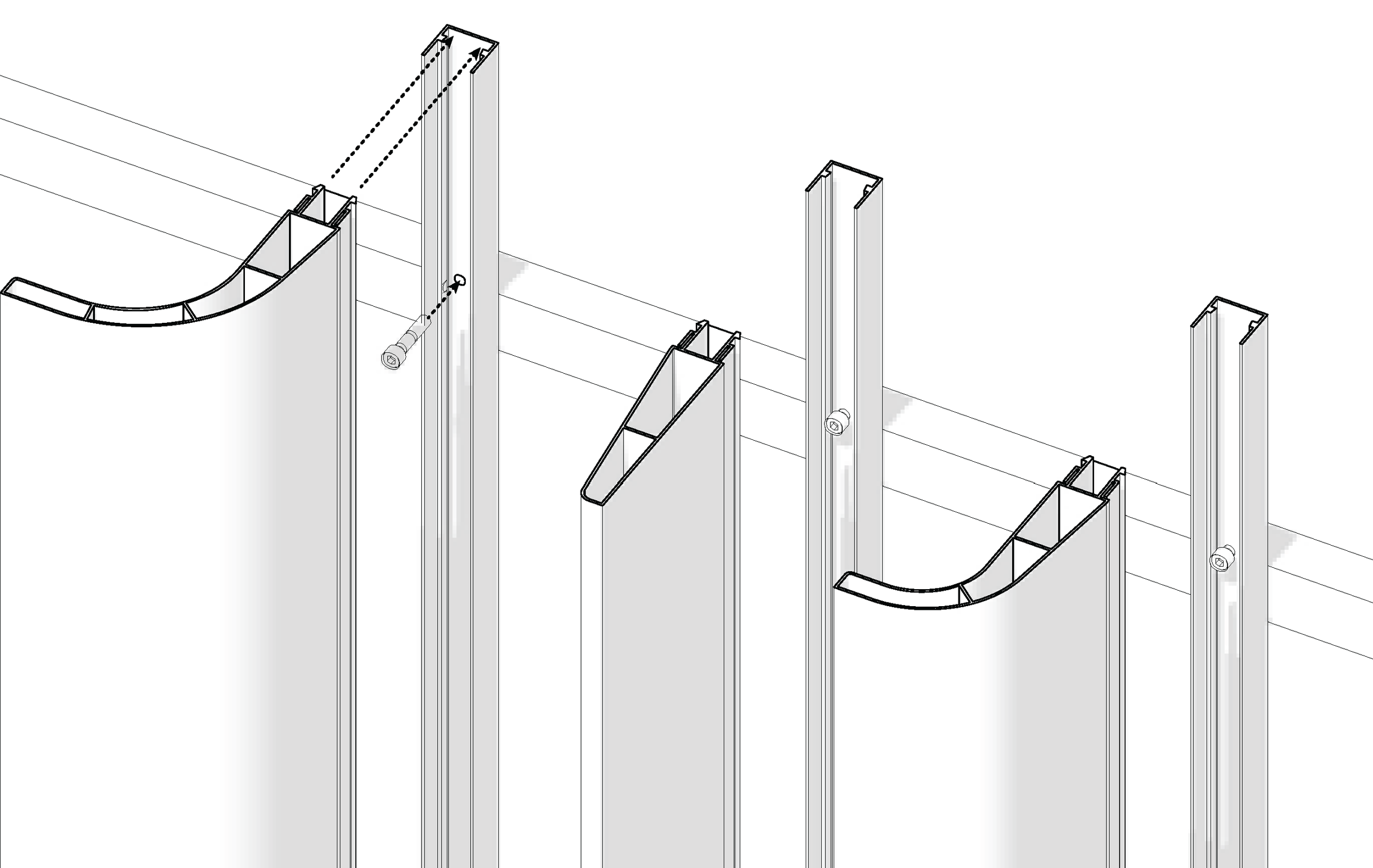
IN(IN) Louver

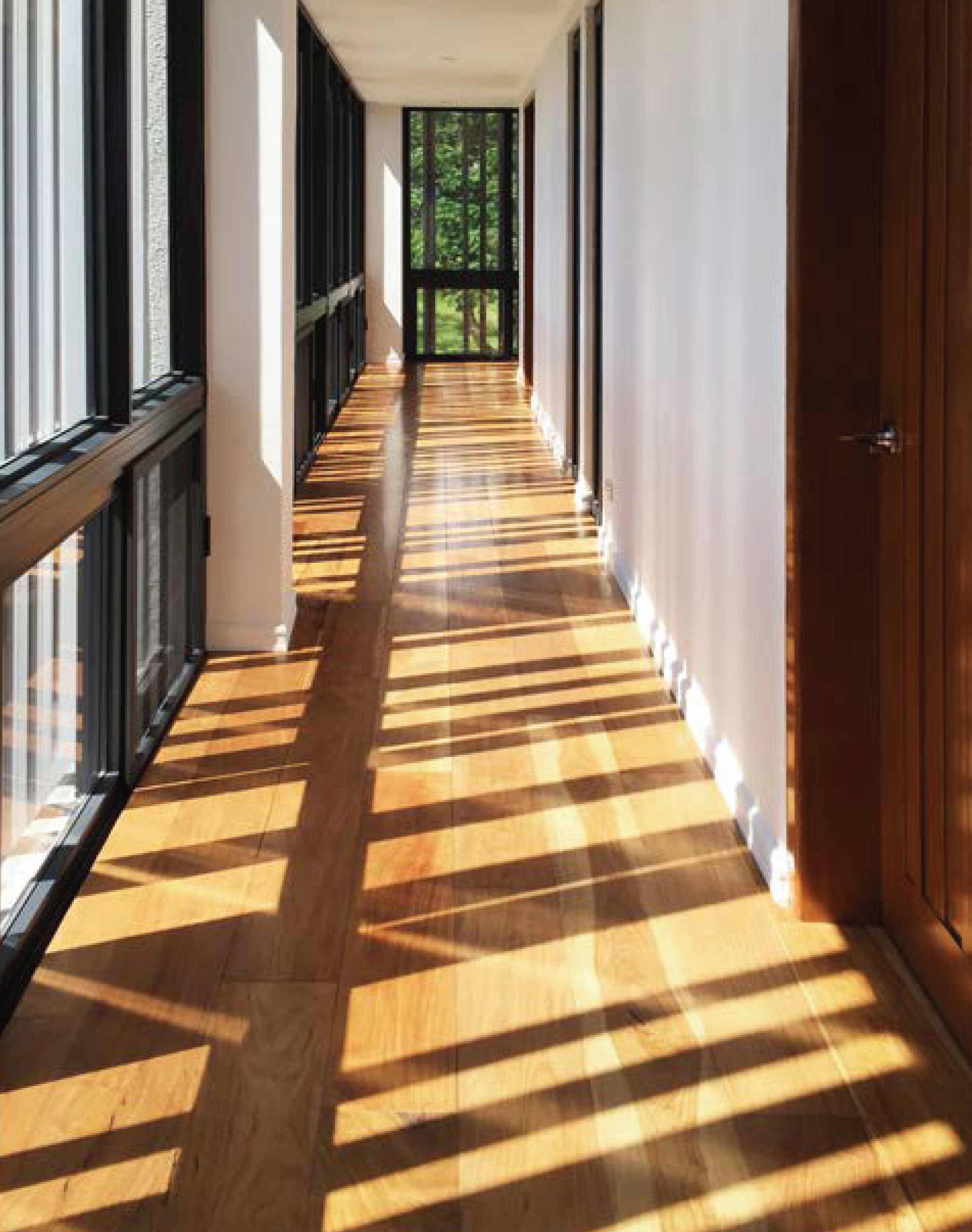
Related Project
In(In) is a residential project located in a private community of Westgrove Heights in Silang, Cavite Philippines, that was completed in 2018. Set atop the slopes that overlook Laguna Lake, the site boasts lush greenery, ample light and rich tropical breeze. The client wished to build a guest house that connected seamlessly to the already existing main house and landscape, which was spread across multiple adjacent lots he had acquired and built at different phases. The project called for a contemporary design that showed a personal taste for the current that was deeply grounded in its context.
As a guest house, In(In) needed to distinguish two main hosting programs: entertainment and rest. Looking at the design in section, there is a larger, more open base into which a tighter, more divided volume is nestled into. The bottom volume is all about openness to light and air. The main hall and all public programs are located into this base, where the exterior and the interior are less divided and solid walls were removed whenever structurally and materially possible. The main hall was encased with movable floor to ceiling glass frames, to reinforce maximum accessibility and visibility, while at other times completely closing off to serve an exclusively private experience to those within.
The simple diagram of nestling a small volume within a larger volume--In(In)--served to create a unique, site-specific, and program specific design to meet the requested needs in a qualitative manner. Informed by organization of heritage homes that was guided by passive cooling methods and utilizing climate and sun path data, this guest house not only created a contemporary space to take shelter in but also allowed this shelter to fully open up to the outside to provide a richer experience during the temporary stay.
Fibrous Bud
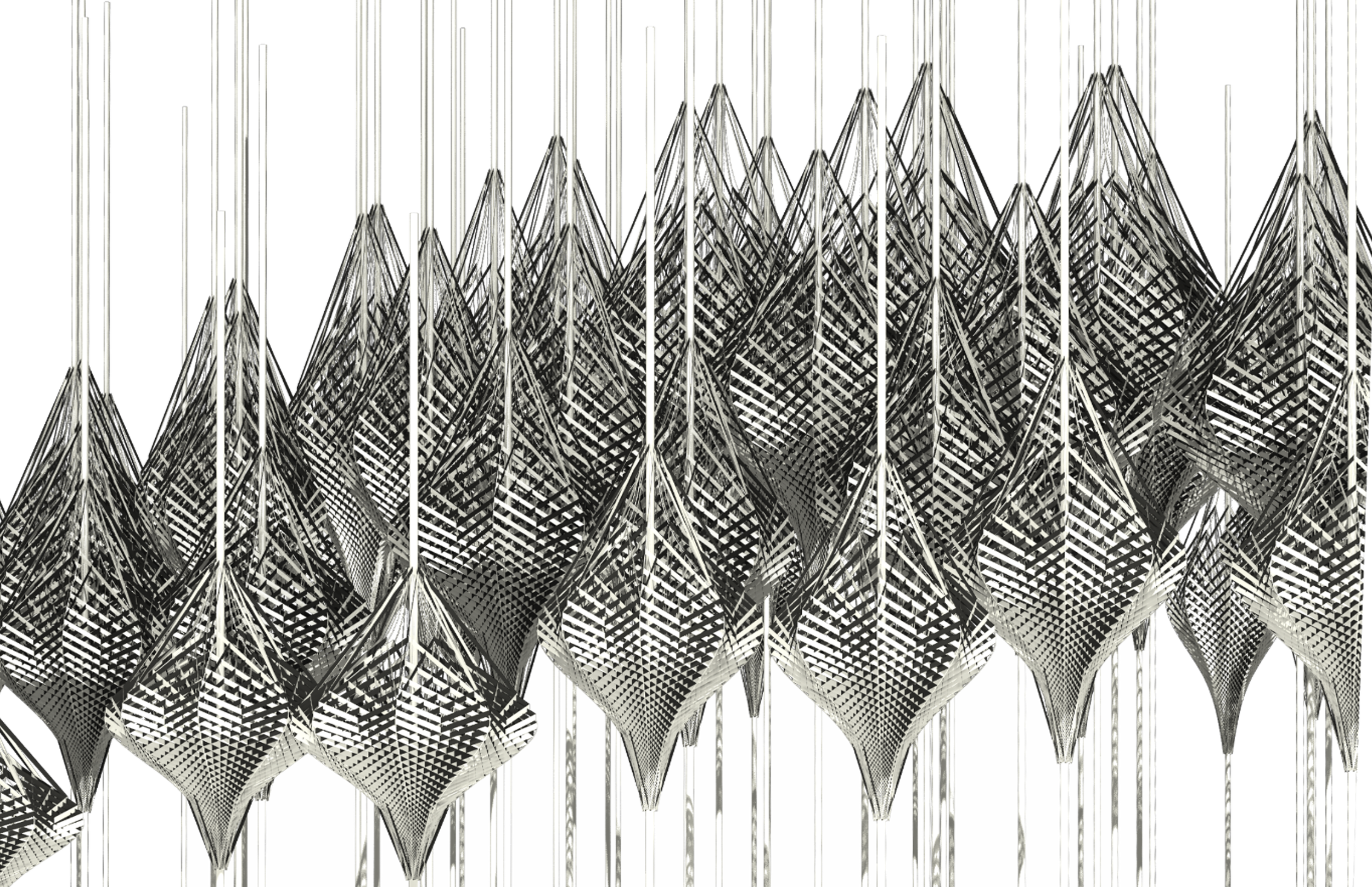
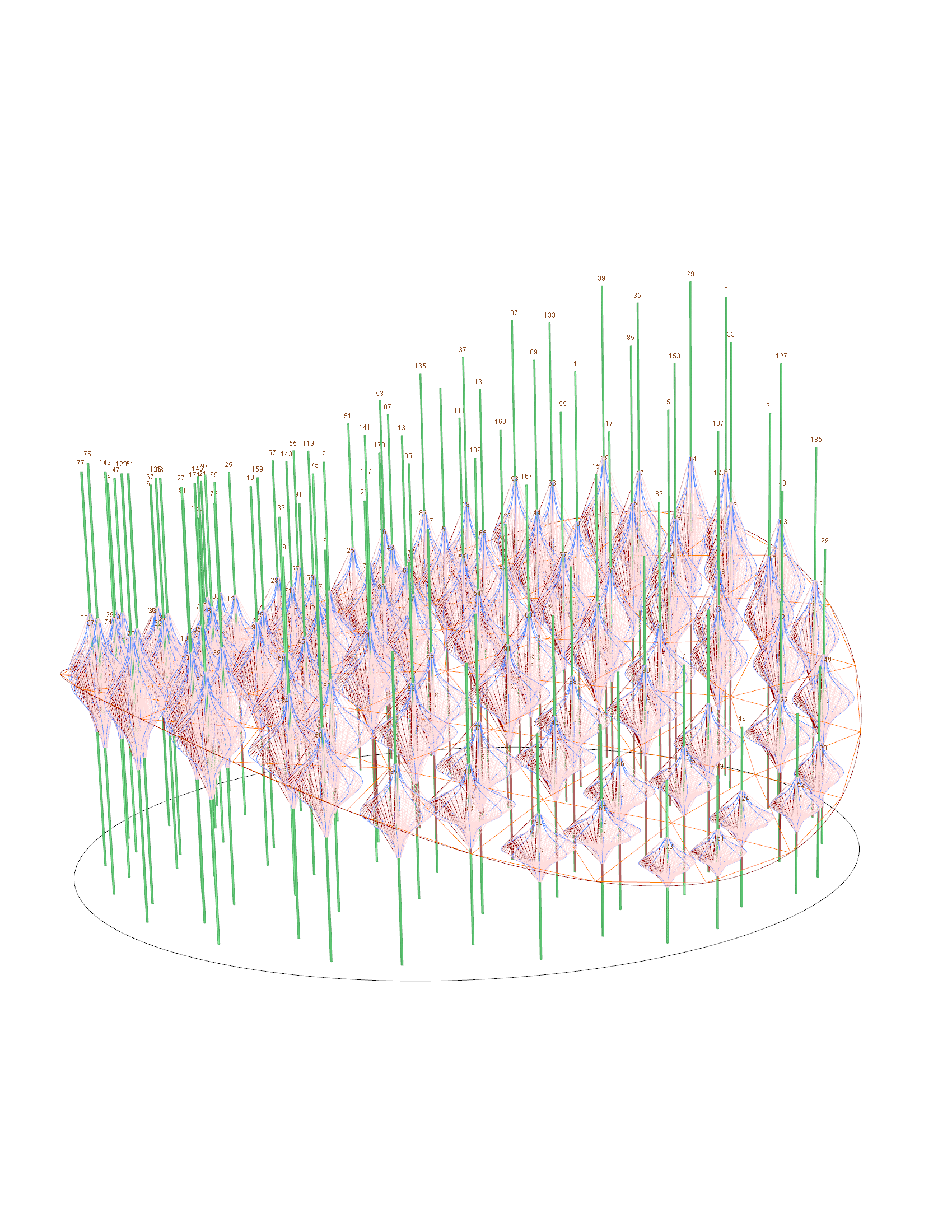
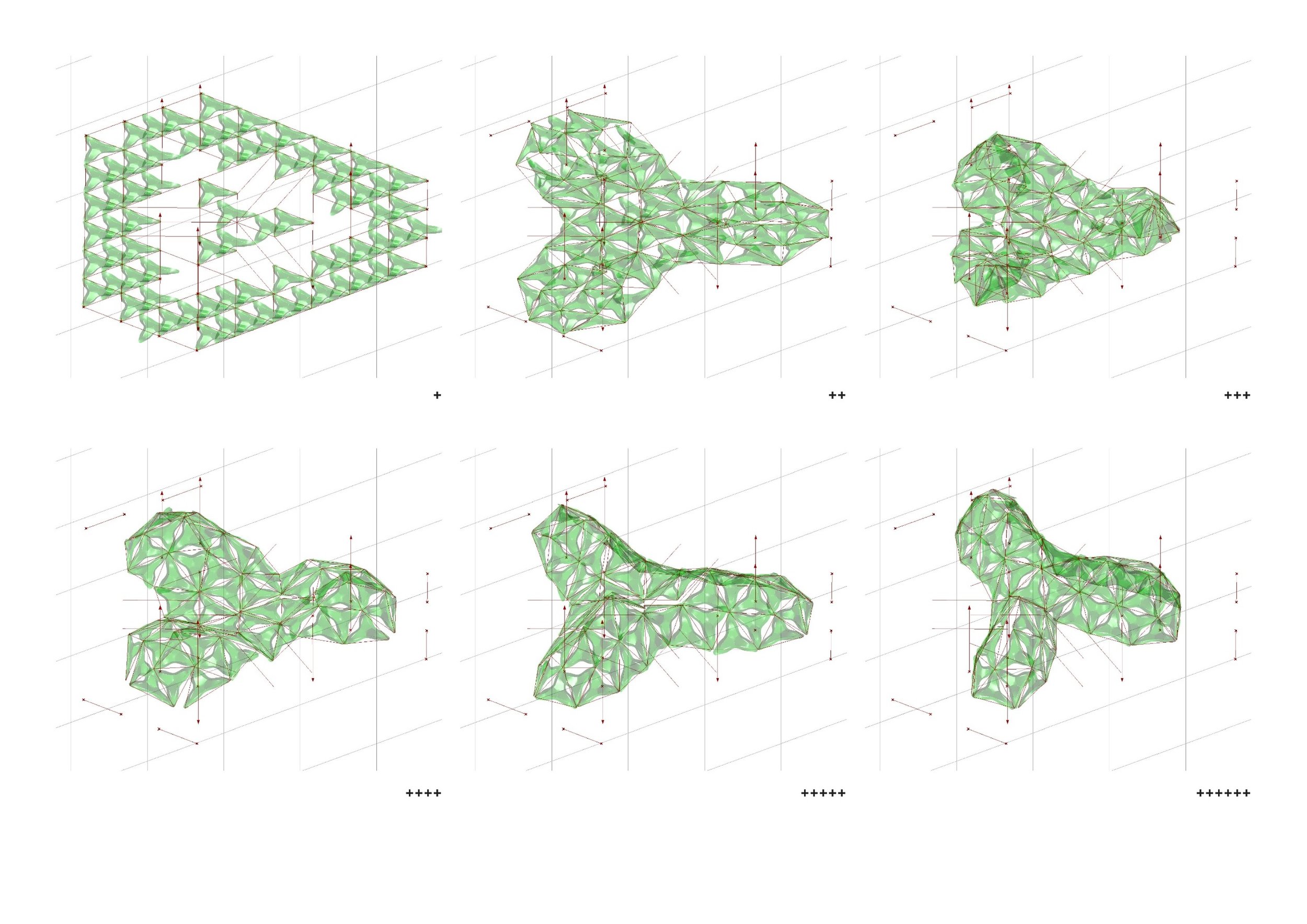
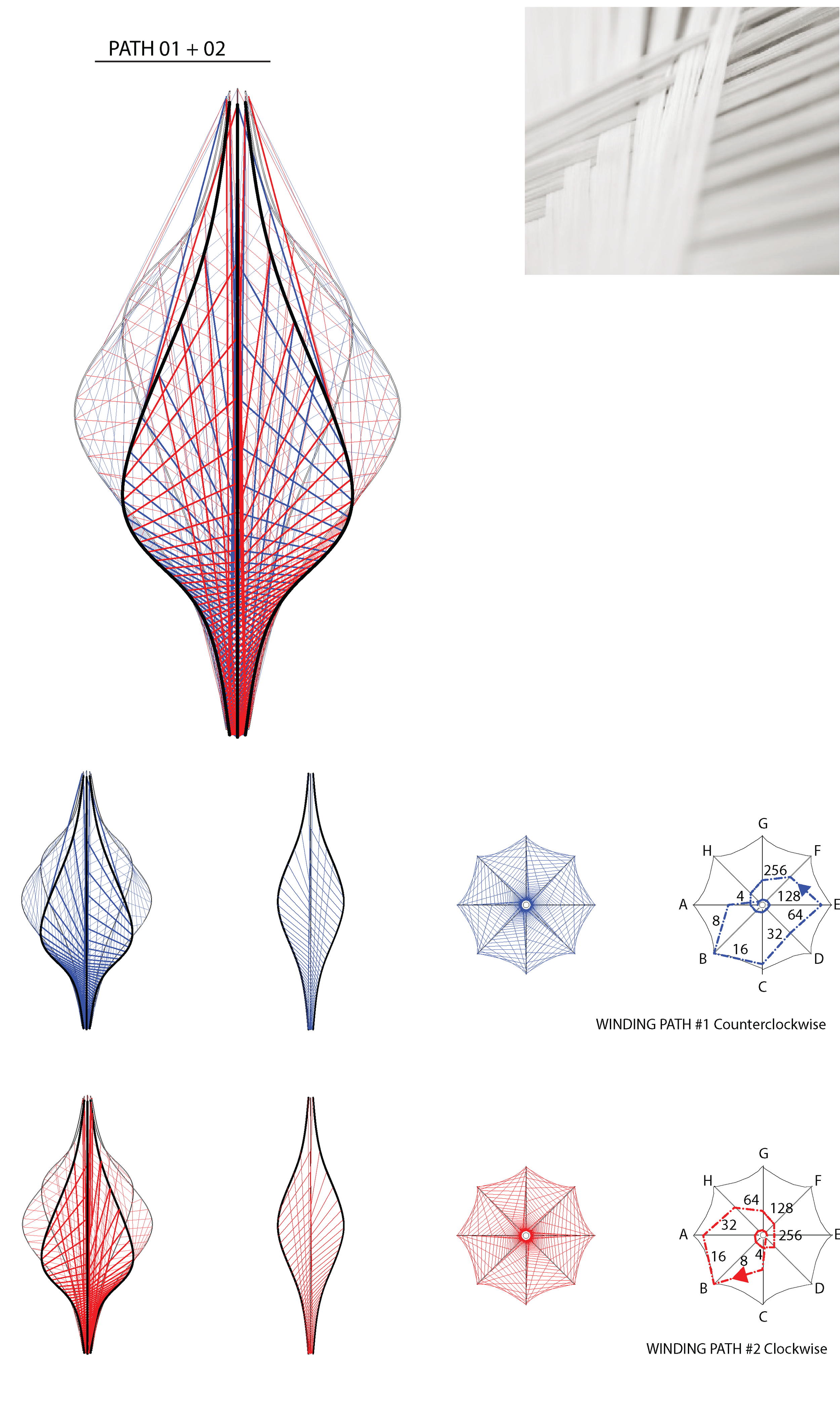
The Lamborghini Road Monument is a case study of fibrous tectonics that combines digital computation, material behavior, and efficient fabrication. The project is composed of pod-like assemblies fabricated by weaving carbon and glass fiber threads around a reusable formwork made of bending-active carbon-fiber rods. This flexible formwork can be adjusted into various shapes and lengths, allowing the system to respond to different design conditions while maintaining a simple and efficient construction process.
The project uses physics-based computational modeling to control both the overall form and the individual components required for fabrication. Through automatically generated data, each pod can be produced with accurate dimensions and assembled as part of a larger structural system. Since the prefabricated components can be transported to the site in groups and quickly installed onto a prepared foundation, the construction process minimizes on-site labor and improves efficiency.
Overall, the project demonstrates how digital design and material logic can work together to create a lightweight, adaptable, and repeatable architectural system. Rather than treating form as a fixed object, the proposal explores a soft tectonic process in which computation, fabrication, and material performance are directly connected.
Bundle

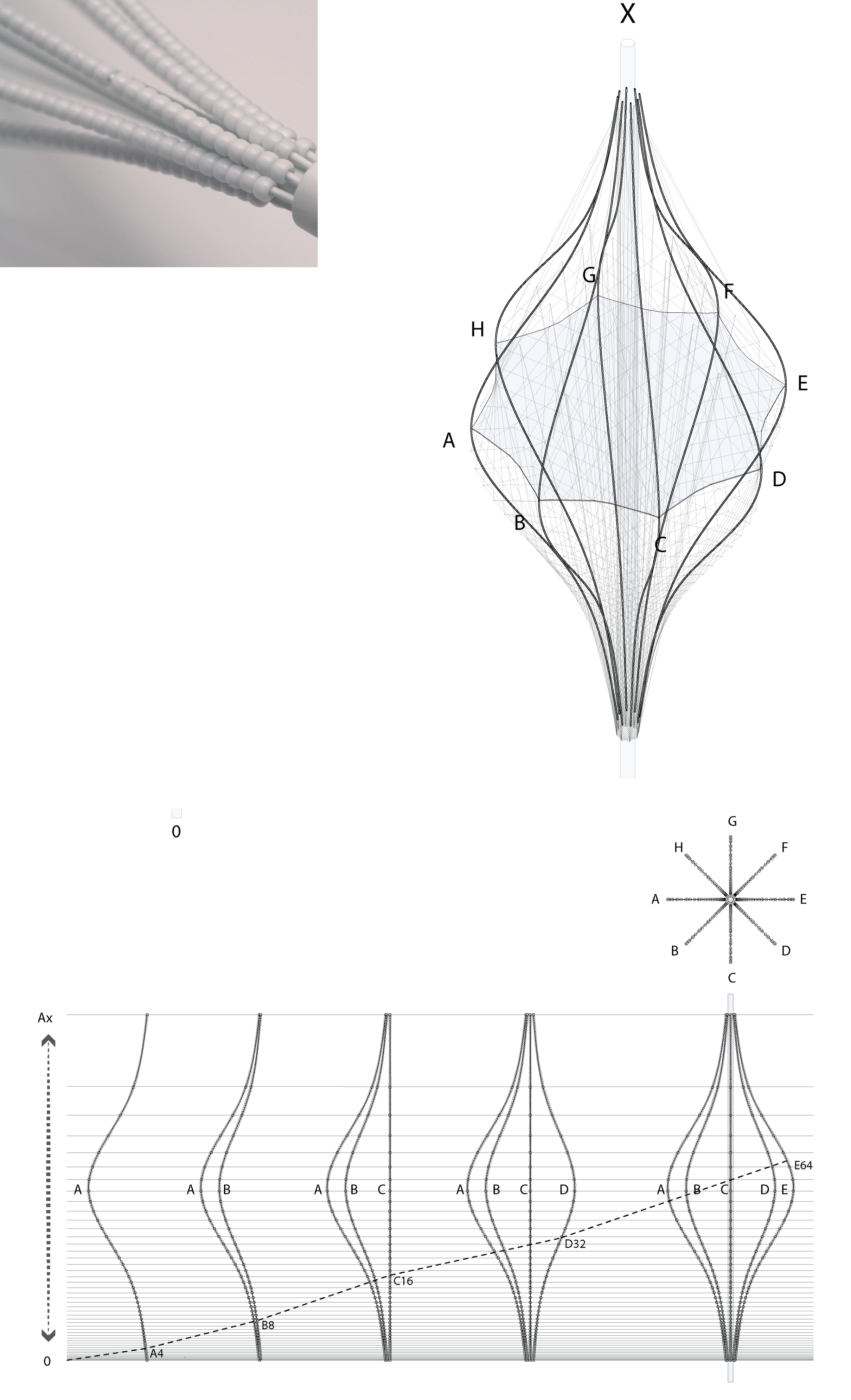
“Bundle House: Home for Five Grandchildren.” Nestled amidst the tranquility of the countryside, this charming abode is designed as a weekend retreat, a haven where cherished family moments are woven into the tapestry of life.
The heart of the Bundle House resides on the first floor, a shared space thoughtfully designed to foster togetherness. Here, a warm and inviting living room welcomes laughter and conversation, while a spacious dining area becomes the backdrop for memorable family feasts.
Venture upstairs to the second floor, and you’ll discover five individual bedrooms, each bathed in the gentle glow of skylight blessings from above. These cozy sanctuaries offer privacy and comfort, ensuring that each grandchild has a personal haven to call their own.But what truly sets the Bundle House apart is its unique architectural design. The building itself is a work of art, a manifestation of familial love and unity. Five distinct cone-shaped structures rise gracefully into the sky, representing each grandchild, and they converge harmoniously at the base, symbolizing the unbreakable bonds of family.
The Bundle House is not just a structure; it’s a testament to the enduring spirit of family, where generations gather to create lasting memories and celebrate the love that binds them together. It’s a place where the past, present, and future of a family come together, like a tightly woven bundle of joy.
Year: 2016
Location : Manila, Philippines
Size : 230 ㎡
Year : 2016
Status : Design Development
Type : Single Family House
Principal in Charge :
Seojoo Lee (I.f), Allie Yeseul Chung (I.f Manila), Dongil Kim (Kyung Hee University)
Wrinkle

Year : 2016
Location : Manila, Philippines
Status : Design Development
Type : Facade Development of the Building
Principal in Charge : Seojoo Lee (I.f), Allie Yeseul Chung (I.f Manila), Dongil Kim (Kyung Hee University)
UP(UP)


“Up(up) House: Elevating Accessibility and Lifestyle”
The “Up(up) House” stands as a testament to innovative design that transcends boundaries. Crafted with utmost consideration for accessibility, this remarkable three-story residence is a sanctuary that seamlessly integrates a ramp that spirals gracefully around the building, offering unrestricted mobility for the owner who uses a wheelchair.
The first floor of the “Up(up) House” is a shared space where the magic of daily life unfolds. The spacious living room beckons with its welcoming embrace, while the adjoining dining room becomes the backdrop for heartwarming family gatherings and cherished meals. Ascending the gently spiraling ramp to the second floor reveals a world of leisure and inspiration. Here, a well-appointed library invites the owner to explore the realms of literature, and a hobby room becomes a canvas for creative expression and passion pursuits. The journey continues to the third floor, where the bedroom awaits, offering tranquility and comfort. With expansive windows that frame captivating views, this space becomes a sanctuary for rest and rejuvenation.
What sets the “Up(up) House” apart is its architectural ingenuity. The ramp, which encircles the building like a ribbon of inclusivity, is a symbol of the owner’s unwavering spirit and the boundless possibilities of accessible design. It is an affirmation that barriers can be overcome, and that the home itself is a source of empowerment and independence. The “Up(up) House” isn’t merely a dwelling; it’s an embodiment of limitless aspirations. It’s a place where accessibility meets elegance, where every corner reflects the owner’s zest for life, and where the power of design transforms challenges into triumphs.
Year : 2016
Location : Manila, Philippines
Size : 240 ㎡
Status : Design Development
Type : Single Family House
Principal in Charge : Seojoo Lee (I.f), Allie Yeseul Chung (I.f Manila), Dongil Kim (Kyung Hee University)
Self-Formation
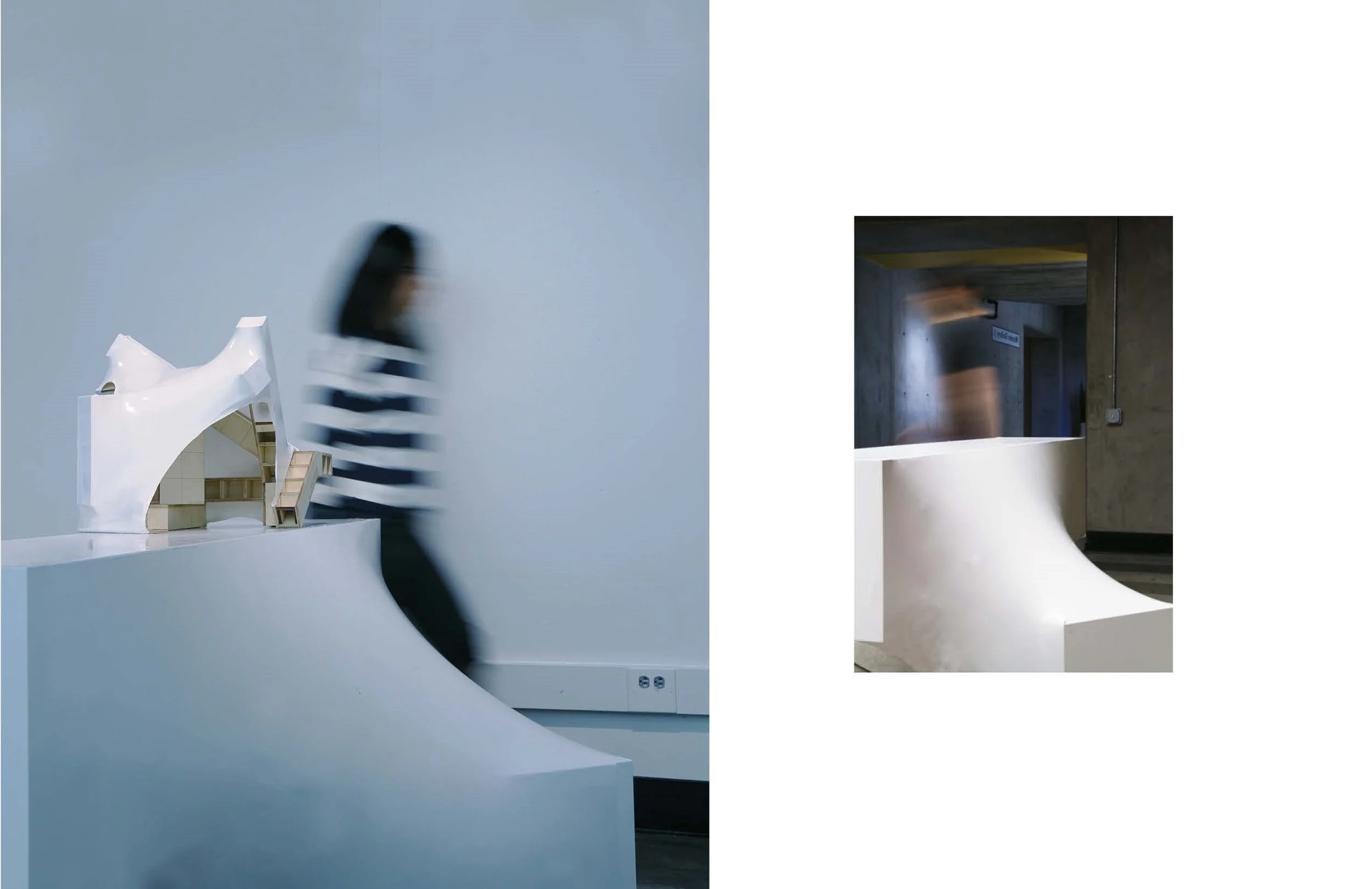
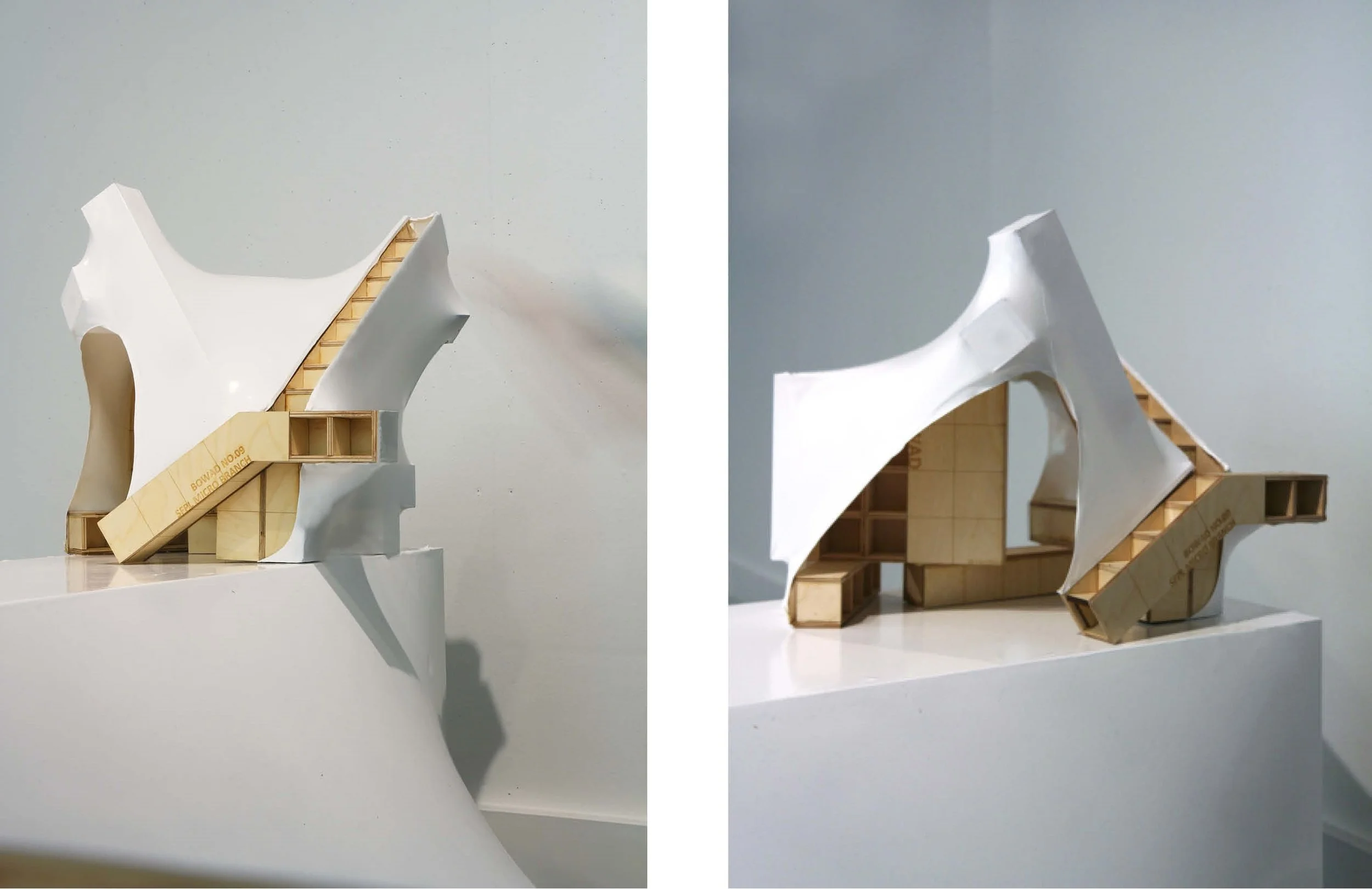
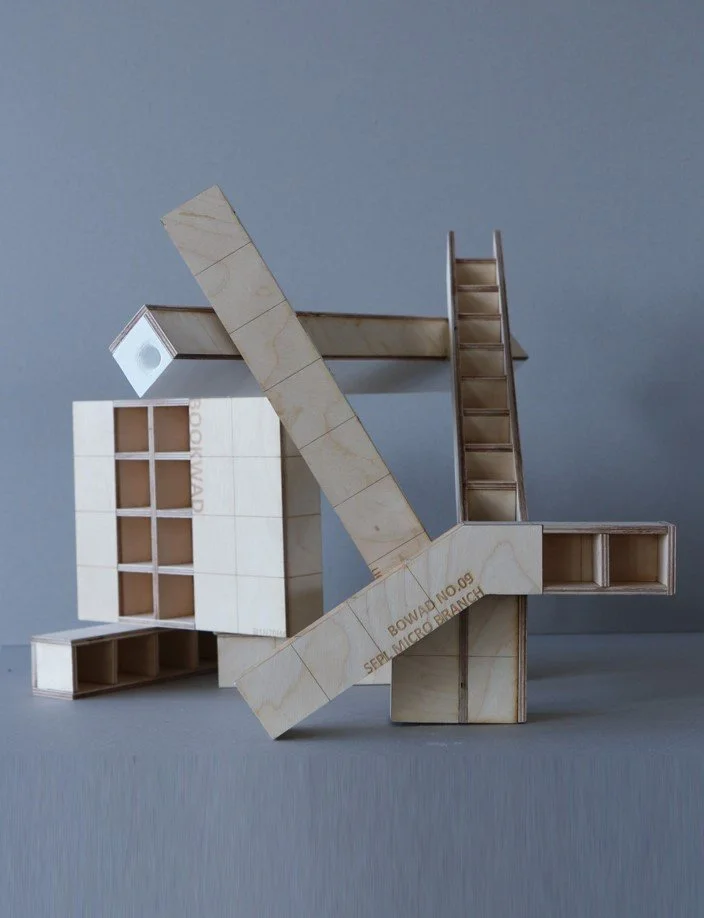
Self-formation is a process that an object or phenomenon is transformed by itself to adapt its shape or character from the external forces. The transition when the nature changes or is changed by the natural impacts such as weathering, erosion, sedimentation, earthquake or volcano effect, can be also called as a self-formation. Not only the natural phenomenon, but also arts and architecture can be also self-formed, which means that the form of arts and architecture is produced unintentionally from the natural phenomenon including gravity or user’s change, although the designer did not purpose the outcome. Interestingly, the external factors and the system how Nature or man-made structure has infl uenced on is very similar and its impact brings similar results on both, even though the intent, scale, life and material of form from Nature and artificial constructions are totally different each other. Through the Branner Research Fellowship, I explore the all the results of self-formation in both Nature, arts and architecture, and understand its process, reasons, controlling factors and external forces.
Related Research