Yecheon Parking Tower


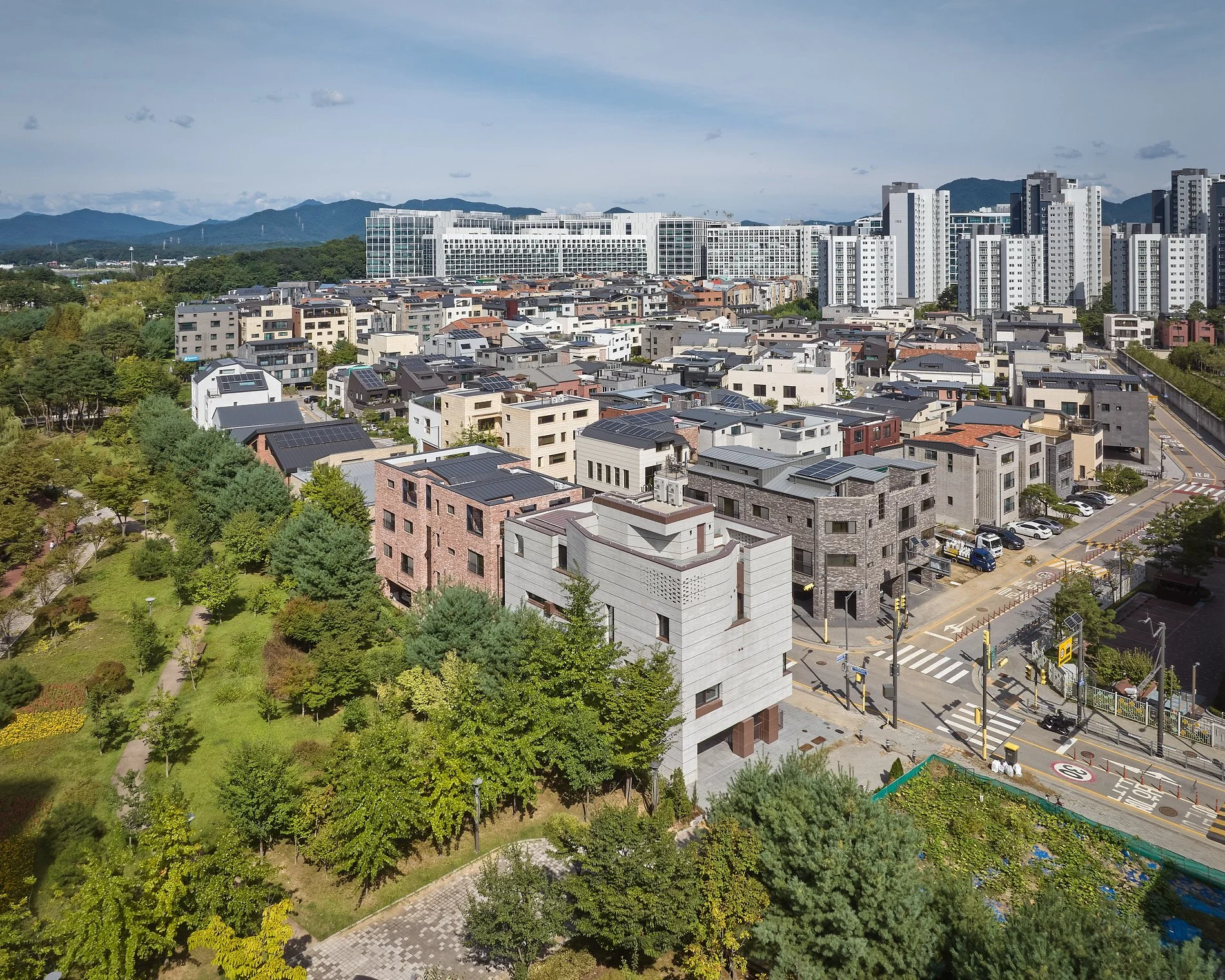
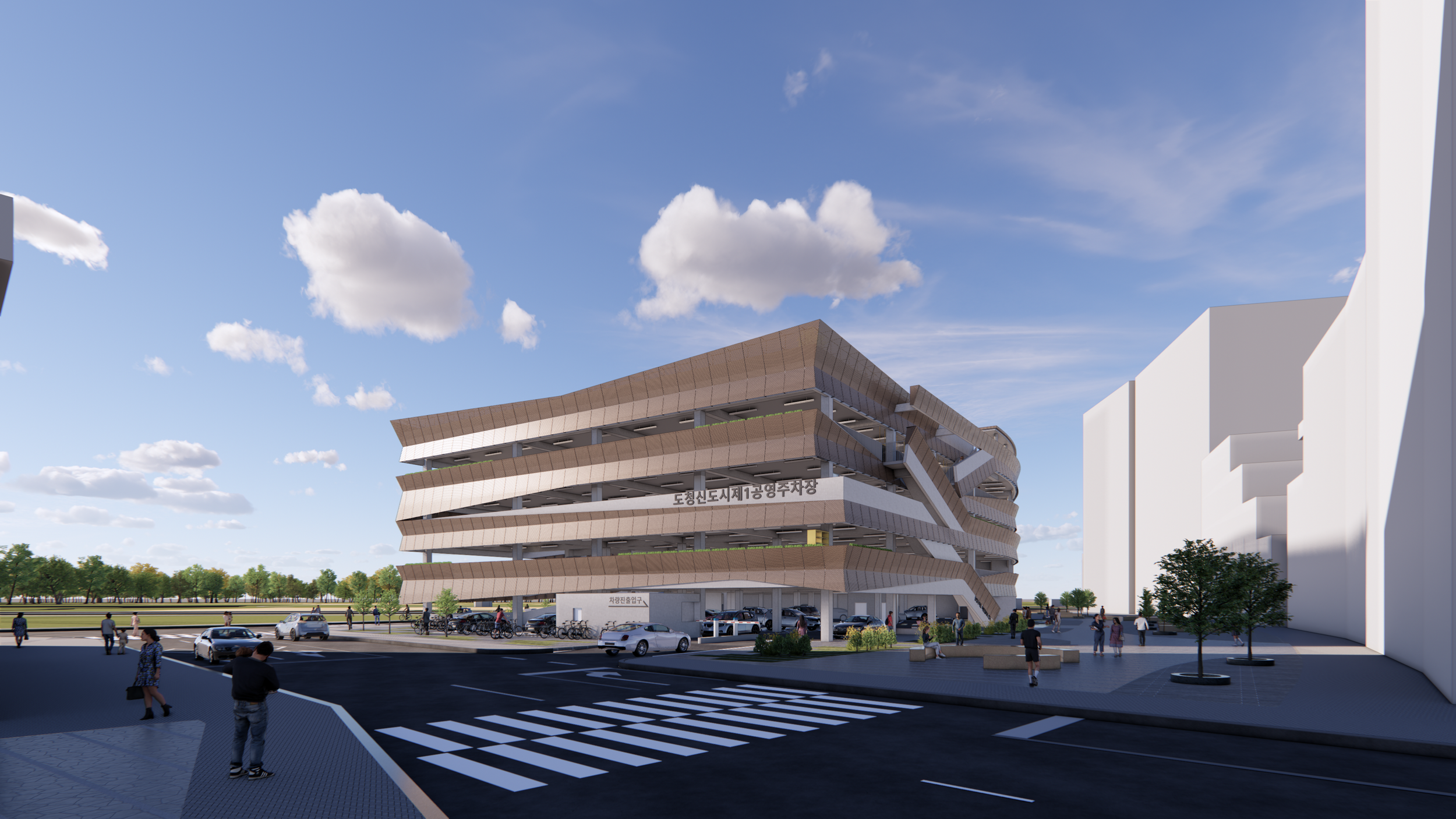
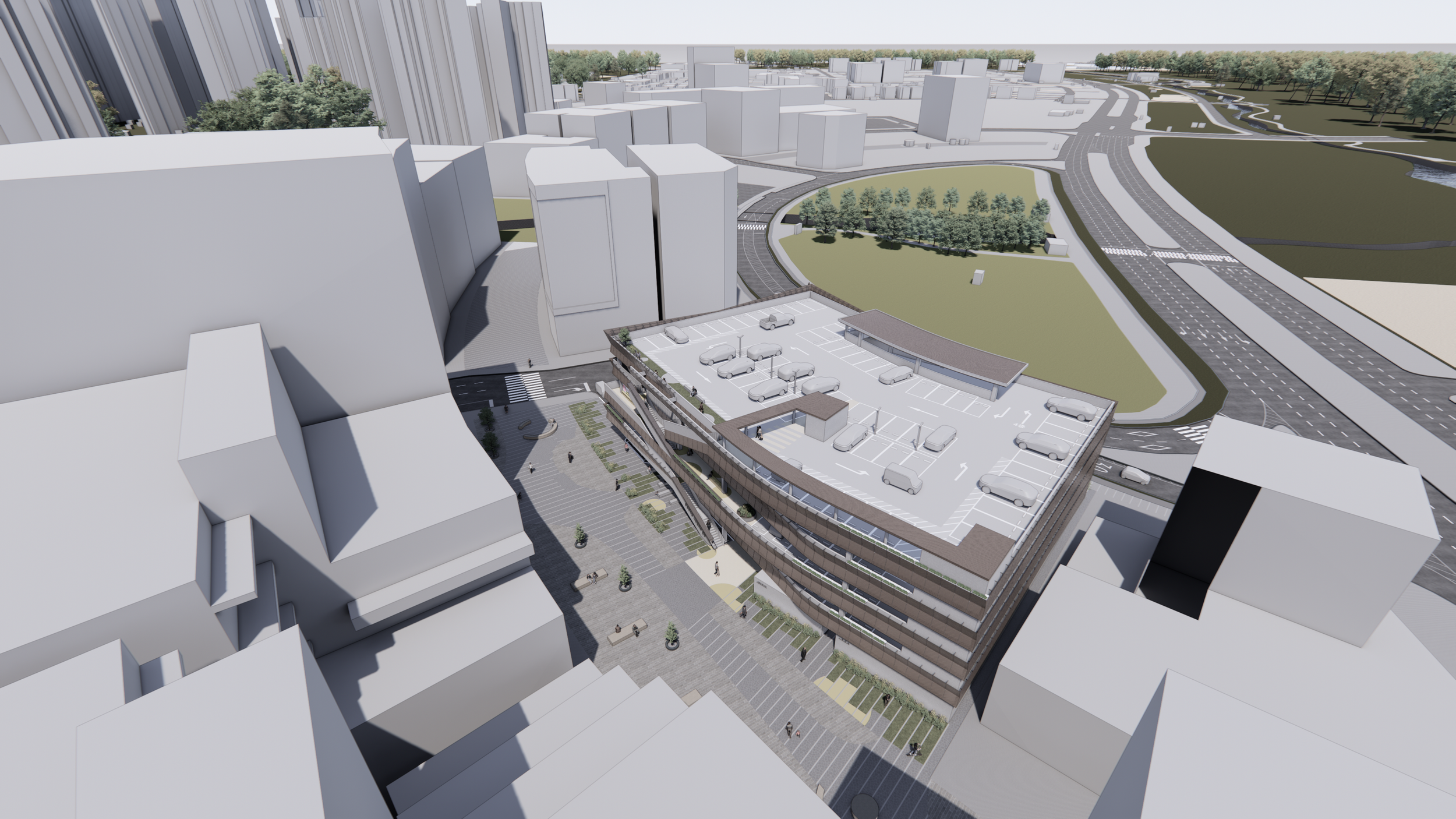
The Gyeongsangbuk-do Provincial Government's new city project aims to accommodate 100,000 residents by 2027, focusing on administrative functions while attracting residential, commercial, and cultural facilities. It features an administrative town on the east side, where the provincial office is located, and a second administrative town on the west side. Residential and commercial facilities between these two areas blend abundant green spaces with urban spaces. The central commercial zone is designed with an ideal spatial structure for easy access to urban functions from surrounding areas.

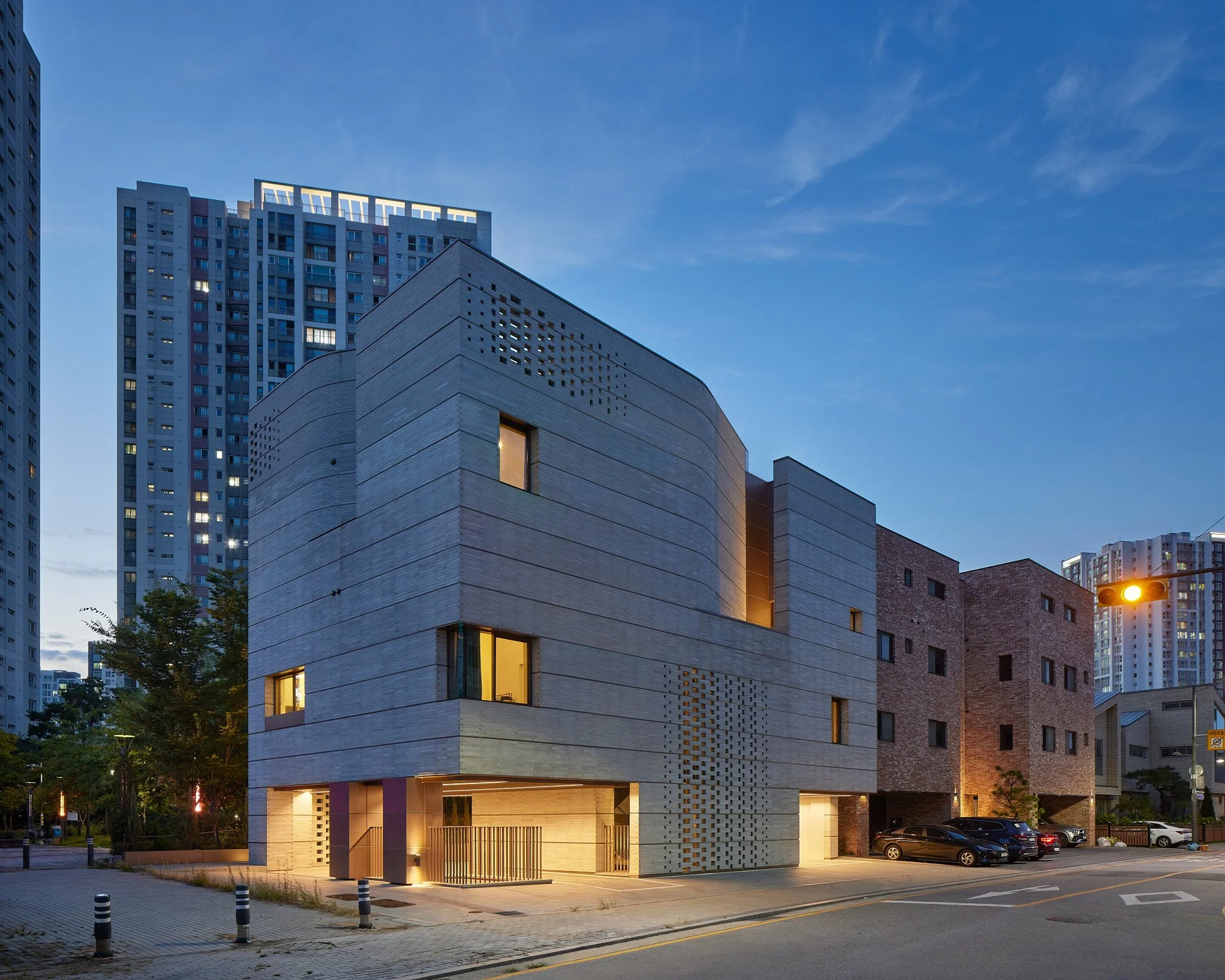
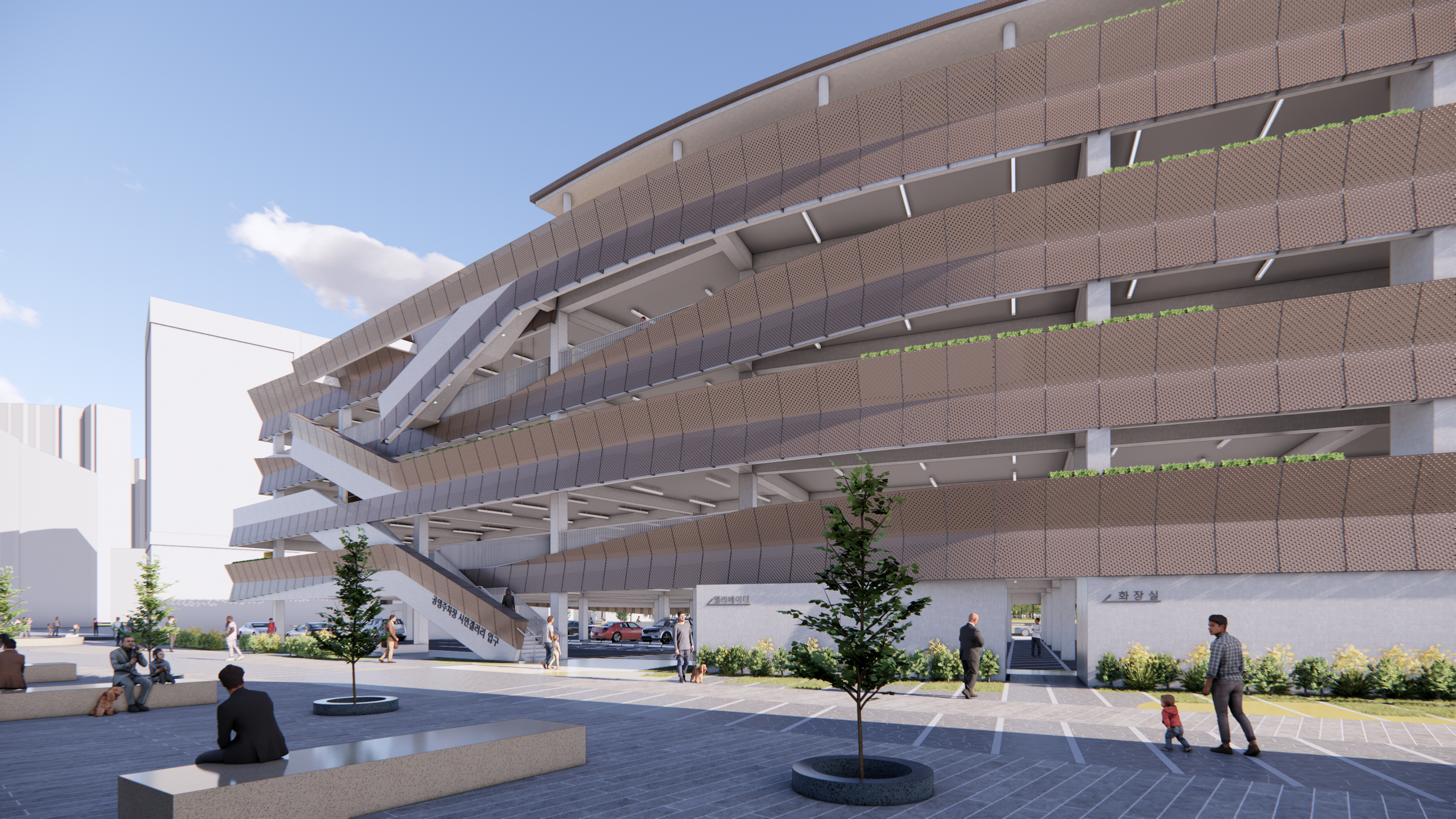
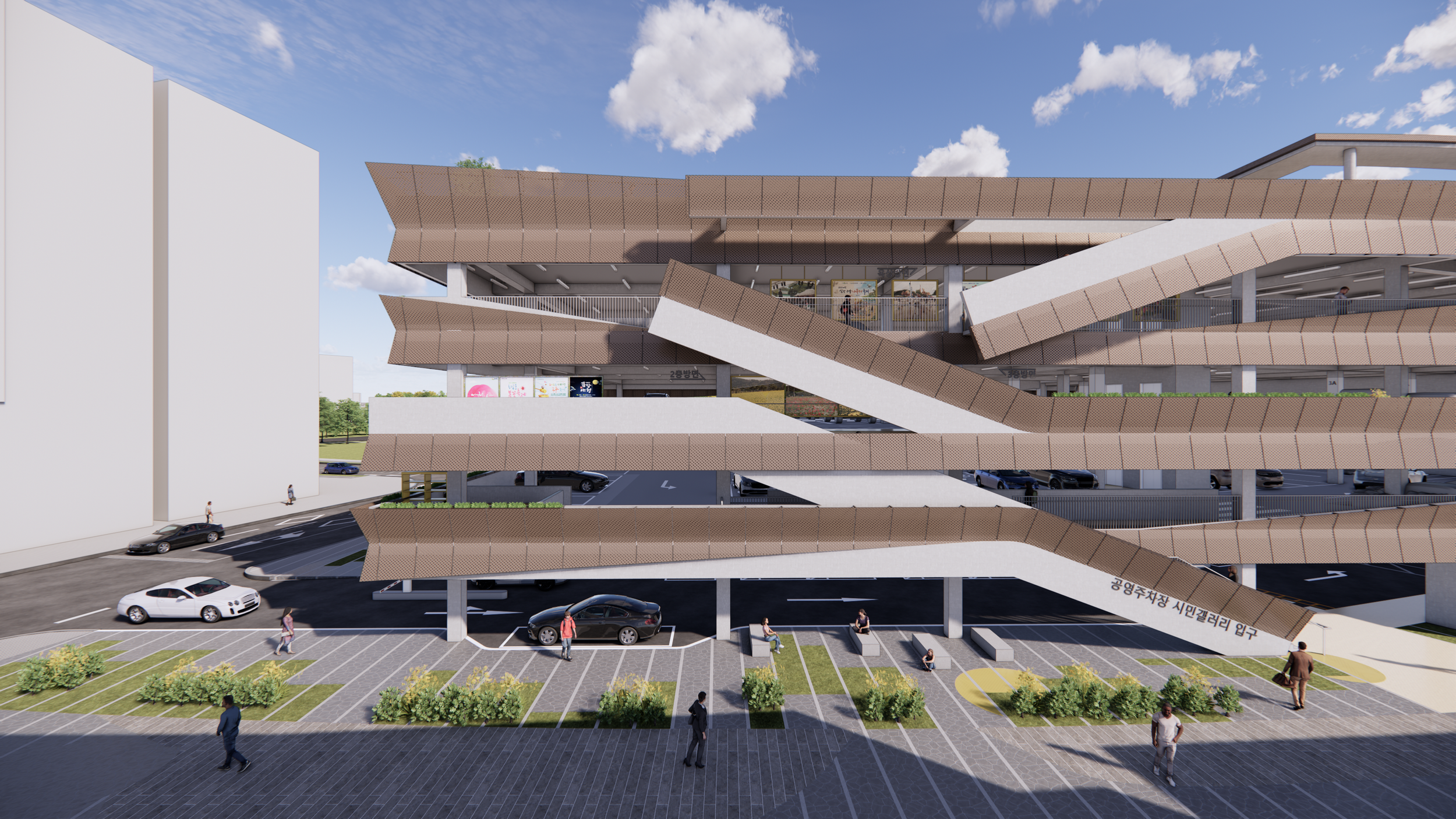
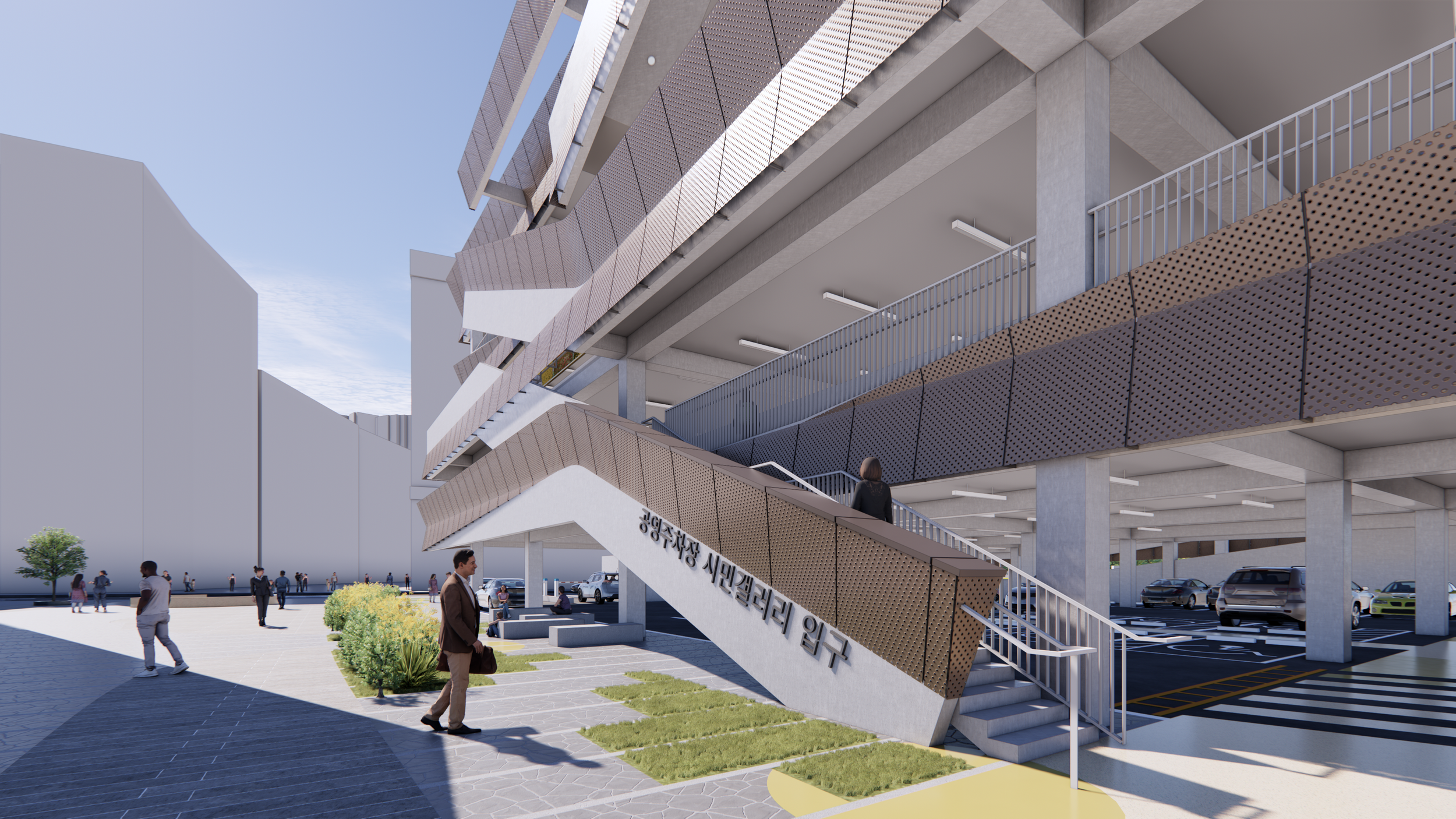
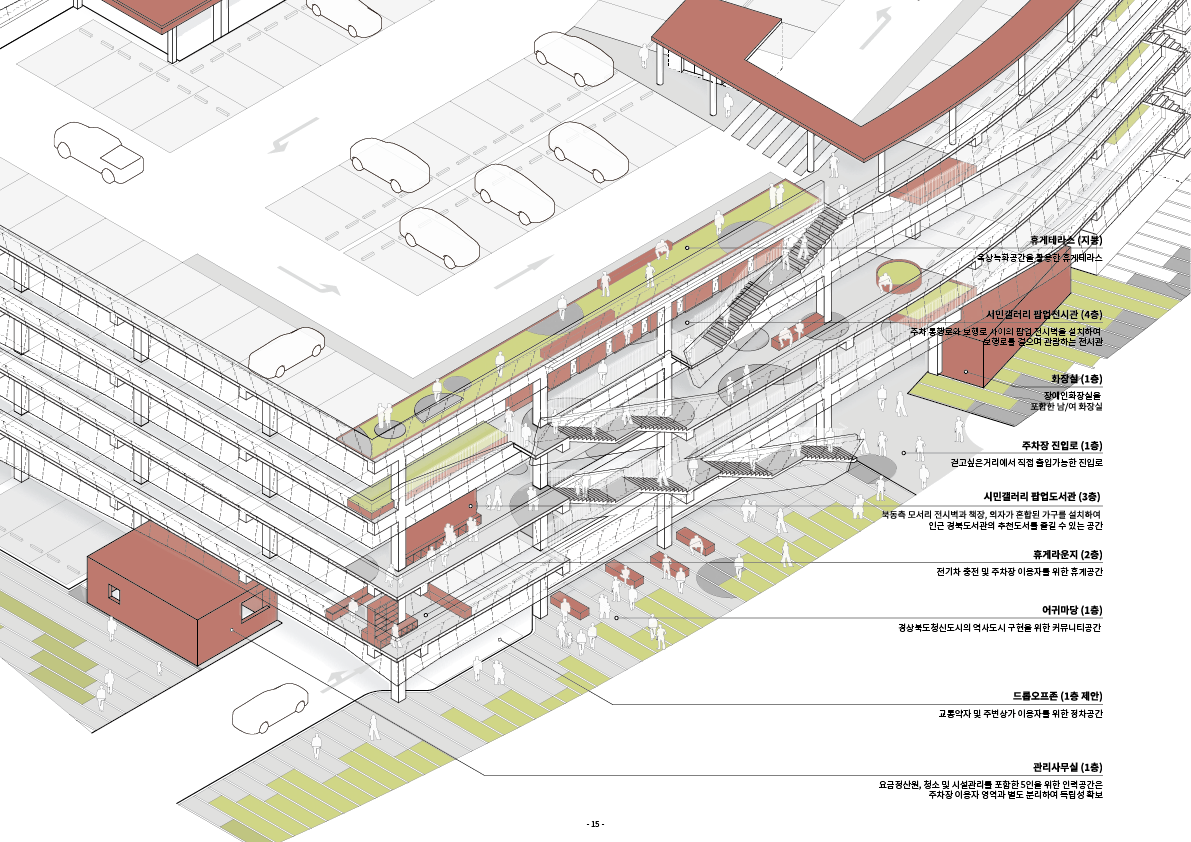
Parking facilities in the new city must efficiently accommodate the movement of residents and visitors while considering the urban environment. To address issues like noise and emissions, the parking plan proposes integrating parking structures with pedestrian pathways and green spaces adjacent to the city. This aims to create a buffer and transitional space using external changes while maintaining the unique functions of parking lots.

Parking structures should support safe and efficient parking and movement for vehicles and pedestrians. Modern and smart systems are considered for efficient vehicle access and utilization of parking spaces. Integration with surrounding pedestrian paths and roads enhances connectivity with the city. Transitional spaces between parking facilities and the city respond to the external environment, interact with the urban environment, and enhance the overall cityscape.

The parking plan aligns with the city's structure, considering efficient connections between vehicles, bicycles, and pedestrians, thereby improving overall transportation systems. It aims to provide citizens with convenient and efficient mobility by harmonizing major roads and walkways within the city.


Year : 2023

Location : Yecheon, Korea

Size : 8,962.66 m²

Status : Competition Entry

Type : Parking Tower

Principal in Charge :

Seojoo Lee, Hyojung Kim (i.f), Dongil Kim (Kyung Hee University), Minho Lee (func. Architects)

Design Team:

Seungil Kim, Soohyun Im (i.f)
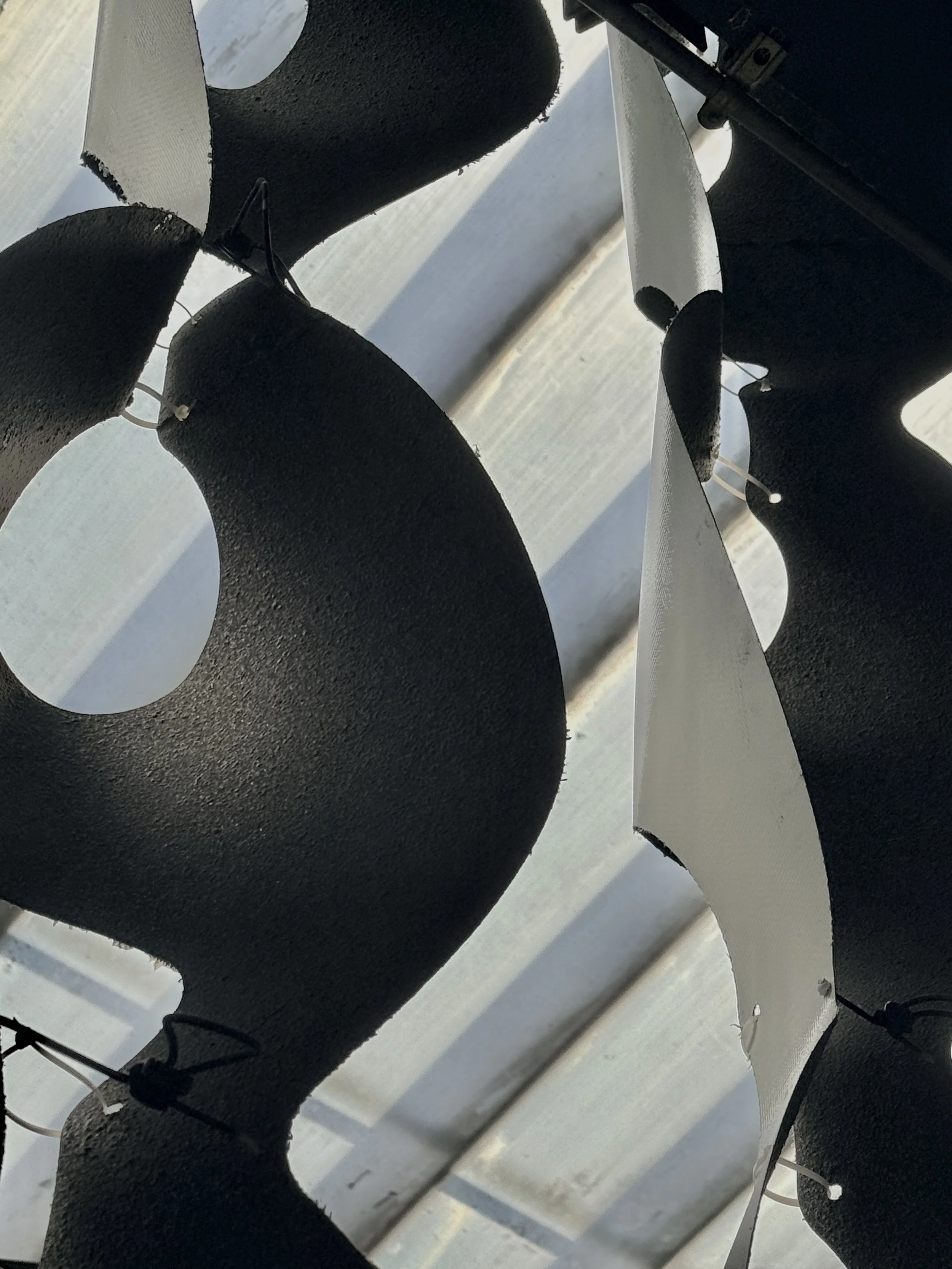
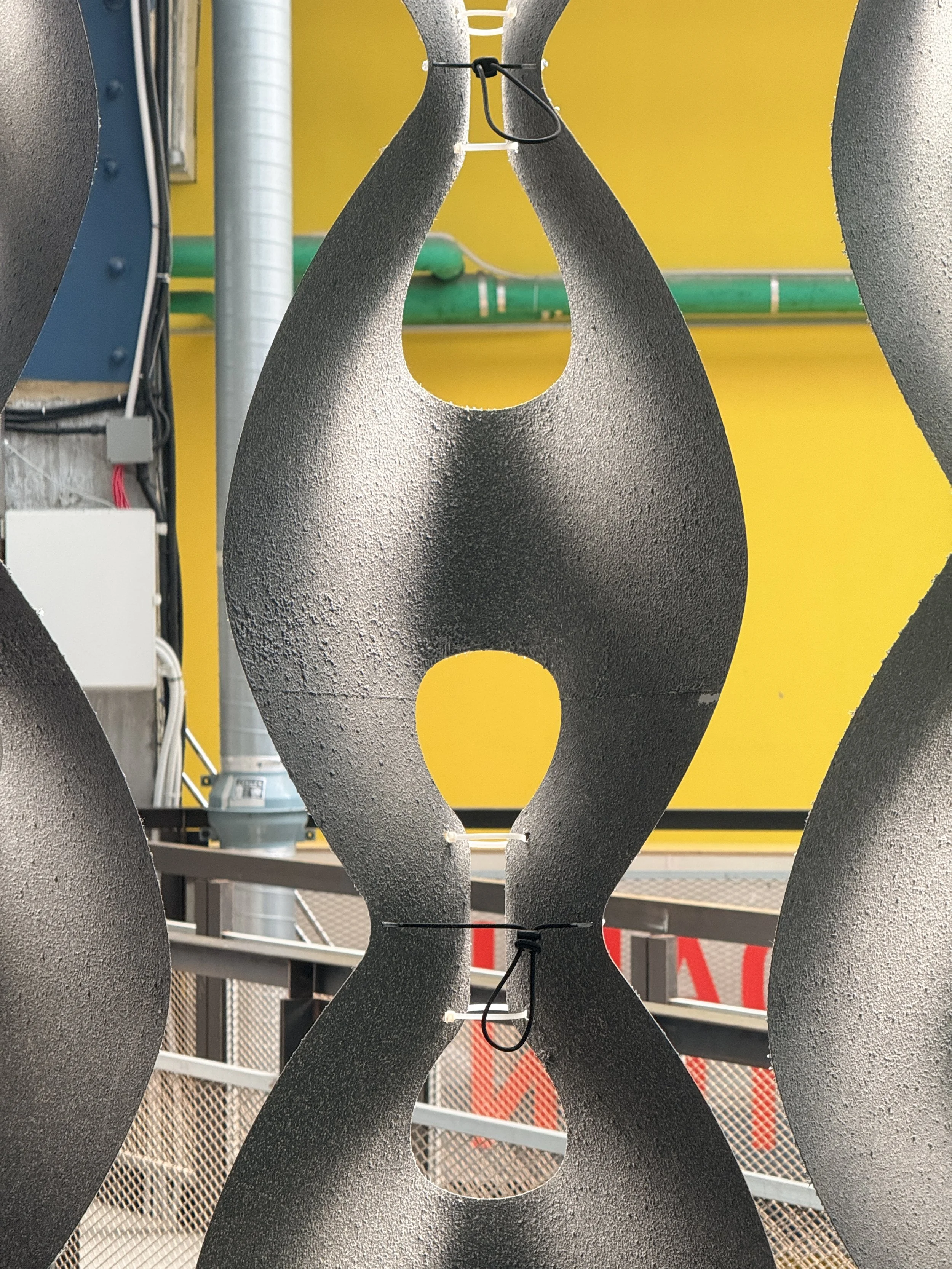
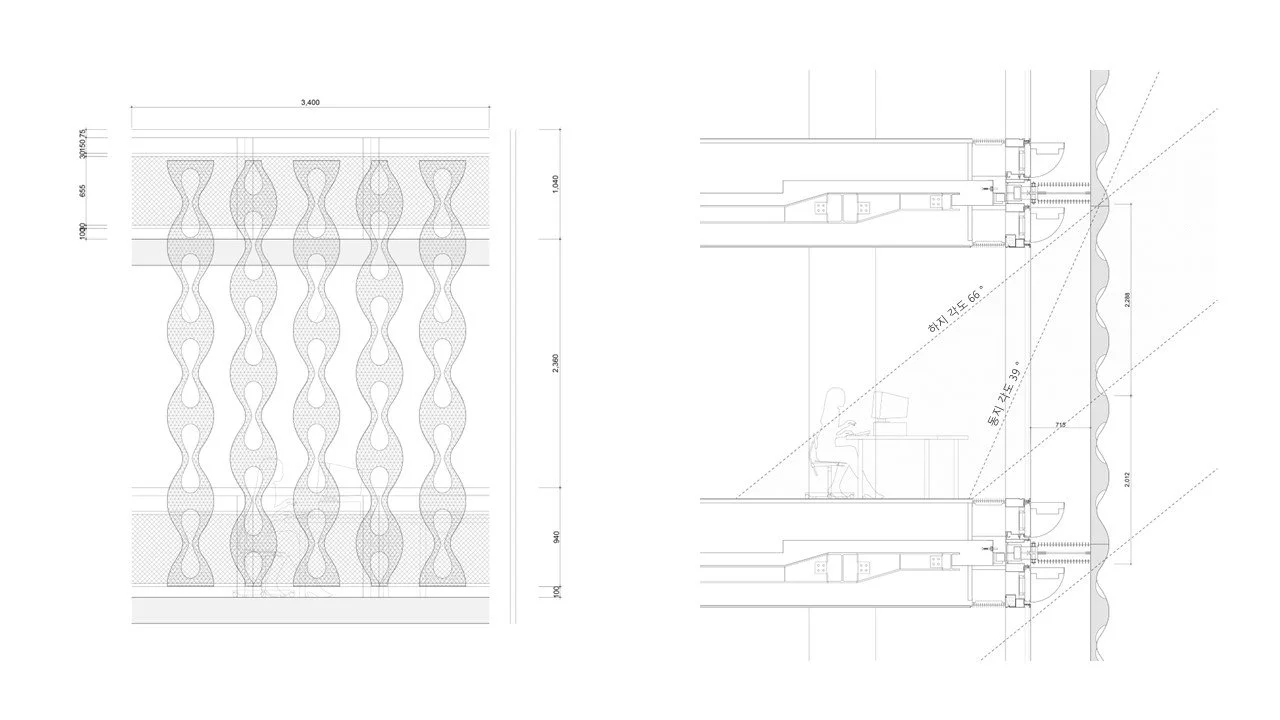
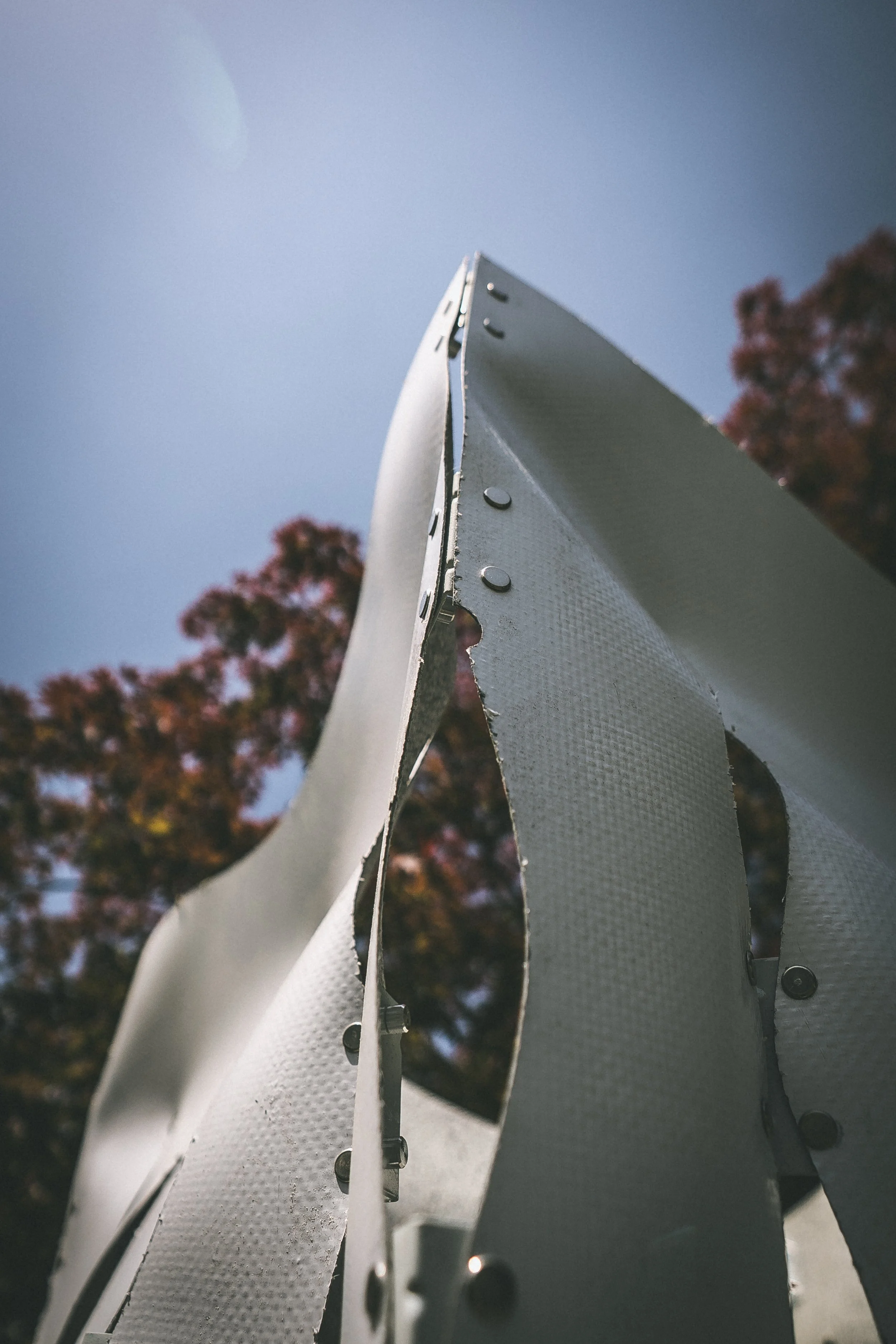
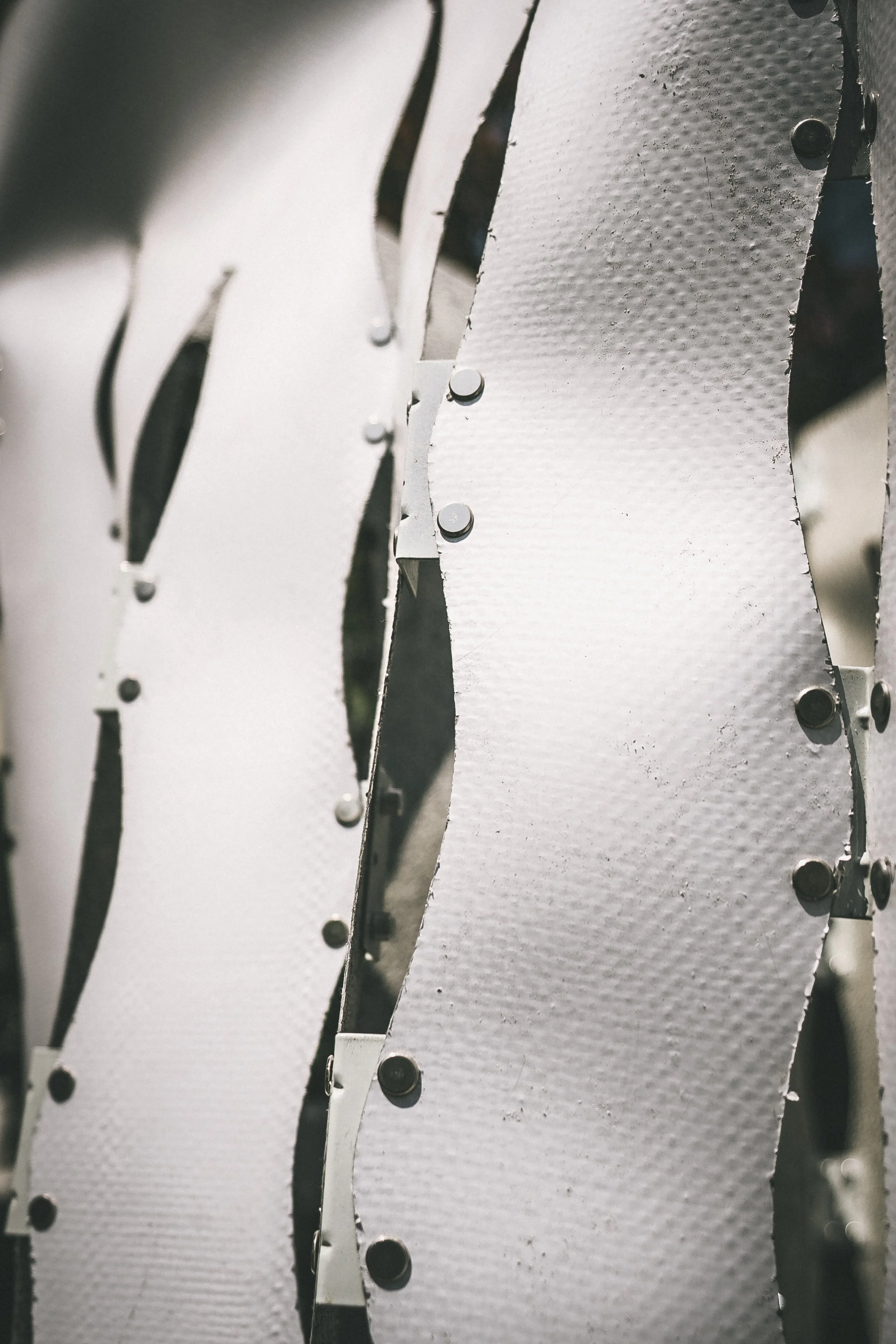
Bending-Active Facade

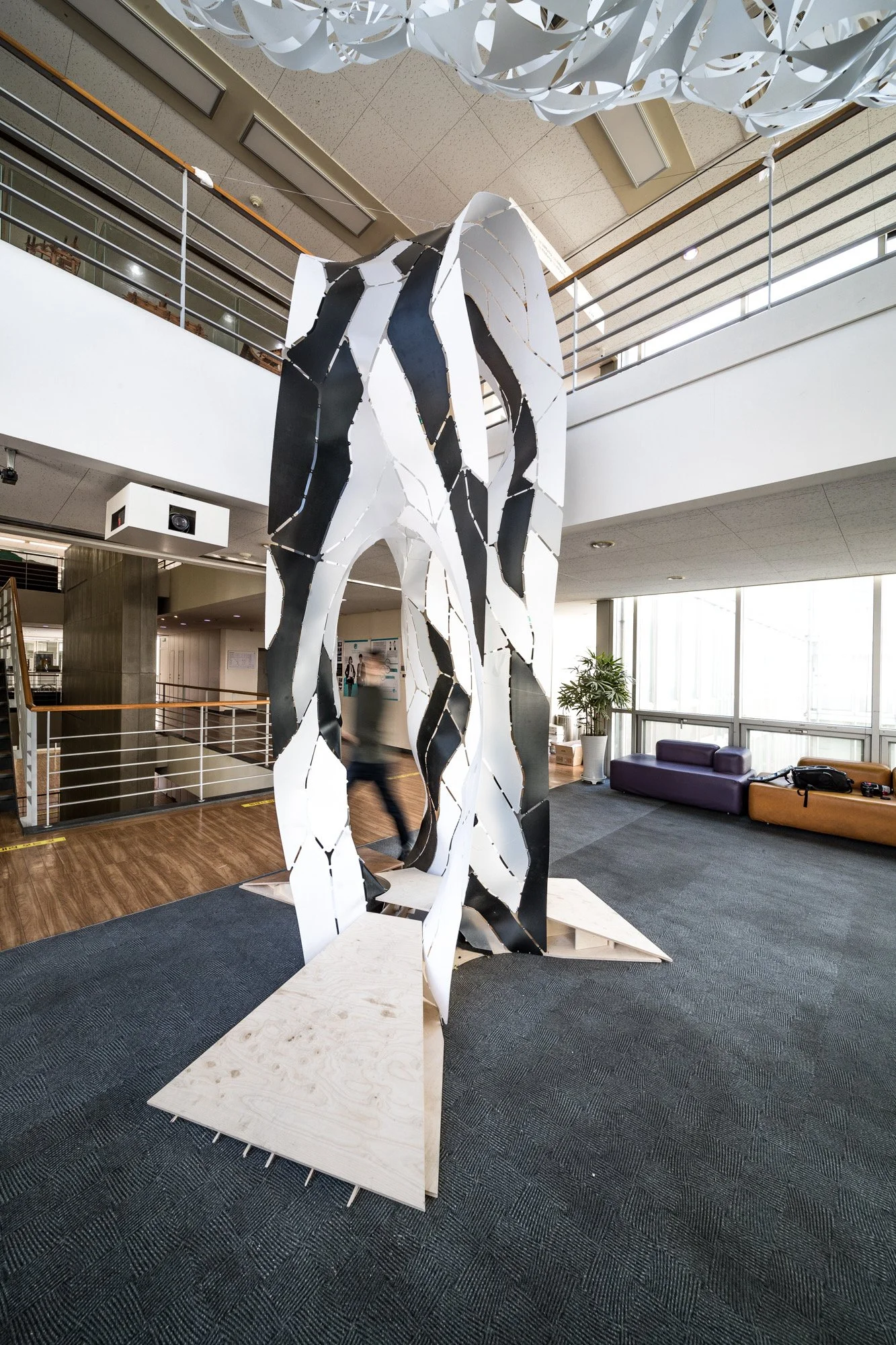
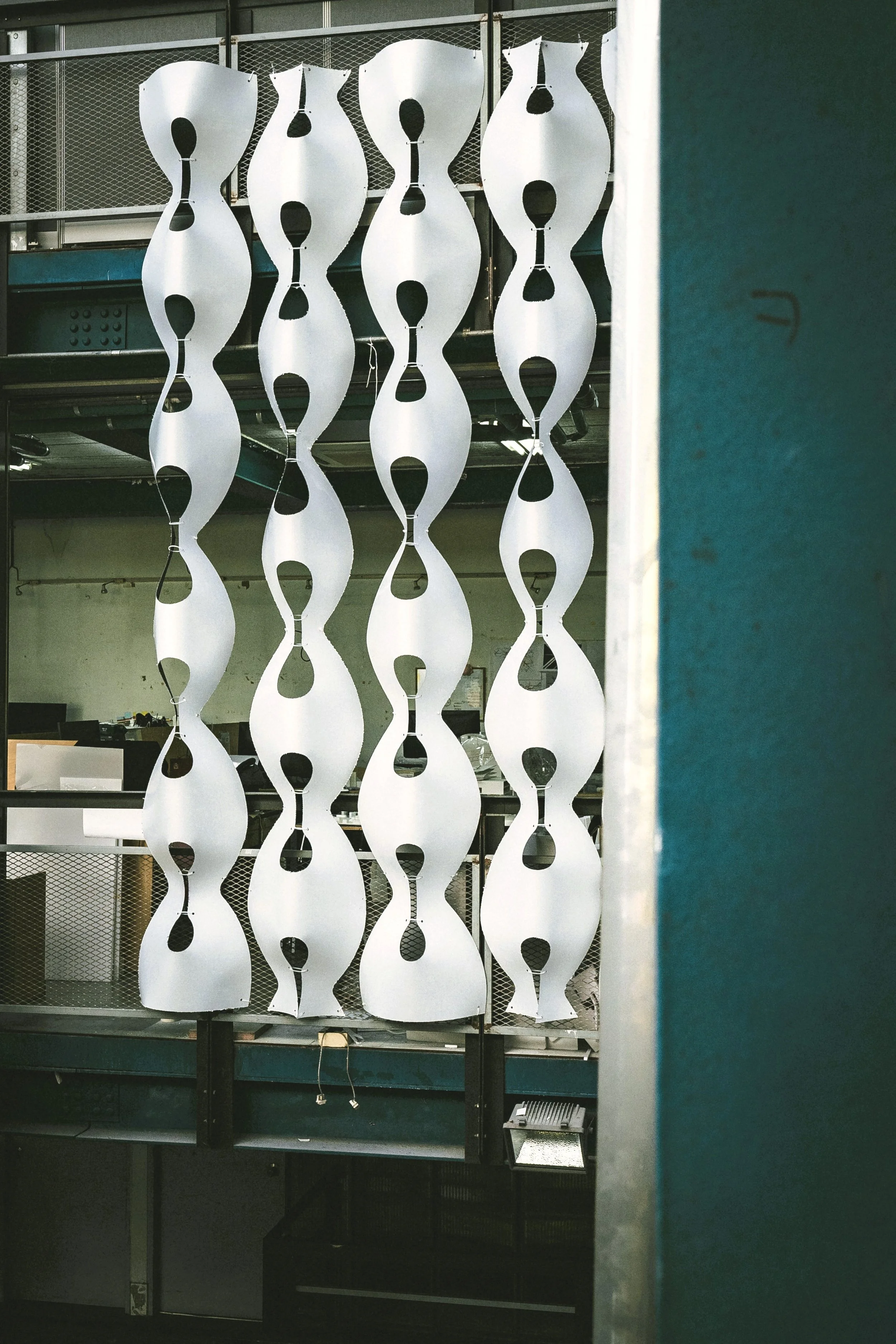
Design process in general, and particularly in architecture, is a complex process that involves a combination of knowledge, skills, experiences, practices, etc. In recent decades, digital design emerges as an unstoppable trend, which adds to all the aforementioned factors the use of digital tools. The techniques cover this issue with computational and algorithmic design systems, the so called parametric design. It is already vividly present in the first half of the twentieth century in the automotive sector (geometric design), and finally impact on architectural design which represents a new step that has led to a new type of Architecture. The workshop is to re-envision the role of Architects as system maker from thinking strategy to fabricator.

This course aims to investigate the continuing advancement of computational processes in architecture in their practice. The topics are exposed as both a technical and intellectual venture of formal, spatial, construction and ecological potentials. The primary role of the workshop is the theoretical and practical development of generative computational design process on both conceptual design and construction phase, allowing for the integral use of computer-controlled manufacturing process in this design system. The later of this course will reach to critically review computational design towards a more challenging and self-demanding commitment to physical and environmental constraints as a fabrication stage.


Year : 2023

Project Director : Dongil Kim (I.f CDL / KHU)

Student : Taeyang Kim, Gwangeun Hwang, Dongyoung Kim, Jiseon Won / Dohyun Kwon, Heeyong Lee, Syed Haseeb Shah / Juyeon Kim, Seungil Kim, Taehyeon Kim / Saddiq Ur Rehman, Hageon Jang

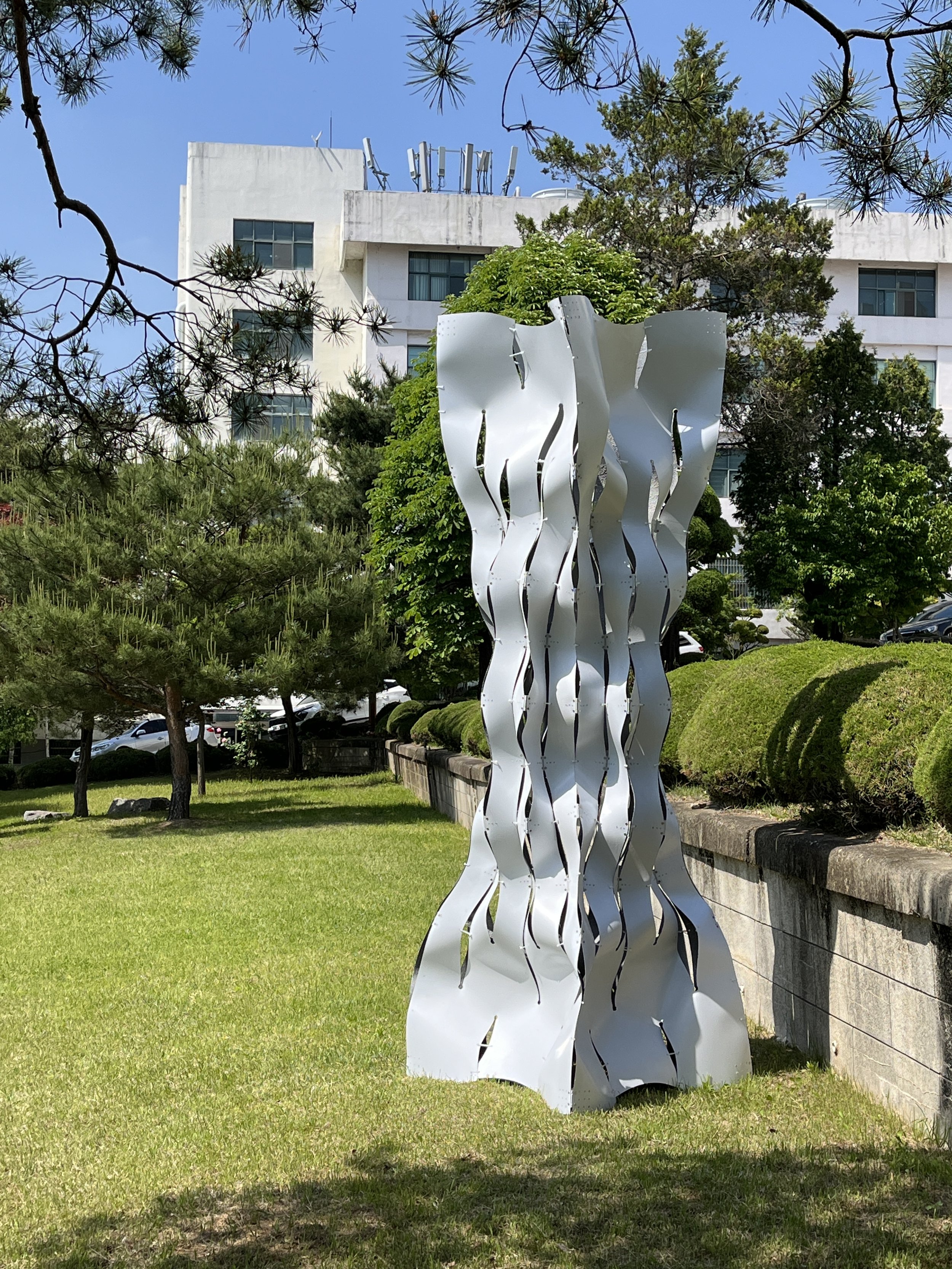
Pleated Column

Design process in general, and particularly in architecture, is a complex process that involves a combination of knowledge, skills, experiences, practices, etc. In recent decades, digital design emerges as an unstoppable trend, which adds to all the aforementioned factors the use of digital tools. The techniques cover this issue with computational and algorithmic design systems, the so called parametric design. It is already vividly present in the first half of the twentieth century in the automotive sector (geometric design), and finally impact on architectural design which represents a new step that has led to a new type of Architecture. The workshop is to re-envision the role of Architects as system maker from thinking strategy to fabricator.

This course aims to investigate the continuing advancement of computational processes in architecture in their practice. The topics are exposed as both a technical and intellectual venture of formal, spatial, construction and ecological potentials. The primary role of the workshop is the theoretical and practical development of generative computational design process on both conceptual design and construction phase, allowing for the integral use of computer-controlled manufacturing process in this design system. The later of this course will reach to critically review computational design towards a more challenging and self-demanding commitment to physical and environmental constraints as a fabrication stage.


Related Research


Year : 2023

Project Director : Dongil Kim (I.f CDL / KHU)

Student : Taeyang Kim, Gwangeun Hwang, DongYoung Kim, Jiseon Won / Dohyun Kwon, Heeyong Lee, Syed Haseeb Shah / Juyeon Kim, Seungil Kim, Taehyeon Kim / Saddiq Ur Rehman, Hageon Jang

Sunsan Healing Center

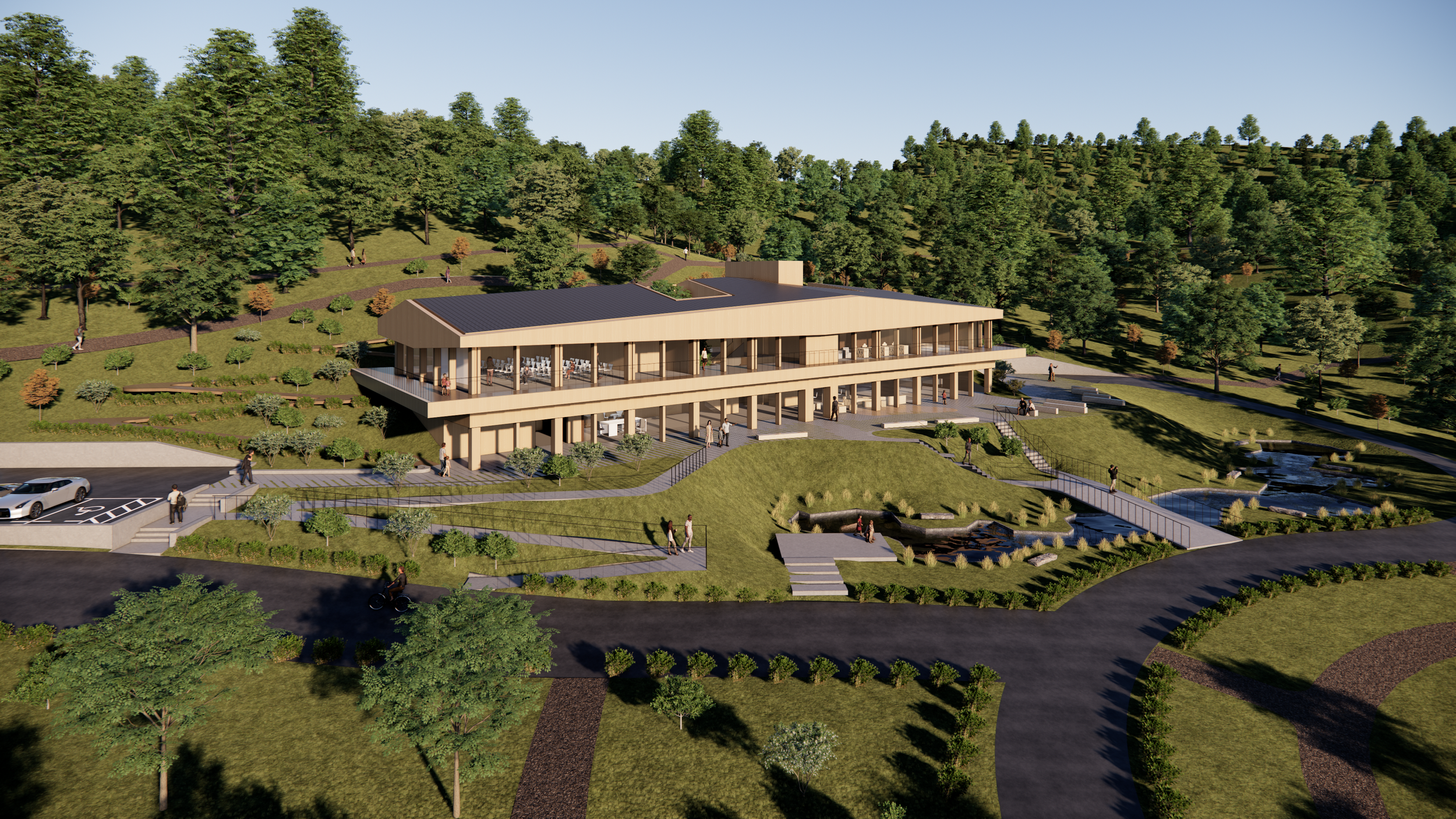
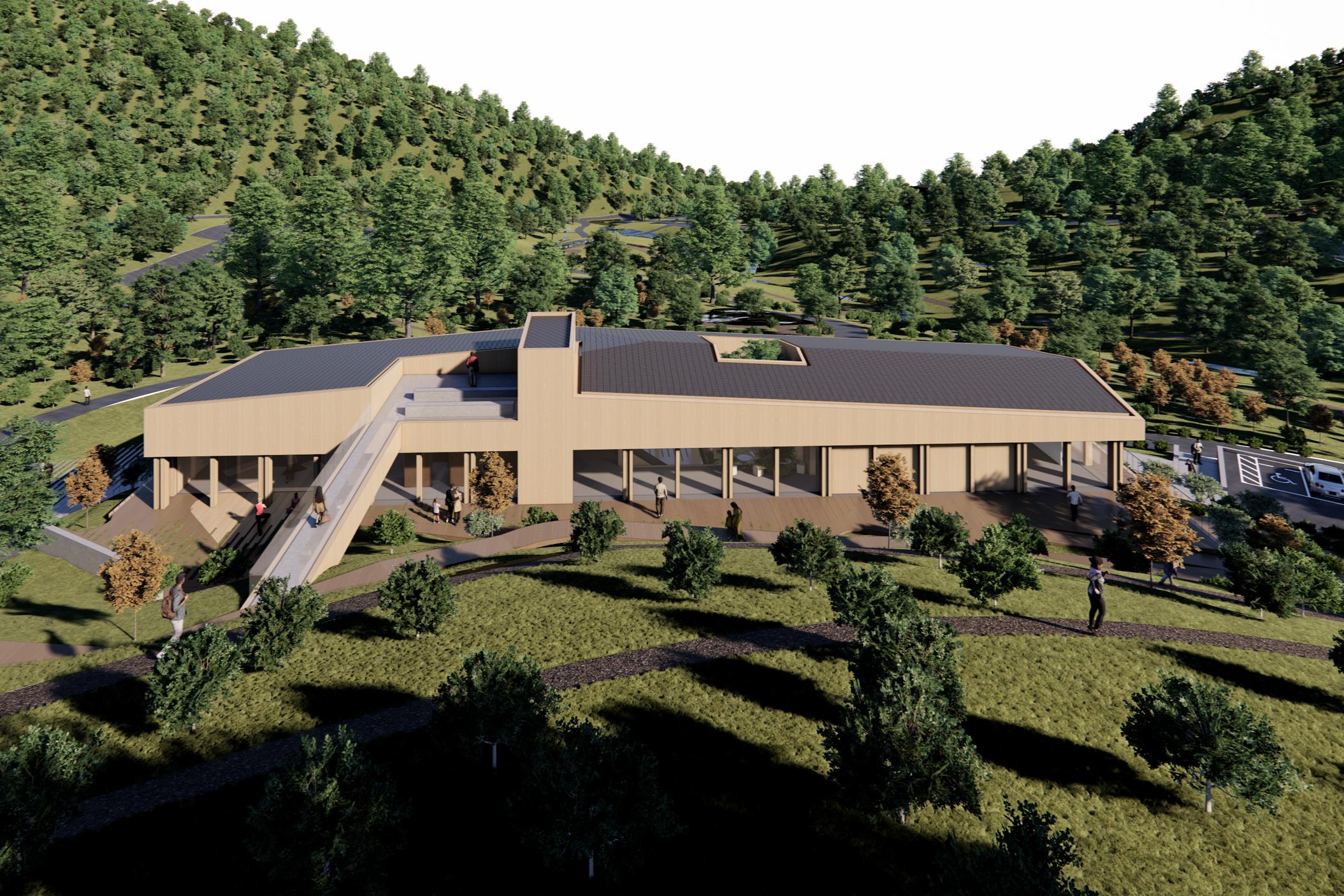
The Healing Center, part of the forest leisure town in Sunsan-eup, aims to secure recreational and restful spaces for citizens through the value of forests. It's designed to harmonize with the terrain while ensuring panoramic views of the woods below the mountainside without disrupting the landscape. Emphasizing a genuine natural environment, the center utilizes sloped areas, nestling the structures into the terrain and creating gently sloped roofs amid the forest canopy.

This space aims to offer diverse programs physically and visually connected to nature, reflecting the essence of a healing center. The design focuses on eco-friendly spaces and active integration between indoor and outdoor areas. Under low roofs akin to mountain birds, major program areas have separate outdoor spaces, fostering activities that harmonize with nature's flow. This envisioned Healing Center invites individuals to experience and enjoy nature while reflecting its tranquility and circulation within the space.


Year : 2023

Location : Kumi, Korea

Size : 4,325 m²

Status : Competition Entry

Type : Cultural

Principal in Charge :

Seojoo Lee, Hyojung Kim(i.f), Dongil Kim (Kyung Hee University), Minho Lee (func. Architects)

Design Team: Seungil Kim, Soohyun Im (I.f)
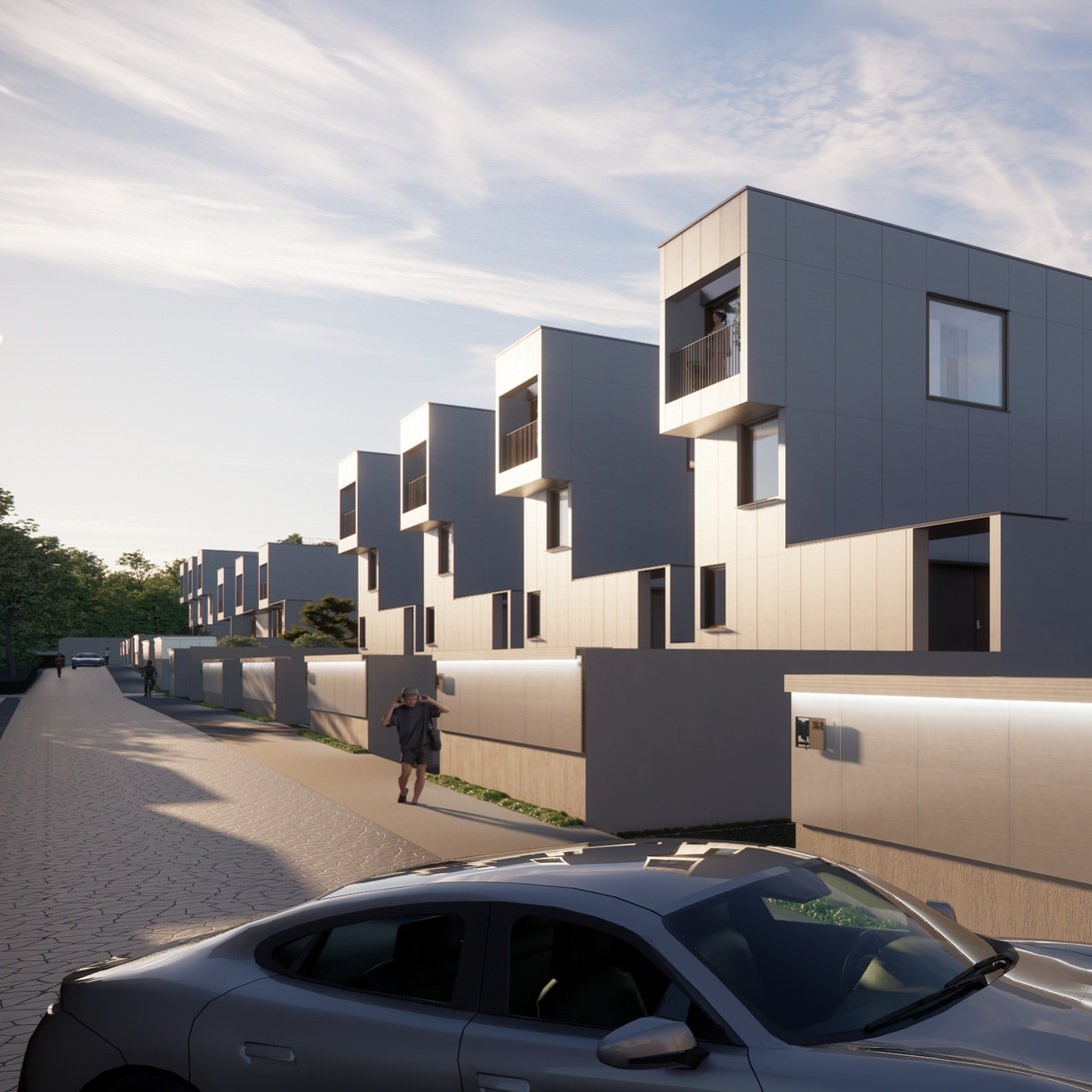
Bespoke Housing Platform

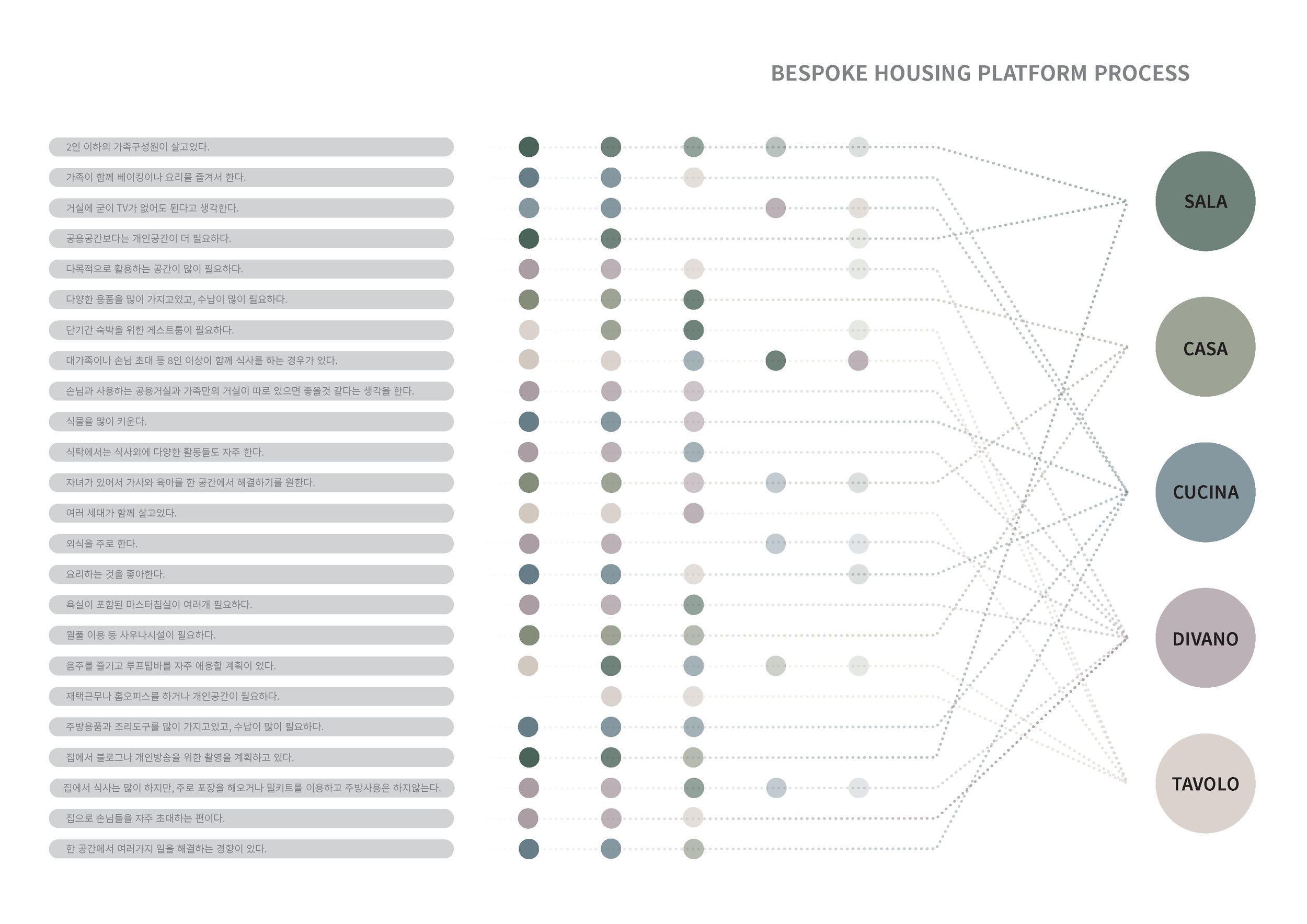
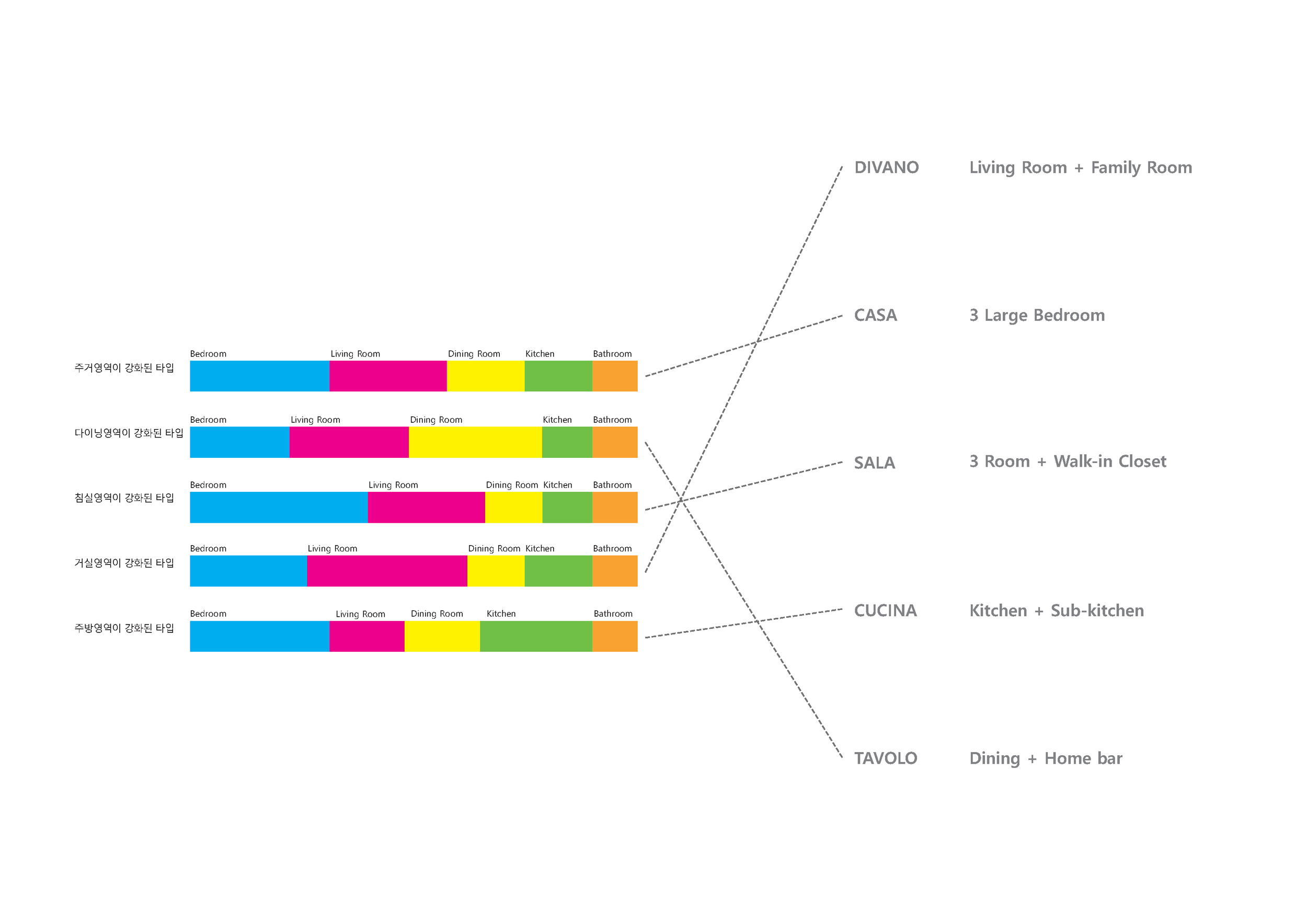
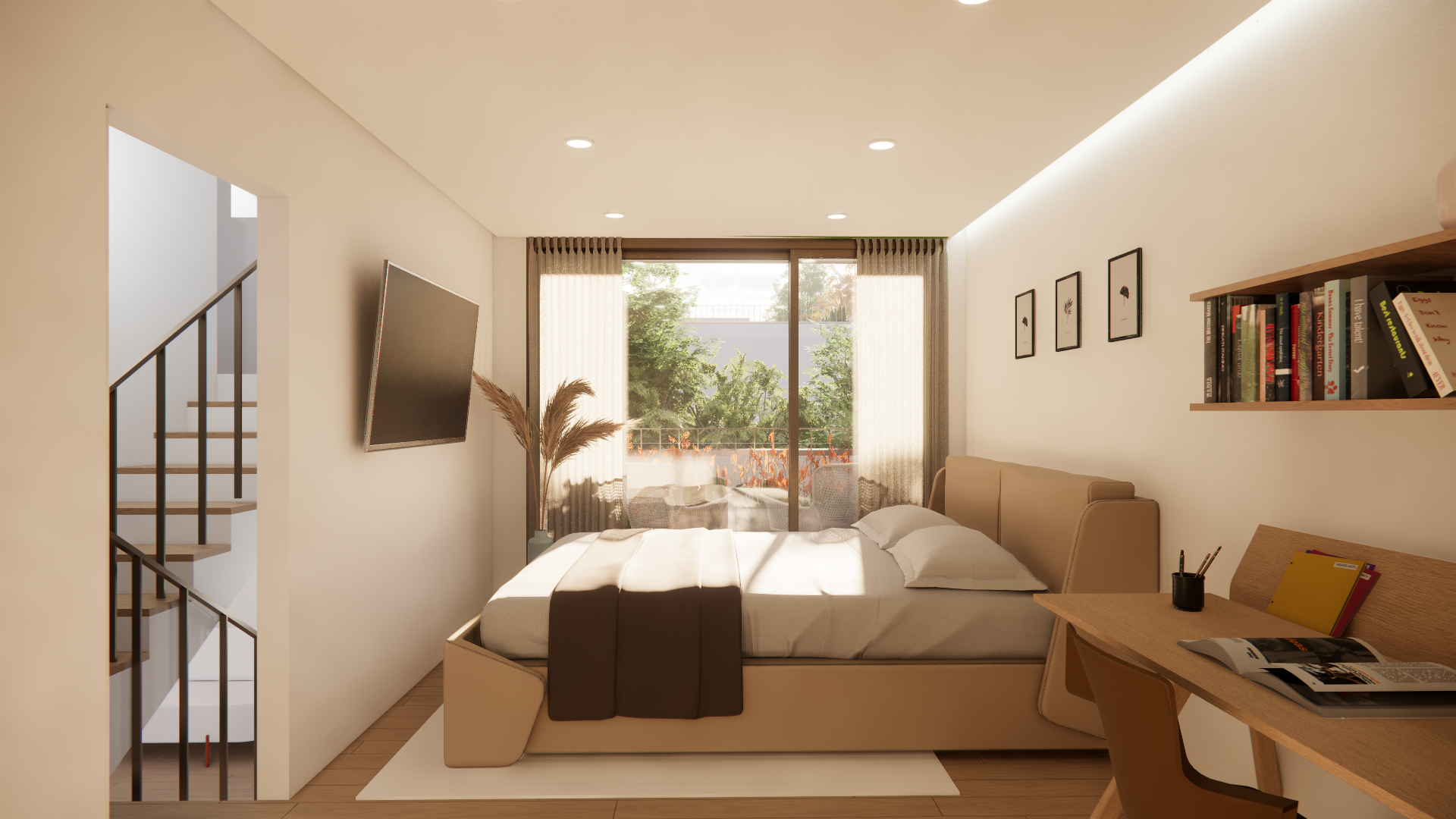
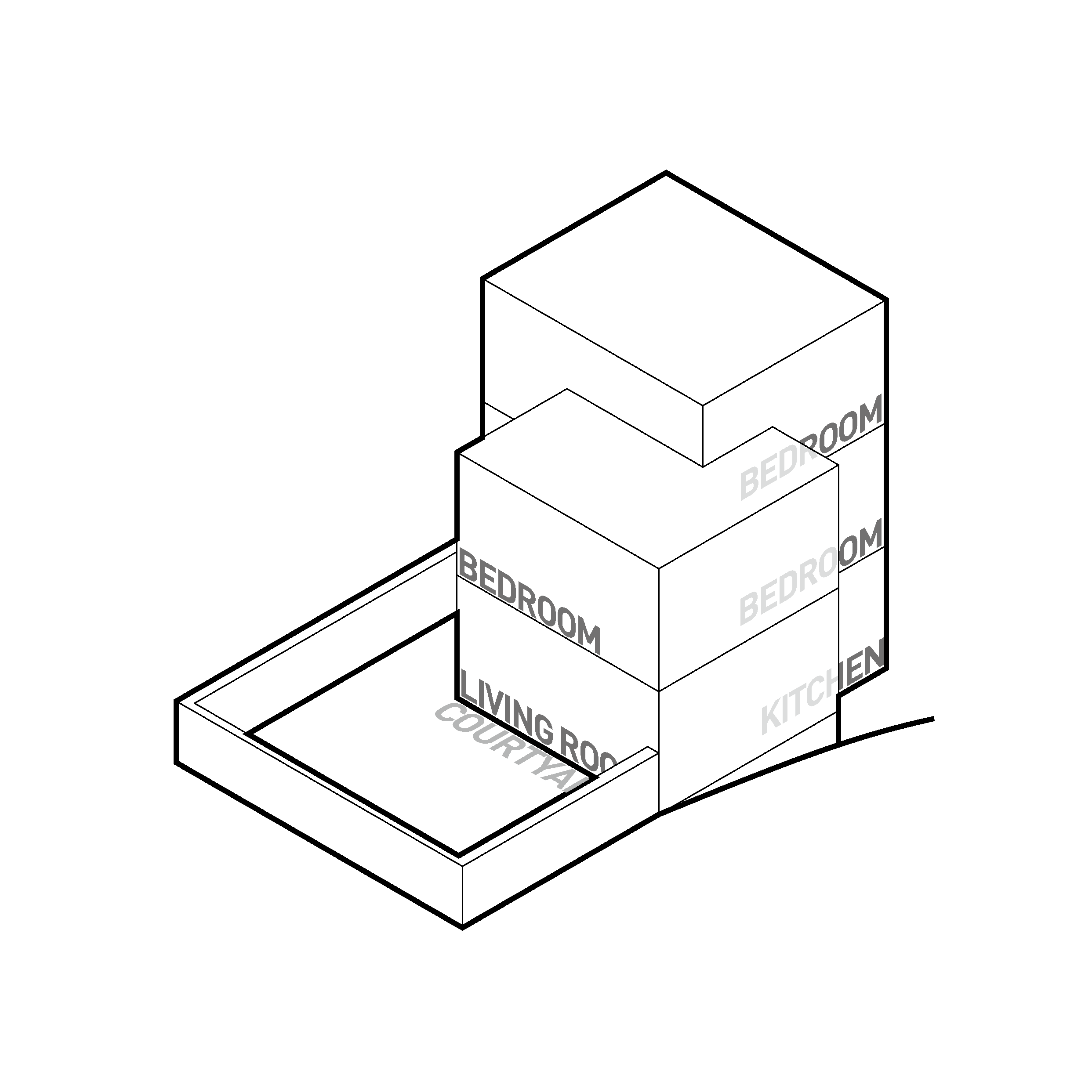
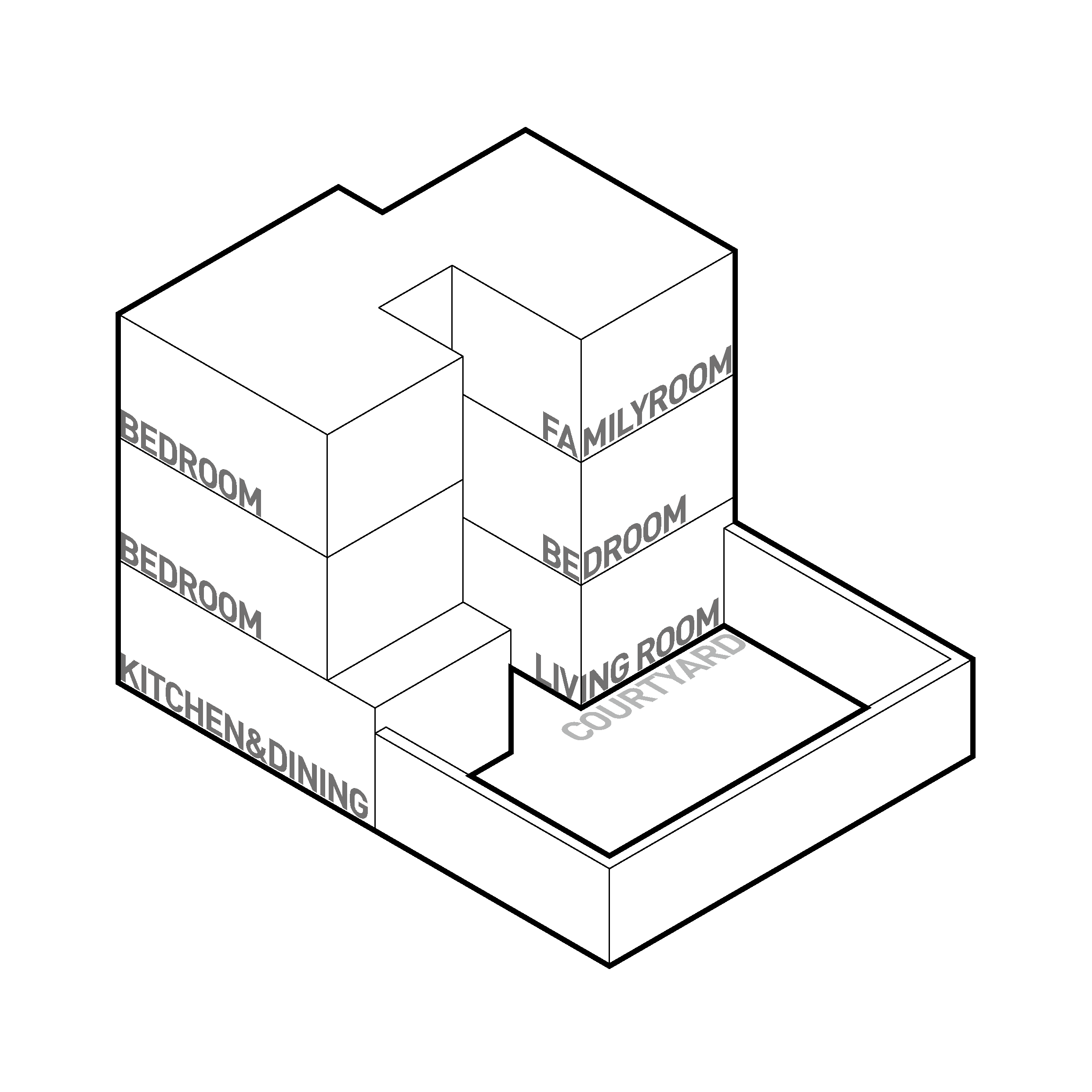
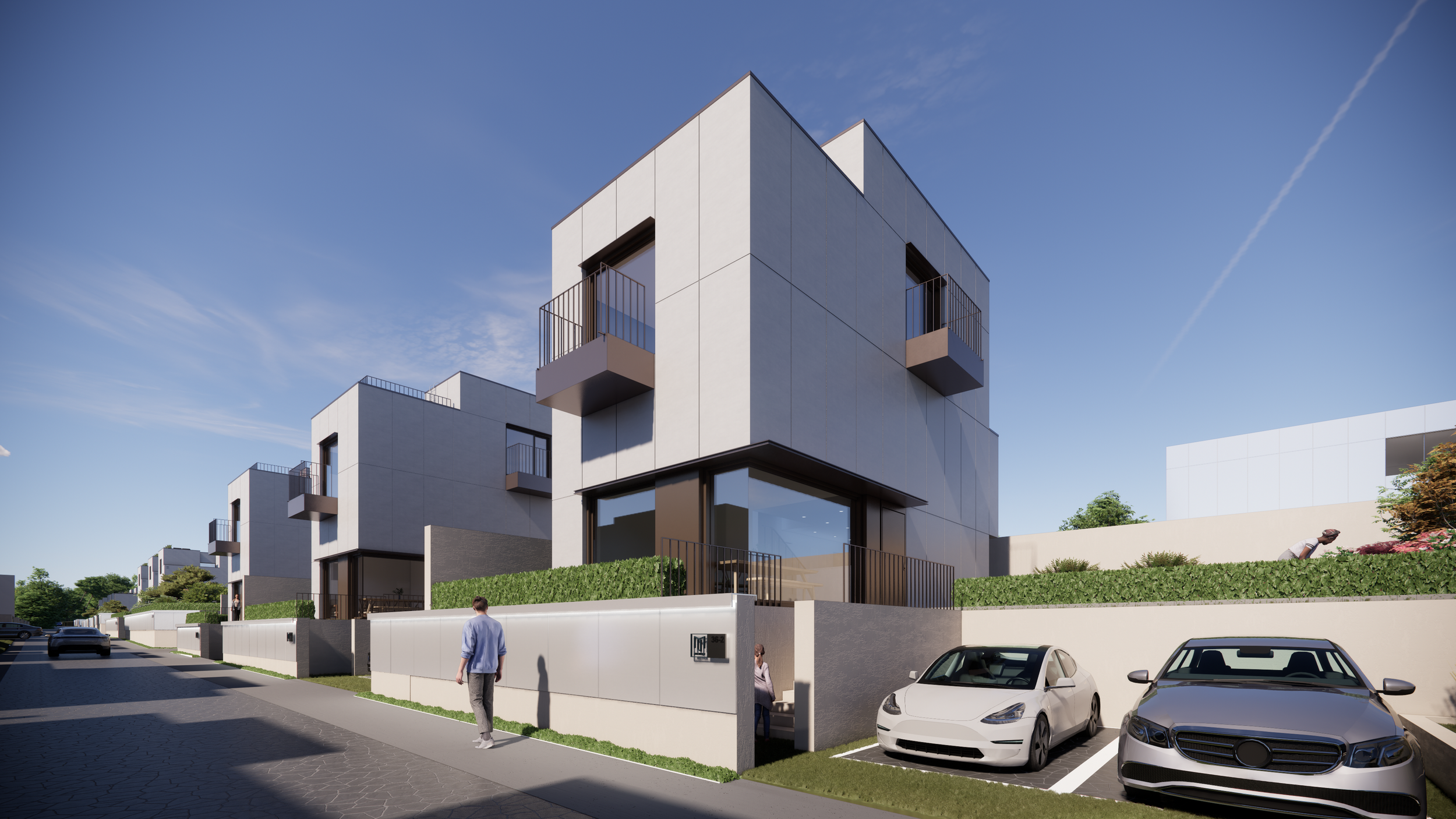
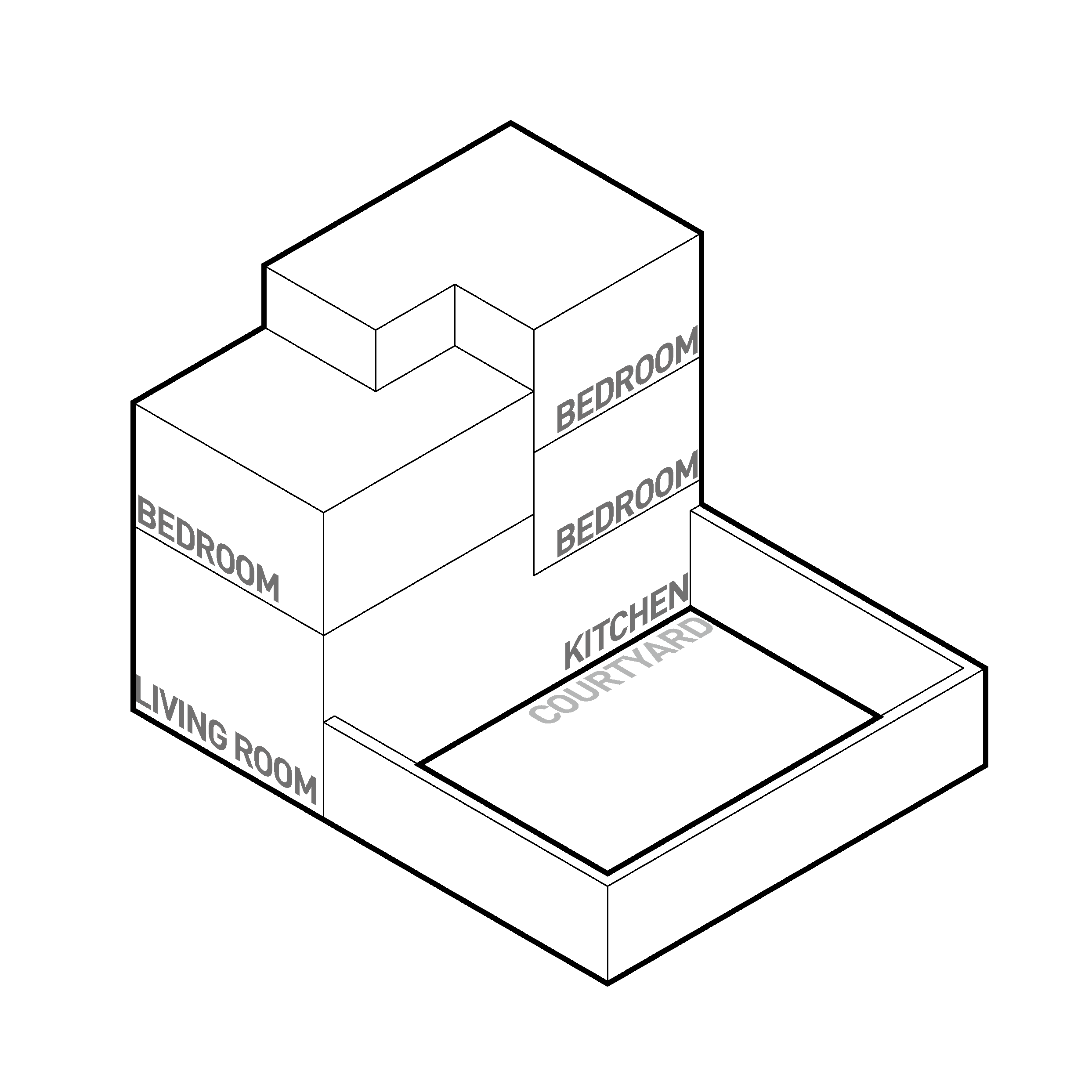
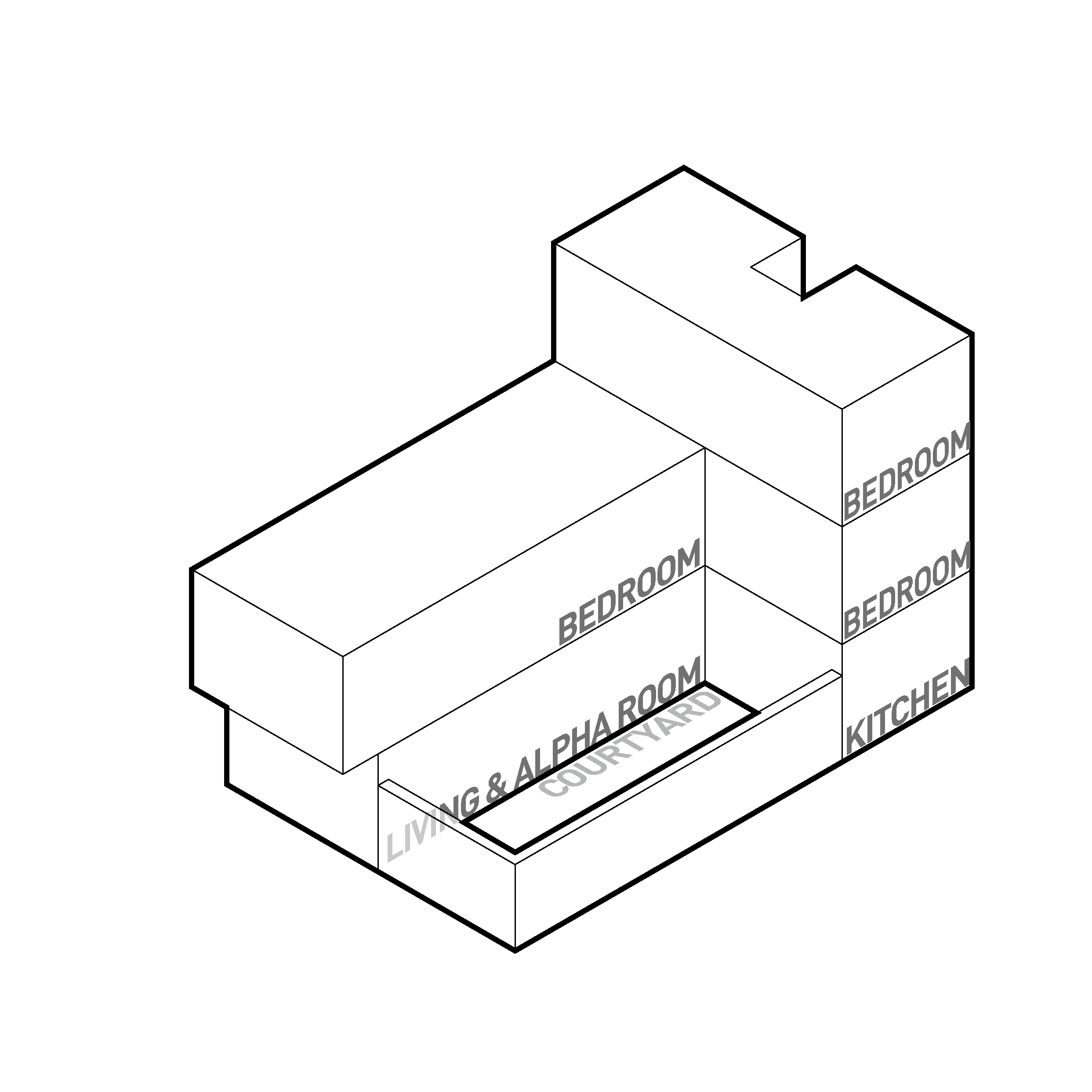
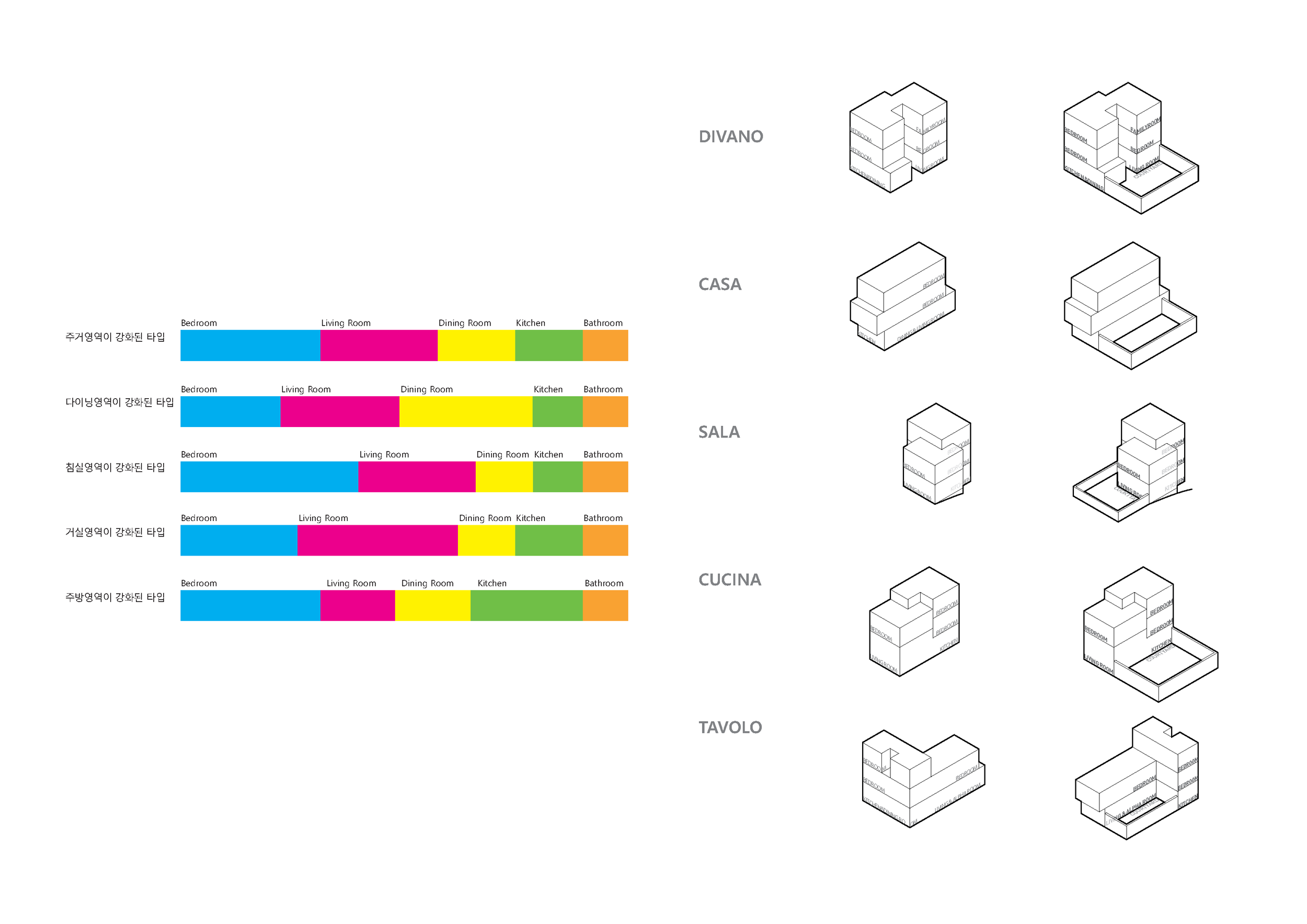
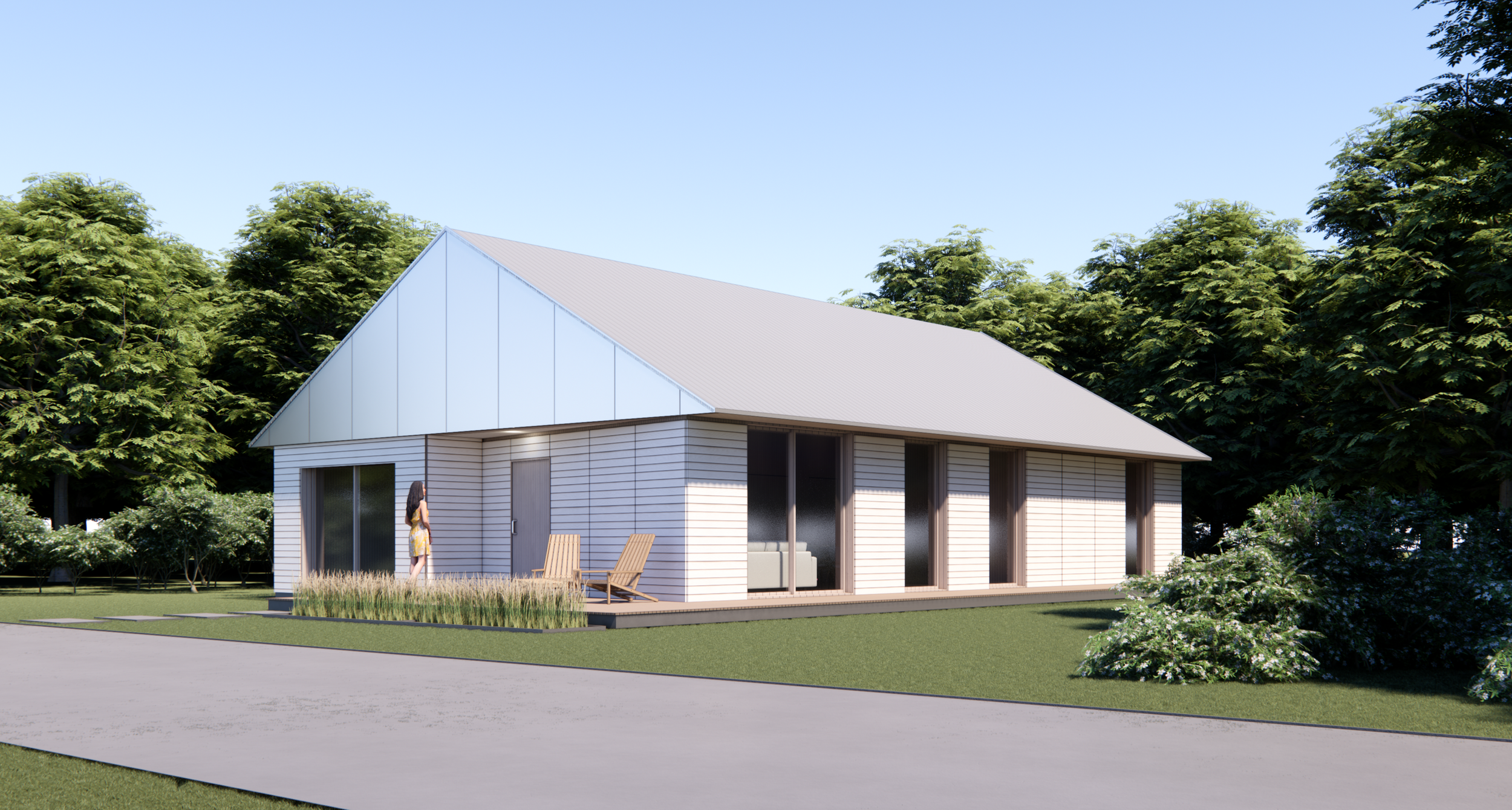
The Bespoke Housing Platform is designed to address the rapidly changing residential environments of the post-pandemic era by offering customized housing solutions tailored to the unique preferences and lifestyles of each resident. Instead of conventional, rigid layouts, the platform establishes a clear spatial hierarchy based on individual lifestyles, allowing residents to choose from five distinct housing types and fine-tune specific features to match their personal tastes.

SALA

CASA

DIVANO

CUCINA

TAVOLO

This framework operates on three foundational pillars: Bespoke Culture, which focuses on developing a deep understanding of the residents' diverse lifestyles; Bespoke Space, which offers tailored housing plans and customized residential types; and Bespoke Technologies, which suggests specific interior configurations and materials that support these functional requirements.

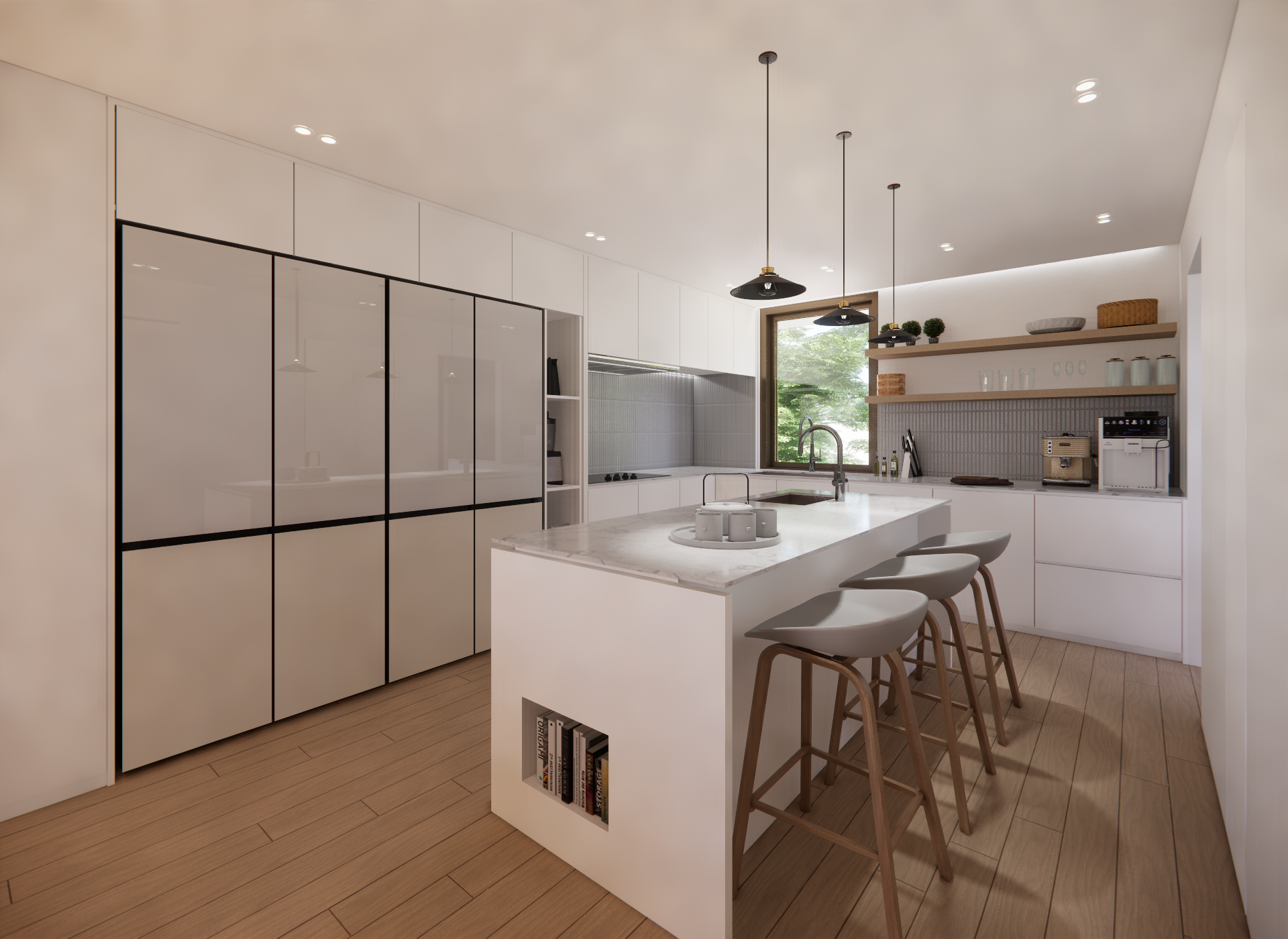
To maximize the efficiency of a home tailored to the resident's lifestyle, the platform introduces the "Beyond Zoning" concept, which supports a highly flexible and adaptable spatial operation system. While maintaining the primary location and purpose of the rooms, it promotes integrated, cross-functional uses such as leisure, relaxation, work, education, and socializing. Furthermore, the platform proposes practical and functional elements to support individual living areas, known as Technological Bespoke Space. This includes bespoke furniture solutions utilizing Kolon Global's specialized "KanKan System," a curated selection of interior and exterior finishing materials that perfectly match the resident's lifestyle, and customized fences and landscaping styles tailored to individual privacy needs and specific usage purposes.


Year: 2023

Location : Gimpo, Korea

Size : 35,273 m²

Status : Design Proposal

Type : Residential

Principal in Charge :

Seojoo Lee, Hyojung Kim (I.f), Dongil Kim (Kyung Hee University), Minho Lee (func.Architects)

Design Team :

Seungil Kim, Junyoung Park, Soohyun Im, Inyeob Jang (I.f)
 

Related Project

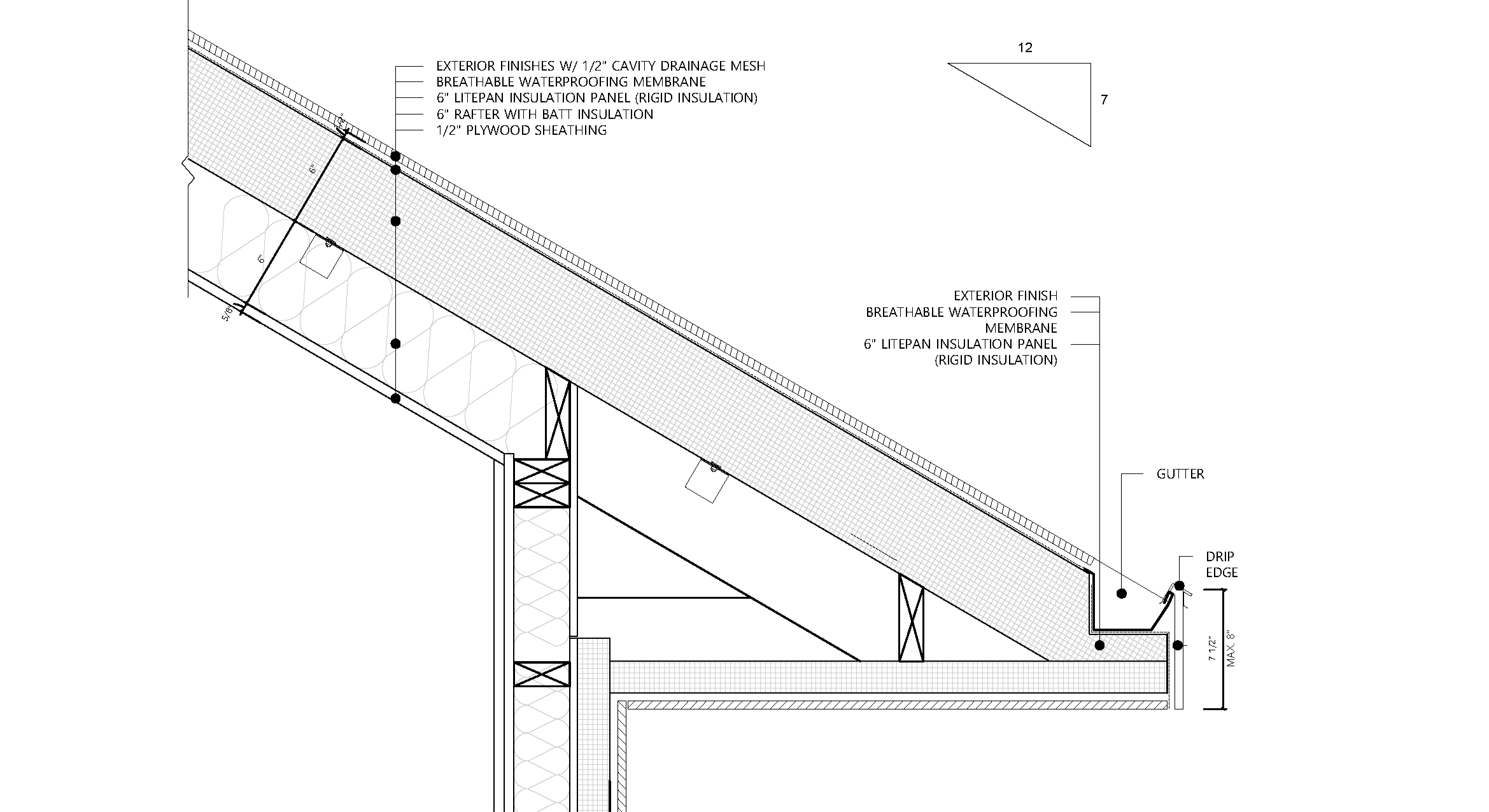
Panelization Standard Details


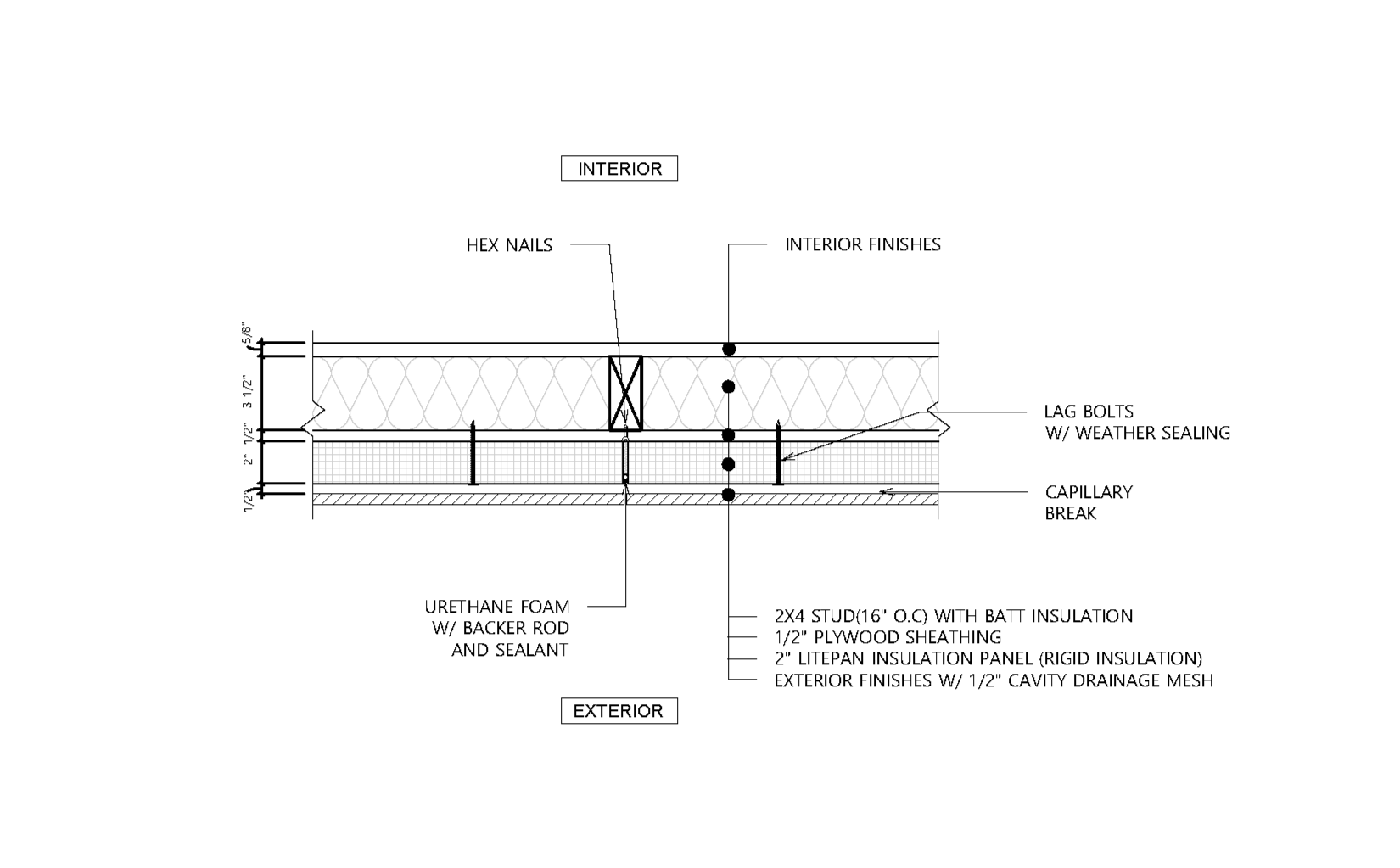
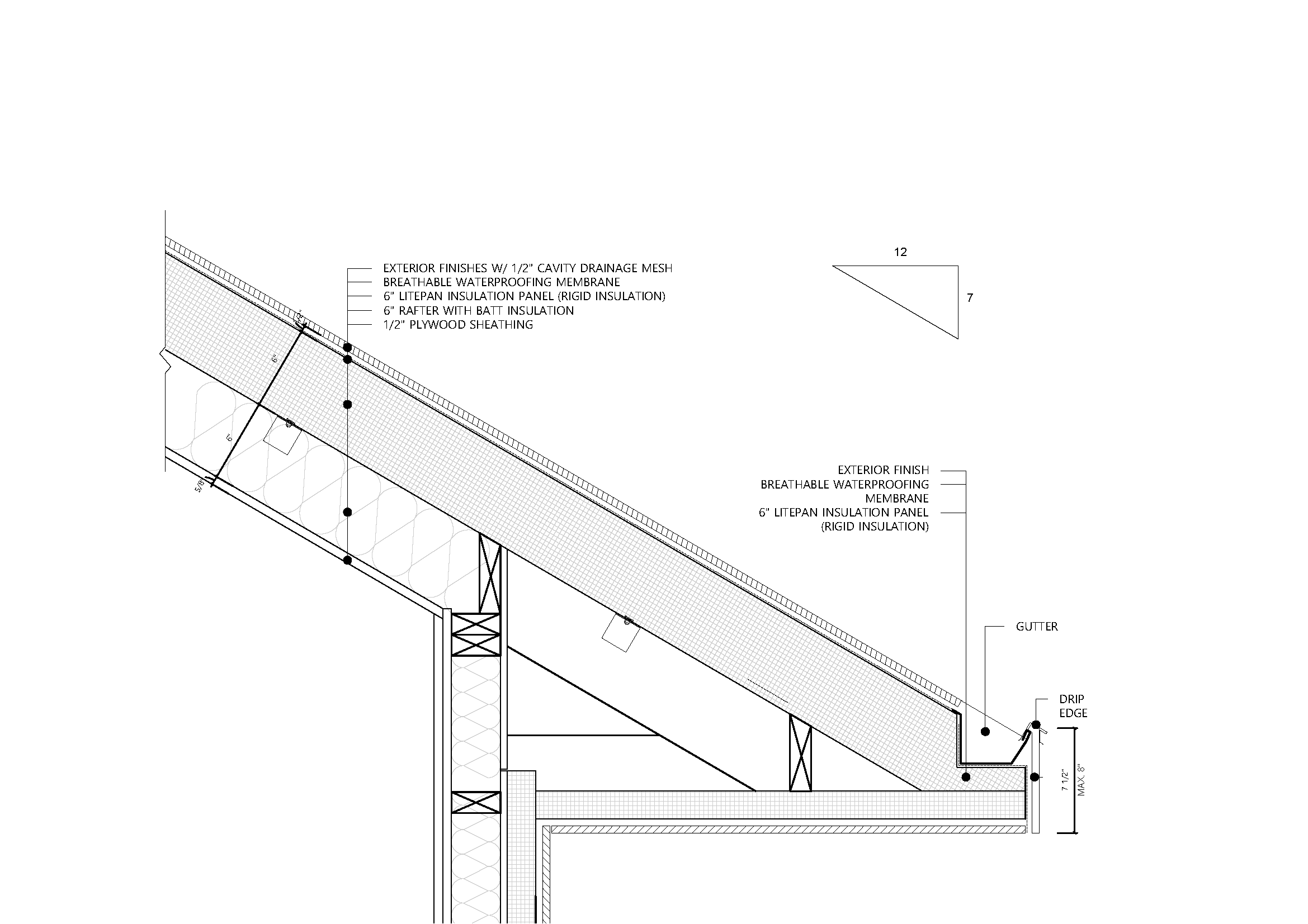
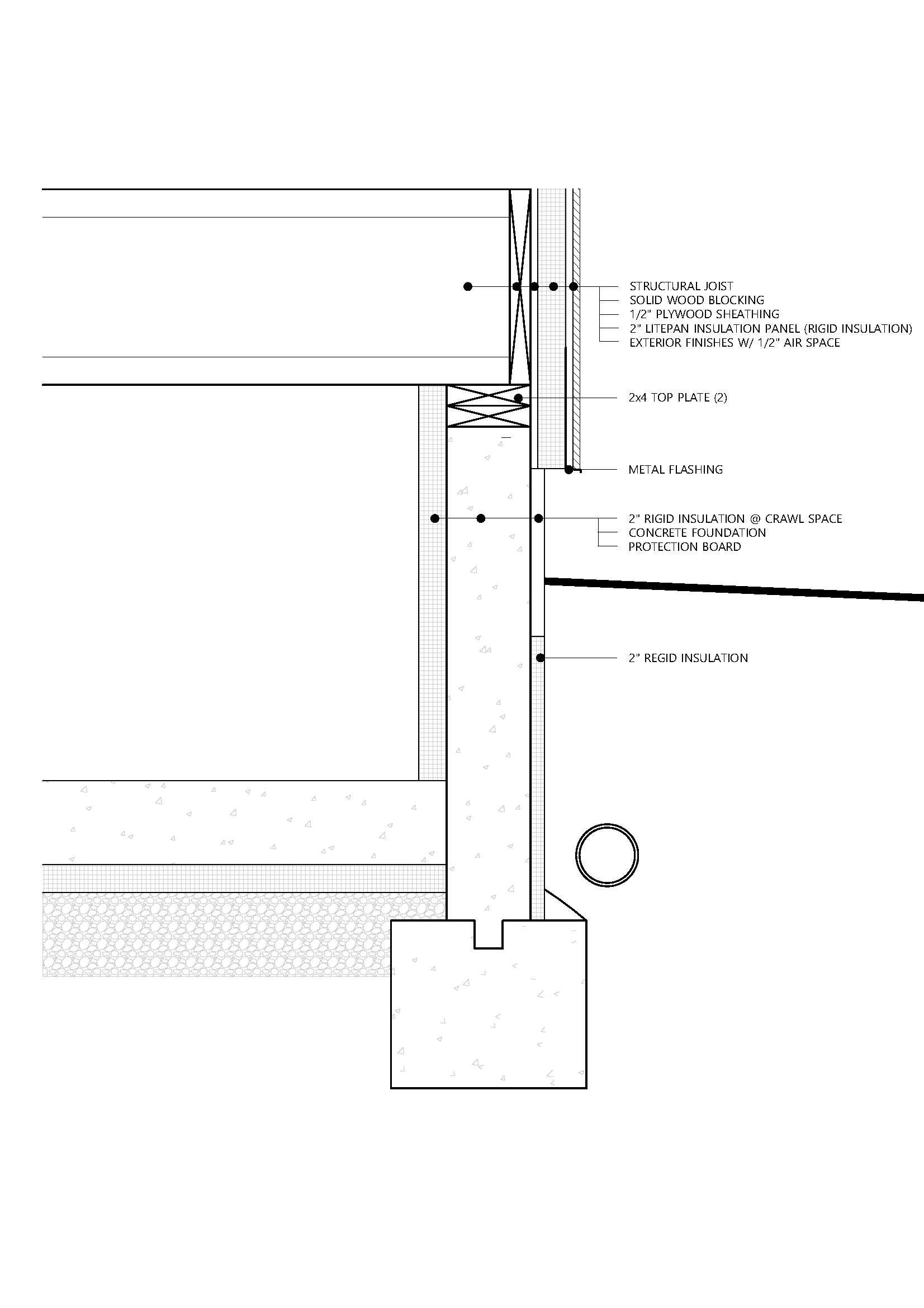
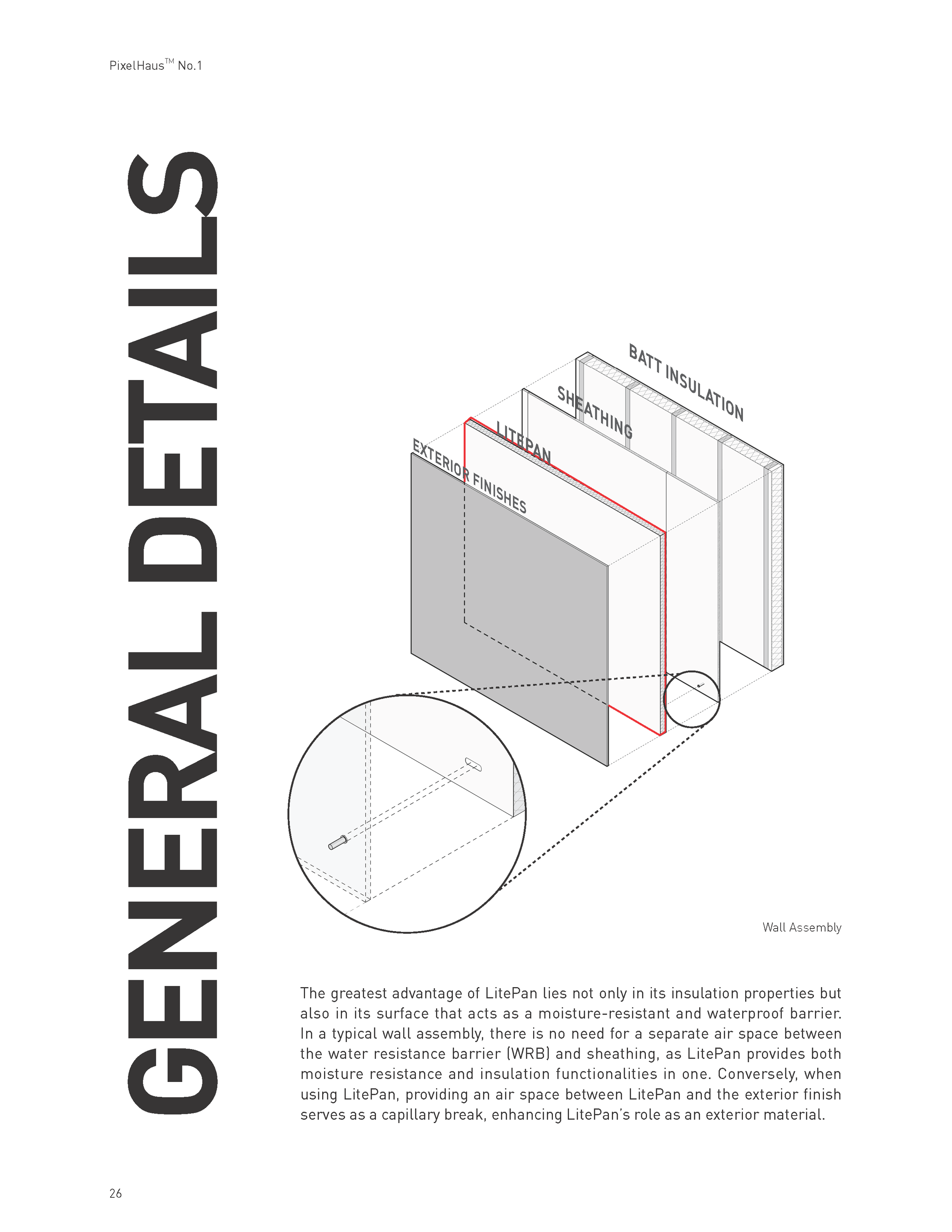
Composite building structures offer several advantages over traditional materials, including faster installation, increased cost-efficiency, higher energy efficiency, and longer life cycles. LiteTex®, a cutting-edge composite laminate created by Axia Materials, incorporates continuous fibers—such as glass, carbon, or aramid fibers—for reinforcement and uses a proprietary resin system for its matrix. This innovative composition enables LiteTex® to outperform metallic materials, offering a lighter weight and greater strength by comparison.”LitePan® is an advanced Composite Structural Insulated Panel (C-SIP) that employs LiteTex® as its outer face material and foam plastics as its insulation core. This product has been employed in numerous energy-efficient, volumetric construction projects due to its multifunctionality—it simultaneously provides structural support, insulation, and waterproofing. LitePan® offers extensive coverage, with single panels capable of spanning up to 9-feet by 40-feet, while maintaining an extremely low weight of approximately 1.12 lb/ft2 (5.47 kg/m2) for a 4-inch (101.6mm) thick panel.”
The distinctive features of LitePan® have delivered unparalleled value to the construction industry, enabling exceptionally rapid construction and airtight sealing. These capabilities facilitate a level of energy efficiency that meets Passive House standards, providing cost-effective solutions that save both time and energy in building projects.

The primary objective of this catalog is to furnish comprehensive elucidations regarding the exemplary versatility of LitePan® and its adherence to prevailing architectural standards. Additionally, it endeavors to furnish intricate delineations pertaining to specific applications. We express the anticipation that, upon the prospective utilization of this product by regional contractors or construction entities, this catalog shall prove to be an invaluable resource, offering substantial aid and guidance.


Year : 2023

Size : 92.90 ㎡

Structure : Construction Type V (Lightweight Wood Structure with Insulated panel attached)

Type : Residential

Status : Completed

Principal in Charge : Seojoo Lee, Hyojung Kim (I.f), Dongil Kim (I.f.CDL)

Desigin Team : Seungil Kim (I.f.CDL)


Related Research

Pixel Haus No.1


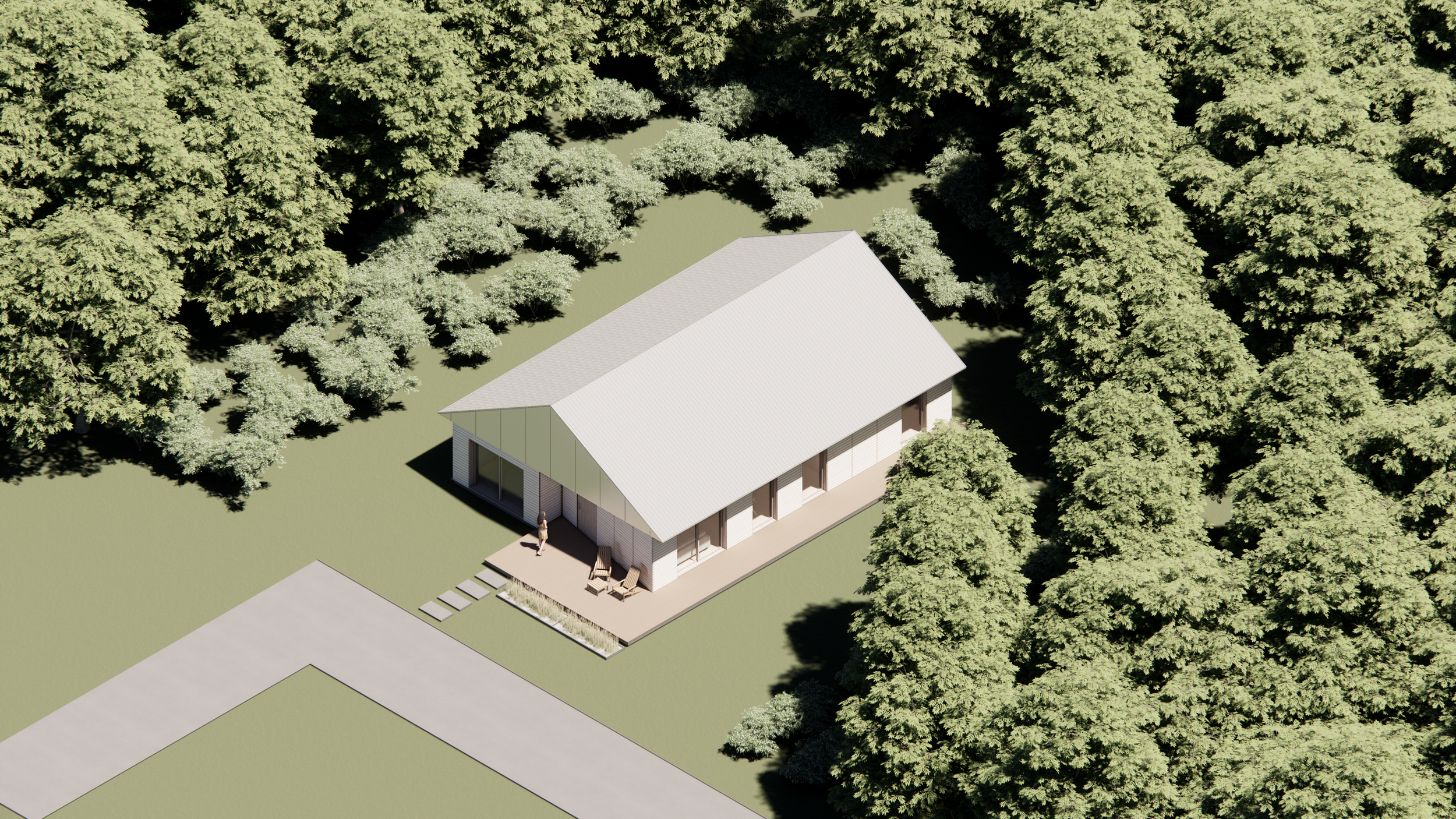
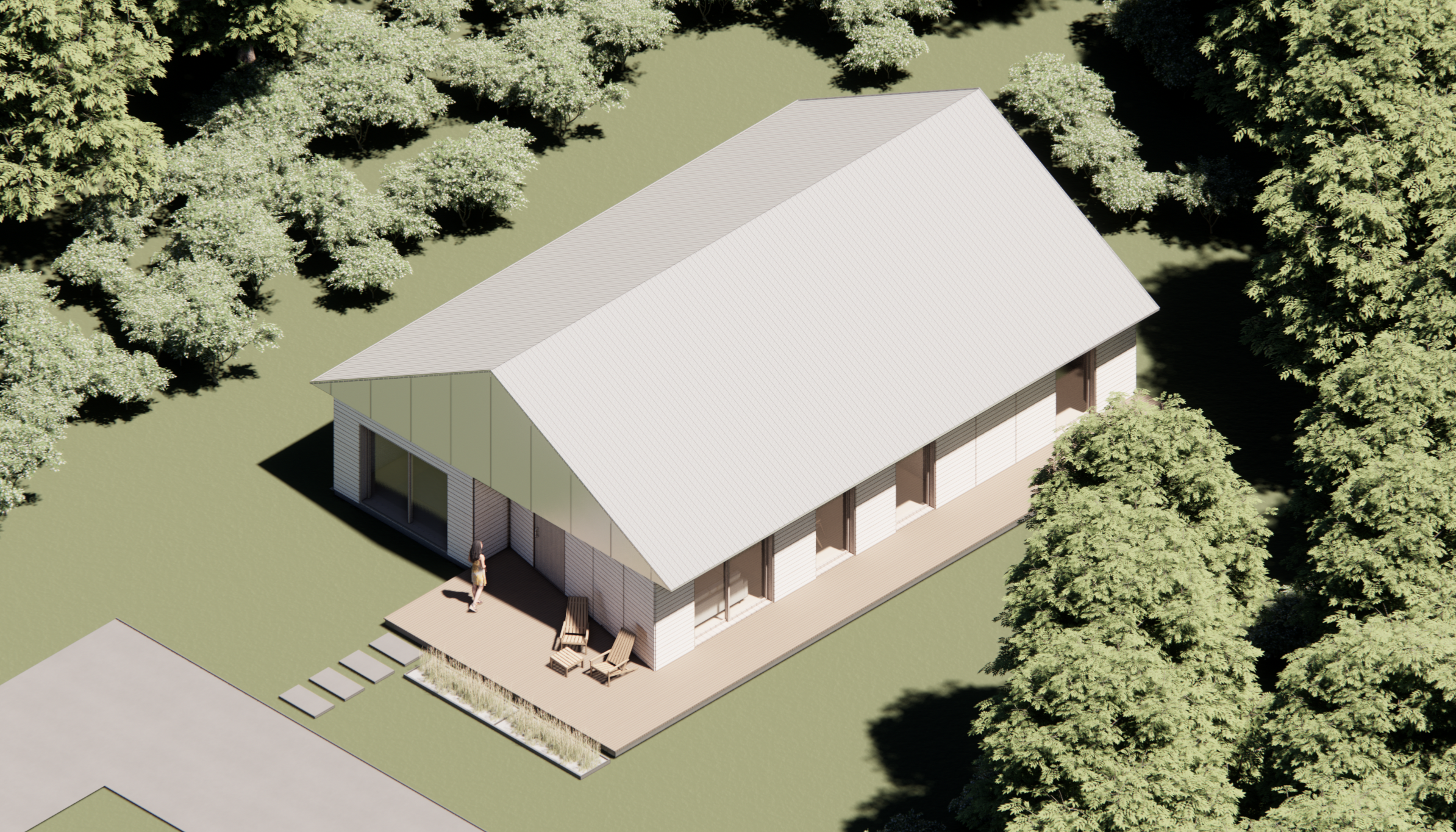
PixelHaus is a brand developed by Axia that will feature a range of proposals and sample houses using LitePan Board for both wall and roof materials. The aim is to showcase the versatility and effectiveness of LitePan in various housing designs intended for the US market. These designs will cater to different needs, from small ADUs (Accessory Dwelling Units) with an area of around 600 square feet to larger two- story single-family homes spanning up to 2,000 square feet.

The concept behind PixelHaus is to demonstrate how LitePan can be seamlessly integrated into different types of residential buildings, offering both architects and builders a wide array of options for incorporating LitePan into their projects. By utilizing LitePan for both wall and roof materials, “PixelHaus™ is designed to showcase the exceptional energy efficiency, inclusive of superior thermal insulation capabilities, and the robust structural integrity inherent in LitePan technology.”


Related Research


PixelHaus intends to provide a platform for presenting innovative housing solutions that prioritize energy efficiency, sustainability, and ease of construction. By leveraging LitePan’s lightweight yet robust characteristics, PixelHaus seeks to redefine traditional housing construction methods and offer more efficient and environmentally friendly alternatives.

The proposals and sample houses presented under the PixelHaus brand will serve as practical examples of how LitePan can be utilized effectively in real-world construction projects. Each design will be carefully crafted to showcase LitePan’s capabilities in enhancing thermal performance, moisture resistance, and overall building durability.

Overall, PixelHaus represents Axia’s commitment to promoting LitePan as a premier building material for modern residential construction, offering solutions that meet the evolving needs of homeowners, architects, and builders alike.


Year : 2023

Size : 92.90 ㎡

Structure : Construction Type V (Lightweight Wood Structure with Insulated panel attached)

Type : Residential

Status : Completed

Principal in Charge :

Seojoo Lee, Hyojung Kim (I.f), Dongil Kim (I.f.CDL)

Desigin Team : Seungil Kim (I.f.CDL)

Gimpo Townhouse and Masterplan

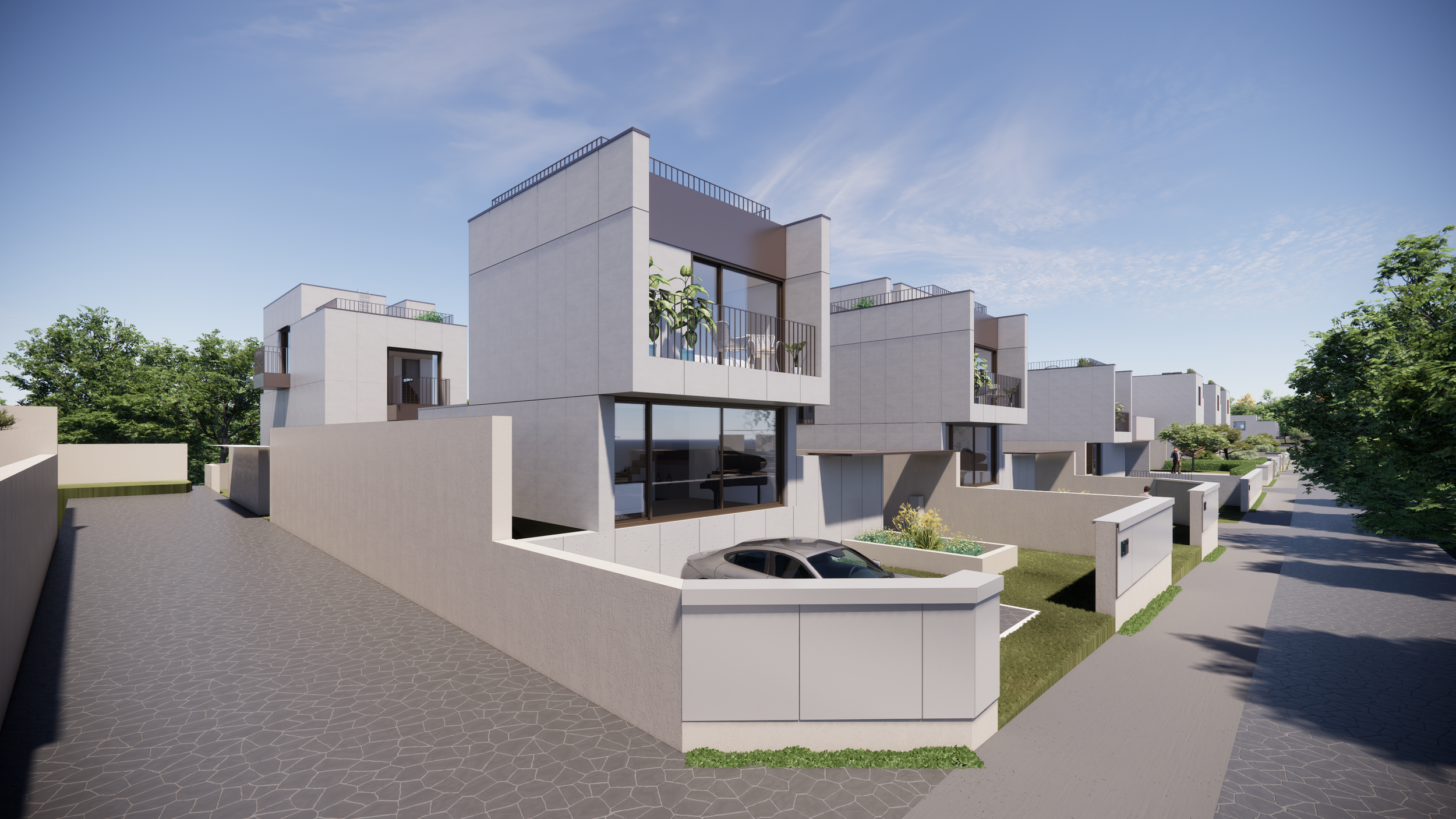
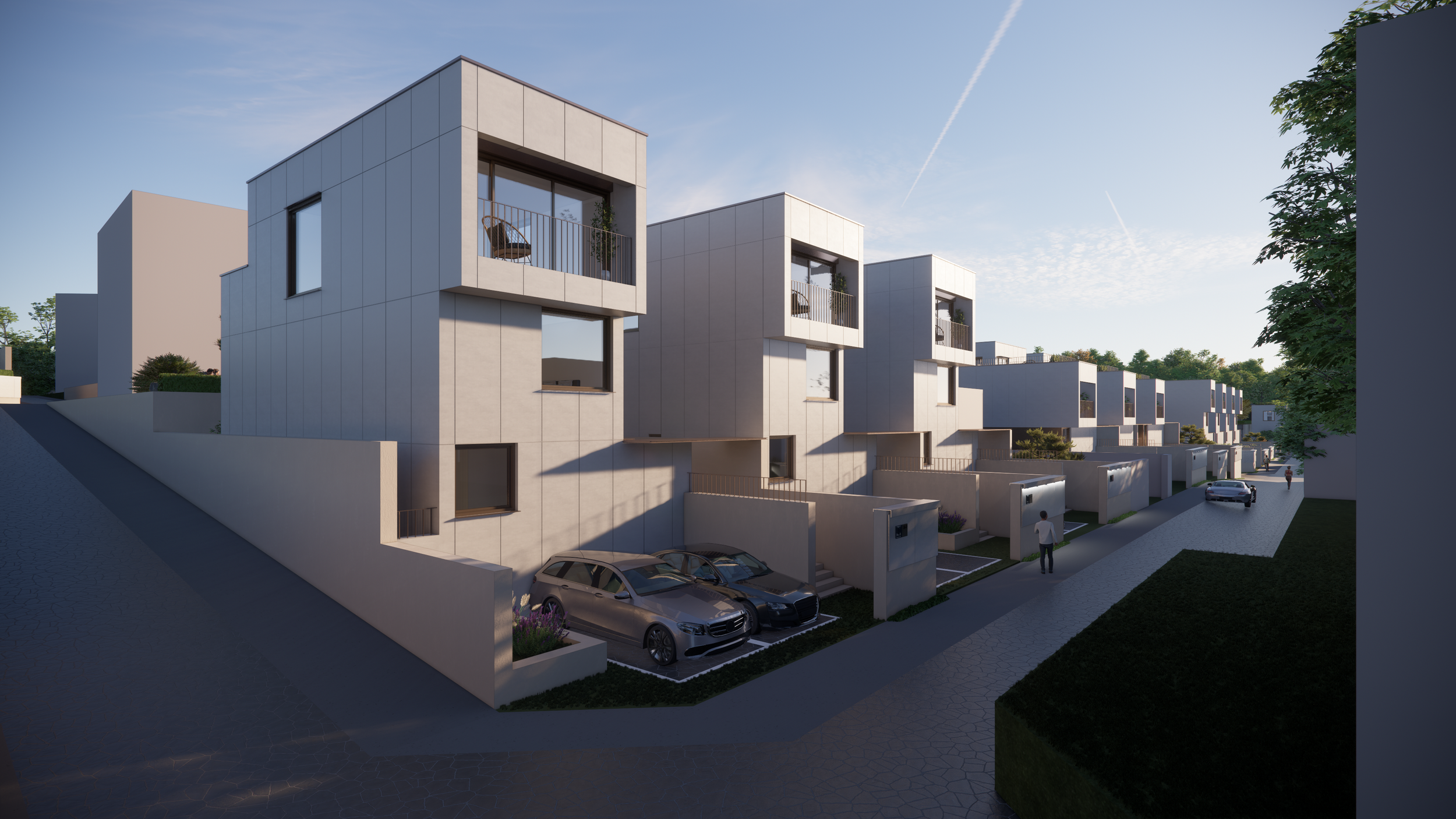
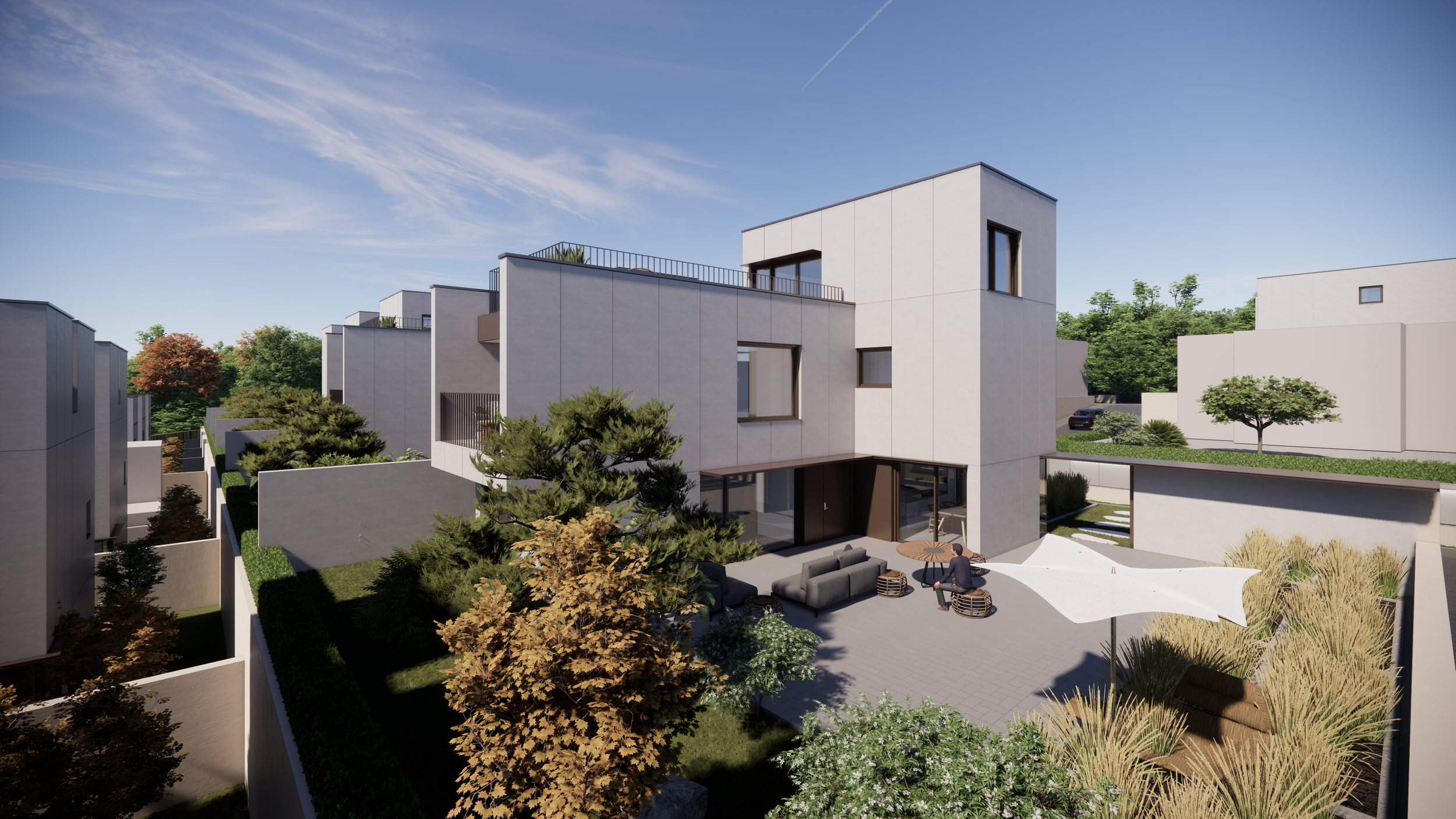
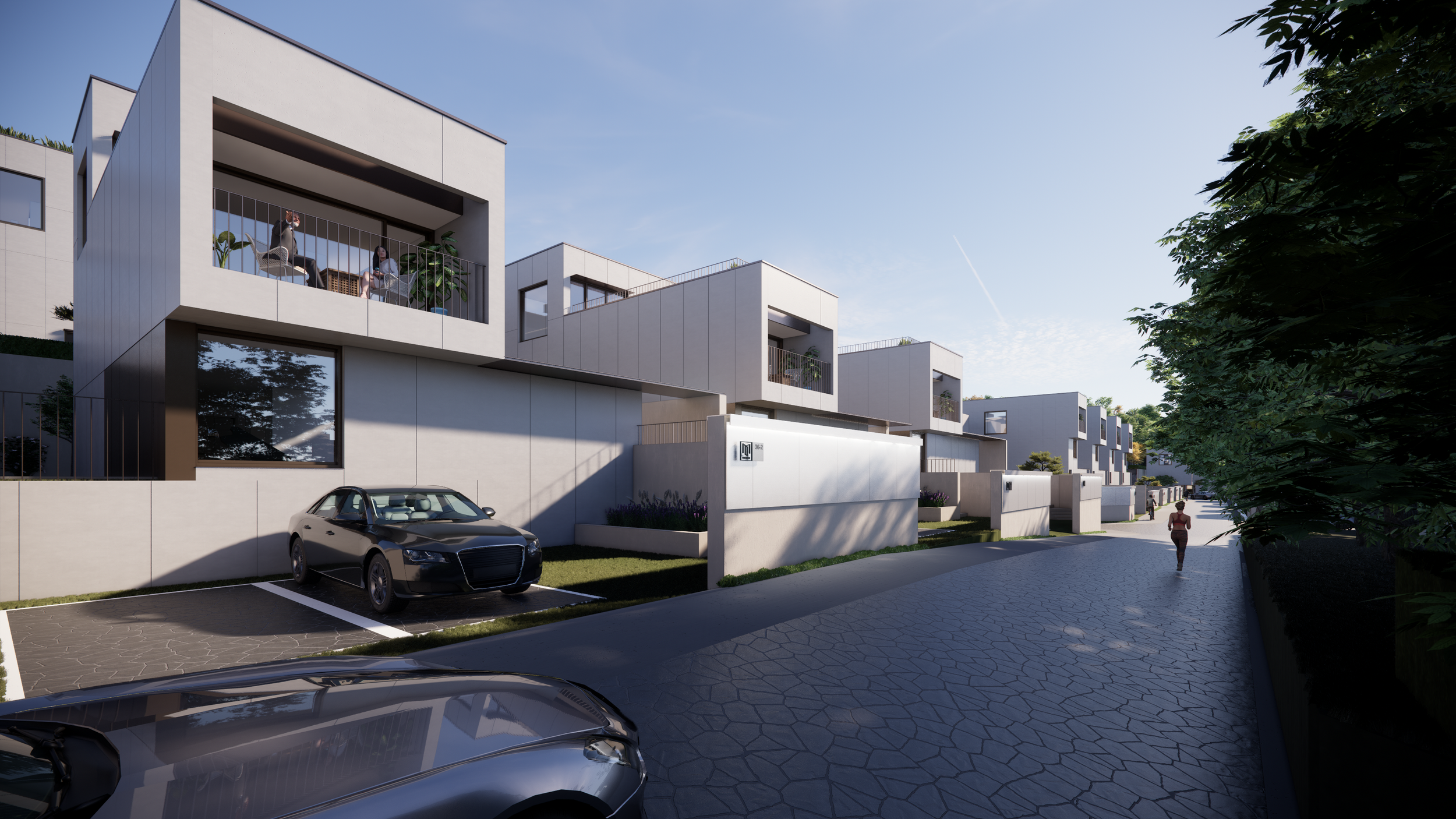
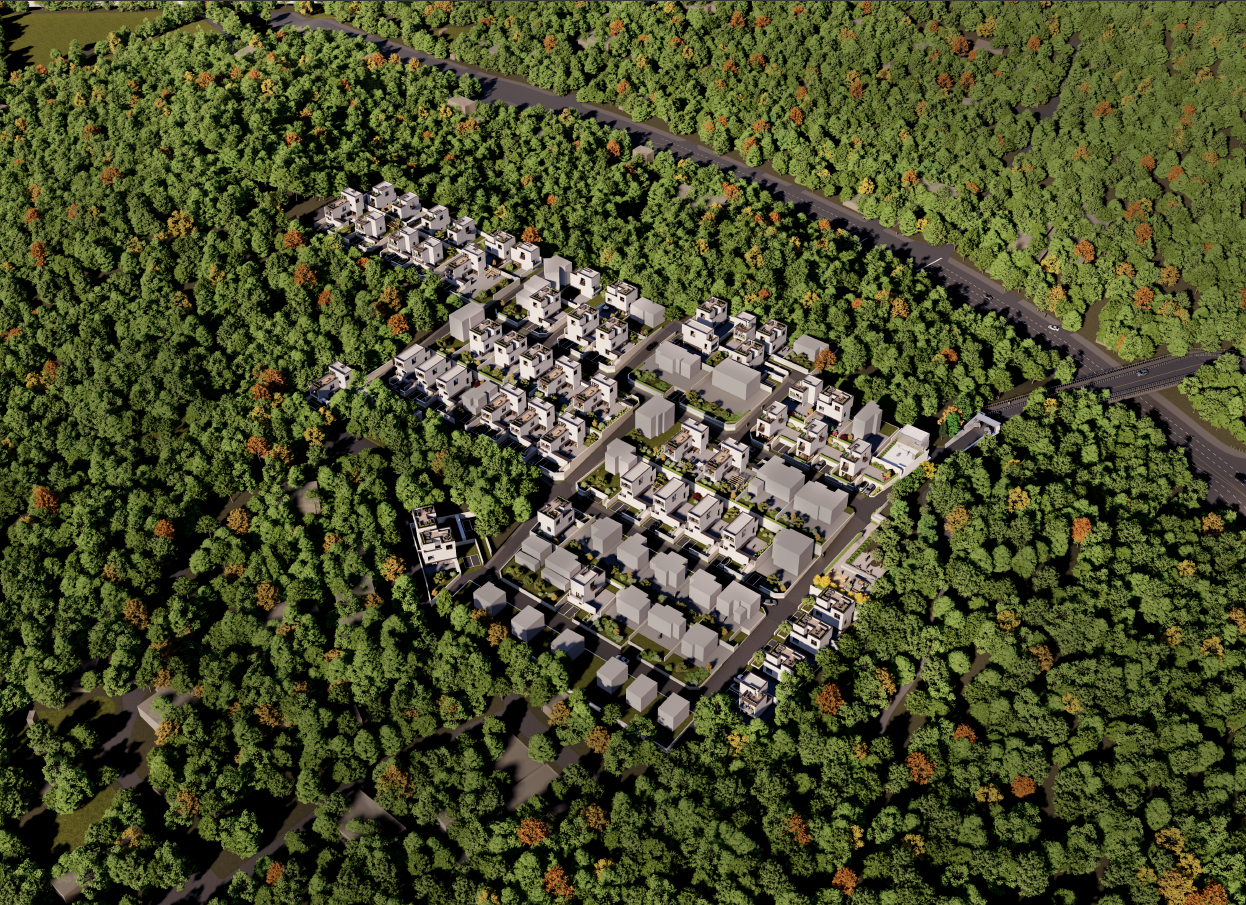
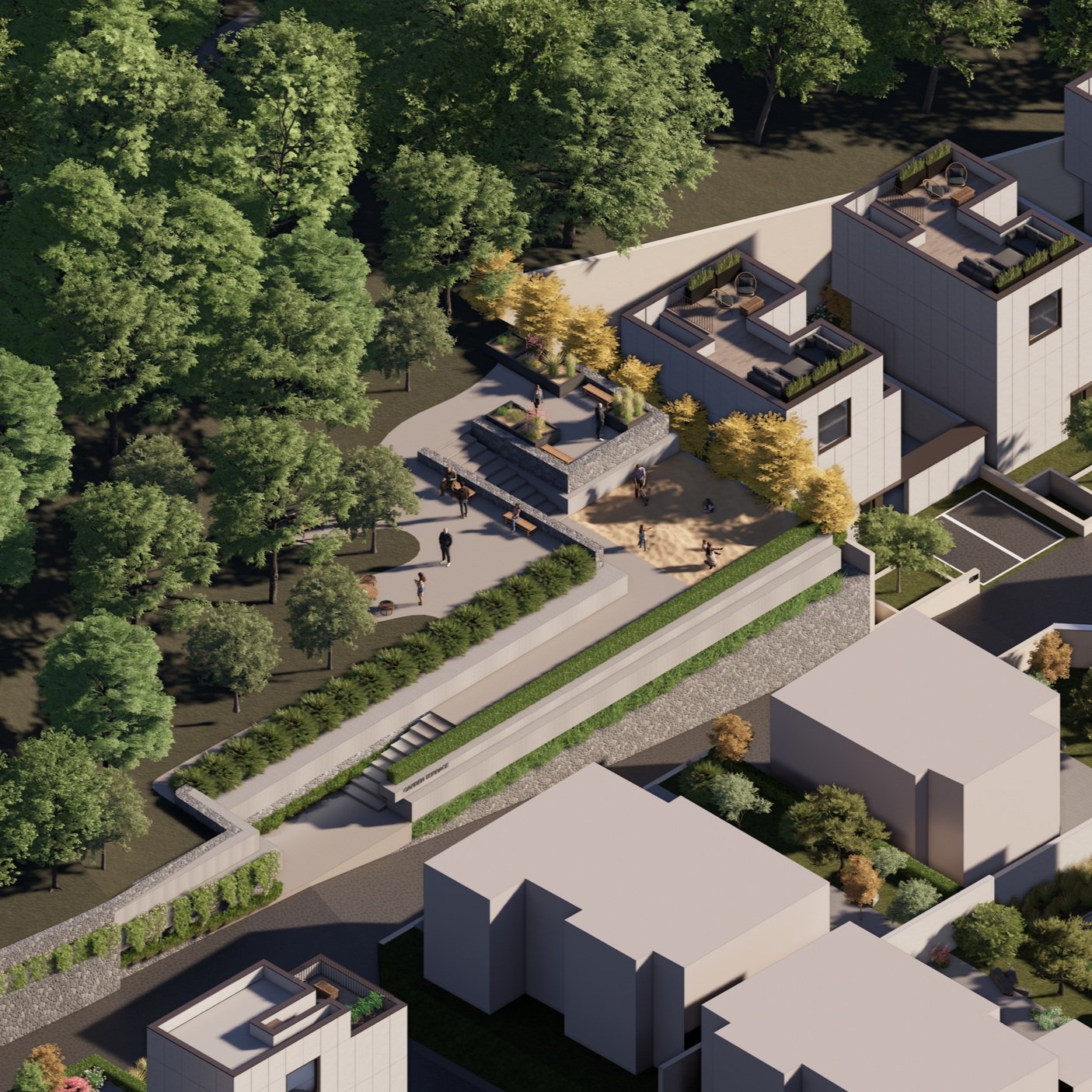
Nestled within the verdant landscapes of Yangchon-eup, Gimpo City, this project occupies a site surrounded by a serene forest and crowned by a gentle hill. Its purpose is to develop a visionary community rooted in new culture, space, and technology. The project is driven by the ideals of LOHAS (Lifestyles of Health and Sustainability), aiming to embody social sustainability, life sustainability, and environmental sustainability. It aspires to be more than just a residential complex; it is a commitment to a holistic approach that considers not only personal well-being but also environmental stewardship and social responsibility, with an eye toward the future of our planet.

Respecting the existing allocation of over 80 parcels, the project’s design standards for new public spaces are visionary. They focus on creating immersive entry experiences, enhancing the streetscape, and providing design criteria for communal spaces within and outside the community.

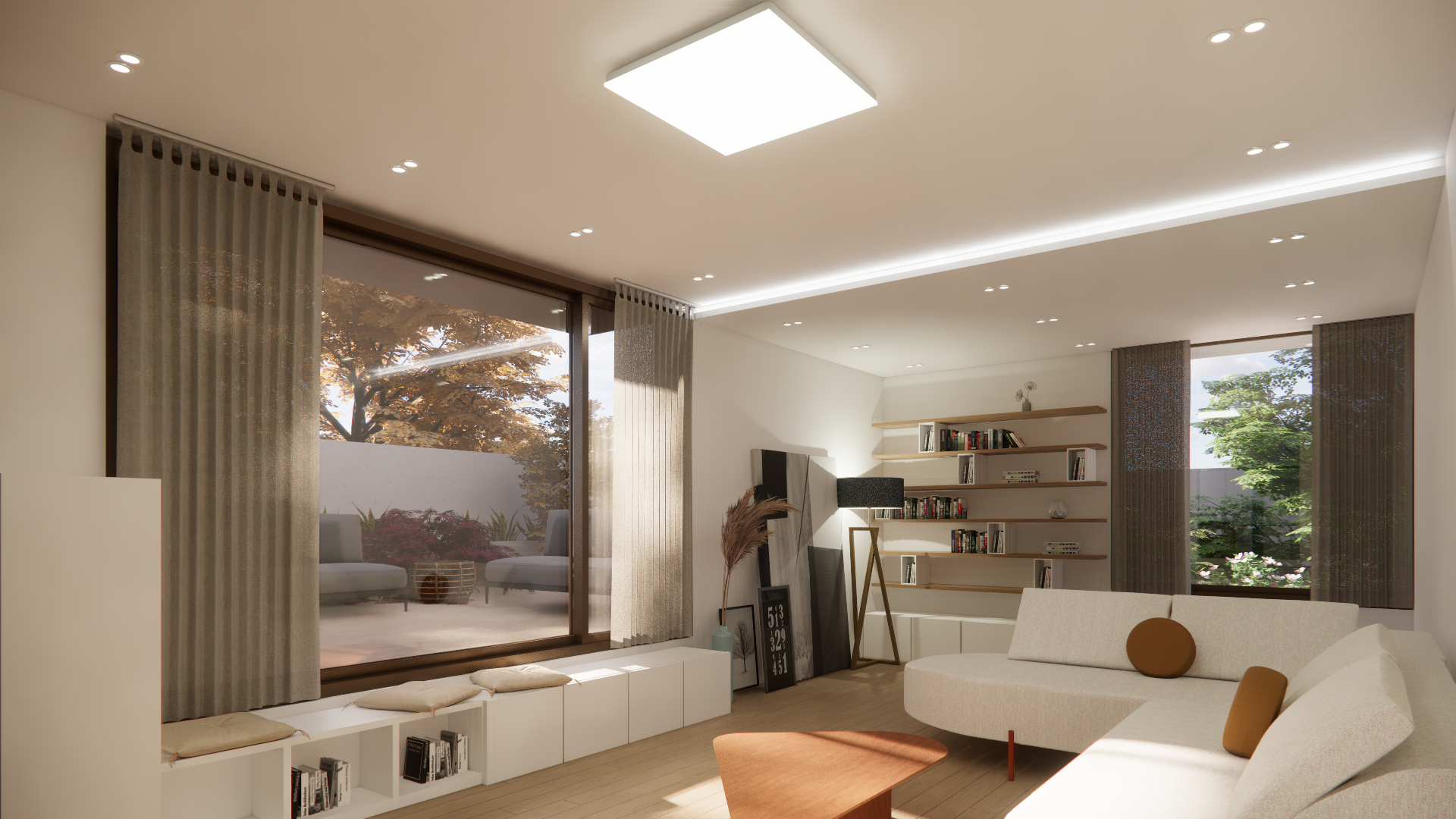
The residential typology here has been carefully analyzed in light of the significant changes in living environments post-pandemic. Five distinct residential types have emerged to cater to diverse lifestyles. Individual spaces are designed to be customizable, aligning with residents’ preferences, offering the flexibility of a bespoke housing platform.

This development isn’t just about housing; it’s about crafting a way of life that reflects the evolving needs of modern society while nurturing an environment where personal aspirations align with ecological and social responsibilities. It’s an invitation to join a community that embodies the spirit of LOHAS and envisions a sustainable, dynamic, and harmonious future.


Related Research


Year: 2023

Location : Gimpo, Korea

Size : 35,273 m²

Status : Design Proposal

Type : Residential, Community Facilities, Master Plan

Principal in Charge :

Seojoo Lee, Hyojung Kim (I.f), Dongil Kim (Kyung Hee University)

Design Team :

Seungil Kim, Junyoung Park, Soohyun Im, Inyeob Jang (I.f)
Jinju National Museum

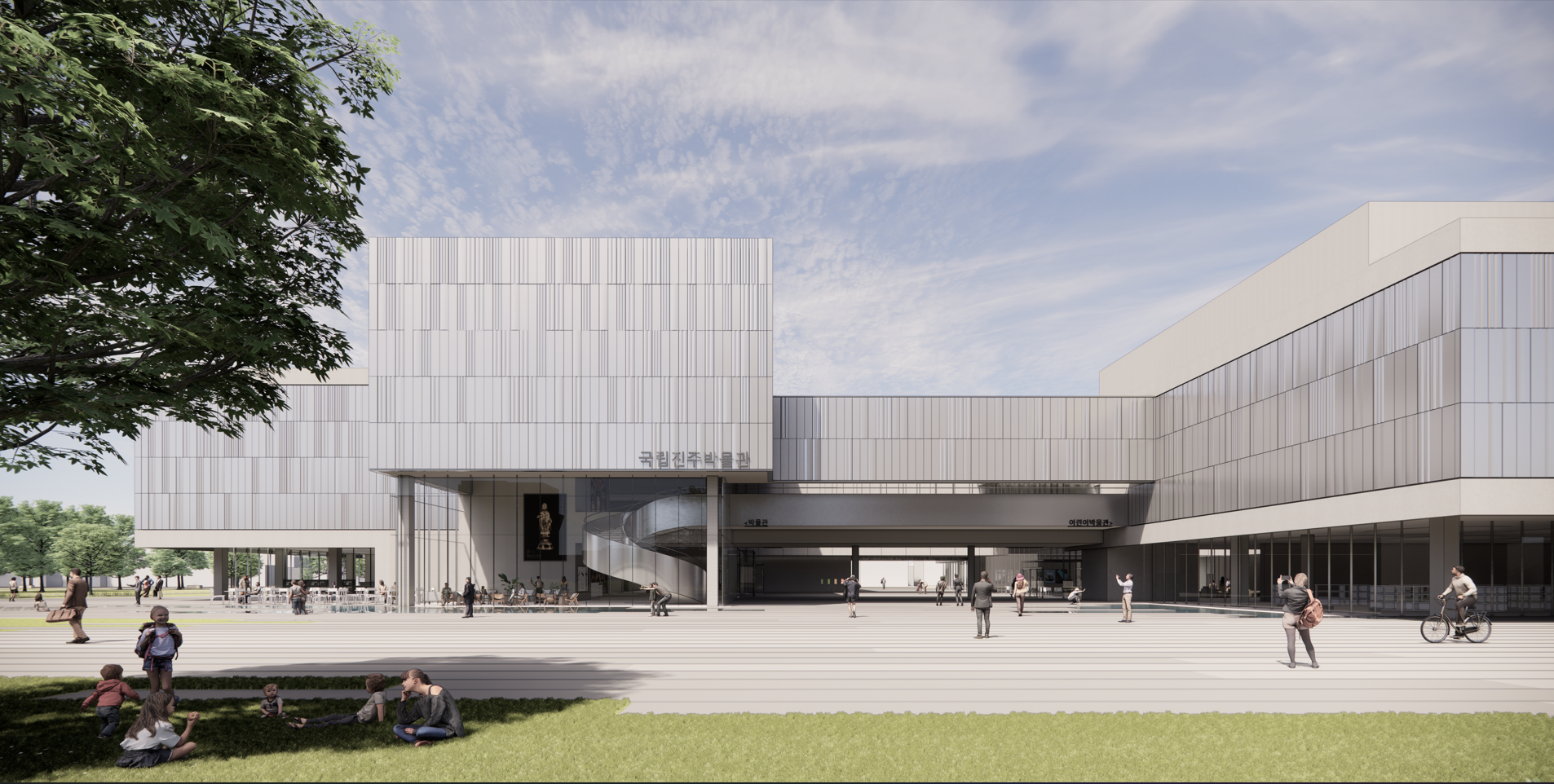
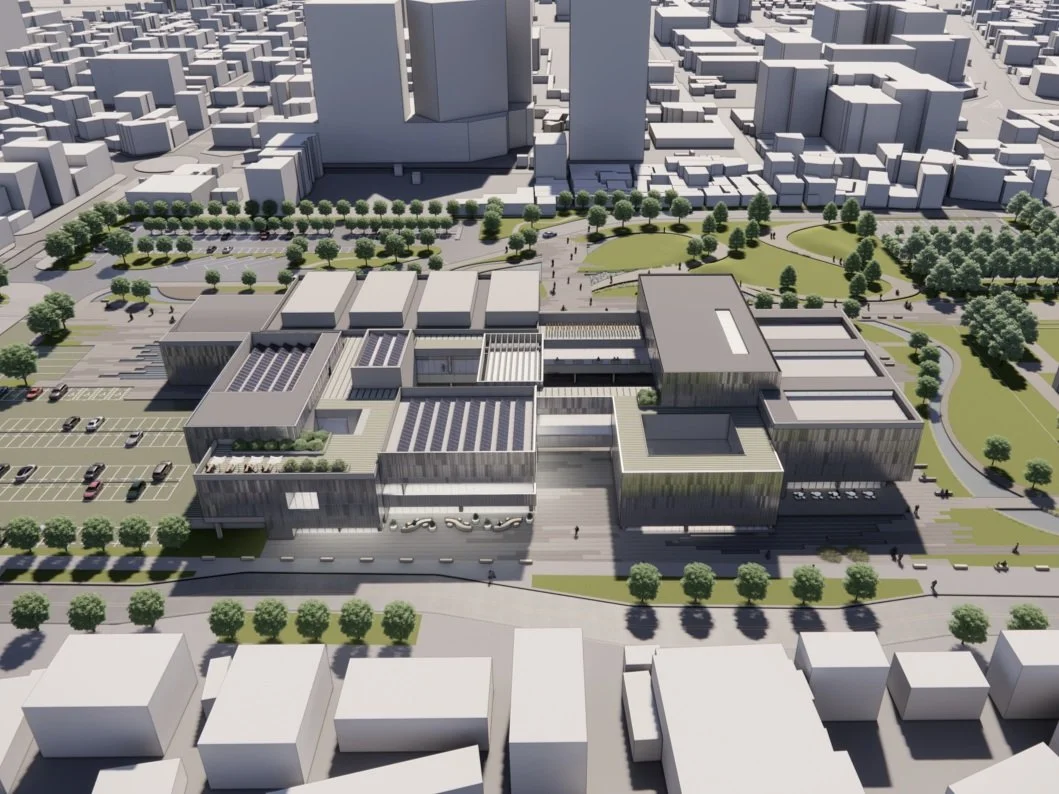
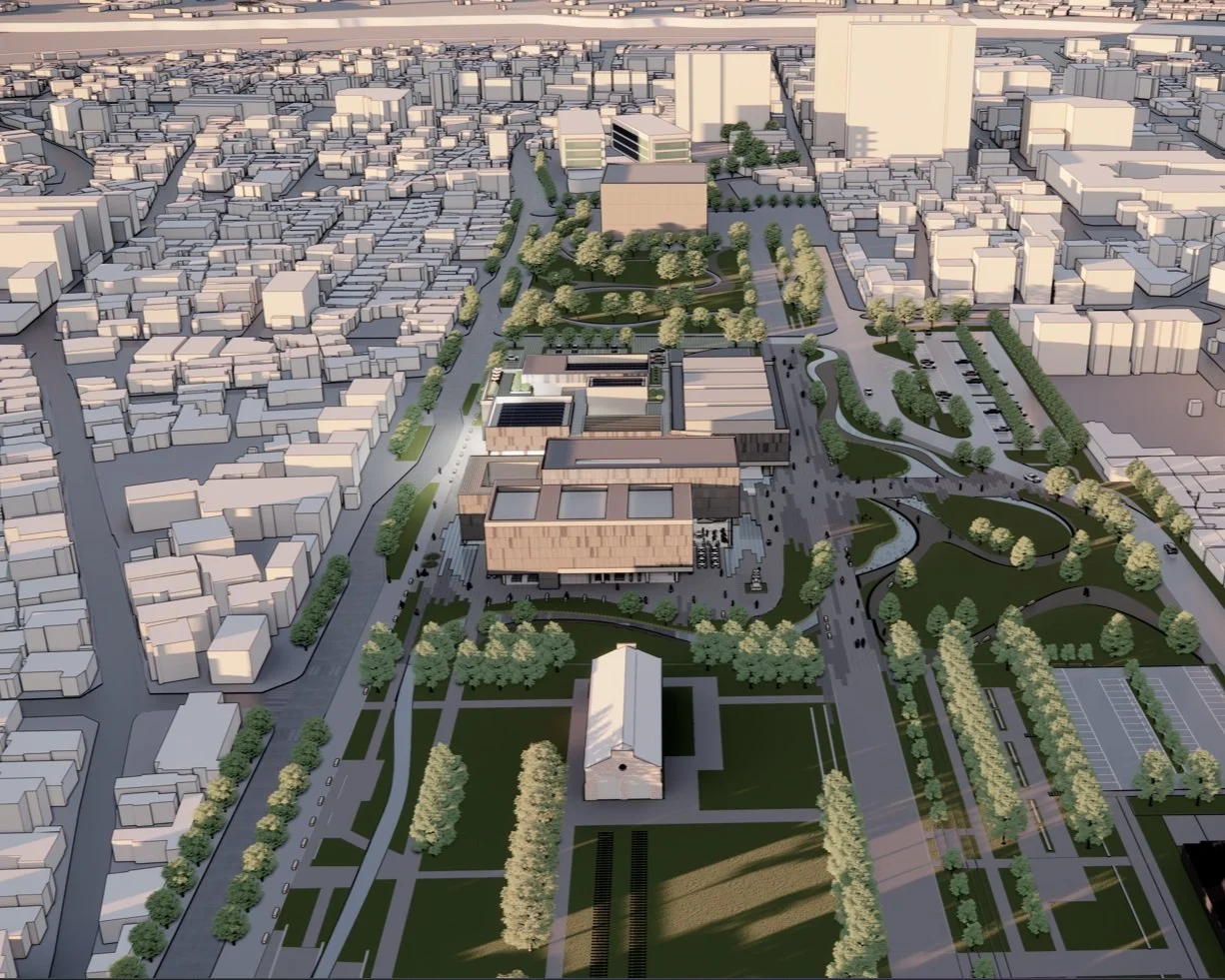
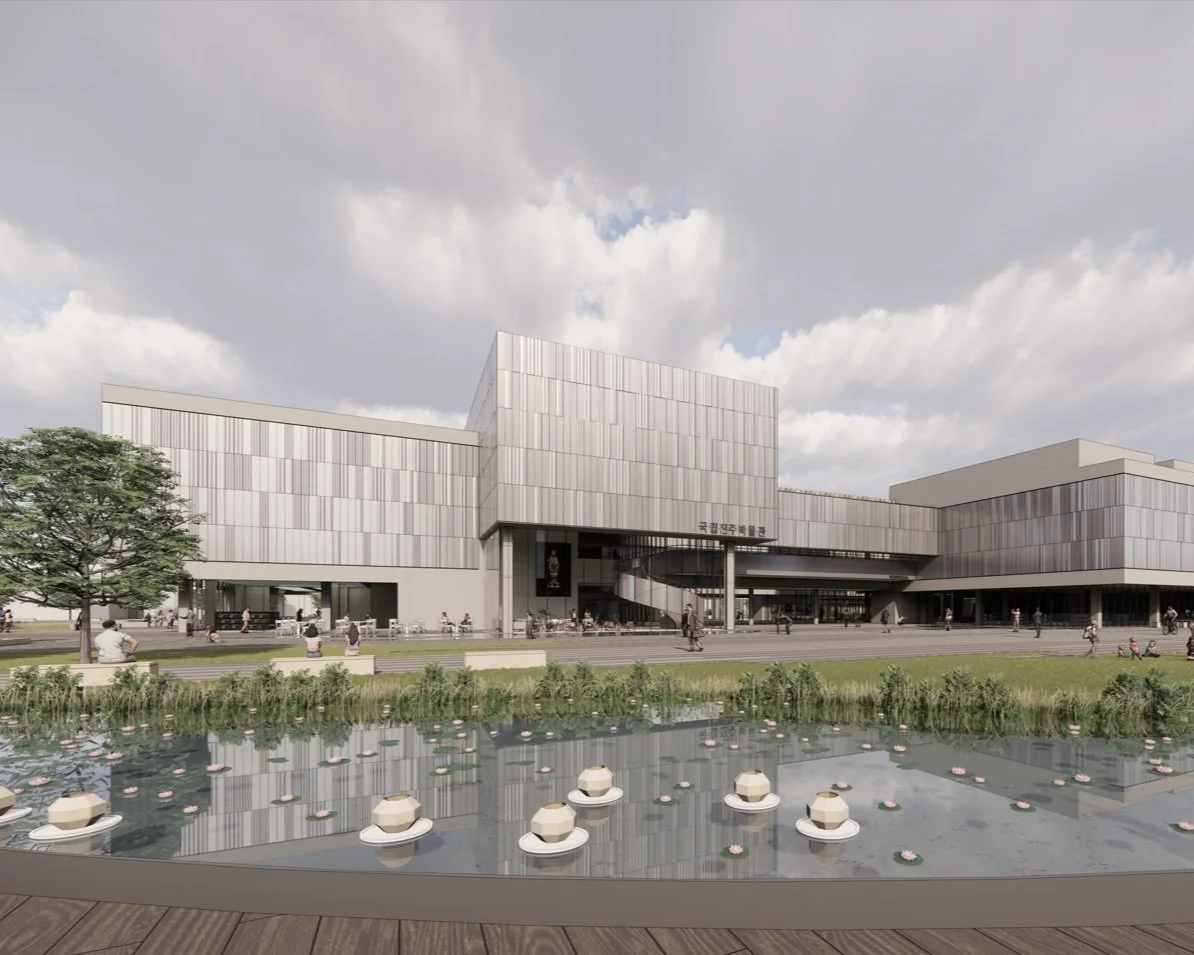
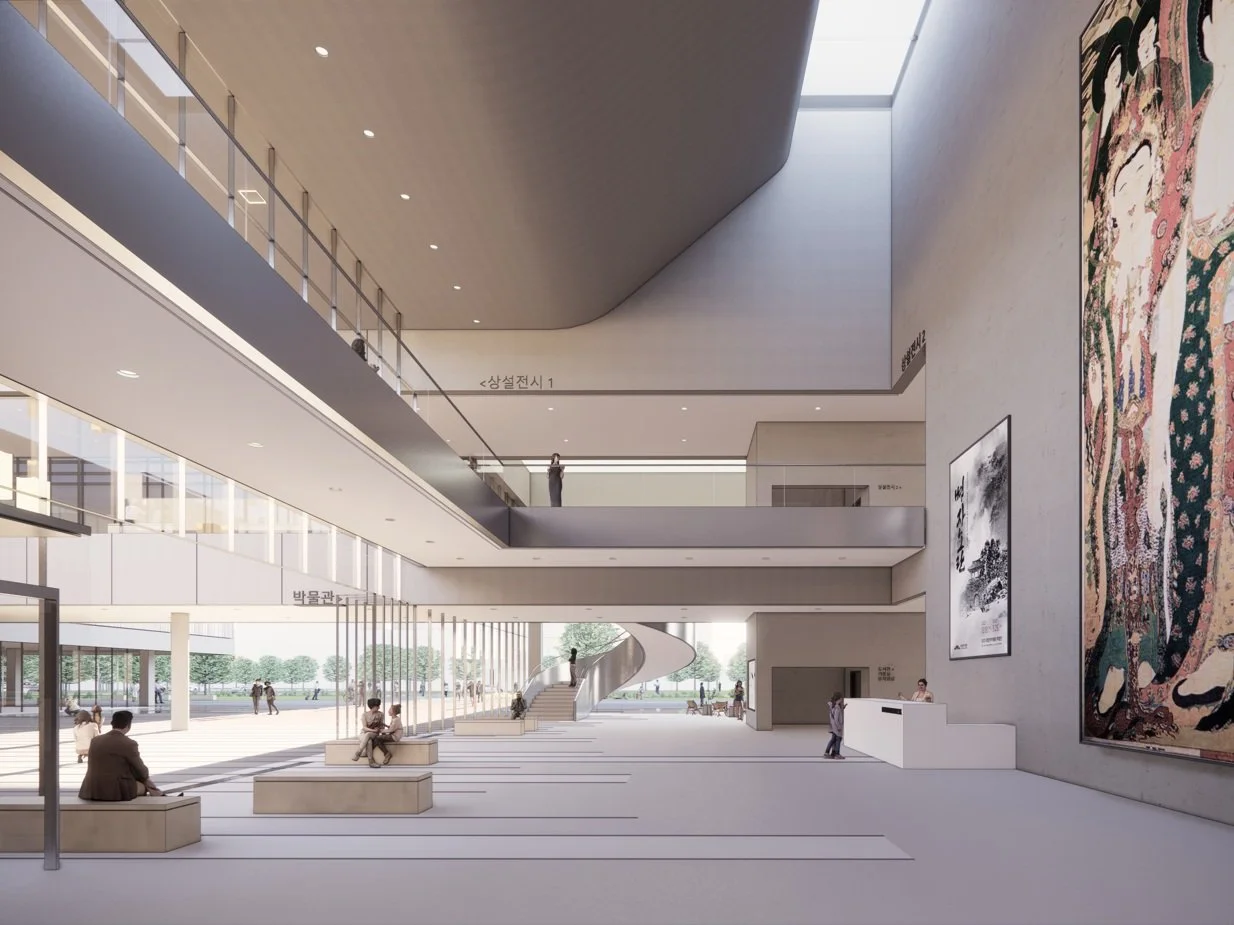
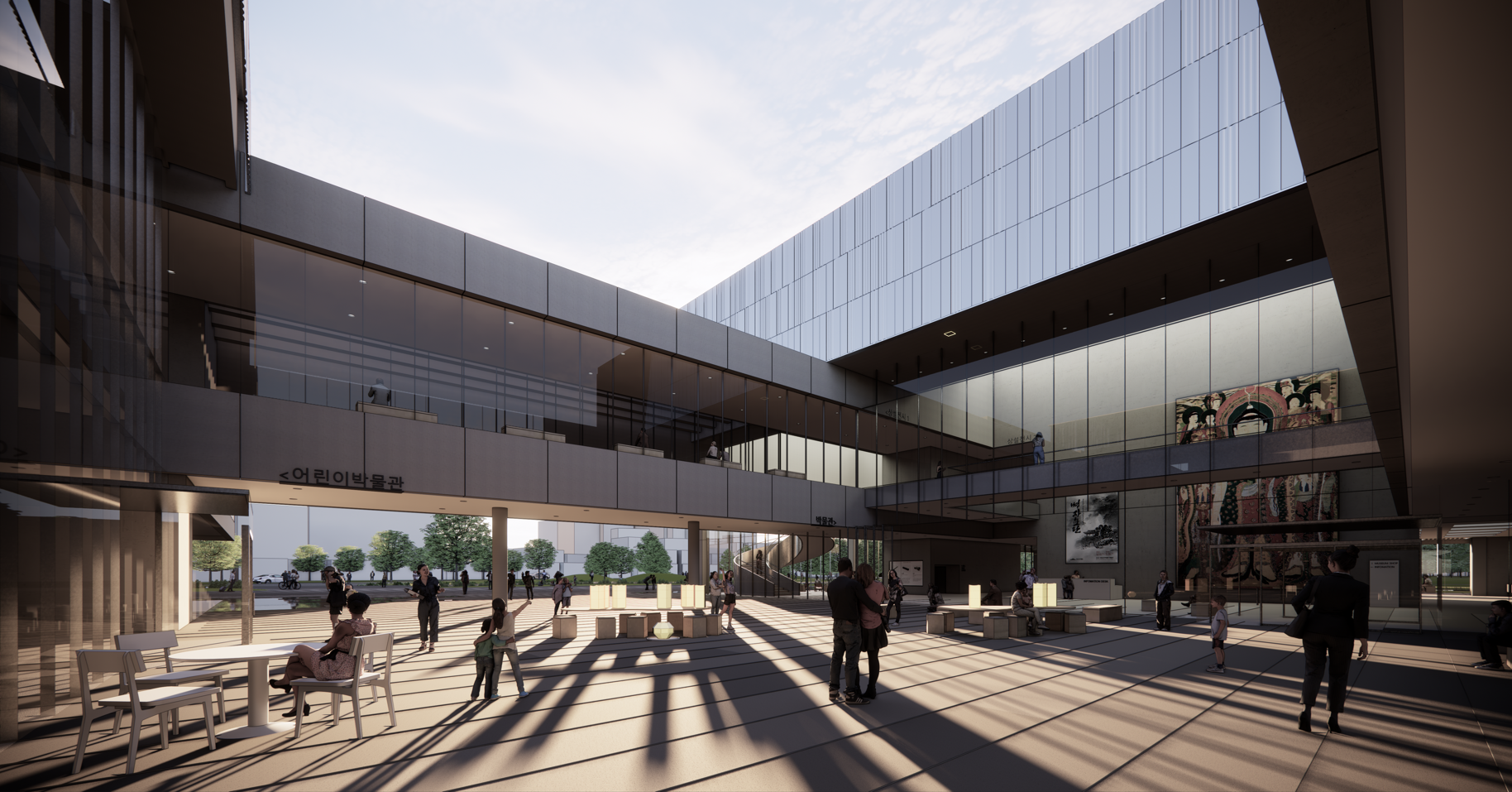
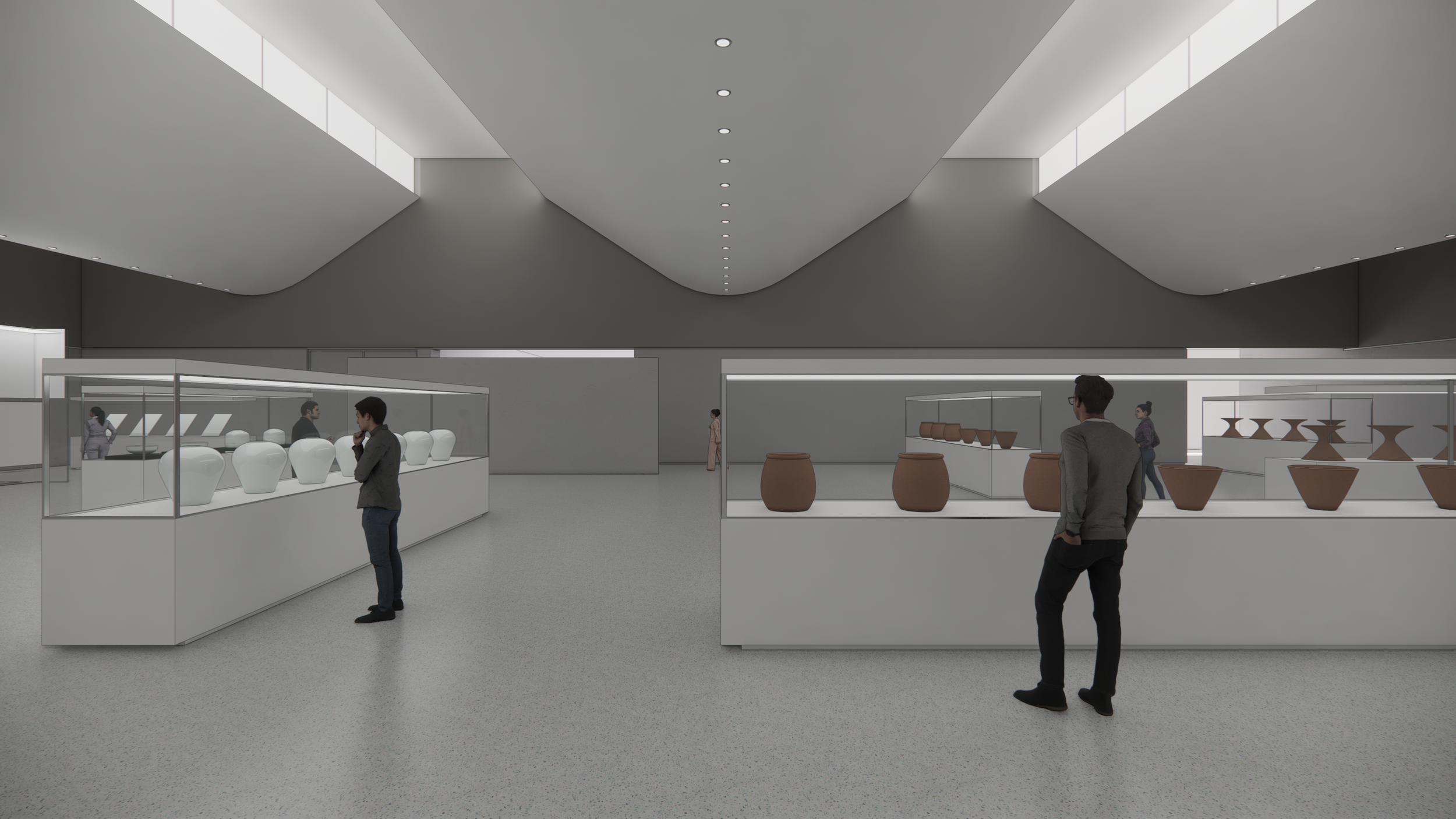
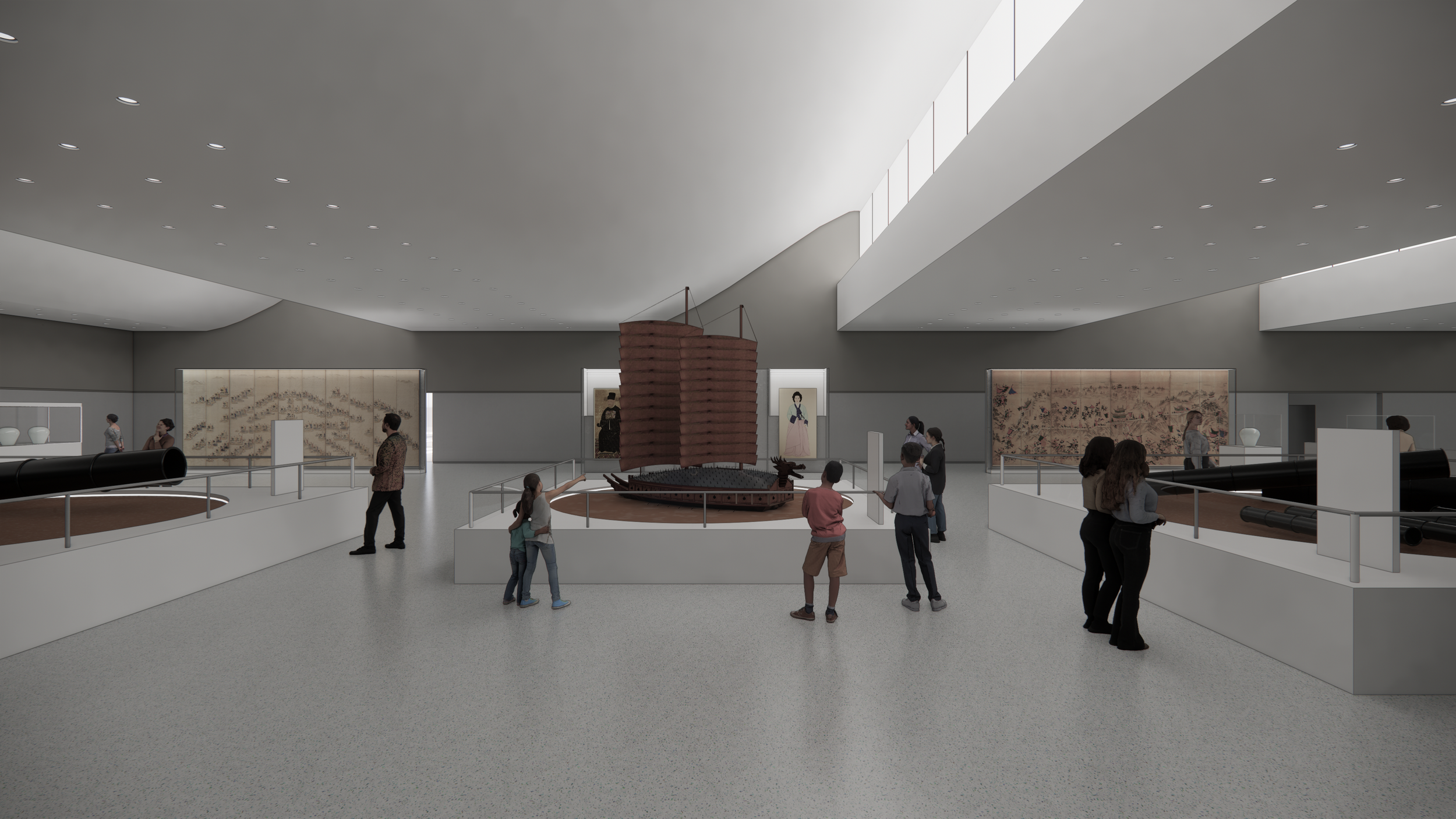
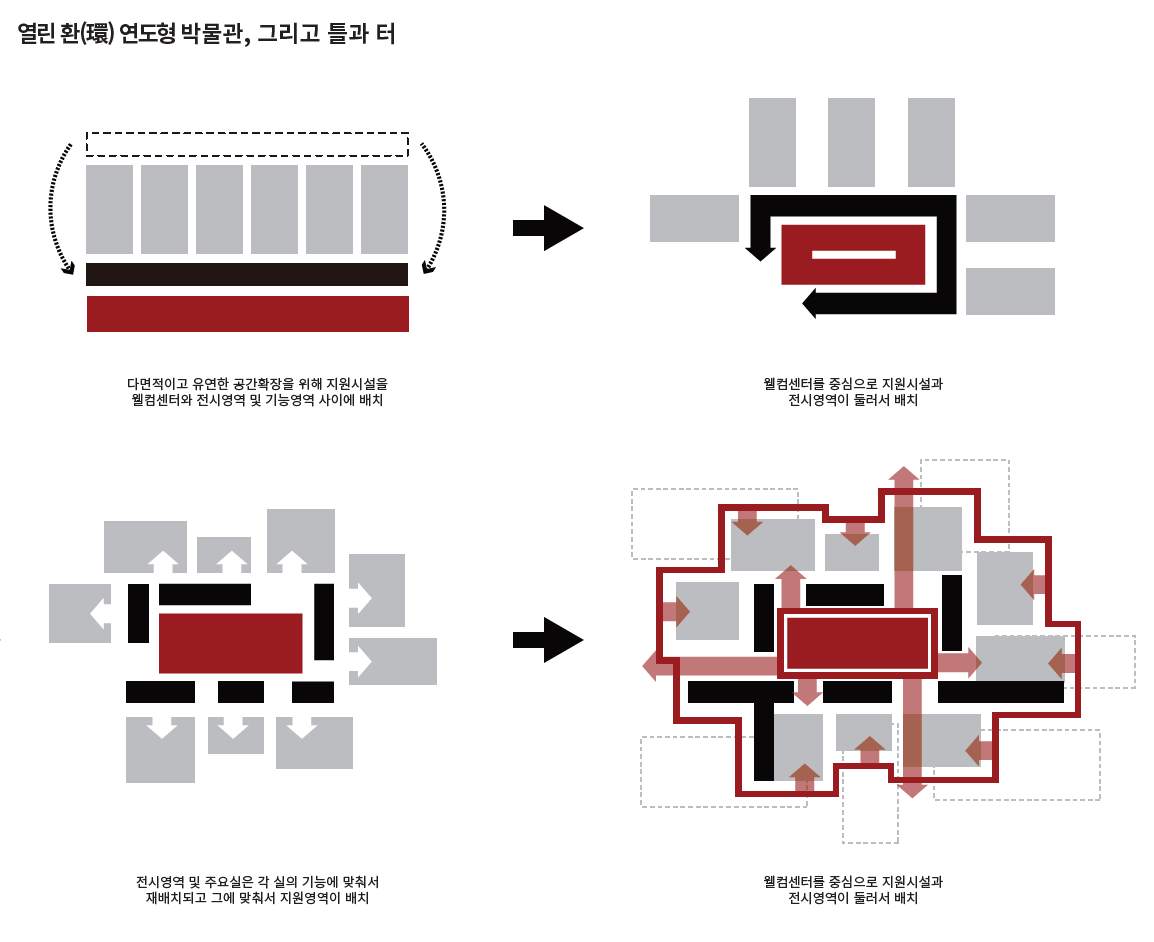
The National Jinju Museum is embarking on a significant transformation, moving from its iconic location within Jinju Castle to a new cultural park situated between the city center and the urban area near the old Jinju Station. The aim is to reposition itself as a focal point for the citizens of Jinju. In this endeavor, we propose the creation of an open, circular museum that seamlessly blends the daily lives of citizens with the museum’s commemorative essence.It begins with the concept of the museum as an exceptional lobby, one that interfaces directly with the linear park that adjoins the urban core. The revitalized area, once divided by railway tracks, is transformed into a park where Jinju citizens can engage with the city’s history and culture during their daily routines. The circular design encompasses flexible exhibition, educational, cultural, and leisure spaces that directly connect to both the city street and the park, allowing people to encounter Jinju’s history and culture as they commute to school or work.

This circular space, serving as an extension of civic life, is situated adjacent to the Welcome Center, which becomes the bridge between the expanded museum and the civic space. By inserting a framework that physically and spatially supports both spaces, we enhance accessibility for the citizens, fostering a stronger connection between the museum and their daily lives. Our proposal is driven by the idea that the museum’s role extends beyond commemorating history; it should be an integral part of daily existence. The open, circular design encourages citizens to engage with the museum’s unique experiences as they go about their daily routines. This transformative approach seeks to seamlessly integrate the museum’s commemorative aspect with the everyday lives of Jinju citizens, making history and culture accessible to all.


Year: 2023

Location : Jinju, Korea

Size : 33,234 ㎡

Status : Competition Entry

Type : Museum

Principal in Charge :

Seojoo Lee, Hyojung Kim (I.f), Allie Yeseul Chung (I.f Manila), Dongil Kim (Kyung Hee University), Minho Lee (func. Architects)

Design Team : Seungil Kim, Junyoung Park (I.f)
Collaboration : Urbanyard Landscape

SY Inpection Engineering

Creating Sensory Experience in Industrial Architecture

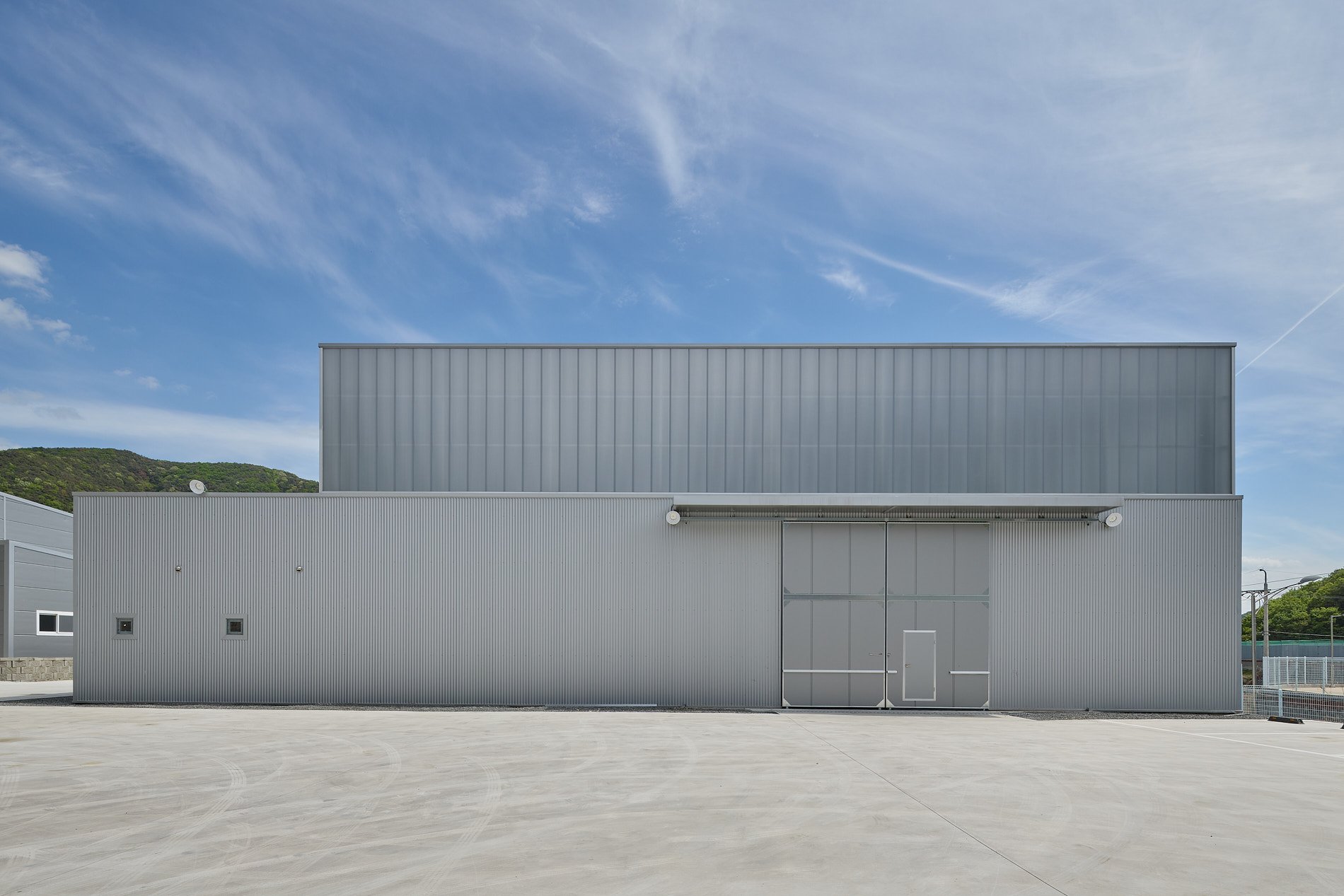
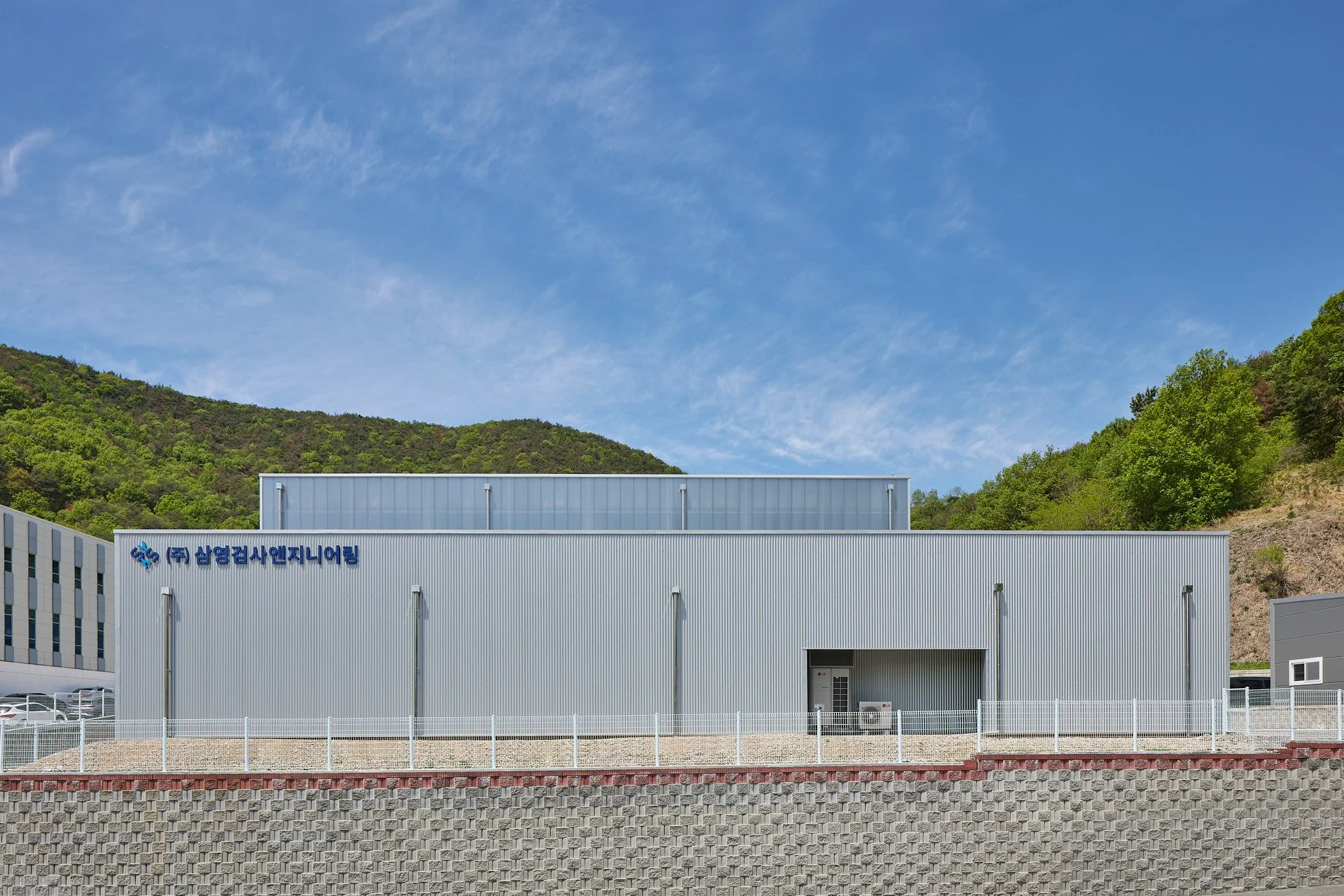
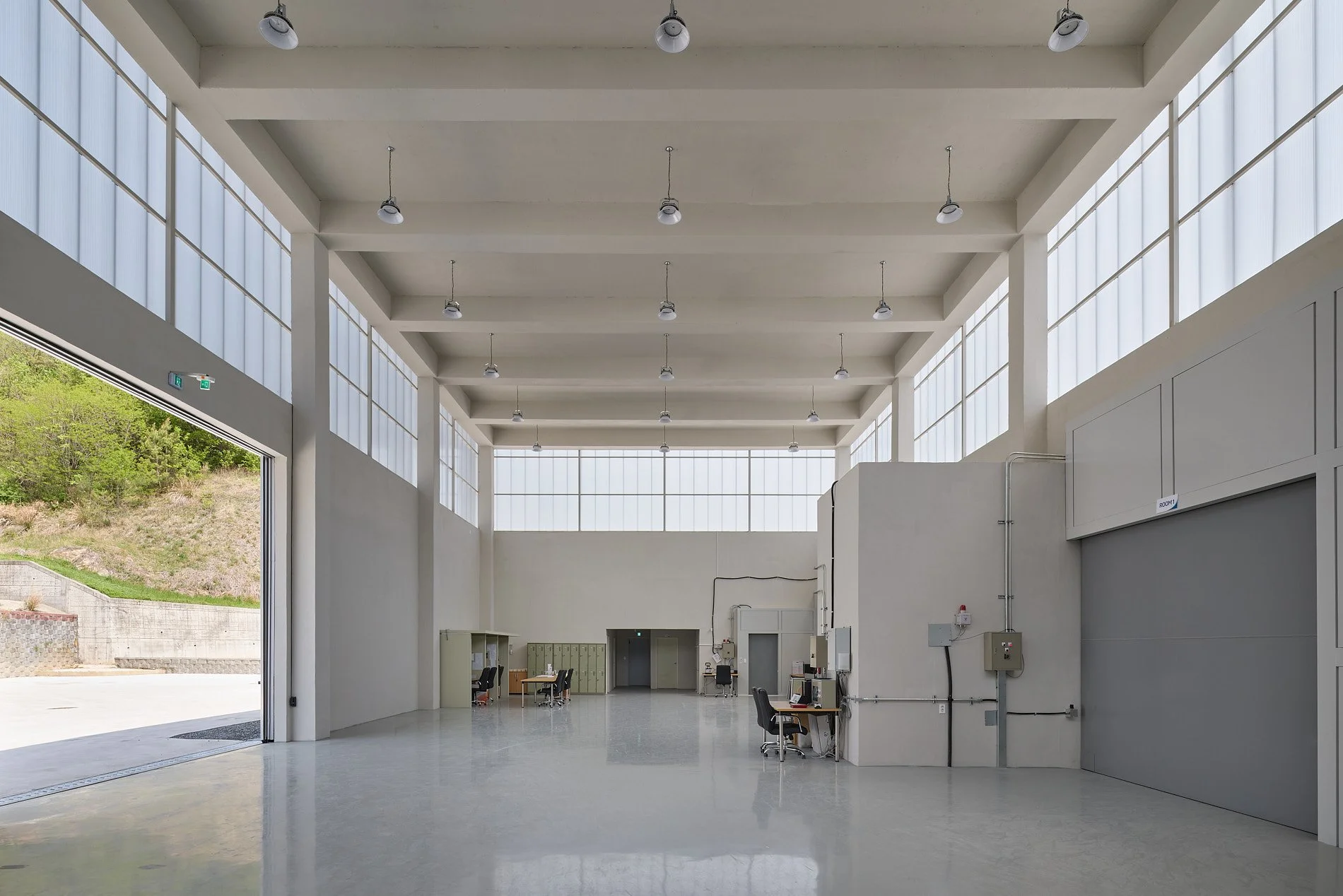
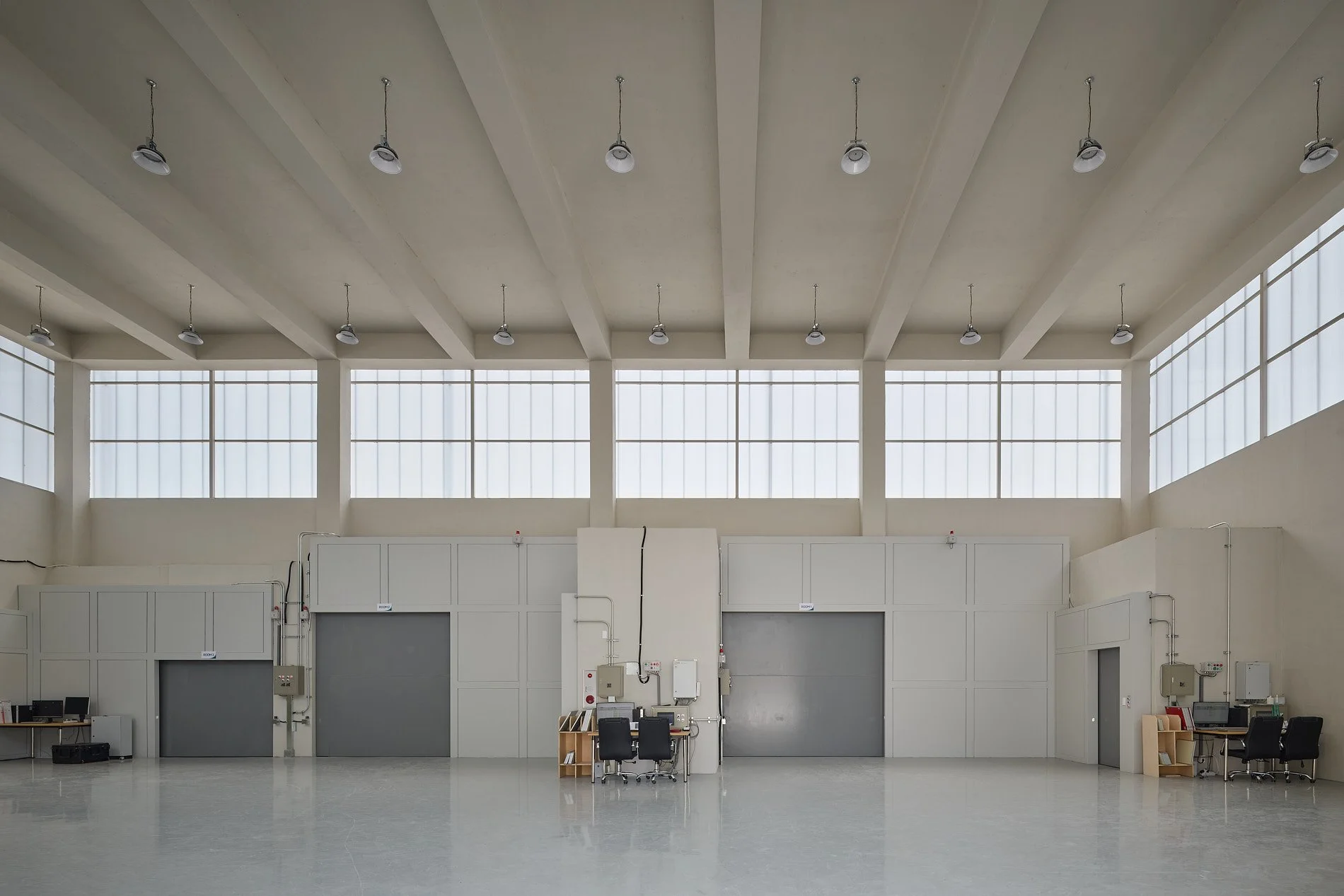
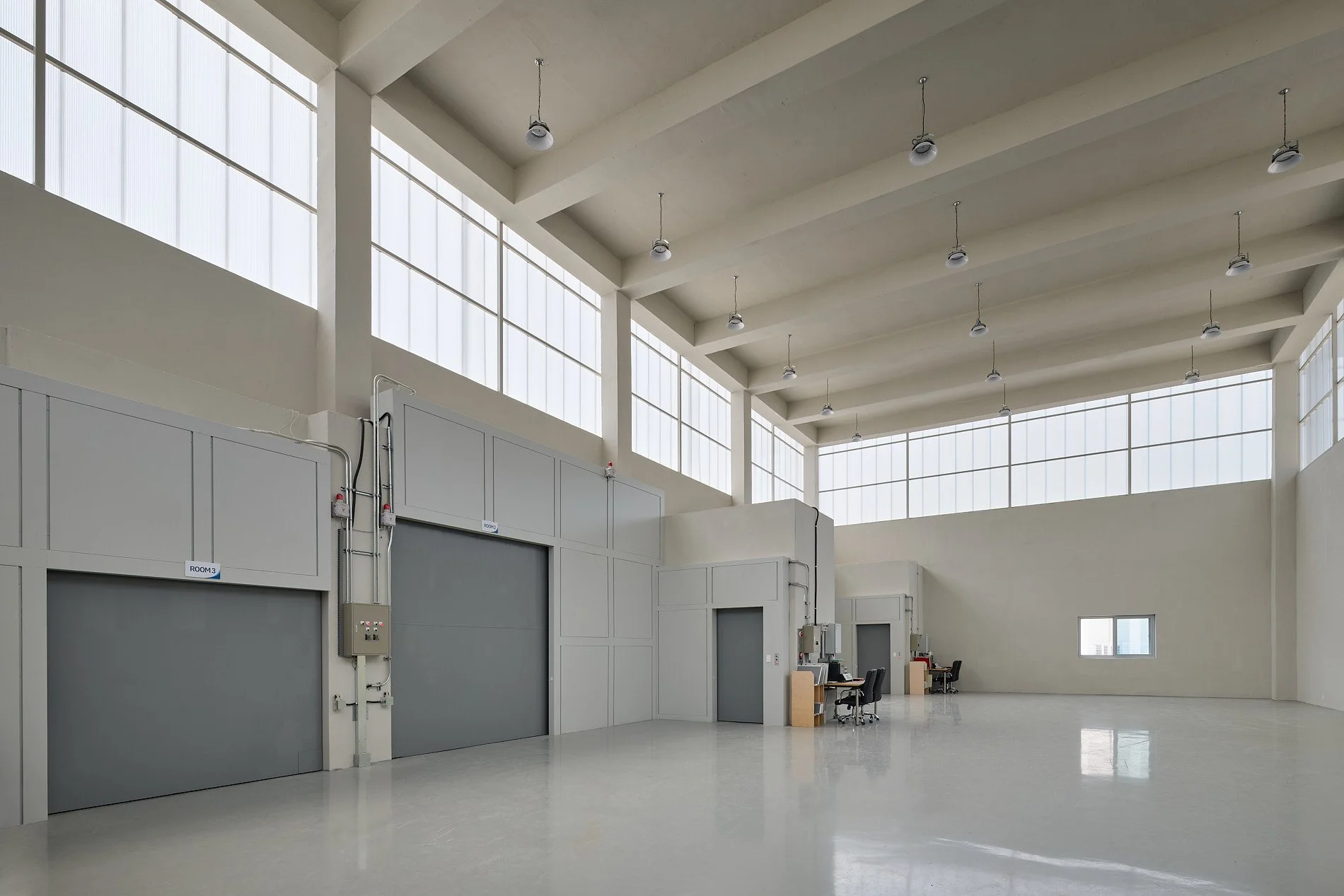
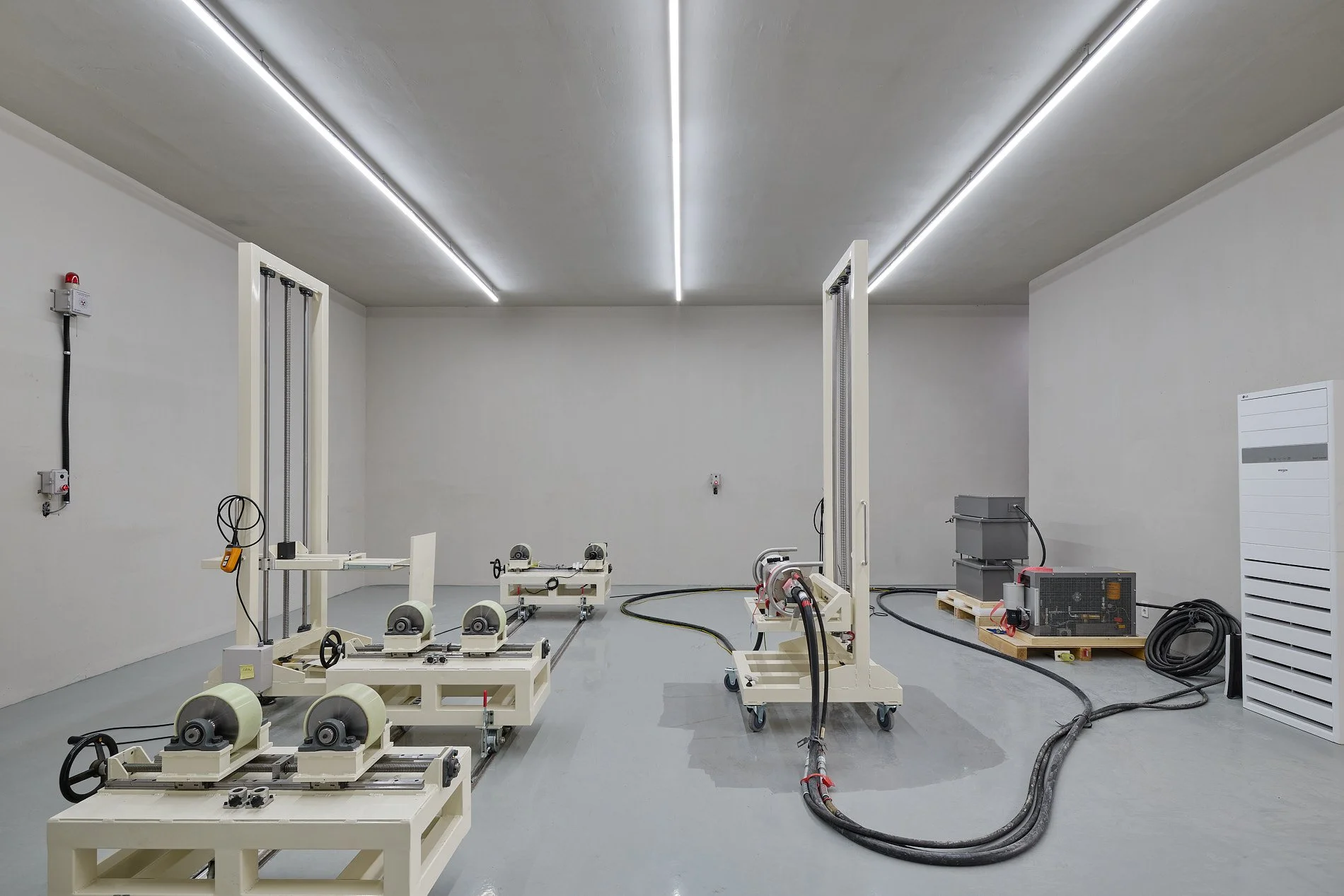
Inspection facilities rarely allow architectural expression. Handling invisible radiation, heavy equipment, and strict functional priorities, these spaces are dominated by technical constraints. The Samyoung Inspection Engineering facility in Miryang explored how architecture can intervene within such limits.

Order Through Function

Located in an industrial complex in Miryang, the facility is a specialized non-destructive testing (NDT) center with shielding walls, heavy iron doors, and high ceilings. These constraints were embraced as a framework for order. Three main inspection rooms are connected by clear circulation paths, with an open central hall serving as workspace and lobby, where light and sightlines intersect. Minimal spacing between areas preserves human-scale breathing room.
Light as a Design Device

Shielding walls enclose interiors, yet clerestory polycarbonate windows allow diffuse daylight to penetrate deep inside. This soft light conveys the rhythm of day and season to staff and preserves dignity within dense technical spaces.

Workplace Welfare

A south-facing rooftop terrace provides a vital outdoor retreat. Sunlight and open views offer moments to restore daily rhythm, reflecting an architectural approach that respects human presence.

A Disciplined Exterior

The exterior responds to its context with restraint. Precise materials, understated colors, and vertical façade proportions create a composed presence. Light and shadow subtly express organizational dignity.

Industrial Architecture, Reimagined

The facility shows that industrial buildings can balance function, human presence, and technology. Through order, light, and circulation, architecture shapes sensory experience even under strict technical conditions.


Year : 2024

Location : Miryang, Korea

Size : 653.89 m²

Status : Built

Type : Factory

Principal in Charge :

Seojoo Lee, Hyojung Kim (I.f), Dongil Kim (I.f CDL), Minho Lee (func. Architects)

Twinrock Hotel & Resort

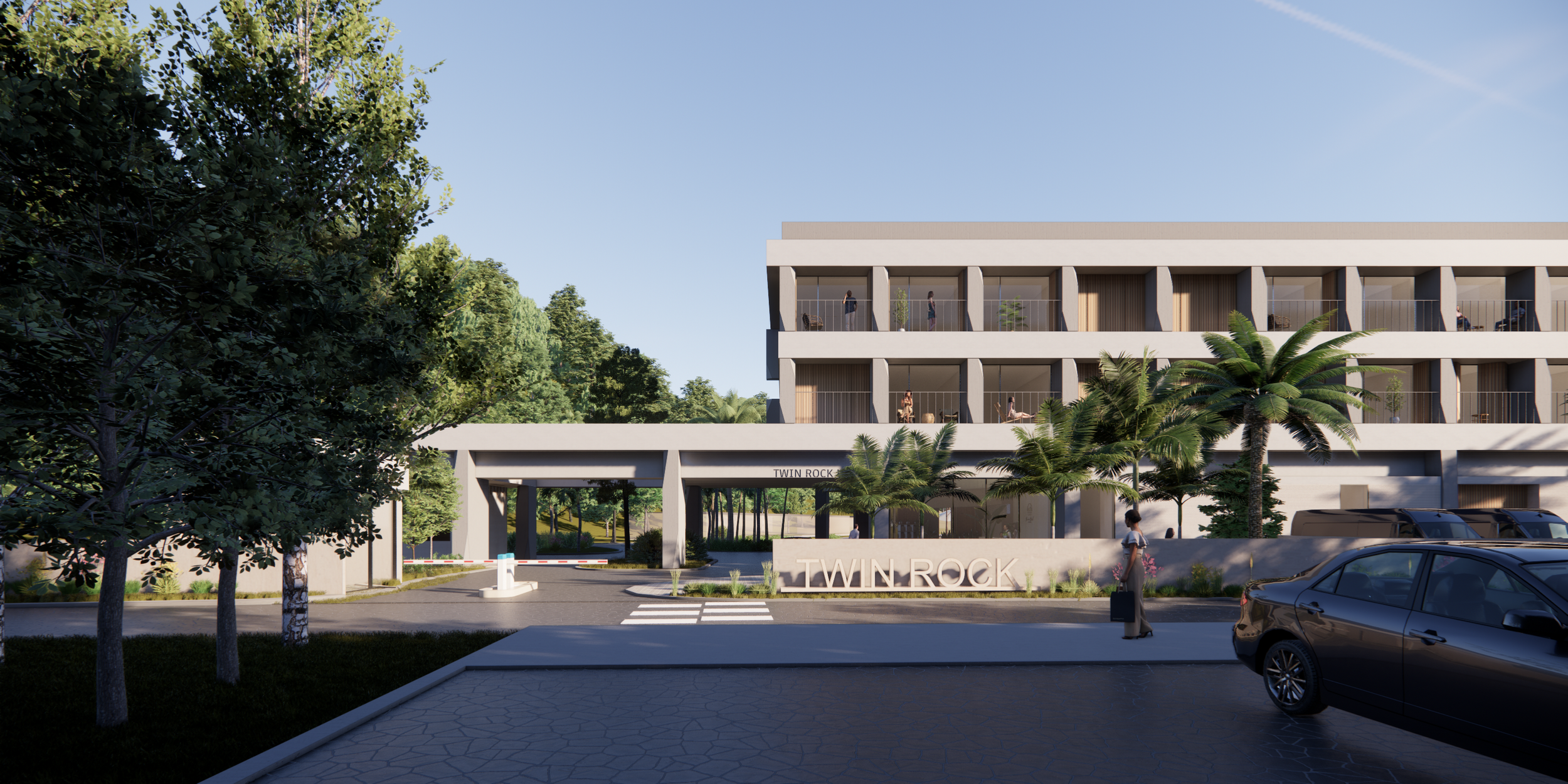
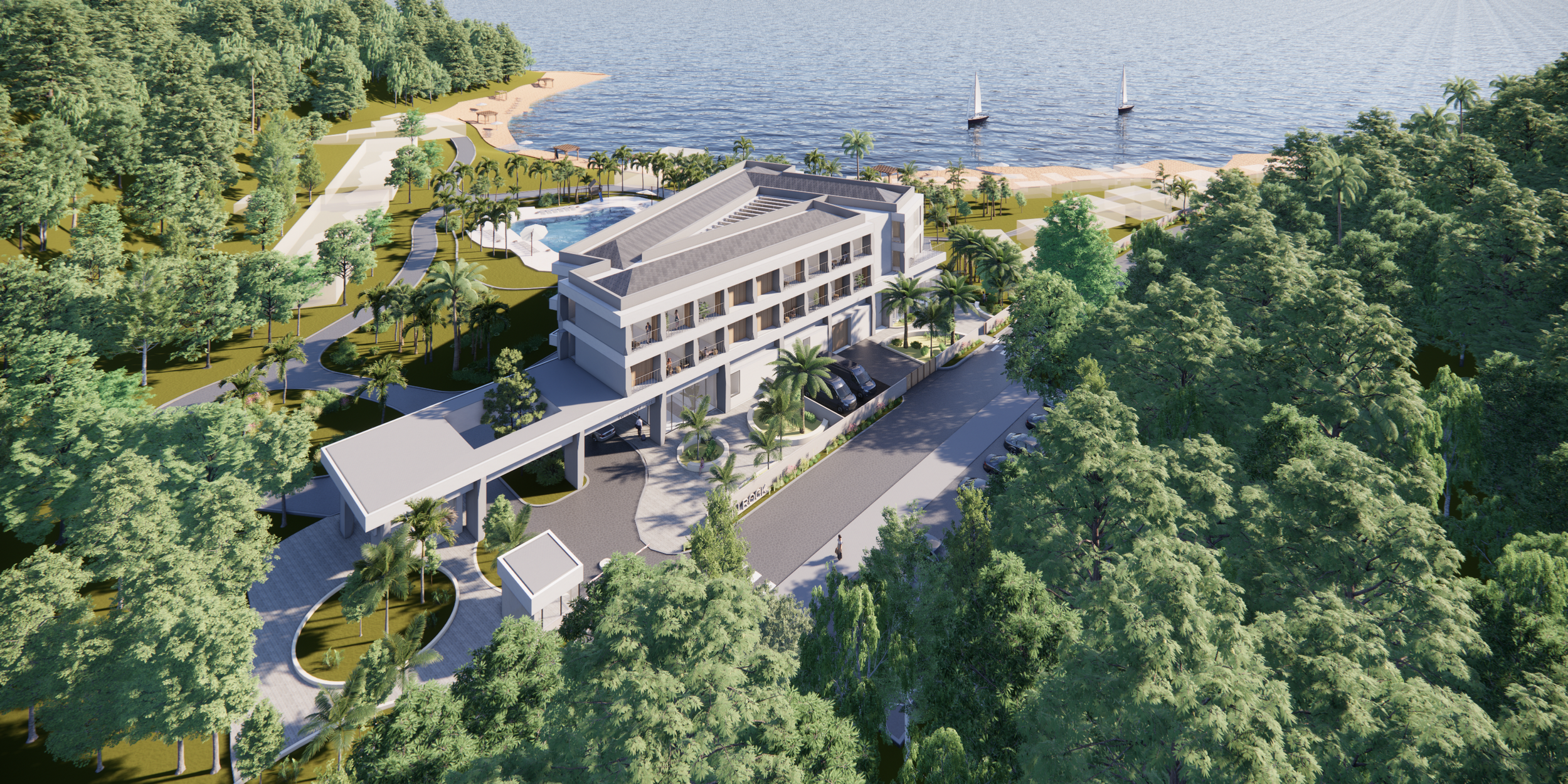
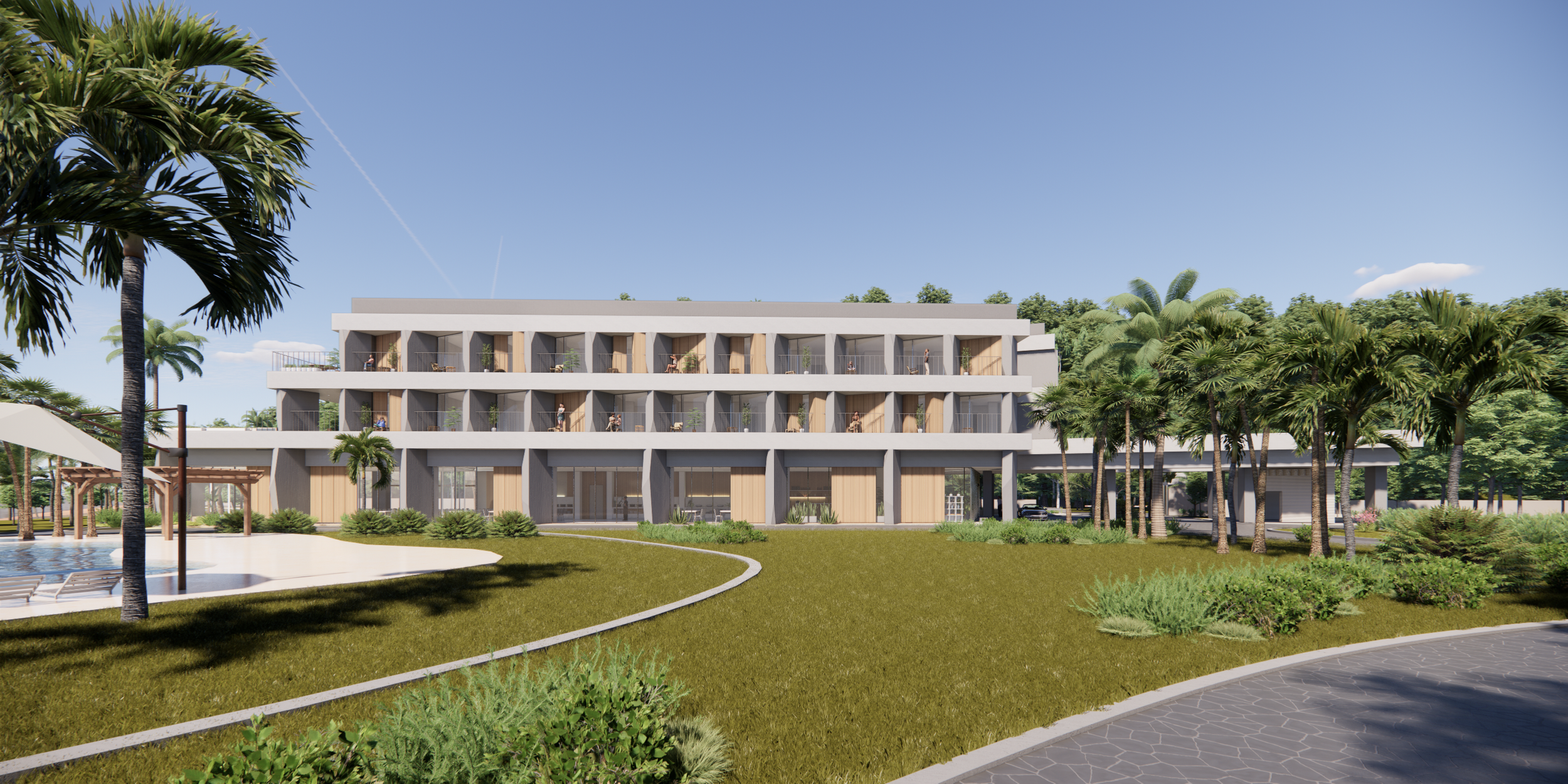
Nestled along the serene shores of Catanduanes Island in the Philippines, Twinrock Hotel offers a tranquil respite amidst the natural beauty of the region. The existing resort site boasts several amenities, including an outdoor swimming pool, cabanas, event spaces, a picnic area, and a sandy beach where one can witness the sunset.

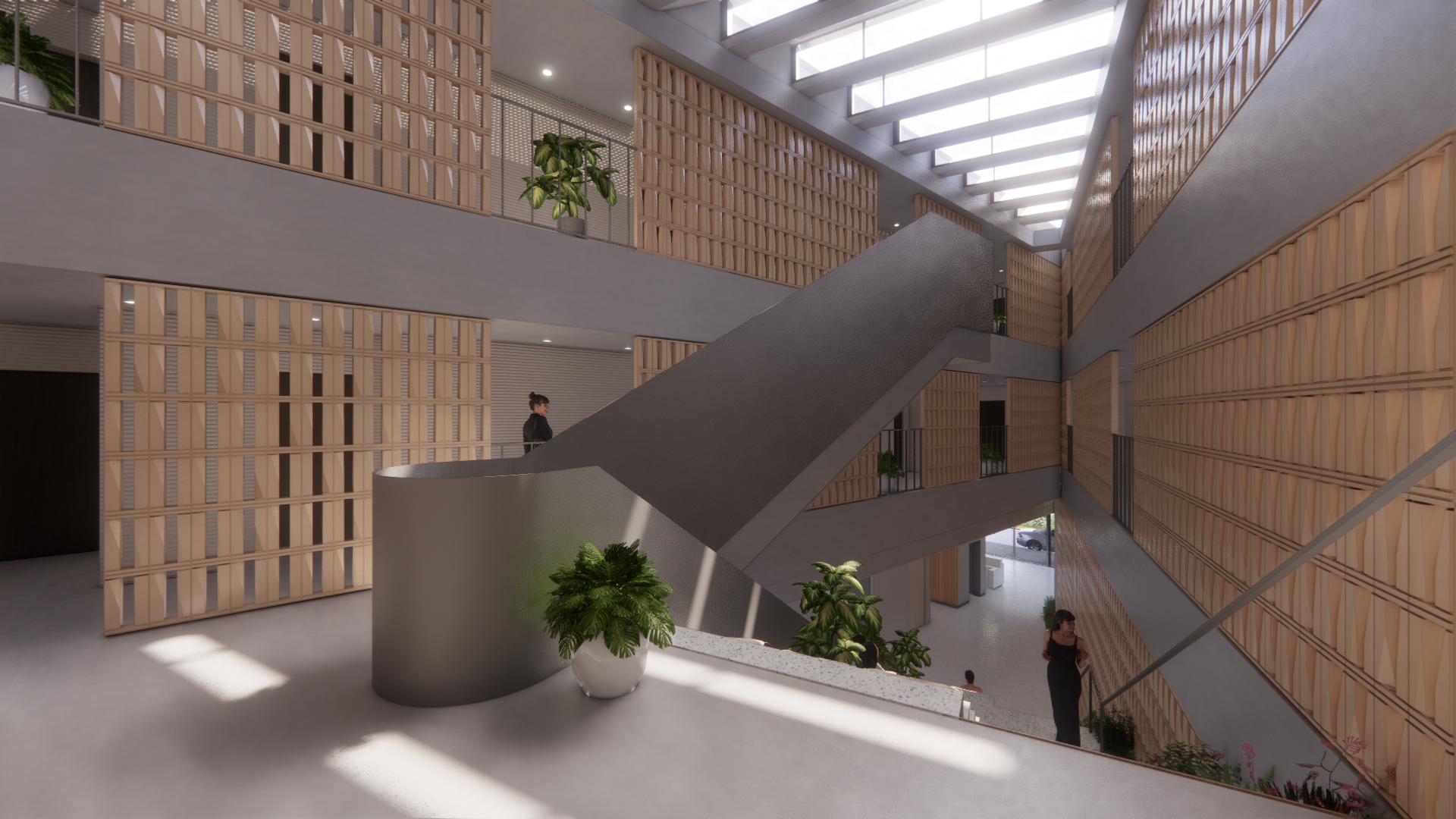
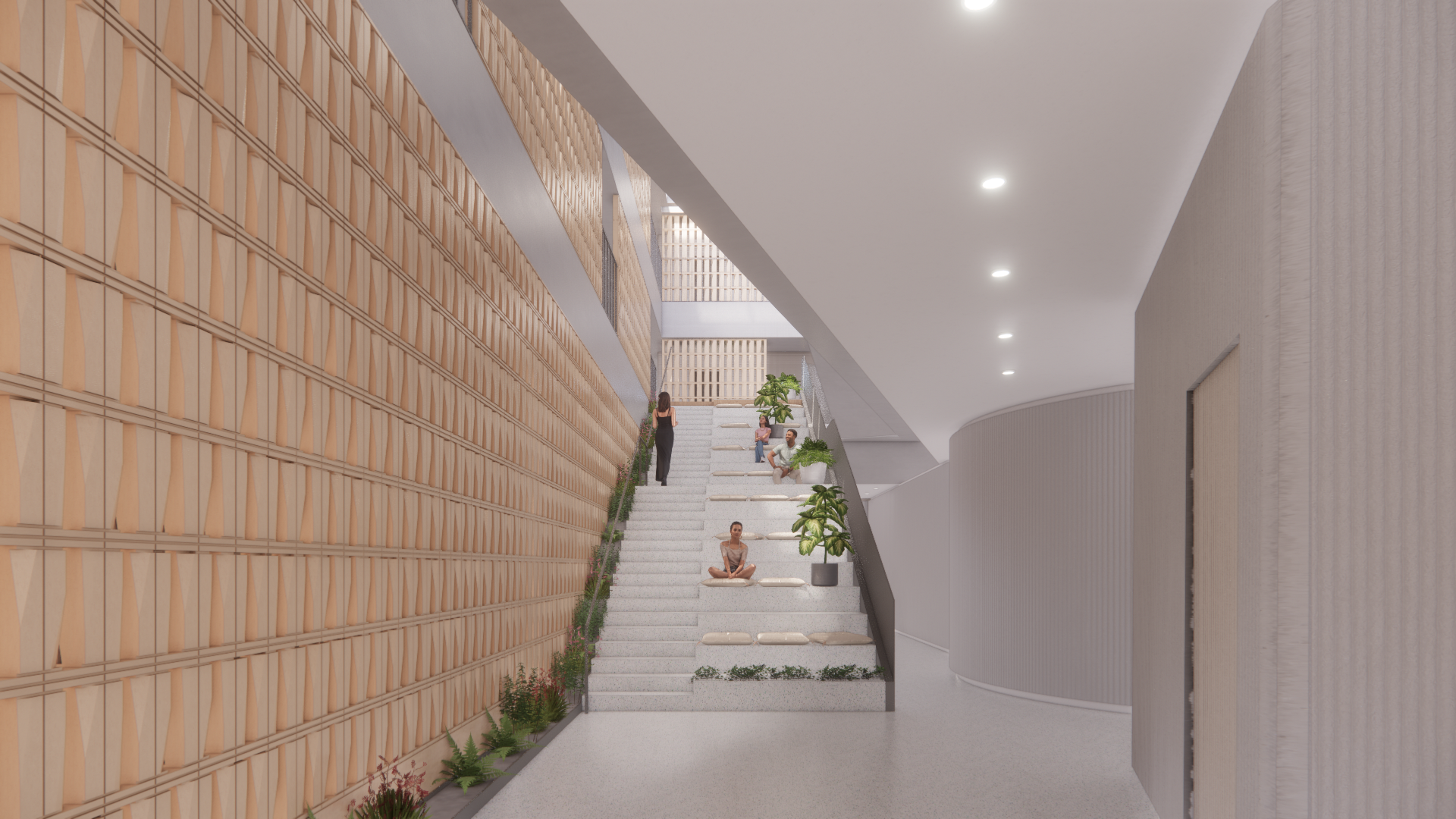
Our latest addition, a 3-story hotel, aims to provide accommodation in the form of 40 units, encompassing oceanview suites and presidential suites. These units are designed to cater to the discerning traveler seeking a certain level of comfort.

At ground level, a convention hall is available, capable of accommodating up to 300 individuals for events or meetings. This flexible space can be repurposed into a meeting room, café, or banquet hall to suit various requirements. The second floor offers a range of amenities, including a swimming pool, spa, game room, and gym, catering to various leisure interests. Twinrock Hotel presents itself as a destination for those in search of solace or a base for business activities. Our commitment to service remains consistent, ensuring a comfortable and uneventful stay for all patrons.


Year : 2023

Location : Catanduane Island, Philippines

Size : 4,325 m²

Status : Ongoing

Type : Hospitality

Principal in Charge :

Seojoo Lee, Hyojung Kim, Yeseul Allie Chung (I.f), Dongil Kim (Kyung Hee University)

Design Team : Seungil Kim (I.f)

Collaboration : I.f Manila Office

Paju Bandabi Sport Complex

Common Ground

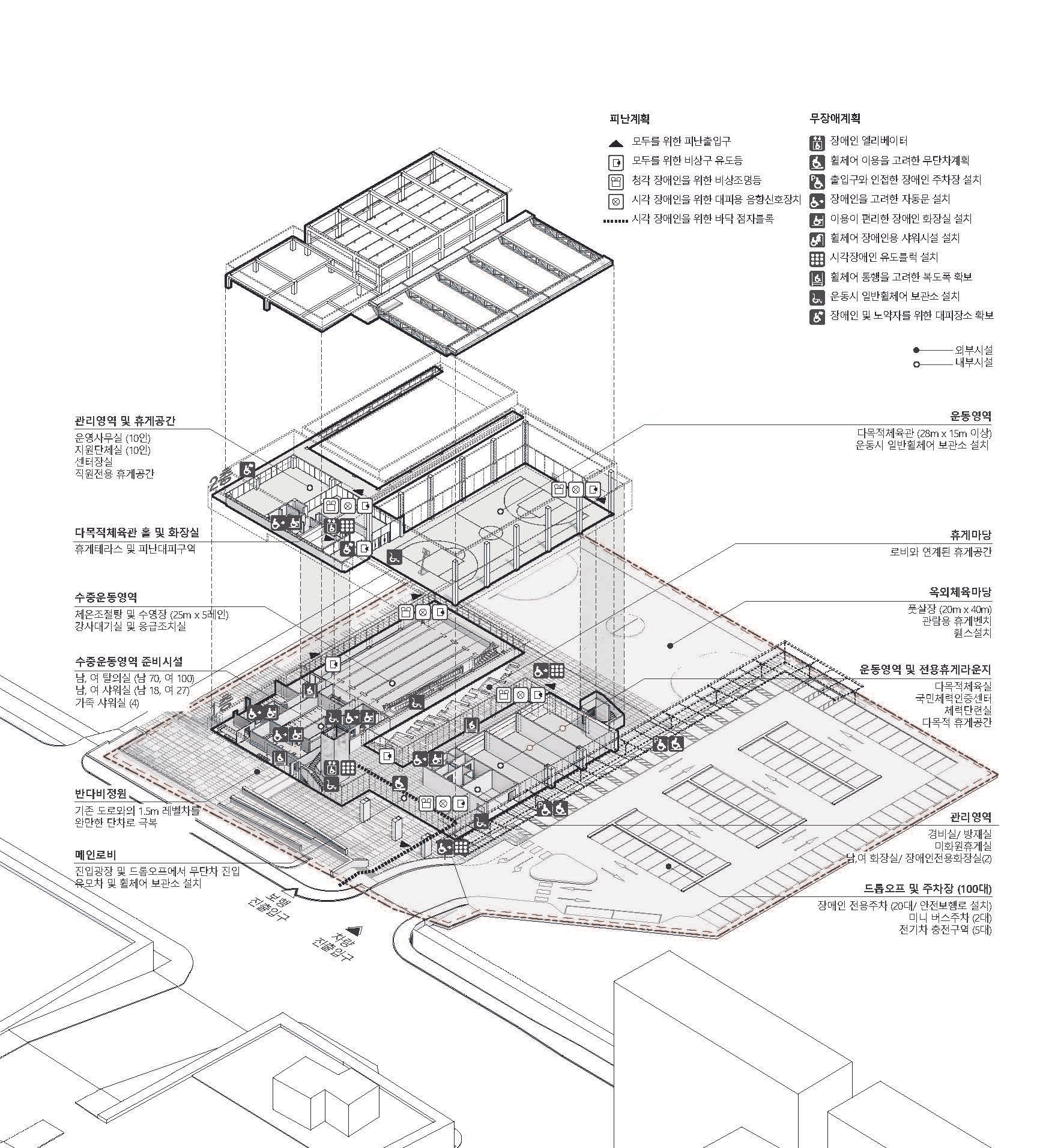
The Bandalbi National Sports Center in Paju serves as a complex sports facility along the pedestrian axis connecting Paju Stadium and Geumchon Multipurpose Gymnasium, functioning as a combined cultural and leisure facility for all local residents in Paju. Located on the northern side of the site, the central road provides convenient access from anywhere as it connects Paju City Hall, subway stations, nearby highways, catering to various modes of transportation such as vehicles, bicycles, and pedestrians. Due to its horizontally expansive setting within the existing agricultural land, it plays a role in converging the flow of the city and outwardly radiating, creating an open space that interacts diversely with the surroundings. The Bandalbi Sports Center, designed based on consideration and understanding for individuals without discrimination between people with disabilities and non-disabled individuals, serves as a mediator between people, the city, and public spaces.

Universal design starts from recognizing everyone's differences rather than defining a particular majority as "normal" and discriminating against a minority due to their differences. Since each individual is unique, with numerous and diverse distinctions, everyone is equally important. It begins by paying closer attention to each person and being sensitive to the subtle differences in everyone's bodies. The spaces created within Paju's Bandalbi Sports Center stem from a profound consideration for the architectural appearance of a simple, flexible, fair, free, diverse, and enjoyable complex cultural and sports facility.

The Bandalbi Sports Center in Paju places a strong emphasis on embracing the daily lives and physical differences of diverse individuals. It acknowledges the variety of everyday experiences and physical differences of everyone who seeks a complex cultural and sports facility in their daily lives, including young mothers pushing strollers, students using wheelchairs due to leg injuries, children who are deaf, young adults undergoing vision therapy without complete recovery, seniors coming on scooters, pregnant women and their husbands.

A Public Space Encompassing Everyday Life

For a long time, Paju's public cultural facilities mainly developed as tourist attractions centered around coastal areas and the demilitarized zone (DMZ). However, recently, Paju has made considerable efforts to advance public architectural cultural heritage centered around its citizens. As an extension of the motto of public architecture as a "connecting city" based on Paju's geographical characteristics and historical background and urging active citizen participation in "connecting spaces," the Bandalbi Sports Center can be envisioned as a more just and inclusive public building based on the ideology of universal design. If public buildings were previously focused on nostalgia, the Bandalbi Sports Center proposes an additional value of coexistence alongside nostalgia. It embodies the ideology of a public building not specifically for a certain minority but aiming to encompass more people's differences and everyday lives. It will be a resident-friendly public building that promotes the improvement of residents' quality of life, connects regions, and understands and encapsulates the daily lives of individuals.


Year : 2023

Location : Paju, Korea

Size : 3,214.28㎡

Status : Competition Entry

Type : Cultural

Principal in Charge :

Seojoo Lee, Hyojung Kim (I.f), Dongil Kim (Kyung Hee University), Minho Lee (func. Architects)

Incheon Geomdan Cultural Complex

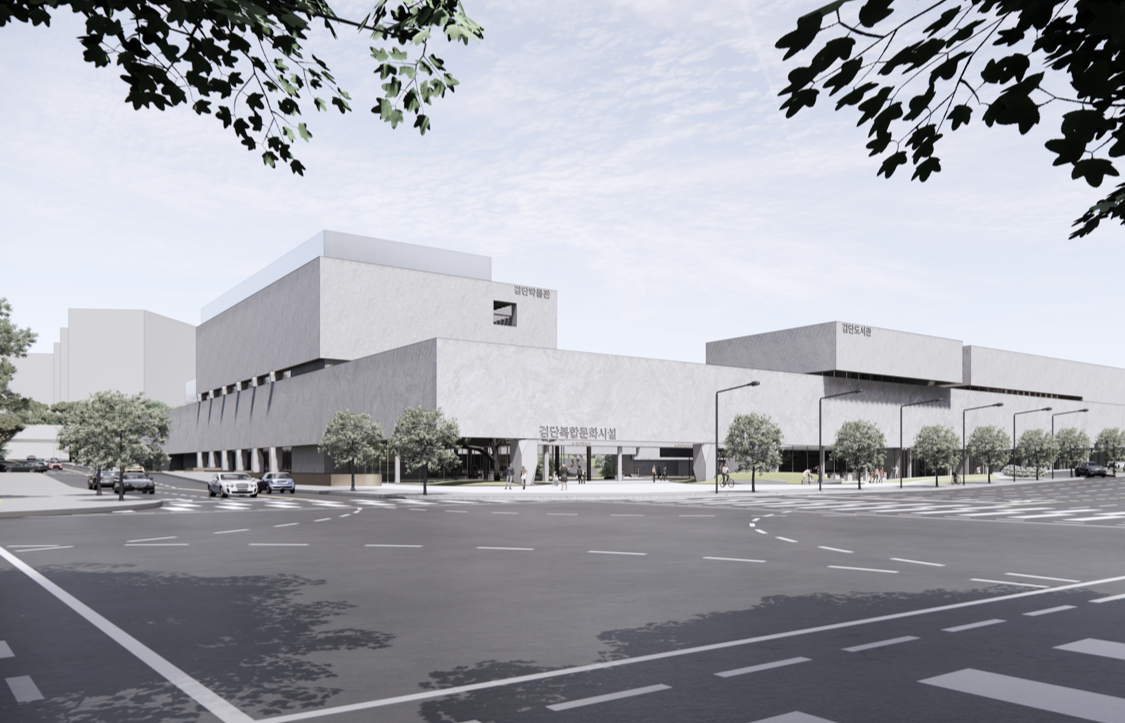
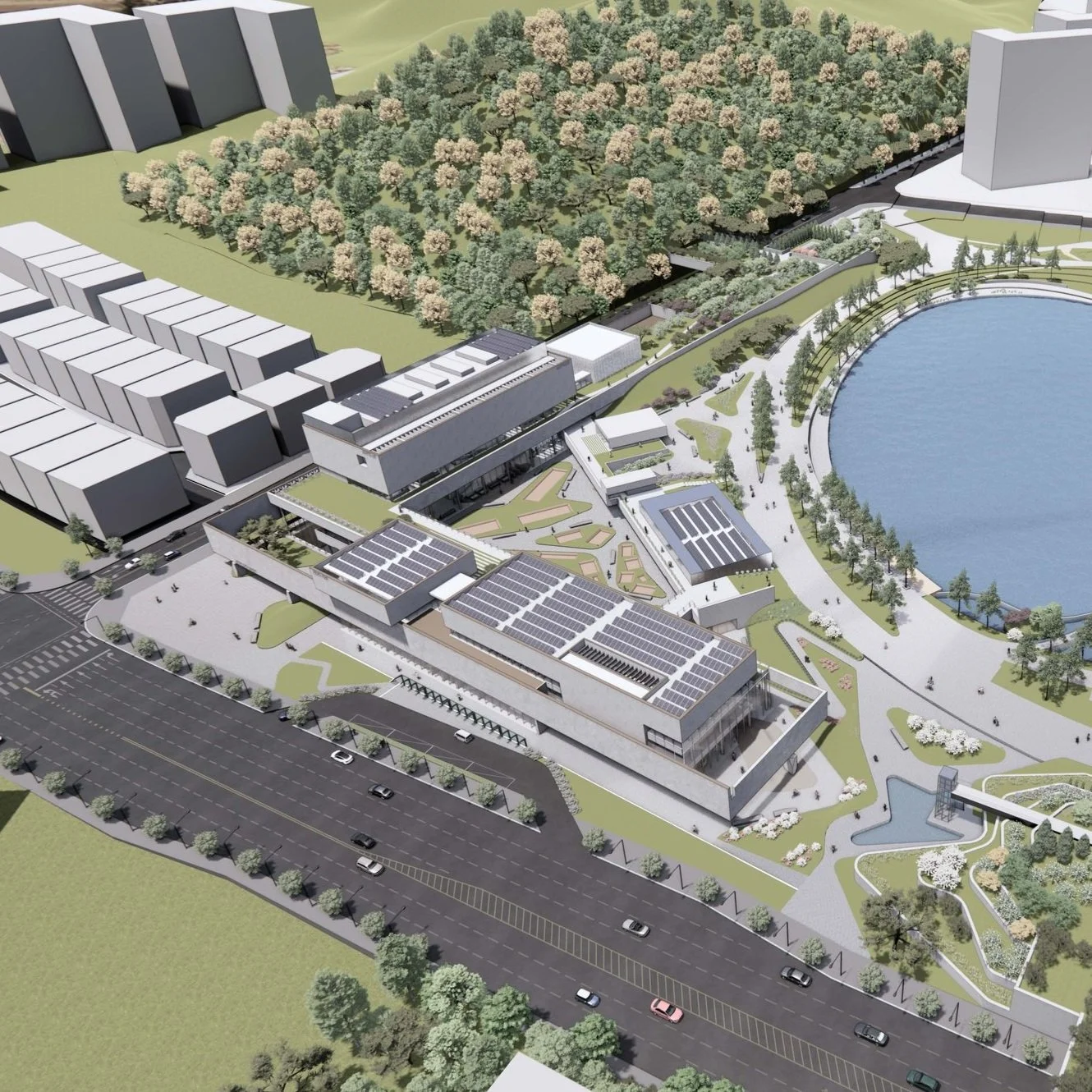
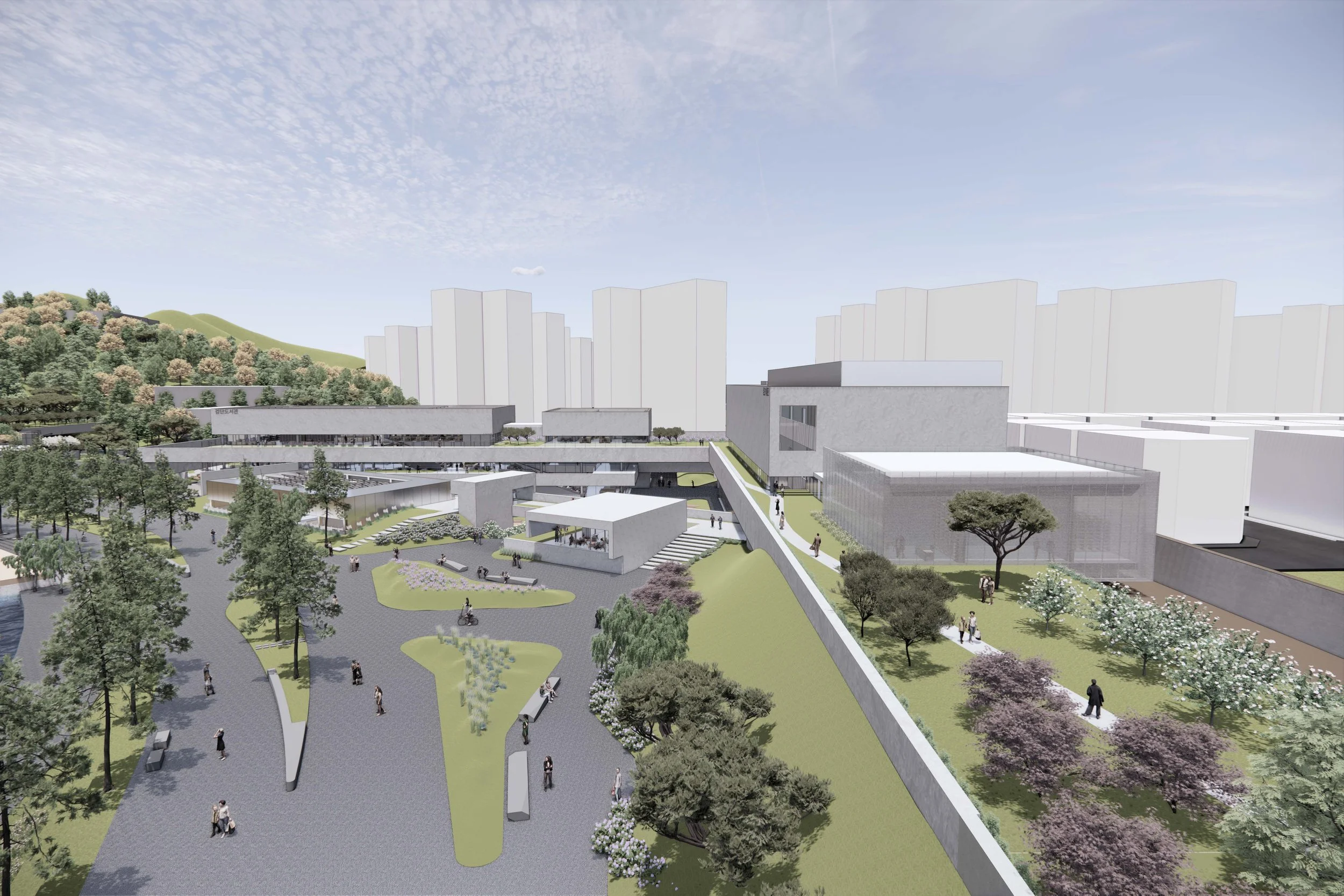
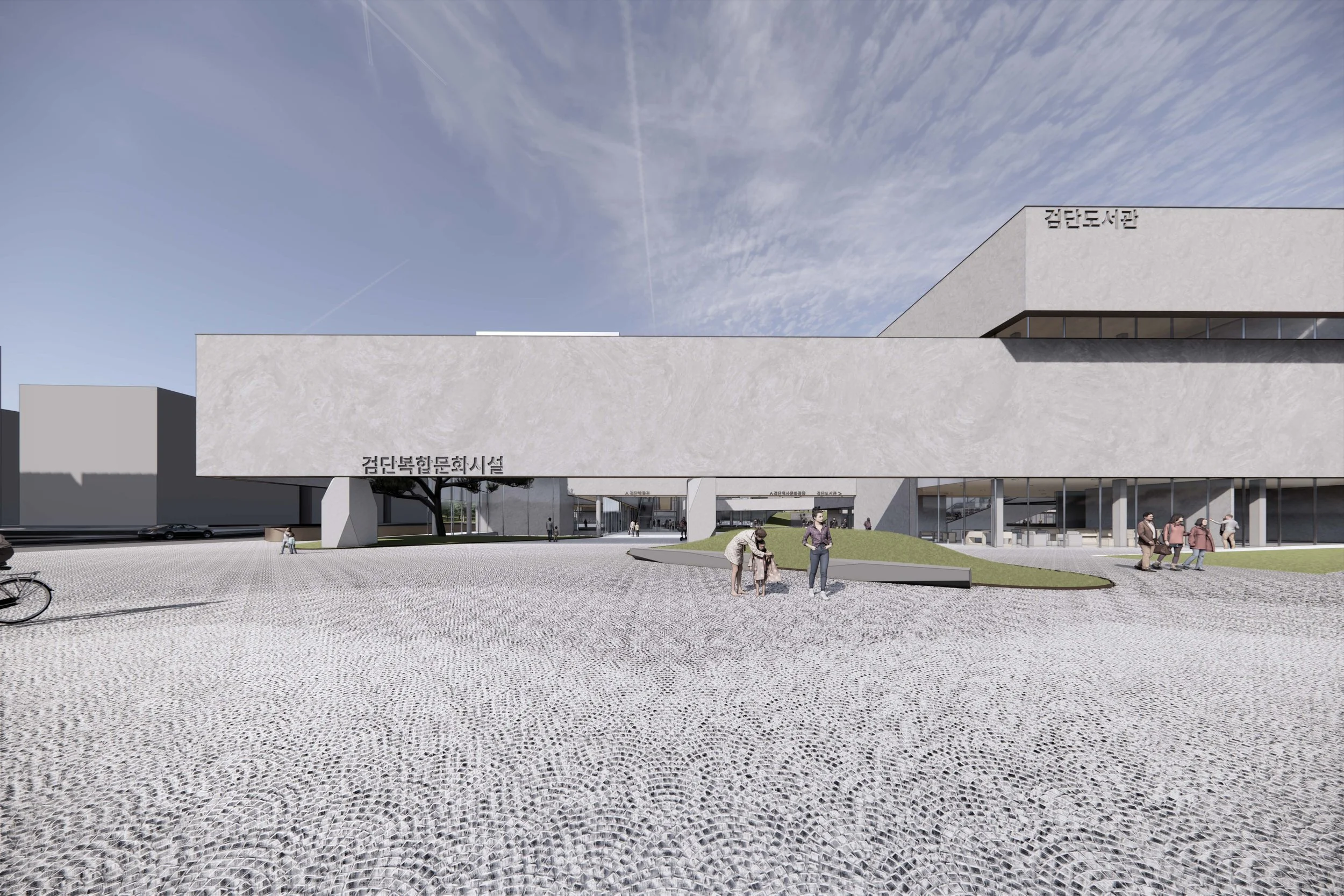
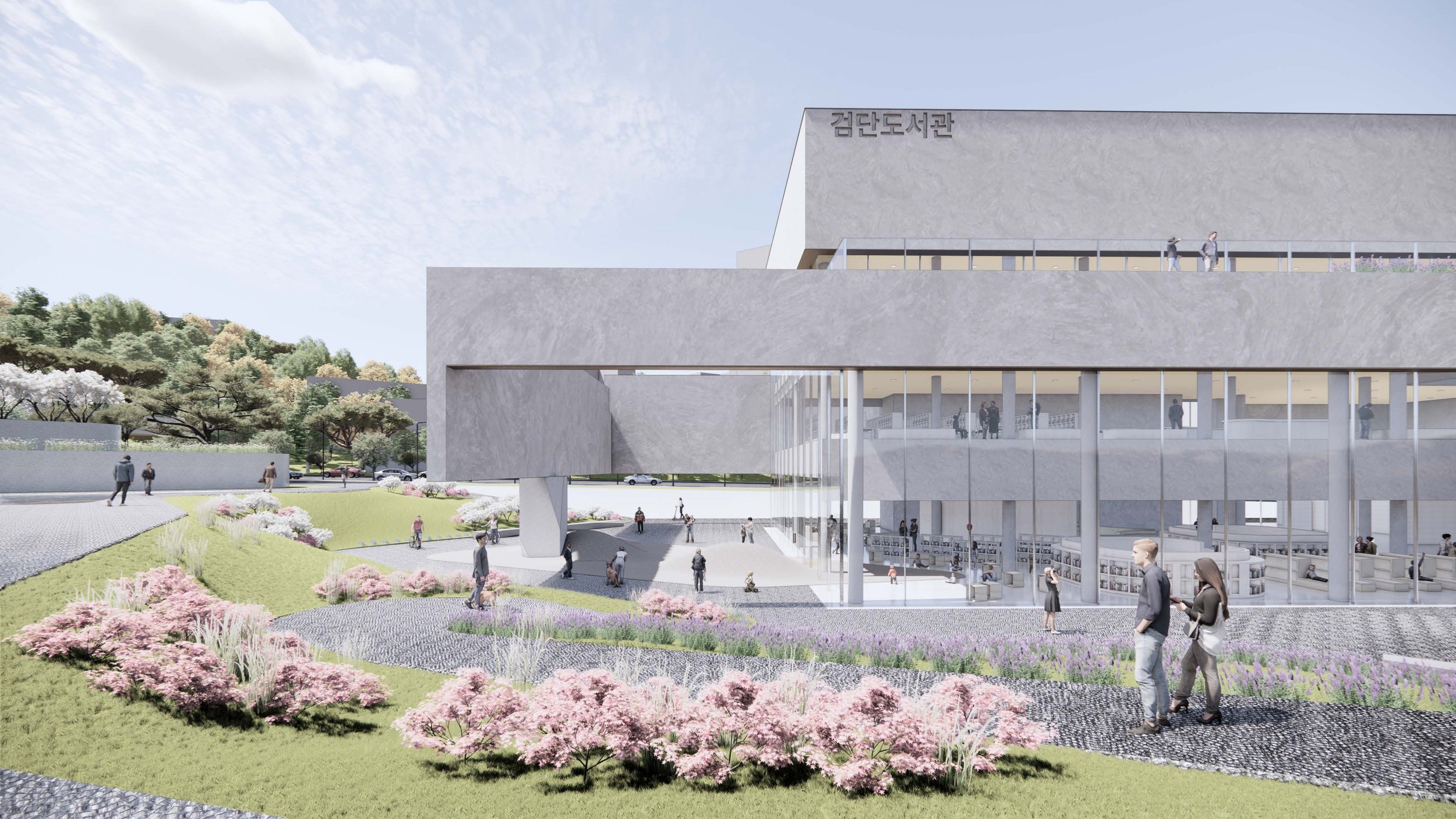
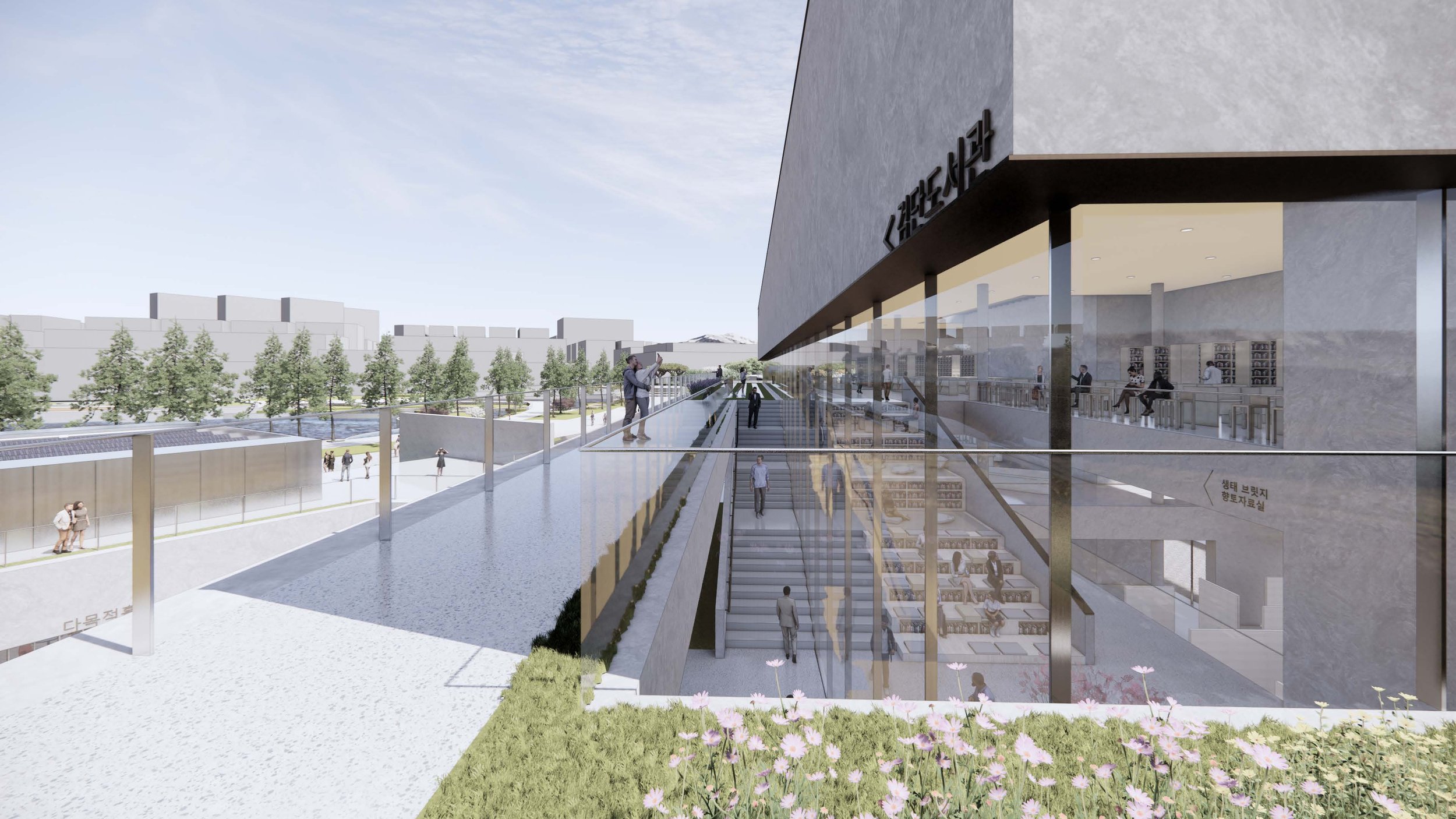
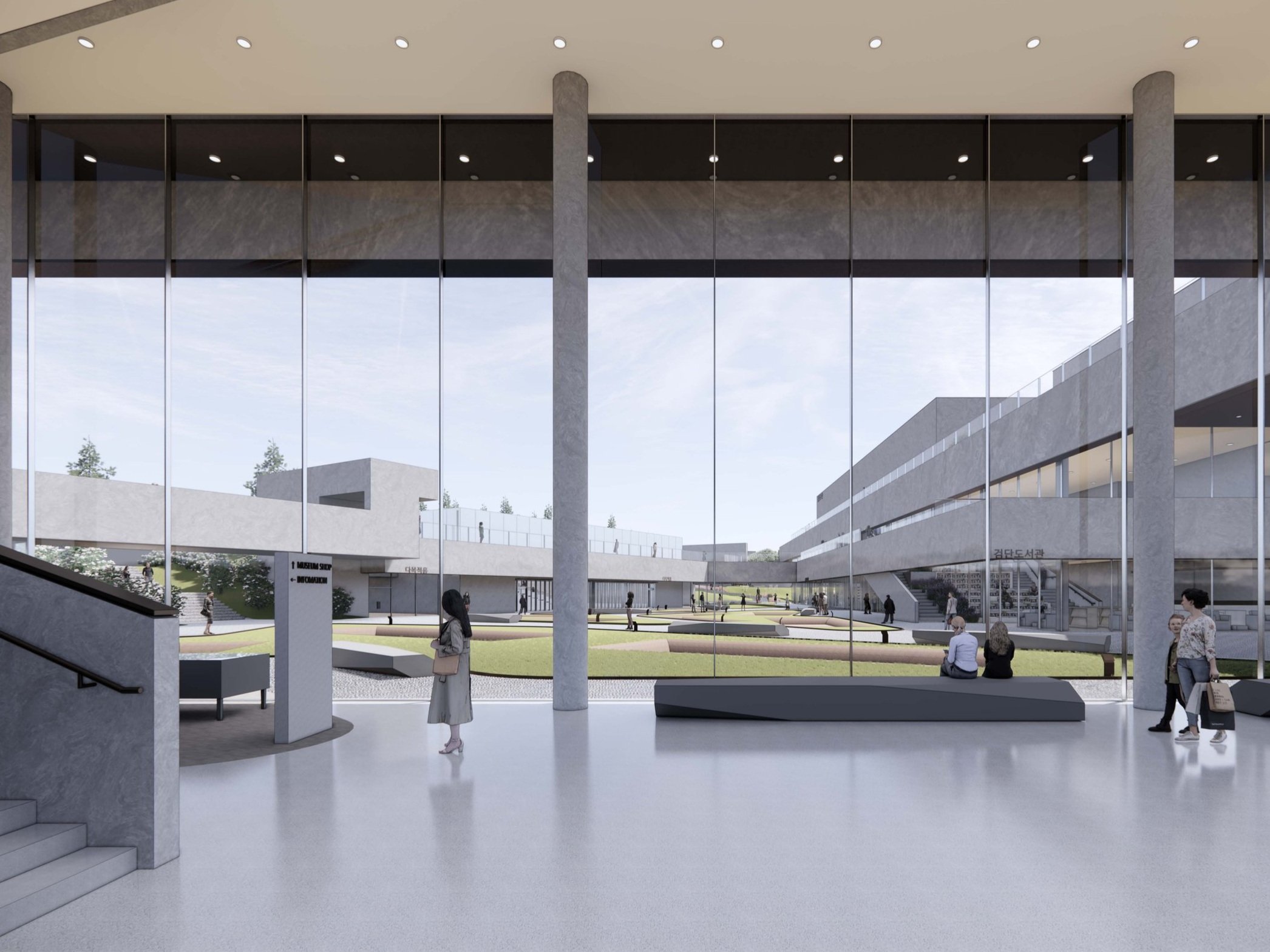
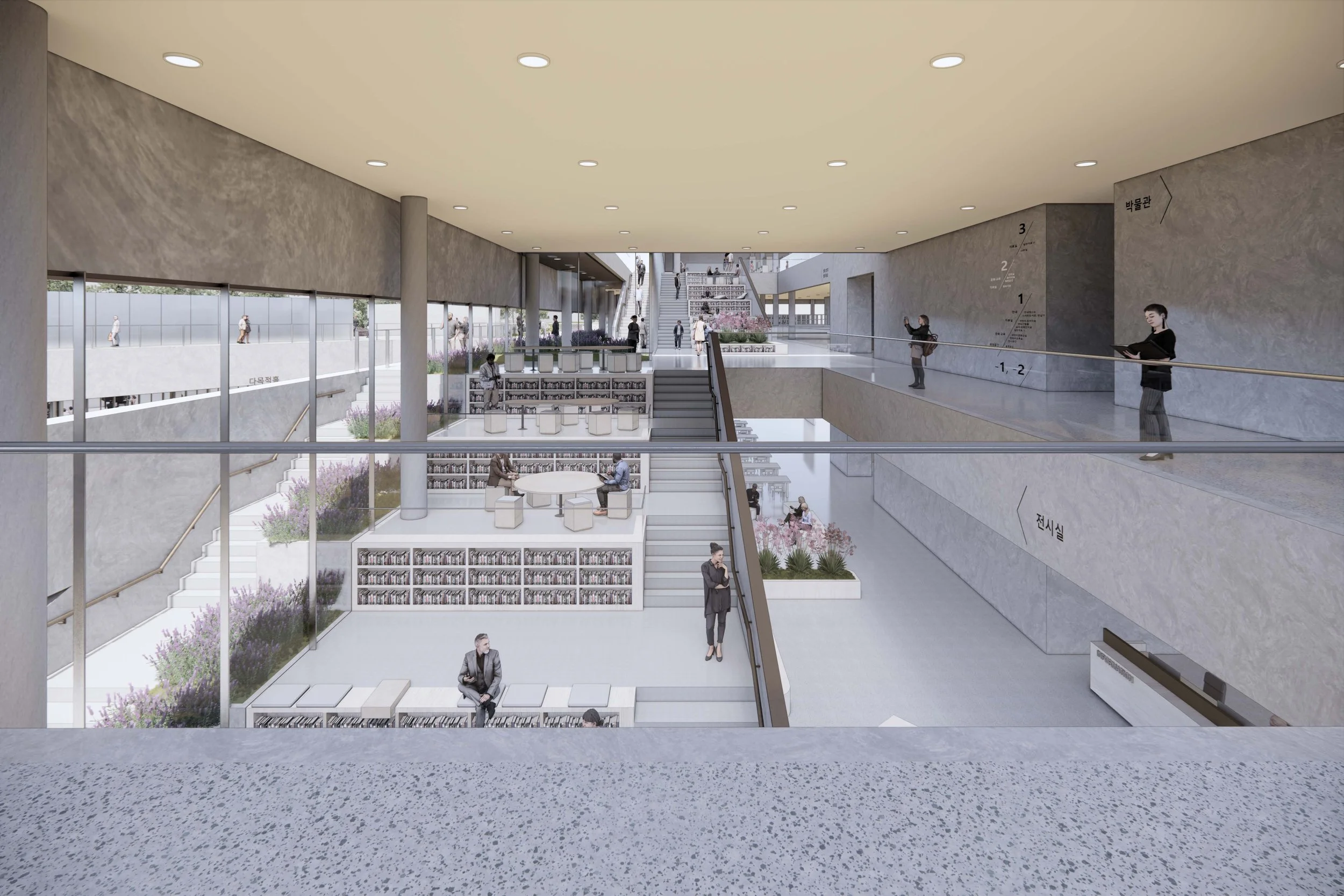
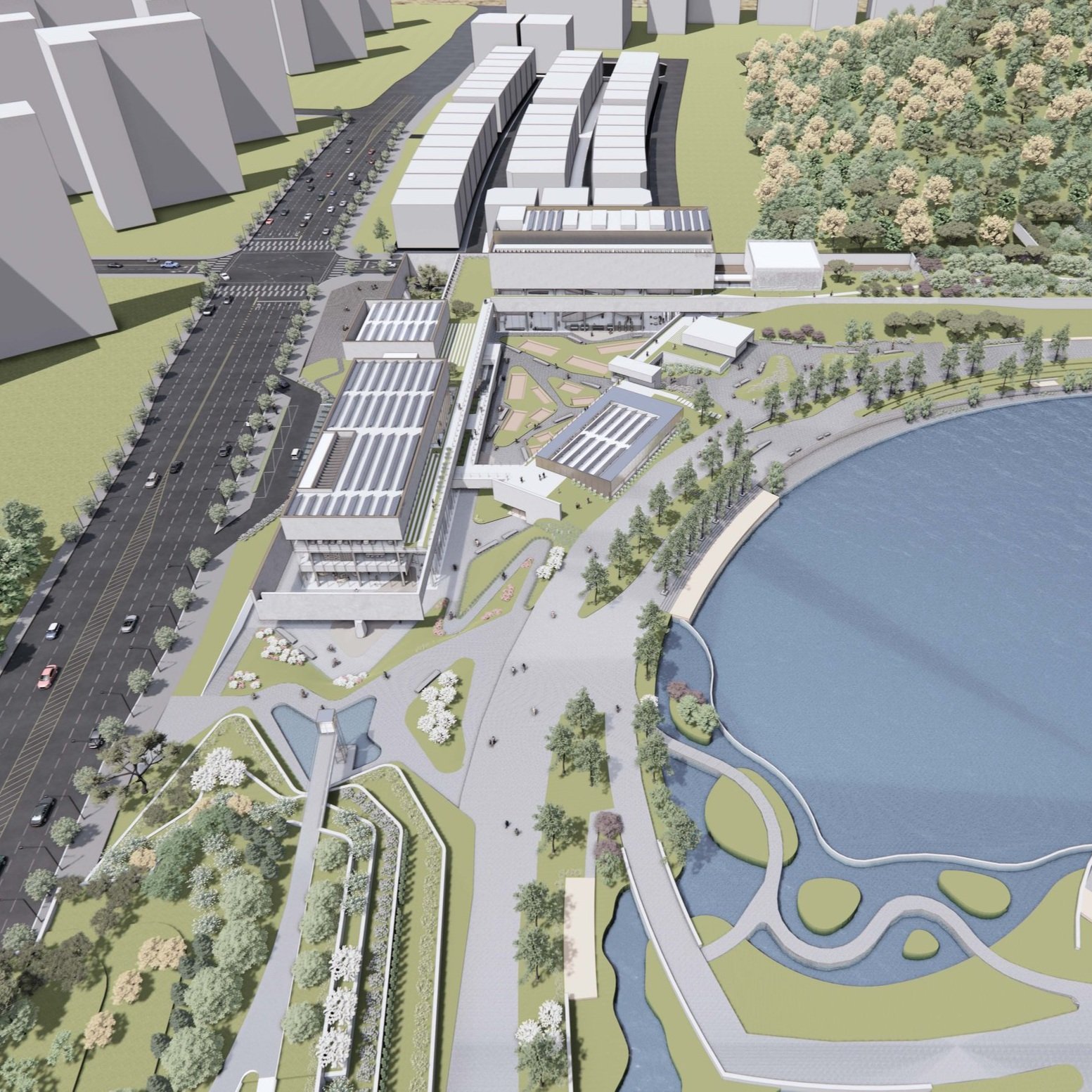
The Site is a Corner condition placed between the dense residential complexes to one side, and the Neighborhood Parks 13 and 15 to the other side. In the large scale, the Cultural Complex will be an extension of the U-shaped thread of Neighborhood Parks and especially the Lake in No.3 Cultural Park. However, in responding to the two distinctive zoning conditions, the Museum•Library Cultural Complex will produce a gradient of spaces in order to merge and take advantage of the two physical conditions the New City zonal plan offers. In response to the dense City edge, a homogeneous and hard form will emerge by organizing the volumes in an “L” composition. As one enters deeper into the Complex and closer to the edge adjacent to the Park and the Lake, the volumes disperse and the singular form breaks to provide a more intricate conglomeration of volumes, walkways, as well as interior and exteiror conditions. This seamless transition of spatial composition will allow a smoother transition of the cityscape.

To Geomdan New City, the Museum•Library Cultural Complex becomes a landmark because of its seamless integration as a place for the Everyday Life activities to unfold. It is a sacred place only because of its flexibility to accommodate any and all Everyday Events of the Everyday People of the New City. The form is simple, weighted, and informed by the Go-in-dol. The horizontal overlays of spaces and spatial groupings allows for the act of gathering and spreading of programs but mainly of people. The physical boundaries between the programmatic volumes are less defined as it merges and divides seamlessly from one to the other. The in-between spaces that are mostly walkways of varying thickneses; sometimes lobbies; sometimes open spaces for different programs, all serve to break the rigidity and hardness of the Complex. Instead, the layered composition allows for fluid movement within and throughout and beyond the Cultrual Complex.


Year: 2024

Location : Incheon, Korea

Size : 27,377 sqm

Construction Cost : Incheon-si

Year : 2023

Status : Competition Entry

Type : Museum, Library

Principal in Charge :

Seojoo Lee, Hyojung Kim (I.f), Allie Yeseul Chung (I.f Manila), Dongil Kim (Kyung Hee University), Minho Lee (func. Architects)

Environmental Engineering : Dongil Kim


The Big(inner)s

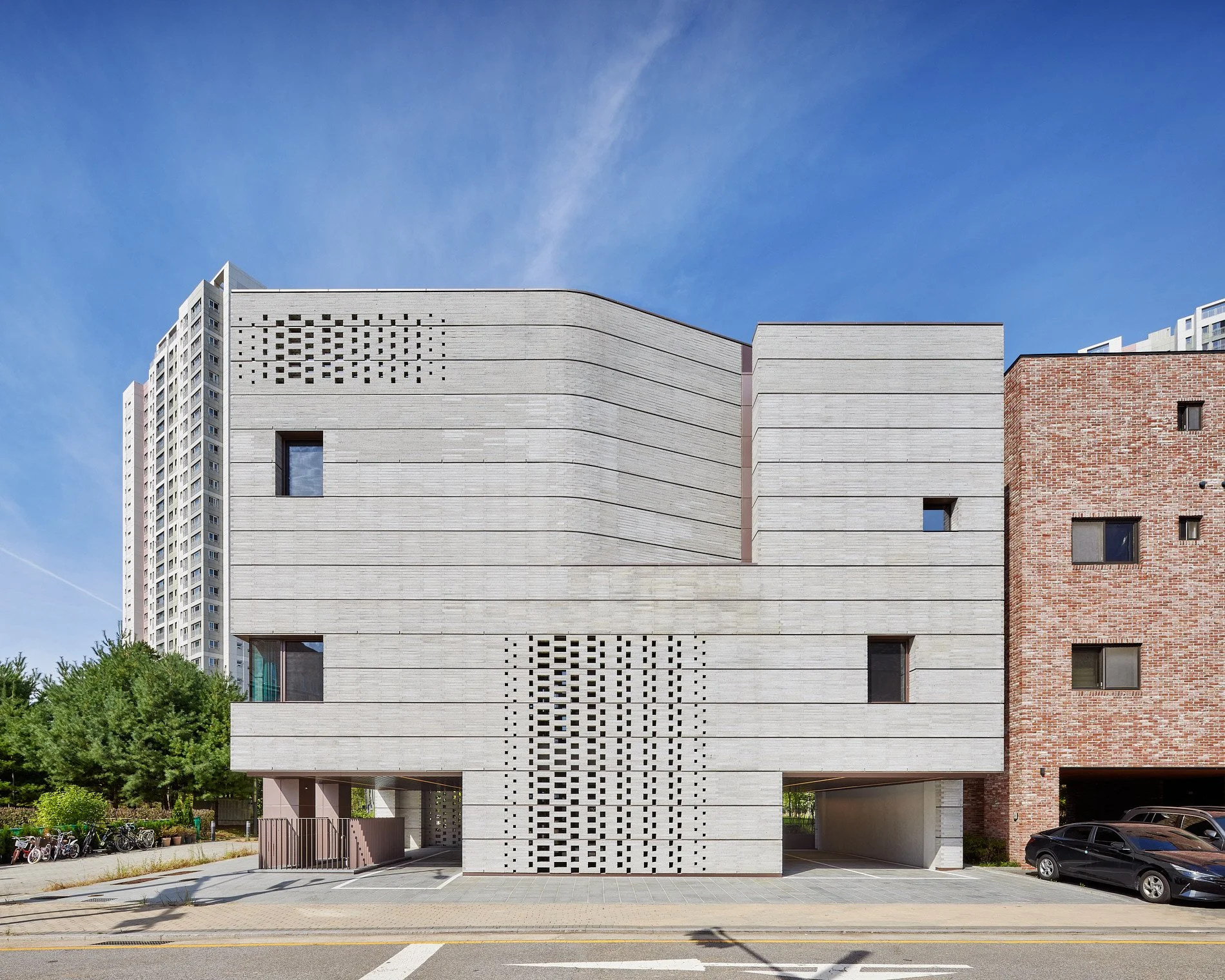
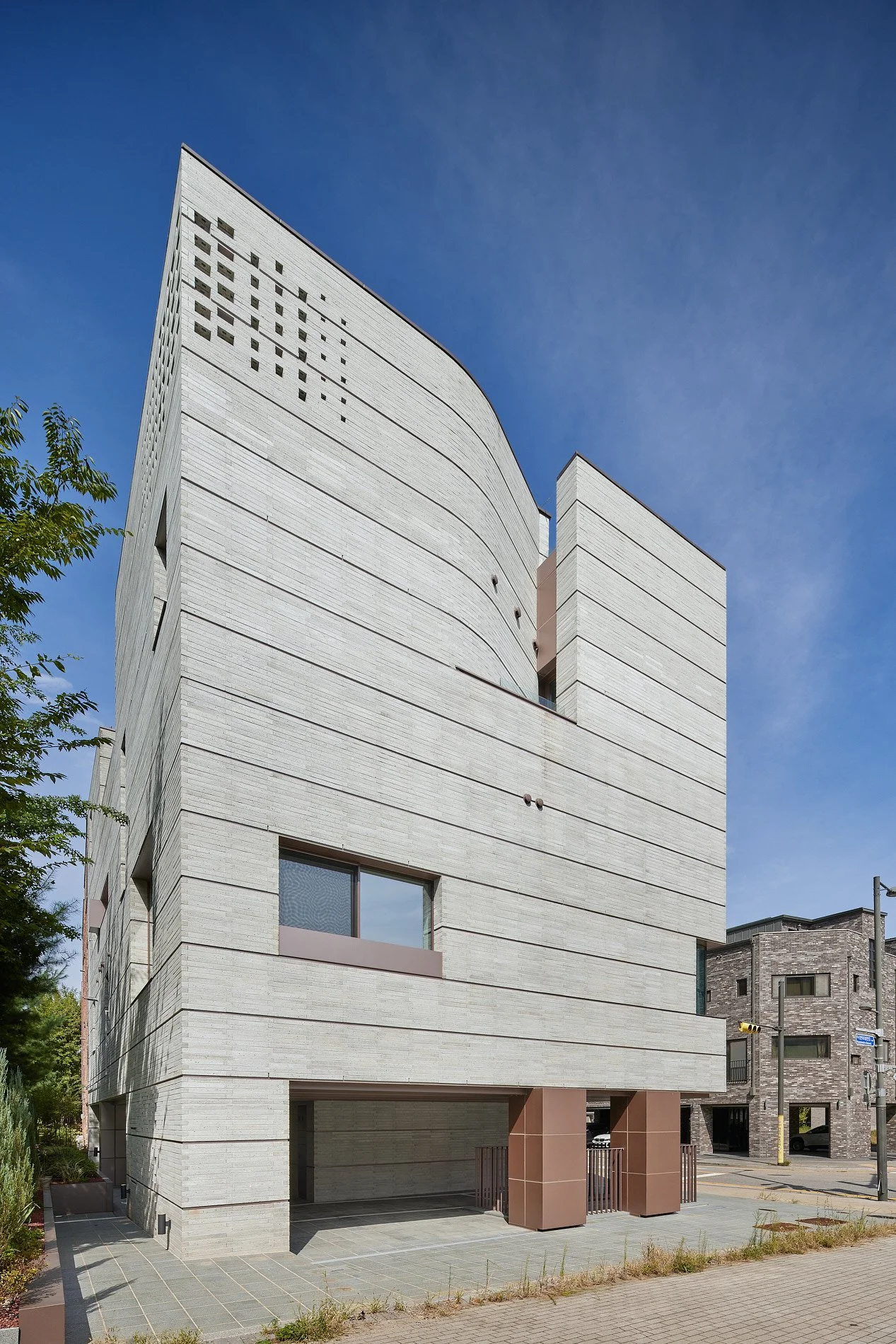
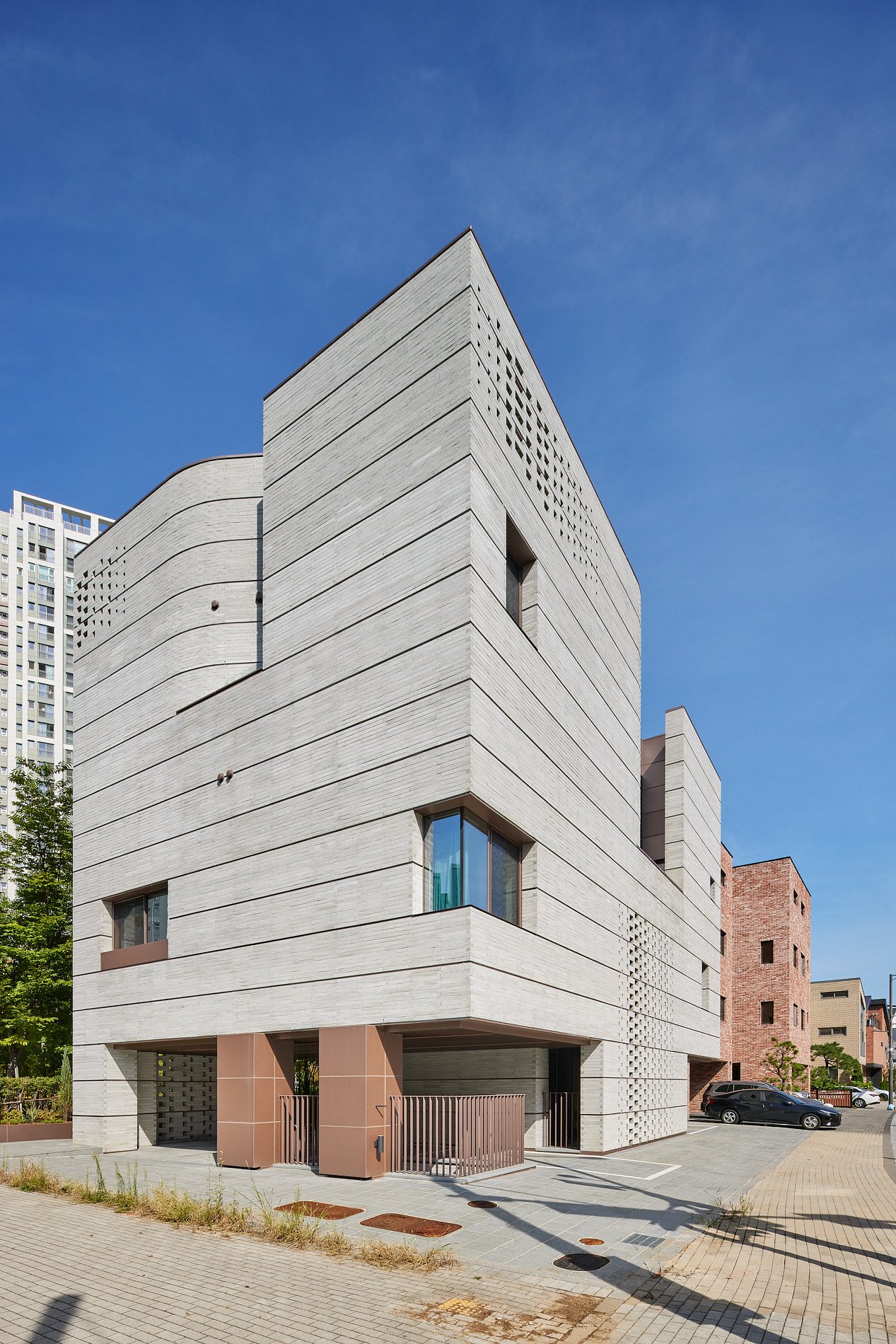
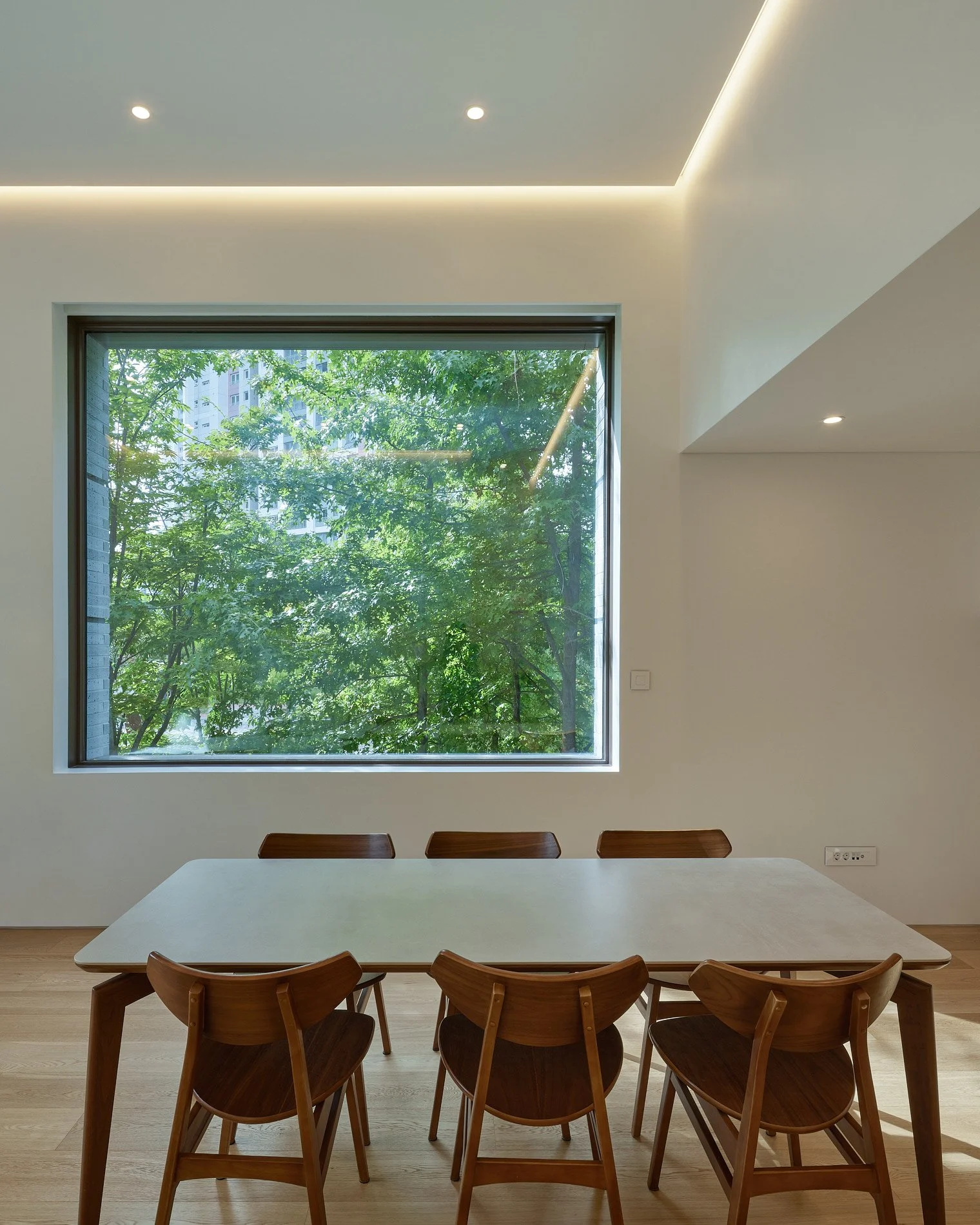
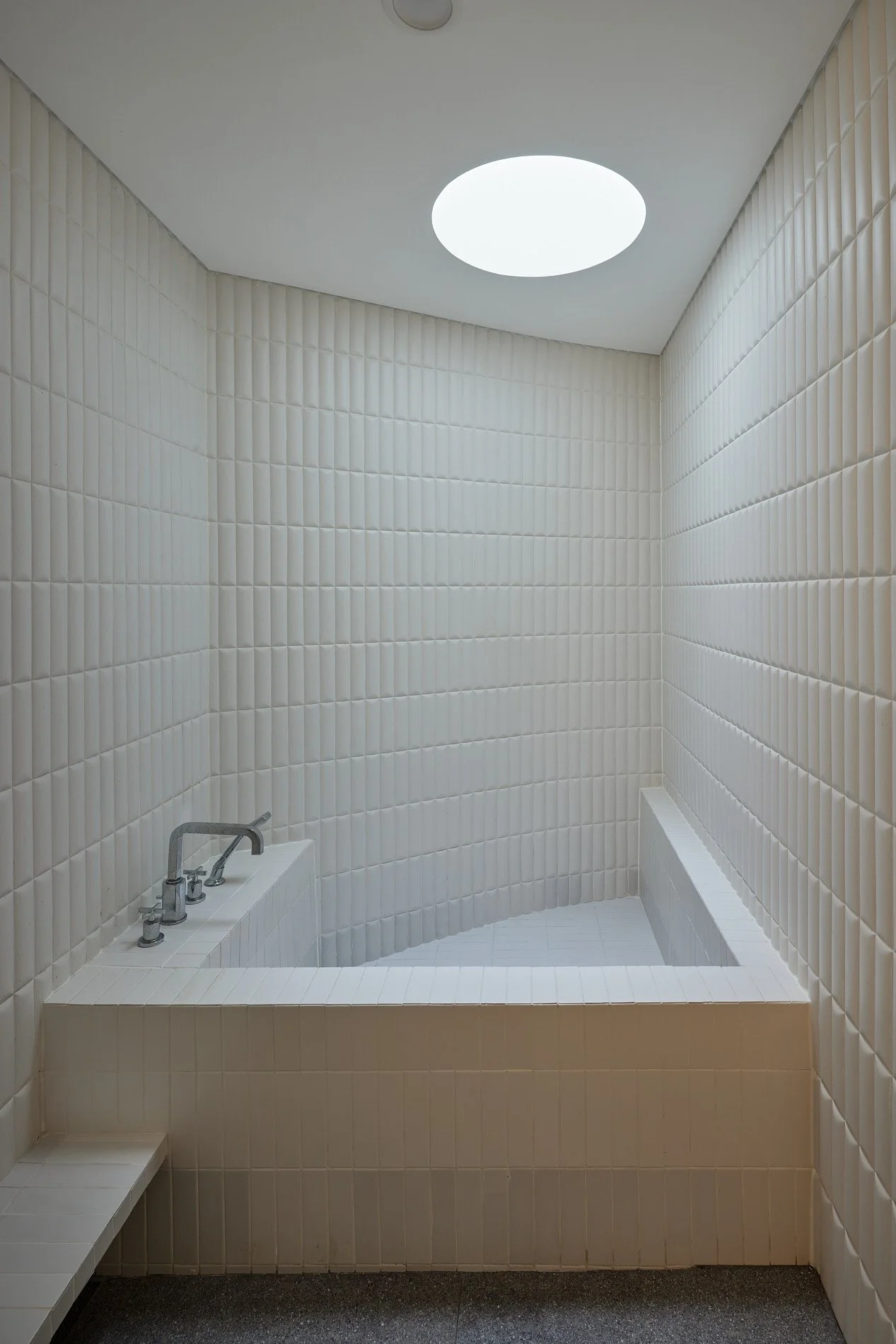
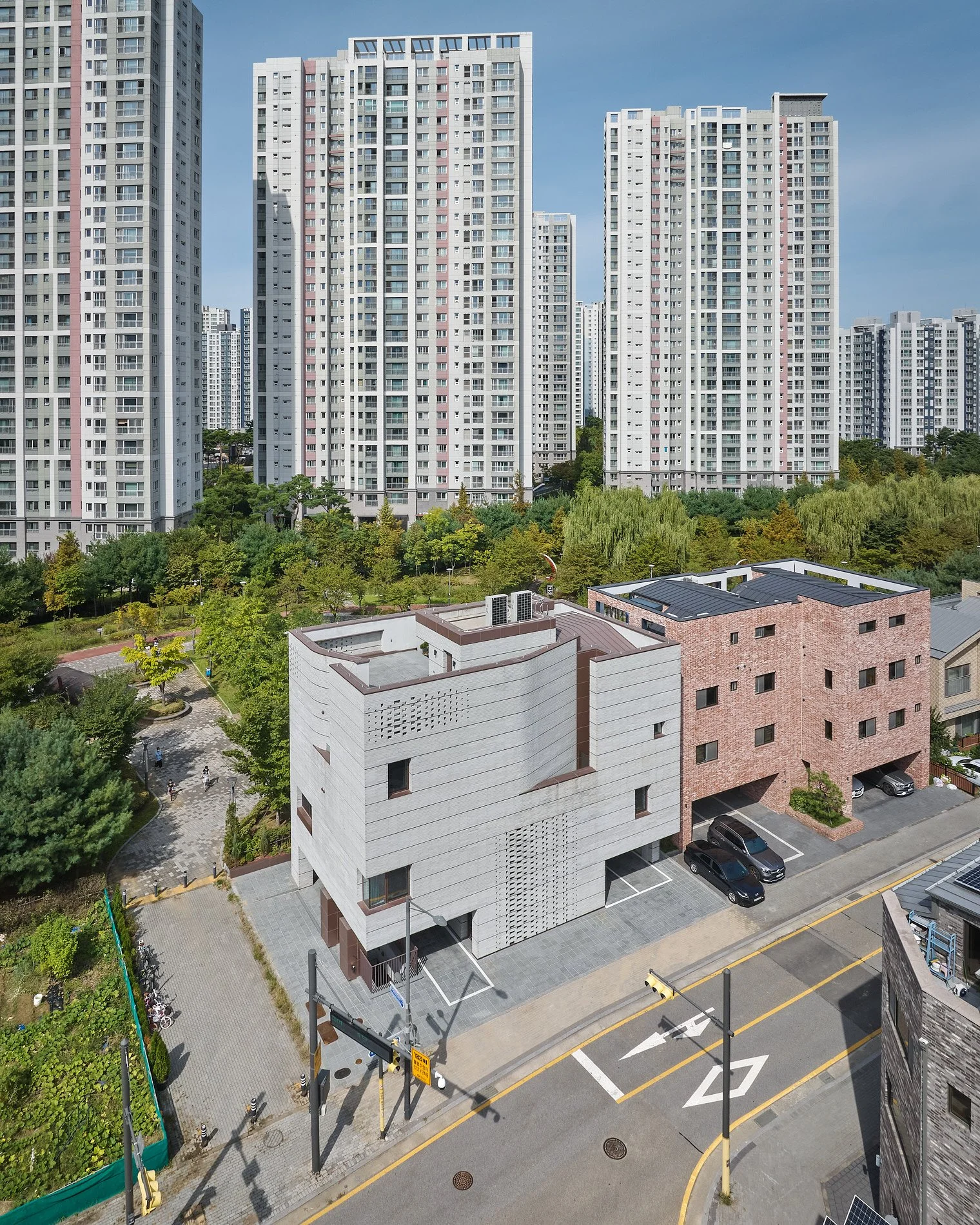
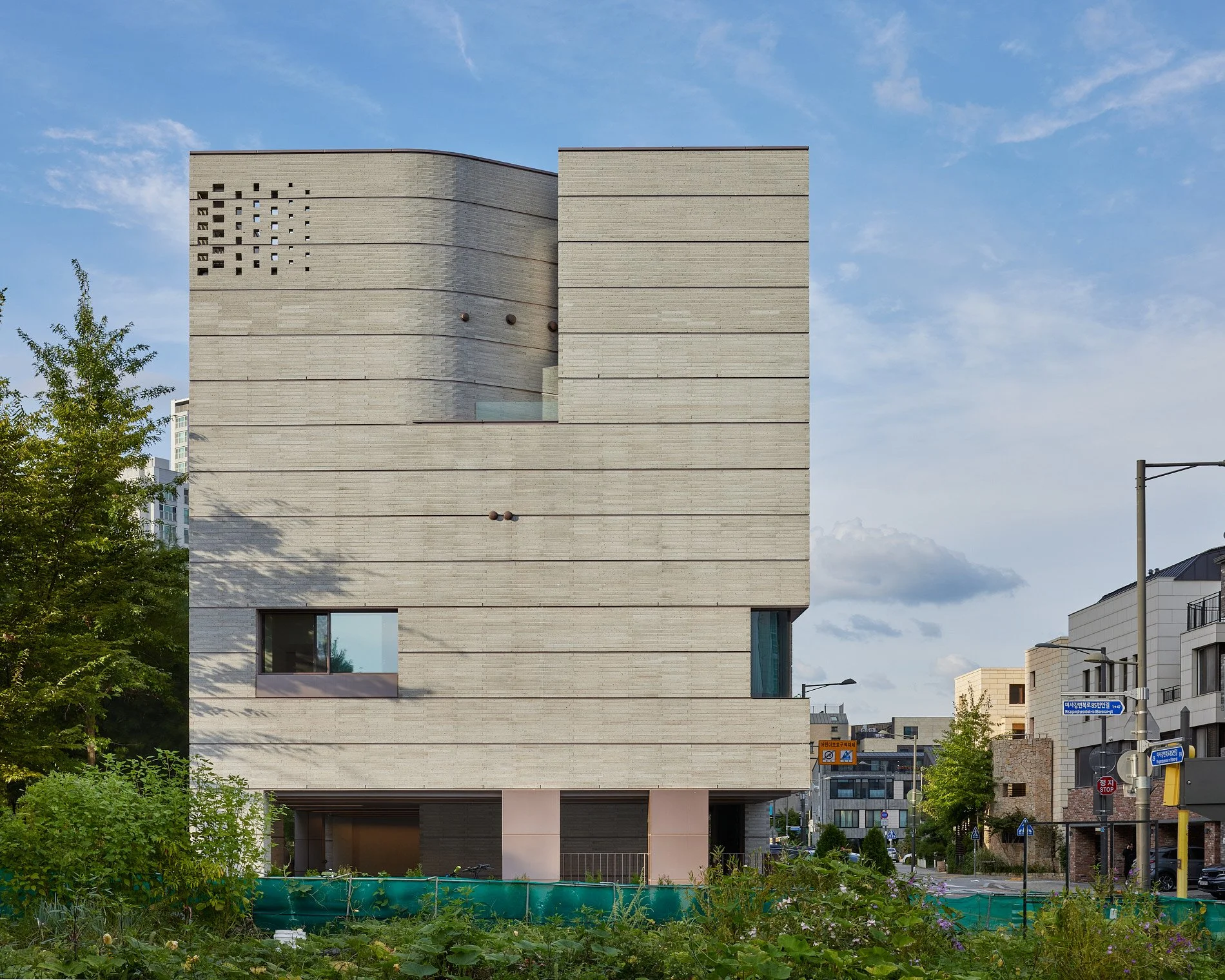
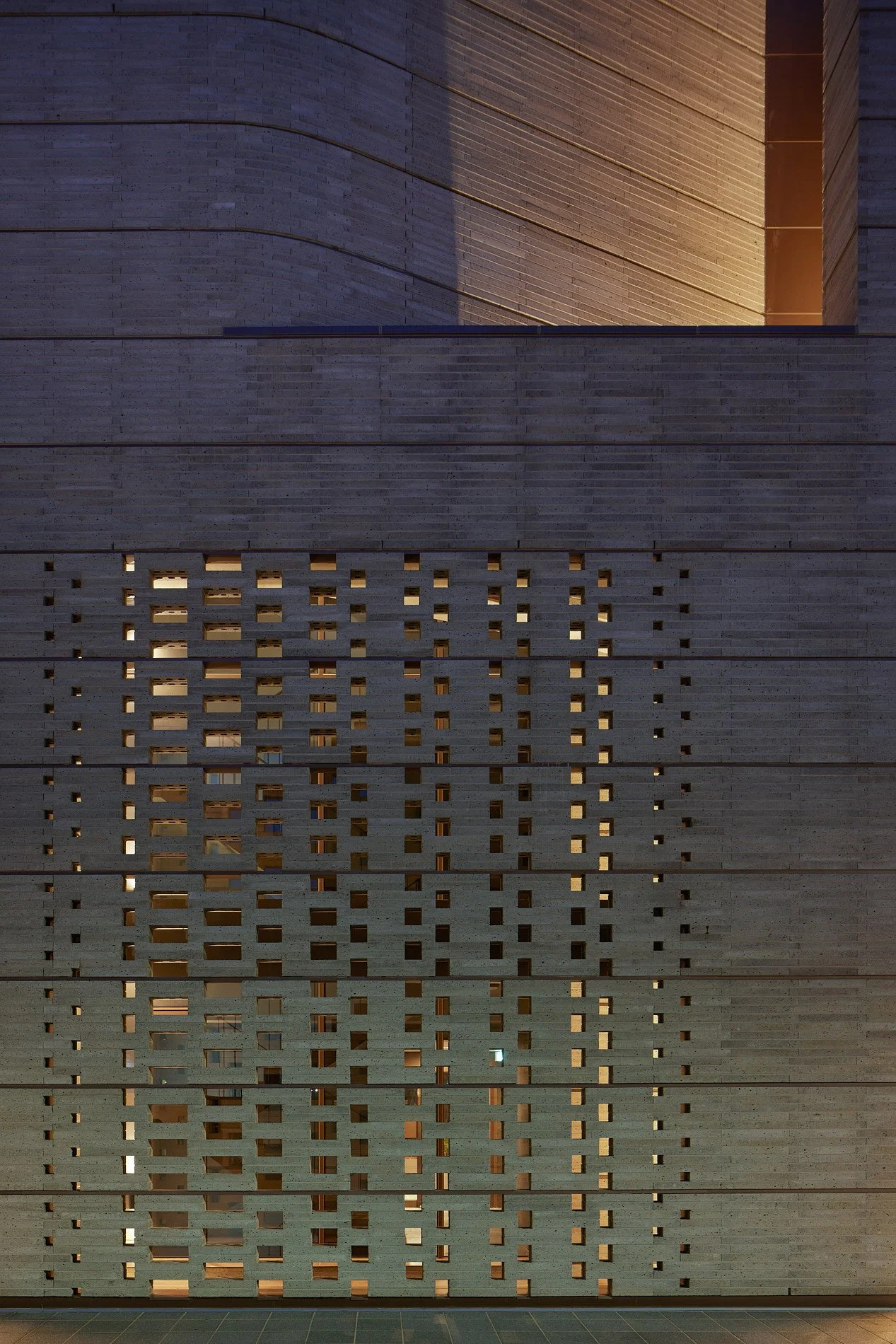
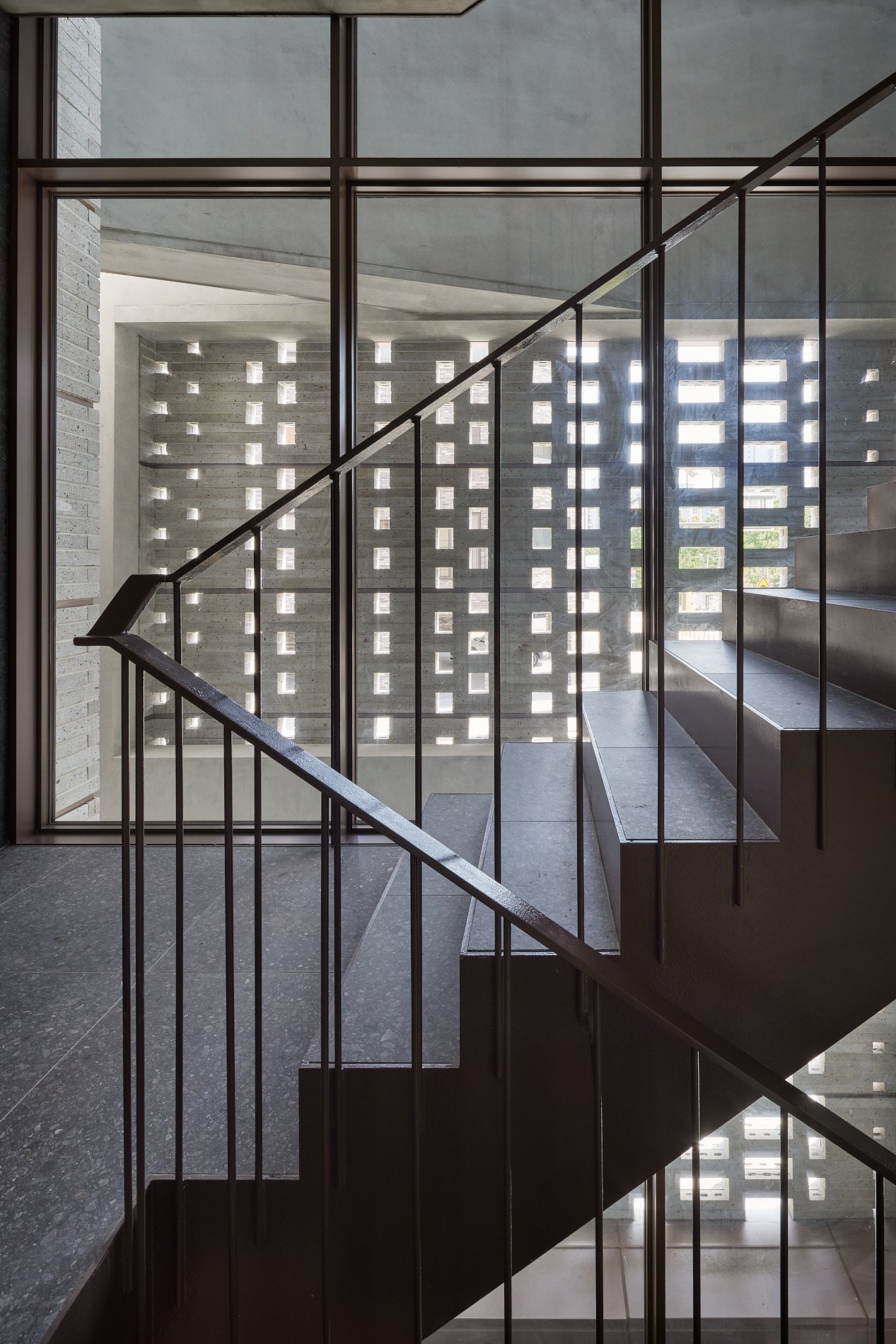
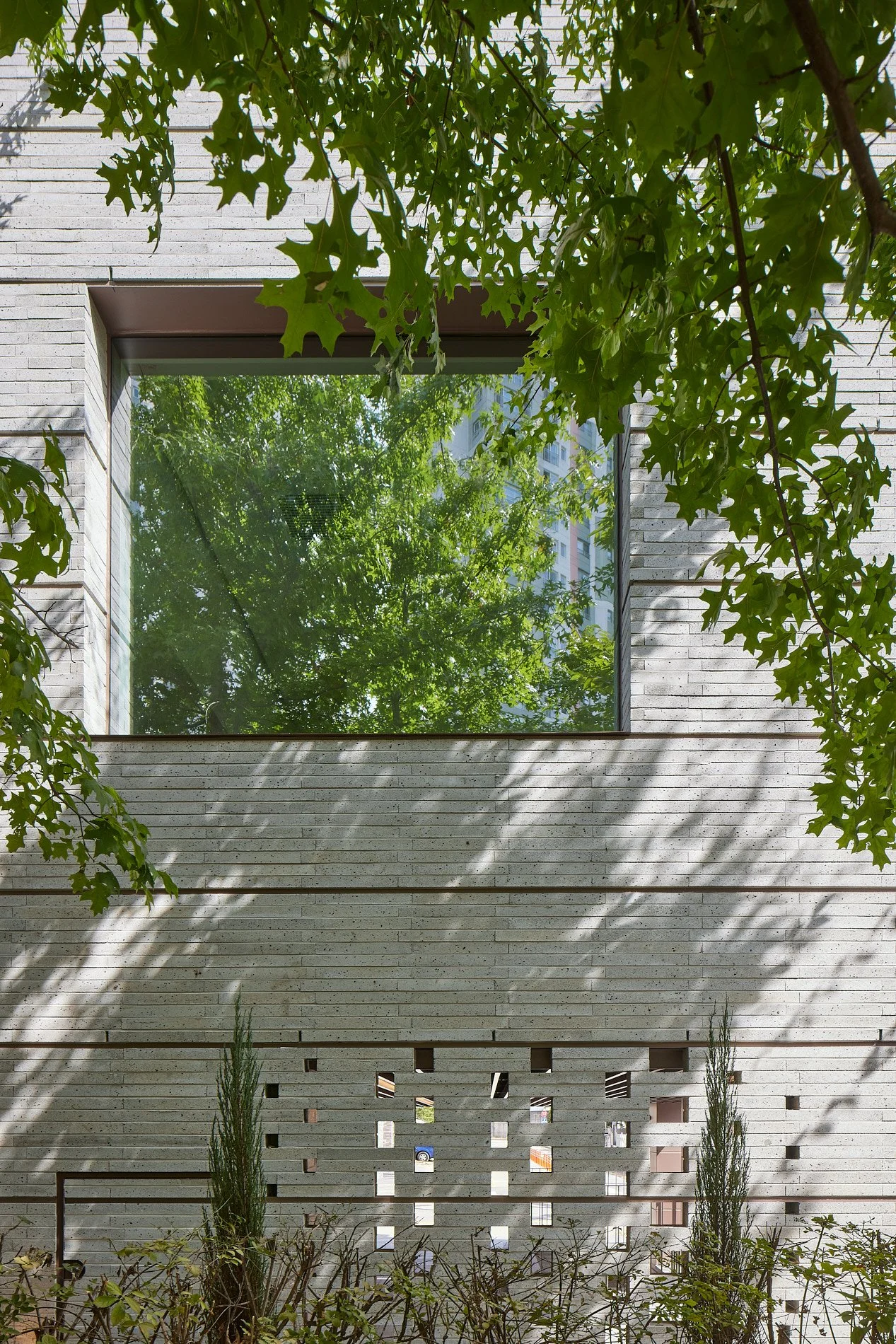
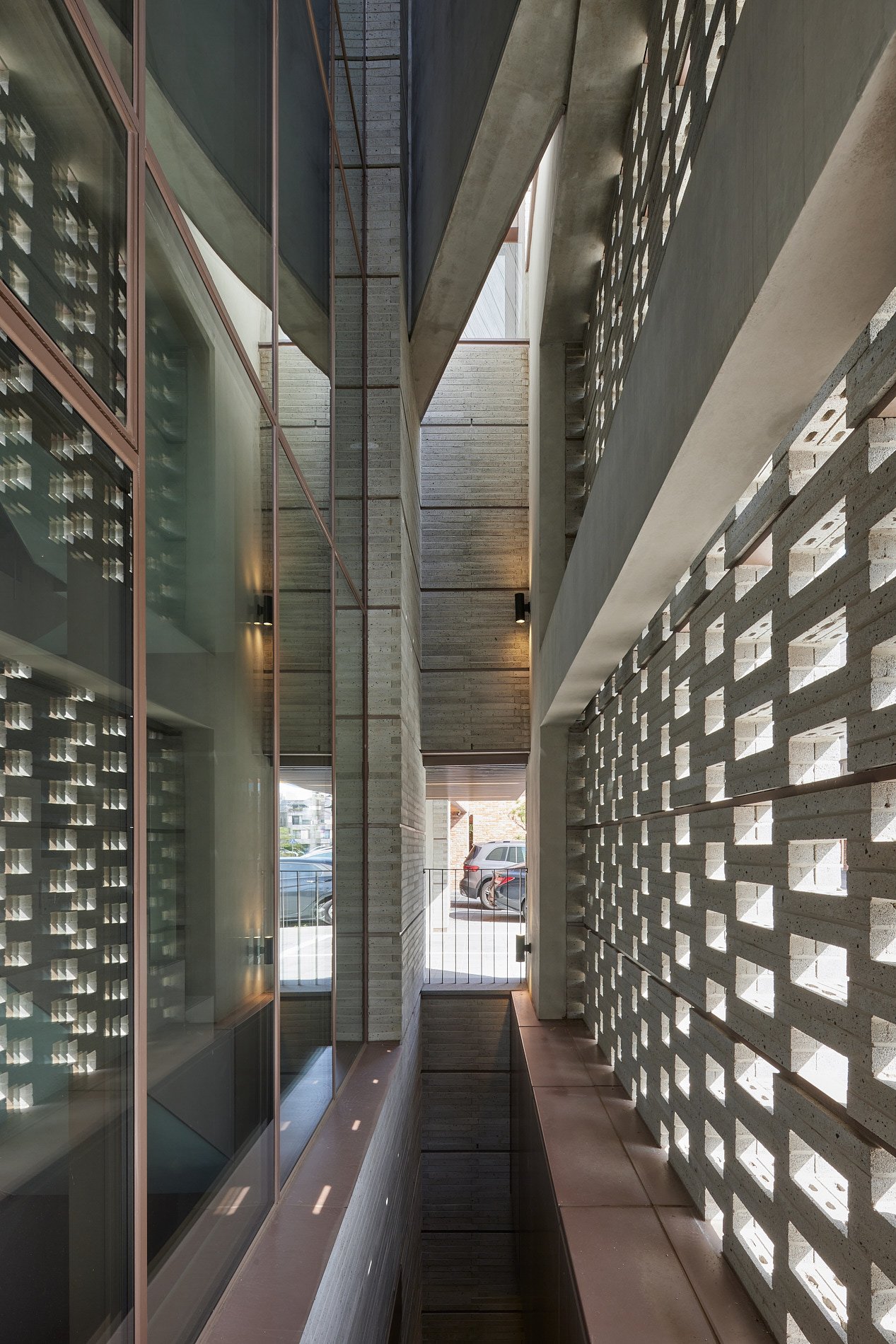
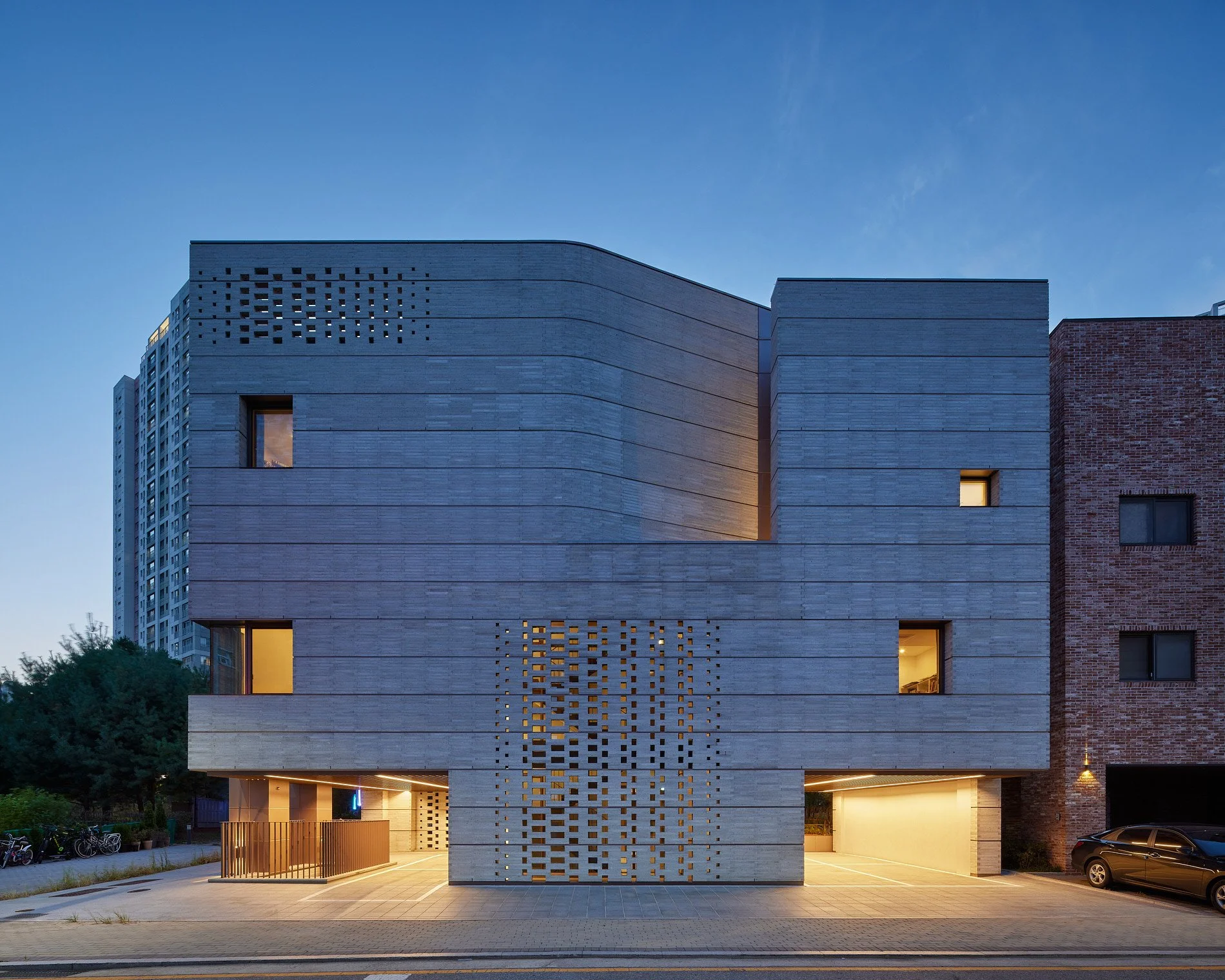
The site located at the entrance of the Misakang River housing complex in Hanam City is adjacent to the entrance of Misanoori Park, which passes through the Misakang River, and requires a role that presents a new landscape to park users while also serving as a residential facility. This building is a studio building for underground sound and a residential facility where two generations live together. It has a solid and concise baseline that holds the order of the complex spatial structure, and it looks like part of a sophisticated urban landscape at the entrance of the park and along the main road, while the area under the building is open to the park, opening up the view to the park not only from the side but also from the back. Unlike the windows that are directly open to the outside, the windows that open to the courtyard, inside the building, and to the sky, express spaces that allow for various interpretations, arouse curiosity, and require imagination such as art museums or galleries.

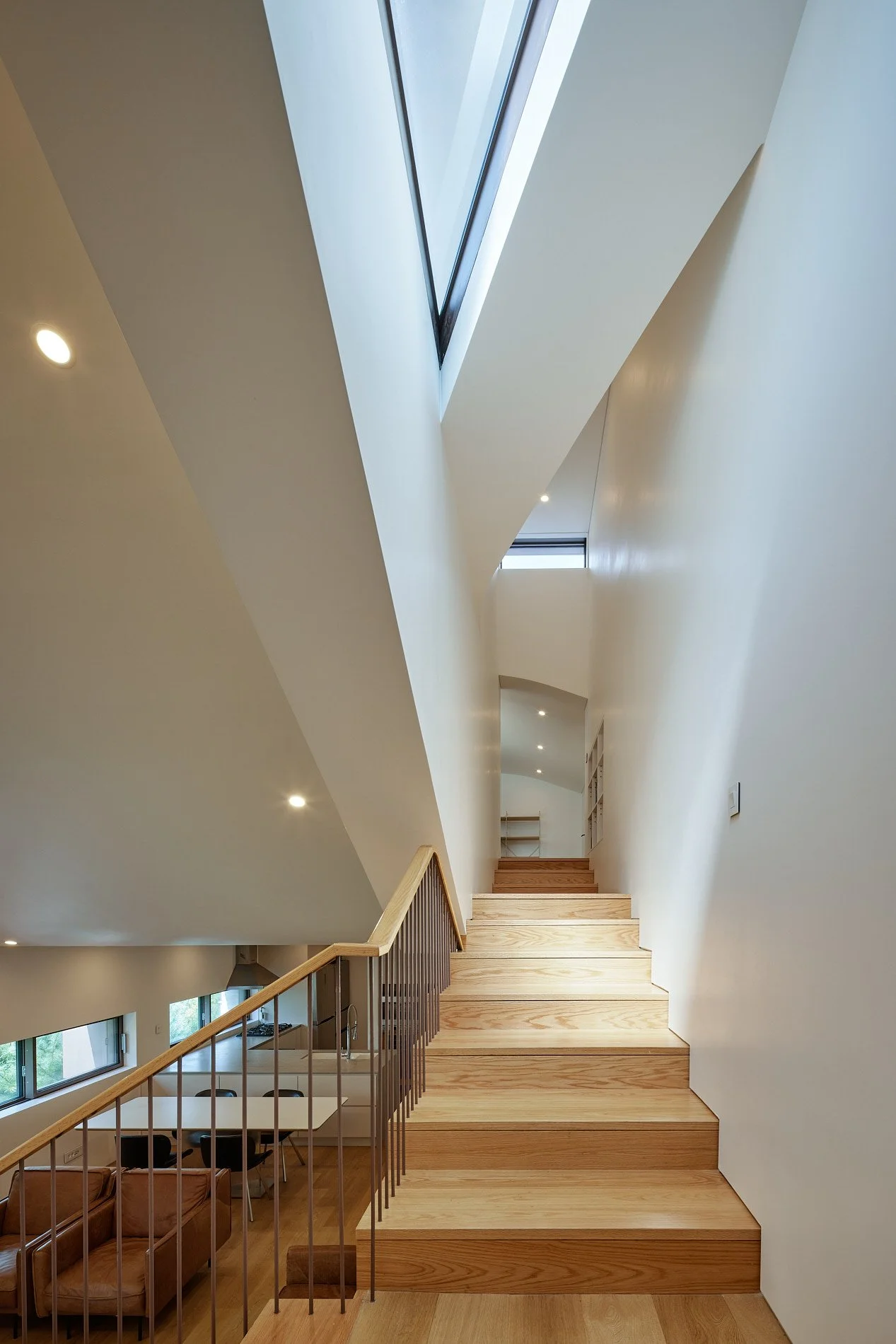
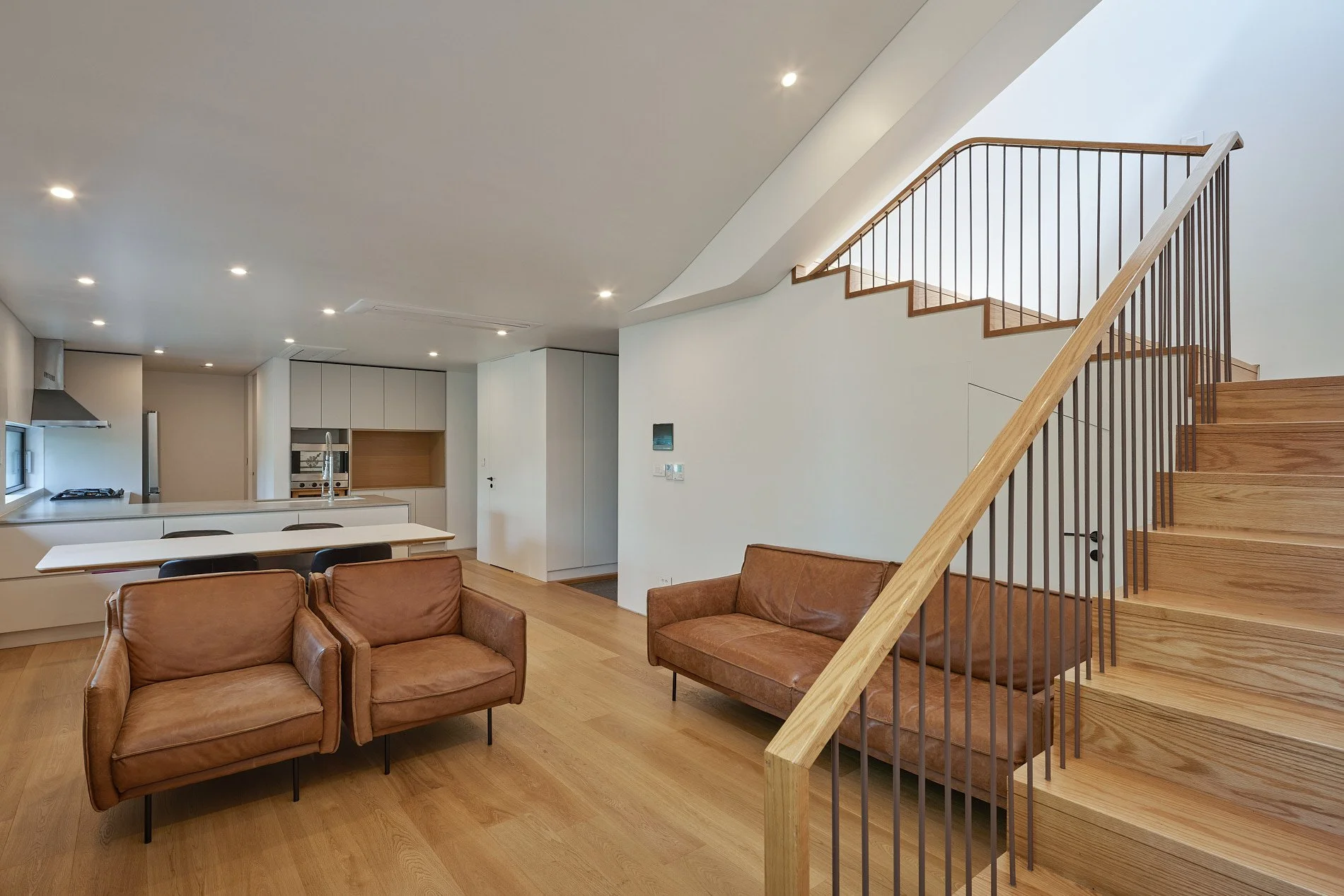
The main courtyard of this building, among its two courtyards, is open from the underground sound studio to the rooftop. The living room gallery on the second floor captures the greenery of the park through large windows, and the high ceiling adds a sense of spaciousness while providing functional sectional variations. The rooftop provides a private space that opens up to the sky among the tall apartments, offering a special outdoor space for families. The long gray brick wall uses rough masonry where visual openness is needed to maintain privacy as a residential facility while providing a sense of openness.


Year: 2022

Location : Hanam, Korea

Size : 489.89 ㎡

Status : Built

Type : Residential

Principal in Charge :

Seojoo Lee, Hyojung Kim (I.f), Dongil Kim (Kyung Hee University)

Client : 김동한

Contractor : (주)성지우종합건설

Civil : (주)토우지오

Structure : 서울구조

MEP : 두현M&C, 대경전기

Environmental Engineering : Dongil Kim

Record Architect : 장원건축

Photography : Kyung Roh

열수축 폴리머 재료를 활용한 디자인 및 제작방법론의 건축적 적용에 관한 연구

열수축 폴리머 재료를 활용한 디자인 및 제작방법론의 건축적 적용에 관한 연구

A Study on Design and Fabrication Methodologies with Heat-Induced Self-Reinforcing Polymer

(Background and Purpose) This research paper aims to investigate a unique design process that digitally manipulates the morphological transformations of a heat-induced self-reinforcing polymer. The principle of the heat-induced contractile polymer has long been implemented in various industries such as packaging and fashion. While other industries have embraced the full potential of the particular soft material, it is still a relatively new material to be further explored in the field of architecture. Yet, with the application of computational tools to architectural form-making and fabrication methodologies, morphological and structural behaviors of heat-induced polymer could become an active material for architectural projects.

(Method) There are two modes distinguished in the presented research methodology. First of all, the author conducts the physical investigation of the material system of heat-induced polymers as a design driver. In this stage, the author computes the material behavior of the polymer sheet considering the material thickness of the polymer sheet and the traits of contractile deformation based on the time of heat exposure and the level of temperature on the material. Second, the author explores the digital investigation of a transition system of the physical properties to digital simulation then from the digital model to a fabricatable artifact based on the physical investigation of the heat-induced polymer sheet. In this stage, A series of computational strategies are applied to evaluate and analyze the design that eventually led to the making process. Finally, the latter part of this research paper showcases a built case study titled De:flatable. The study demonstrates the process of digitally comprehending the morphological transformation of a soft material, ultimately realizing the most optimal form through rapid prototyping with varying parameters.

(Results) The presented paper proves the resilience of the design process and aims to revisit the reciprocity of physical and digital, of formal and structural, and of design and fabrication through comparing the physical scale models and digital form-finding prototypes. And in lieu of the spirit of recalibration, the research is experimentation in imprecision.

(Conclusions) Not only an imprecision by the nature of the polymer’s intrinsic soft materiality but the imprecision of the digital translation of the morphological behavior of viscoelasticity. But as the following research demonstrates, it is within the imprecision and the infidelity of both physical material and computation tools that interpret the material that leads to the production of a form and a design process that hints at new possibilities in architectural design.

Kim Dongil. (2022). A Study on Design and Fabrication Methodologies with Heat-Induced Self-Reinforcing Polymer. Journal of Korea Intitute of Spatial Design, 17(2), 25-36.

https://www.kci.go.kr/kciportal/ci/sereArticleSearch/ciSereArtiView.kci?sereArticleSearchBean.artiId=ART002823029

Related Project


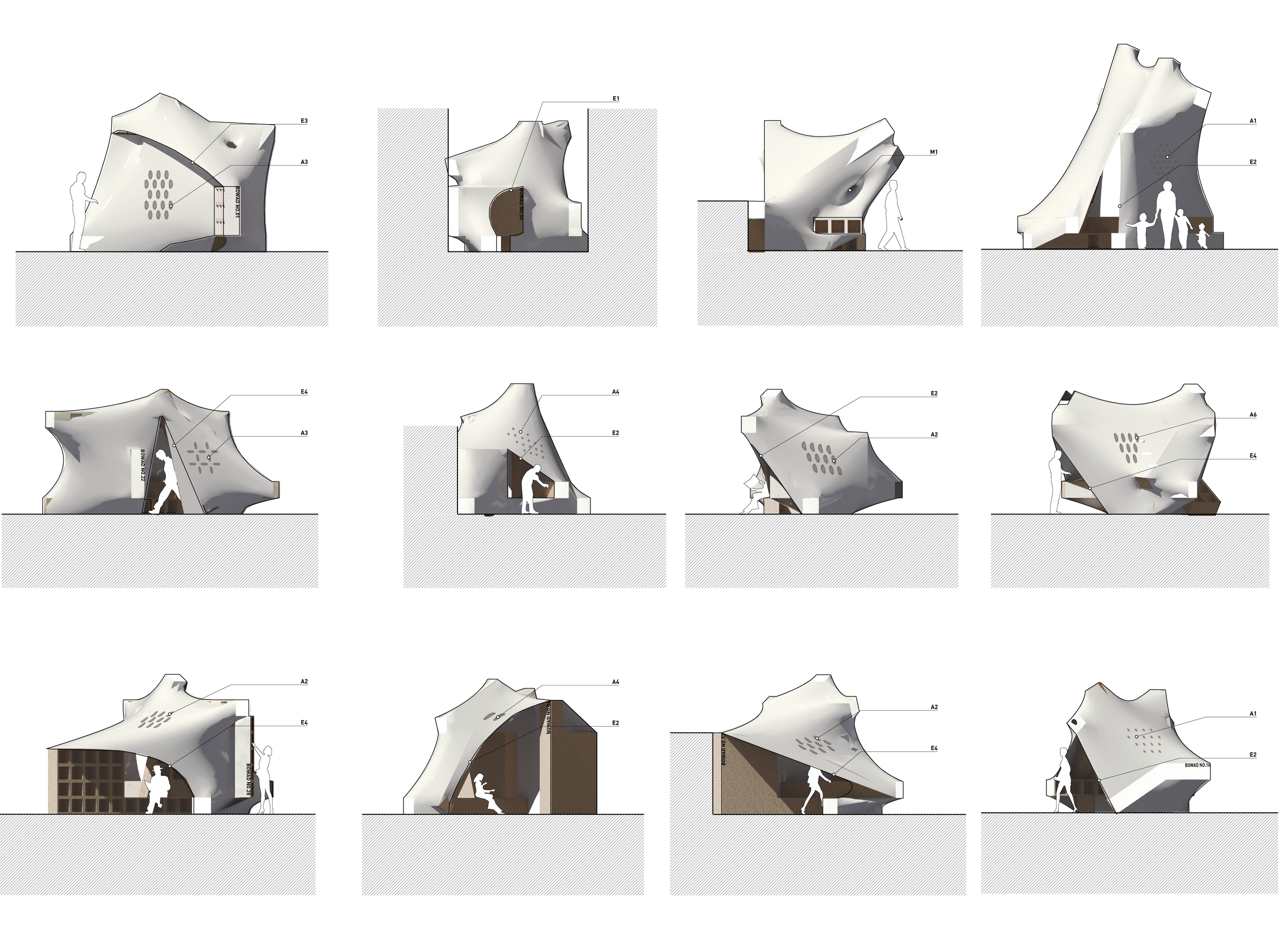
A Study on Architectural and Spatial Application of a Bending-Active Sheet Material


A Study on Architectural and Spatial Application of a Bending-Active Sheet Material

활성 탄성면 재료의 건축 및 공간적 적용에 관한 연구

(Background and Purpose) Bending-active materials have been widely utilized in fashion, furniture, product design and even in creating new spaces and spatial experiences. In applying bending-active surfaces as design drivers, architecture has found it challenging to track and document the material’s morphological behaviors, to fully control the variables for design and fabrication. Also, architectural studies have considered innate structural and formal uncertainties of the bending-active materials to be too great a risk to utilize it as an inhabitable space. However, with the integration of current computational tools into the design and fabrication processes, the natural behaviors of elasticity and resilience in response to bending and other forces, can now be applied to extract morphological and structural investigations in architecture. This paper aims to demonstrate the application of computational tools to the architectural design process of a bending-active surface, from conceptual form-finding to full-scale model fabrication.

(Method) A plastic polymer sheet, which is one of the most widely available bending-active surfaces, will be central to the design process. The methodology is focused on a computational analysis on softness of the plastic polymer sheet, morphological behavior, and structural integrity in the digital platform. Simultaneously, iterative design exercises occur through physical fabrication of the digitally produced results, in order to achieve a complete reciprocity between the digital and the physical platforms. Two case studies are introduced in this paper based on this same mode of study. One exercise begins from the design of local scale modules and develops into the global scale geometry. On the other hand, the second exercise begins from the design of a global scale geometry and proceeds to segment this global geometry to produce local geometries for fabrication purposes.

(Results) The two exercises produced the following results. First, through a reciprocal design process between the digital and physical platforms, a complex novel form that is aesthetically and structurally successful can be realized. Second, by interpreting a widely available material into the digital platform, customized computational tools allow form-finding and analysis of the final geometry to produce automated cut patterns for physical platform translation. Lastly, the assembly process itself can be designed so that a large scale structure can be assembled by a small group of people with no particular expertise and no secondary scaffolding or sub-structure, due to the lightweight material and the structural integrity a bending-active design inherently carries.

(Conclusions) This paper expects to further studies that examine material, formal, and structural design and fabrication of various bending-active surfaces.

Kim Dongil and Chung, Yeseul. (2022). A Study on Architectural and Spatial Application of a Bending-Active Sheet Material. Journal of Korea Intitute of Spatial Design, 17(1), 11-22.

https://www.kci.go.kr/kciportal/ci/sereArticleSearch/ciSereArtiView.kci?sereArticleSearchBean.artiId=ART002812654


Related Research


Youngju Bandabi Sport Complex

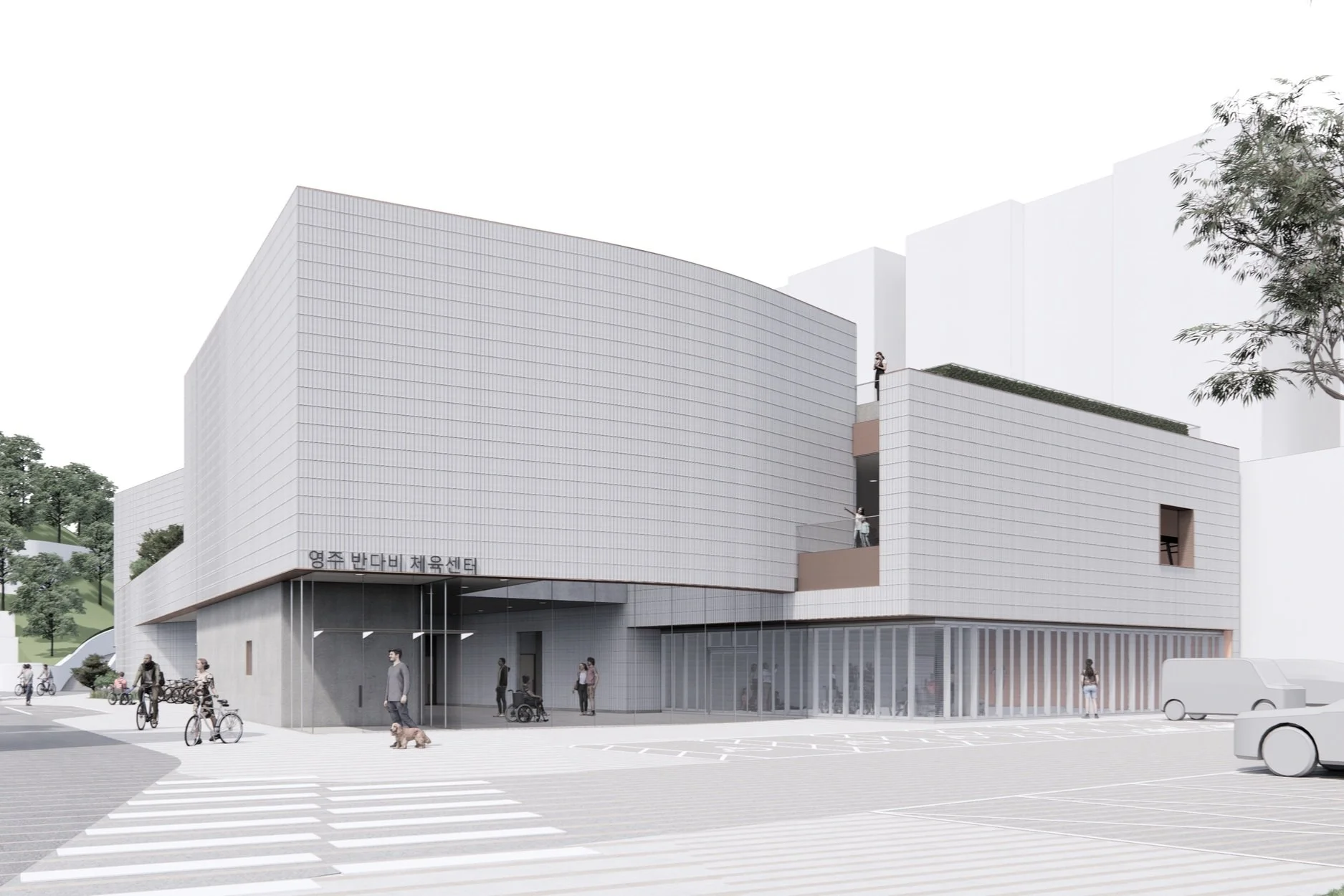
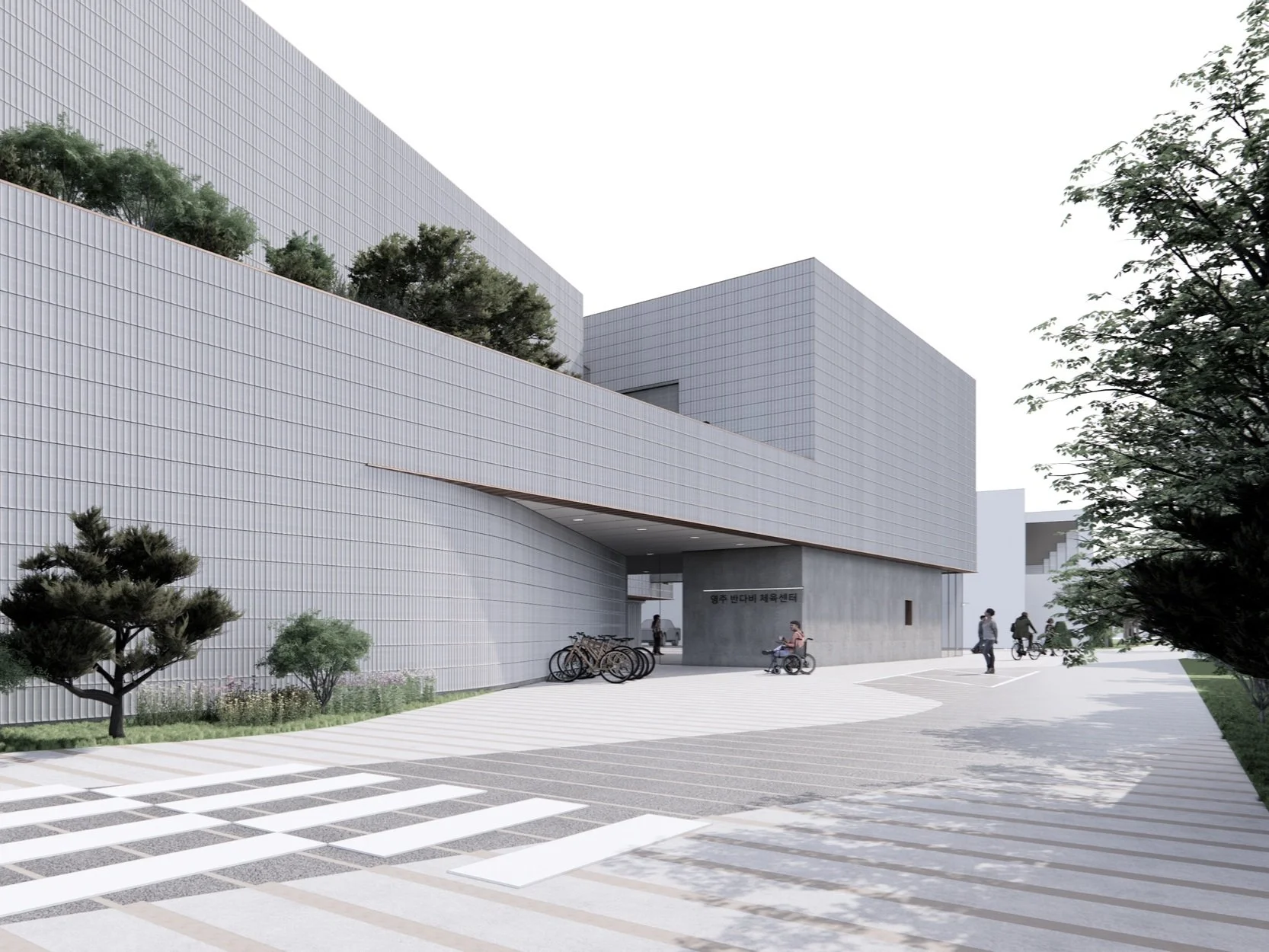
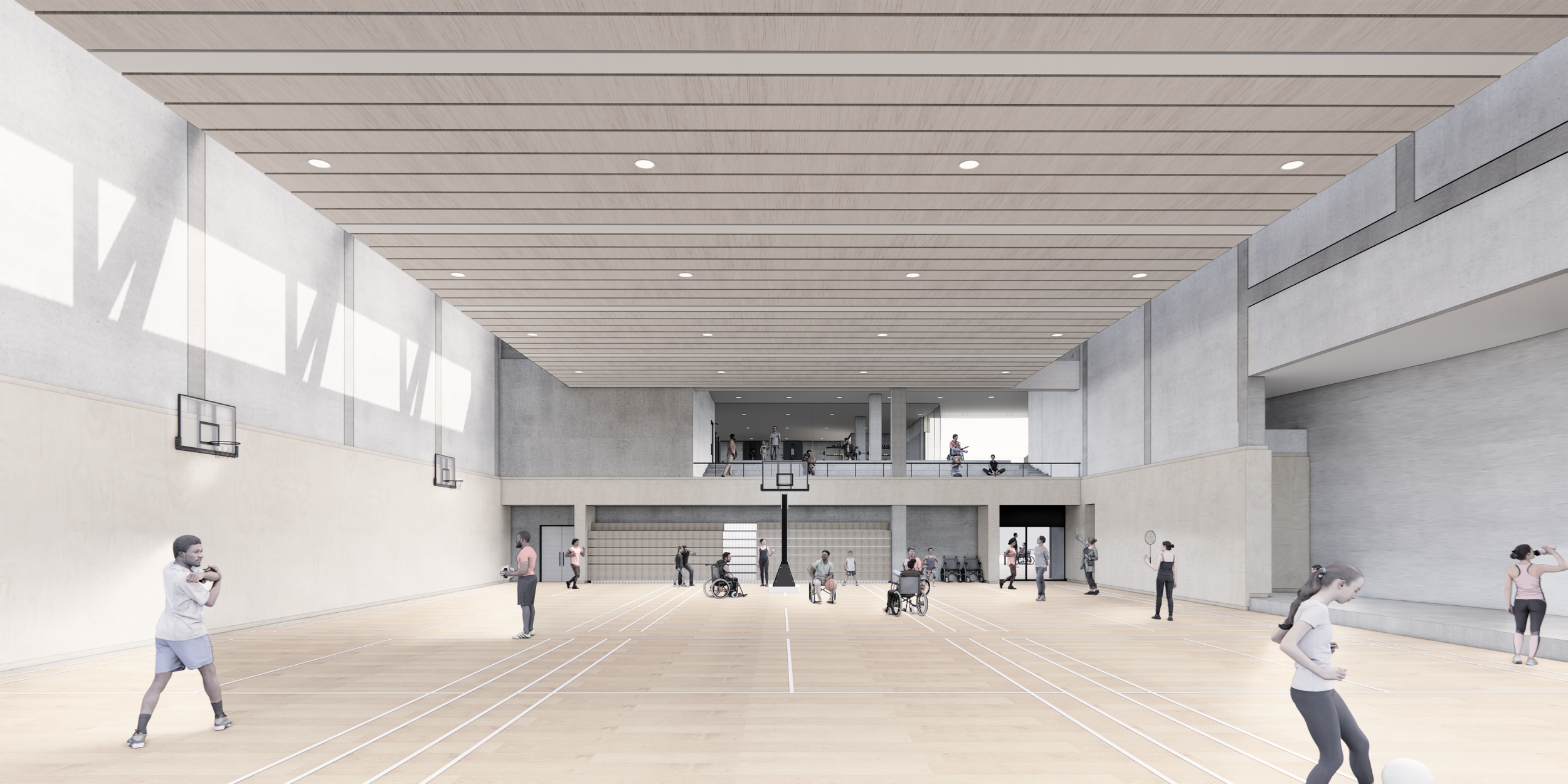
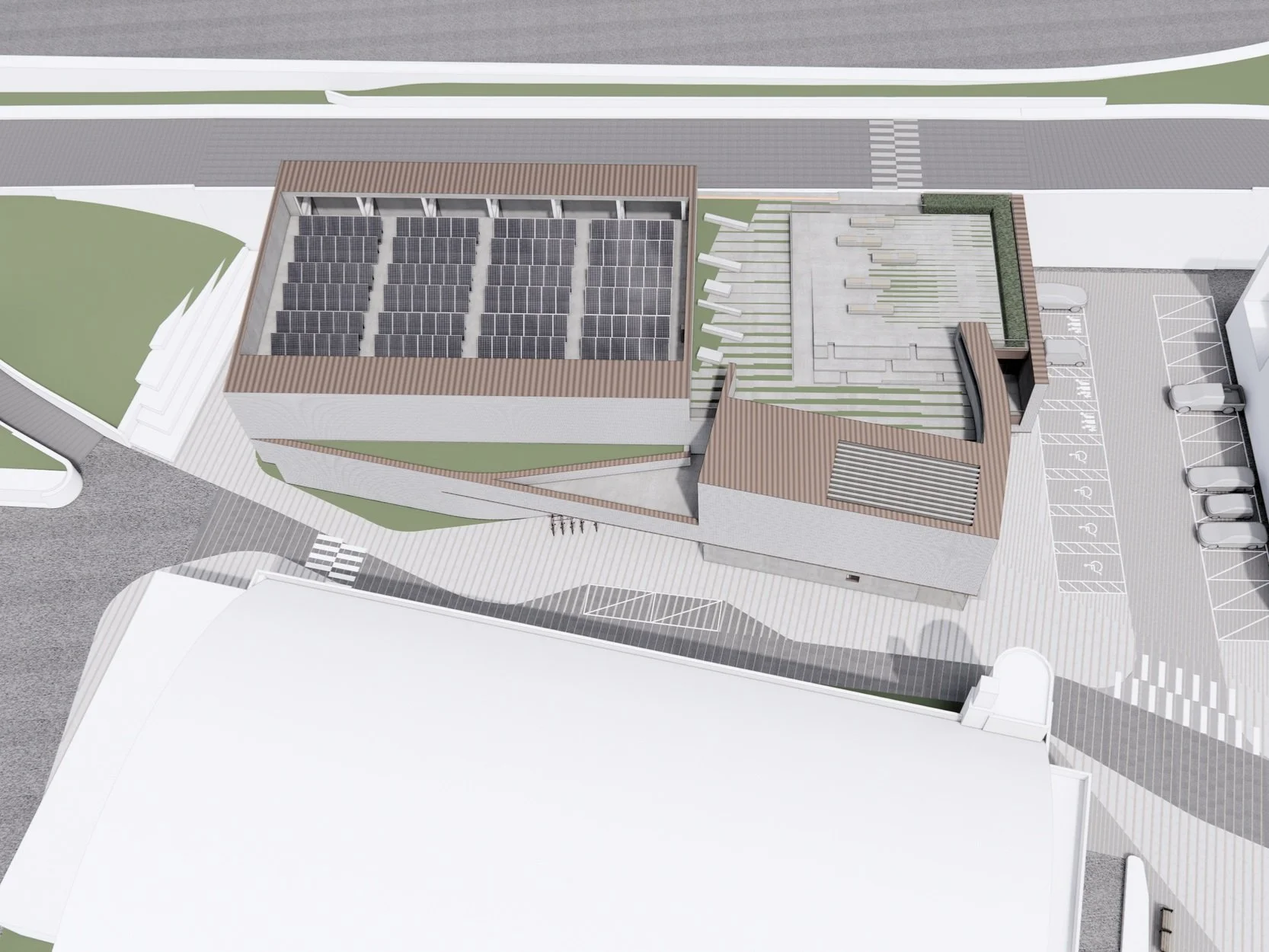
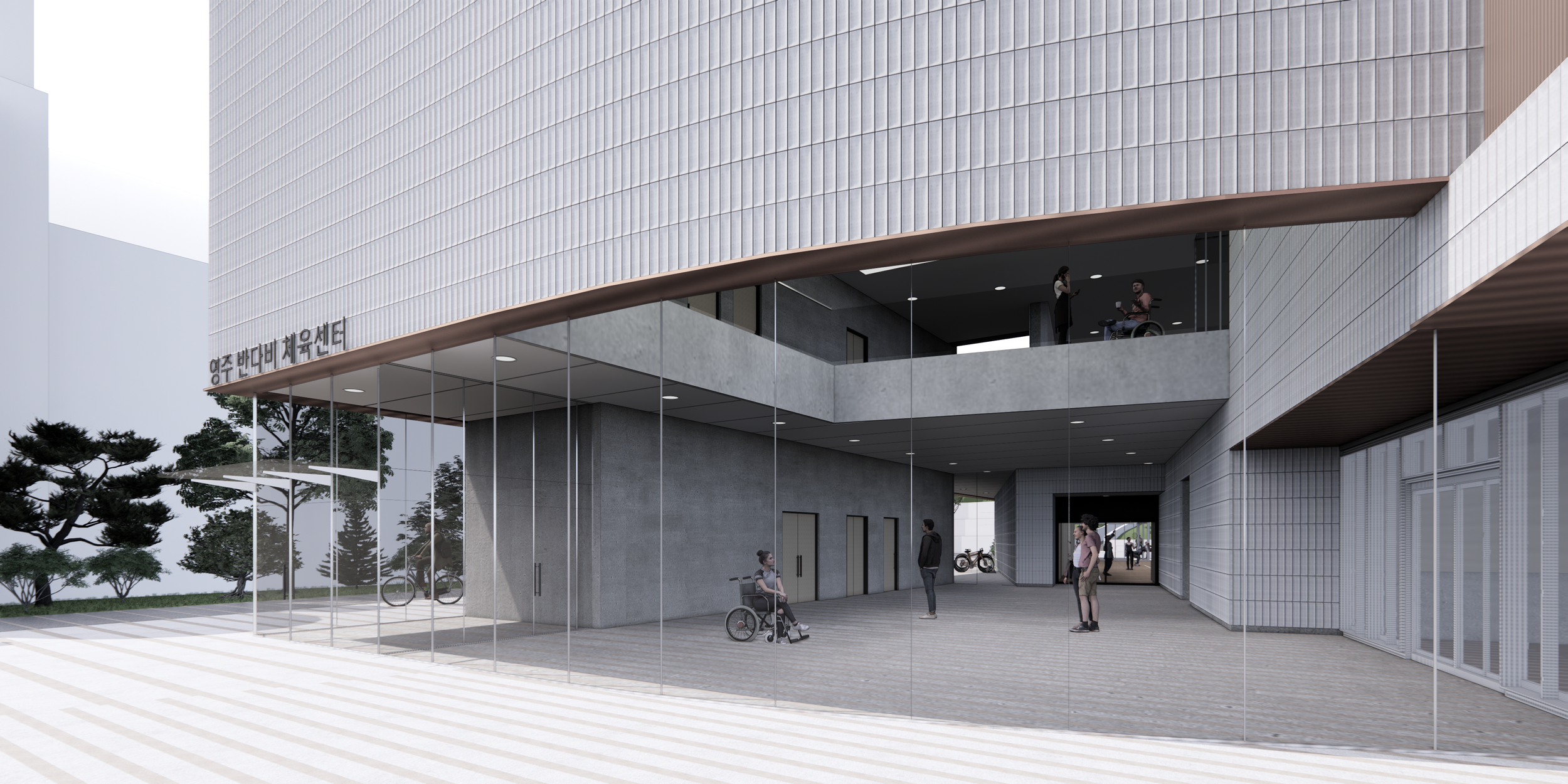
The Bandaebi Sports Center will become a new entrance point located within the Yeongju Citizen Sports Park athletic facilities site. It serves as a mediator that connects people entering from the University Road 153 to both the inside and outside of the Bandaebi Sports Center, as well as other facilities within the site, such as the Community Sports Hall, indoor swimming pool, boxing training center, Citizen Sports Park, tennis court, soccer field, volleyball court, National Sports Center, and Citizen Sports Park. The external space configuration encourages the Bandaebi Sports Center to be closely integrated with the site by opening up to a variety of external spaces that are adjacent to the site. Planning for natural and convenient access for different people and various modes of transportation such as cars, bicycles, and scooters, the Bandaebi Sports Center is designed to be a mediator between people, the city, and public spaces, based on consideration and understanding for each individual.

Over the past decade, public buildings in Yeongju have positively transformed the landscape of small cities and improved the quality of life for its residents. Yeongju has been steadily and clearly attempting urban regeneration through public buildings. Based on the characteristics of the Bandaebi space, if we try to capture the core idea in the public building, we can think of a more fair and inclusive public building based on the ideology of universal design. The Yeongju Bandaebi Sports Center embodies the idea of a public building that aims to accommodate more people’s diversity and everyday life, rather than being a space for a specific minority. Through this, Yeongju aims to achieve successful public buildings that have already been carried out and also match the goal of urban regeneration.


Year : 2021

Location : Youngju, Korea

Size : 2,035 ㎡

Status : Competition Entry (2nd Prize)

Type : Community Facility

Principal in Charge :

Seojoo Lee, Hyojung Kim (I.f), Allie Yeseul Chung (I.f Manila), Dongil Kim (Kyung Hee University), Minho Lee (func. Architects)

Environmental Engineering : Dongil Kim

Geoje Public Library

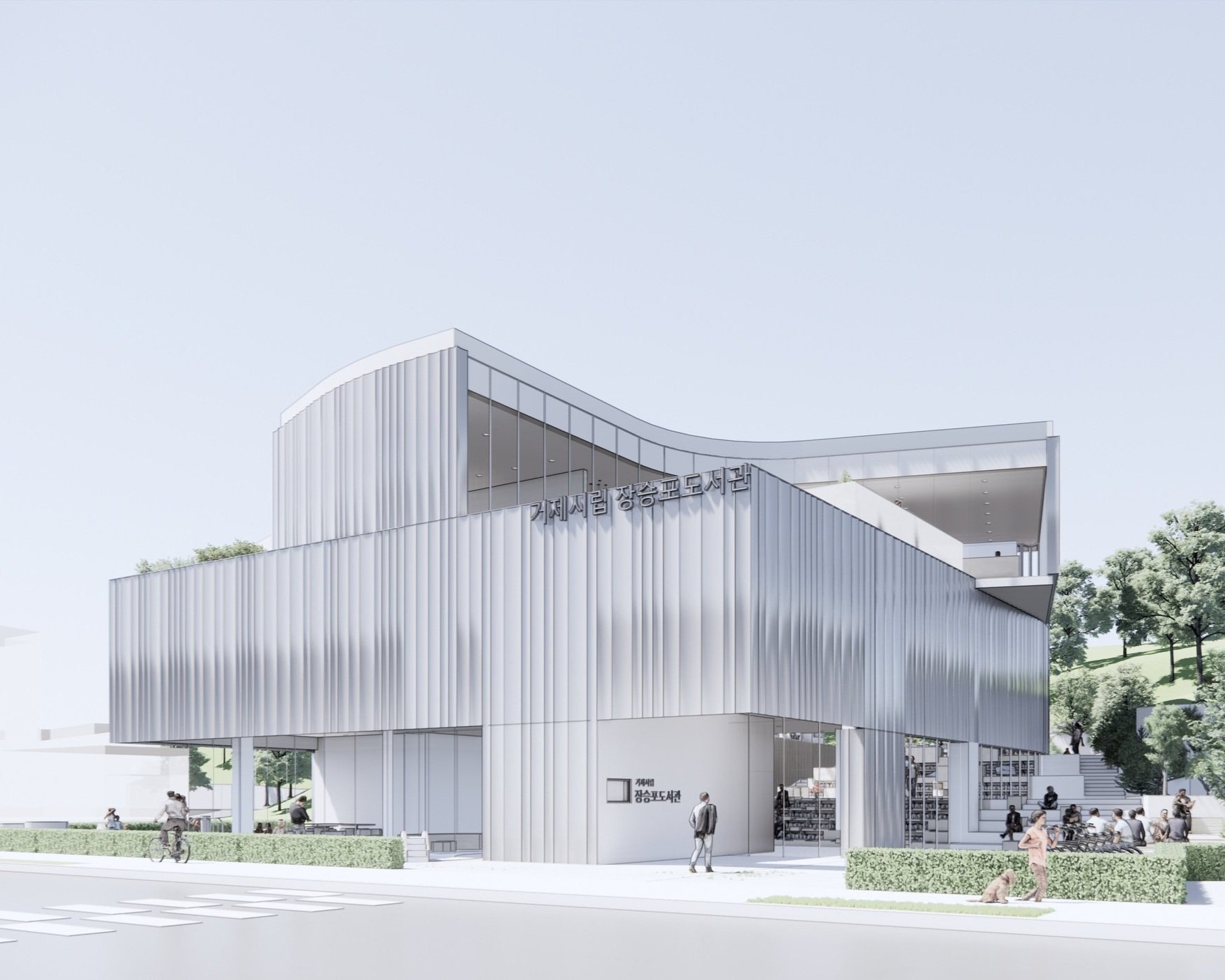
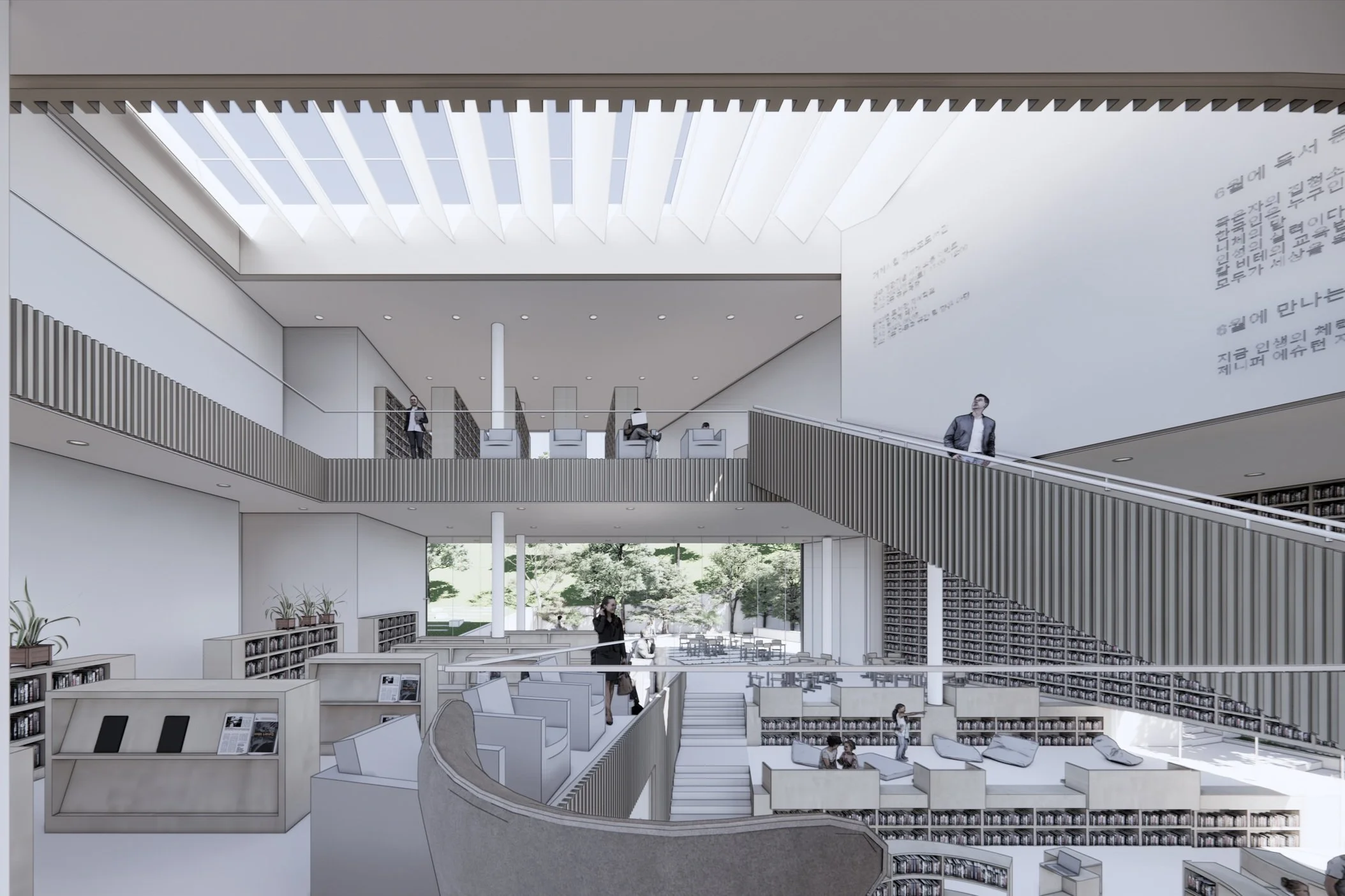
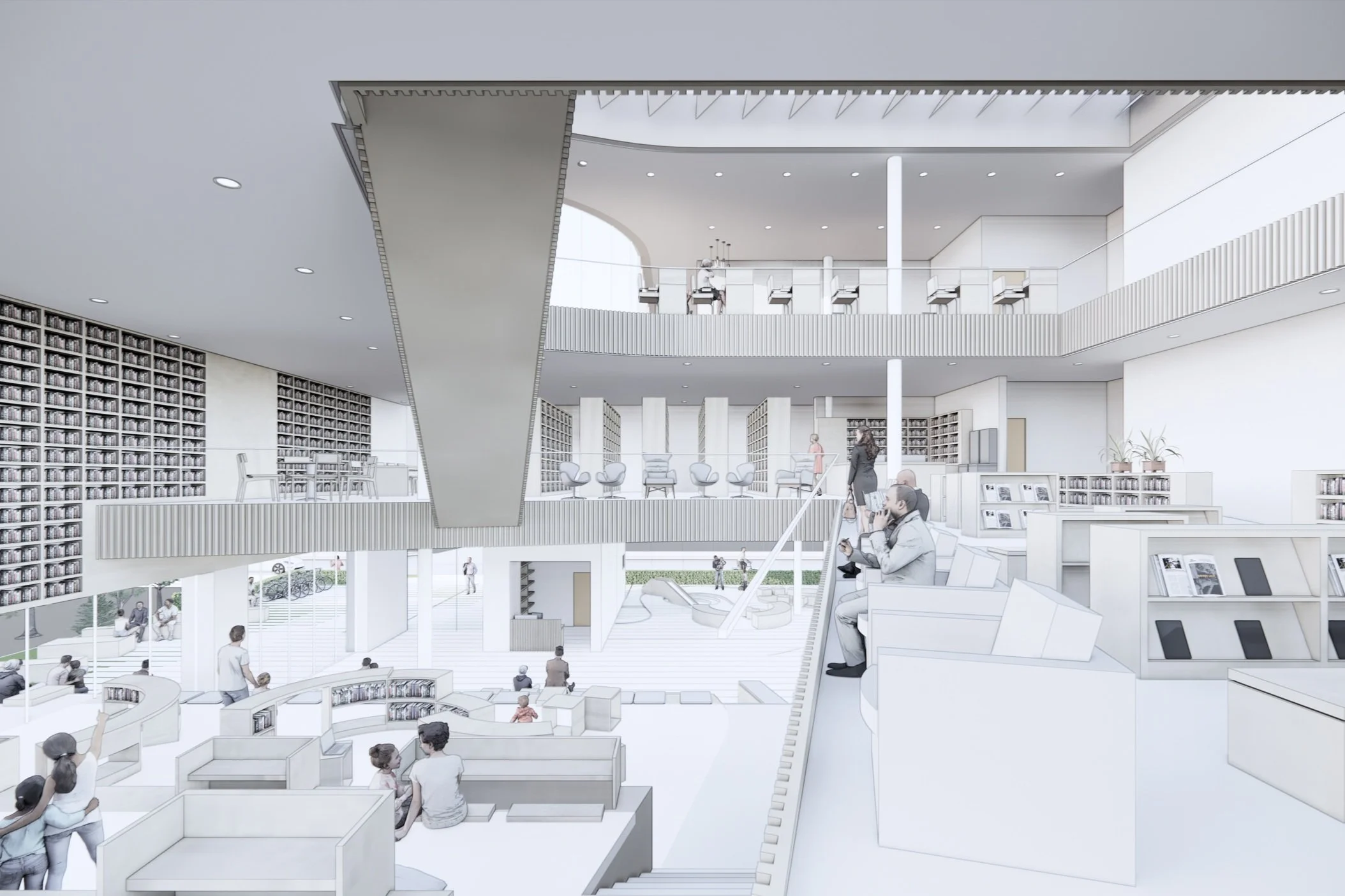
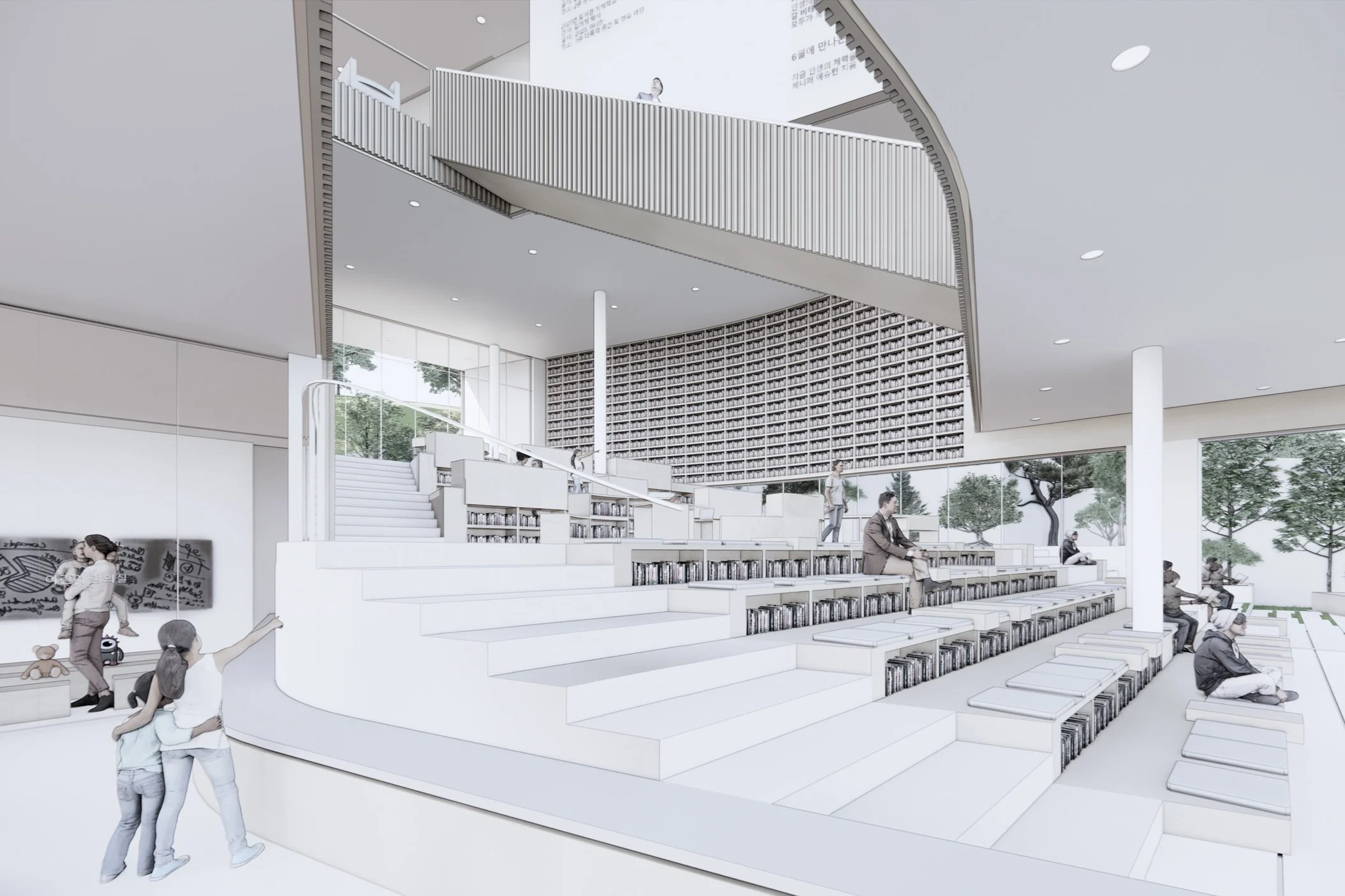
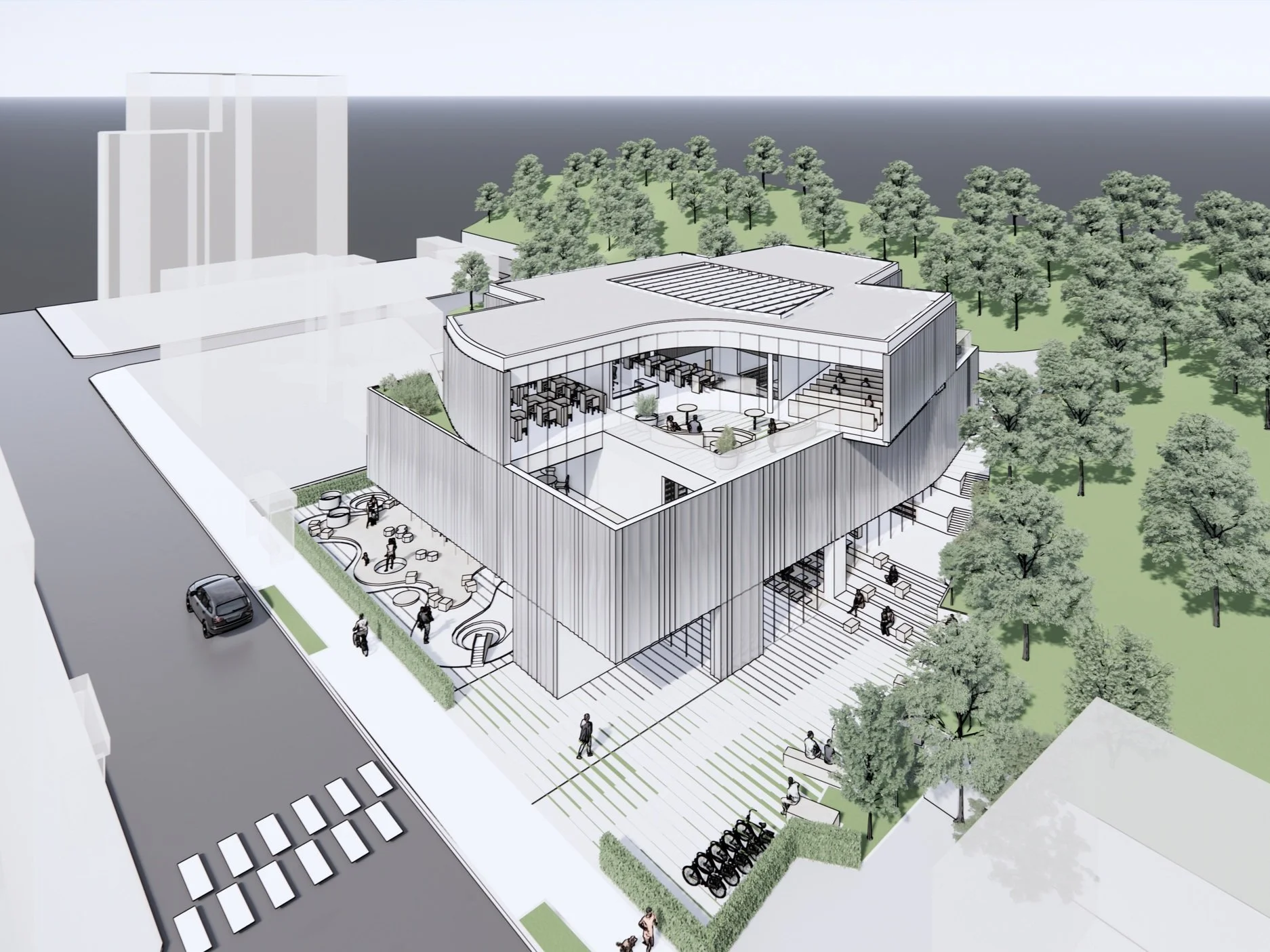
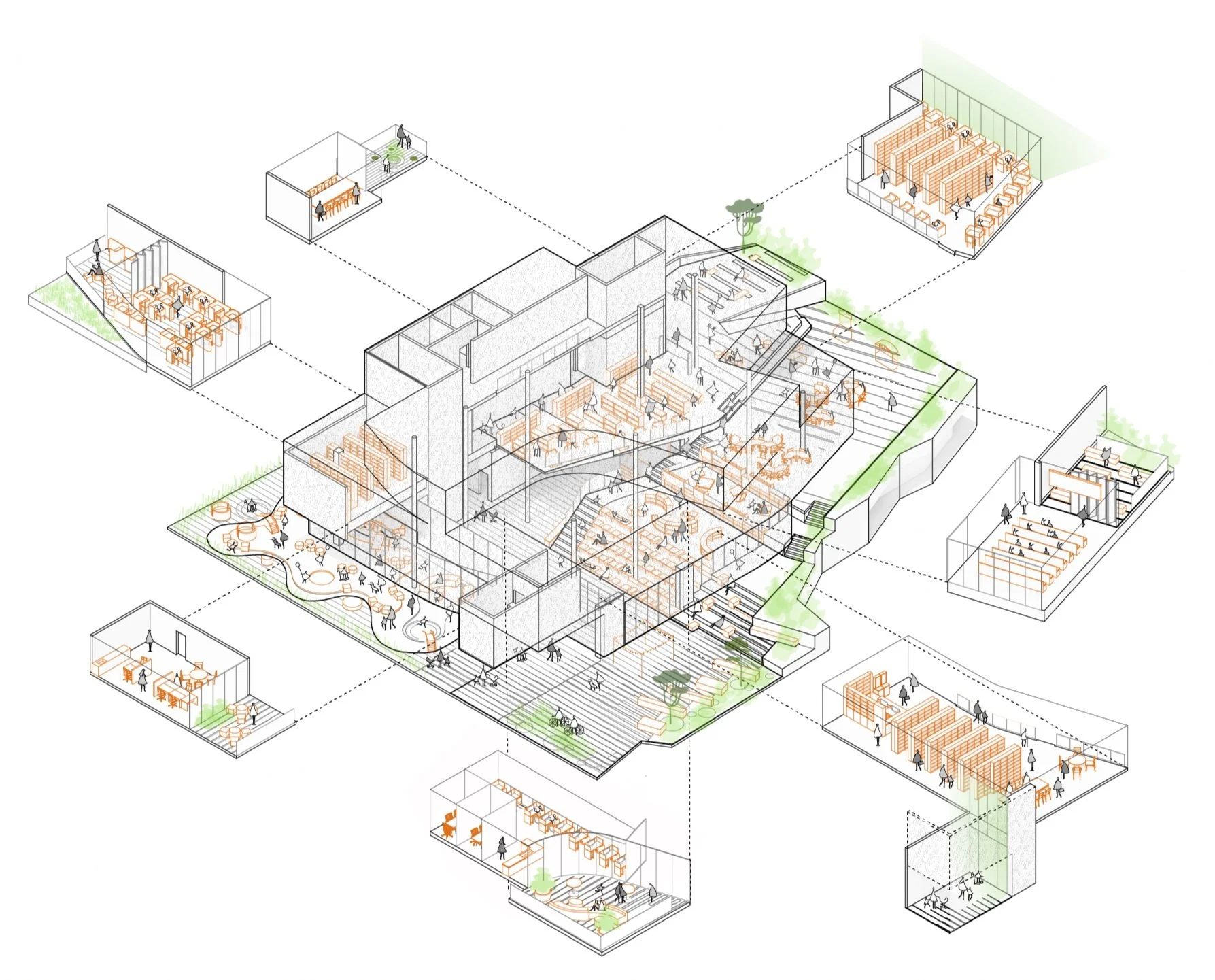
Jangseungpo Port was designated as a trading port in 1965, and it was a lively and diverse place where different people and things gathered and dispersed. The library for the people here should be functionally excellent, faithfully fulfilling its role as a place for preserving the collected books and sharing knowledge, and the proposed urban space is a public space but also a very personal place that individuals can privately own but is primarily a public space. It is a place where sharing and enjoyment coexist and are separated, where individual experiences are gathered, accumulated, and defined, and ultimately, a new library is proposed where space is configured from considerations for the community, and a new type of space that can contain both daily and non-daily experiences is presented as a truly meaningful public space for the city.

Starting from individuals and reaching out to many, it ultimately becomes a library for everyone - overlapping and intersecting with the activities and traces of individuals and groups to create a diverse and resident-friendly library. As people, objects, spaces, time, and memories accumulate, they form a complex public space - the library is designed to faithfully fulfill its primary function. It also incorporates intangible libraries that surround and embrace it. Here, each generation can gather, overlap, and share space together, or enjoy it individually as needed. The diverse library accommodates and embraces the community.

The library projects and embraces its surroundings through the material of its unobtrusive form - rather than standing out in its relationship with the city, it is a humble library that guards its place. The significance of the metal exterior that fully receives and respects the surrounding area is crucial. Depending on the characteristics of the material, it can project and absorb the surroundings, enveloping and reflecting them. The colors and textures of the city and the surrounding greenery will dye the library exterior like an image.


Year: 2021

Location : Geoje, Korea

Size : 1,595 ㎡

Status : Competition Entry (2nd Prize)

Type : Library

Principal in Charge :

Seojoo Lee, Hyojung Kim (I.f), Allie Yeseul Chung (I.f Manila), Dongil Kim (Kyung Hee University), Minho Lee (func. Architects)

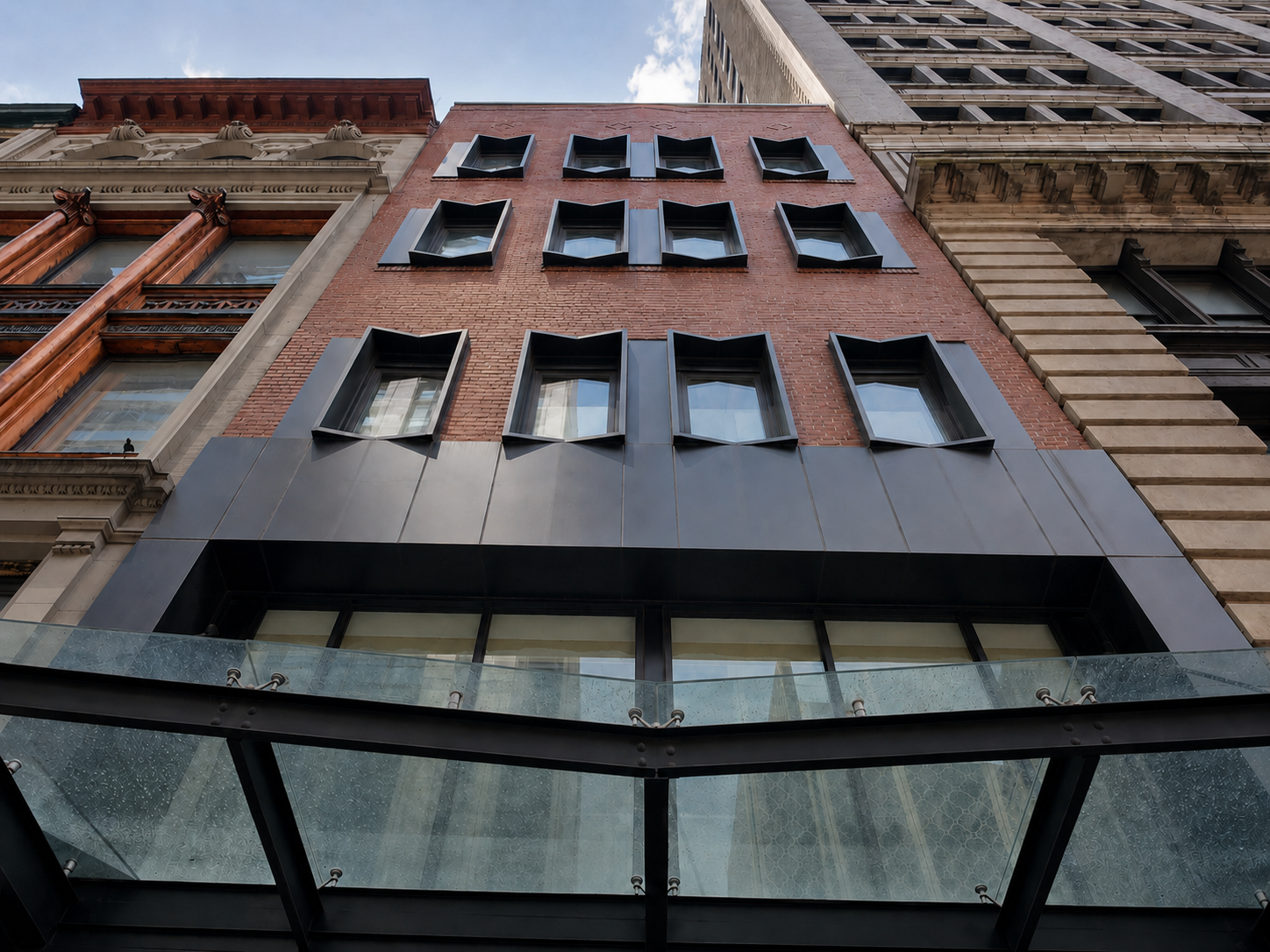
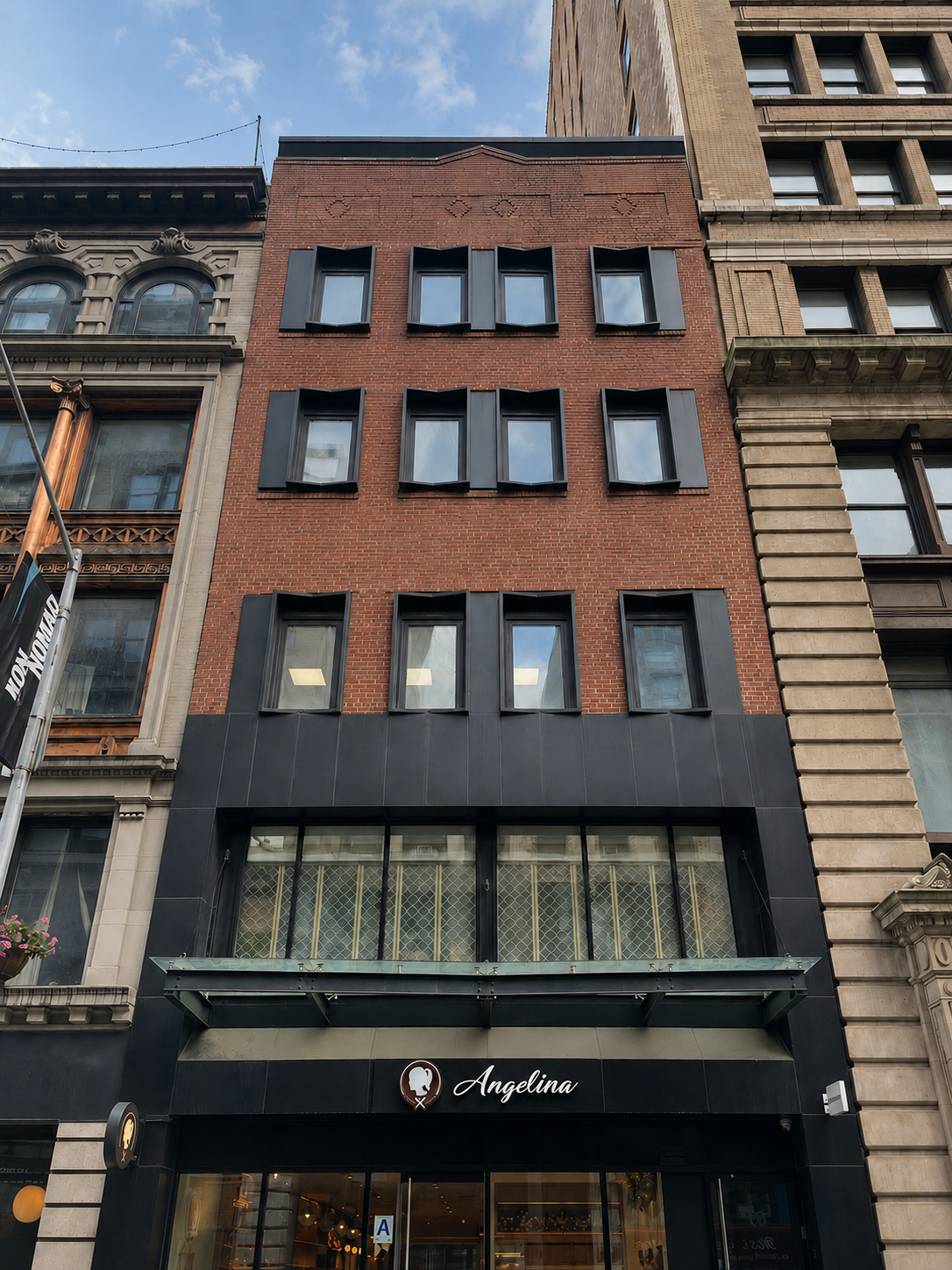
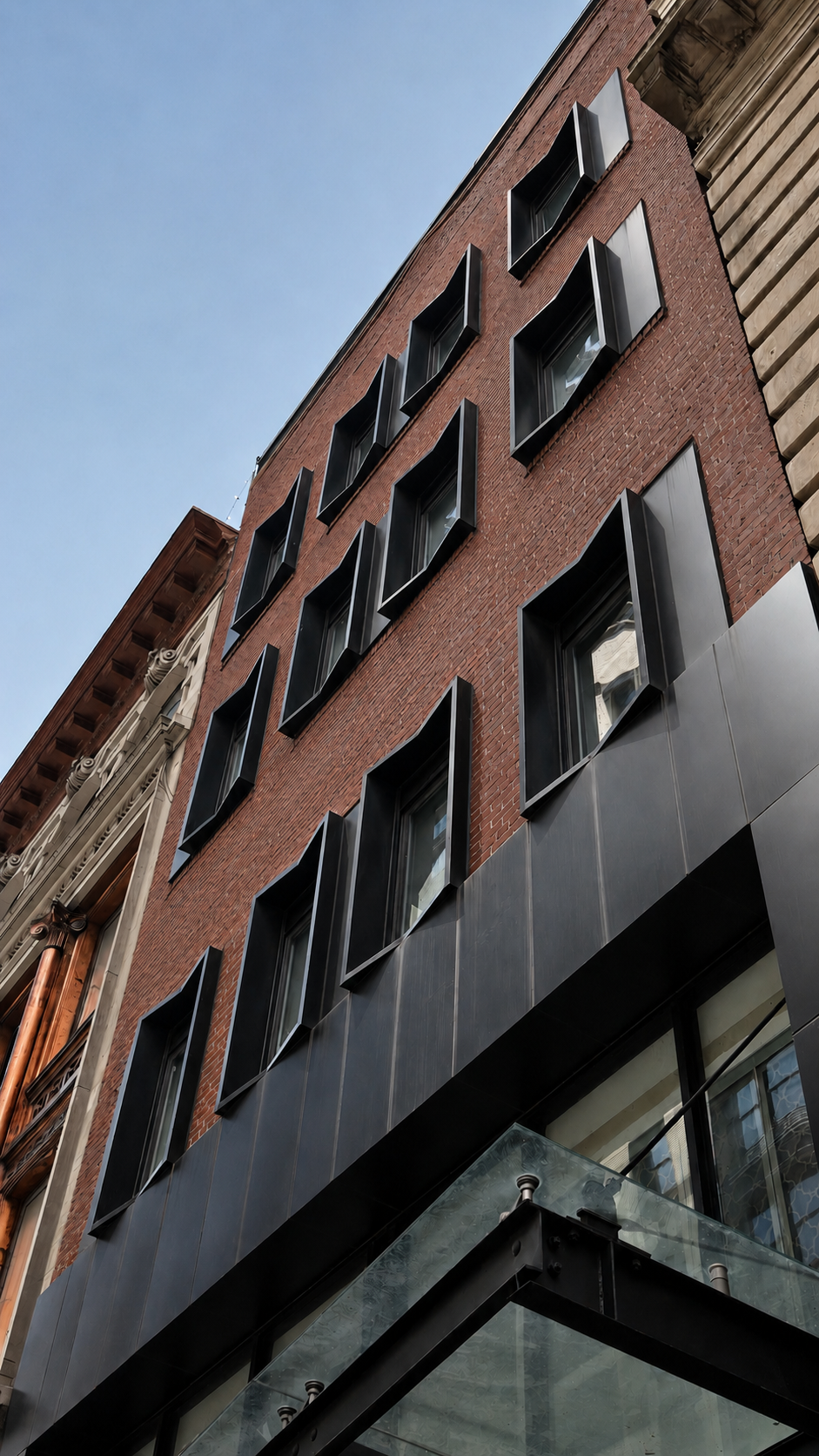
42W 28th St.


Year : 2021

Location : New Yourk, U.S.A.

Size : 392.90㎡

Status : Completed (Renovation)

Type: Commercial, Hospitality

Principal in Charge : Dongil Kim, Seojoo Lee (I.f)

Collaboration : Eco Architects

Pattern Tree


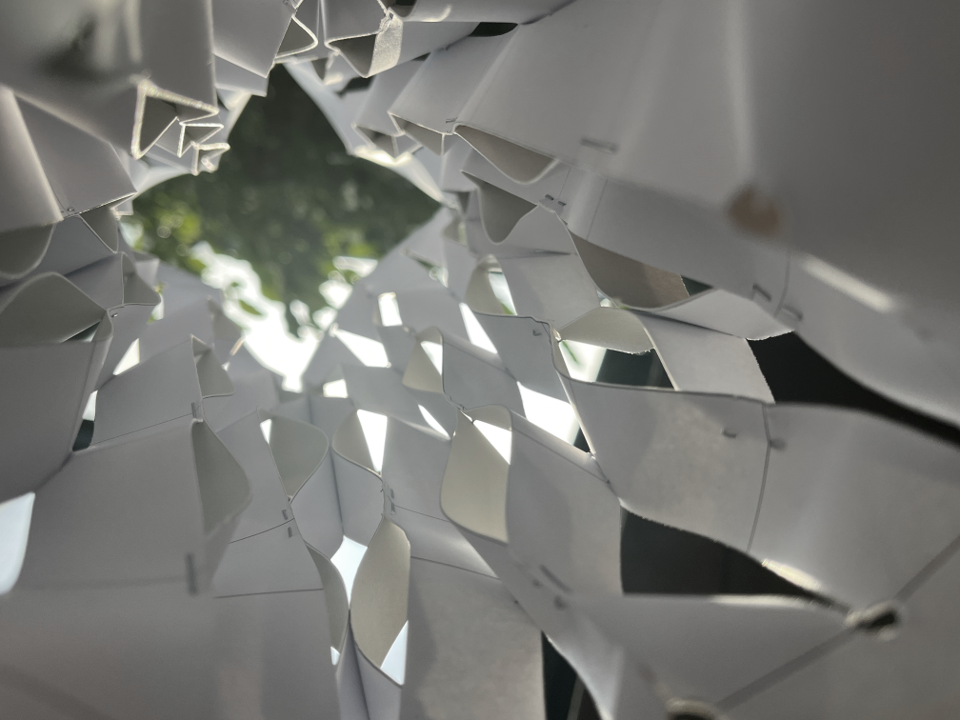
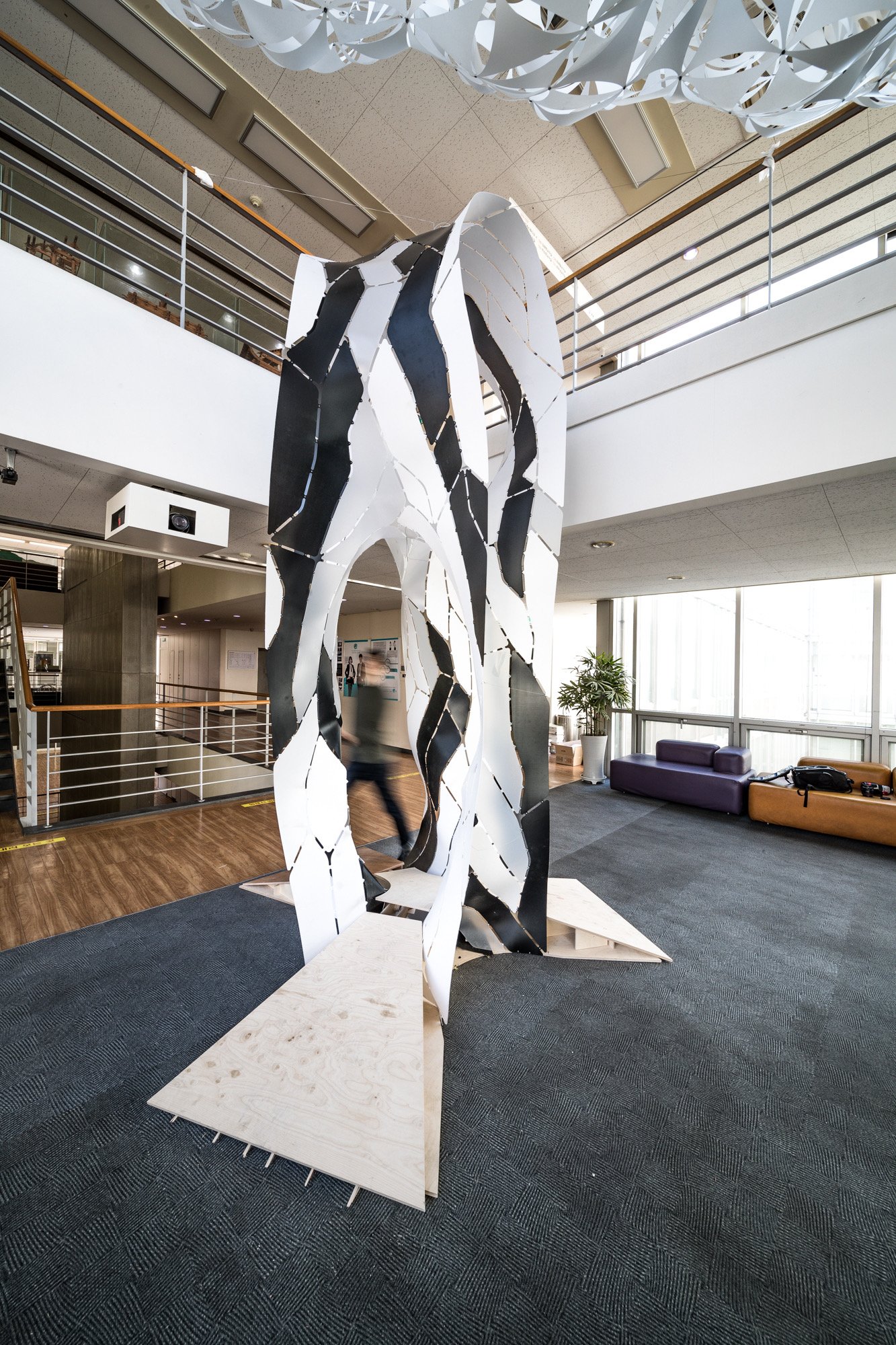
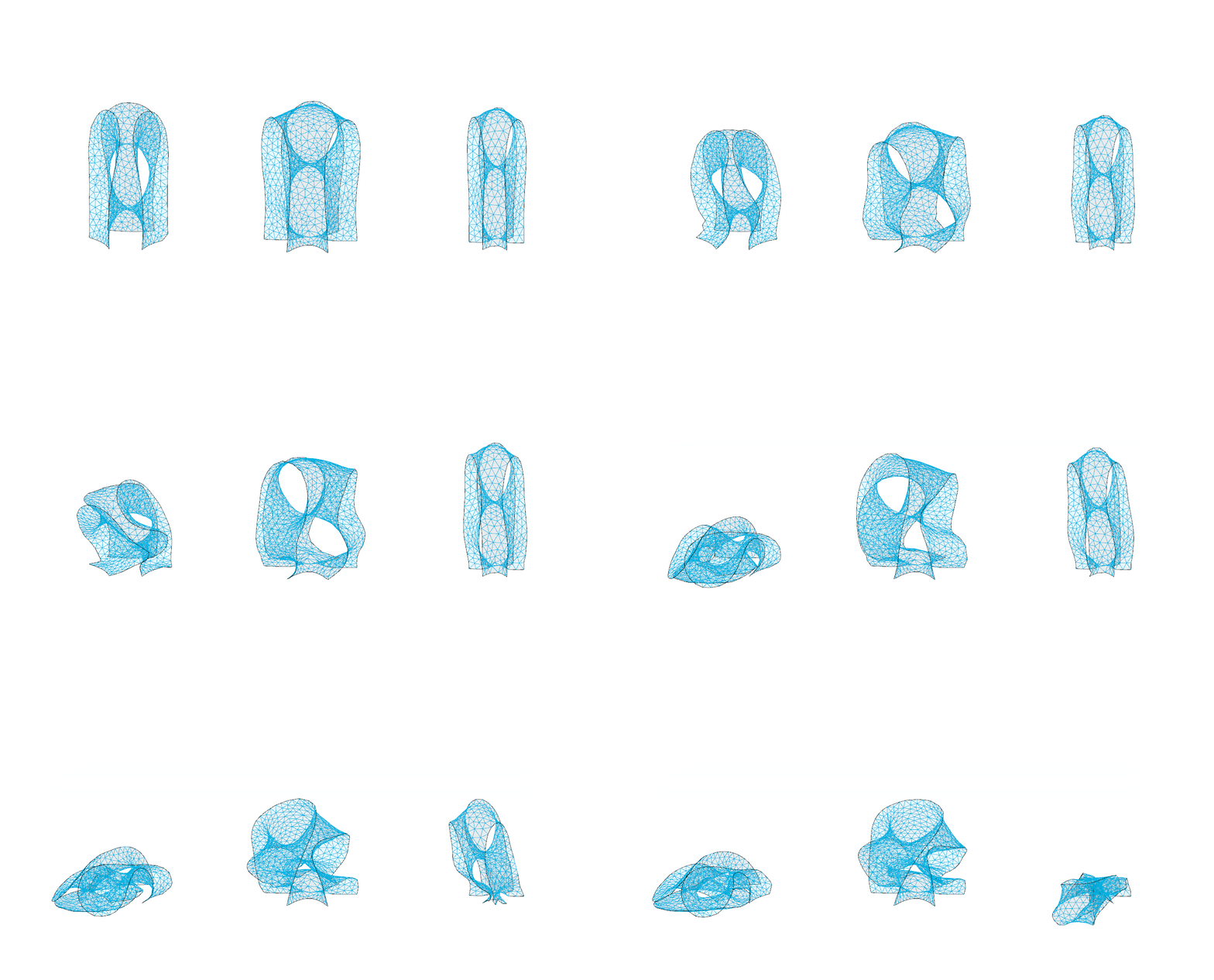
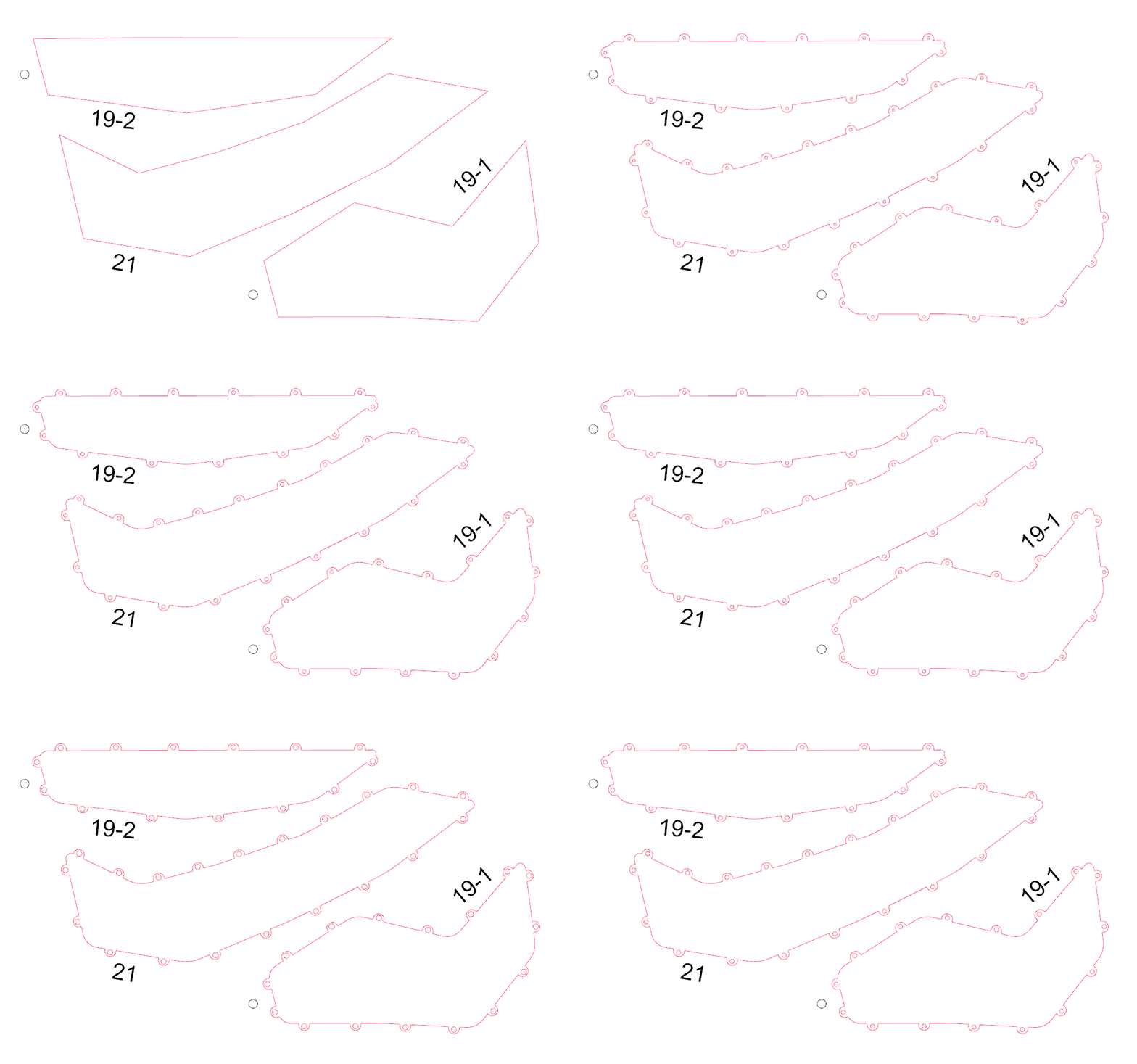
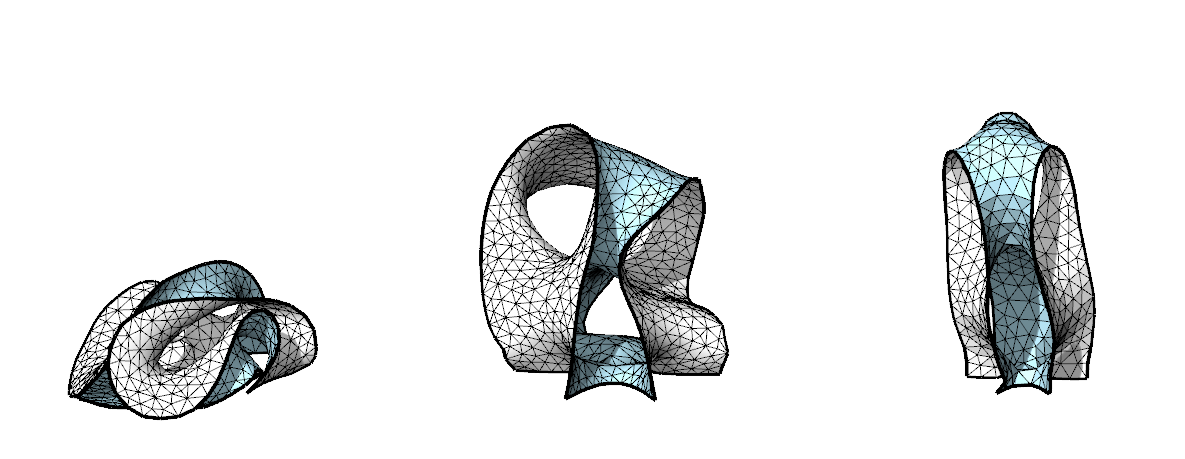
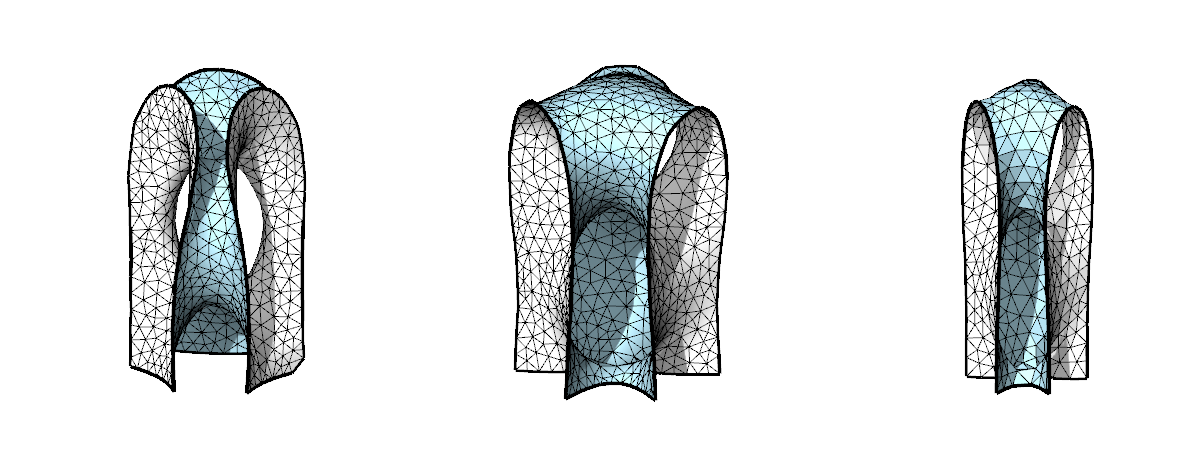
Pattern Tree is a computational design and fabrication study that explores how external forces and material behavior can generate architectural form. The project begins with a simple UV surface and applies digital form-finding techniques to create a global geometry shaped by two main forces: bending force along the outer edge and elastic force within the inner surface. Through this process, the surface is not treated as a fixed shape, but as a result of interaction between force, matter, and geometric constraints.

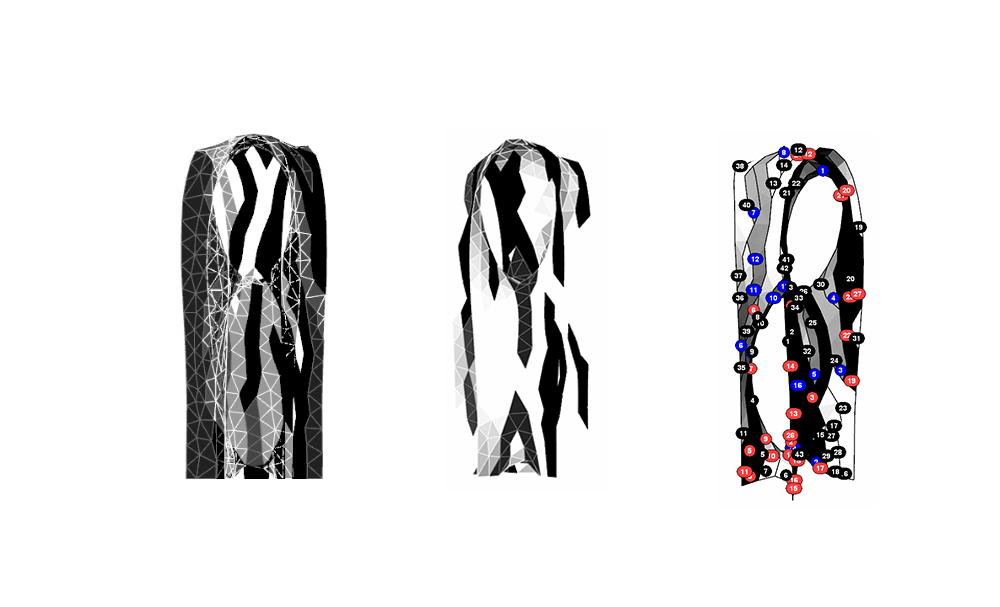
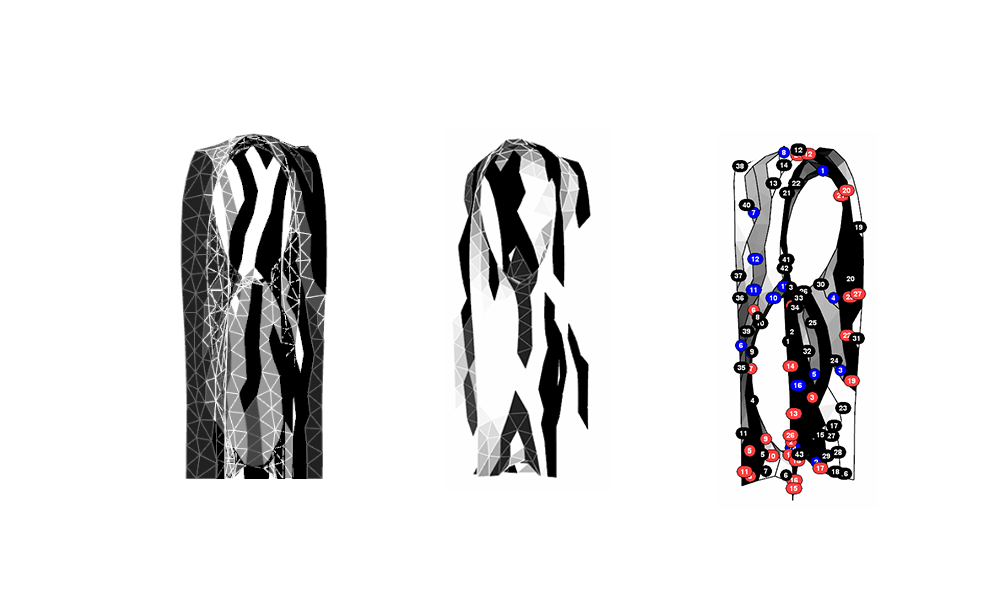
After defining the global geometry, the project translates the complex surface into a fabrication-ready system. The mesh is rebuilt and optimized, while gravity simulations are used to identify structural weak points. The surface is then divided into strip-based components, with the directionality of the strips controlled through the Steiner Tree algorithm. This allows the complex form to be organized into readable patterns that can be cut, labeled, and assembled at full scale.

The project also tests joints and flaps as connection details between strips, combining digital modeling with physical mock-up studies. Overall, Pattern Tree demonstrates how computational tools can connect form-finding, structural behavior, pattern generation, and fabrication into one continuous design process. It proposes a lightweight and efficient method for producing complex curved surfaces through material logic and digital control.


Related Research