Component-Based Modular Housing

Component-Based Standard Plans
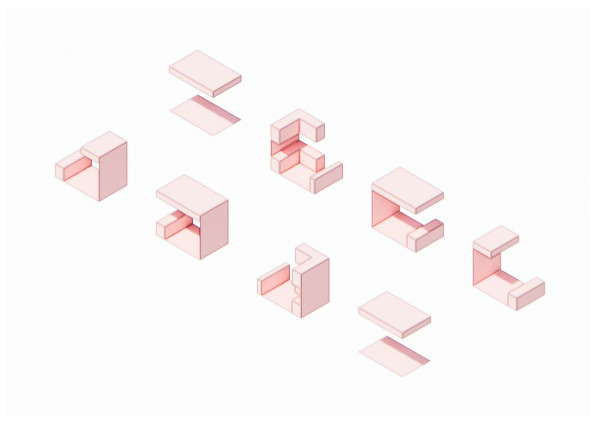
BA (Bathroom)
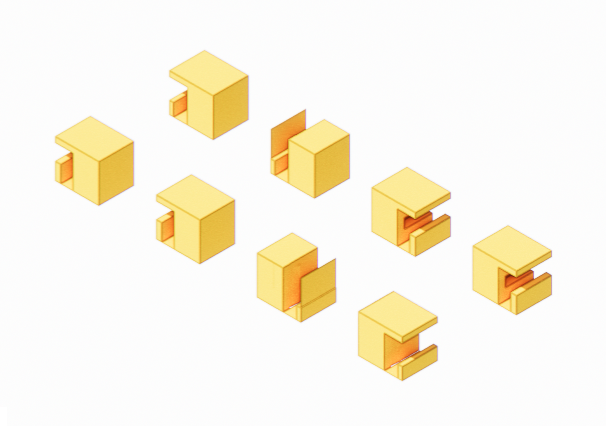
L (Living)
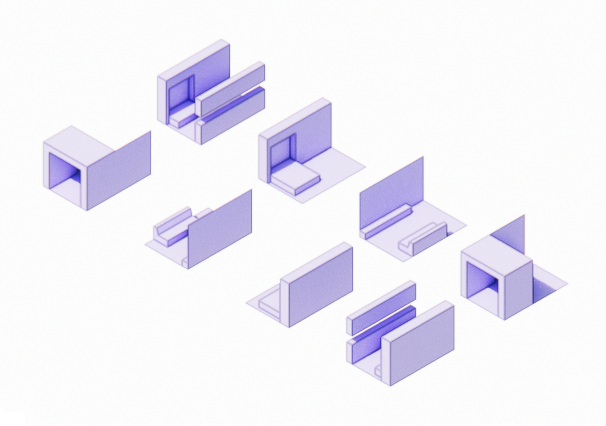
K (Kitchen)
B (Balcony)
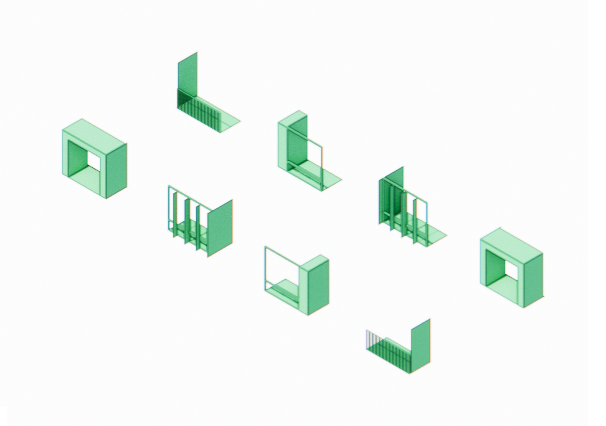
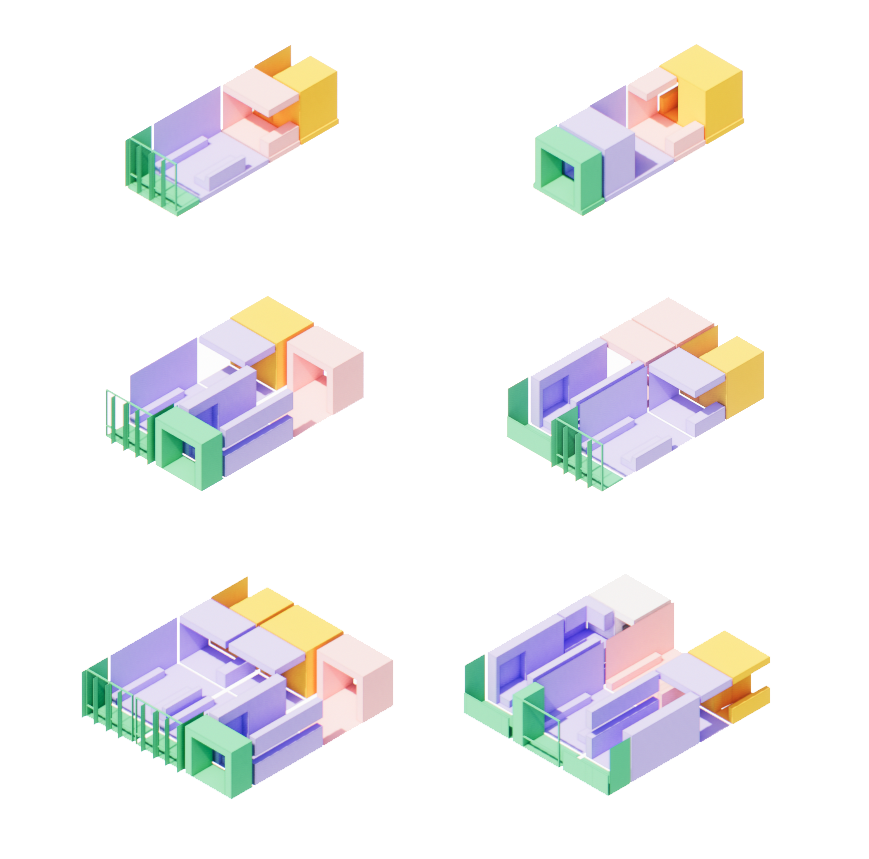
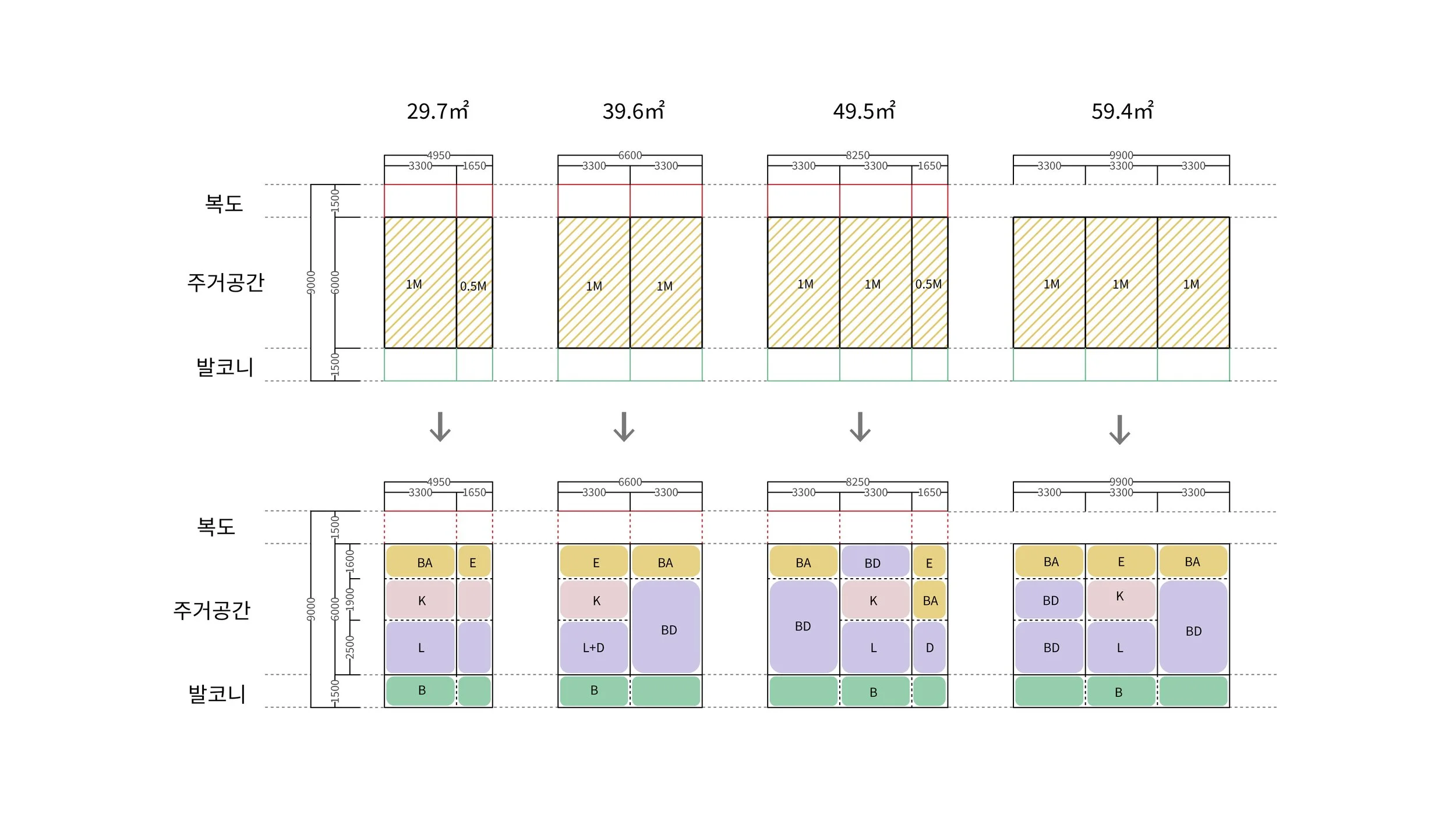
4 standard floor plan types
 

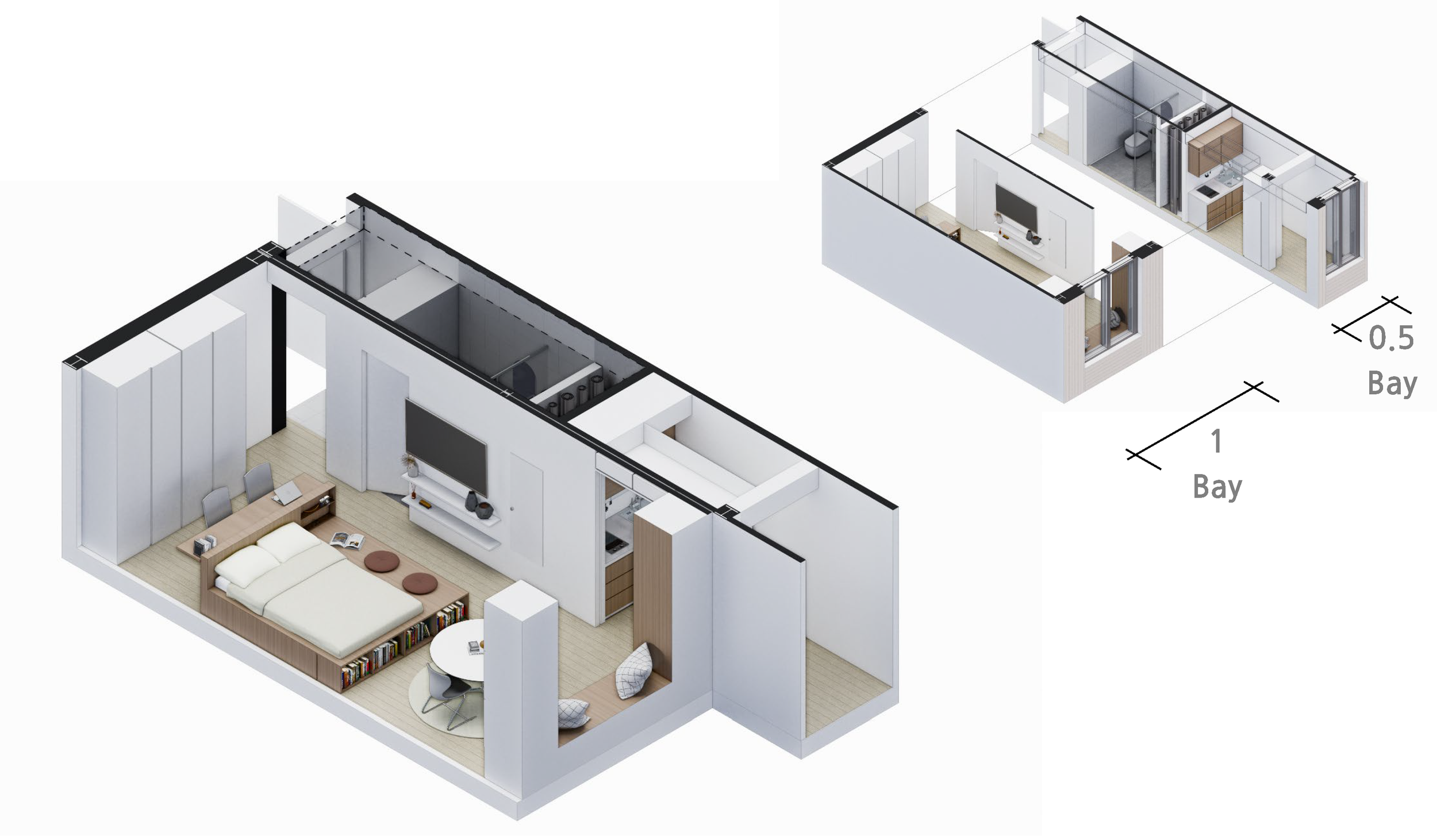
29㎡
 

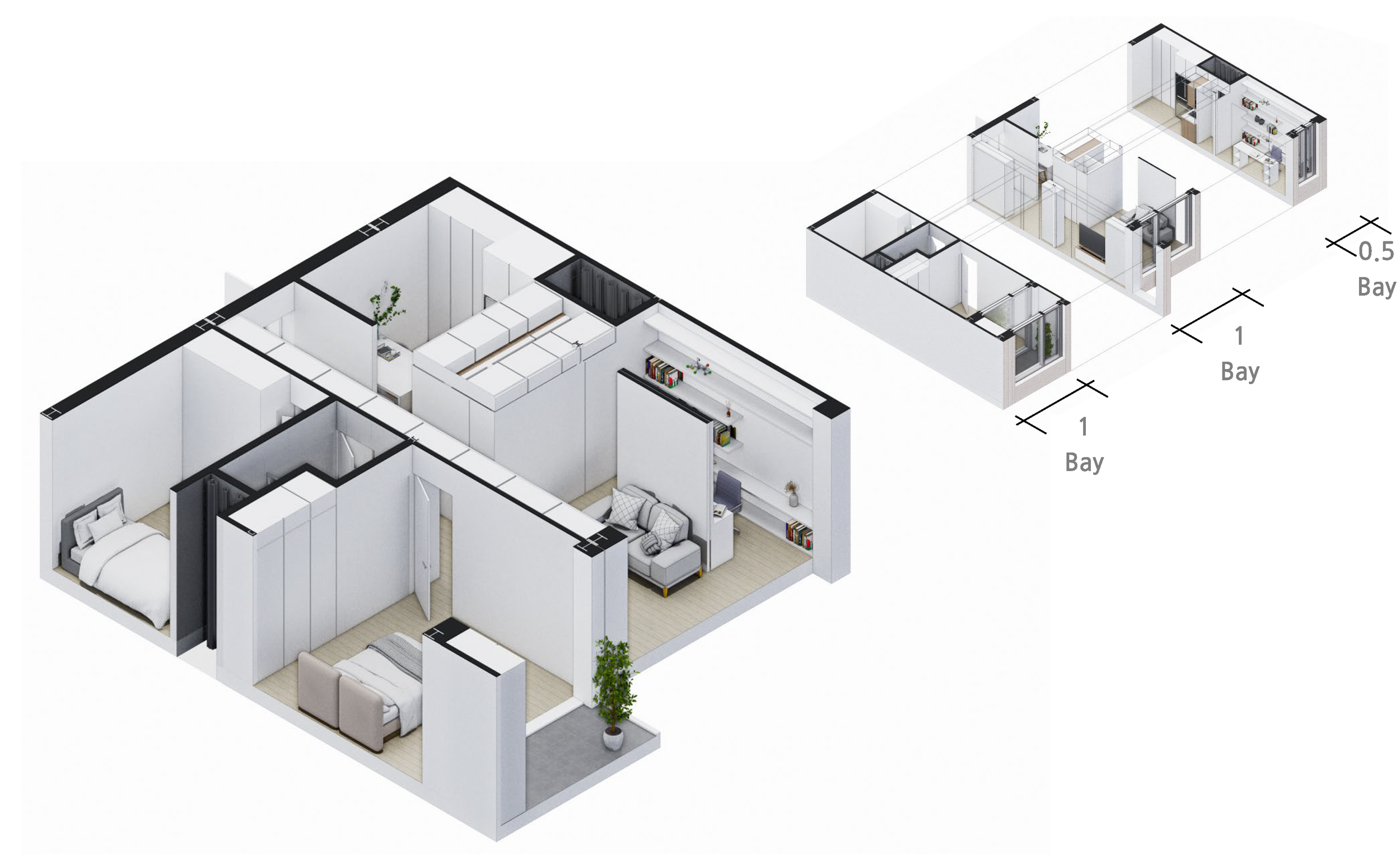
48㎡
39㎡
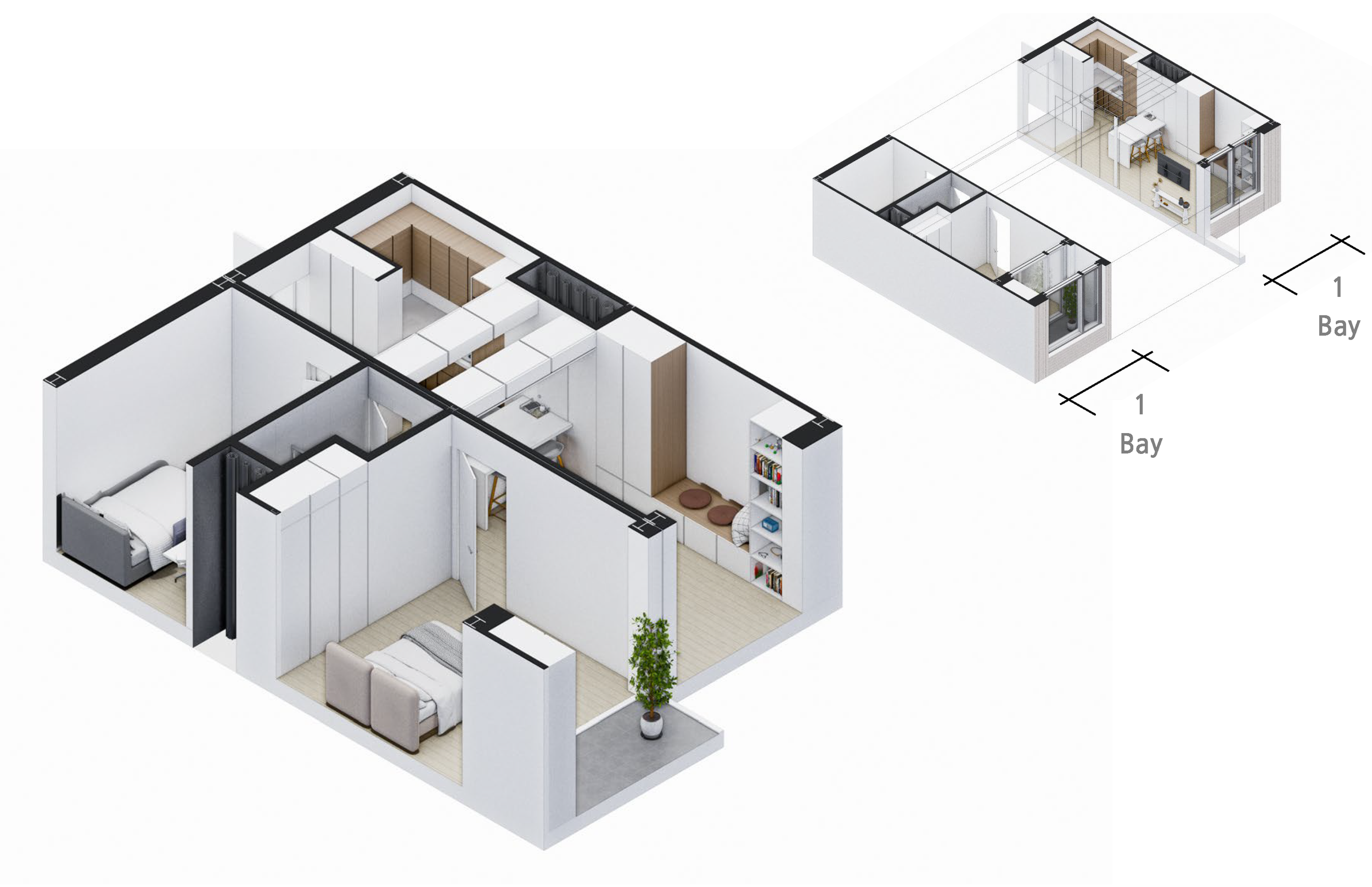
 

59㎡
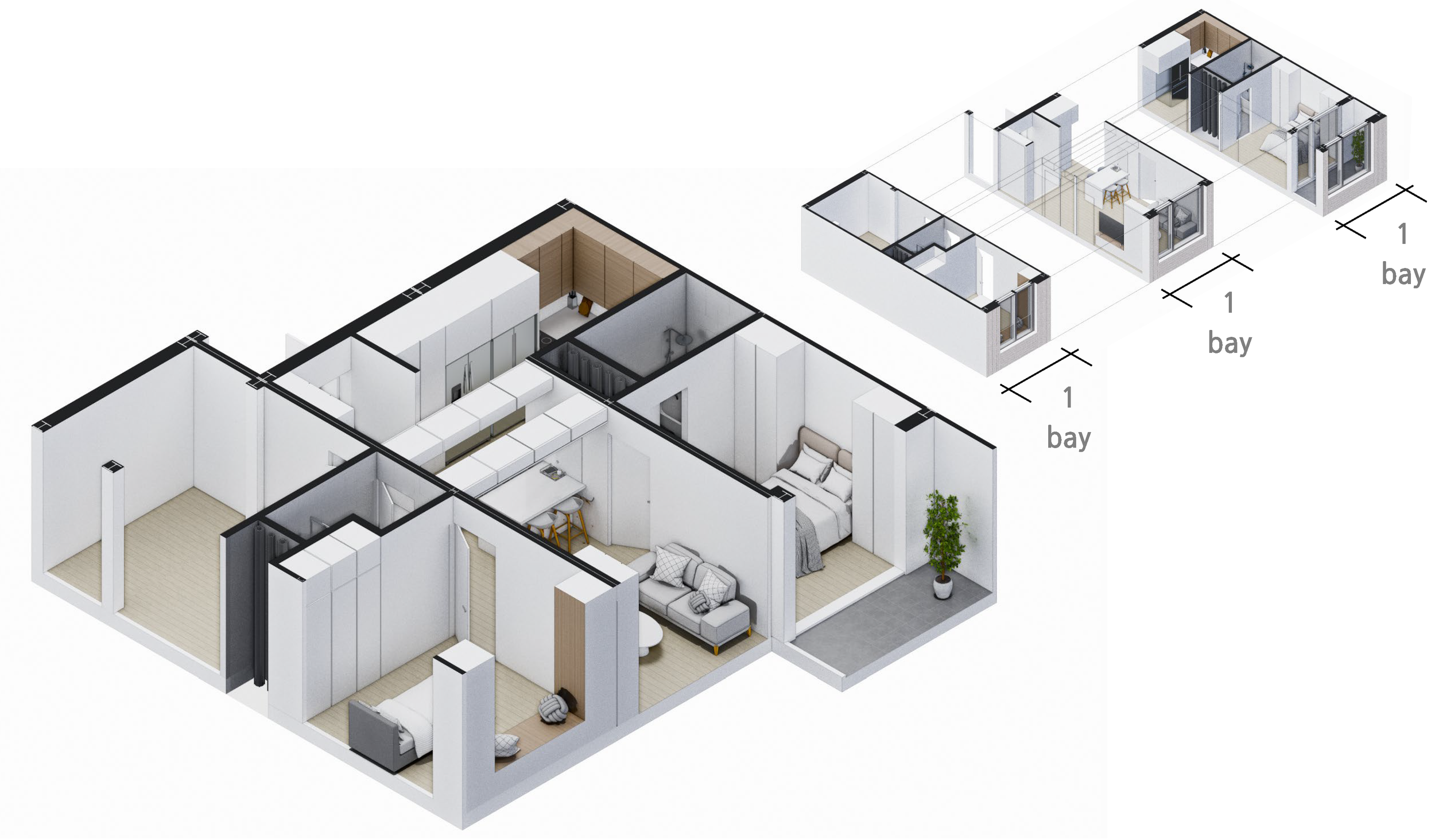
GH Modular Living System is a research and planning project for developing standard unit plans for high-rise modular housing. The project responds to the limitations of conventional modular housing, such as rigid layouts, repetitive stacking, short life cycles, project-specific solutions, and provider-oriented planning. Instead, it proposes a flexible housing system that balances mass production with adaptability, long-term maintenance, and changing user needs.

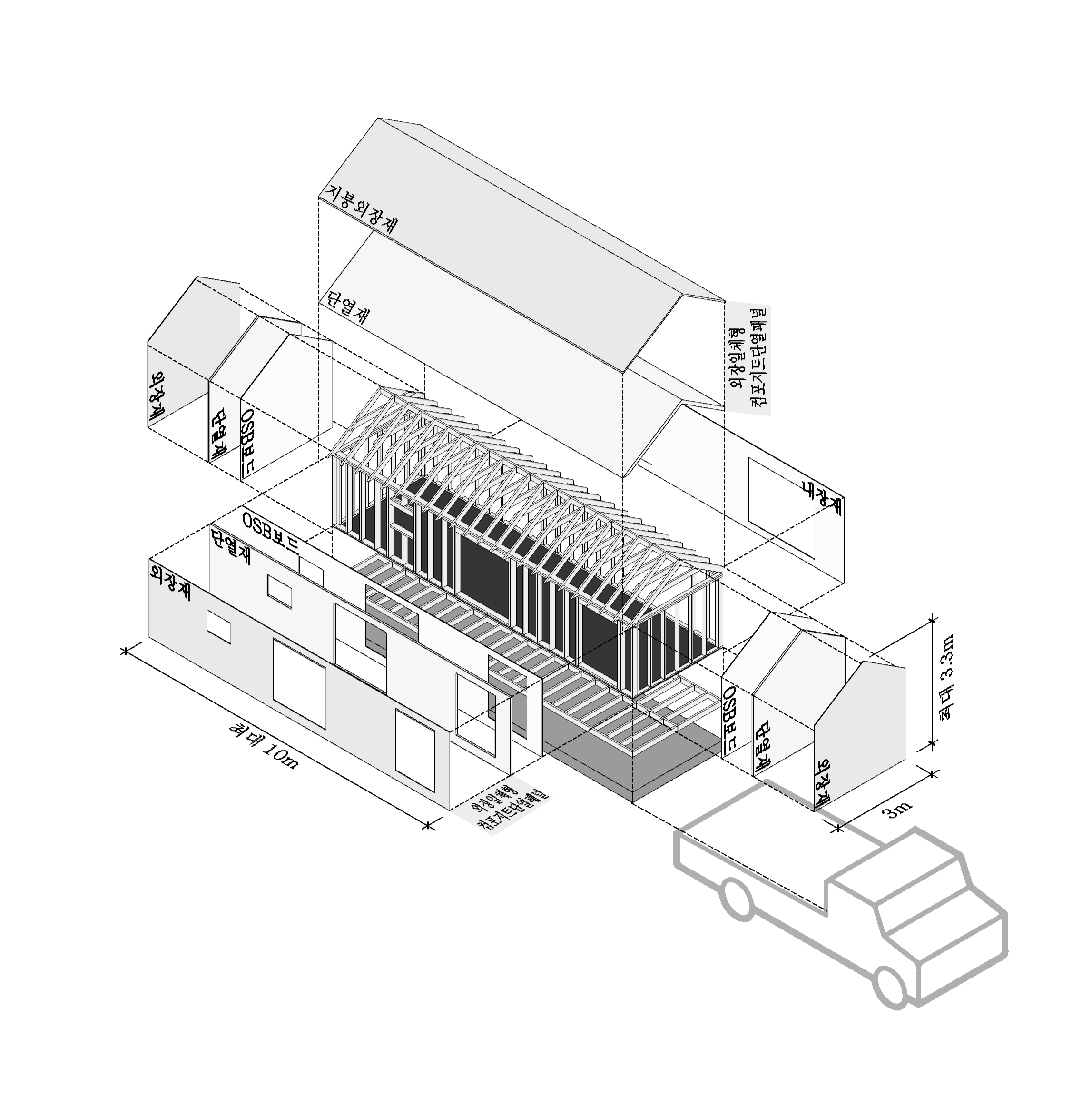
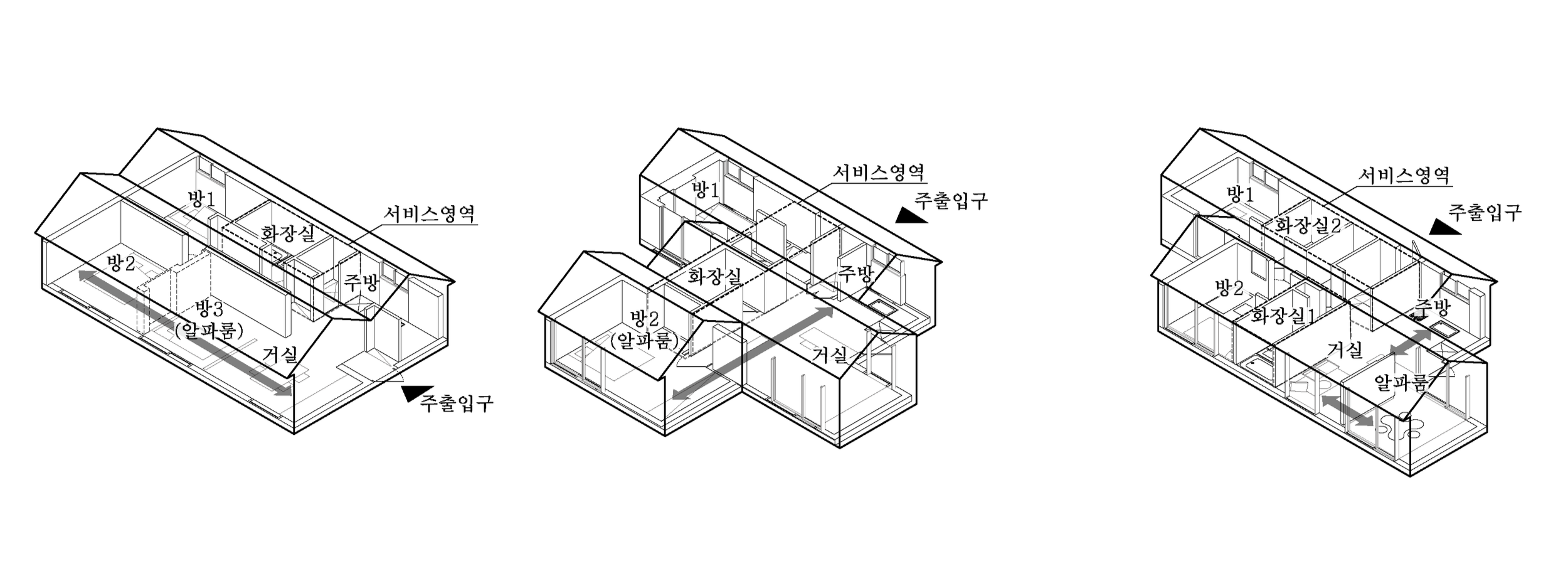
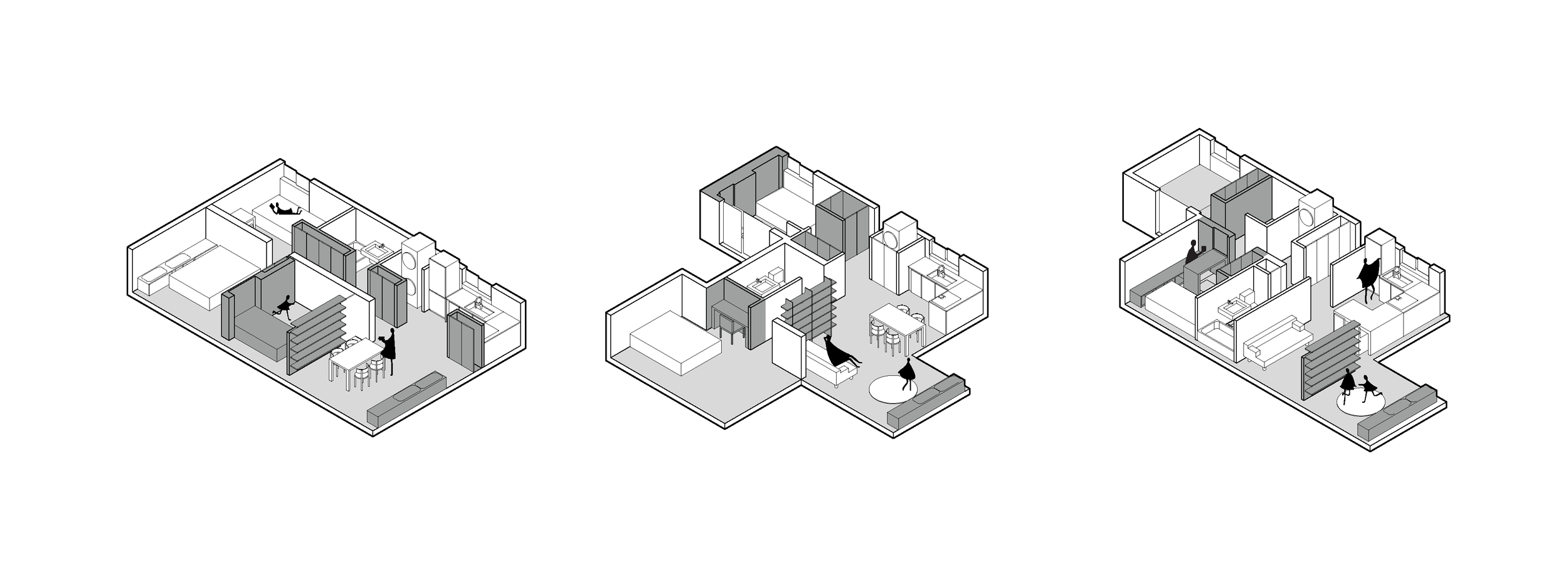
The design strategy is based on a component-based planning method. Fixed components, including the entrance, kitchen, bathroom, mechanical shaft, and laundry area, are integrated as service zones, while flexible components such as living rooms, bedrooms, balconies, façade elements, and built-in furniture can be selectively combined according to household size and lifestyle. This allows modular units to maintain standardized dimensions and construction efficiency while offering spatial variation and user customization.

Four standard unit types—29㎡, 39㎡, 48㎡, and 59㎡—are developed using a common structural grid and modular dimension of 3.3m × 12m × h 3.3m. Each type responds to different household profiles, from single-person households to families of two to four people. By combining service modules, living components, balcony components, and furniture systems, the project establishes a scalable framework for future high-rise modular housing that can support flexibility, efficiency, and improved residential quality.


Year: 2025

Status : Completed

Type : Modular System

Principal in Charge :

Seojoo Lee, Hyojung Kim (I.f), Dongil Kim, (I.f CDL)

Design Team : Hyunjoo Kang (I.f)
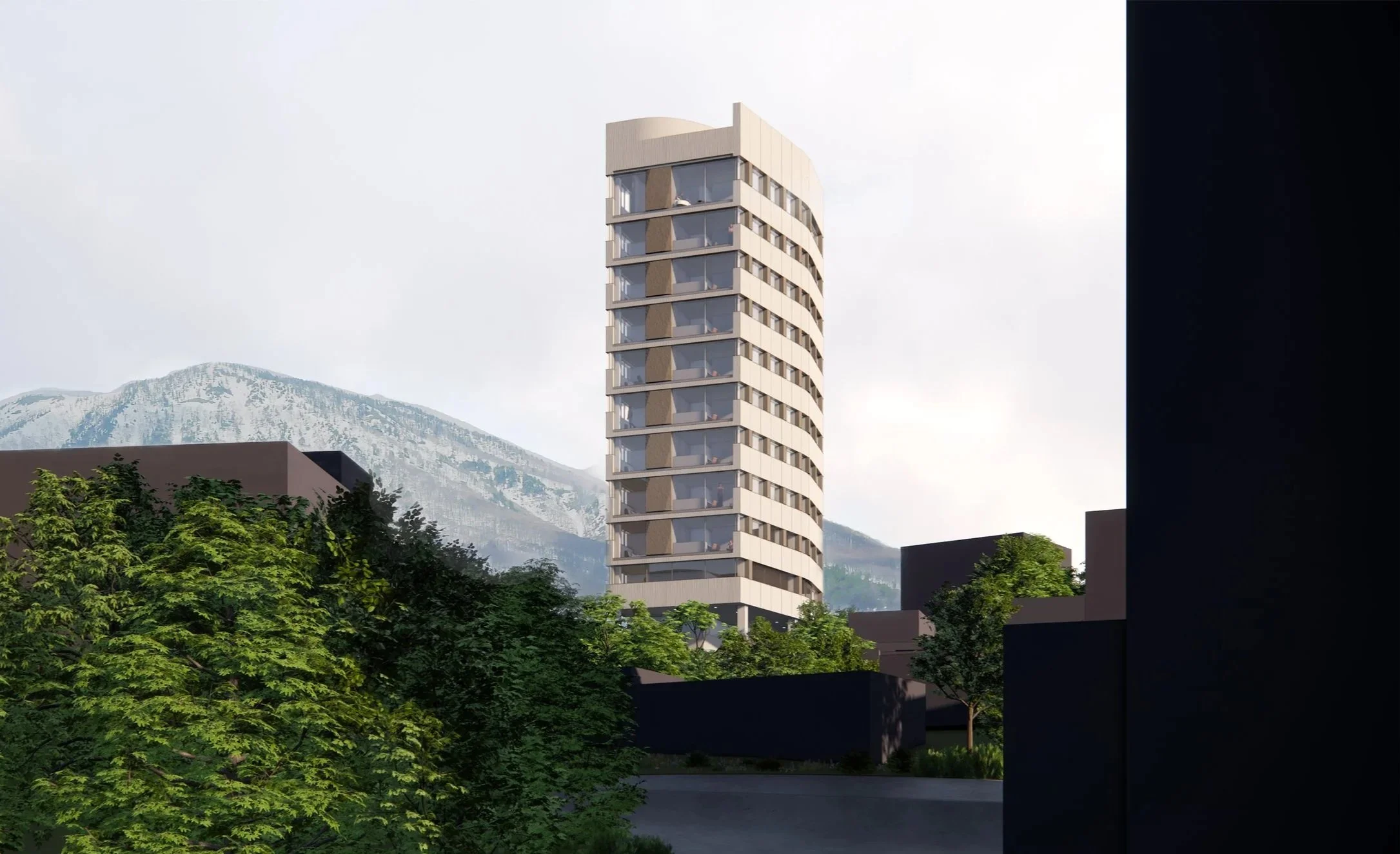
Jeju Office


Year : 2025

Location : Jeju, Korea

Size : 1,609.37 m²

Status : Design Proposal

Type : Office

Principal in Charge :

Seojoo Lee, Hyojung Kim (I.f), Dongil Kim (I.f CDL)

Design Team : Seungil Kim, Gwangeun Hwang (I.f CDL)

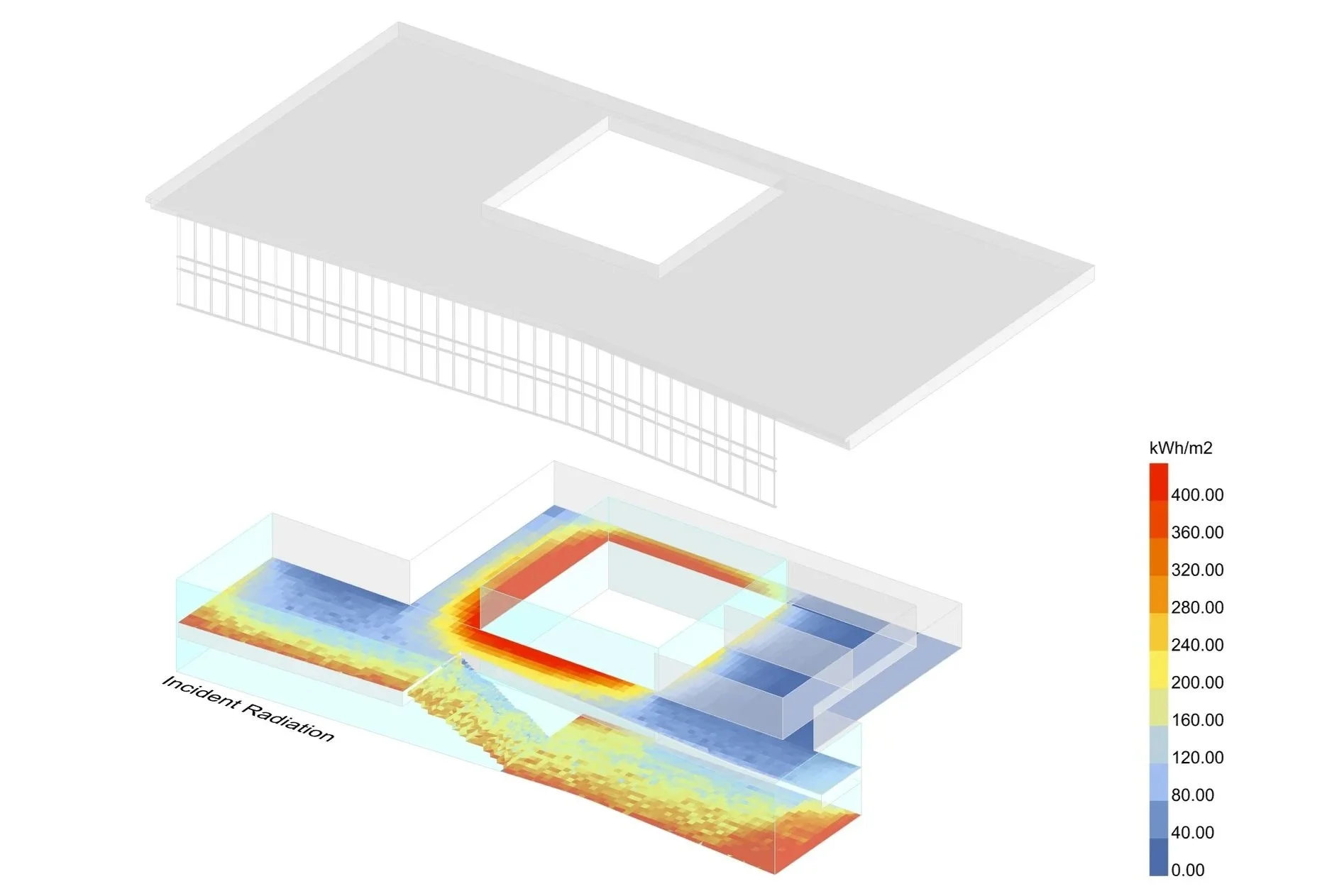
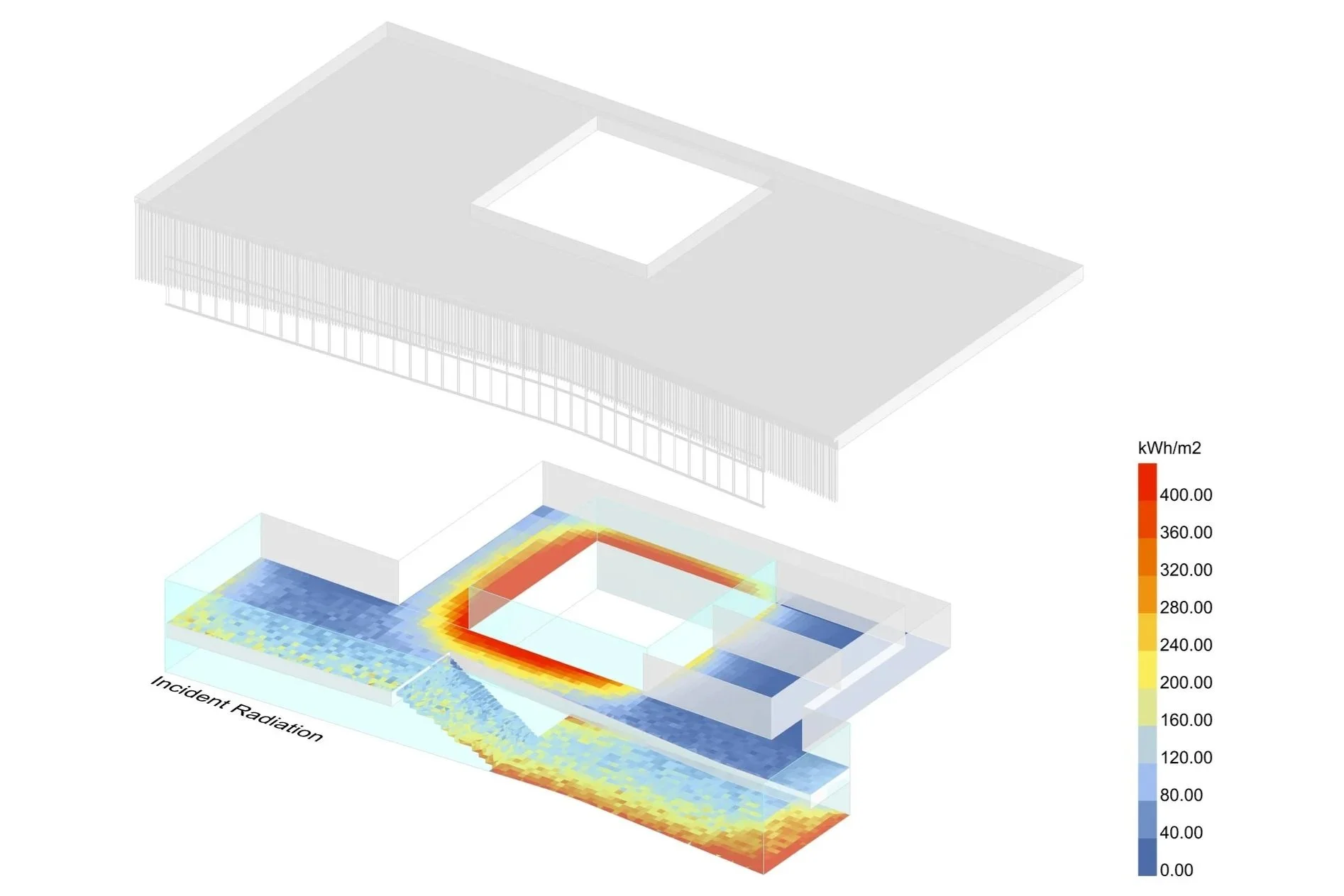
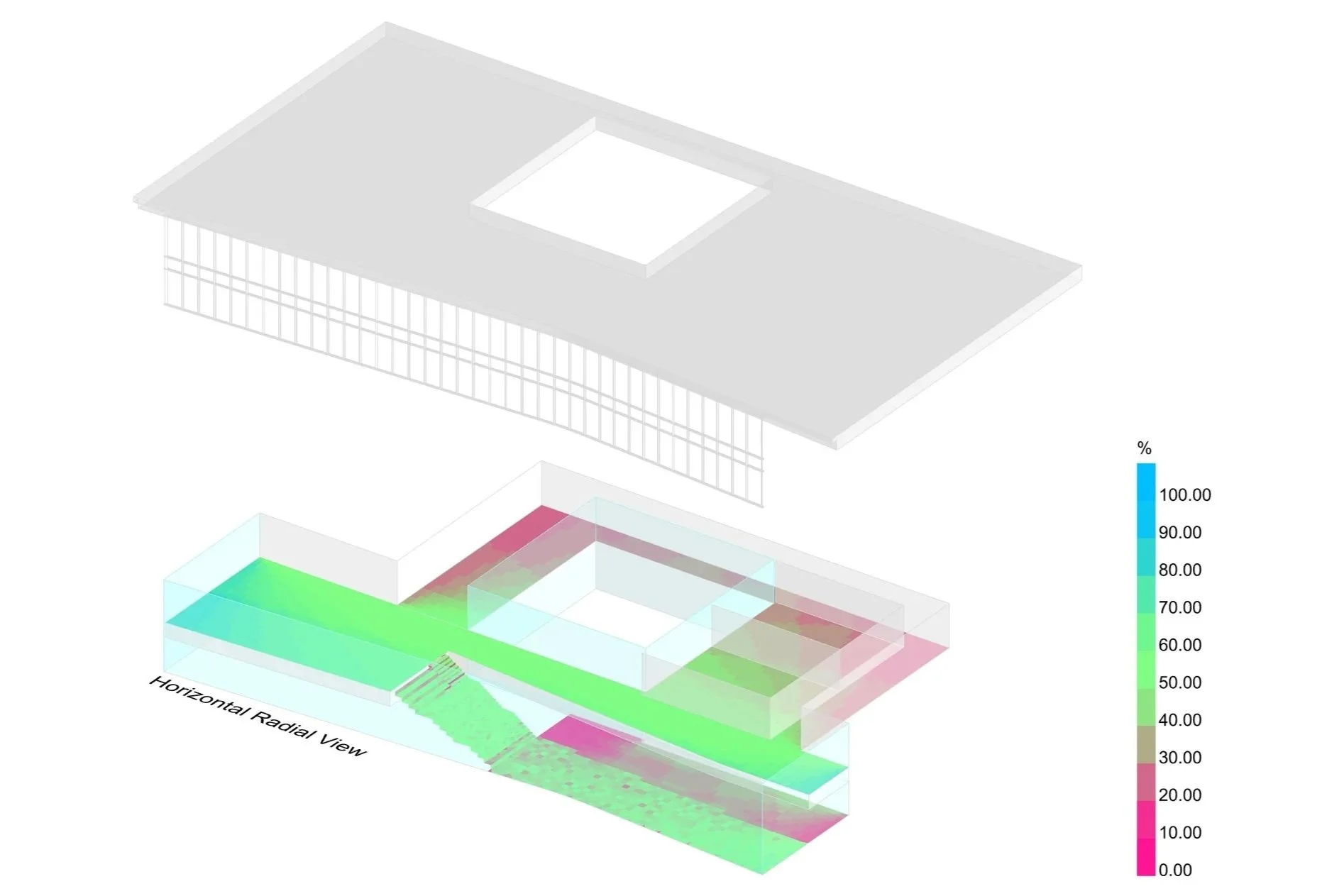
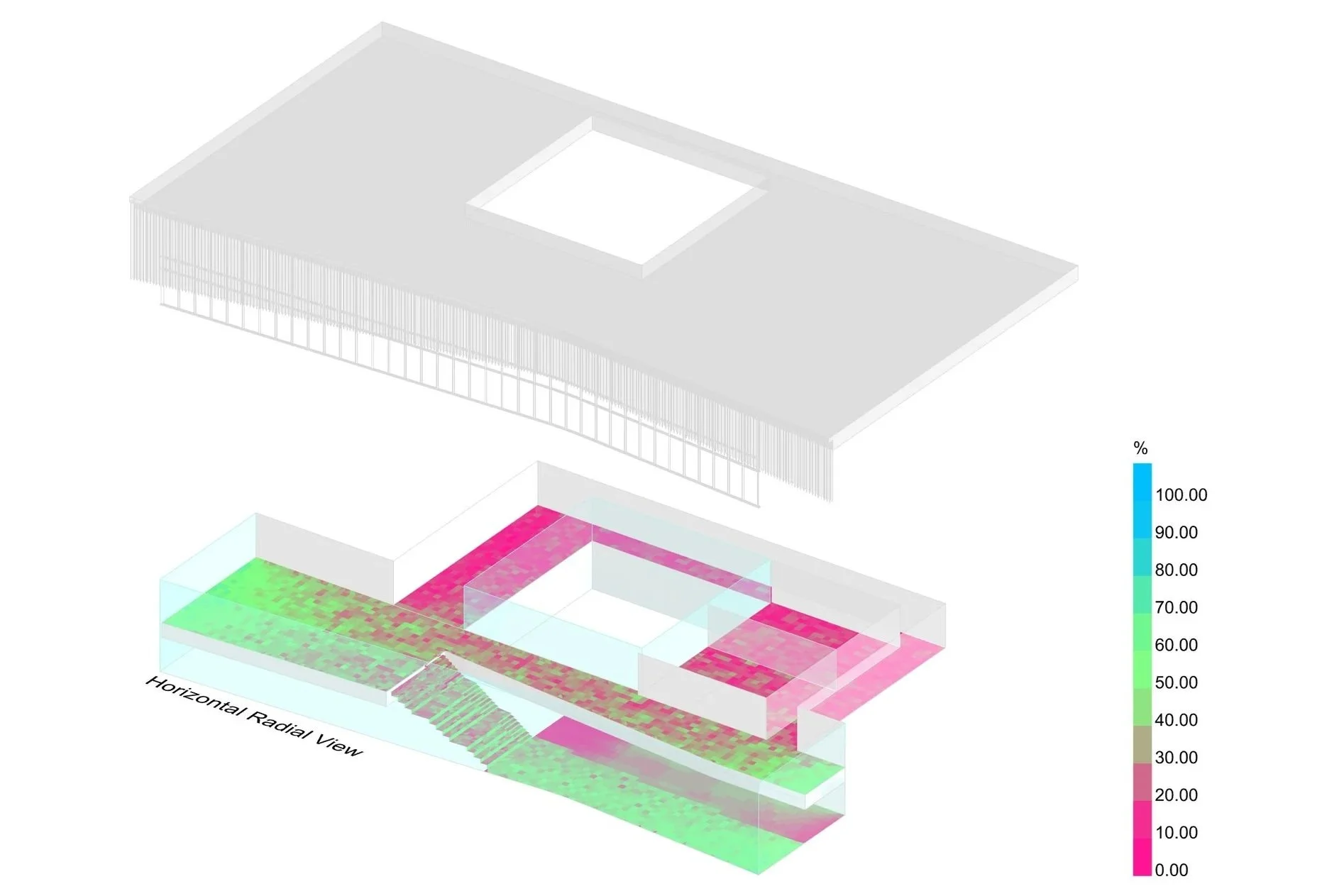
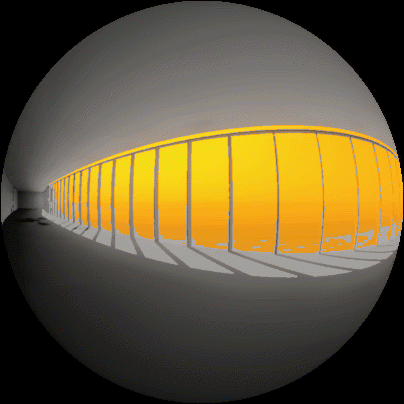
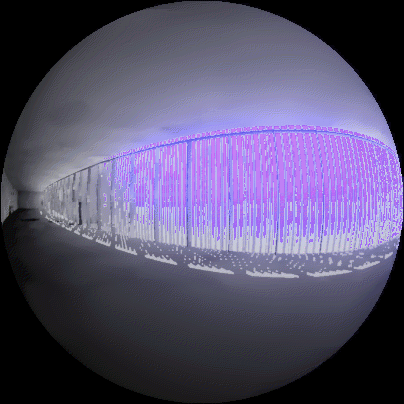
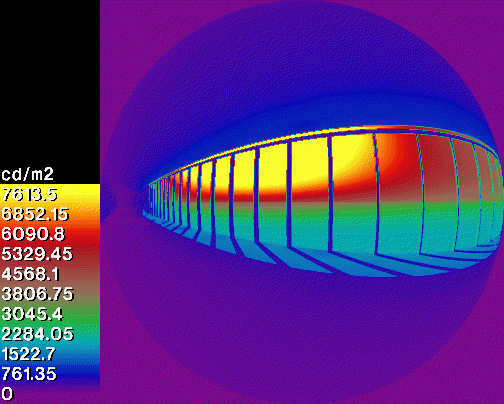
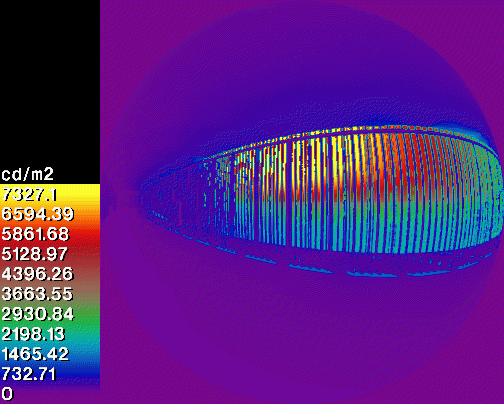
건축디자인 도구로써 기후 메타데이터 적용에 관한 연구


건축디자인 도구로써 기후 메타데이터 적용에 관한 연구

Applying Climate Metadata in Architectural Design

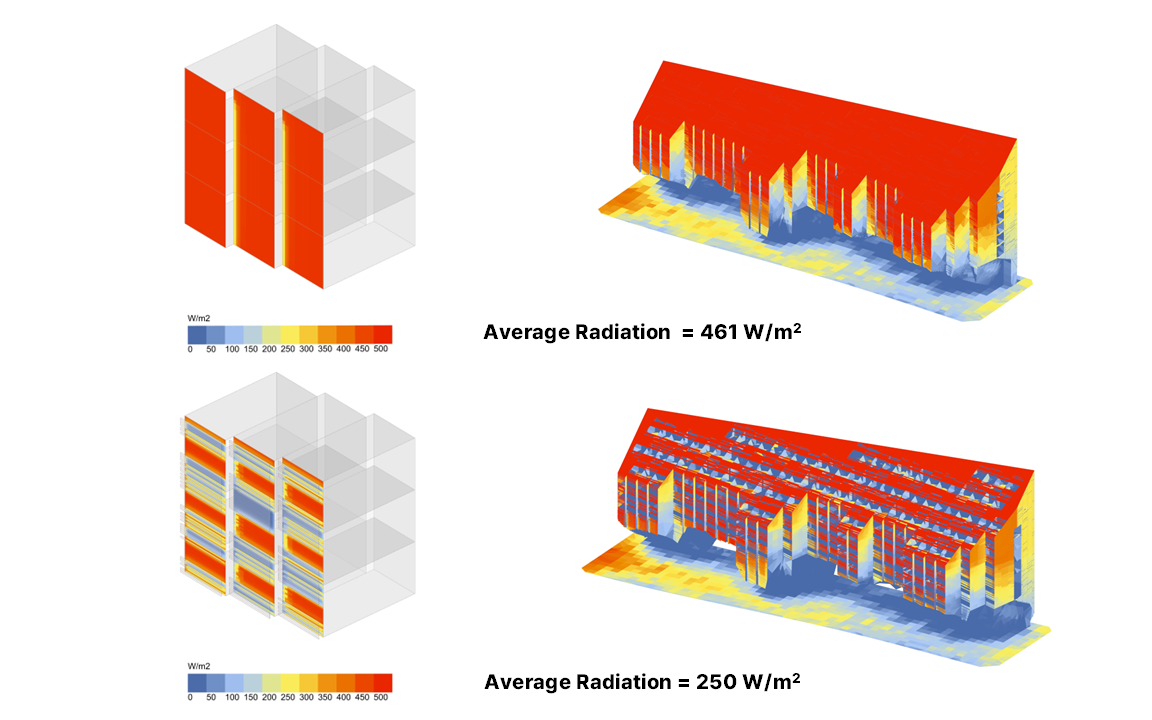
As the environmental impact of the built environment continues to grow, the architectural field has increasingly adopted technological innovations to promote sustainability. Integrating performance-based design (PBD) methodologies into architectural education helps cultivate professionals who can understand and apply the complex relationship between architecture and the environment. This study explores the role of climate metadata and PBD as essential decision-making tools in architectural design and examines methods for their integration into educational curricula.

Grounded in environmental analysis tools and PBD principles, it reviews existing case studies to identify limitations and propose improved instructional frameworks. The research combines theoretical and historical instruction, hands-on training in environmental analysis and computational tools, and their application in real-world pilot projects.

Student outcomes were analyzed based on project scale, design processes, and decision-making approaches. The findings highlight the effectiveness of PBD methodologies in architectural education and their potential for broader application. By establishing a framework for integrating climate metadata and performance-based approaches, this study provides a foundation for future advancements in architectural pedagogy, adaptable to diverse teaching environments and methodologies.

Kim, Seungil, Hwang, Gwangeun and Kim Dongil. (2025). Applying Climate Metadata in Architectural Design - Focusing on Insights From Performance-based Educational Case Studies -. Journal of the Architectural Institute of Korea, 41(4), 165-174.

https://www.kci.go.kr/kciportal/ci/sereArticleSearch/ciSereArtiView.kci?sereArticleSearchBean.artiId=ART003195134


Related Research


Shinjuku City Building


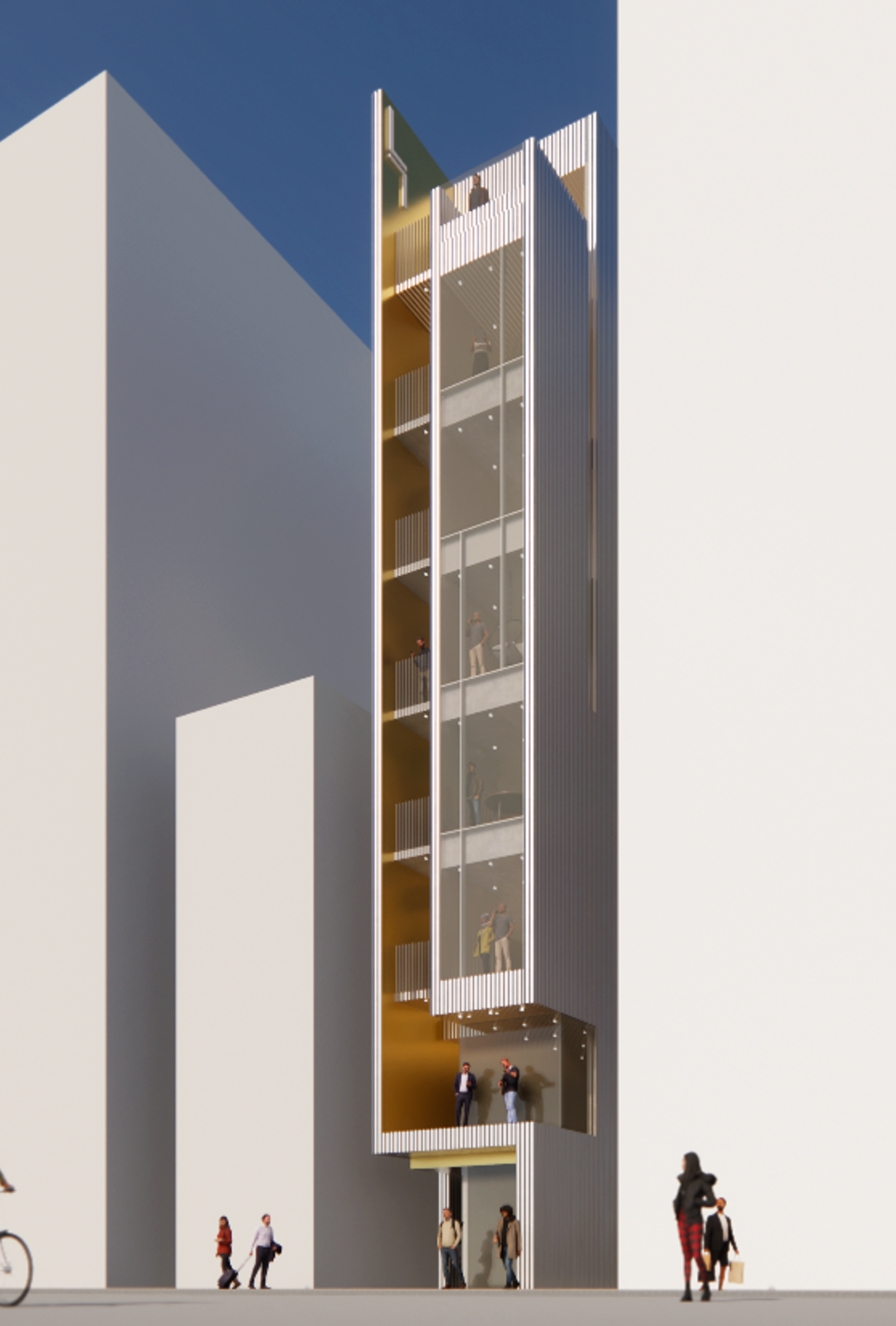
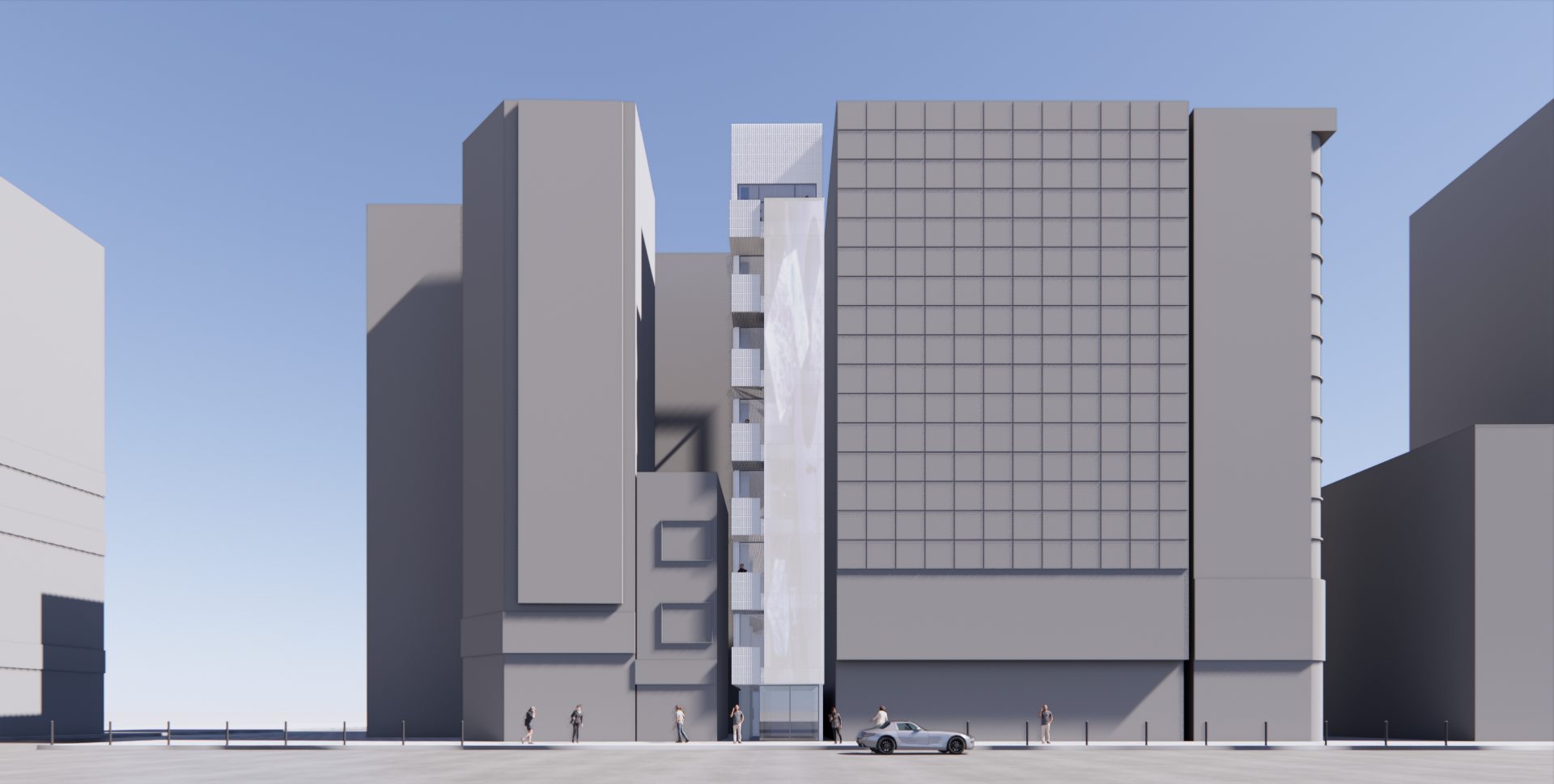
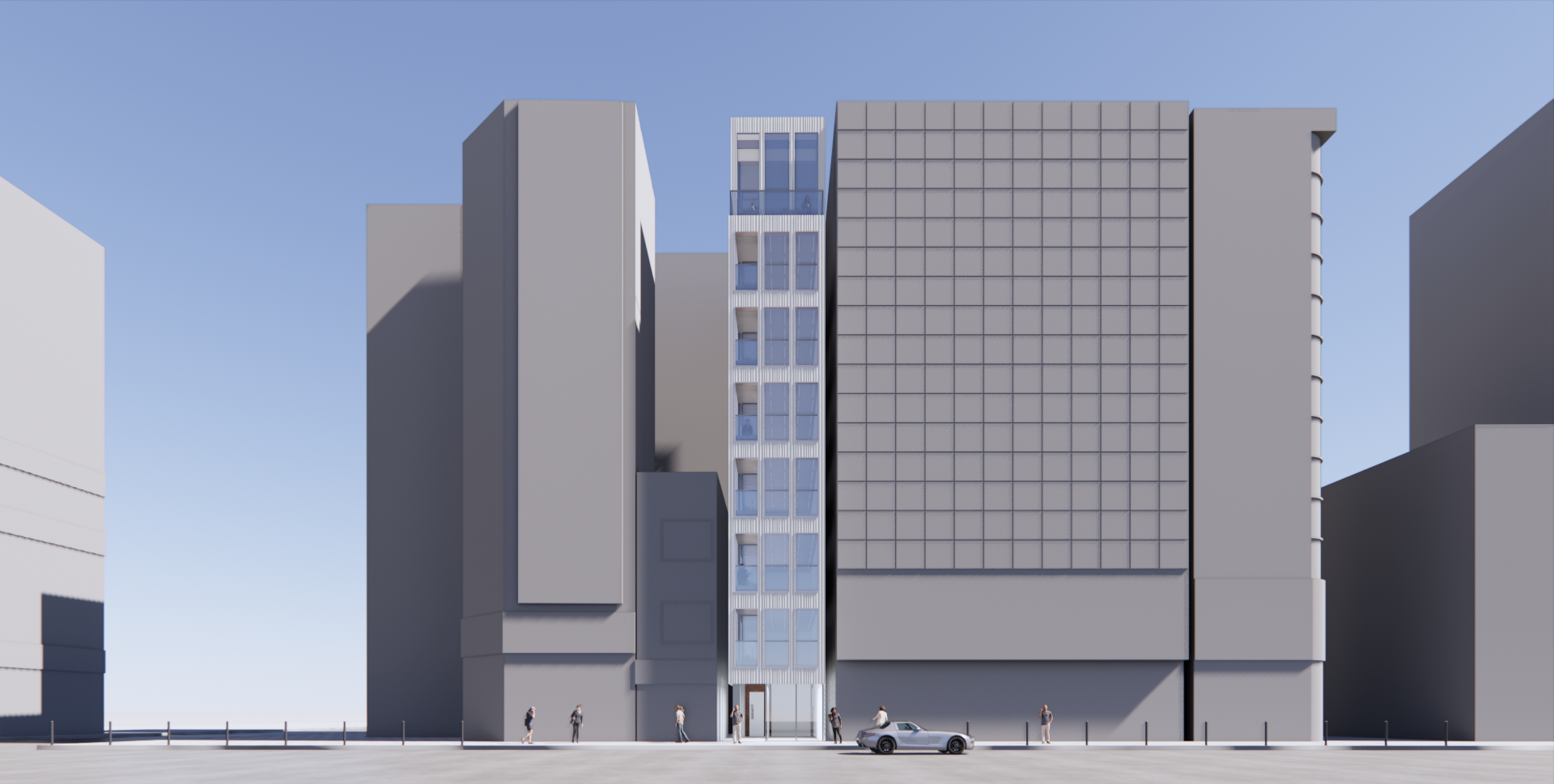
This project proposes a compact eight-story rental building in Kabukicho, Shinjuku, Tokyo. Located near Yasukuni-dori and the TOHO Building with the Godzilla Head, the site has strong pedestrian visibility and requires a clear facade strategy that can be easily recognized from the street.

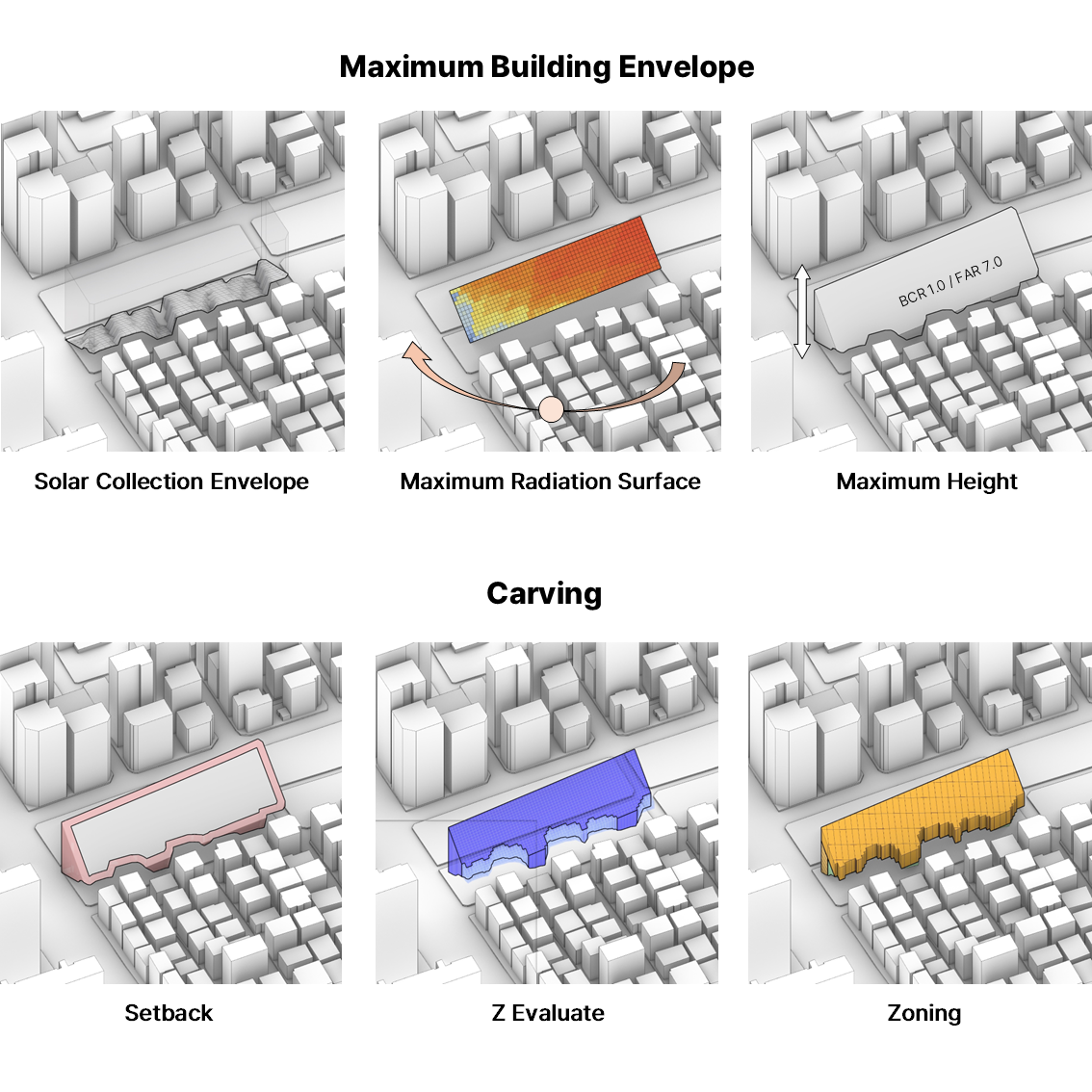
Due to the narrow site condition, the plan focuses on maximizing rentable floor area while responding to legal and evacuation requirements. The building is planned below the 31-meter height limit to avoid the need for an emergency elevator, while the section is adjusted to secure the maximum volume under the road setback regulation. A front evacuation balcony and a rear outdoor stair provide two evacuation routes, and the ground-level frontage is designed to maintain visibility and commercial value.

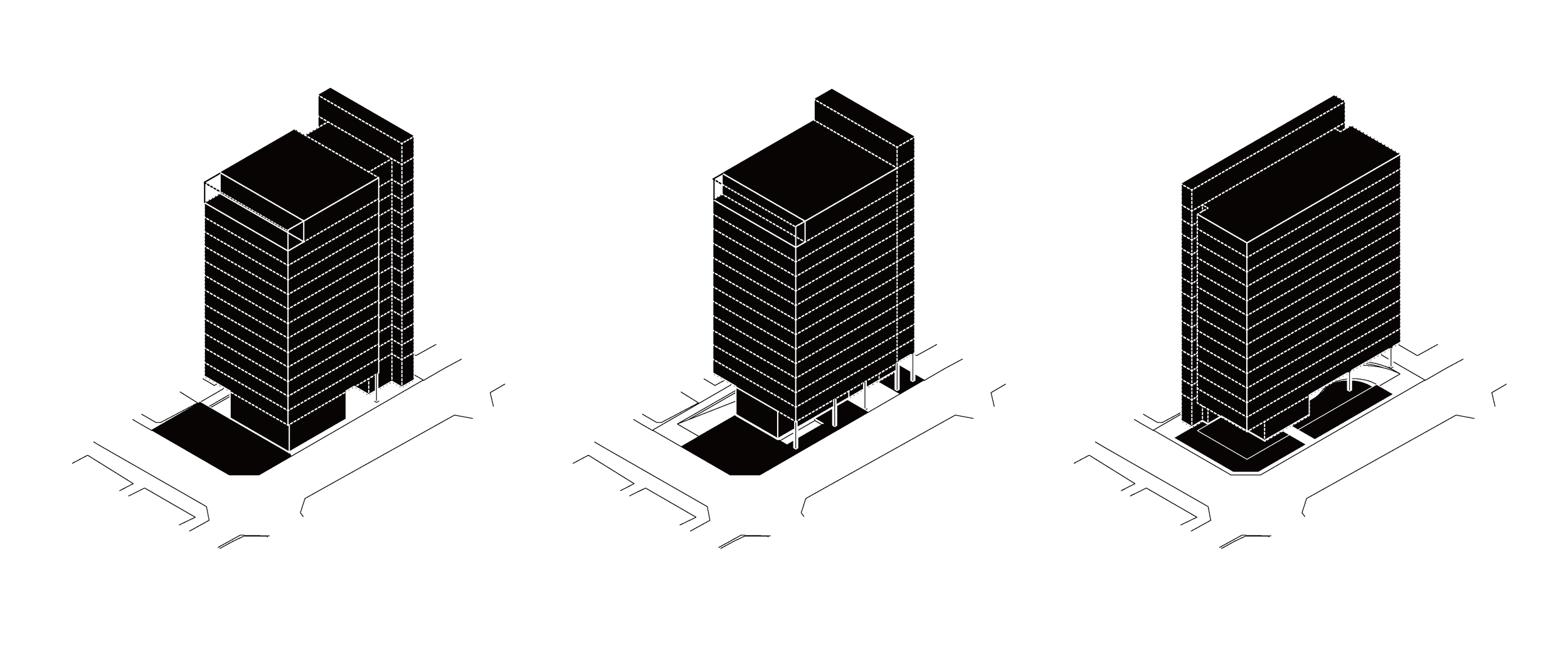
The proposal explores three facade alternatives. Option A emphasizes a solid grid facade with a pixelated media expression. Option B strengthens verticality through a continuous curtain wall and highlights the horizontal rhythm of the exposed side wall. Option C responds to pedestrian flows from Yasukuni-dori and the TOHO Building by forming an L-shaped facade gesture that creates a stronger urban presence. Overall, the project aims to transform a narrow urban site into a recognizable commercial building through efficient planning, legal optimization, and a distinctive facade design.


Year: 2025

Location : Shinjuku, Japan

Size : 1016.75 m²

Status : Proposal

Type : Commertial

Principal in Charge :

Seojoo Lee, Hyojung Kim (I.f), Dongil Kim (I.f CDL)

Design Team :

Chaeyoon Chang (I.f)

Collaboration :

M3 Systems, Atelier KOMA

National Archive Museum

Living Records: The Multidimensional Role of the National Archives Museum

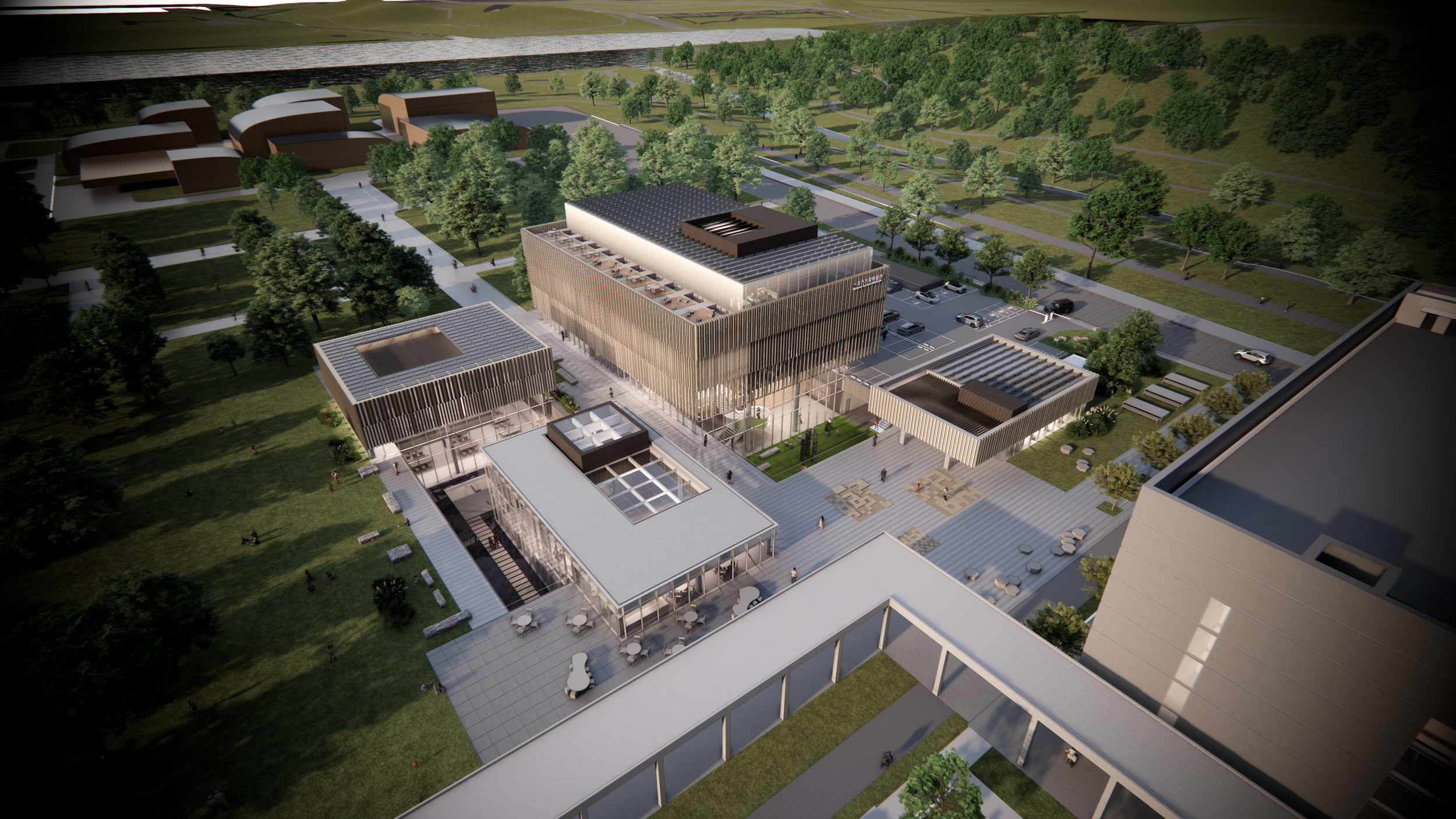
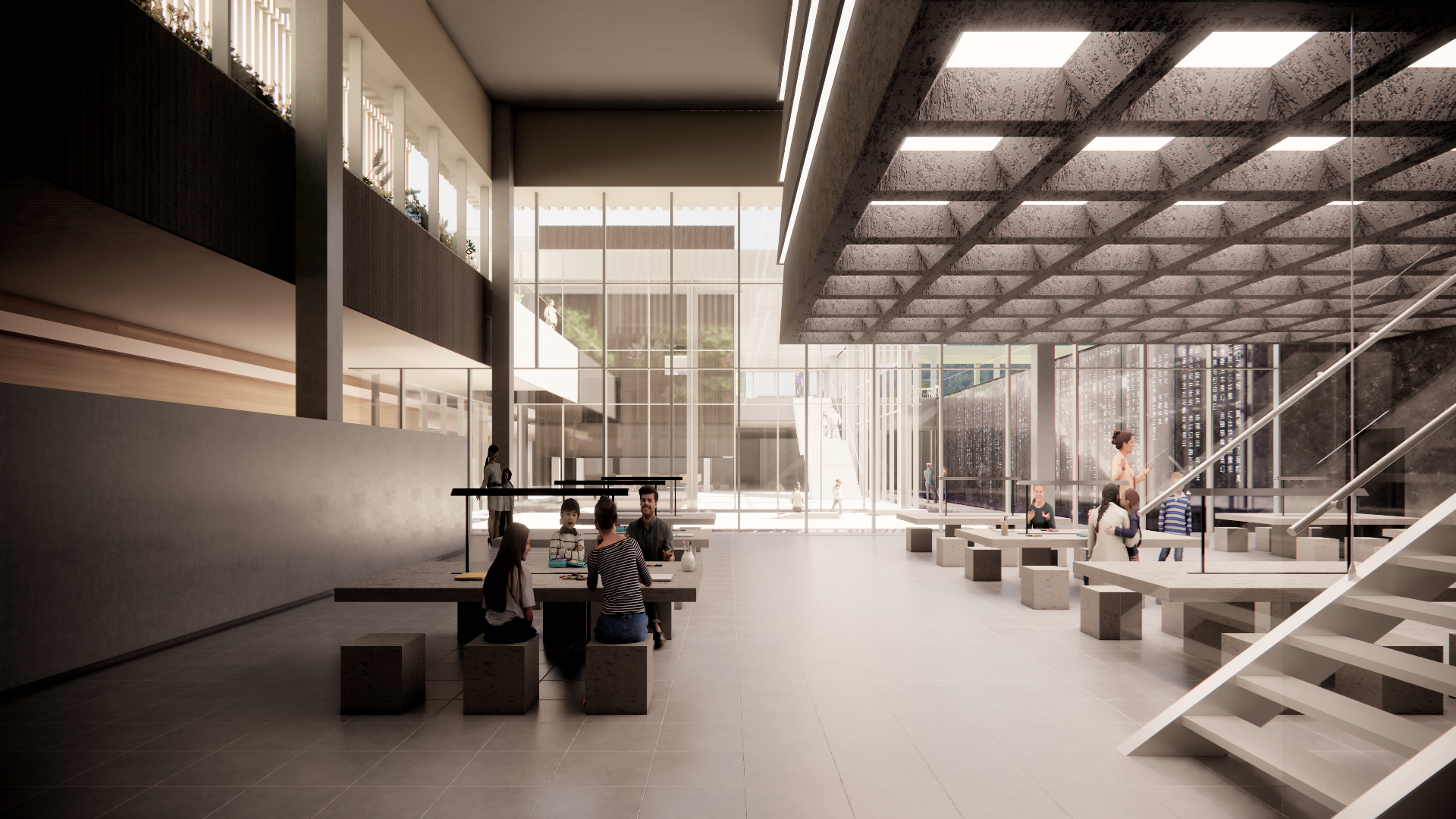
The National Archives Museum is not merely a repository of records but a spatial platform where records are created, shared, and interpreted. Records are not just static collections of past information; they are dynamically reinterpreted within historical and social contexts. Just as Walter Benjamin's nonlinear view of history suggests, records are not simply objects of preservation but cultural assets that connect the past, present, and future.

The National Archives Museum: A Period and a Comma in the Master Plan

The National Archives Museum is not merely an independent structure; it serves as an architectural nexus within the spatial network of the National Museum Complex. Rather than existing in isolation, it must integrate seamlessly with the broader master plan, functioning as a key element in the interconnected museum district. Although positioned at the edge of the museum complex, the Archives Museum is not just an endpoint but a starting point for the expansion of archival culture. It acts as both a period, marking a culmination, and a comma, allowing continuity, ensuring that records are not just preserved but actively engaged with, interpreted, and disseminated.

As the Track of Records and the Vessel of Everyday Life

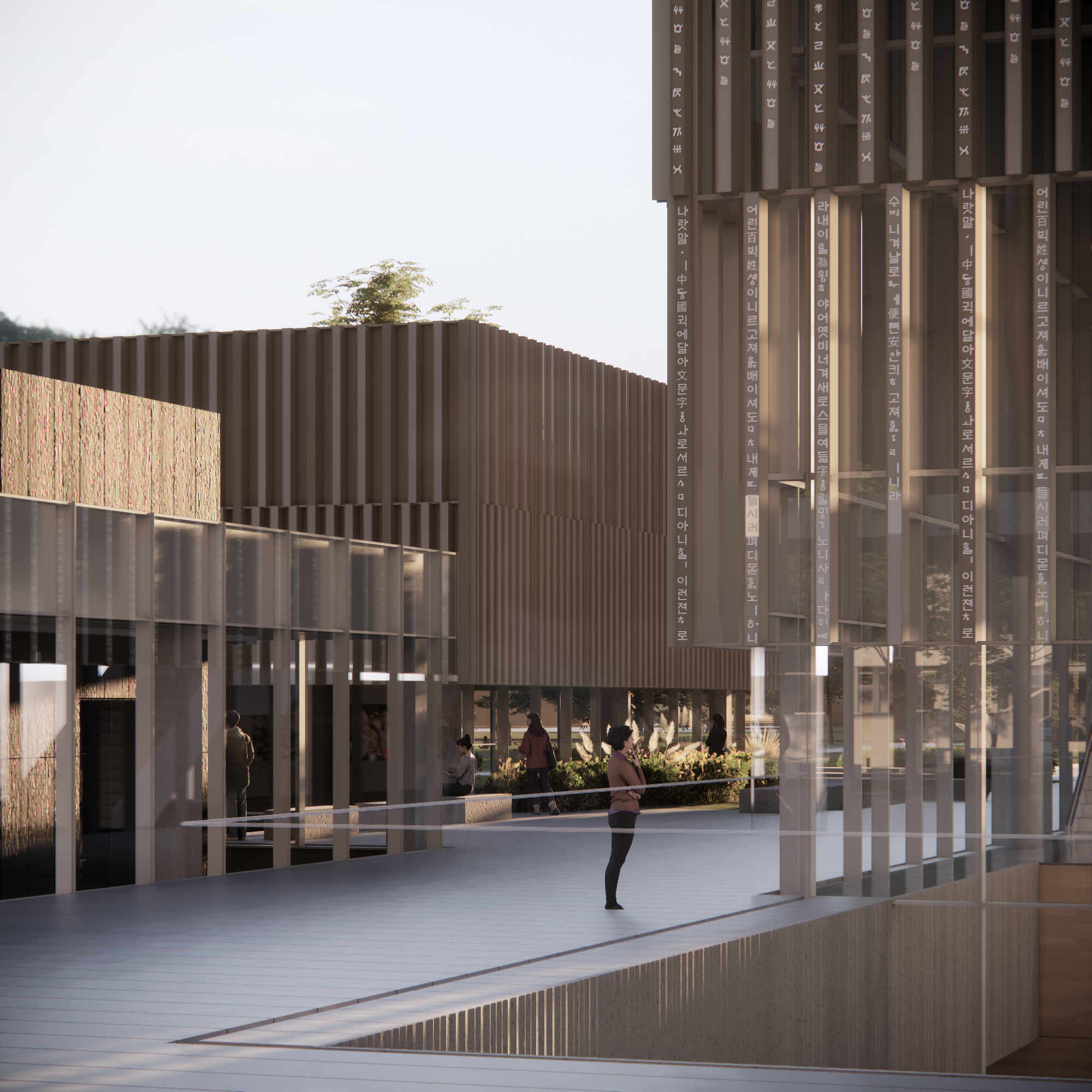
The National Archives Museum is designed as a space where preservation and openness coexist, serving as an interface where archived records intersect with public experience. Its spatial concept is structured around a “floating track (궤)” that holds records and a “vessel (함)” that embraces and connects it to everyday life.


Year : 2025

Location : Sejong, Korea

Size : 11,798.87 m²

Phase : Competition Entry

Type : Museum and Archives

Principal in Charge :

Seojoo Lee, Hyojung Kim (I.f), Dongil Kim (I.f.CDL)

Design Team :

Hyunjoo Kang (I.f), Seungil Kim, Gwangeun Hwang, Soohyun Im, Roun Yi, Hyungtae Kim, Bugun Kim, Isaac Kang (I.f.CDL)

S:PROUT Pavilion Prototype

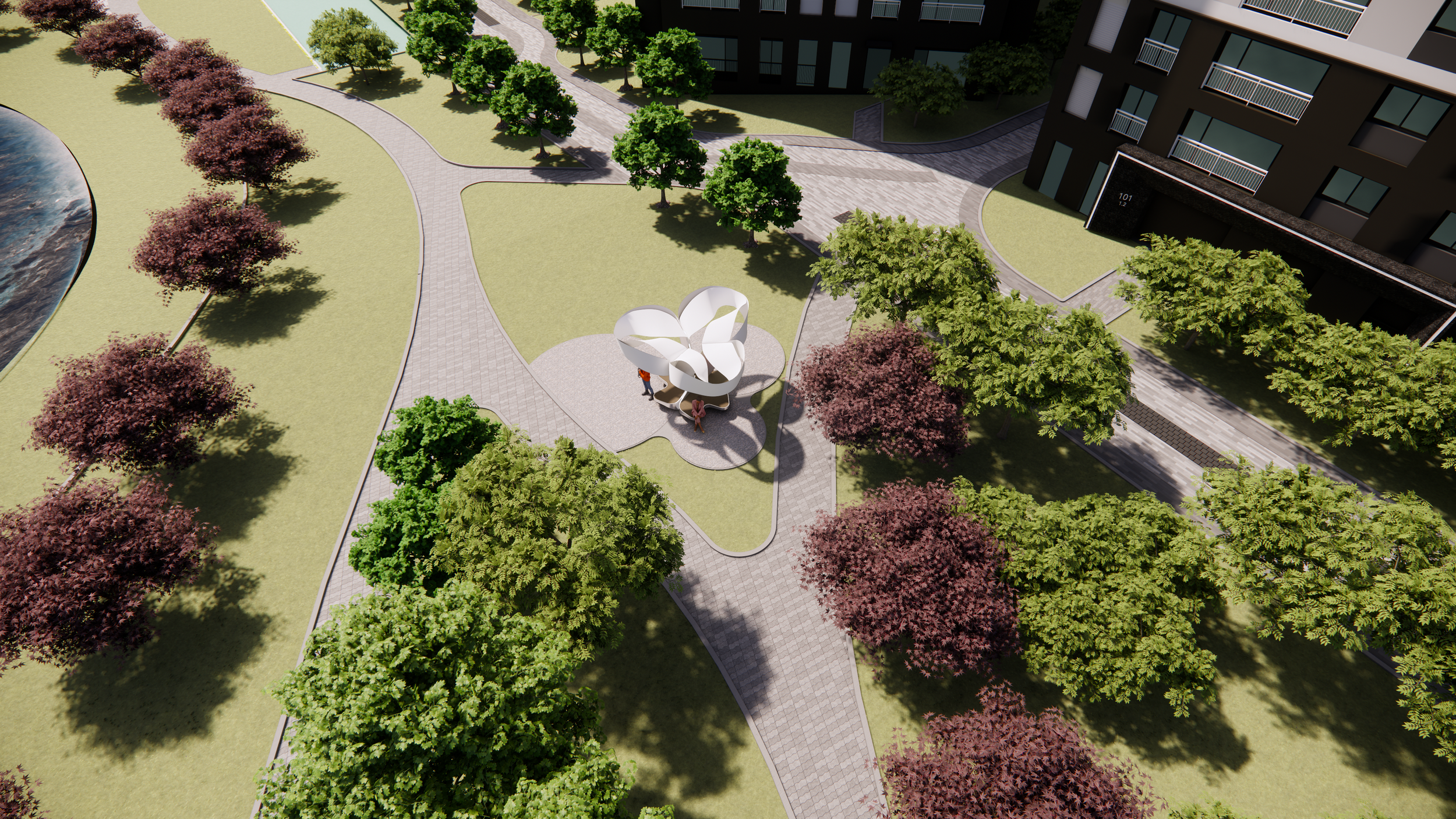
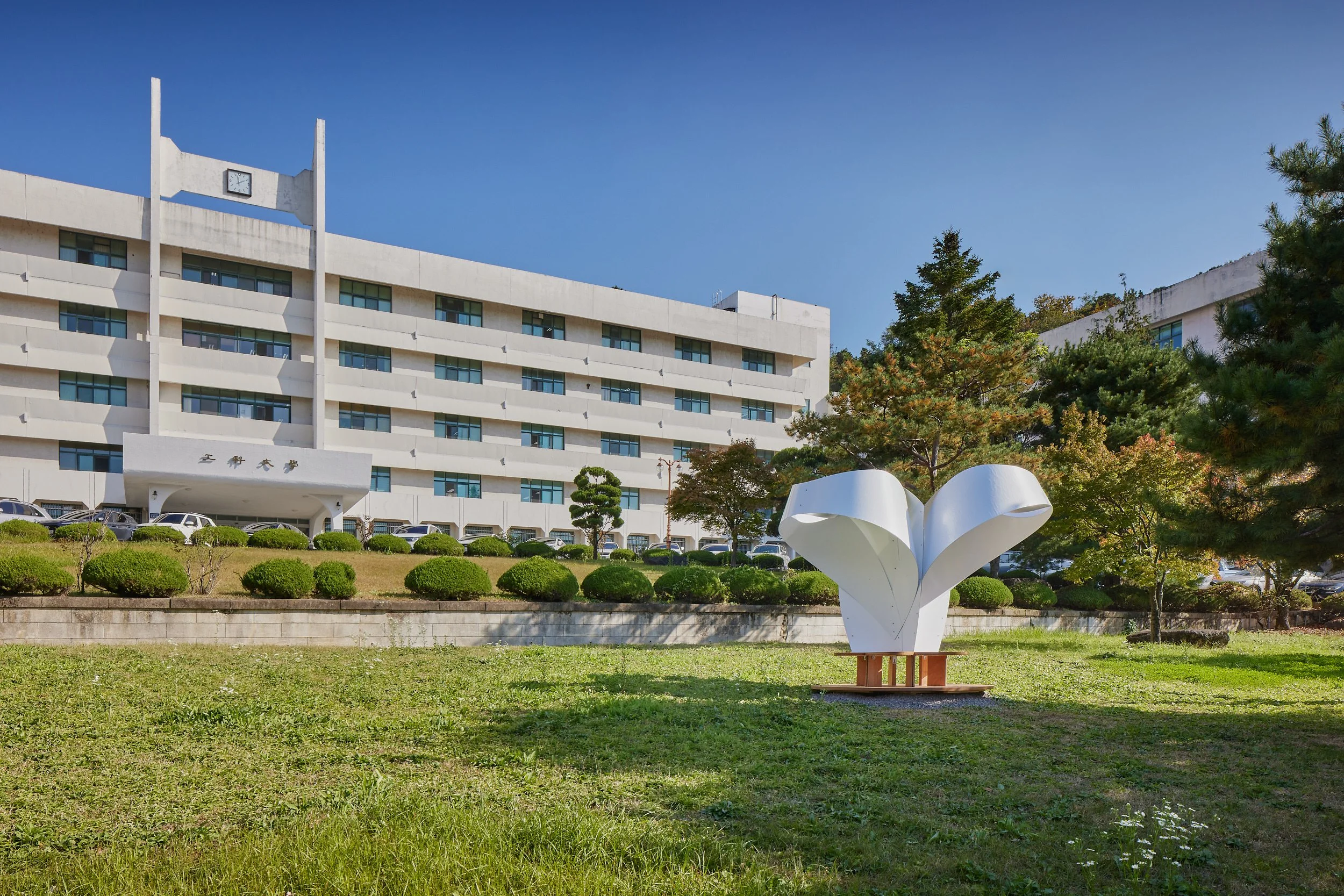
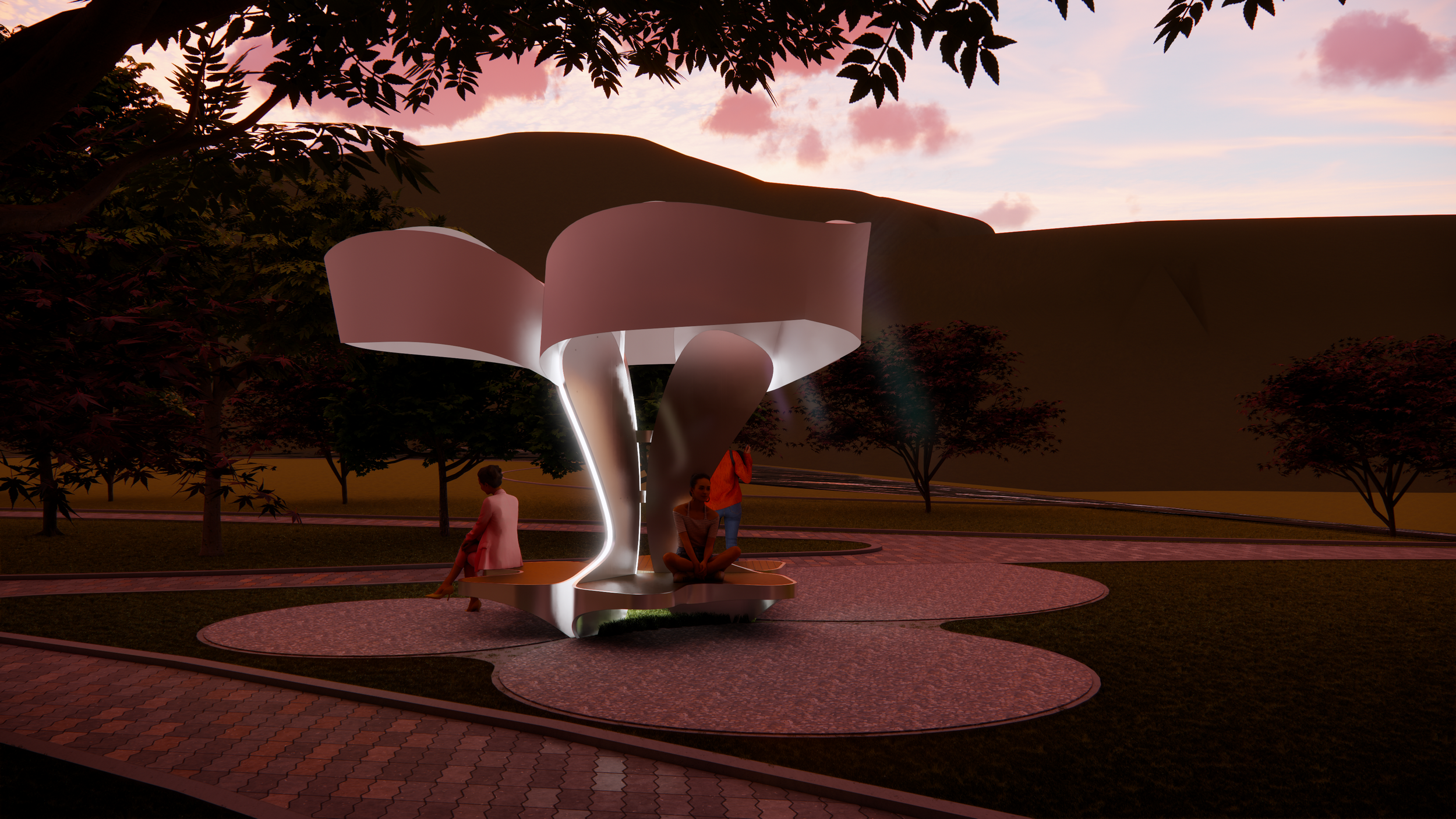
Since 2023, the Kyung Hee University Convergence Design Lab, I.f Architecture Lab, and AXIA Materials have been researching the architectural applications of continuous fiber composite materials through an industry-academia collaboration.

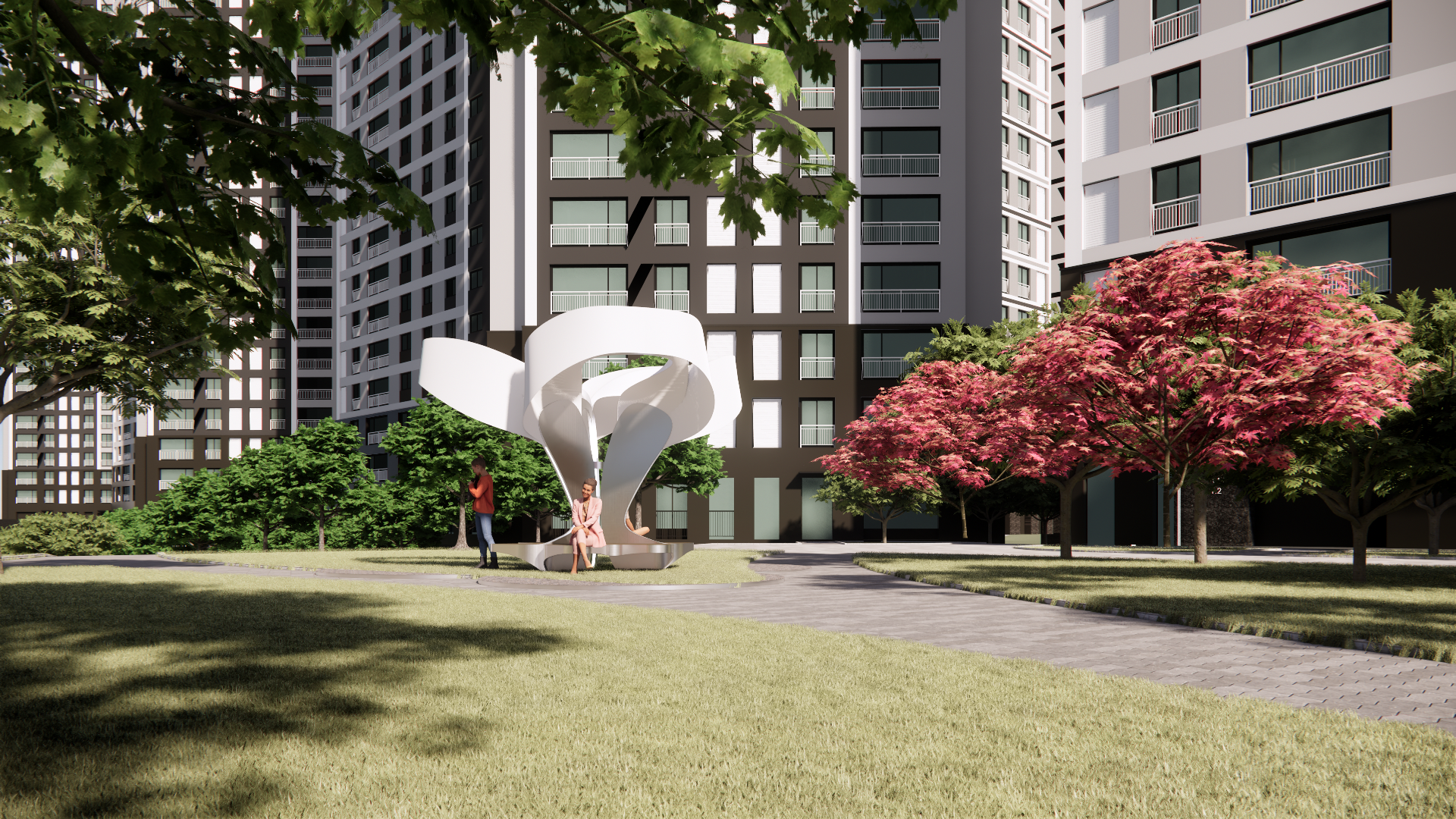
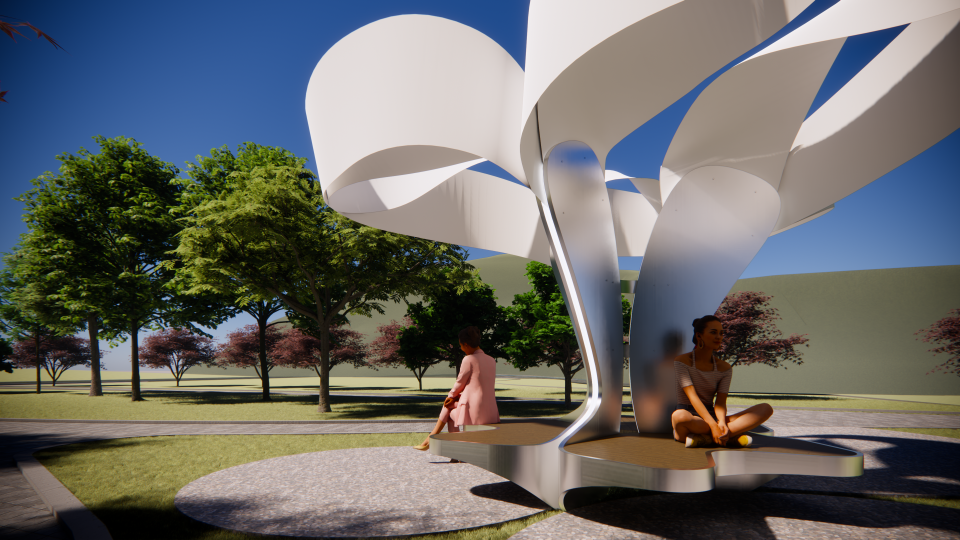
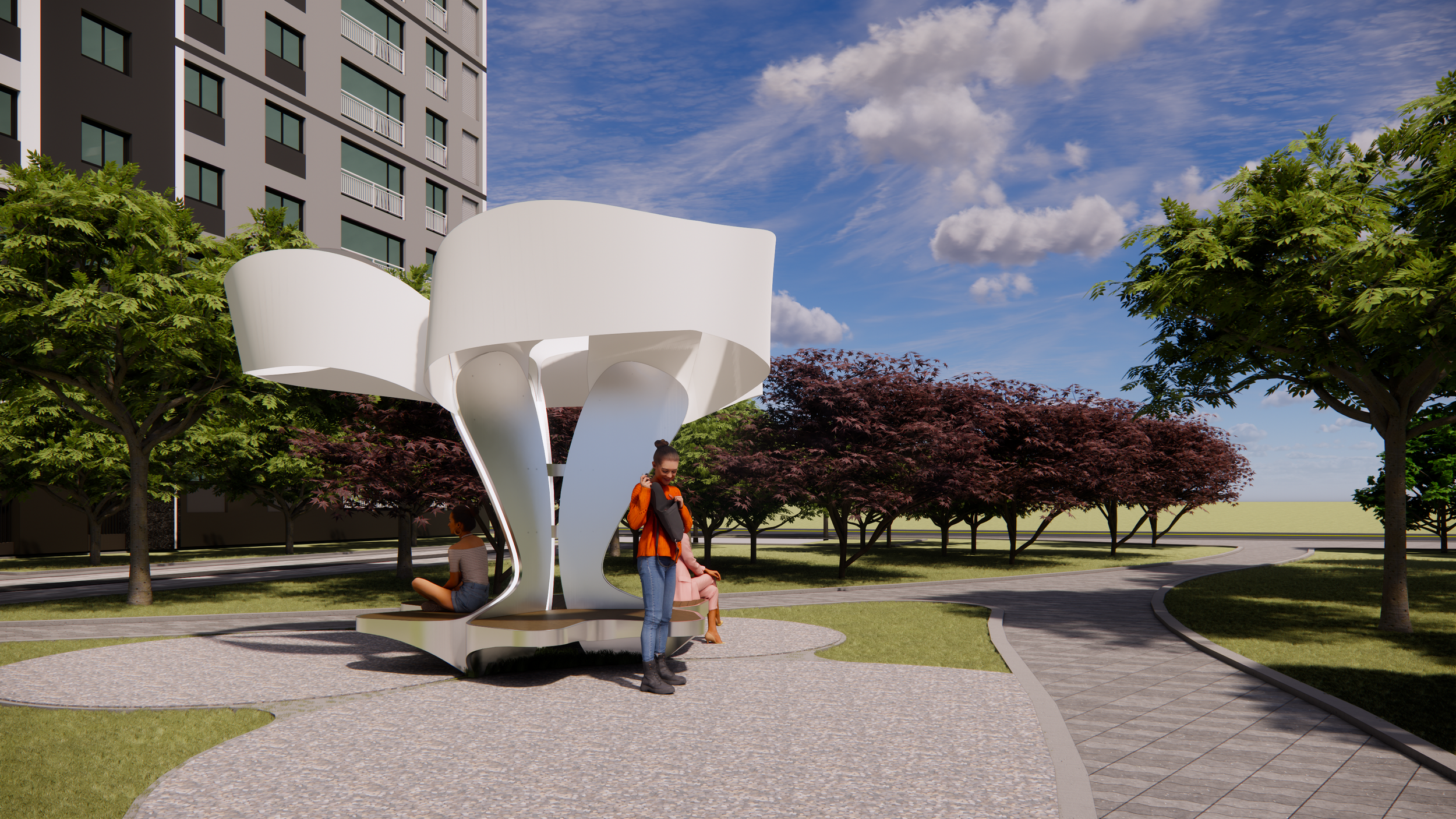
Project S:PROUT, the first physical outcome of this partnership, was created through the convergence of the superior elastic strength and innovative material technology of AXIA Materials’ high-performance continuous glass fiber reinforced composite, LiteTex®, with the shape-deformation tracking technology for active elastic surfaces, digital design tools, and structural simulations developed by I.f Architecture Lab and the Kyung Hee University research lab.

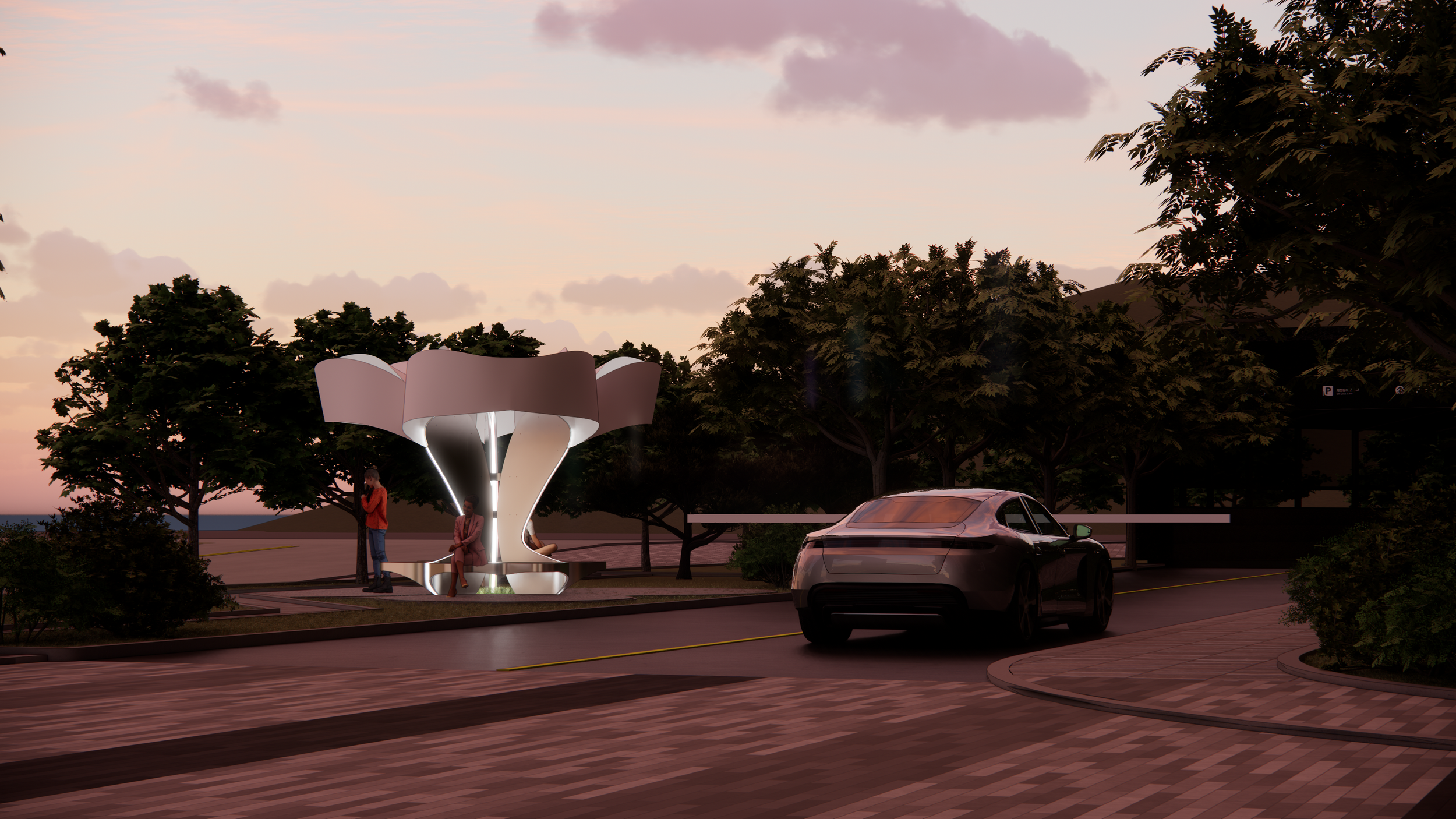
Applied as a pavilion within a residential complex, this project demonstrates the potential of the fiber industry to expand into architectural design and advanced materials.

As a pioneering example that establishes a new paradigm for the utilization of new architectural materials, Project S:PROUT is expected to hold a significant position in the architecture industry through various future research and development endeavors.


Year : 2025

Location : Gumi, Korea

Status : Design Proposal

Type : Pavilion

Project Director :

Dongil Kim (I.f CDL)

Principal Researcher :

Seungil Kim, Gwangeun Hwang (I.f CDL)


Related Project

Related Research


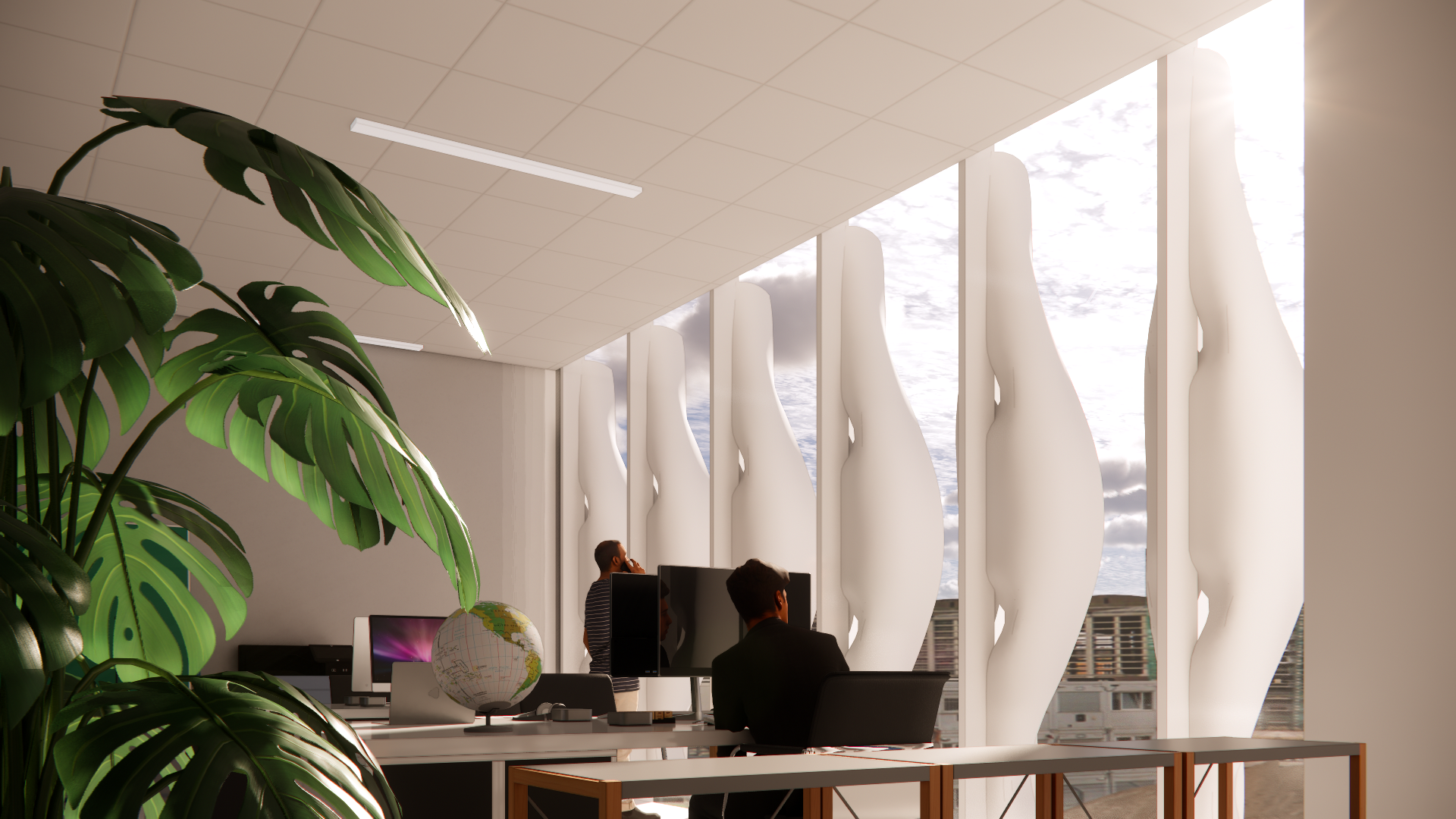
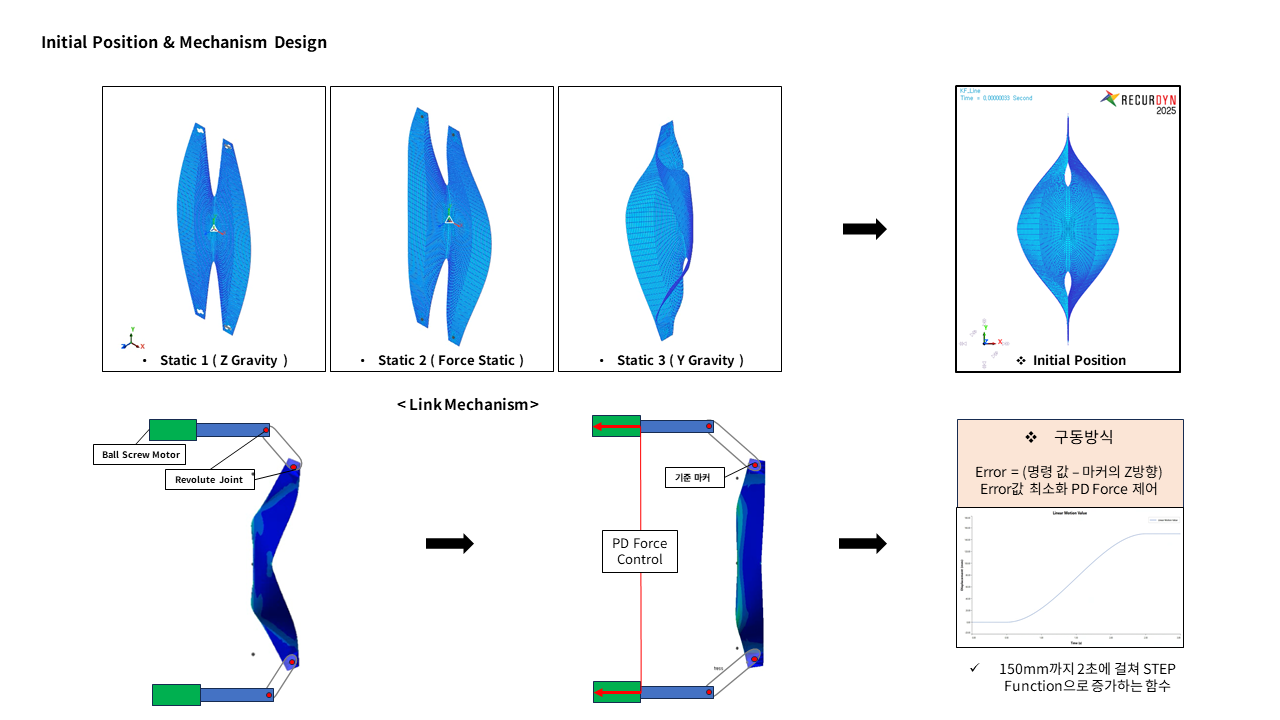
Elastic Kinetic Facade

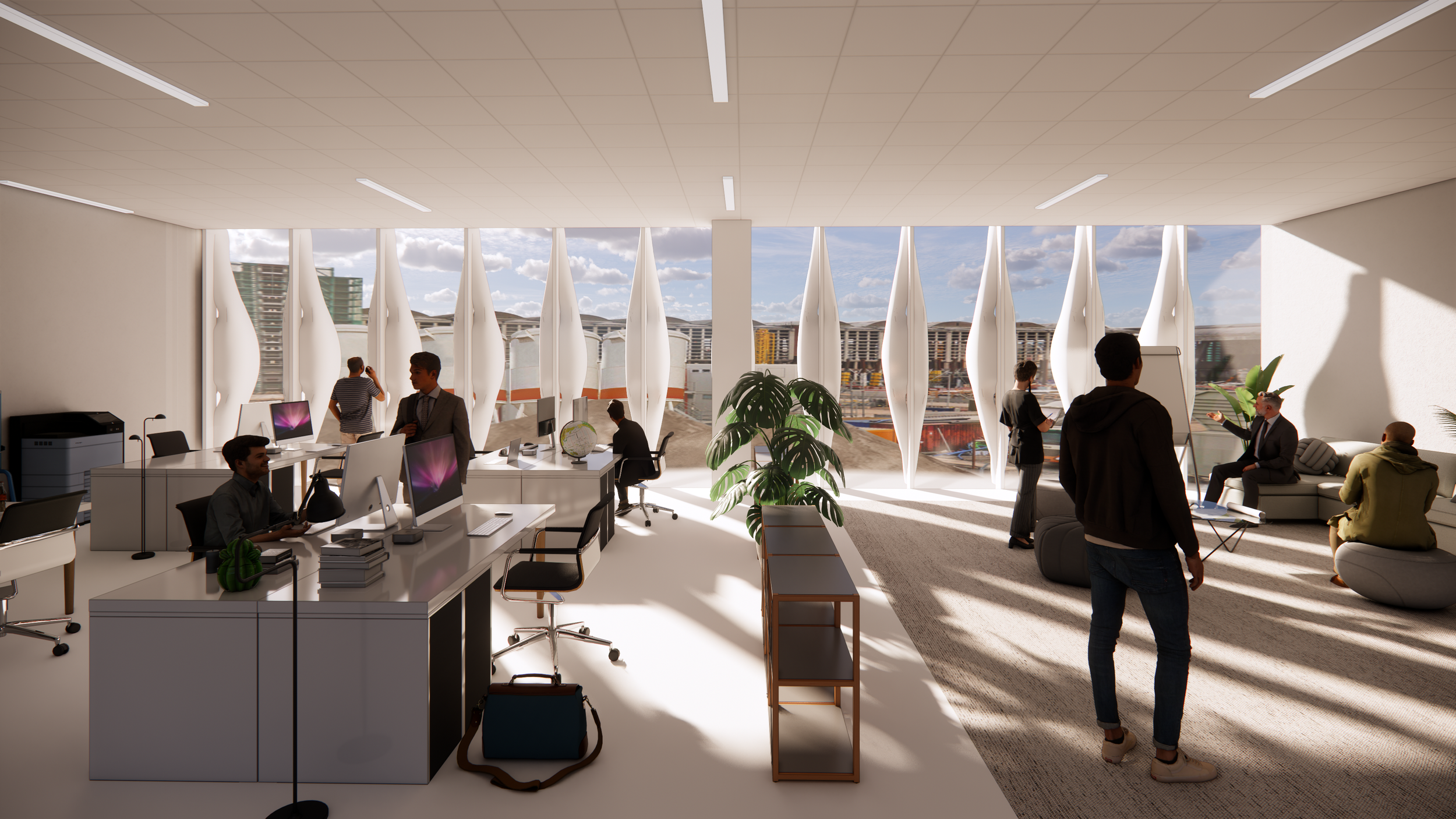
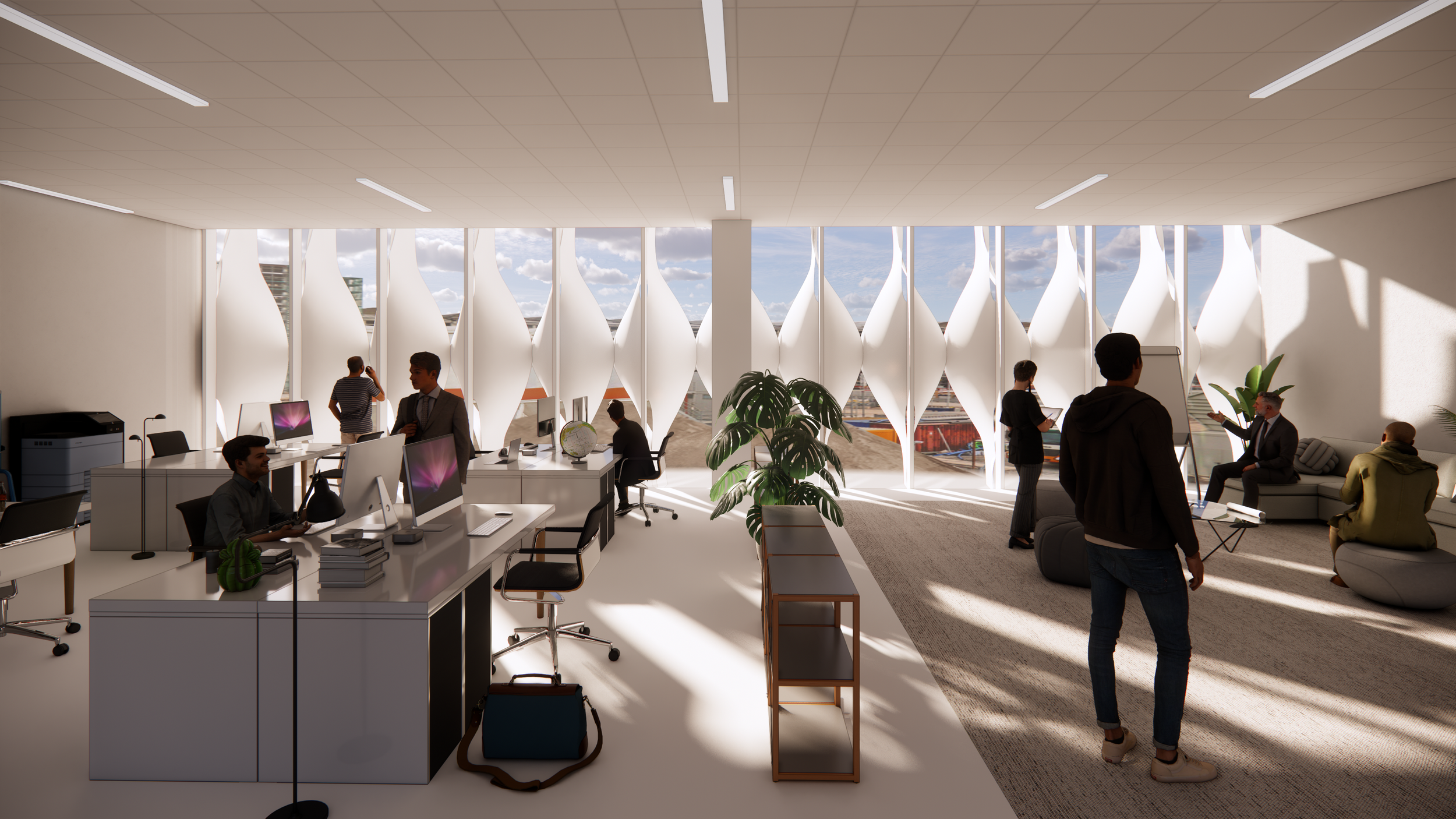
Design process in general, and particularly in architecture, is a complex process that involves a combination of knowledge, skills, experiences, practices, etc. In recent decades, digital design emerges as an unstoppable trend, which adds to all the aforementioned factors the use of digital tools. The techniques cover this issue with computational and algorithmic design systems, the so called parametric design. It is already vividly present in the first half of the twentieth century in the automotive sector (geometric design), and finally impact on architectural design which represents a new step that has led to a new type of Architecture. The workshop is to re-envision the role of Architects as system maker from thinking strategy to fabricator.

This course aims to investigate the continuing advancement of computational processes in architecture in their practice. The topics are exposed as both a technical and intellectual venture of formal, spatial, construction and ecological potentials. The primary role of the workshop is the theoretical and practical development of generative computational design process on both conceptual design and construction phase, allowing for the integral use of computer-controlled manufacturing process in this design system. The later of this course will reach to critically review computational design towards a more challenging and self-demanding commitment to physical and environmental constraints as a fabrication stage.


Year : 2024

Material : LiteTex 2ply (AXIA Materials), Plywood

Project Director : Dongil Kim, Sanghyun Kim (KHU)

Principal Research : Seungil Kim (I.f CDL), Daehan Lee (V.P.Lab), Eunae Gang (RCI Lab)

High-Rise Modular Unit System

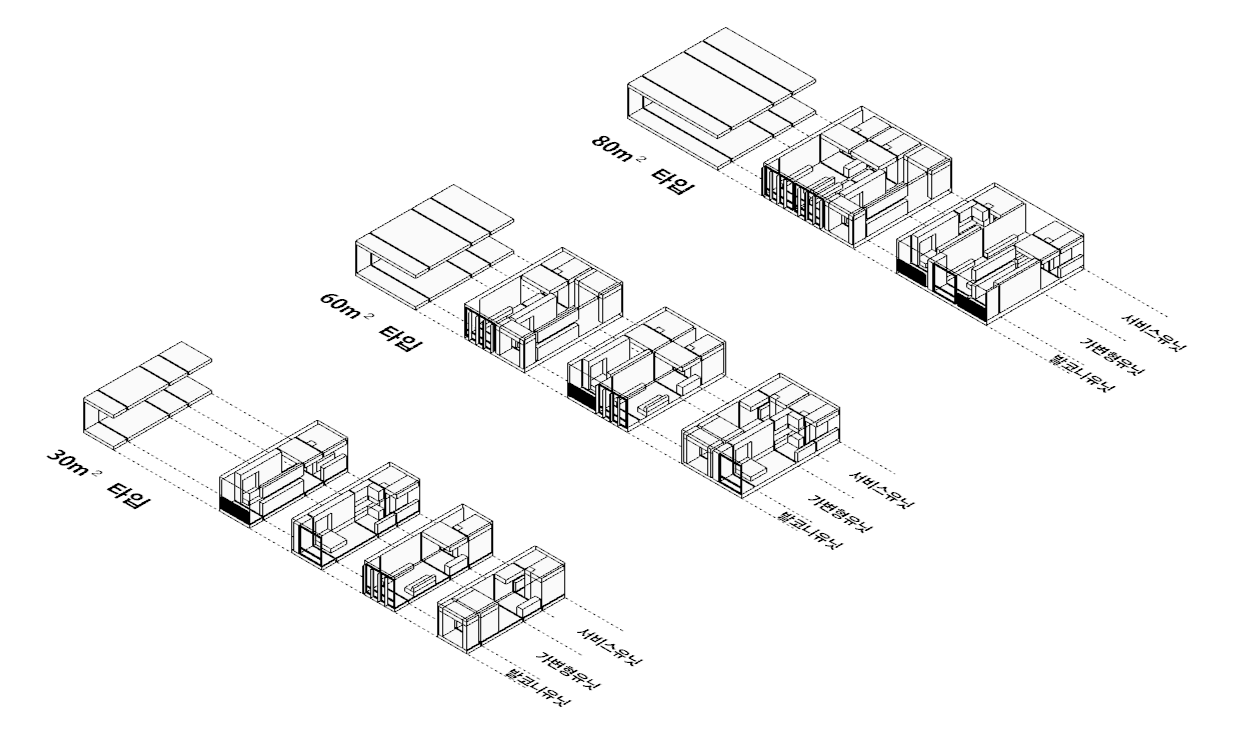
High-Rise Modular Unit System is a product development proposal for a high-rise modular housing system based on structural innovation and unit integration. The project responds to the limitations of conventional modular construction in Korea, where modular housing has often relied on repetitive stacking, rigid layouts, and apartment plans borrowed from conventional concrete housing systems. As the market expands toward mid- and high-rise modular buildings, the proposal argues that modular construction requires not only standardized production, but also a flexible structural and spatial system.

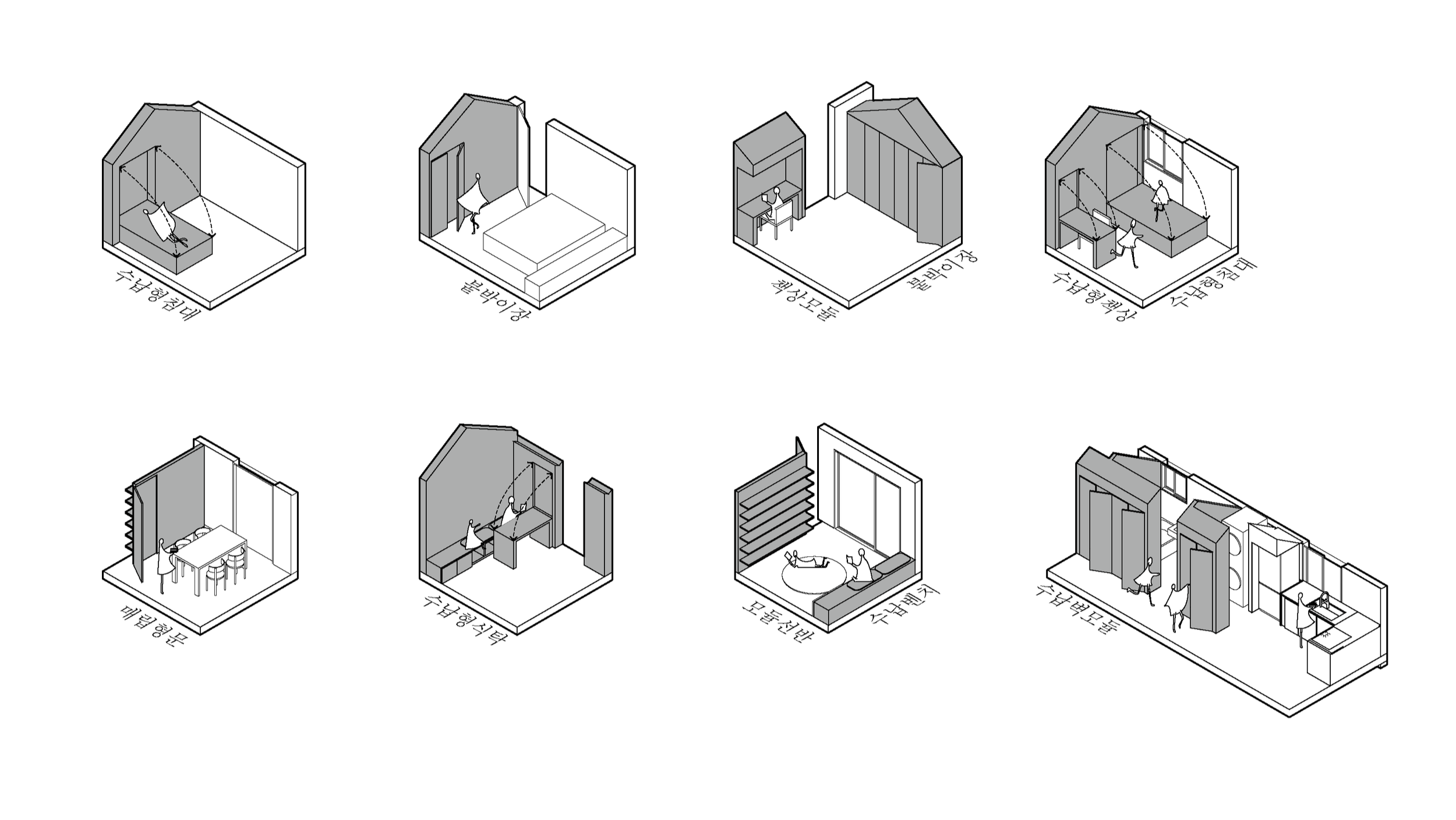
The research focuses on diversifying modular construction methods beyond simple stacking. Infill-type systems and cartridge-type systems are examined as alternatives that can improve structural stability, reduce floor impact noise, and allow individual units to be replaced or maintained more easily over time. In parallel, the proposal develops interior unit types that can be applied across different modular plans rather than being limited to a single unit layout.

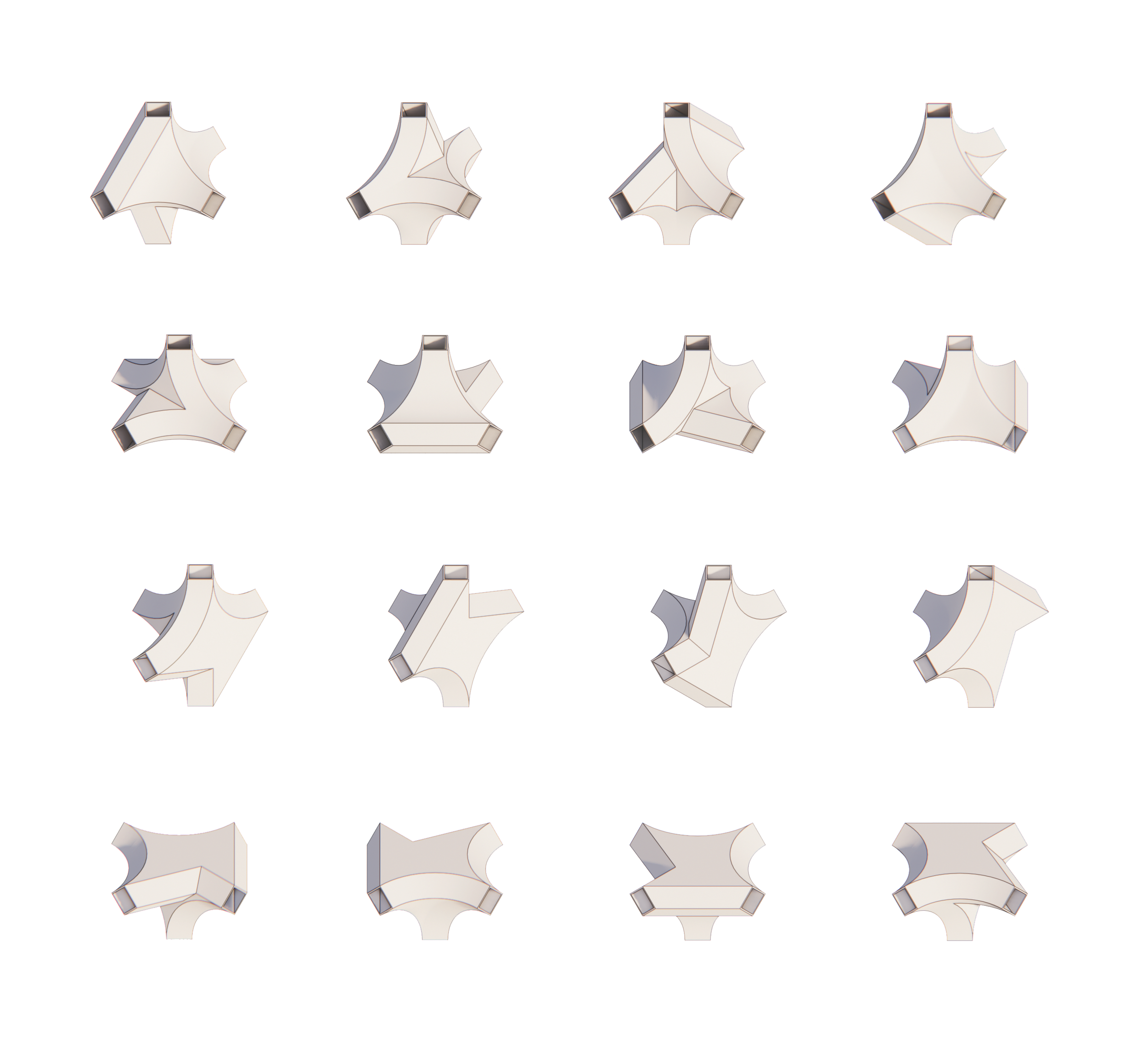
The unit system is organized into three categories: service units, flexible units, and balcony units. Service units integrate equipment and structural systems to improve functionality and constructability; flexible units support different spatial configurations through modularized interior functions; and balcony units operate as independent exterior attachments that consider insulation, drainage, and façade performance. Through this approach, the project establishes a scalable framework for high-rise modular housing that can support mass production, customization, long-term maintenance, and future commercialization.

Year: 2024

Status : Proposal

Type : Modular System

Principal in Charge :

Seojoo Lee, Hyojung Kim (I.f), Dongil Kim (I.f CDL)

Design Team :

Hyunjoo Kang (I.f)
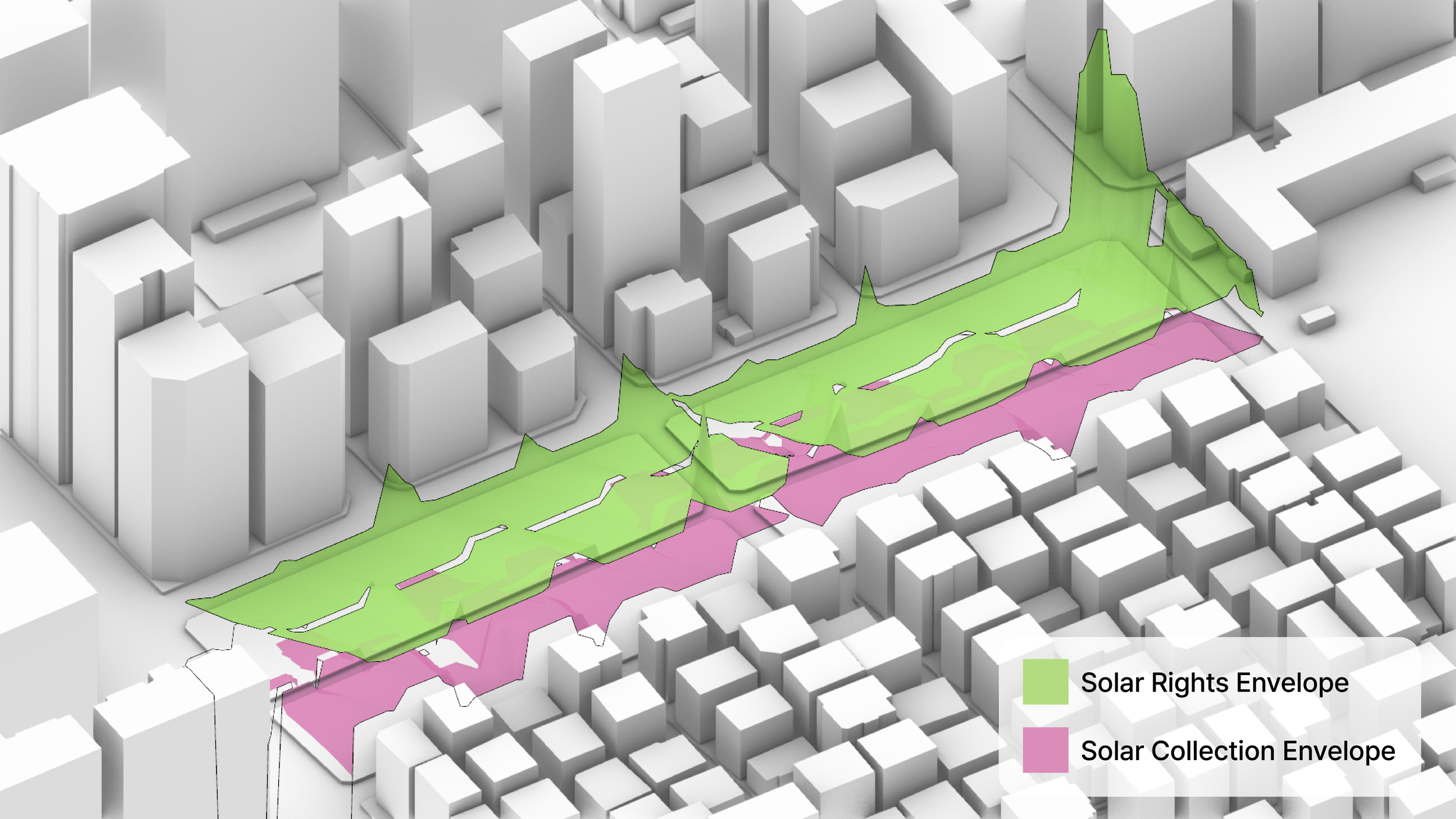
Project PEACE

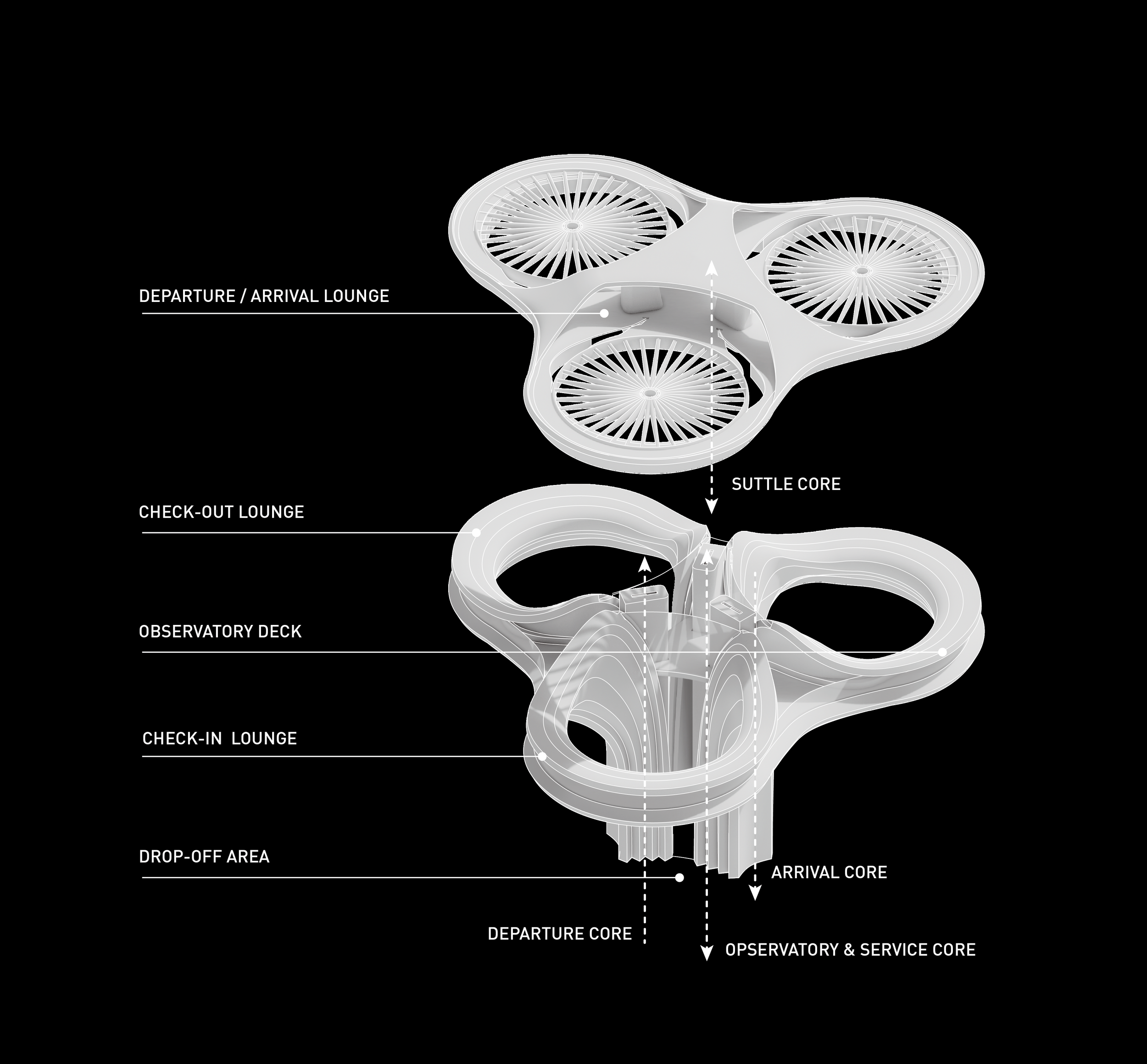
The Vertiport of the PEACE PROJECT is proposed as a new transportation infrastructure connecting cities near the Demilitarized Zone (DMZ) of South and North Korea. It goes beyond being a mere mode of transportation to serve as a symbolic venue linking the two Koreas. Designed with respect for the preserved natural environment of the DMZ, the VertiStop seeks architectural solutions that coexist with the ecosystem while minimizing environmental impact and harmonizing with nature.

The Vertiport features a steel truss structure comprising three landing pads, each with a radius of approximately 40 meters, providing both stability and efficiency. Designed to stand about 10-15 meters taller than the average height of nearby trees, it minimizes interference with nature during takeoff and landing, ensuring smooth operations. The structure is divided into three levels. The ground level serves as the main entrance and circulation area, guiding users through a natural flow. The middle level functions as a lounge for pre- and post-boarding procedures, featuring independent observation decks where passengers can complete boarding formalities while enjoying the surrounding natural scenery. The top level is a waiting area designed for comfort, offering a pleasant environment for passengers before boarding. All levels are connected by independent vertical circulation paths.

The exterior is clad with steel materials that reflect the surrounding forest and blend seamlessly into the natural environment. This choice of material reacts dynamically to changing light and weather over time, creating an aesthetic that makes the structure feel like an integral part of nature.

Around the Vertiport, gardens and outdoor spaces harmonize with nature, offering passengers areas to rest or take a stroll while waiting. These features position the VertiStop as more than just transportation infrastructure; it has the potential to foster interaction and communication between residents of both Koreas, serving as a place of exchange and connection.


Year : 2024

Status : Concept Design

Type : Vertiport

Principal in Charge :

Seojoo Lee, Hyojung Kim (I.f), Dongil Kim (I.f CDL)

Design Team : Seungil Kim, Gwangeun Hwang (I.f CDL)

Collaboration : I.f + JOWA Architects + SML

Connective Monument


Connective Monument: A Modular Facade Connecting City, Brand, and Customer

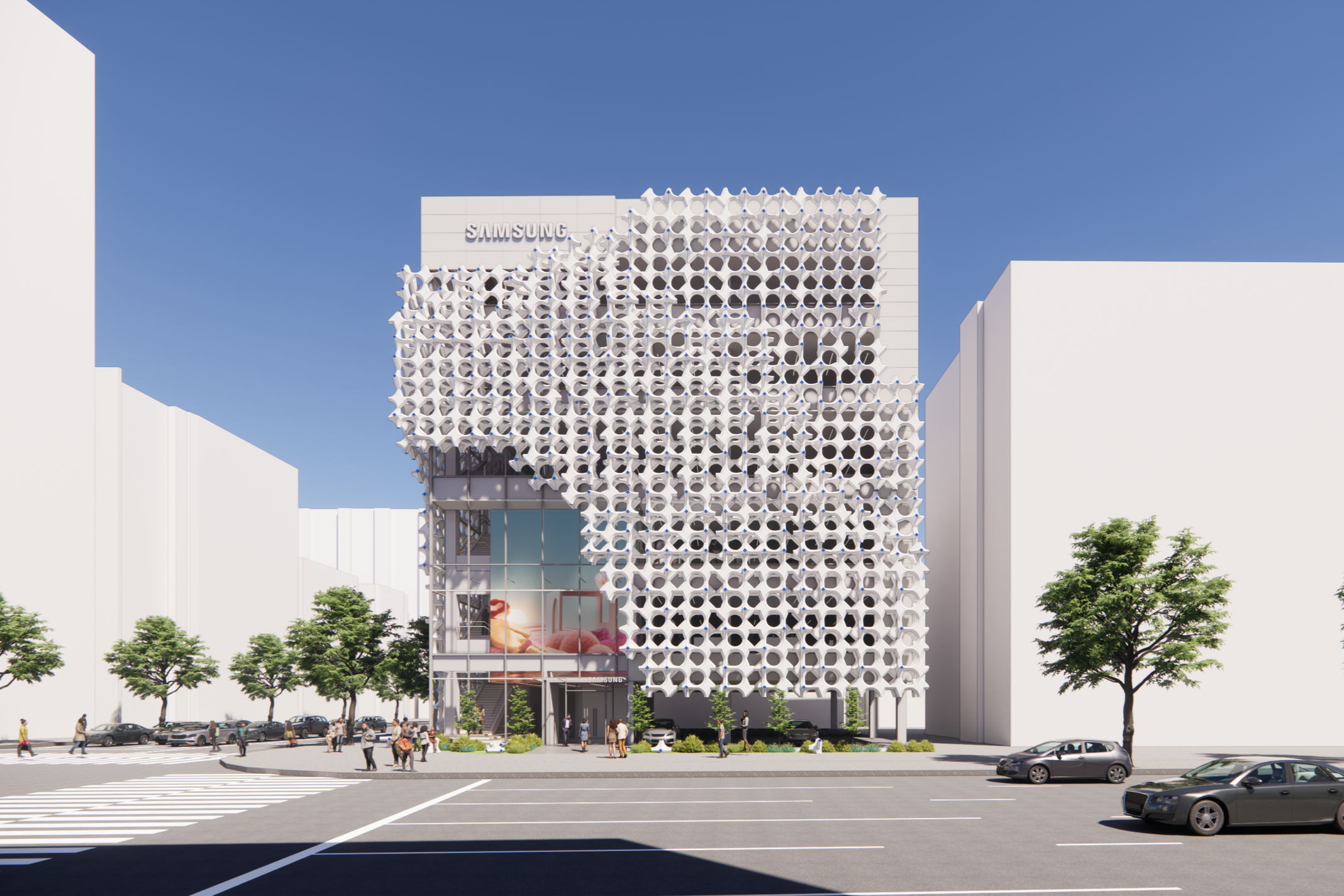
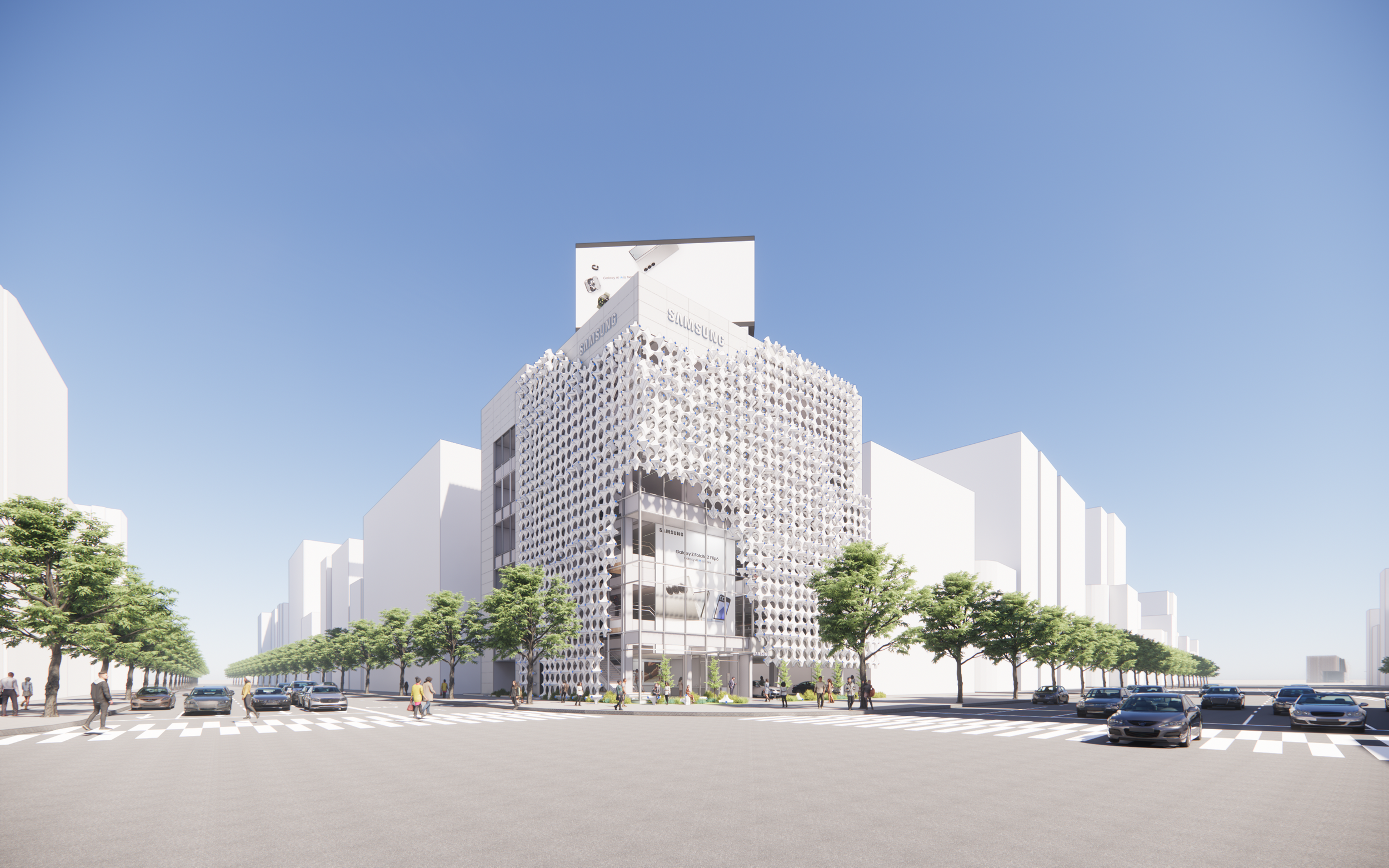
Connective Monument is a facade renovation proposal for Store Cheongdam that transforms the building into a bold and interactive brand landmark. Located in Cheongdam, where high-end flagship stores and iconic brand facades are concentrated, the project responds to the site’s urban character by creating a distinctive exterior that is both luxurious and memorable.

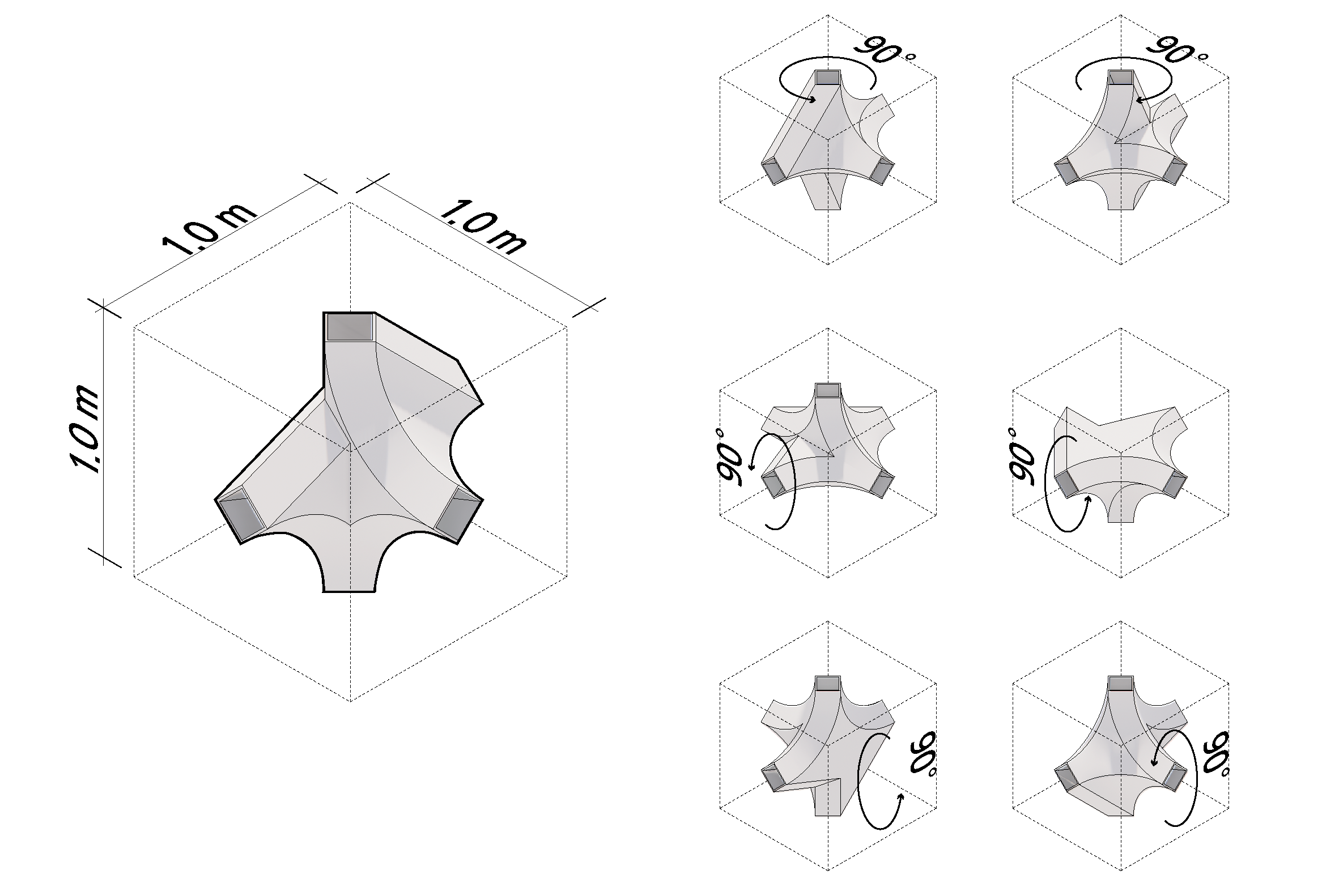
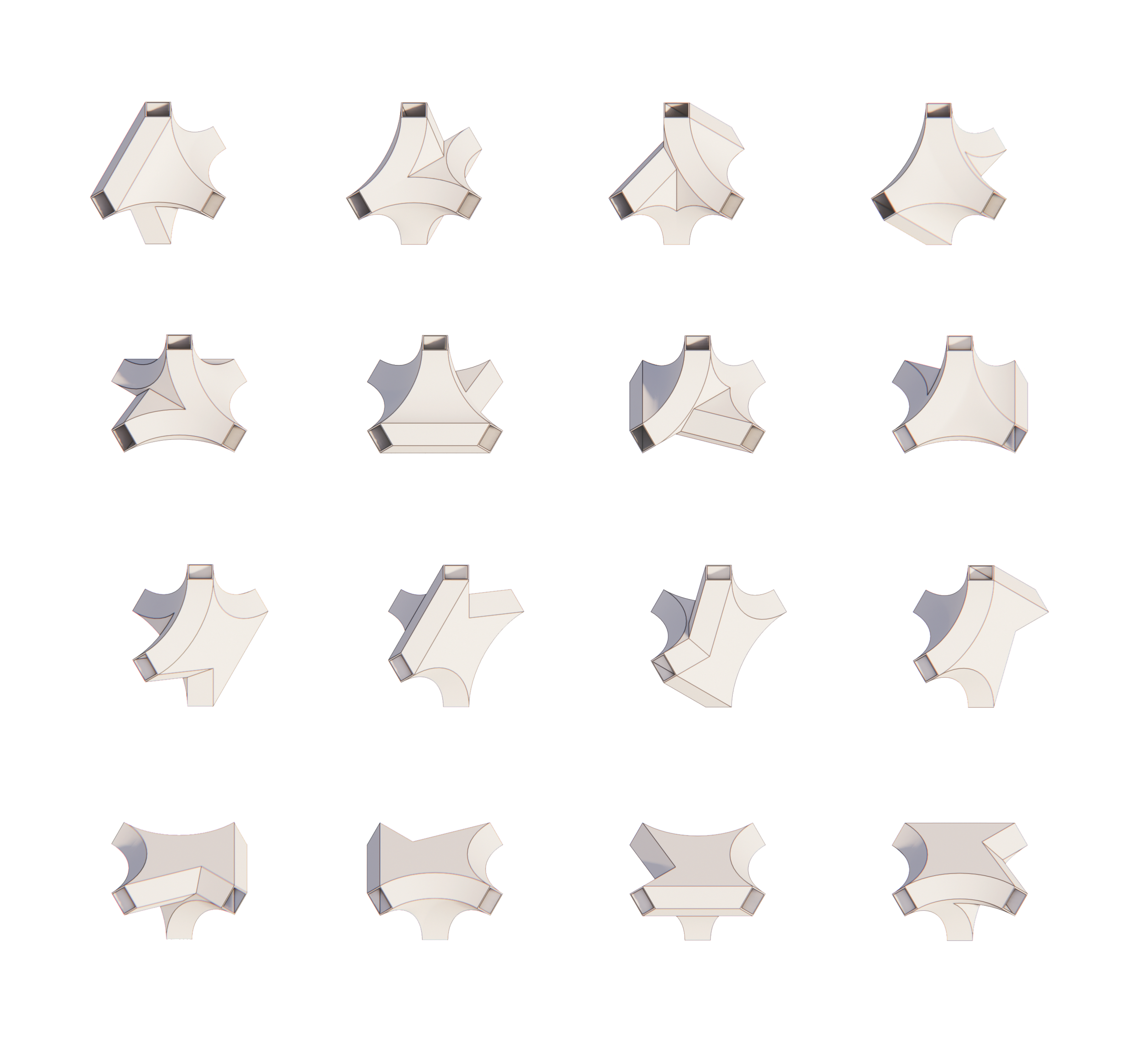
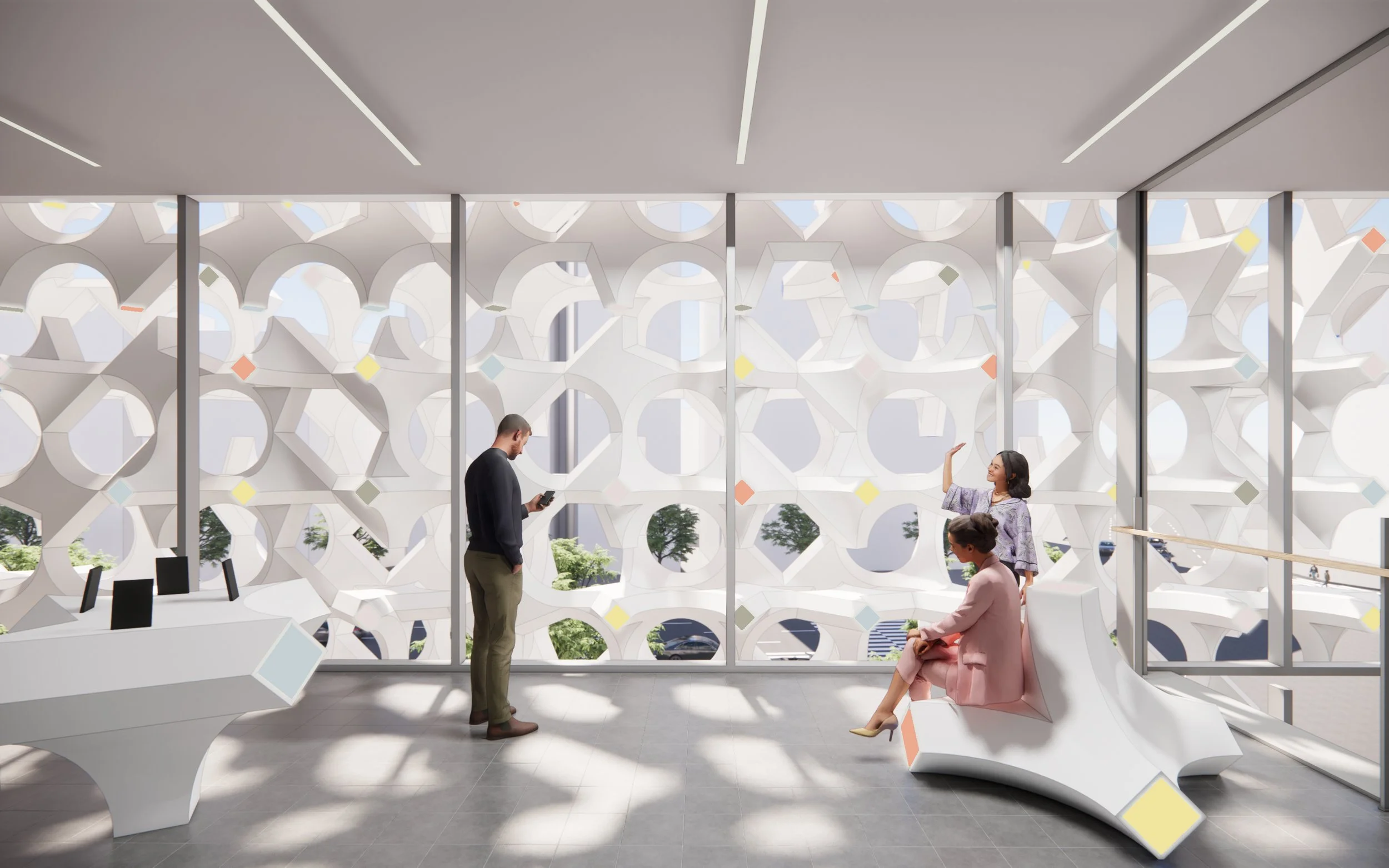
The design is based on the idea of connection — connecting the city and the building, the existing Store identity and a new spatial experience, and the brand with its customers. The facade is composed of three-dimensional star-shaped modules inspired by brand’s symbolic value. Each module can rotate and combine in multiple directions, creating a dynamic surface that expresses the brand’s bold and playful tone.

Beyond visual impact, the facade is designed as a communicative surface. Through lighting and color scenarios, it can respond to product launches, seasonal events, and urban festivals, allowing the building to engage with the city over time. The modules also create a layered experience from the inside, filtering light and views while offering potential use as display shelves or interior elements.

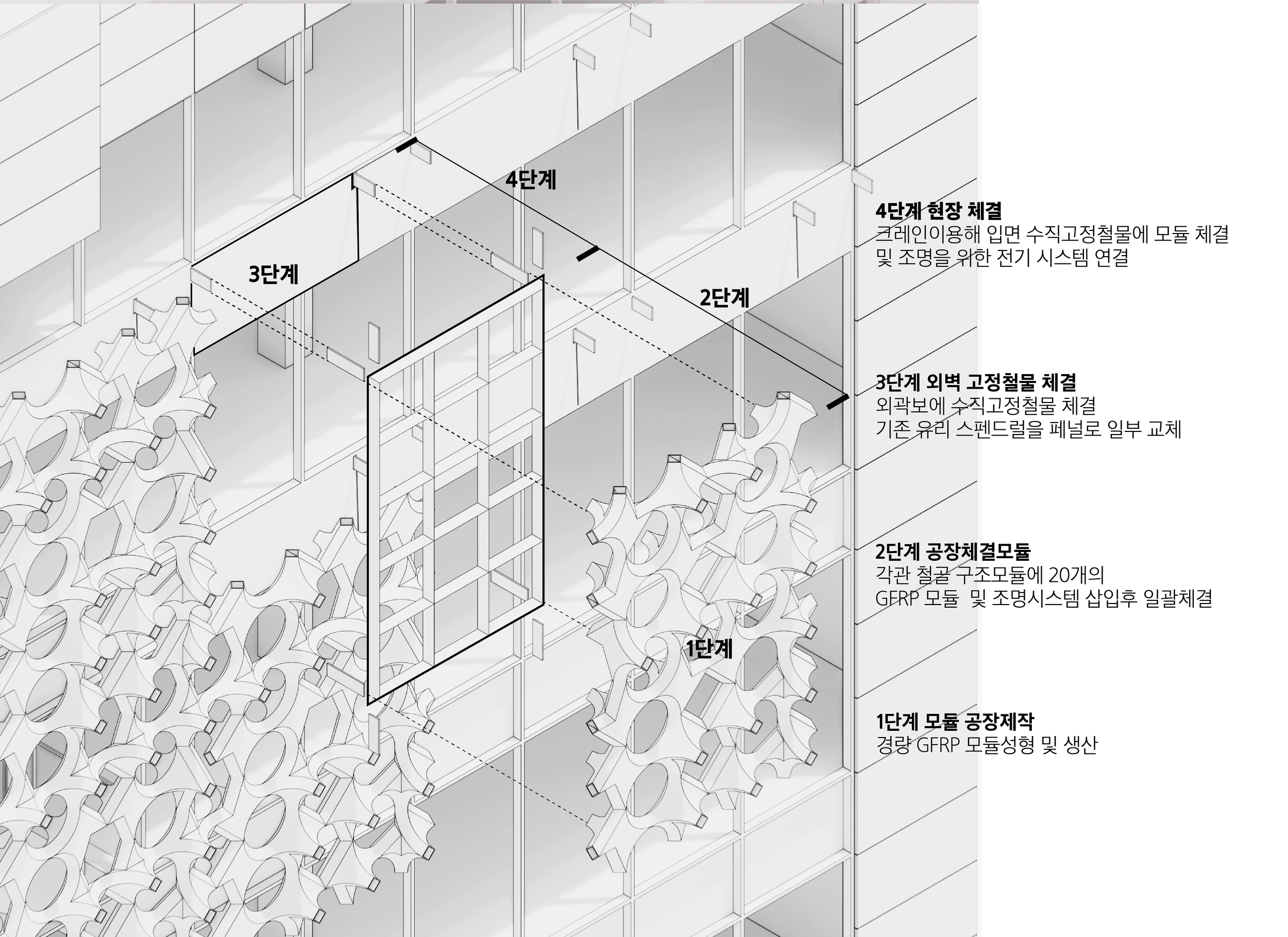
The use of lightweight GFRP modules supports efficient fabrication, installation, removal, and reuse. By applying an independent facade structure, the proposal minimizes interference with the existing glass facade and store operation. In this way, Connective Monument presents Store Cheongdam not simply as a retail building, but as a flexible urban interface that embodies Samsung’s future-oriented brand identity.


Related Project


Year: 2025

Location : Gangnam, Seoul, Korea

Phase : Design Development

Type : Commercial Facade Renovation

Principal in Charge :

Seojoo Lee, Hyojung Kim (I.f), Dongil Kim (I.f.CDL)

Design Team : Hyunjoo Kang (I.f)
S Project


This project envisions a “Connective Monument”—a spatial symbol that links architecture with its urban surroundings, connects brand to customer, and creates seamless transitions between environments. Positioned in a context where high-end flagship stores and luxury brand headquarters are concentrated, the design responds with a visually iconic and sophisticated presence that reflects both prestige and originality.

From an urban perspective, the building acts as part of the cityscape, catching the public’s eye naturally while transforming in response to social events and seasons—offering a dynamic interaction between architecture and society. As a spatial connector, it retains design continuity with existing Samsung stores, reinforcing a unified brand identity while introducing a fresh experiential layer.

At the street level, the design emphasizes aesthetic presence and brand clarity. The front-scape is crafted to naturally draw customers inward, creating an inviting threshold that encourages participation and exploration. The building’s façade, composed of three dimensional modular elements inspired by star symbol, rotates and interlocks vertically and horizontally. This kinetic composition captures Samsung’s brand tone of Bold & Playful, turning the structure itself into an interactive and expressive statement of the brand’s future-forward vision.


Related Research


Year : 2025

Location : Seoul, Korea

Status : Design Proposal

Type : Commercial Facade Renovation

Principal in Charge :

Seojoo Lee, Hyojung Kim (I.f), Dongil Kim (I.f CDL)

Design Team :

Hyunjoo Kang (I.f)
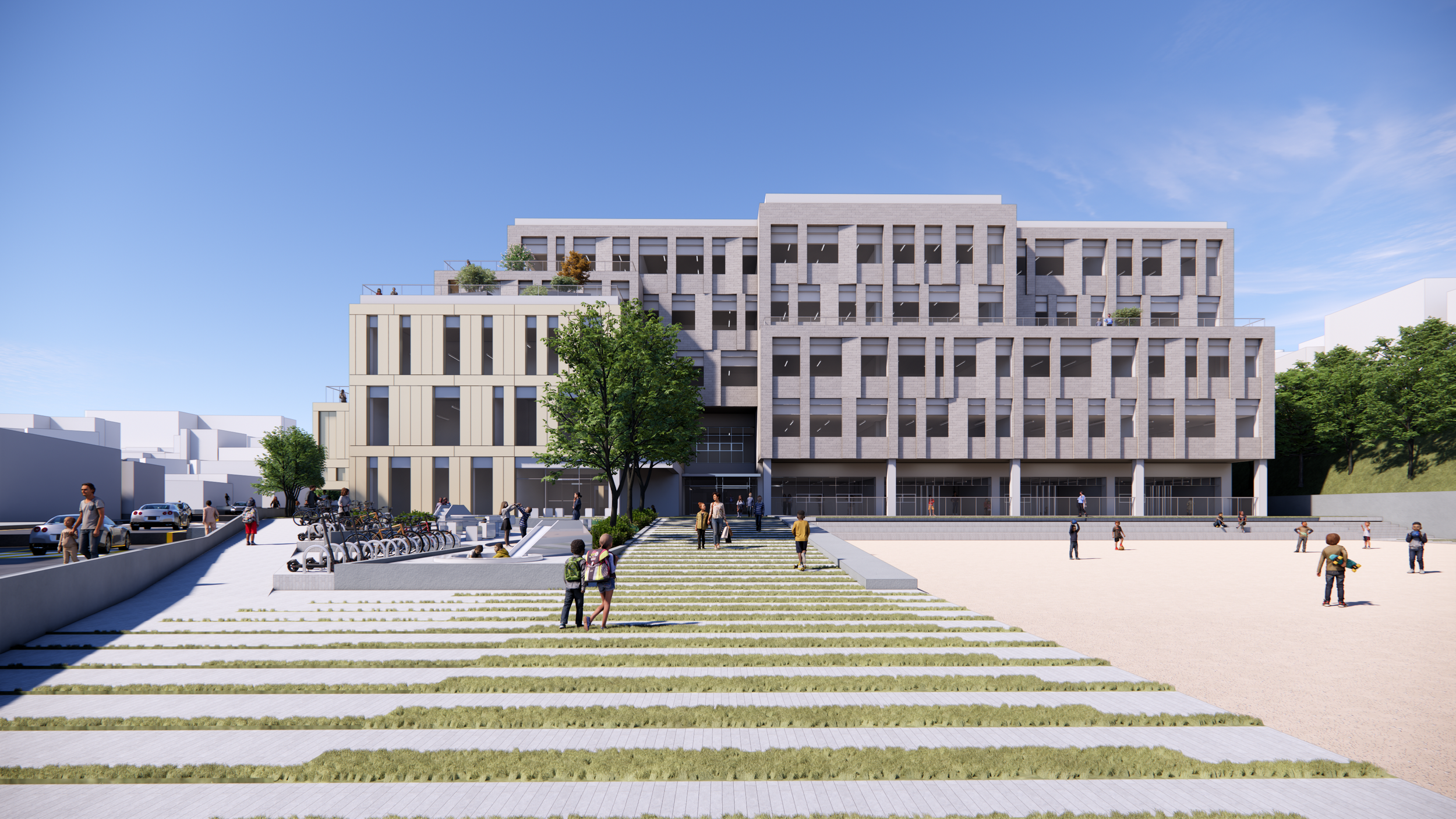
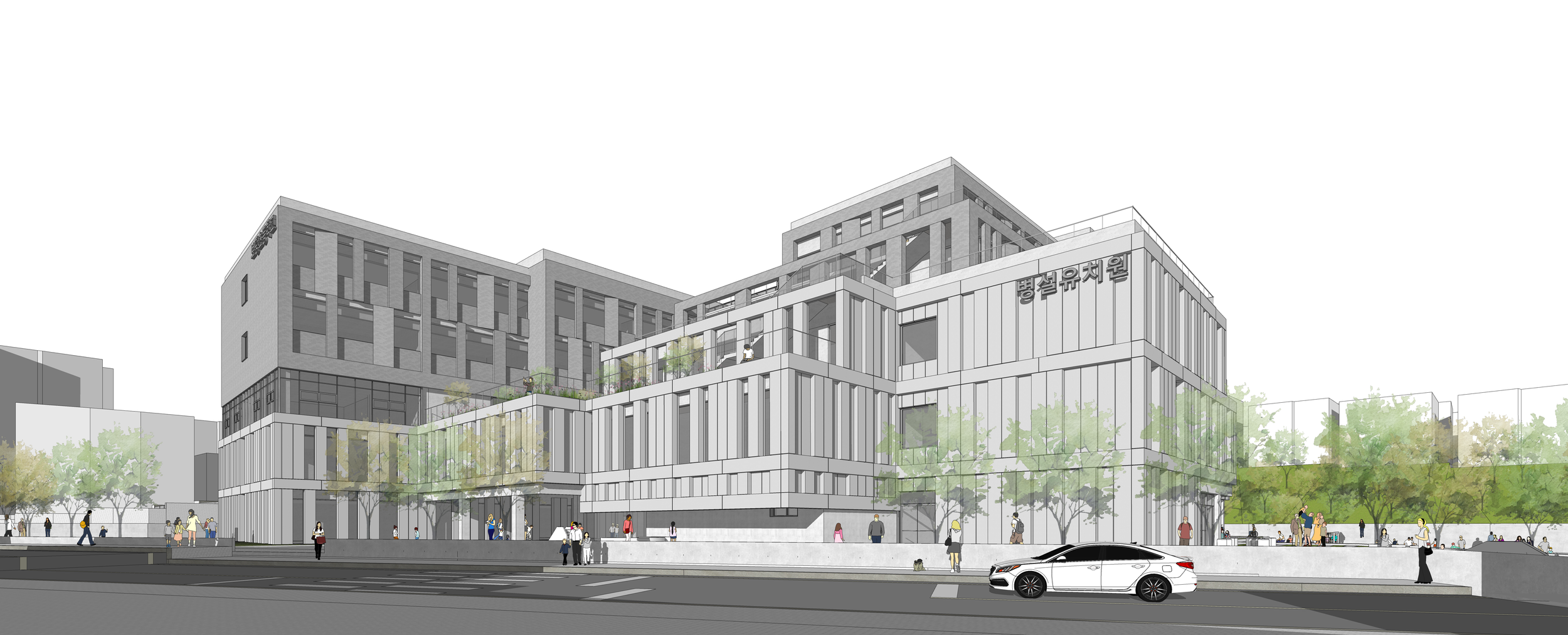
Seoul Multi-Purpose Sports Center and Children's Park

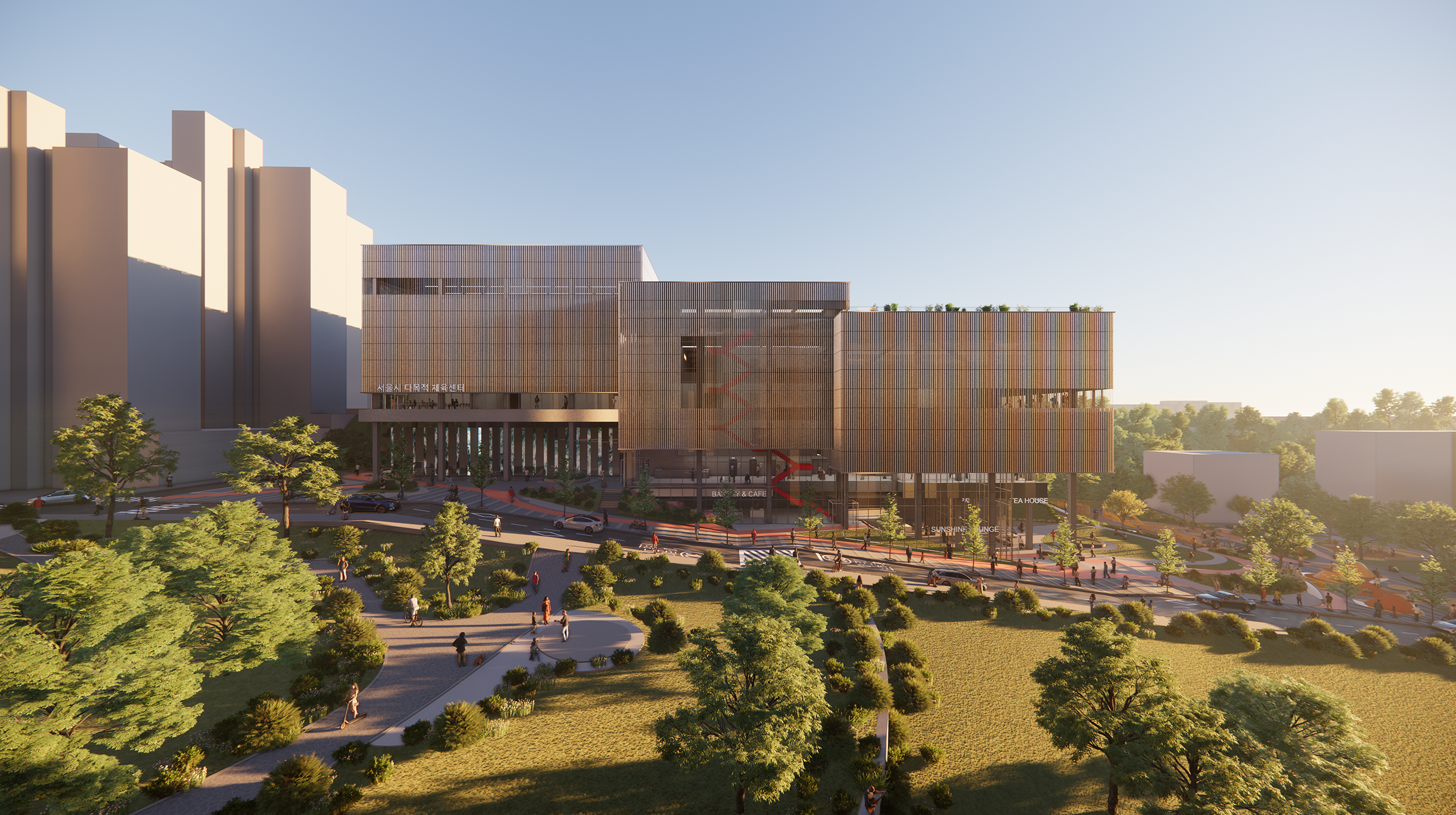
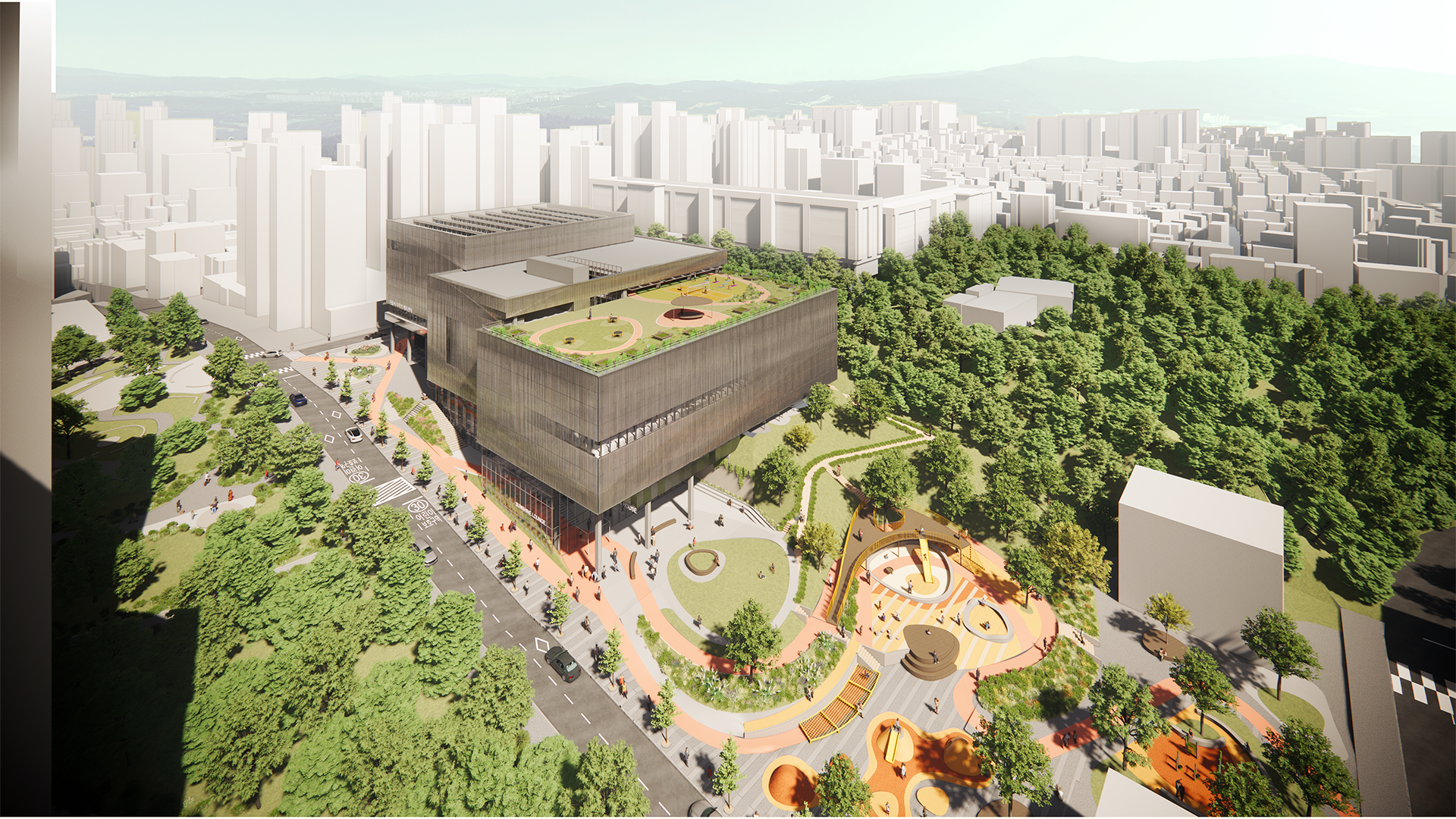
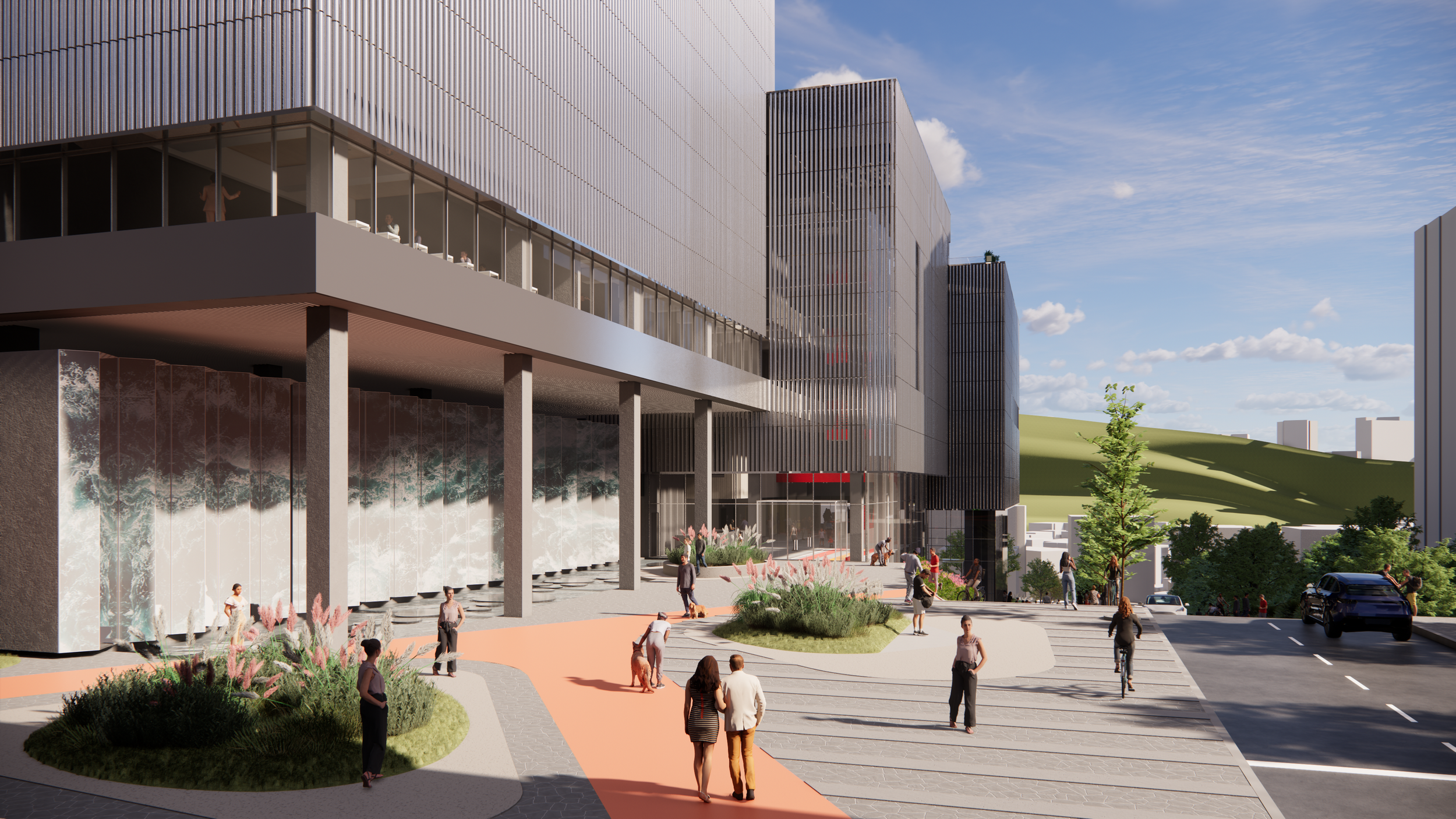
As society evolves toward prioritizing individual quality of life, the specialization of community-based sports facilities is also accelerating. Bangbae-dong Redevelopment Zone 5, once a hillside densely packed with small residential buildings, has transformed into a large-scale, high-rise, luxury residential complex. Amid this dramatic contextual shift, this multipurpose sports center is located at the northern slope of Isu Middle School, tucked within the inner edge of Zone 5. It serves as a multifunctional space for local residents' athletic activities and leisure. In the changing urban fabric, the sizable sports facility maintains a quiet presence without drawing unnecessary attention to itself.

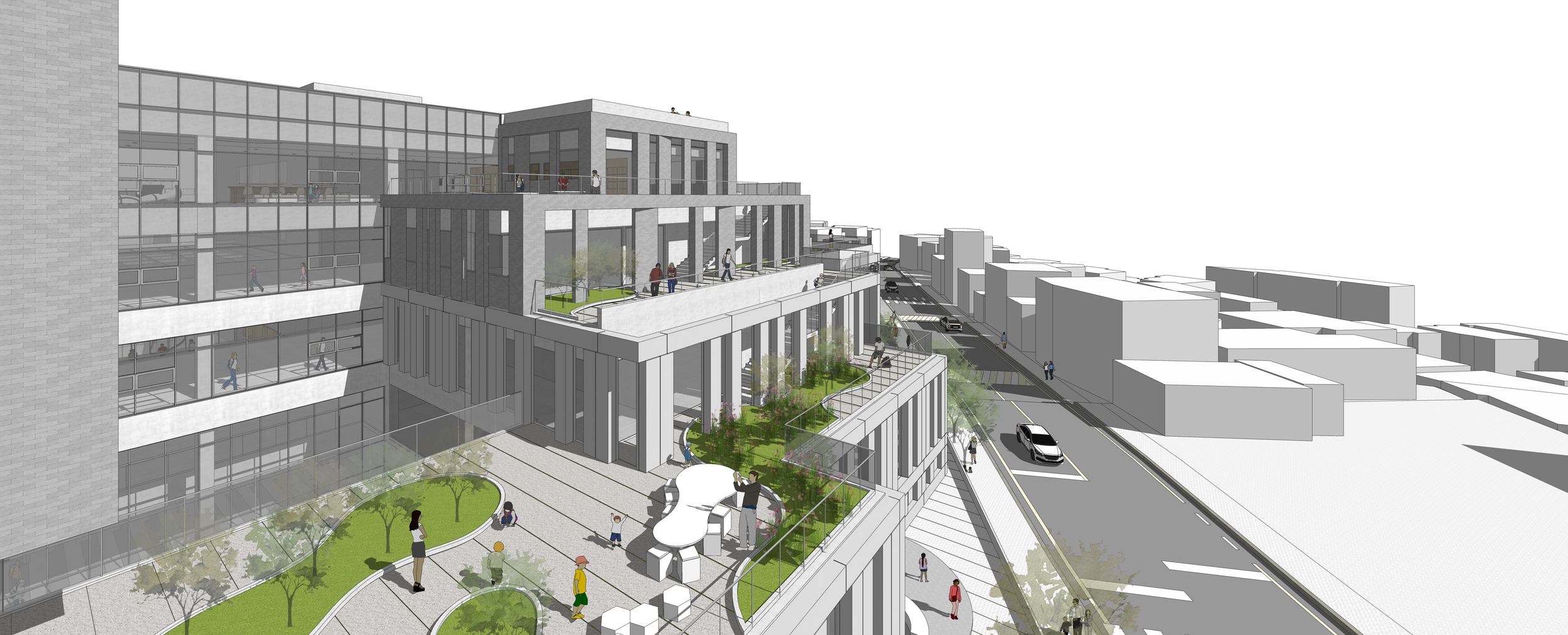
To maximize the site's topographical features, a series of three-dimensional public spaces that naturally connect to the adjacent children’s park have been placed on the ground level. Meanwhile, a large swimming pool and multipurpose gymnasium are elevated above this public area. The swimming pool, with eight 50-meter lanes, is designed to accommodate professional swimming competitions as well as community swimming lessons. The multipurpose gymnasium, equivalent in size to two basketball courts, offers a versatile space for basketball, volleyball, badminton, and various local events. Despite its considerable size, the upper mass of the sports center harmonizes with its surroundings, presenting a calm and understated exterior. The building’s interior, while modest in its exterior expression, is vibrant and filled with natural light to support active and healthy athletic activities. Designed for maximum natural ventilation and sunlight, the interior ensures bright, fresh, and invigorating spaces for users.

The lower part of the building, accommodating various lobby levels, mechanical and electrical rooms, pool pits, and parking facilities, is constructed using an RC (reinforced concrete) frame structure. The central section, housing the vertical cores and support facilities for the pool and gymnasium, also employs RC framing. The large-span spaces, such as the gymnasium and swimming pool, are supported by lightweight steel trusses placed atop the RC frame, with mega trusses forming the external walls to resist lateral forces. This structural system is straightforward yet robust, comfortably housing both large and small programmatic spaces.

Situated atop a diverse array of external spaces that connect Dogo-meori Park to the newly established Half-Moon Park, this sports center actively integrates indoor and outdoor spaces with the children’s park. It provides an open, indoor public area for Seoul residents, serving as a space for health, vitality, and community engagement.


Year : 2024

Location : Seoul, Korea

Size : 14,985.95 m²

Status : Competition Entry

Type : Public Sports Complex and Children’s Park

Principal in Charge :

Seojoo Lee, Hyojung Kim (I.f), Dongil Kim (I.f.CDL), Minho Lee (func. Architects)

Design Team :

Seungil Kim, Gwangeun Hwang (I.f CDL)

Collaboration :

I.f + TAAL Architects + func.Architects (Architecture), iL Landscape (Landscape)

Bending-Active Research Pavilion


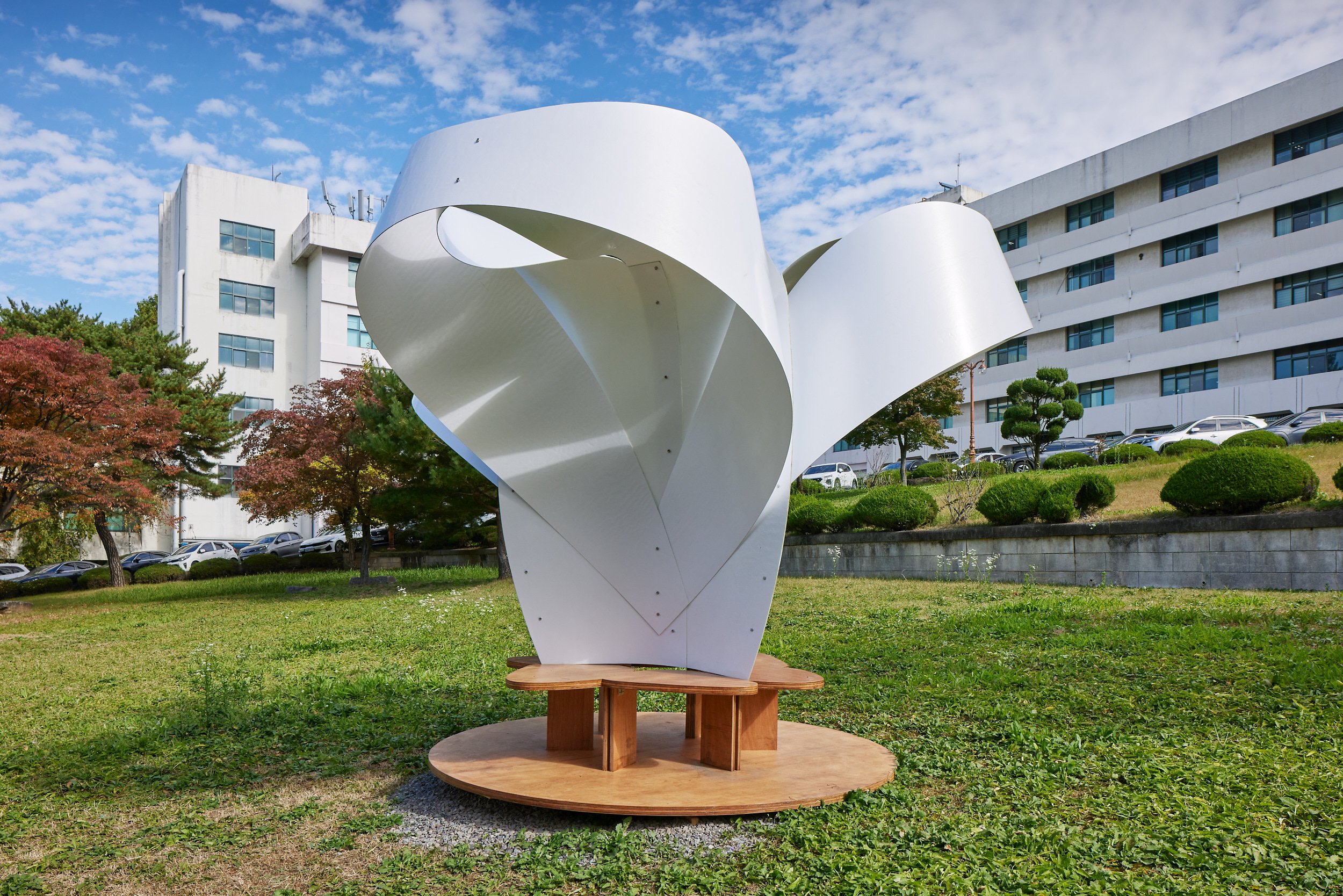
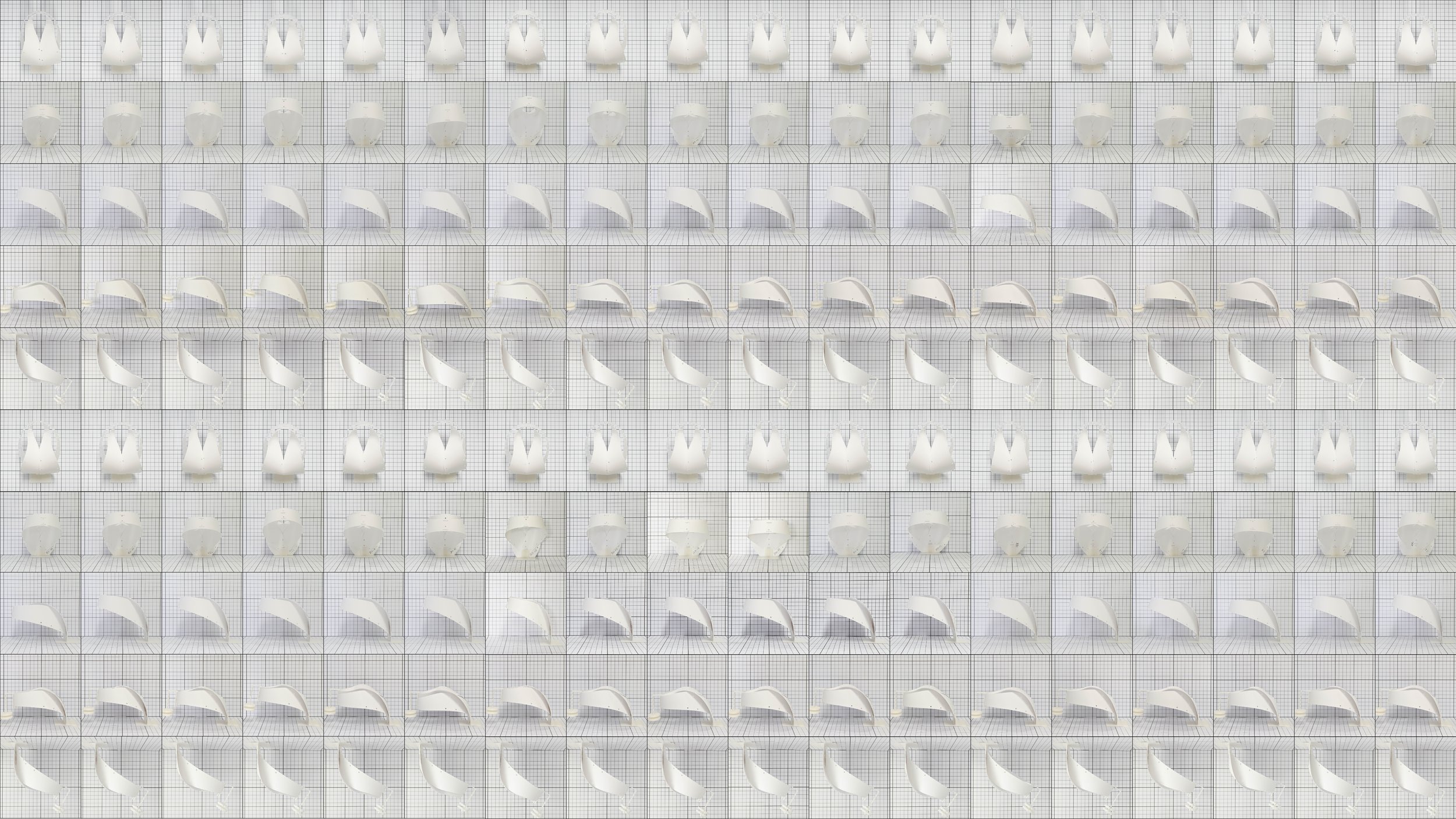
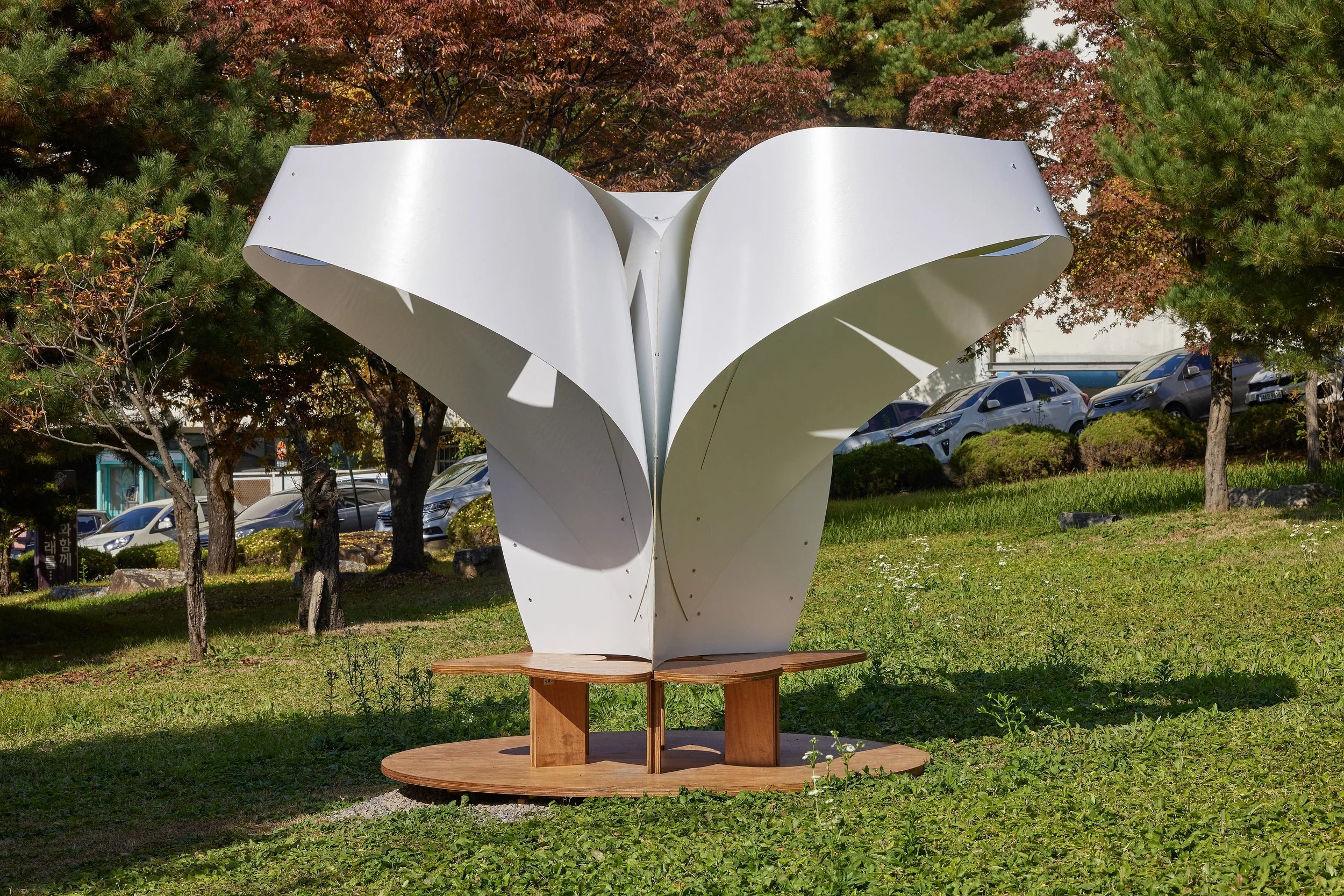
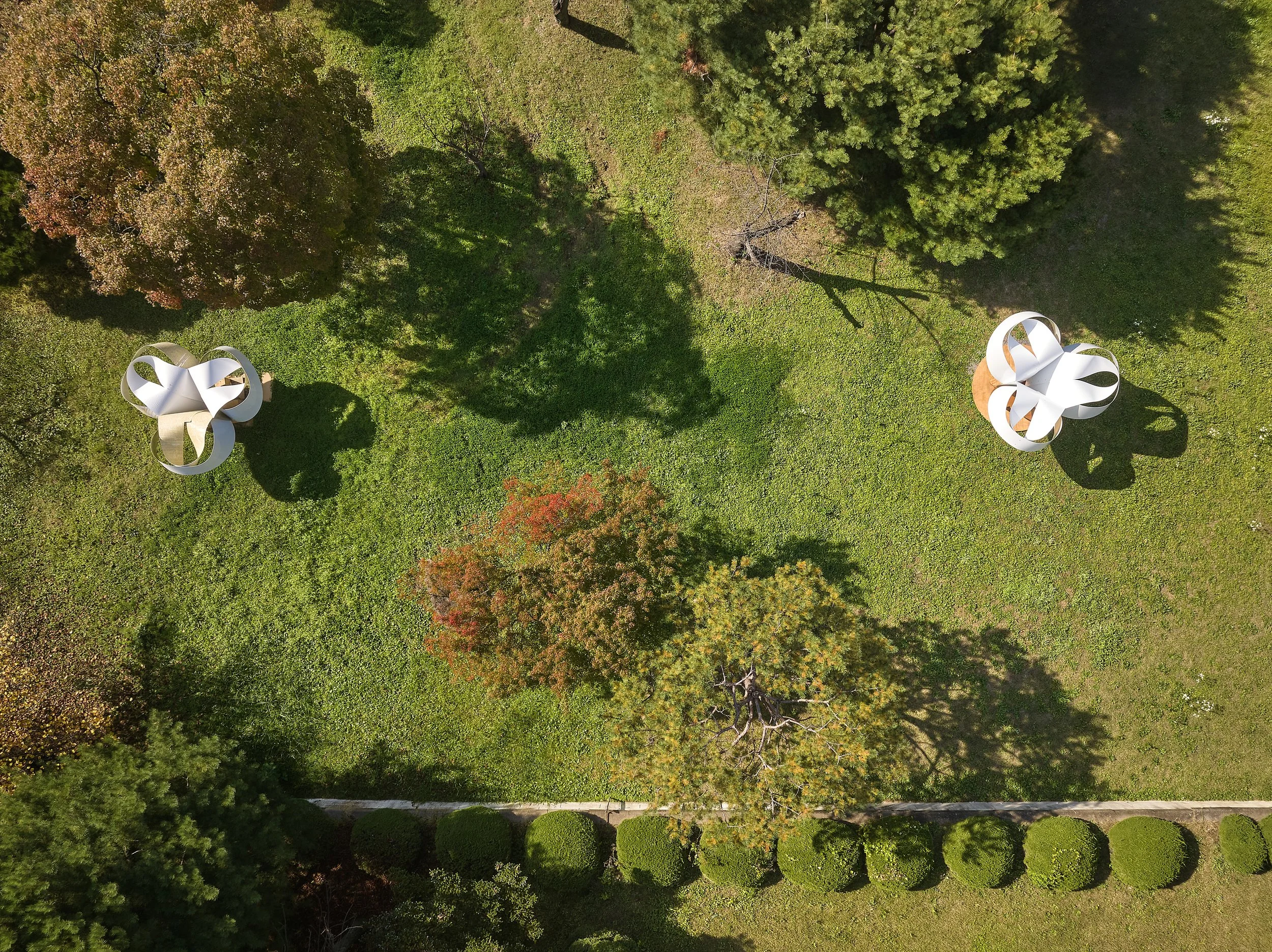
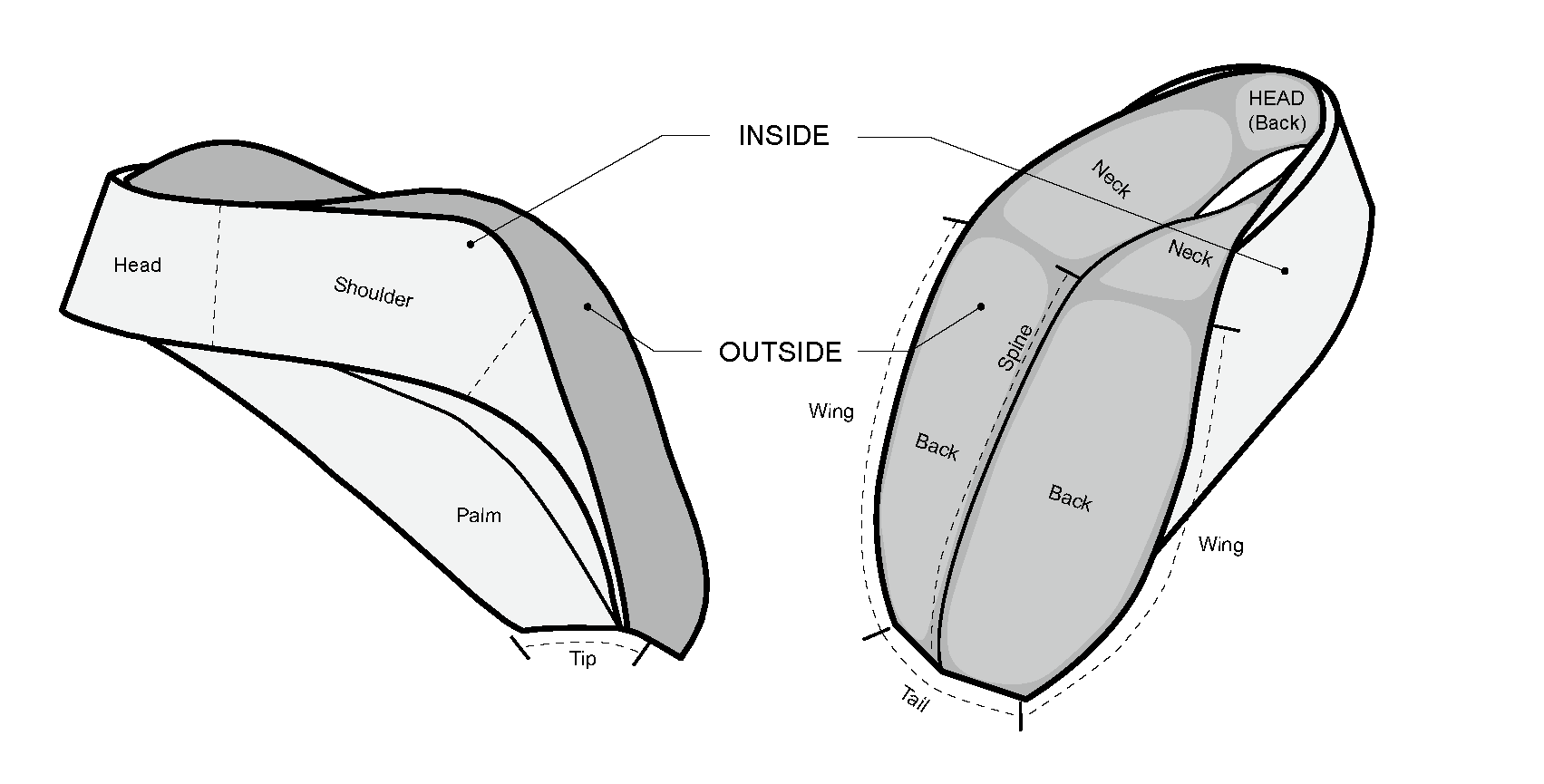
This study explores the architectural application of active elasticity in continuous-fiber composite materials through a Bending-Active Research Pavilion using AXIA LiteTex. Rather than designing a pavilion as a fixed sculptural object, the research develops a process in which flat composite sheets are cut, bent, connected, simulated, and fabricated into a lightweight three-dimensional structure.

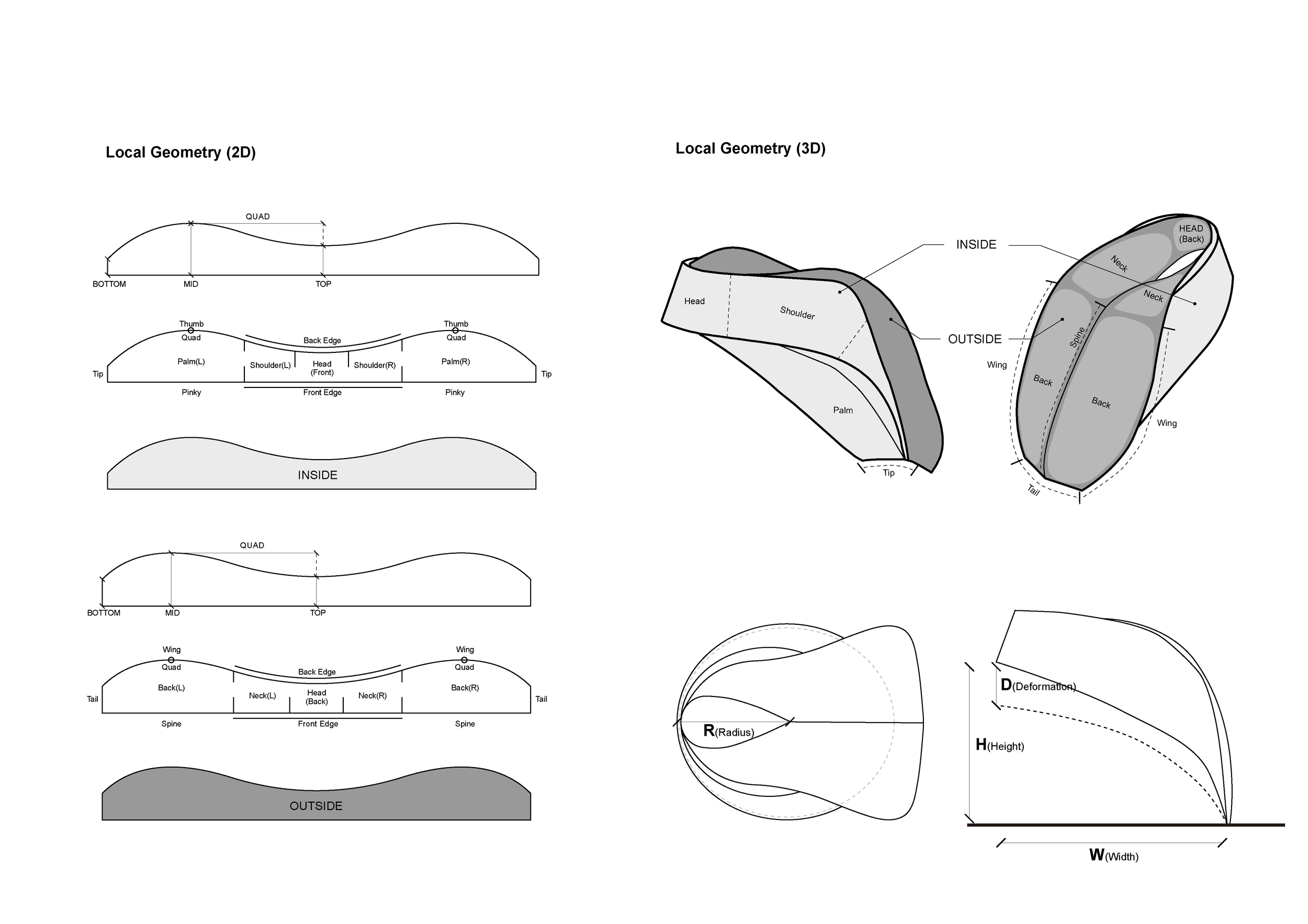
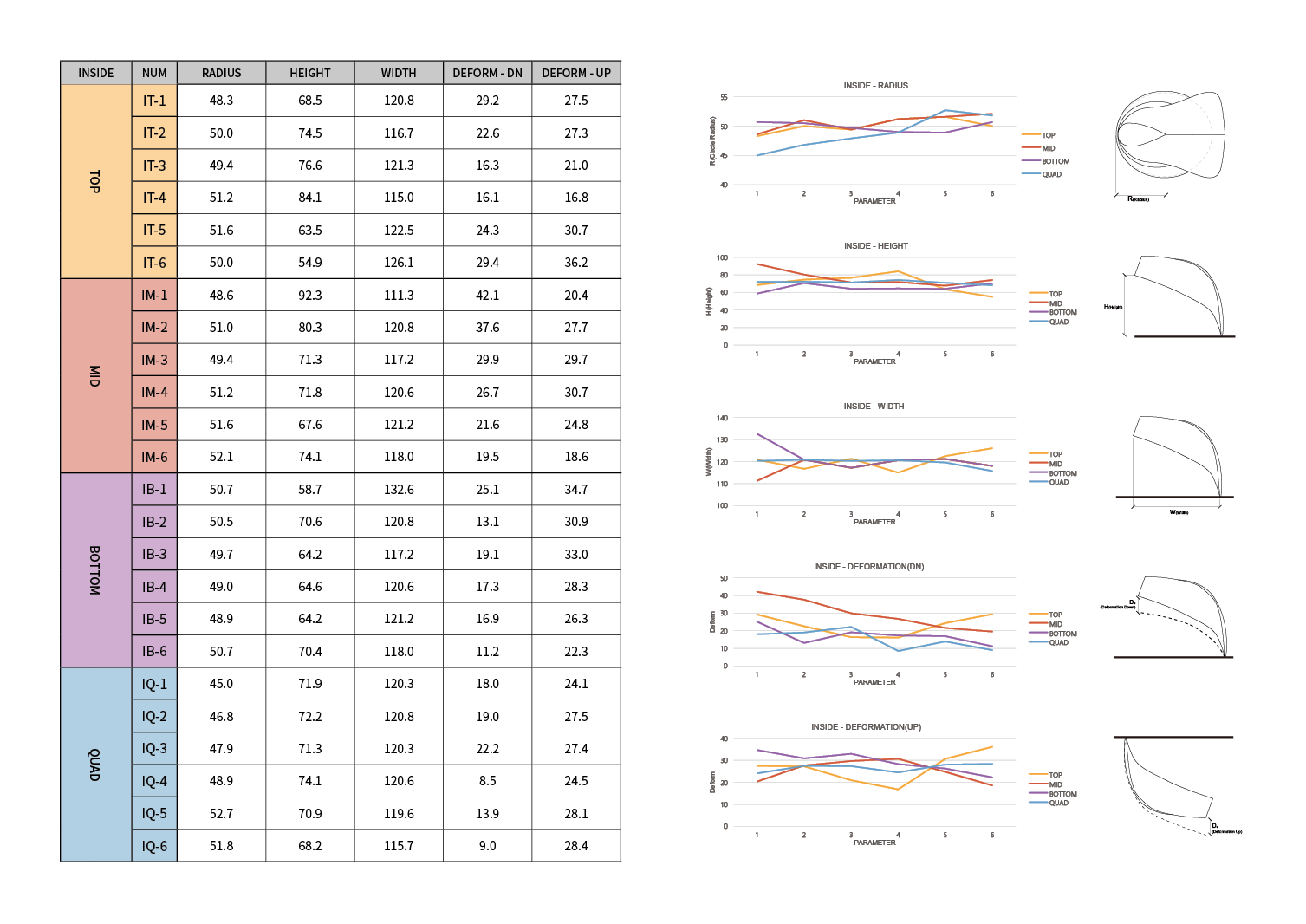
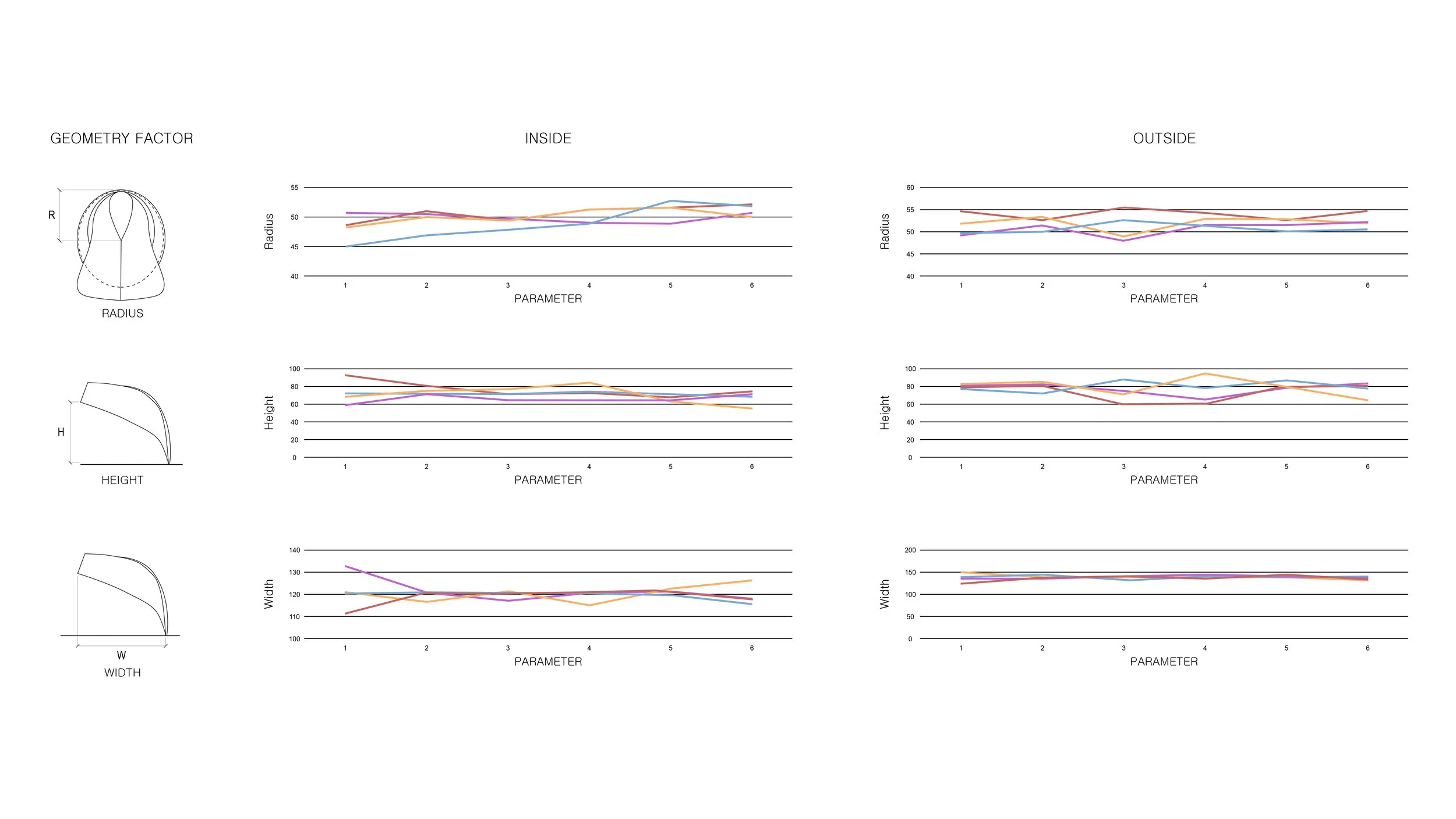
The research is organized into seven phases: local geometry tests, multi-parameter tests, global geometry combinations, LiteTex material tests, digital simulations, fabrication-detail studies, and final fabrication process review. In the early phases, planar parameters such as Top, Mid, Bottom, and Quad are tested to understand how two-dimensional sheets transform into three-dimensional bending-active geometries. The study identifies the Quad relationship between the inside and outside strips as a major factor affecting radius, height, width, and deformation.

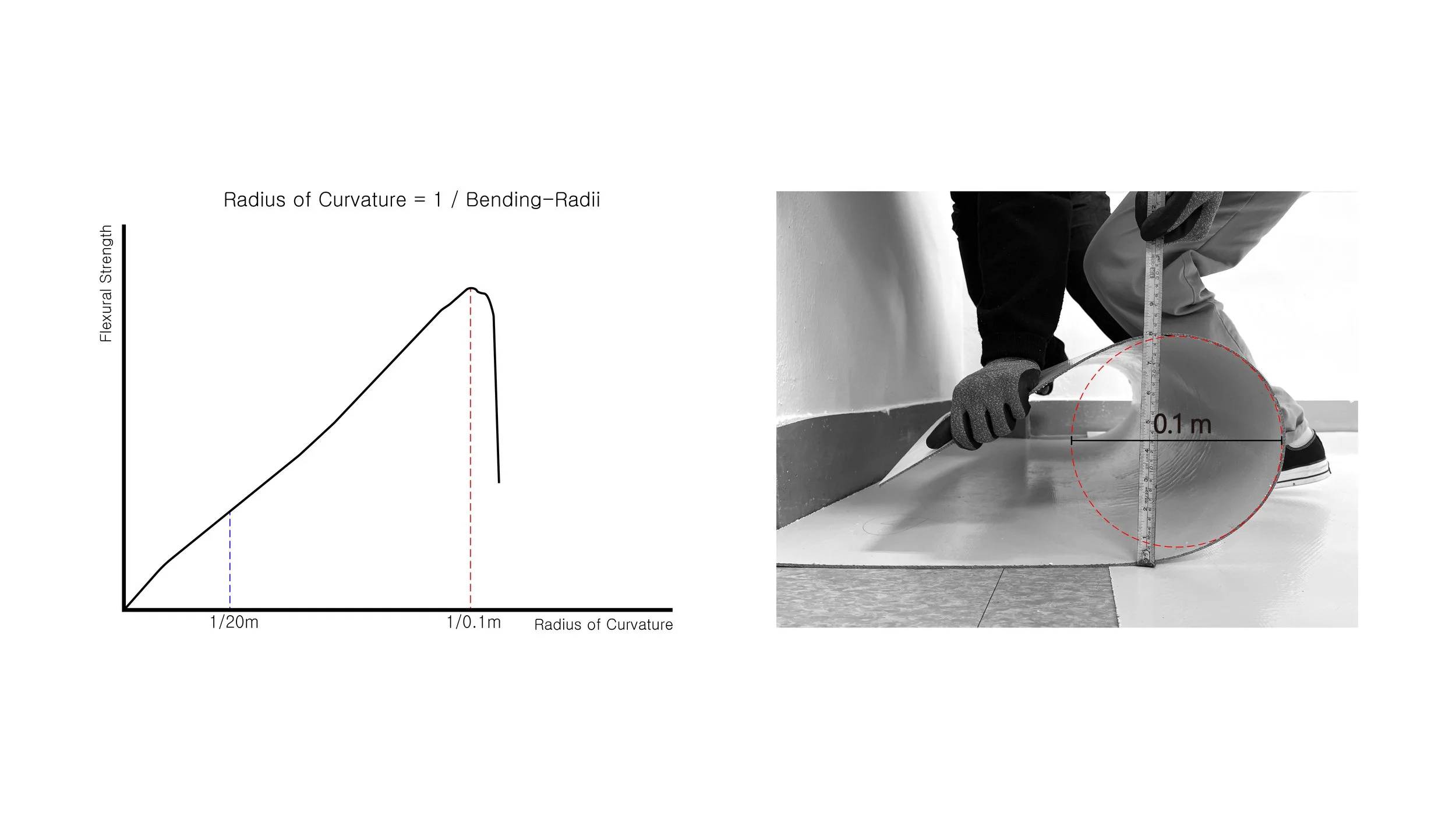
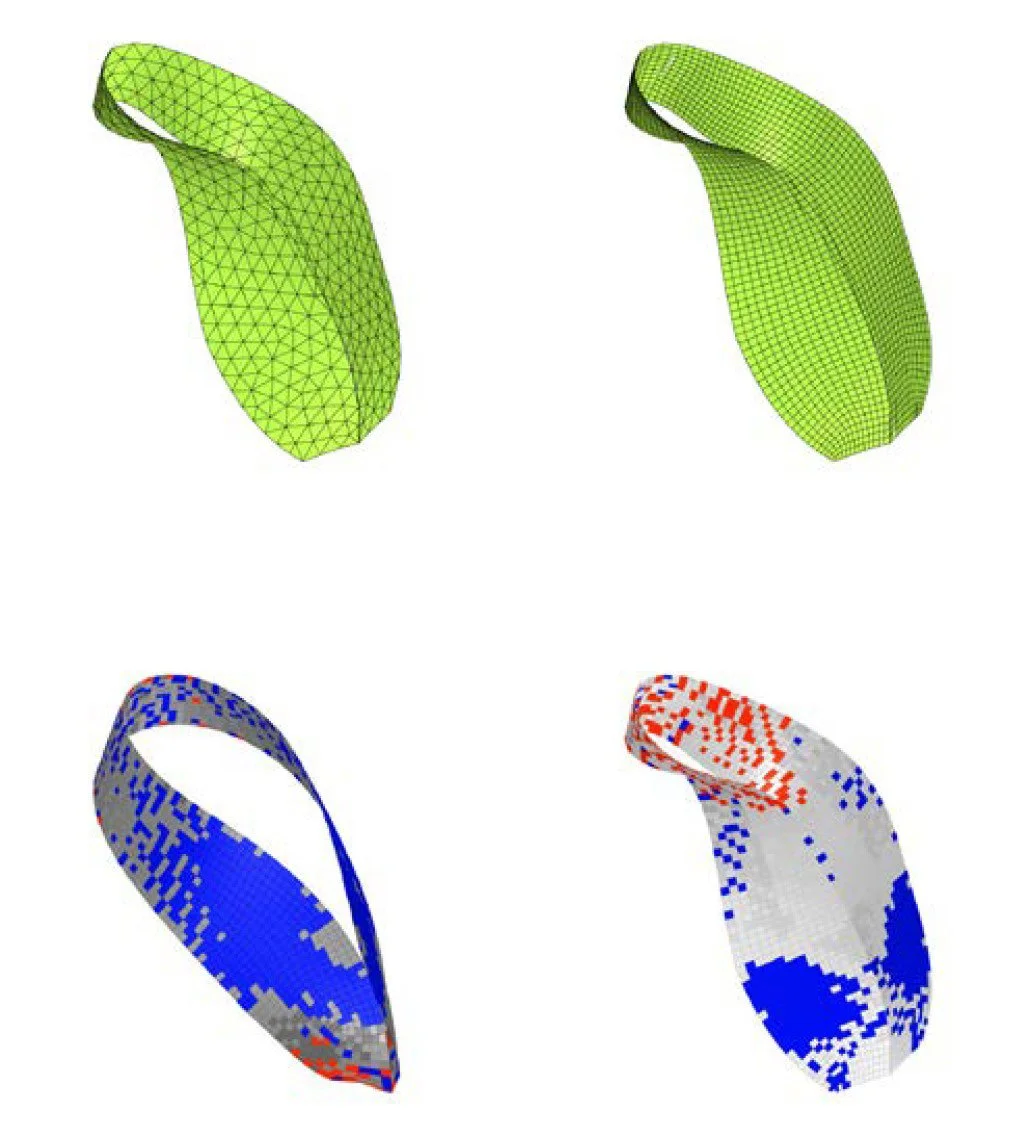
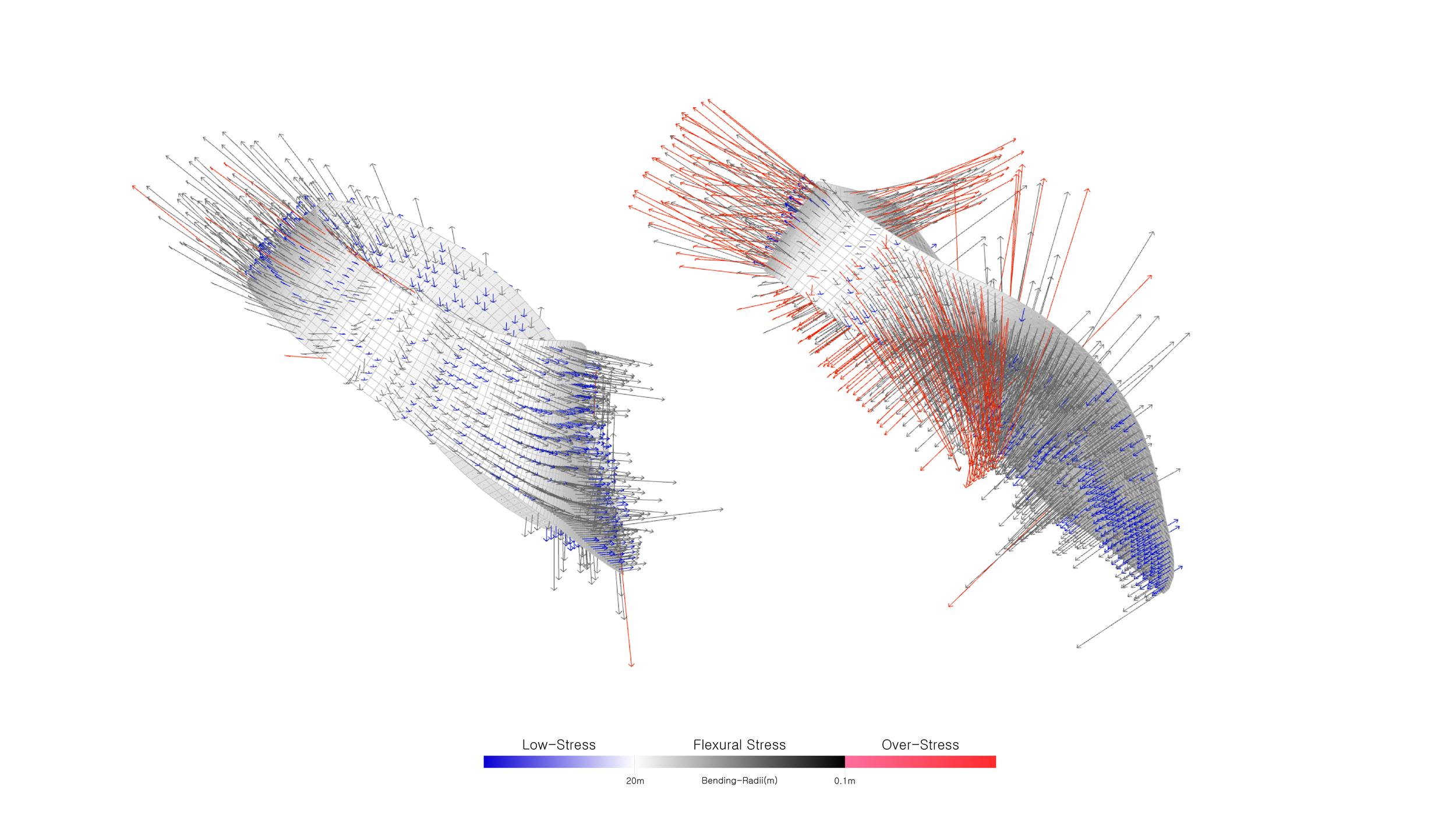
Based on these tests, selected global geometries are further examined using LiteTex 2-ply, 3-ply, and 4-ply models to evaluate self-weight, deformation strength, bending radii, and structural feasibility. The study then integrates Kangaroo-based form-finding, Mesh Curvature and Vector/Sphere simulations for bending-radius analysis, Karamba3D shell displacement analysis, and 3D scanning-based digital twin methods for site installation planning.

The later phases focus on fabrication details, including joinery systems, edge cladding, foundation and anchoring strategies, and surface pattern studies. Overall, this research is significant because it connects material behavior, geometric logic, digital simulation, and full-scale fabrication into one integrated architectural workflow.


Year : 2024

Type : Pavilion

Status : Completed

Project Team : I.f Convergence Design Lab

Principal Researcher : Seungil Kim, Gwangeun Hwang

Project Assistant : Dongheon Lee, Jinsan Ryu (DAKHU)

Supported by : AXIA Materials, Kolon Global


Related Project

S:PROUT

Architecture with Flexible Materials: Discovering New Possibilities

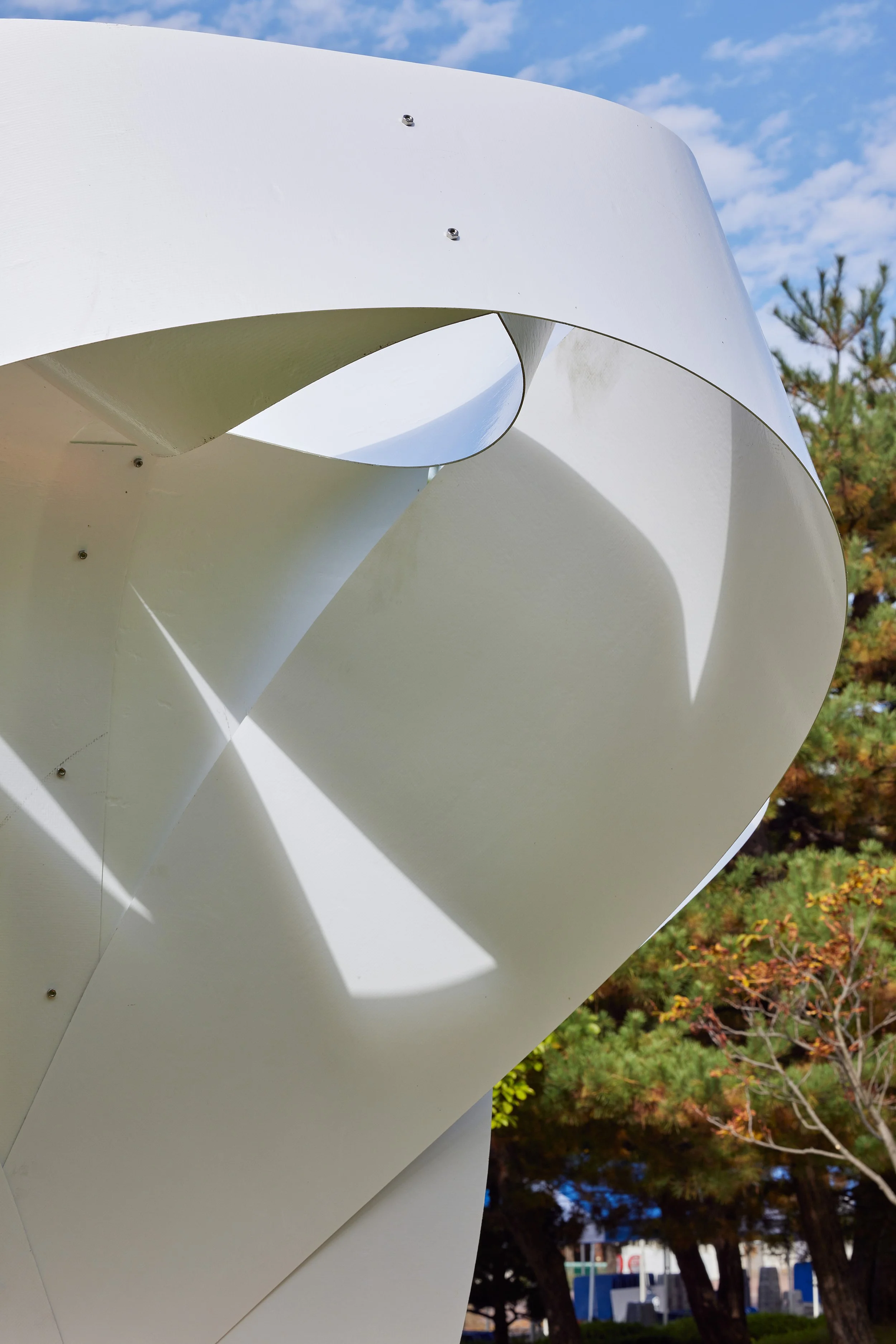
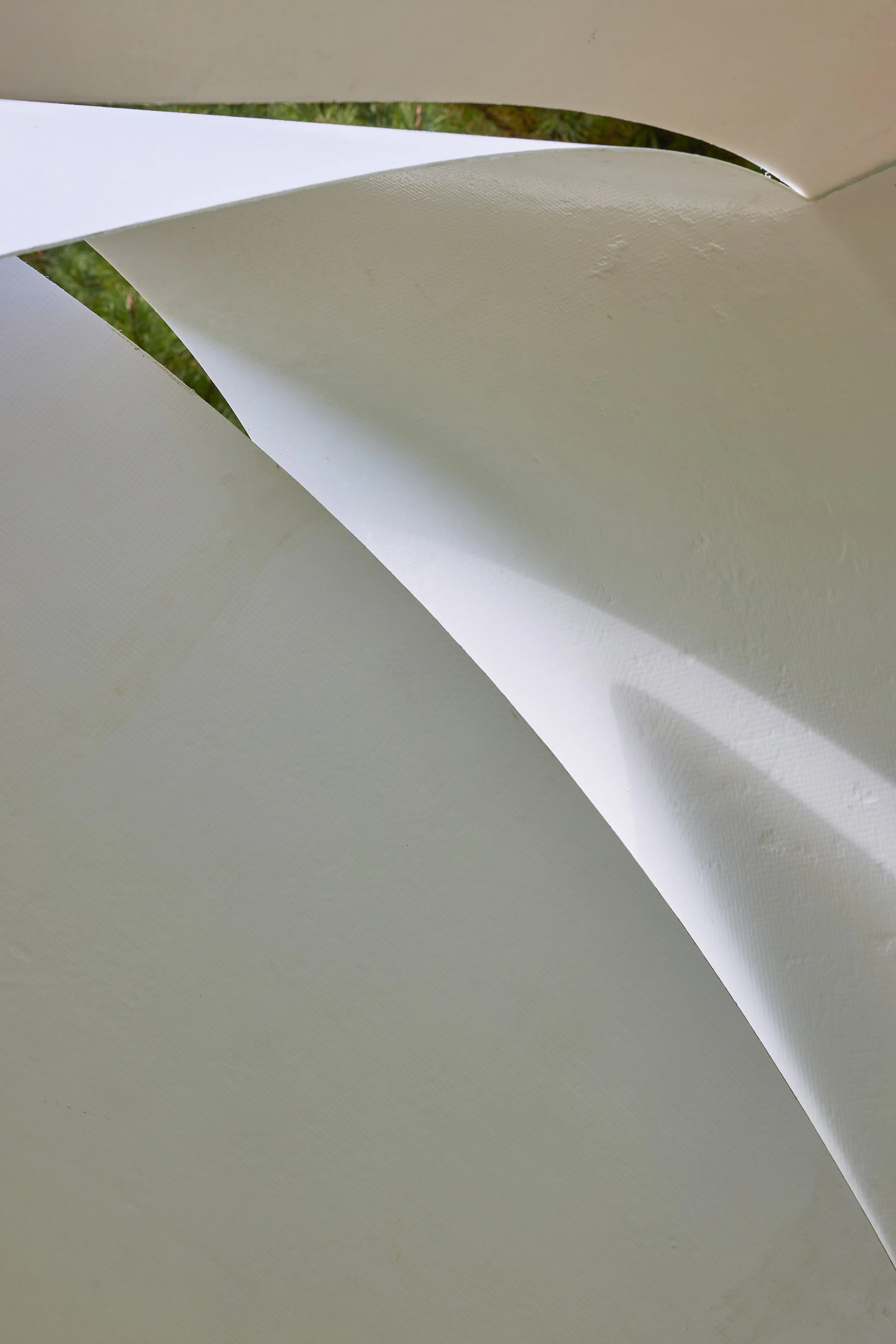
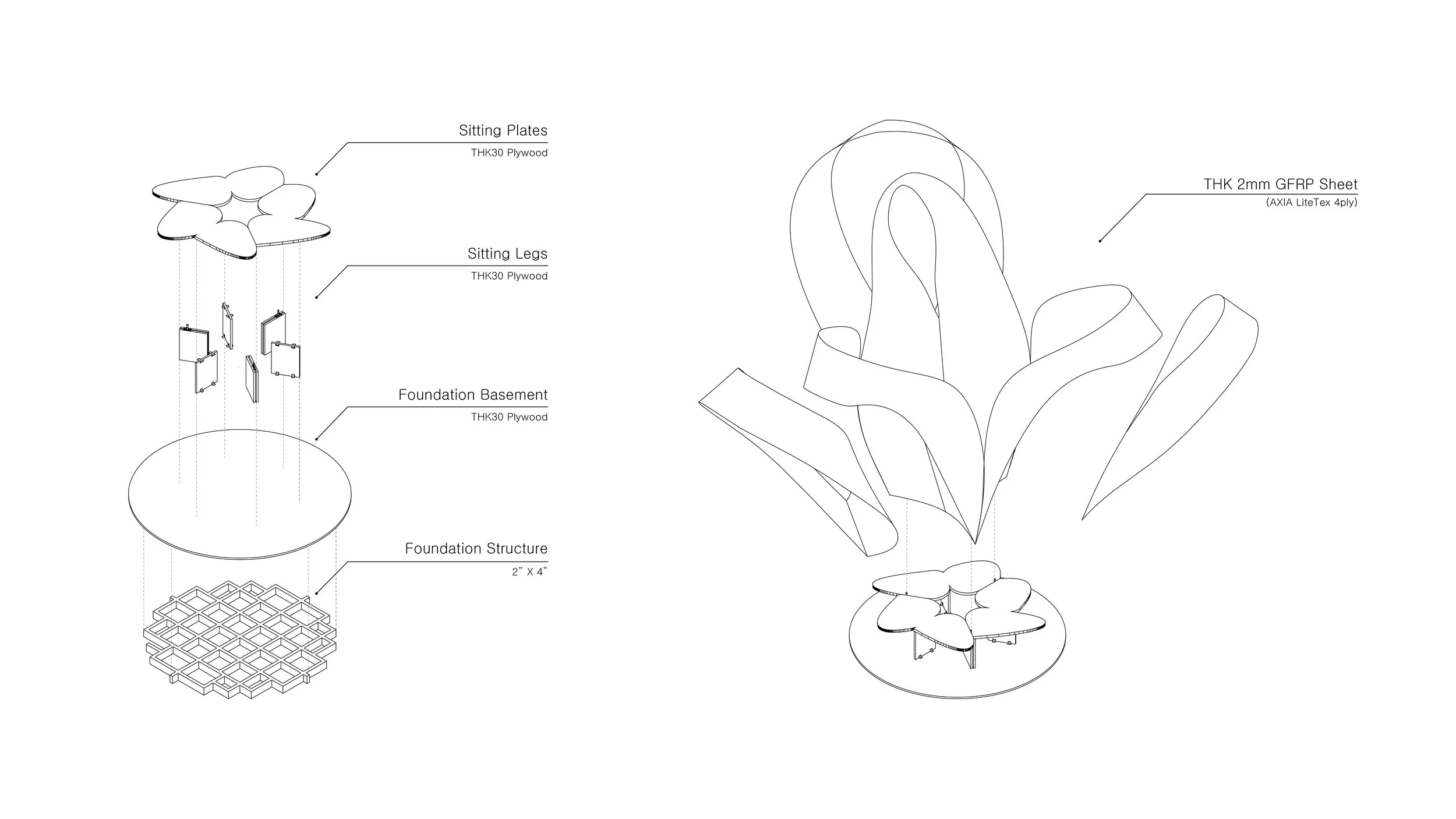
Flexible materials stimulate architectural creativity through their inherent physical properties and capacity for transformation. In traditional vernacular architecture, materials such as bamboo and earth have been utilized to create adaptive, flexible structures that respond to local environmental conditions and needs. Contemporary architecture reinterprets this flexibility by experimenting with high-performance composite materials. LiteTex, the material used in this project, is a continuous fiber composite that begins as a flat sheet and holds potential for transformation into three-dimensional forms. This material simultaneously offers elasticity and rigidity, maximizing portability and storage while enabling the creation of complex structures on-site. By applying two-dimensional patterning techniques from the garment industry, this approach enables the transformation of flexible, flat materials into three-dimensional forms, simplifying the fabrication process and ensuring cost-effectiveness. LiteTex represents more than a material experiment; it expands the possibilities of architectural design. This material is not only suitable for spatial requirements such as movable structures, temporary buildings, and pavilions, but it is also recognized for its environmental sustainability.

Designing Change: Process-Oriented Design and Fabrication

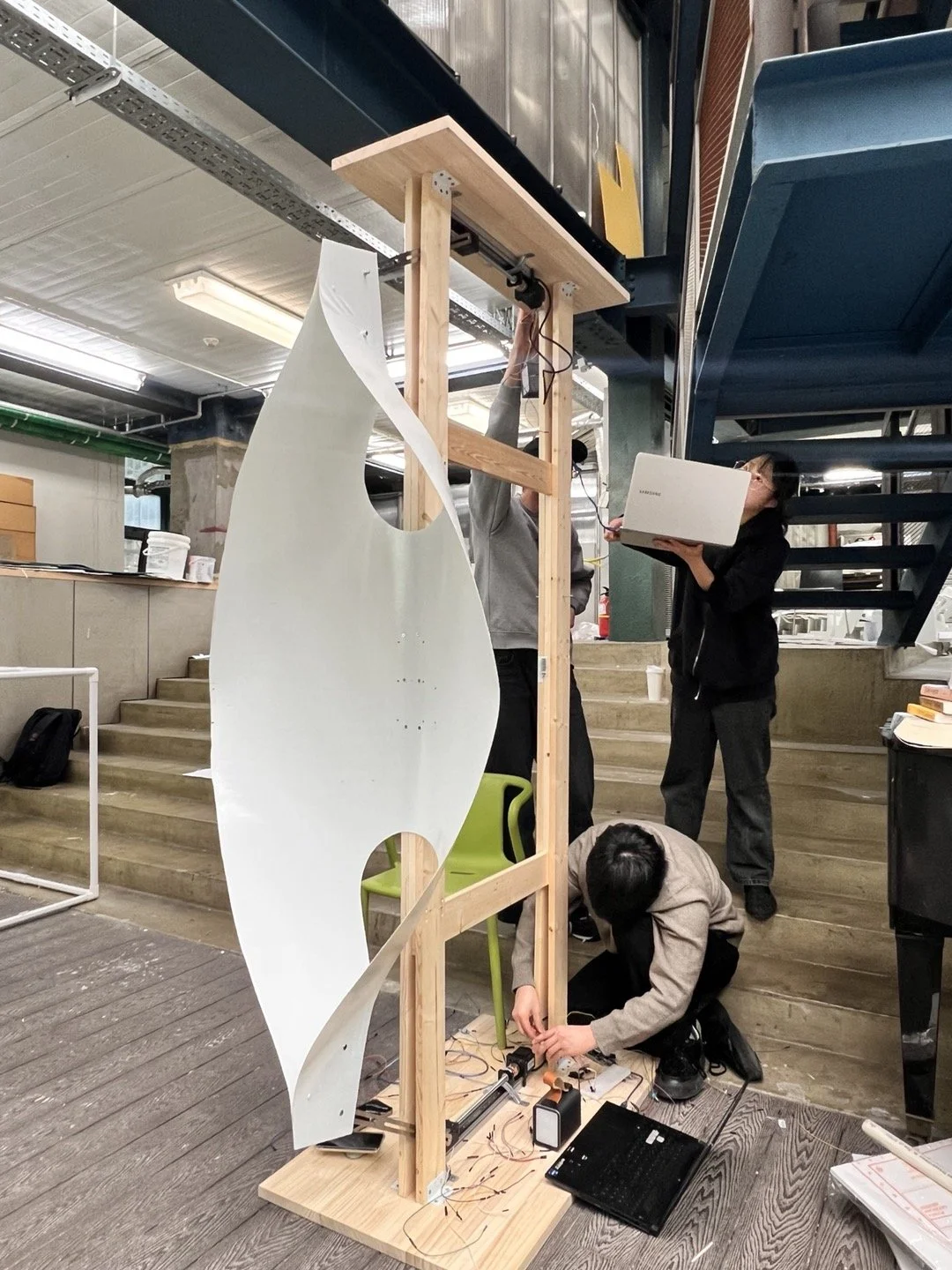
Designing change involves more than the creation of a final product; it requires the integration of the entire process by which that product is realized. This project focuses on the research of the design and fabrication process, investigating the physical properties and limitations of flexible materials through the integration of digital technologies and physical experimentation. The design process is divided into three distinct phases. The first phase involves basic form experiments using scale models to analyze the relationships between the material’s physical properties and the design variables. The second phase combines digital simulations with physical testing to assess the material’s behavior in real-world conditions. Finally, full-scale mock-ups are constructed to identify potential issues in the assembly process and derive solutions. By considering factors such as the material’s bending radius, self-weight, and assembly sequence from the early design stages, it is possible to achieve not only three-dimensional forms but also structural stability and spatial efficiency. This approach enhances the overall quality of the final product while minimizing errors during fabrication.

Integration with Digital Technology: Employing New Design Tools

Digital technology plays an essential role in effectively integrating the design and fabrication processes. In this project, a digital twin was constructed to measure the gap between the virtual model and physical reality, allowing for simulations of changes throughout the entire design and fabrication phases. Digital simulations were utilized as a tool to validate the design’s efficiency before creating physical mockups. Factors such as bending strength and deformation limits were analyzed in advance, enabling the identification of potential errors prior to fabrication. These simulations facilitated collaboration among architects, engineers, and material specialists, and helped integrate data from multiple disciplines. Physical experiments served to verify the outcomes of digital designs and test the performance and assembly feasibility of the materials. The complementary relationship between digital simulations and physical testing improved the reliability of the design and further extended the potential of new materials and technologies.


Year : 2024

Location : Yongin, Korea

Status : Installation

Size : 0.957 ㎡

Height : 2.87m

Material : LiteTex 5ply (AXIA Materials), Plywood

Structure : Bending-Active Composite Structure

Project Team : I.f Convergence Design Lab + Center for Ai & Architecture (Ai+A) (Prof. Dongil Kim)

Principal Researcher : Seungil Kim, Gwangeun Hwang

Project Assistant : Dongheon Lee, Jinsan Ryu, Isaac Kang, Yeonhee Kim, Hyeongtai Kim, Ro-un Yi (DAKHU)

With the Support of : Seojoo Lee, Hyojung Kim (I.f)
Collaboration : I.f Architecture & Research, AXIA Materials, Kolon Global, EFFECTOR, V.P.Lab

Photography : Kyung Roh


Related Project

Related Research

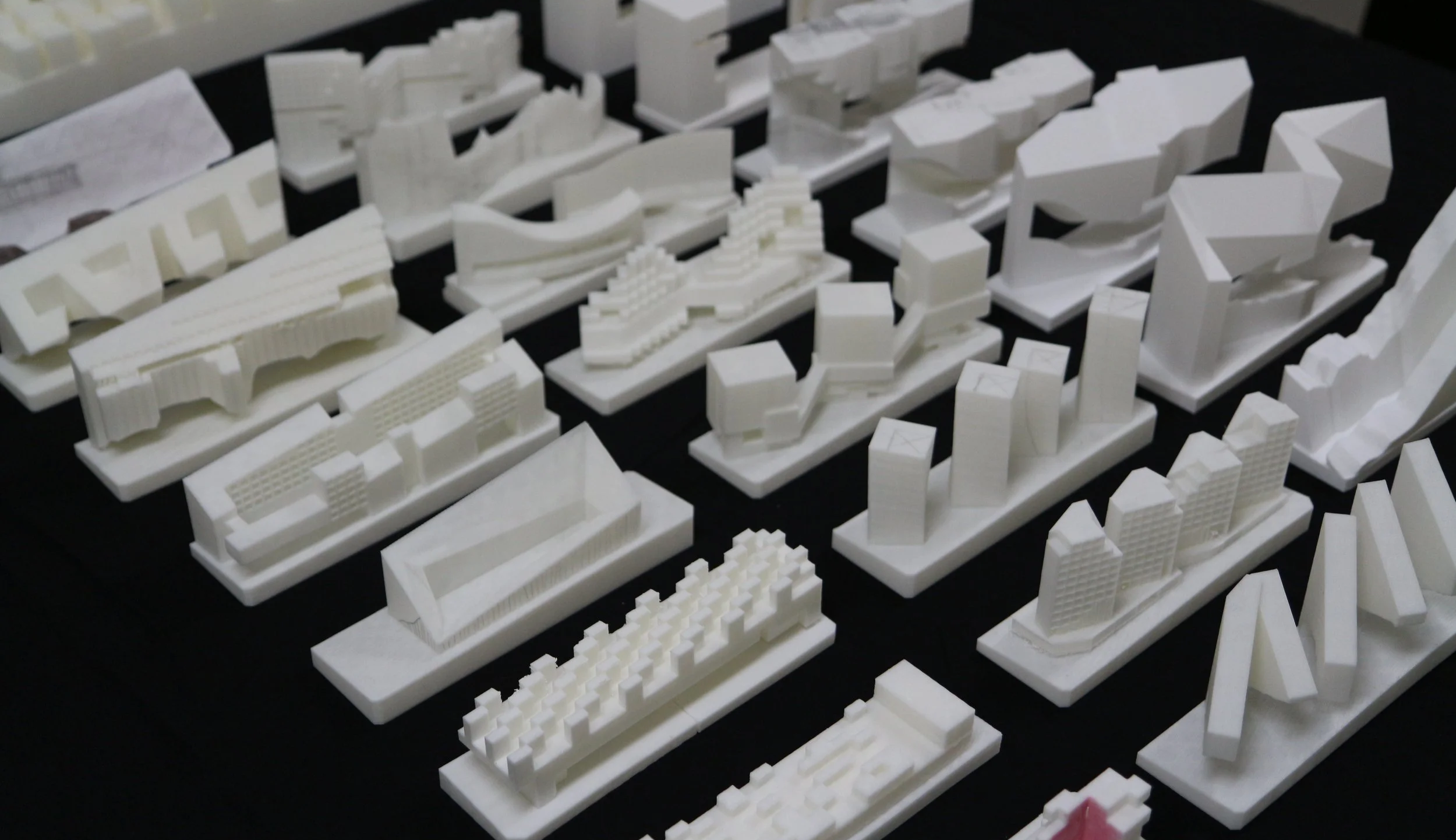
Energy and Form


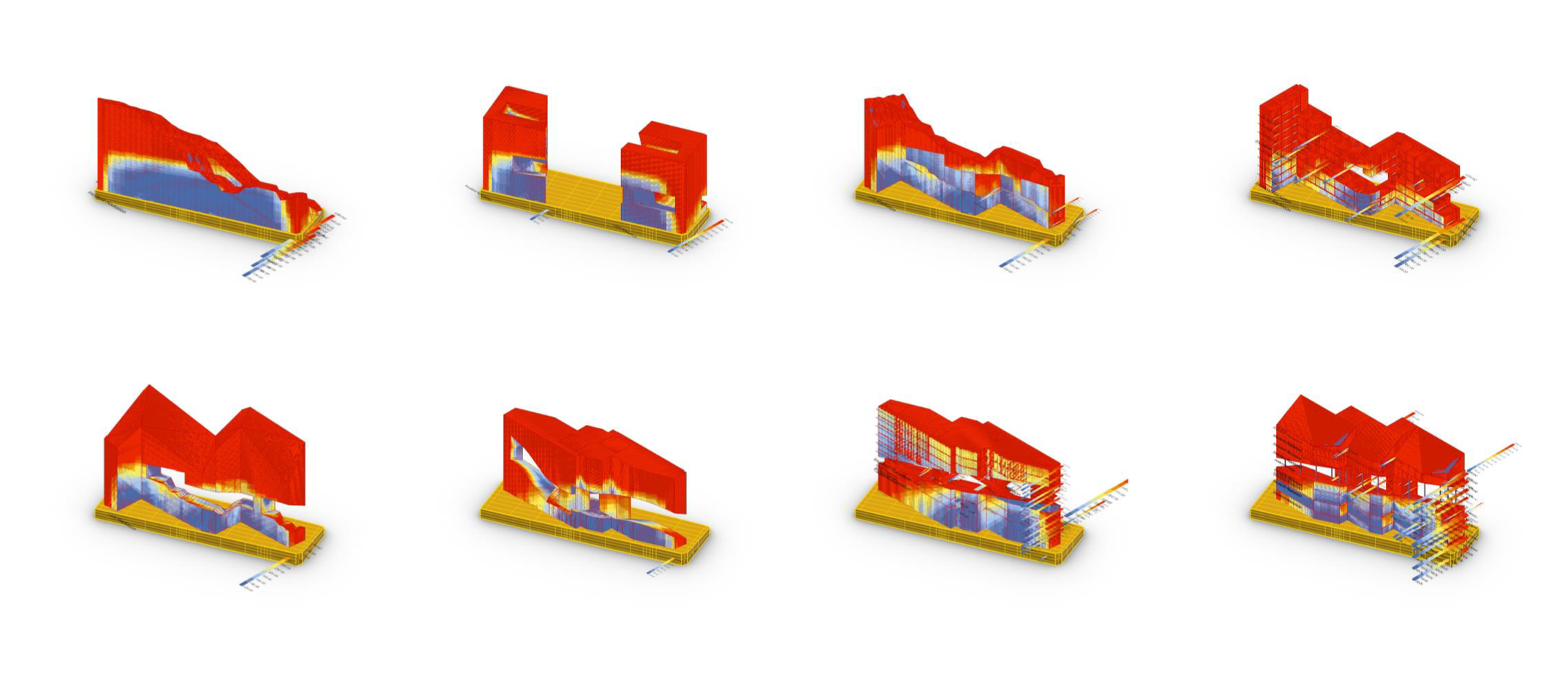
This course aims to investigate the continuing advancement of computational processes in architecture in practice. The topics are presented as both a technical and intellectual exploration of formal, spatial, construction, and ecological potentials. The primary role of the workshop is the theoretical and practical development of generative computational design processes during both the conceptual design and construction phases, allowing for the integral use of computer-controlled manufacturing processes in this design system.

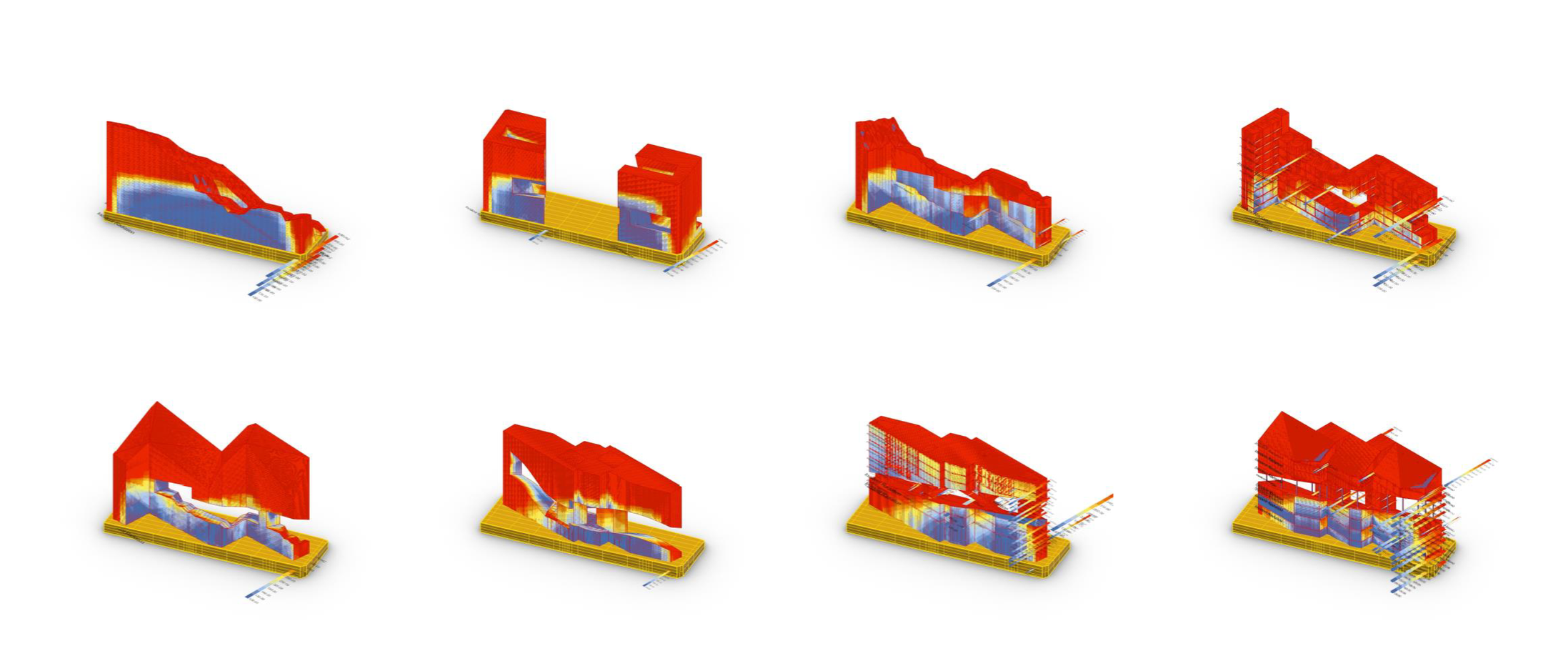
The latter part of this course is critically review computational design towards a more challenging and self-demanding commitment to physical and environmental constraints as a fabrication stage. The first half of the course integrates theory and practical exercises on the relationship between architecture, the environment, and environmental data-driven form-finding optimization in the digital environment. In the latter part of the course, students apply this knowledge to design on actual sites and progress with facade-related design through simulation and physical model fabrication.


Related Research


Year : 2024

Project Director : Dongil Kim (I.f CDL / KHU)

Student : Kim Taewon, Saddiq Ur Rehman, Emilie Sayag / Syed Haseeb Shah, Kim DongYoung, Yang Yupeng / Kim Seungil, Lee Dongheon, Hwang Gwangeun / Kim Taehyeon, Ryu Jinsan, Han Jongpyo

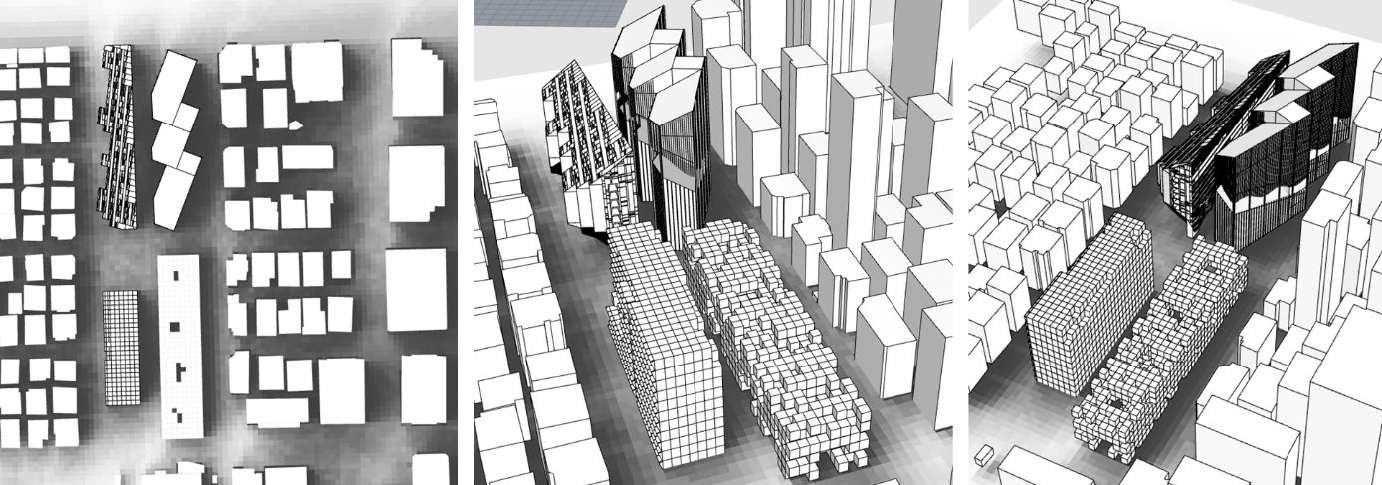
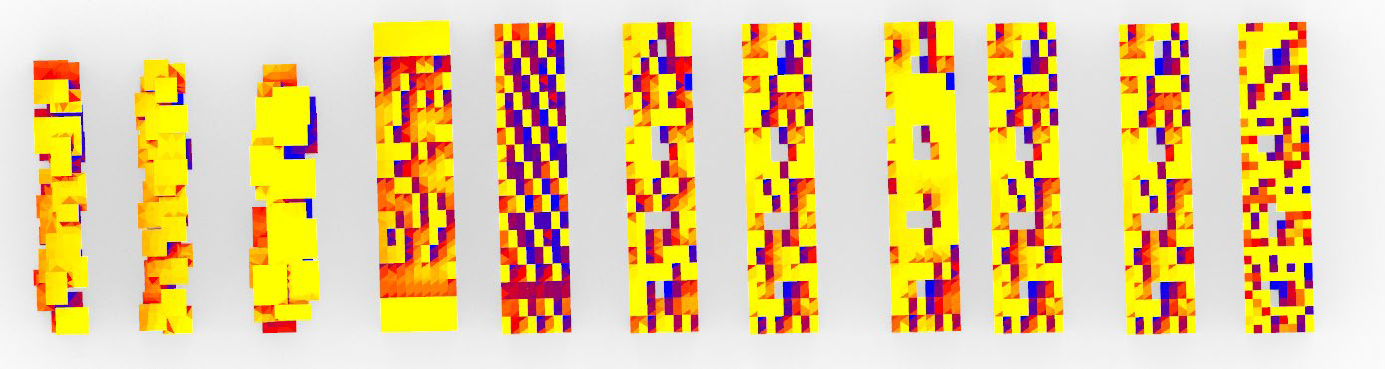
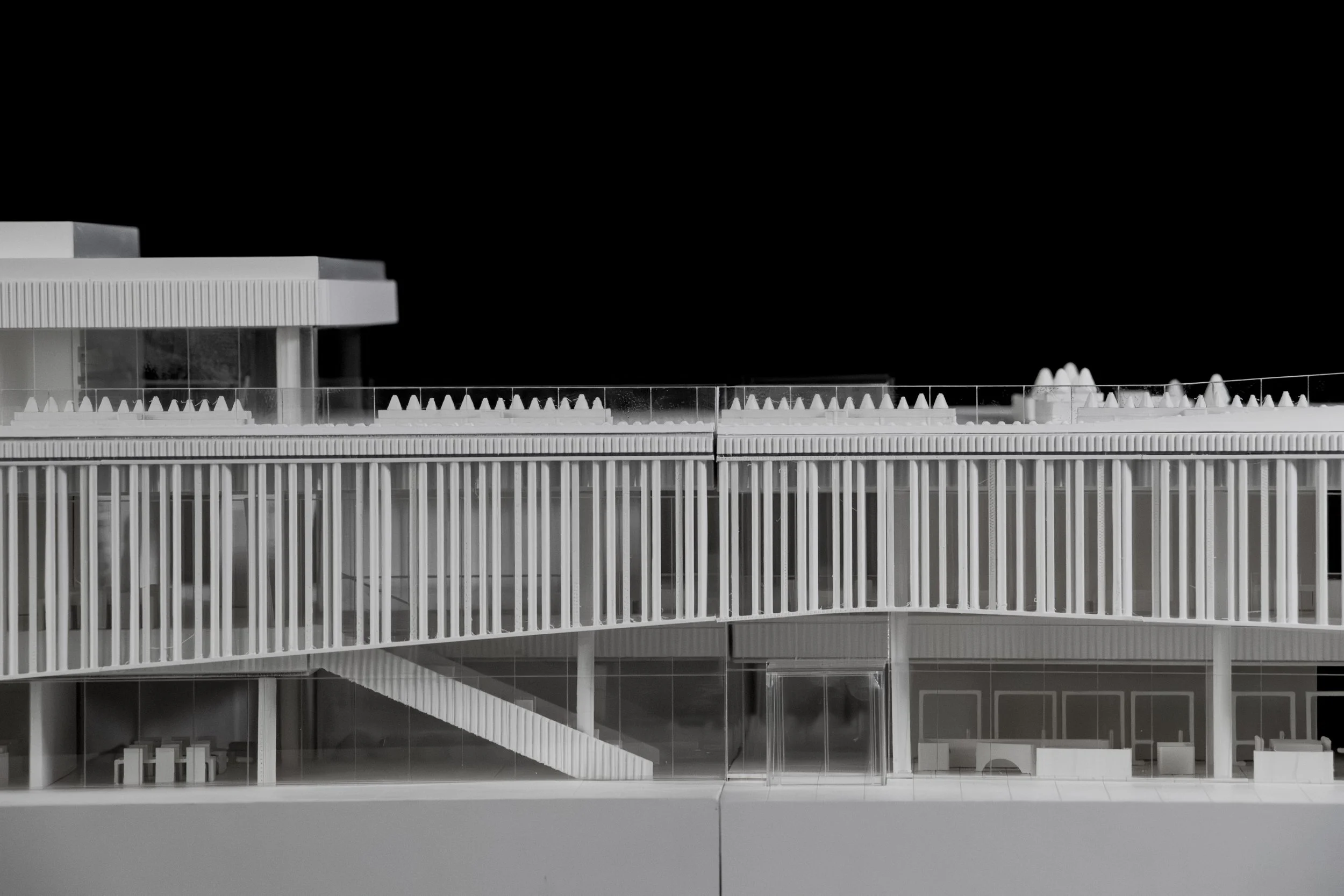
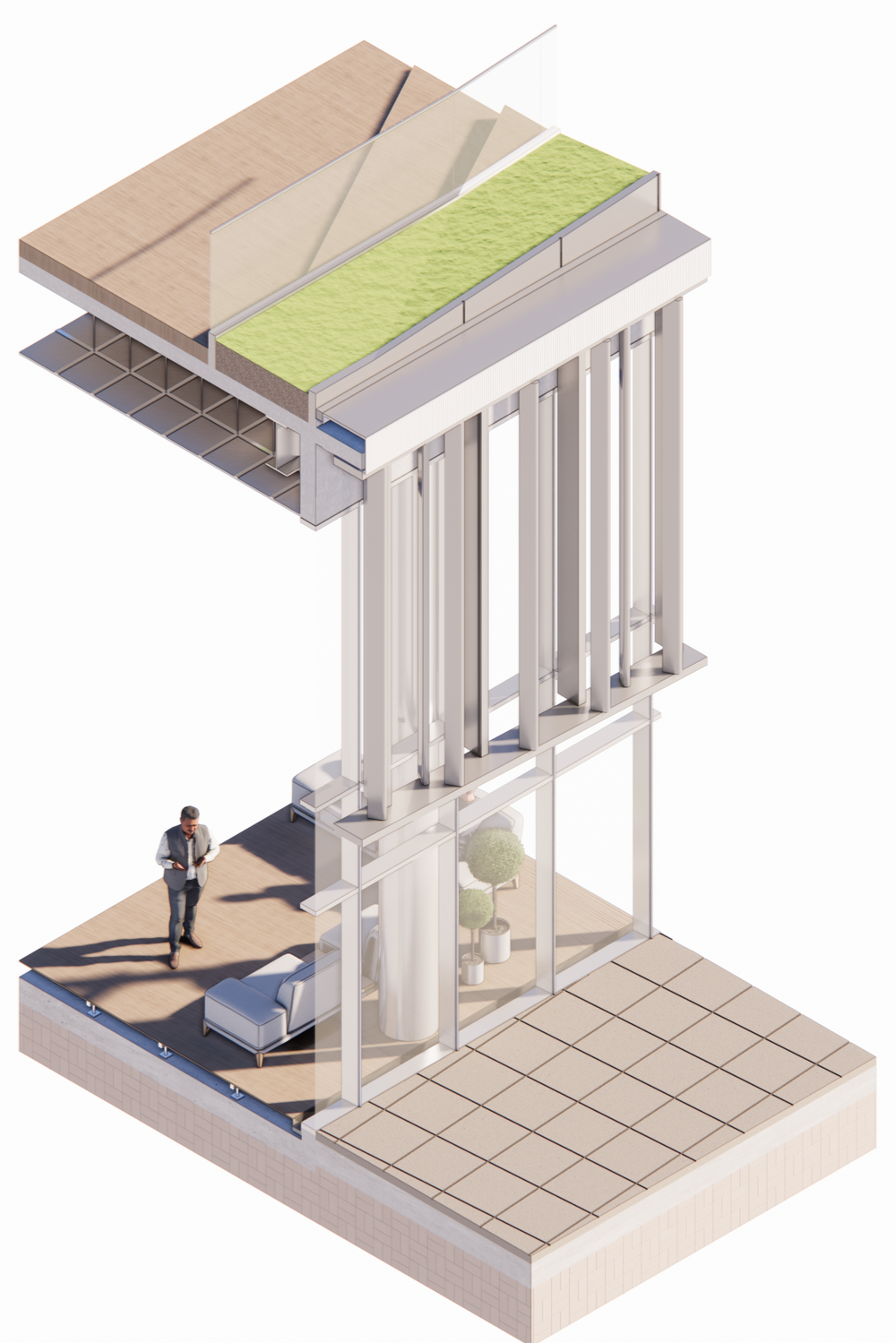
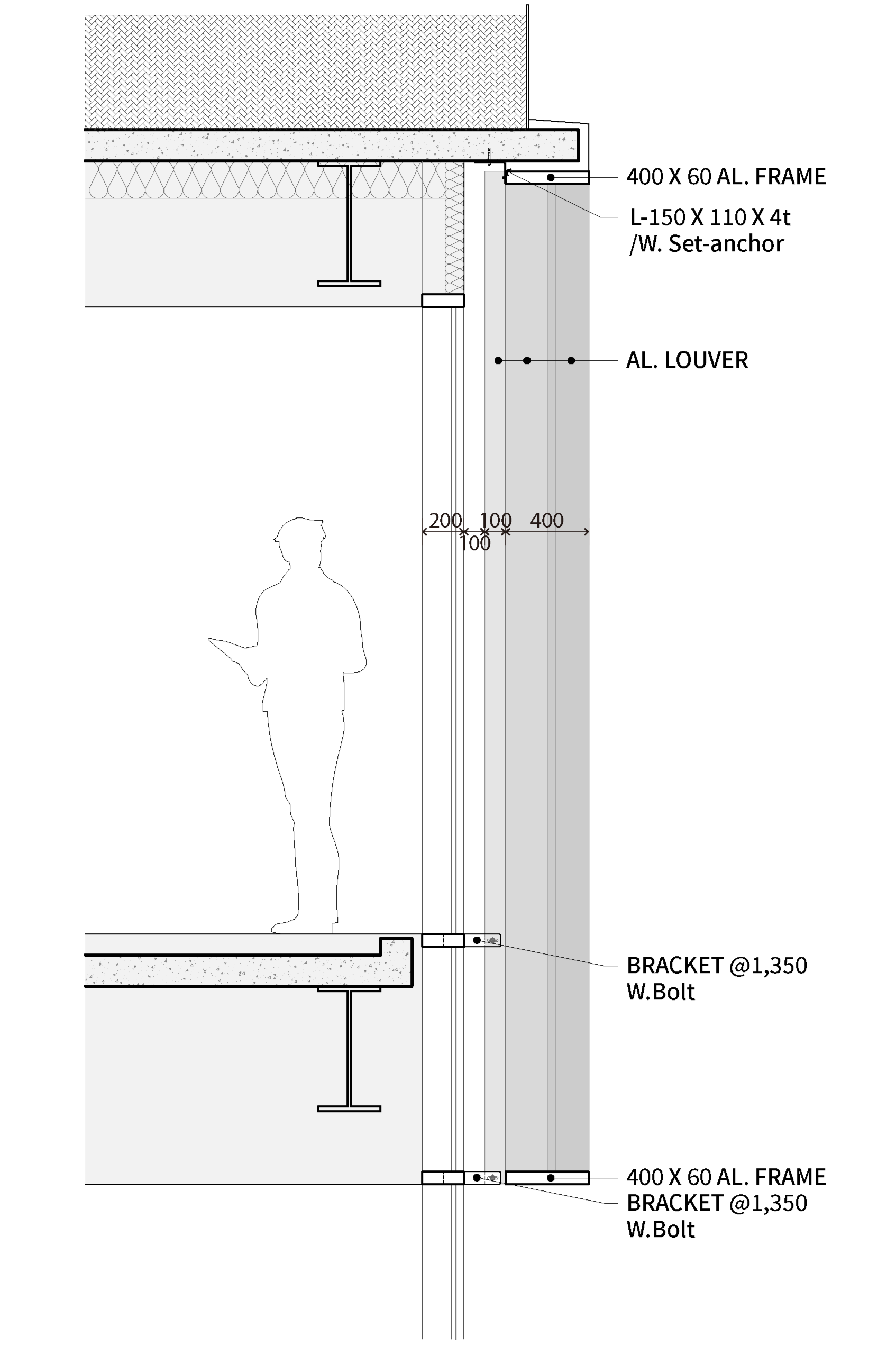
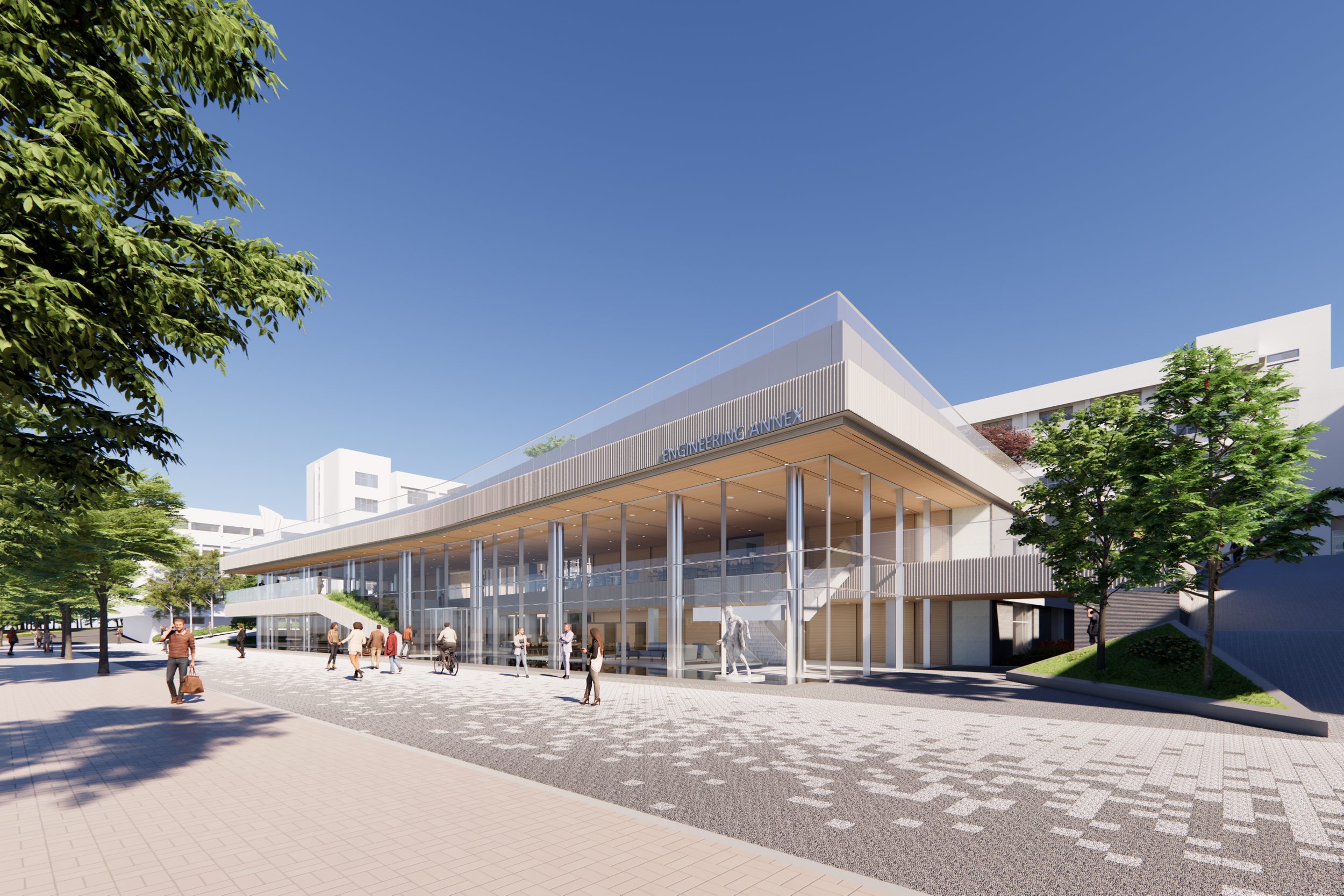
Annex Louver Optimization


The design of the new annex for the College of Engineering at Kyung Hee University is a thoughtful response to both the legacy of the existing Engineering Hall and the evolving needs of the university community. Originally constructed in the 1980s as the first building on the International Campus, the existing Engineering Hall is characterized by its U-shaped layout and the central sloped courtyard that has long served as an open space for leisure, relaxation, and interaction among students and faculty. The new annex aims to respect and enhance this historical context while introducing cutting-edge, interdisciplinary research and educational facilities. The design takes into account the sloped lawn, a significant part of the campus landscape, by integrating it into the new structure as an active and versatile courtyard. This space not only preserves the original function of the area as a communal gathering place but also reinterprets it to accommodate modern needs.

In planning the annex, careful consideration was given to maintaining harmony with the existing Engineering Hall. The new structure addresses the height difference between the front and rear of the site, creating a seamless connection that enhances the overall campus experience. The annex is conceived as a symbol of the university’s commitment to innovation, serving as a bridge between tradition and the future of education and research.


Related Project


Year: 2024

Location : Yongin, Korea

Size : 3,348 m²

Status : Proposal

Type : Building Skin

Project Director :

Dongil Kim (I.f CDL)

Principal Researcher

Seungil Kim, Gwangeun Hwang (I.f CDL)

Suseo Library

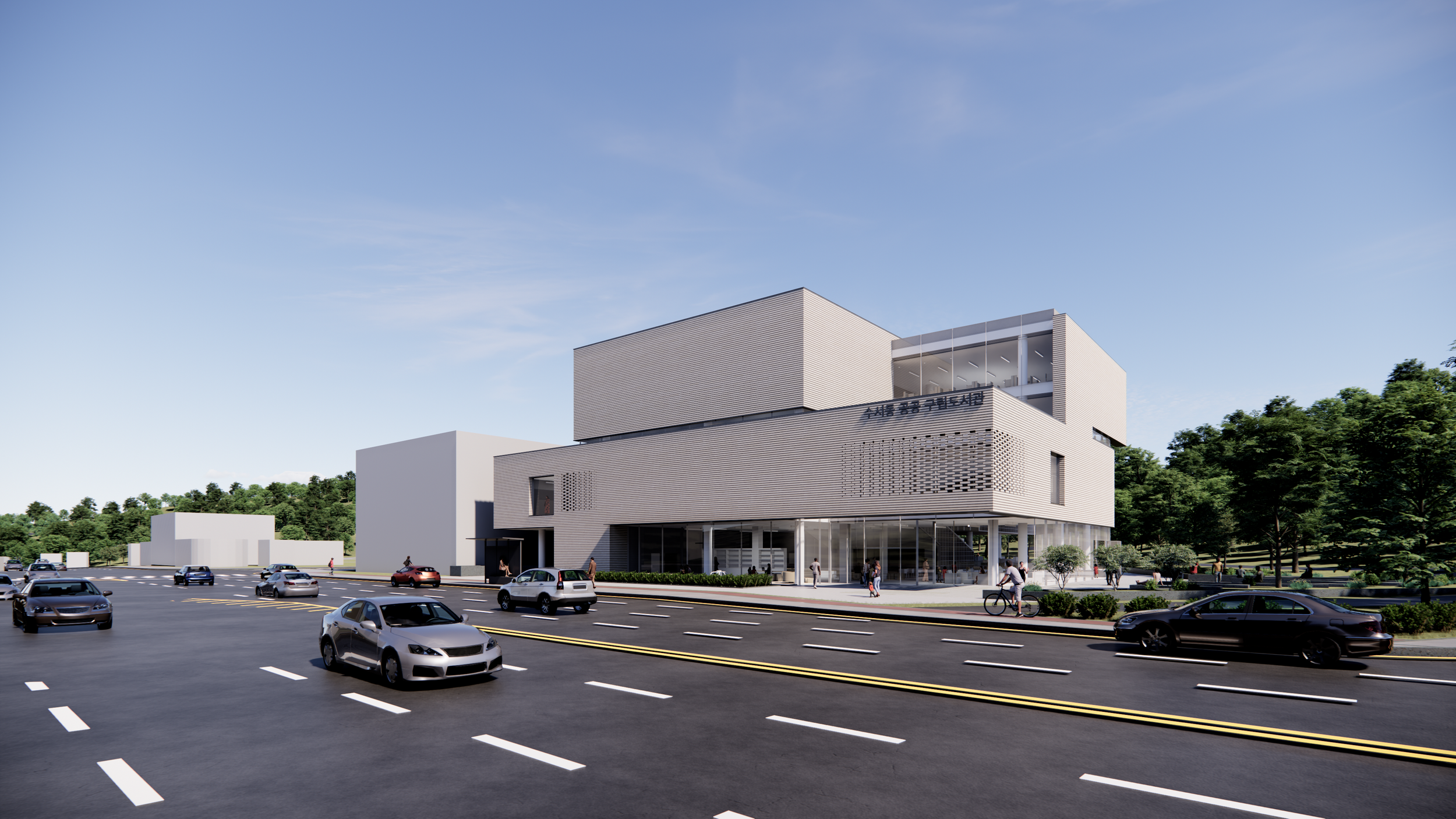
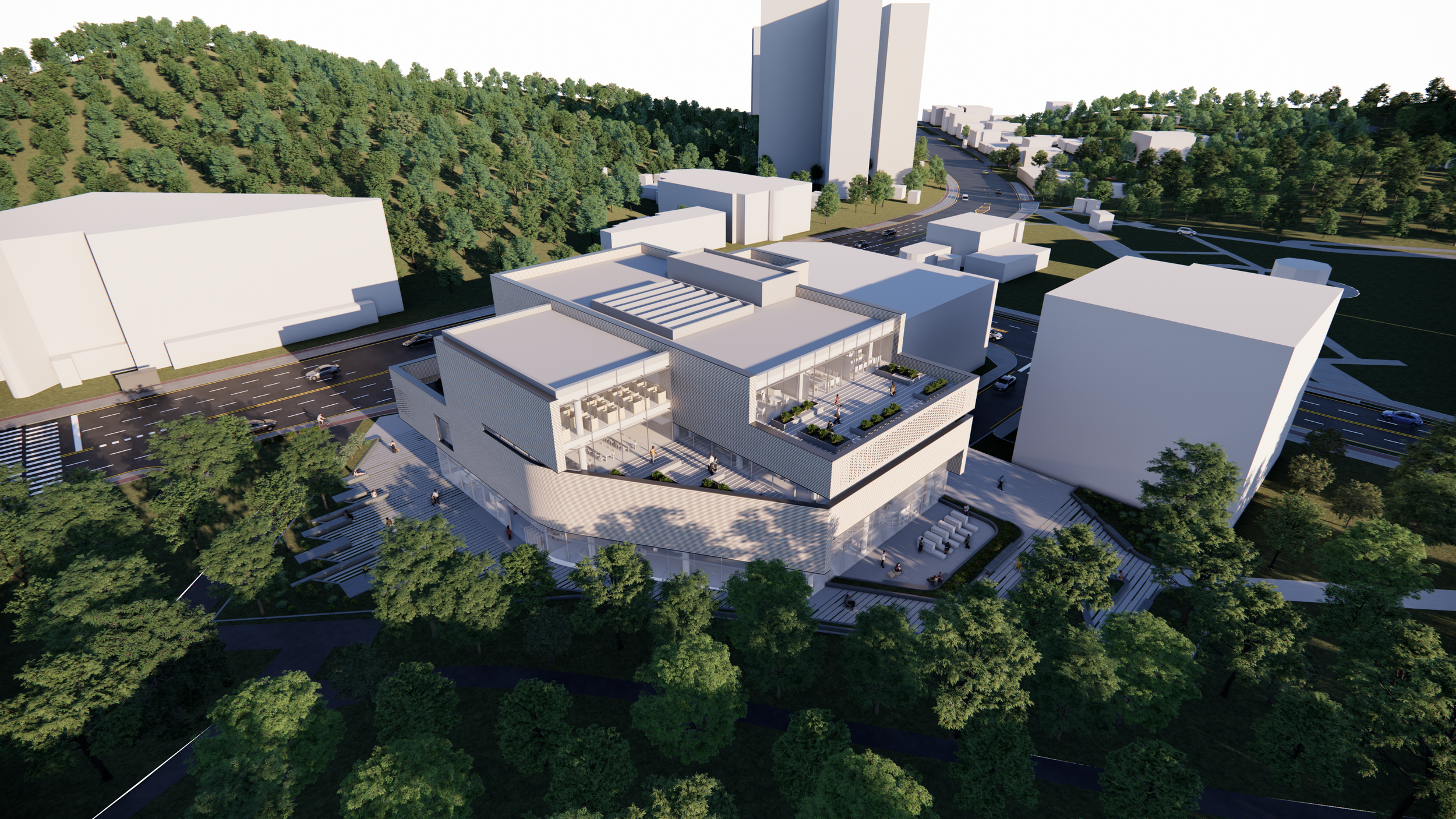
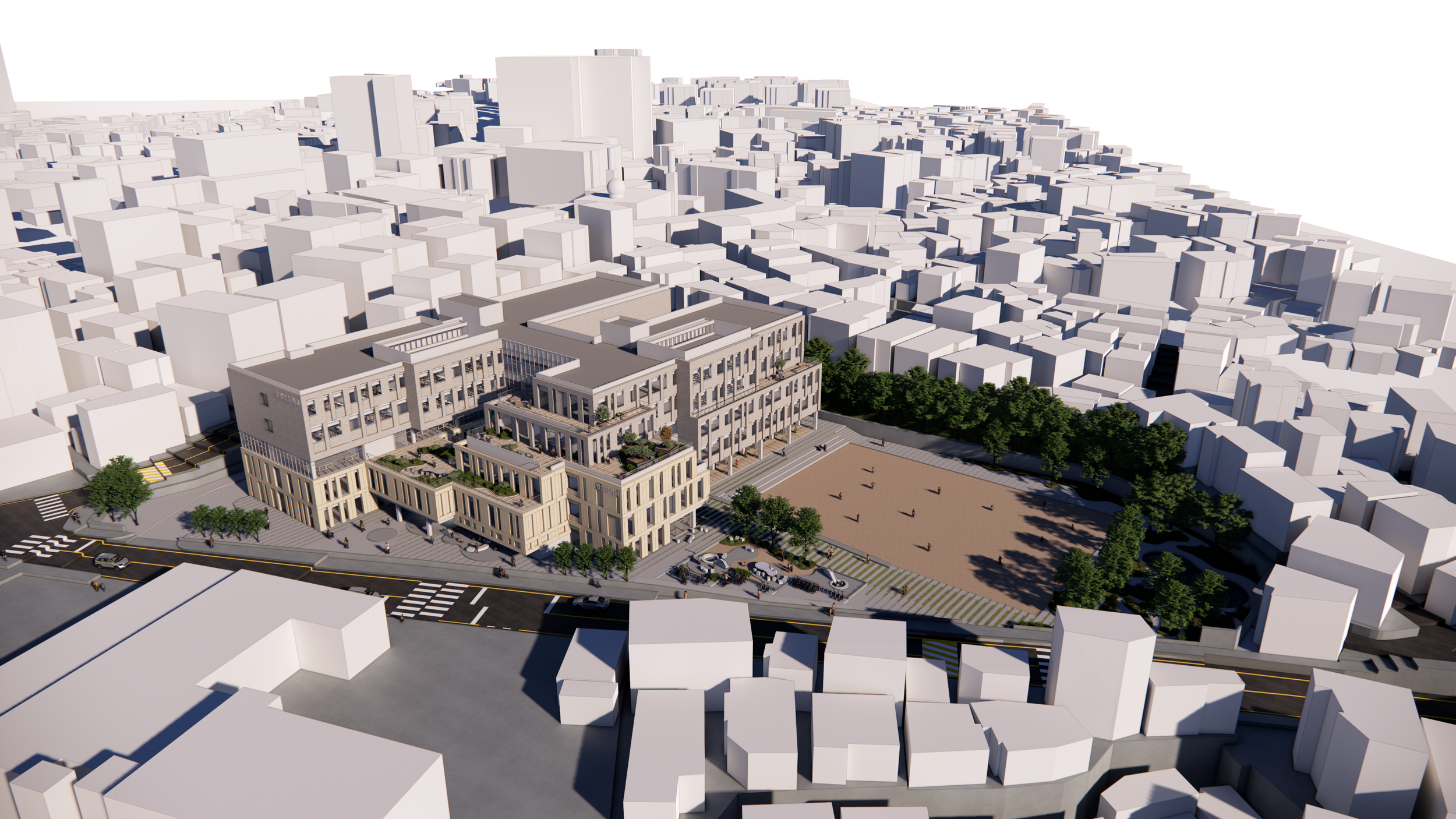
This proposal details the design for a new Public Library in Suseo-dong, Seoul, conceived not merely as a repository for books, but as a vibrant hub for diverse community formation among local residents. Architecturally, the building achieves this goal by utilizing an innovative spatial strategy: individual, specialized areas—such as the quiet reading rooms/study halls and the dedicated Children’s Library—are clearly defined, but are deliberately positioned around a central, magnificent atrium-style volume.

This central volume houses the shared common spaces, effectively acting as a communal heart that encourages interaction and connectivity between various user groups. Further enhancing its connection to the urban and natural environment, the structure incorporates multiple, distinctively designed terraces situated between the main building masses.

These terraces are strategically opened to the landscape, offering contrasting yet engaging views: specifically framing the natural beauty of Daemosan Mountain to the west, and providing a visual link to the nearby residential complex to the east, making the library a thoughtful interface between the community and nature.


Year : 2024

Location : Seoul, Korea

Size : 4,817.11m²

Status : Competition Entry

Type : Library

Principal in Charge :

Seojoo Lee, Hyojung Kim (I.f), Dongil Kim (I.f.CDL), Minho Lee (func. Architects)

Collaboration : Jongkil Kim

Prime Platform

Volume Options

Versatile Office Platform

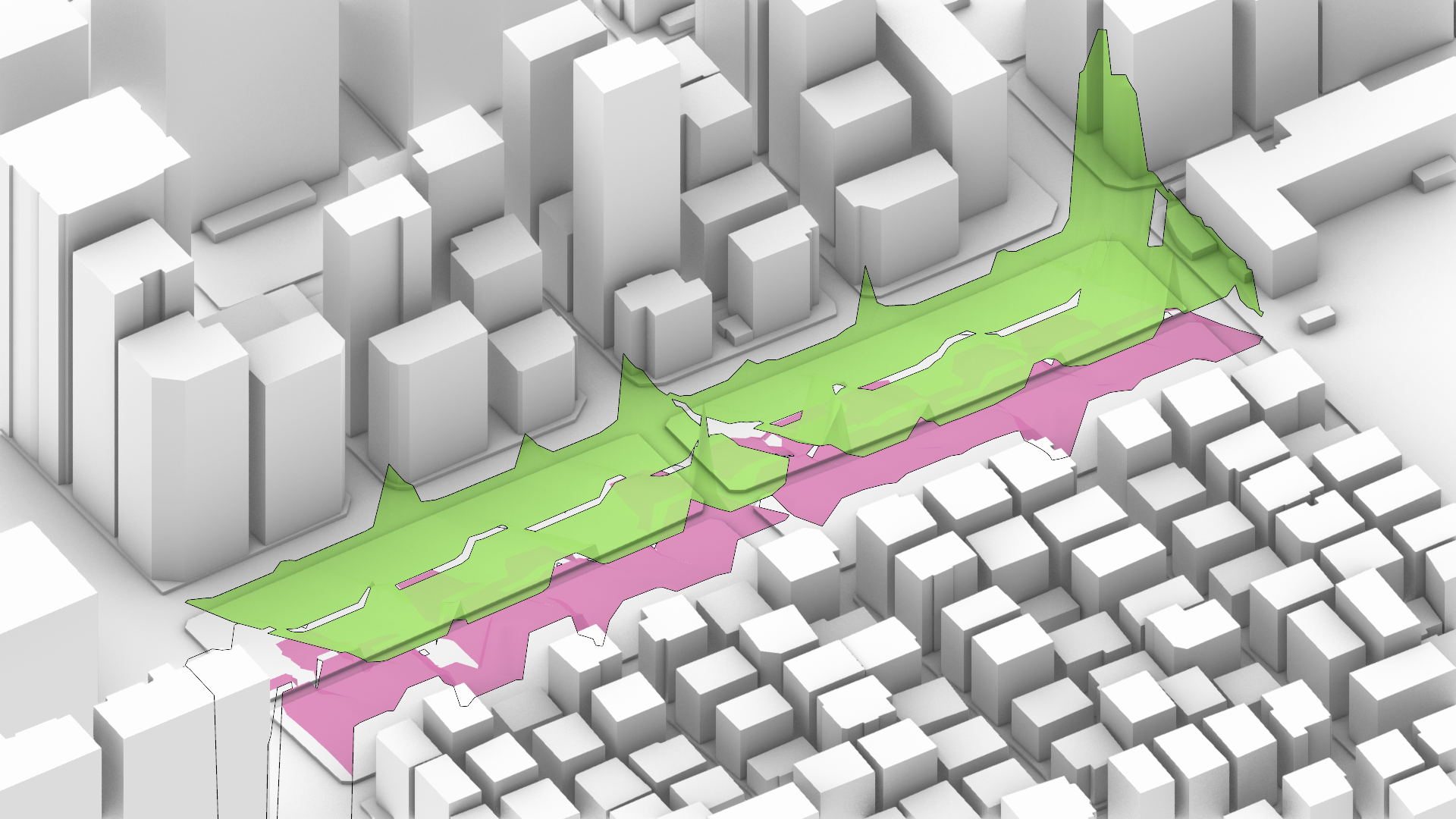
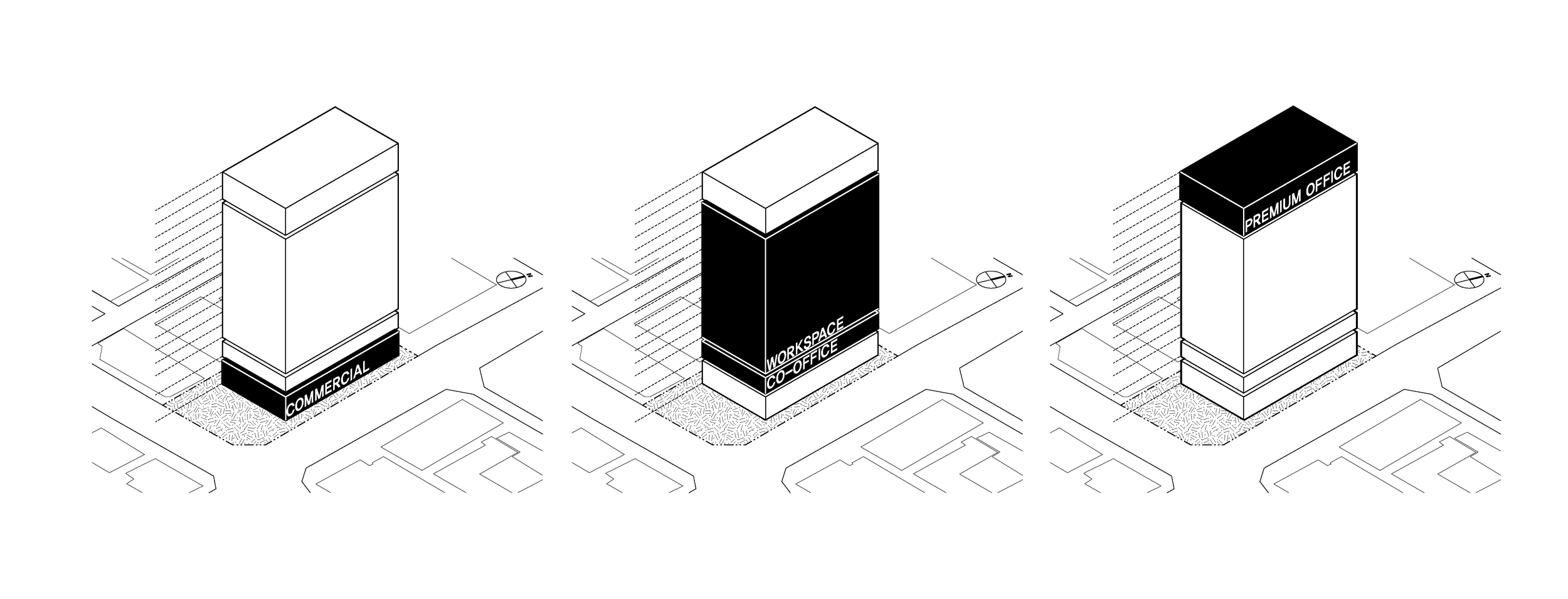
Prime Platform is a development strategy for a new corporate headquarters in Daechi-dong, Gangnam, located within Seoul’s International Exchange Complex district. The project redefines the prime office not only through physical metrics such as floor area, rent, or accessibility, but also through qualitative values such as corporate image, spatial comfort, productivity, and urban presence.

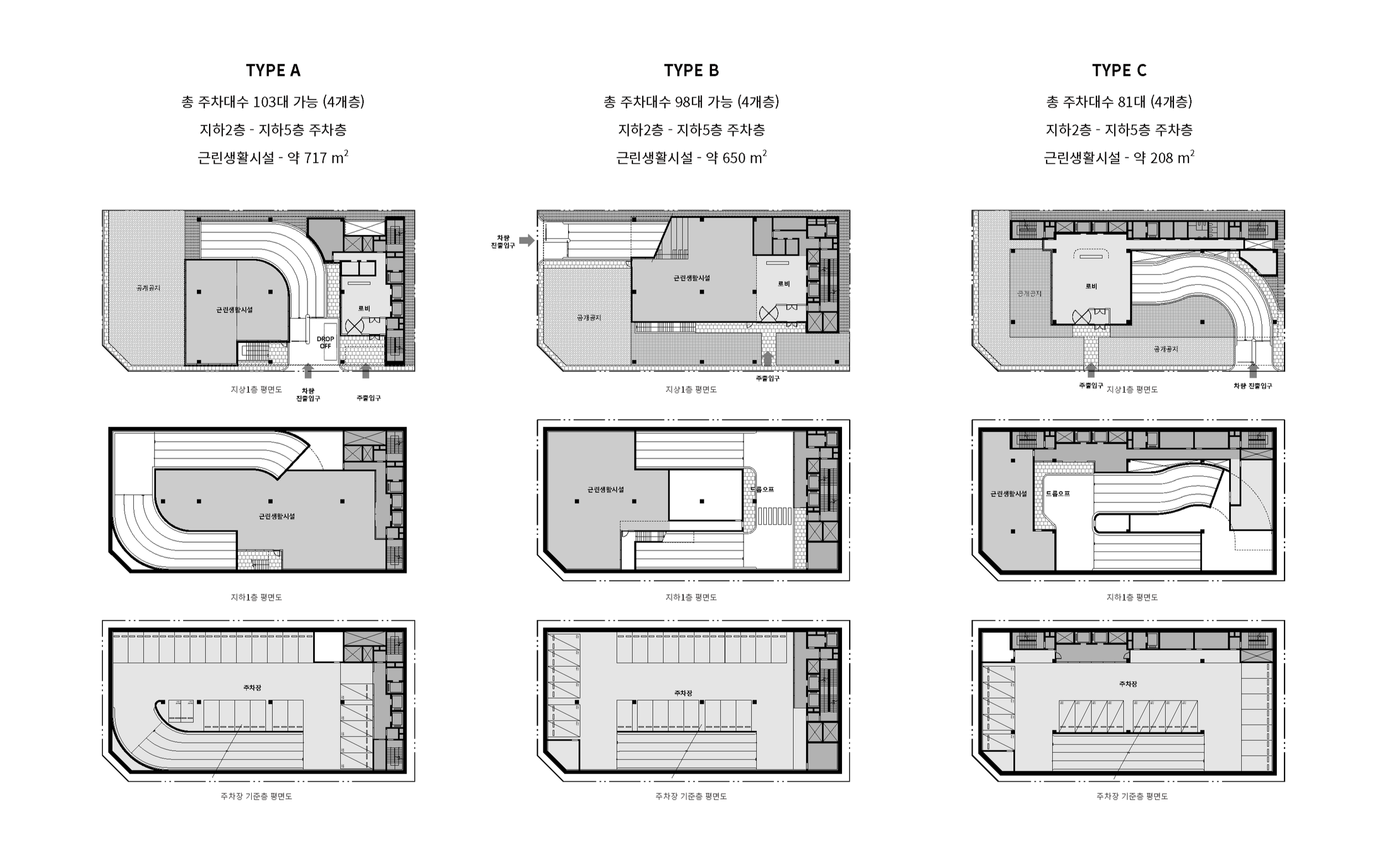
The strategy focuses on the lower levels as the building’s most important interface with the city. Lobby, retail, public open space, and drop-off areas are treated as a continuous street-level experience that shapes the first impression of the headquarters and activates the surrounding urban context. Above this base, the building is organized into three platforms: a Social Platform for commercial and public interaction, a Creative Platform for flexible work environments, and an Executive Platform for premium office space.

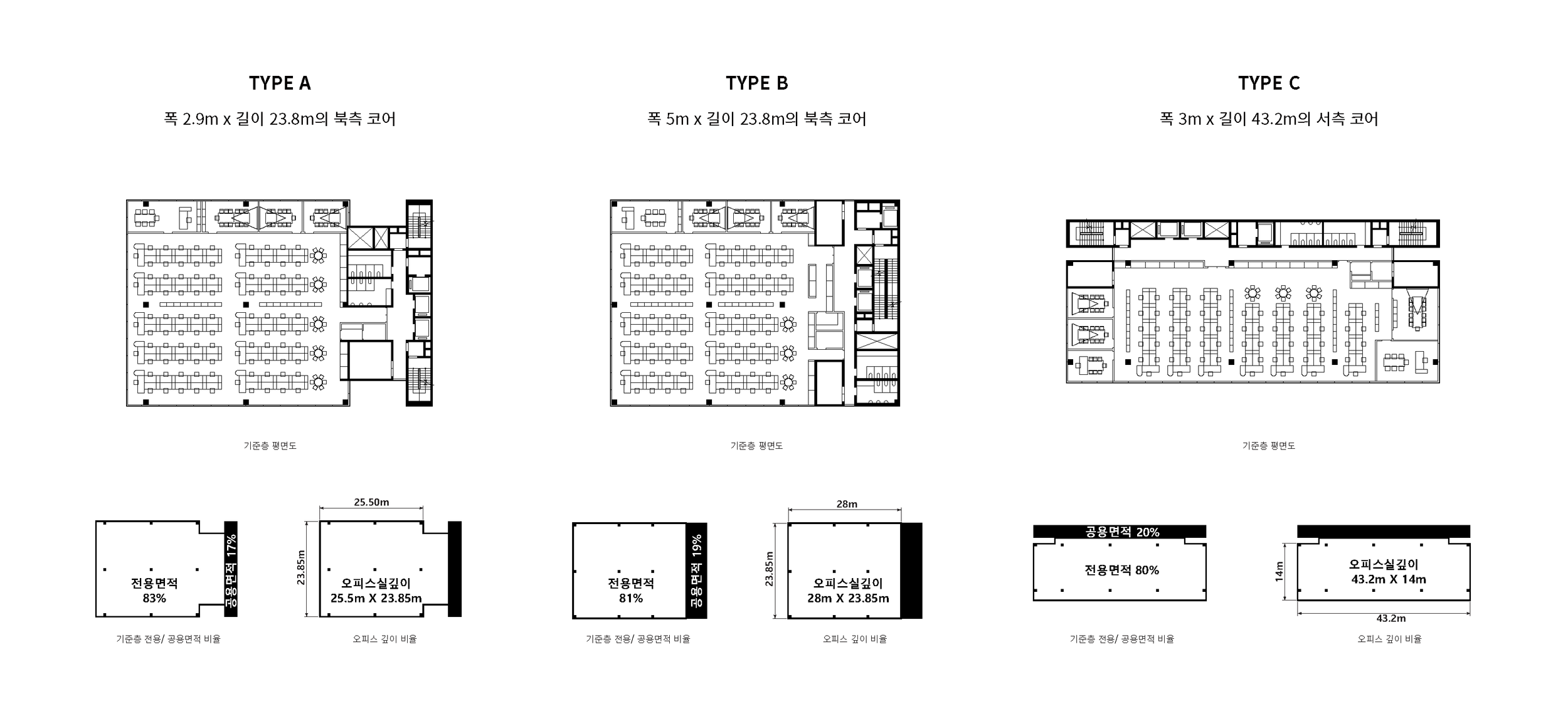
Through comparative massing studies, core arrangements, height regulation analysis, and flat-slab structural planning, the proposal seeks to maximize spatial efficiency while securing a premium workplace identity. Rather than presenting a single fixed form, the report establishes a strategic framework for transforming the site into a high-value urban office environment.


Year: 2024

Location : Seoul, Korea

Size : 1,310 m²

Status : Proposal

Type : Office

Principal in Charge :

Seojoo Lee, Hyojung Kim (I.f), Dongil Kim, (I.f CDL), Minho Lee (func. Architects)

Collaboration :

Jongkil Kim

Bokwang Elementary School

Childhood school memories are etched deeply in our minds, from the dusty sports fields to the creaky classroom windows and playful footsteps in the corridors. Schools hold a special place in our hearts, shaping daily routines and cherished memories. But can they transform into spaces that continue to nurture meaningful experiences for adults, rather than just relics of the past?

The vision for Bokwang Elementary School is to embrace the uniqueness of every individual and create a place that is both ordinary and extraordinary. It aims to constantly renew itself, fostering an environment that inspires dreams for the future. Situated in the heart of Seoul, the school serves as a public space where diverse people and ideas converge, playing a crucial role in the local community. Various external spaces are planned to actively engage with the community, ensuring inclusivity and openness.

The school's design is intentionally crafted to shape both body and mind through space. Every architectural element—doors, windows, steps, walls, and more—physically constructs the school space while also shaping the minds of its occupants. By bringing nature into the classrooms and opening up to the natural world outside, the school aims to create its own natural environment amidst the urban landscape. This approach, inspired by Crow Island Elementary School, offers a unique daily experience and mindset.

Rather than focusing solely on function and efficiency, the school is designed to facilitate horizontal learning, where encounters with diverse individuals foster accidental and self-driven learning. Through a horizontal hierarchy of spaces, it provides meaningful environments for everyone, fostering a sense of belonging and inclusivity.


Year : 2024

Location : Yecheon, Gyeongsangbuk-do, Korea

Size : 8,962.66 m²

Status : Competition Entry

Type : Institution

Principal in Charge :

Seojoo Lee, Hyojung Kim (i.f), Dongil Kim (Kyung Hee University), Minho Lee (func. Architects)

Design Team :

Seungil Kim, Inyeob Jang (i.f)
Damurak Learning Village

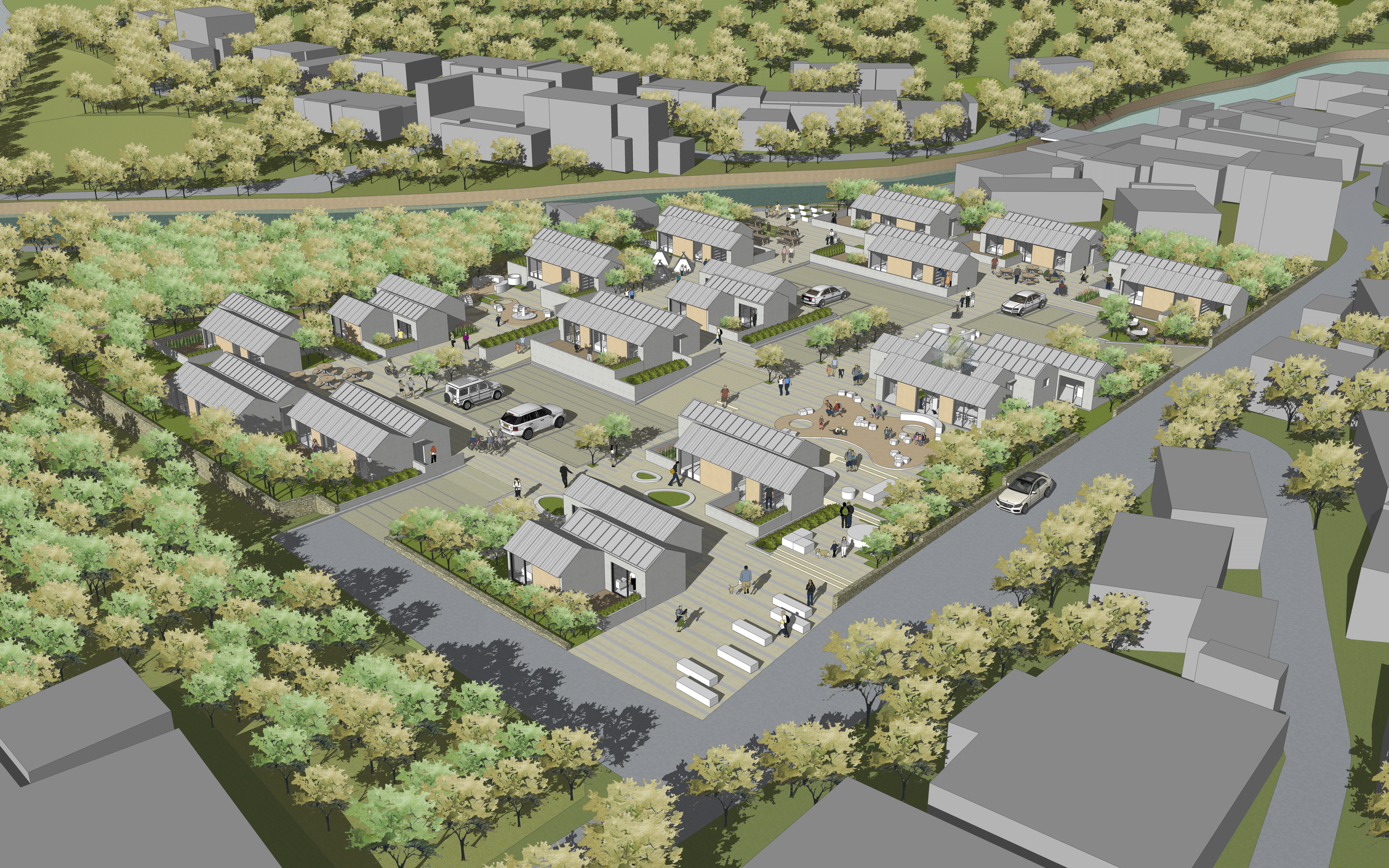
Damurak Learning Village proposes a rural learning community in Hayu, Damurak Village, Gurye, where the quiet landscape of Jirisan and the existing low stone walls become the foundation for a new educational settlement. Rather than creating a uniform open village, the project respects the privacy of each household while gradually expanding relationships from individual homes and gardens to shared yards, outdoor classrooms, and community spaces.

The village is organized as a decentralized and pedestrian-oriented cluster of small houses, whose roof forms echo the mountain ridges of Jirisan. Three housing types respond to different family structures and lengths of stay, offering flexible rooms, independent living areas, and adaptable shared spaces. At the center, a community center connects residents and local neighbors through a library, study room, shared kitchen, education room, and lounge.

Landscape, circulation, and housing are integrated to form an educational, ecological, and village-based community where children can learn, play, and live close to nature.


Year: 2024

Location : Gurye, Korea

Size : 952 m²

Status : Design Proposal

Type : Housing

Principal in Charge :

Seojoo Lee, Hyojung Kim (I.f), Dongil Kim (I.f.CDL), Minho Lee (func. Architects

Design Team :

Seungil Kim, Inyeob Jang (i.f)